Packing a Canoe for a Boundary Waters Hunt
Embarking on a hunting trip into Minnesota's Boundary Waters Canoe Area Wilderness is an incredible adventure, but it comes with unique challenges, especially when it comes to packing. Unlike road-accessible hunts where you can simply load up the truck, every single item you bring into the BWCA must be transported by canoe and then carried on your back over portage trails. This guide is all about mastering that balancing act, helping you meticulously plan and pack your canoe for a successful, self-reliant hunt in one of the most pristine wilderness areas in the country.
Understanding the Boundary Waters Challenge
The Boundary Waters isn't your typical deer camp. It's a place where modern conveniences vanish, and your ability to rely on yourself and your gear becomes paramount. Many hunters dream of the solitude and raw beauty, but underestimate the sheer logistics involved.
The Wilderness Mentality: Self-Reliance is Key
When you push off from the entry point into the Boundary Waters, you're entering a world that demands respect and thorough preparation. There are no roads, no cell service in many areas, and certainly no corner stores to pick up forgotten items. This means you need to adopt a deep wilderness mentality, focusing on self-reliance, minimal impact, and robust problem-solving skills. Every piece of gear needs to earn its spot in your canoe, serving a vital purpose or offering crucial redundancy. Think about what you'd do if a critical piece of equipment failed or got wet, and pack accordingly. This isn't just a physical journey; it's a mental one, forcing you to disconnect from the everyday and fully engage with your surroundings.
You're responsible for your own safety, your food, your shelter, and your ability to navigate back out. This level of self-sufficiency is a huge part of the allure for many who seek a hunt truly off the grid, but it also highlights why a well-thought-out packing strategy is non-negotiable. It also changes how you approach every aspect of the hunt itself, from scouting to tracking. For more on the specifics of hunting once you're in there, check out Canoe Hunting Boundary Waters Deer and Grouse.
Weight and Volume are King: Every Ounce Matters
The most immediate and undeniable reality of a Boundary Waters hunt is the portage. These trails, ranging from a few rods to over a mile, require you to carry all your gear (and your canoe!) on your back. If you're tackling multiple portages, you'll likely be making two or even three trips across each one with your packs. Suddenly, that extra pair of boots or that "just in case" gadget looks a lot heavier.
Every ounce you add to your pack means more sweat, more effort, and more time spent on the portage trail, potentially cutting into valuable hunting time or simply exhausting you faster. The goal is to pare down to essentials without sacrificing safety or critical comfort. This means choosing lightweight versions of gear whenever possible—ultralight tents, compact sleeping bags, dehydrated meals. It also means ruthless decision-making about what truly stays and what gets left behind. Volume is equally important; bulky items might fit in the canoe, but if they don't pack efficiently into a portage pack, they'll be awkward and difficult to carry. Imagine trying to carry a bulky cooler across a half-mile portage—it's not happening gracefully.
Essential Gear Categories and Packing Strategies
To tackle the BWCA effectively, it helps to categorize your gear and apply specific packing strategies to each. This ensures nothing critical is forgotten and everything is protected.
The Big Three: Shelter, Sleep, and Sustenance
These are your absolute priorities. Without reliable shelter, a warm place to sleep, and adequate food and water, your hunt could quickly turn into a survival situation.
When it comes to shelter, think lightweight, durable, and appropriate for potential Minnesota weather. A good three-season tent with a robust rainfly is usually sufficient, but consider one designed for more wind and snow if you're pushing into late fall. A separate footprint is a must to protect the tent floor from sharp rocks and moisture. Pack your tent in its own dry bag or stuff sack, separate from its poles and stakes if that makes for more efficient packing.
For sleep, your sleeping bag's temperature rating is crucial. Err on the side of warmer; a cold night can ruin the next day's hunt. Down bags offer excellent warmth-to-weight ratios but are useless if they get wet, so a waterproof compression sack is non-negotiable. Synthetic bags offer more peace of mind in damp conditions but are heavier and bulkier. Pair your bag with a good sleeping pad for insulation from the cold ground and comfort. Self-inflating pads offer a good balance of comfort and packability, while foam pads are indestructible but bulkier.
Sustenance involves food, cooking, and water. Dehydrated or freeze-dried meals are fantastic for weight savings and ease of preparation. Supplement these with high-calorie snacks like nuts, jerky, and energy bars for quick fuel during long days of paddling, portaging, and hunting. A compact, lightweight backpacking stove and fuel are essential, along with a pot, mug, and utensil. As for water, you absolutely need a reliable filtration system or purification tablets. Never assume surface water is safe to drink directly. You might even consider using a detailed mapping application like onX Hunt on a ruggedized device for planning your routes and identifying potential water sources or game trails, ensuring you have a clear picture of the terrain and where you might find your next meal's ingredients.
Hunting-Specific Necessities
Beyond basic survival, your hunting gear needs careful consideration for the wilderness.
Your weapon needs to be broken down and protected. For a rifle, this means a soft case that can be rolled or compressed when empty, and the rifle itself broken down if possible. A bow should be in a padded case or sleeve. Ammunition and arrows should be kept to a minimum—just what you need for the hunt plus a small contingency—and stored securely in waterproof containers. Opt for lightweight optics like compact binoculars and a laser rangefinder. These should also be in protected cases within your pack.
If you're successful, you'll need a game processing kit. This should include a sharp, sturdy knife, a bone saw (or knowledge of the gutless method), game bags to protect the meat, and cordage for hanging quarters if necessary. Consider the realities of Field Dressing a Deer in Cold Weather and how that translates to a remote wilderness setting. You won't have a heated shed or easy access to water. Also, don't forget your blaze orange or pink requirements for Minnesota hunting seasons. A vest and hat are usually sufficient and lightweight.
Clothing and Personal Items
The key to staying comfortable in Minnesota's unpredictable weather is layering. Start with good quality base layers (merino wool or synthetic) that wick moisture away from your skin. Add mid-layers like fleece or a lightweight puffy jacket for insulation. Your outer shell should be waterproof and windproof, capable of shedding rain and blocking biting winds. Bring multiple pairs of wool or synthetic socks; dry feet are happy feet.
For personal items, navigation is paramount. A physical map of your area, a reliable compass, and a GPS unit (or a dedicated app like onX Hunt on your phone, with downloaded maps and a strong power bank) are essential. Don't rely solely on your phone. A compact first-aid kit is non-negotiable; for a comprehensive list of what to include, refer to First Aid Kits for Remote Northwoods Ground. A headlamp with extra batteries, fire starters (multiple methods), and personal hygiene items round out the list.
The Art of Waterproofing and Load Distribution
Getting your gear into the Boundary Waters is one thing; keeping it dry and manageable is another. Proper waterproofing and strategic load distribution are game-changers.
Dry Bags and Barrel Systems: Protecting Your Gear
Water is everywhere in the Boundary Waters, and even a capsized canoe isn't the only risk. Rain, paddle drips, and damp portage trails all pose a threat to your gear. This is why waterproofing is crucial. Dry bags are a paddler's best friend. Roll-top dry bags come in various sizes and are excellent for keeping individual items or small groups of items bone-dry. Consider color-coding them to easily identify contents (e.g., red for sleeping bag, blue for clothing). For items that absolutely cannot get wet, like your sleeping bag, consider double-bagging them within another dry bag or a heavy-duty contractor bag.
Another popular option, especially for food and shared camp gear, are waterproof barrels. These sturdy, often 30-liter or 60-liter containers, have gasketed lids that create a watertight seal. They're excellent for protecting food from critters and moisture, and their rigid shape means they hold their form well when portaging, often designed to be carried with a shoulder harness. They are heavier than dry bags, but their durability and protection are unmatched.
Here's a quick comparison of the two:
| Feature | Dry Bags | Waterproof Barrels |
|---|---|---|
| Protection | Excellent for individual items, flexible | Superior for crush protection, rodent-resistant |
| Weight | Lighter | Heavier |
| Capacity | Various sizes, flexible shape | Fixed sizes (e.g., 30L, 60L), rigid shape |
| Portaging | Can be awkward if overstuffed, need good straps | Often designed with harnesses, easier to carry |
| Cost | Generally less expensive per unit | Higher initial investment |
| Best Use | Clothing, sleeping bags, personal items | Food, camp kitchen, fragile gear |
Balancing the Canoe and Portaging Packs
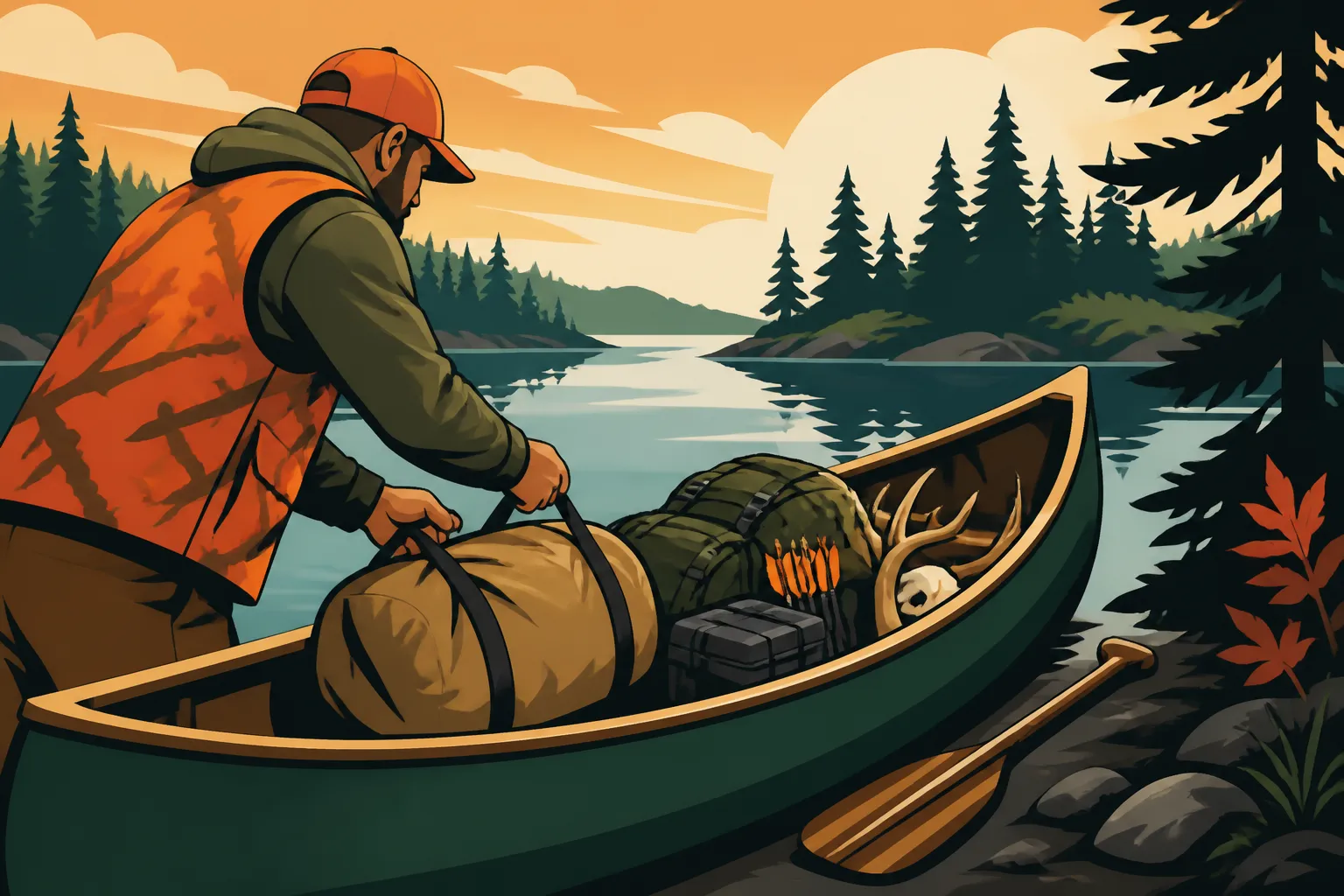
Once your gear is waterproofed, the next step is load distribution. In the canoe, you want weight distributed evenly from front to back and side to side to maintain stability and efficient paddling. Heavy items should be placed low in the canoe to keep the center of gravity down. Secure everything so it doesn't shift unexpectedly, especially if you hit waves or navigate tight turns. Consider that you might need to quickly access rain gear or a snack, so don't bury those items.
For portaging, the goal is to create "portage-ready" loads. This means packing your gear into large, comfortable portage packs (often called Duluth packs) that are designed to be carried on your back, often with a sturdy tumpline across your forehead for added support. Heavy, dense items like food barrels, water filters, or even your weapon in its protective case should be placed at the bottom of these packs, close to your back, to ensure good balance and transfer weight effectively. Lighter, bulkier items can go on top. Many experienced BWCA trippers aim for a "one-and-a-half" or "two-trip" system: one person carries the canoe and a small pack, while the other carries two larger packs. This minimizes trips back and forth on the portage trail. Knowing the Motorized Portage Rules in the Boundary Waters is also crucial, as certain areas or conditions may have specific regulations.
Strategic Packing for the Unknown
Even the best-laid plans can go awry in the wilderness. Strategic packing means preparing for eventualities and making every item count.
Planning for Contingencies: What If Things Go Wrong?
In the Boundary Waters, a small mishap can quickly become a serious problem if you're not prepared. That's why contingency planning is paramount. Always carry a repair kit for your canoe (patch materials, duct tape) and your tent. A multi-tool can fix countless small issues. Extra cordage is invaluable for hanging food, securing gear, or making emergency repairs.
Emergency communication is a must. A satellite messenger or personal locator beacon (PLB) can literally be a lifesaver in an area with no cell service. While you hopefully won't need it, knowing you can summon help is huge for peace of mind. Always have a backup for critical items—an extra fire starter, another compass, or spare batteries for your headlamp. Even considering how you'd handle a game recovery after dark, potentially needing to Blood Trailing After Dark in Minnesota, reinforces the need for reliable light sources and communication.
It's also worth researching your specific hunting area beforehand. Resources like GoHunt can provide detailed maps and potential habitat information, helping you anticipate terrain challenges or game movement patterns that might influence your packing decisions. Knowing, for instance, that you'll be navigating through particularly dense areas might prompt you to pack a more robust saw for clearing shooting lanes or processing game. Remember, when you're obtaining your Getting a Boundary Waters Entry Permit, you'll also get information that might influence your packing choices.
Minimizing Redundancy, Maximizing Utility
In the BWCA, every item needs to justify its existence. This leads to the principle of minimizing redundancy while maximizing utility. Can an item serve multiple purposes? For example, your camp knife can also be your primary game processing knife. Your cordage can be used to secure your canoe, hang a food bag from a bear pole, or even serve as an emergency clothesline.
Before packing any item, ask yourself: "Do I really need this, or is there another item that can do the same job?" This isn't about suffering, but about being efficient. A lightweight camp towel can also serve as an emergency rag. A simple plastic tarp can be a ground cloth, an emergency shelter, or a wind break. Even the clothes you wear for paddling can often double as your first layer for hunting, especially when thinking about Minnesota Blaze Orange Requirements – a vest can go over your base layers. The goal is to reduce overall weight and bulk without compromising safety or your ability to effectively hunt and live comfortably in the wilderness. Every choice you make in packing compounds over the duration of your trip, so thoughtful selection is key to a successful Boundary Waters hunt. You'll thank yourself when you're portaging across rough terrain, knowing that every ounce is there for a critical reason.
Disclaimer
This article is for general informational purposes only and does not constitute professional advice. Laws, prices and regulations vary by location and change over time. Consult a qualified professional for guidance on your specific situation.