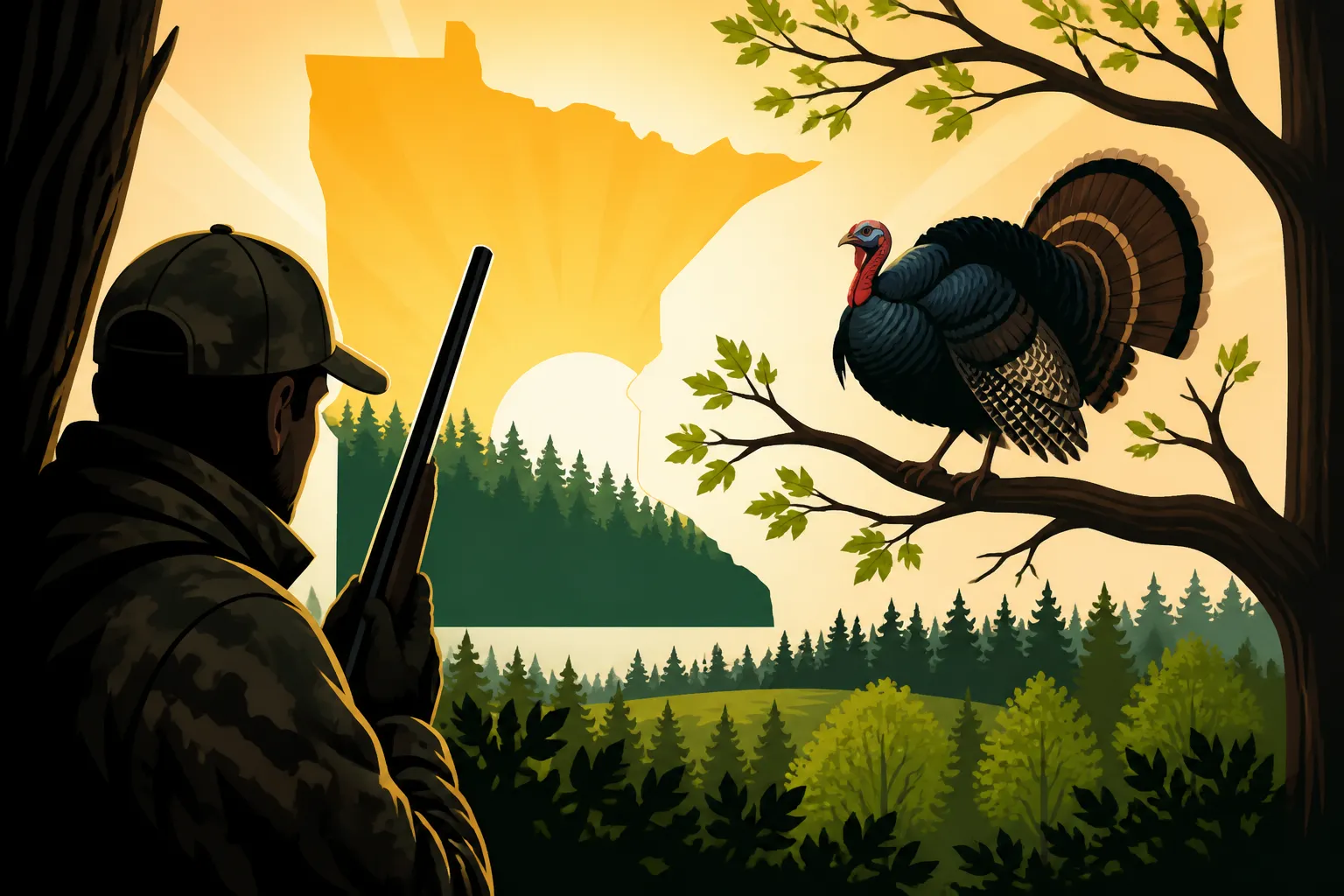
Roost Hunting Minnesota Gobblers
There's nothing quite as frustrating as hearing a gobbler thunder from the roost at dawn, only to have him fly down and head the opposite direction without even a glance your way. It’s a common scenario that leaves many Minnesota turkey hunters scratching their heads, wondering what went wrong. This comprehensive guide will walk you through the art and science of roost hunting gobblers in the North Star State, helping you understand their behavior and refine your tactics to turn those morning thunder chickens into successful harvests.
Understanding Gobbler Roosting Behavior
Before you can effectively hunt turkeys off the roost, you first need to understand why they choose certain trees and areas to spend the night. It's not just a random selection; there's method to their madness, driven by instinct and survival.
Why Turkeys Roost in Specific Trees and Areas
Turkeys are highly vulnerable to ground predators like coyotes, foxes, and bobcats when they're on the ground after dark. Their primary defense mechanism is to fly up into the tallest, sturdiest trees they can find, seeking safety and an elevated vantage point. These roost trees often feature large, strong horizontal limbs that can comfortably support a turkey's weight. In many parts of Minnesota, you'll find them favoring large oak trees, mature pines (especially white pines), or even towering cottonwoods along river bottoms.
Beyond safety, turkeys will also choose roosts that offer a strategic advantage for the next morning. They prefer spots that are relatively close to prime food sources, water, or established strutting zones, allowing for an easy fly-down and immediate access to what they need. Think about how many times you've heard them gobble on the limb, then fly directly into an alfalfa field or a patch of open woods where hens are likely to gather. In colder spring nights, especially during an early turkey period in Minnesota, they might also seek out thicker pine stands that offer a bit more thermal cover, providing some warmth from the biting wind. It's fascinating how consistent turkeys can be; once they find a good roost, they'll often use it repeatedly unless they're heavily disturbed or local food sources shift dramatically.
Seasonal and Weather Influences on Roosting
Just like our plans for a hunt change with the calendar and the forecast, so do a gobbler's roosting habits. Early in Minnesota's spring turkey season, when the breeding cycle is in full swing, gobblers might roost closer to traditional breeding grounds where hens are more concentrated. As the season progresses and hens begin to nest, gobblers tend to become more spread out and might choose more solitary roosts.
Weather also plays a significant role. Strong winds can make turkeys choose more sheltered areas, perhaps lower in the canopy or on the leeward side of a ridge, to avoid being buffeted all night. Rain, while it might make birds less vocal, doesn't stop them from roosting; they'll still seek high ground. The timing of their fly-down in the morning can be influenced by weather as well. Cold, damp mornings might delay fly-down by a few minutes as they wait for the sun to warm things up, while clear, calm mornings often see them hit the ground right at first light, eager to greet the day. Knowing these nuances can give you a crucial edge, helping you anticipate their movements and plan your setup accordingly.
Pre-Season and Pre-Hunt Scouting for Roosts
You can't hunt a roost if you don't know where it is. Successful roost hunting begins long before you ever step foot in the woods with your shotgun. It's all about diligent scouting, both in the off-season and the day before your hunt.
Listening for Gobbles at Dusk and Dawn
The absolute best way to pinpoint an active roost is by listening. This means getting out to your potential hunting areas either the evening before or early on the morning of your planned hunt, specifically to listen for gobblers. Head out to a vantage point where you can hear a good distance, then use a locator call – an owl hooter or a crow call works wonderfully – to elicit shock gobblers. Turkeys will often gobble in response to these loud, abrupt sounds, betraying their location without you having to sound like a potential threat.
It's critical to maintain silence and distance during this scouting phase. You don't want to get too close and risk spooking the birds. If they know they've been located, they might alter their routine. Instead, listen carefully, noting the direction and approximate distance of each gobble. Tools like a compass or a good mapping app can help you triangulate their position. Pay attention to the timing; turkeys typically start "sounding off" as they put themselves to bed in the evening, and again just before first light as they wake up. Understanding how sounds carry in different weather conditions and wind directions will also make your listening efforts more productive.
Using Technology to Pinpoint Potential Roosts
In today's hunting world, technology is an indispensable scouting tool. Before you even set foot in the woods, using a good mapping application like GoHunt or OnX Hunt can help you identify potential roosting areas from your armchair. Look for areas with tall timber, especially along ridge lines, near water sources, or at the edges of open fields. Topographical maps showing elevation changes can point you to high spots where turkeys might prefer to roost.
You can overlay public land boundaries, identify potential travel corridors, and use high-resolution satellite imagery to spot clusters of large trees in otherwise open areas – these are prime candidates. I find that marking these potential roosts and planning your access routes on the map beforehand is invaluable. It helps you visualize your approach, ensuring you can slip in silently and efficiently the next morning. Remember, knowing how to interpret these maps and understanding how to use the Minnesota Recreation Compass App can give you a significant advantage, particularly when exploring new territory.
Visual Confirmation and Sign Reading
While listening and mapping get you close, visual confirmation seals the deal. After you've identified a potential roost area through listening or mapping, you'll want to sneak in during the middle of the day (when turkeys are typically elsewhere) to look for physical evidence. The tell-tale signs beneath an active roost tree are often very clear: a concentration of droppings, scattered wing feathers, and sometimes even fresh scratch marks on the ground where they've been feeding nearby.
Beyond the roost itself, look for other turkey sign that indicates where they'll go after fly-down. Finding "dusting bowls" – shallow depressions in dry soil where turkeys dust themselves to remove parasites – or strut zones nearby will give you clues about their morning travel patterns. Tracks in soft soil along logging roads or field edges can also confirm their presence and general direction of travel. The key is to check these signs without disturbing the area. Use binoculars from a distance if possible, and move stealthily. If you confirm active sign, you've likely found a reliable morning setup for your next hunt.
Approaching the Roost: The Art of the Stealthy Entry
Once you've located a roost, the next critical step is getting into position without alerting the birds. This is where many hunts go sideways, as a single misstep can send gobblers flying in the opposite direction before you even get a chance to call.
Timing Your Approach for Optimal Success
Getting to your setup spot early is paramount, but there's a sweet spot for "early." You want to be in position well before first light, ideally 45 to 60 minutes before you expect the birds to stir and begin their morning vocalizations. This gives you ample time to navigate the terrain, choose your exact setup, and settle in comfortably, minimizing any last-minute movements or noises. If you arrive too early, you might sit in the cold for too long, growing impatient or uncomfortable. Arrive too late, and you risk bumping the birds as they wake up, or even having them gobble from the limb directly over your head before you're concealed.
Factor in the distance and difficulty of your walk-in when planning your timing. If you have a long trek or challenging terrain to navigate, add extra time. The goal is to move deliberately and silently, never rushing. Once you hear the first sleepy tree yelps or soft clucks from the roost, freeze. Let the birds settle back down, or if you're already very close, use the cover of their vocalizations to make your final adjustments. Remember, silence is your greatest asset during this critical phase.
Navigating Terrain Silently
Picking your path using those mapping apps beforehand isn't just for general direction; it's about identifying the quietest route. Avoid crunchy leaves, dry sticks, and steep slopes that make noise when walked upon. Instead, look for natural depressions, creek beds, or areas with soft, damp ground that will cushion your footsteps. The "cat walk" technique – placing your heel down first, then rolling to your toe, feeling for resistance with each step – is essential. Move slowly, deliberately, and stop frequently to listen, not just for turkeys, but for any sounds you might be making.
The wind can be your friend or foe during your approach. A light breeze in your face can mask your sounds, but a strong crosswind might carry your scent. Always try to approach with the wind in your favor, if possible, or at least across your body. Furthermore, ensure your clothing is quiet. Wool or soft fleece are excellent choices, as they don't rustle like some synthetics. Check your equipment – make sure calls aren't clanking together, and buckles on your backpack aren't jingling. Every little sound matters when you're trying to sneak up on a bird with exceptional hearing.
Setting Up Your Ambush Point
The choice of your exact setup location is critical. You want to position yourself strategically between the roost and where you anticipate the birds will fly down and begin their morning activities – whether that's an open field, a specific strut zone, or a travel corridor they use. Crucially, don't set up directly under the roost tree; this puts you at a disadvantage, as they'll likely fly down out of your shooting lane or spot you.
Choose a spot with good natural cover that breaks up your outline, such as a large tree trunk, a thick brush pile, or a slight rise in the terrain. Ensure you have a clear shooting lane in the direction you expect the gobbler to approach. Also, consider the direction of the rising sun; you want it at your back, not in your eyes, and potentially in the bird's eyes as he approaches. Once you're in place, get comfortable and minimize any further movement. Facing the expected direction of the gobbler's approach will help you reduce turning. Some hunters opt for a portable ground blind for ultimate concealment, especially on field edges, offering a fantastic way to blend into the landscape. Remember that finding a solid position, like setting up against a big oak, can be the difference between a successful shot and a missed opportunity.
Calling Tactics Around the Roost
Calling a turkey from the roost requires a different touch than calling one later in the day. It's about subtlety, timing, and knowing when to be assertive versus when to be quiet.
Soft Calls Before Fly-Down
Before the turkeys have left their roost trees, your calling should be minimal and extremely subtle. Think of it as a hen just waking up, stretching, and letting out a few soft, contented sounds. A few soft tree yelps, gentle clucks, or purrs are usually all it takes. The goal here isn't to aggressively draw them in, but simply to let them know a hen is nearby and to pique their interest.
Avoid loud, aggressive calling at this stage. You don't want to spook them, make them suspicious, or worse, cause them to fly down in the opposite direction, convinced there's a more appealing hen over there. If a gobbler on the limb responds to your soft calls with a thunderous gobble, respond sparingly. A single soft cluck or a very short, quiet yelp is usually enough, then go silent. Patience is your best friend here. Let their natural curiosity and the desire to be with hens do most of the work for you, just giving them a little encouragement. Mastering the art of calling a Minnesota gobbler off the roost is a skill refined over many seasons.
Aggressive Calling Post-Fly-Down
Once those big birds hit the ground, the game changes. If they're on the ground and moving in your general direction, you can become more assertive with your calling. This is when you can unleash those excited yelps, sharp cutts, and insistent clucks. You want to simulate an eager, breeding-ready hen, inviting the gobbler to come investigate.
Vary your calling cadence and volume. Don't fall into a predictable rhythm. If the gobbler is showing interest and moving your way, keep him engaged without overcalling. If he "hangs up" – stopping just out of range and gobbling but not committing – try changing up your calls. Sometimes a different tone, a softer series, or even going completely silent for a few minutes will make him impatient enough to close the distance. Remember, the best turkey calls worth carrying in Minnesota offer versatility for these situations.
Decoy Placement for Roosted Birds
Using decoys can be incredibly effective when roost hunting, but placement is crucial. If you're planning to use them, set them up before first light, while it's still dark enough for you to move unnoticed. Place your decoys in a visible spot, ideally 15 to 20 yards from your hidden position, and orient them so they are facing away from you. This way, any approaching gobbler will likely circle to face the decoy, presenting a perfect broadside shot for you.
For roosted birds, a single hen decoy is often subtle enough to draw them in. If you know there are aggressive gobblers in the area, or if you're hunting later in the season, a jake and hen pair or even a full strut gobbler decoy can be highly effective, challenging the dominant gobblers to come in and fight. Be mindful of which turkey decoys work on pressured birds in your area, as they can sometimes be decoy shy. Always exercise extreme caution when using decoys on public land, especially in areas with high hunter traffic. When moving, always wear blaze orange on your person, even if you take it off when settled.
| Calling Strategy | When to Use | Decoy Suggestion | Rationale |
|---|---|---|---|
| Soft Tree Yelps/Clucks | Pre-dawn, while gobblers are still on the roost | Single hen (subtle) | Piques interest, confirms presence, sounds natural and non-threatening, encourages fly-down nearby. |
| Aggressive Yelps/Cutts | Post-fly-down, when gobbler is on the ground & responsive | Jake/hen pair or full strut gobbler | Challenges dominant gobblers, simulates excited hens ready to breed, often pulls in "lonely" gobblers. |
| Purrs/Soft Clucks | Gobbler is close, making final approach, or hung up | Single hen (stationary) | Builds confidence, sounds like a contented hen, can be enough to draw them the last few yards. |
| Locator Calls (Owl/Crow) | Pre-dawn to locate roost, or mid-morning to shock gobble | None | Provokes a "shock gobble" from silent birds, helping to pinpoint their location without sounding like a turkey. |
Dealing with Common Roost Hunting Challenges
Even with perfect scouting and a stealthy approach, turkey hunting throws curveballs. Knowing how to adapt to common challenges can salvage a hunt that initially seems doomed.
Hung-Up Gobblers and What to Do
Ah, the infamous "hung-up gobbler." You know the one: he's gobbling his head off, responding to your every call, and seems genuinely interested, but he just won't close those last 50, 100, or even 200 yards. This usually means one of two things: he expects the "hen" (you) to come to him, or he's already got real hens with him that he's tending to. When a gobbler is hen-pecked, pulling him away from his ladies is one of the toughest challenges in turkey hunting.
If he's hung up and won't commit, resist the urge to overcall. Sometimes, going completely silent for a good 10-15 minutes can make him impatient enough to come looking. Another tactic is to try very subtle, soft purrs and clucks, as if you're a contented hen slowly moving away. If the terrain allows and you're confident you can do so silently, a strategic "run-and-gun" maneuver might be your best bet, where you quickly reposition to get ahead of him or try to cut off his likely travel path. Just remember that success with run-and-gun turkey tactics on public land relies on speed and stealth. If he has real hens, your best bet might be to wait it out. Often, the hens will eventually wander off to nest, leaving the gobbler lonely and more susceptible to your calls later in the morning.
Pressure and Educated Birds
Public land turkeys, especially in well-known areas like Carlos Avery WMA or other easily accessible spots, are often highly pressured and become "educated" very quickly. They've heard every call, seen every decoy, and have likely been spooked by countless hunters. These birds are wary, and they don't respond to typical tactics.
To counteract pressure, you need to be even more subtle, stealthy, and sometimes, unorthodox. Minimizing your calling, maximizing your concealment, and getting further off the beaten path are crucial. Consider hunting later in the morning, after the initial wave of hunters has moved on, or during different turkey periods where pressure might be lighter. The "A" season period, for instance, can be particularly crowded. Sometimes, the most effective strategy is to forget about the traditional roost setup and focus on finding birds later in the morning who are actively seeking hens after separating from their own. Understanding Minnesota's spring turkey zones and periods can also help you strategically plan hunts in less pressured areas or times.
Safety Considerations and Public Land Ethics
Whenever you're hunting public land, especially during a popular season like spring turkey, safety must be your top priority. Always assume any movement or sound could be another hunter. Positive identification of your target is non-negotiable before taking a shot. Remember to wear blaze orange when walking in and out of your hunting area, even if you shed it once you're set up for the hunt (Minnesota requires blaze orange only during the firearm deer season, but it's always a good idea for visibility when moving, especially with decoys).
Respect for other hunters and the land is also paramount. Be aware of property lines and other hunters' positions. If you hear another hunter calling or see them setting up, give them a wide berth. Never set up too close to someone else; a good rule of thumb is to maintain at least 150-200 yards, or ideally, more. Pack out everything you pack in, leaving no trace of your presence. Let's all strive to be good stewards of our natural resources and represent the hunting community in a positive light.
Post-Roost Strategies and Adaptation
Just because the fly-down didn't go as planned doesn't mean your hunt is over. Turkeys are active throughout the morning, and adapting your strategy can often turn a quiet start into a successful finish.
Transitioning to Mid-Morning Hunting
If your initial roost hunt doesn't pan out, don't pack it in. Gobblers often become more callable and active once the hens have gone off to tend their nests, typically mid-morning. This is when the lonely gobblers really start searching for companionship. Instead of fixating on the roost, shift your focus to other key turkey areas. Look for food sources where they might be scratching, established strut zones, travel corridors (like logging roads or field edges), and dusting areas. Turkeys move predictably through these spots throughout the day.
This is a great time to implement "run-and-gun" tactics, covering ground and doing "recon by fire" with your calls. Move to a new location, set up quietly for 15-20 minutes, make a series of aggressive calls, and listen for responses. If you get a gobble, try to close the distance quickly and set up again. If not, move on. An isolated gobbler can often be pulled across greater distances than a hen-covered one, so don't be afraid to be more assertive with your calling and movement. Always keep an eye out for turkey tactics for farmland field edges, as these can be prime spots for mid-morning activity.
Re-Roosting for an Evening Hunt
Sometimes, the morning just doesn't cooperate, or you might find yourself with an afternoon to hunt. If you strike out in the morning, or simply want to scout for the next day, consider finding an evening roost. This isn't usually a hunting opportunity itself, but a prime scouting mission. Head back out to your hunting area an hour or two before sunset. Position yourself in a good listening spot, and remain quiet.
Listen intently for gobblers sounding off as they prepare to fly up to their roosts for the night. They'll often gobble a few times just before flying up, and then again once they're settled on a limb. Use your locator calls sparingly, just to confirm their location if you're unsure. The goal here is purely informational: note their exact location on your map, marking it for an early morning ambush the next day. This evening recon is an excellent way to prepare for spring turkey hunting in Minnesota, giving you a head start on tomorrow's birds without risking spooking them from a morning hunt.
Disclaimer
Hunting is an inherently dangerous activity. This guide provides general information and recommendations. Always consult the current Minnesota Department of Natural Resources (DNR) regulations and guidelines before hunting. Safety should always be your top priority. The author and publisher are not responsible for any accidents, injuries, or legal infractions that may occur.