Hunting Boundary Waters Canoe Country Deer
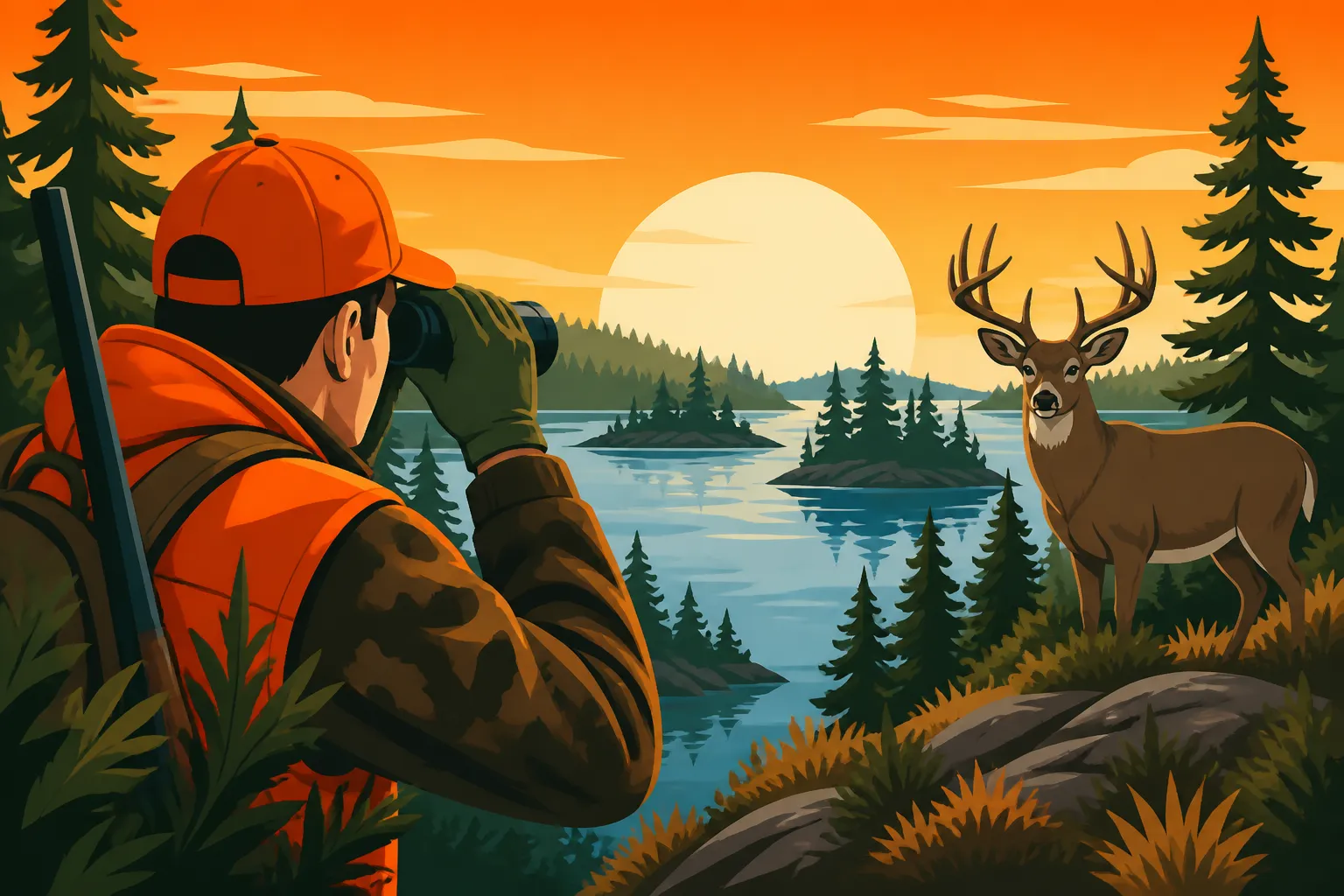
Hunting for deer in Minnesota's vast Boundary Waters Canoe Area Wilderness (BWCAW) presents a unique challenge, unlike any other hunt in the state. You're not just going out for a day; you're committing to a multi-day expedition into an unforgiving, remote landscape where every decision, from your gear to your strategy, is magnified by the sheer lack of modern conveniences. This guide will walk you through the realities, the preparation, and the tactics needed to successfully pursue deer in this incredible, wild corner of Minnesota.
Understanding the Boundary Waters Canoe Area Wilderness Hunting Challenge
The BWCAW is an immense, protected wilderness area, a true gem of Minnesota. But for hunters, its beauty also presents significant hurdles. It's not a place for the faint of heart or the underprepared; it demands respect, meticulous planning, and a deep understanding of its unique environment.
The Unique Environment and its Demands
Imagine navigating through a labyrinth of lakes, rivers, and portages, with no motorized vehicles allowed beyond certain entry points. The terrain varies dramatically, from dense conifer forests of pine and spruce to rocky outcroppings, swampy bogs, and areas of mixed hardwoods. The deer here aren't concentrated like they might be on agricultural fringes; they're spread out, often wary, and attuned to the subtle shifts in this pristine environment. You'll encounter rugged shorelines, thick underbrush, and vast stretches of timber that can feel endless. The sheer scale of the BWCAW means that finding a deer is only half the battle; getting it out is an entirely different beast. You're dealing with isolation, unpredictable weather, and the physical demands of paddling, portaging, and often bushwhacking through trackless woods.
This isn't a landscape where you can just drive in, walk a quarter-mile, and expect to see deer everywhere. Deer densities in the deep wilderness can be lower than in agricultural areas or managed forests closer to civilization. You’re often hunting older, smarter deer that have learned to avoid human contact. They live a tougher life, foraging on natural browse, and reacting instantly to any sign of intrusion. Success often hinges on your ability to read subtle signs, adapt to changing conditions, and accept that the experience itself is a huge part of the reward, even if you don't fill a tag every trip. Understanding the inherent challenges is the first step toward a successful and safe hunt.
Navigating Regulations and Permits
Before you even dip a paddle, you need to be intimately familiar with the specific rules governing hunting within the BWCAW, which are stricter than in many other parts of the state. The BWCAW falls within the Superior National Forest, but it has its own set of federal wilderness regulations on top of state hunting laws. For starters, you'll absolutely need to acquire a Getting a Boundary Waters Entry Permit in advance. These permits control visitor flow at specific entry points and are crucial for managing the wilderness experience. You’ll choose a specific entry point and entry date, and these permits are not just a formality; they're strictly enforced.
In addition to the BWCAW entry permit, all standard Minnesota hunting licenses apply. You’ll need the appropriate deer license for the firearm, archery, or muzzleloader season you plan to hunt. Blaze orange requirements also apply during firearm seasons, even deep in the wilderness. It's also vital to check current state regulations regarding baiting and feeding, as these are often prohibited or restricted in certain areas, particularly with concerns about Chronic Wasting Disease (CWD). Always carry physical copies or digital proof of all your licenses and permits, as cell service is non-existent in much of the BWCAW, making verification difficult. Neglecting any of these regulations can lead to severe fines and a ruined trip, so take the time to plan meticulously.
Essential Gear and Logistics for a BWCAW Deer Hunt
Preparing for a BWCAW deer hunt is akin to planning a small expedition. Every item you bring must serve a purpose, be durable, and be light enough to portage. Overpacking can quickly turn an adventure into a grueling ordeal, while underpacking can leave you vulnerable to the wilderness elements.
Packing Smart: Canoes, Gear, and Food
Your canoe is your lifeline in the BWCAW. A lightweight kevlar canoe is a game-changer when you're making multiple portages, as it reduces the physical strain significantly. You'll need sturdy paddles and life vests for everyone in your party. When it comes to gear, think minimalist but robust. A comfortable, durable pack, quality waterproof bags or dry sacks for all your sensitive gear (sleeping bags, electronics, extra clothing), and a reliable tent are non-negotiable. Don't forget a comprehensive first-aid kit; you'll be hours, if not days, from professional medical help. For cooking, a lightweight backpacking stove and fuel are essential, along with a water filter or purification tablets.
Food planning needs to balance calorie density with weight. Dehydrated meals are popular for their light weight and ease of preparation, but also bring high-energy snacks like nuts, jerky, and granola bars. Think about a five-day supply of food, even for a three-day trip, as unexpected weather or navigation challenges can extend your stay. A critical aspect for a deer hunt specifically is having game bags – tough, breathable bags to protect meat once a deer is down. And remember, all food and scented items must be properly stored to prevent attracting bears. Bear canisters or rope systems to hang food are common practice in bear country, and the BWCAW is definitely bear country. If you're considering Canoe Hunting Boundary Waters Deer and Grouse, remember that the canoe itself influences what you can bring and how far you can travel comfortably.
| Item Type | Essential Gear for BWCAW Deer Hunt | Why It's Crucial |
|---|---|---|
| Navigation | Topographic Maps, Compass, GPS Device, Satellite Communicator | No cell service; critical for staying found and for emergencies. |
| Shelter | Lightweight Tent, Sleeping Bag (appropriate temp rating) | Protection from elements; crucial for multi-day trips. |
| Clothing | Layered System (moisture-wicking, insulation, waterproof) | Adapt to changing weather; stay warm and dry even when wet. |
| Hunting | Firearm/Bow, Ammunition/Arrows, Field Dressing Kit, Game Bags | Primary hunting tools; essential for humane harvest and meat preservation. |
| Water/Food | Water Filter/Purification, Lightweight Stove, Dehydrated Meals | Hydration and sustenance in remote areas. |
| Safety | First-Aid Kit, Knife, Fire Starter, Headlamp, Bear Spray (optional) | Emergency preparedness; essential for wilderness survival. |
| Transport | Lightweight Canoe, Paddles, Life Vests | Primary mode of travel; critical for navigating lakes and portages. |
Navigation and Communication in the Wilderness
Getting lost in the BWCAW is a serious concern. While a phone app like GoHunt can be incredibly useful for scouting and planning from home, its utility diminishes rapidly once you lose cell service. Therefore, reliable analog navigation is paramount. Always carry detailed, waterproof topographic maps of your intended route and a good compass, and know how to use them. A robust, waterproof GPS unit, loaded with your planned routes and waypoints, serves as an excellent backup. Don't rely solely on your phone's GPS capabilities, as battery life is a constant concern.
Beyond knowing where you are, being able to communicate in an emergency is life-saving. A satellite communication device, such as a Garmin inReach or a Zoleo, is highly recommended. These devices allow you to send and receive text messages, track your location, and most importantly, send an SOS signal if something goes terribly wrong. Two-way radios can be useful for communicating within your hunting party over short distances, especially when still-hunting or spreading out to search an area. Remember to carry spare batteries or a portable power bank for all your electronic devices. Even something as simple as a signaling mirror or a whistle can be vital in an emergency. Being able to effectively navigate and communicate is fundamental to both your success and your safety when Scouting With the Minnesota Recreation Compass App or using other digital tools in conjunction with traditional methods.
Deer Tactics Specific to Canoe Country
Hunting deer in the Boundary Waters requires a shift in mindset from typical stand hunting or driving tactics. Here, you'll often become part of the landscape, relying on stealth, observation, and an intimate understanding of deer behavior in an untouched environment.
Scouting from the Water and Shore
Scouting for deer in the BWCAW starts long before your boots hit the ground or your paddle hits the water. From home, you can pore over digital maps, like those provided by GoHunt, looking for pinch points, old burn areas, dense cover adjacent to more open timber, or areas with a mix of habitat types. Pay close attention to subtle elevation changes, as deer often favor high ground for bedding and travel. Identifying islands or peninsulas connected by shallow waters can be productive, as these natural funnels might concentrate deer movement. When you’re actually in the BWCAW, the canoe becomes an invaluable scouting tool. Paddling quietly along shorelines allows you to observe from a distance, looking for fresh tracks in soft earth, rubs on saplings, or even deer feeding along the water’s edge, especially during early morning and late evening.
Once you spot promising areas from the water, pull your canoe ashore and do some on-foot scouting. Look for heavily used game trails, bedding areas (often thick cover on sunny slopes or under dense conifers), and natural food sources like acorns, mushrooms, or browse lines. This is where Reading Aerial Photos for Big Woods Deer becomes practical, matching what you see on the map with the reality on the ground. Unlike farmland deer that might frequent specific fields, BWCAW deer are often nomadic, moving through vast tracts of forest. Understanding their general travel patterns between bedding and feeding areas, often dictated by wind and terrain, is crucial. Focus on areas where distinct habitat types meet, like where a pine stand transitions to a mixed hardwood ridge or along the edge of a large bog.
Still-Hunting and Stand Placement Strategies
Given the vastness and ruggedness of the BWCAW, still-hunting often becomes the most effective strategy. This involves moving slowly and deliberately through the woods, taking a few steps, then pausing for several minutes to scan, listen, and observe. You're trying to integrate yourself into the environment, using the wind to your advantage, and moving with the same stealth as a predator. Pay close attention to the subtle sounds of the forest – a rustling of leaves, a snapped twig – which can indicate deer movement. Areas of mixed conifer and hardwood, or along old logging trails (if you can find them, as most are long overgrown) are prime candidates for still-hunting. Consider hunting the edges of beaver ponds or small lakes, as these can create natural funnels. Learn more about effective tactics by exploring Still-Hunting Minnesota Big Woods.
While traditional treestand hunting can be challenging due to the effort of packing in stands, it's not impossible for day hunts from a base camp. If you do opt for a stand, portability is key. Lightweight climbers or hang-on stands with climbing sticks are your best bet. Look for strategic locations like saddles between ridges, narrow strips of timber between bogs, or points of land jutting into a lake – places where deer movement is naturally constricted. Since you're on public land, remember that stands must be removed at the end of the day or season, depending on specific WMA rules, and you can't permanently alter vegetation. Always consider your Treestand Setups in Minnesota Hardwoods to maximize your visibility and shot opportunities while minimizing your footprint. When placing a stand, think about prevailing winds and clear shooting lanes, understanding that opportunities might be fleeting in this dense cover.
Post-Harvest Challenges and Meat Care in the Wild
Congratulations, you've successfully harvested a deer in the Boundary Waters! Now comes perhaps the most physically demanding and critical part of the entire hunt: getting your prize out of the wilderness and preserving the meat. This isn't a task for one person, and it requires foresight and preparation.
Retrieving a Deer in Remote Terrain
Retrieving a deer in the BWCAW is an immense undertaking. There are no ATVs, no pickup trucks, and often no easy trails. You’ll be relying on pure muscle, teamwork, and your canoe. The "gutless method" of field dressing is highly recommended here, as it minimizes mess and reduces weight by leaving the entrails behind. Quartering the deer into manageable pieces at the kill site is almost always necessary. Pack a sturdy, sharp knife and a bone saw. Once quartered, the meat should be immediately placed into game bags to protect it from dirt, insects, and scavengers.
The real challenge begins with transporting those quarters. You'll likely need to make multiple trips on foot to your canoe, carrying heavy, awkward loads over uneven terrain, through thick brush, and potentially across bogs. This is where a strong frame pack becomes invaluable. Once at the canoe, strategically loading the quarters is vital to maintain stability, especially if you have significant paddling ahead of you. Remember that a loaded canoe sits lower in the water and handles differently. When thinking about Retrieving a Boundary Waters Deer by Canoe, always prioritize safety and take your time. This stage can easily take many hours, or even an entire day, depending on the distance and terrain from the kill site to your entry point.
Preserving Meat Without Modern Conveniences
One of the biggest concerns with a BWCAW deer hunt is meat preservation, especially during warmer early archery seasons. Unlike a hunt closer to civilization where you can quickly get your deer to a cooler or butcher, you might be days away from refrigeration. After quartering and bagging the meat, air circulation is your best friend. Hang the game bags from tree limbs in a shady, breezy spot to allow the meat to cool quickly and form a protective "rind." This helps to keep flies away and slow bacterial growth. During the day, keep the meat as cool as possible, ideally submerged in a cold lake (though this can make it harder to access and invites water saturation if not properly bagged).
If you're hunting during cooler rifle or muzzleloader seasons in late fall or early winter, the cold temperatures can be a huge advantage for natural refrigeration. However, you still need to protect the meat from freezing solid before you can process it, and from opportunistic animals. For longer trips, consider salting the outer layers of the meat, which can act as a preservative. The goal is to get the meat cooled and aired out as quickly as possible, and then transported out efficiently. Neglecting meat care, even for a few hours in warm weather, can lead to spoilage and a wasted effort. Plan your trip for cooler weather if possible, and ensure you have all the necessary supplies for proper Field Dressing a Deer in Cold Weather and meat transport.
Disclaimer
The information provided in this guide is for general informational purposes only and is not a substitute for checking current regulations. Hunting laws and wilderness rules can change. Always consult the most recent Minnesota Department of Natural Resources (DNR) regulations and specific Boundary Waters Canoe Area Wilderness (BWCAW) rules before planning any hunt. Safe hunting practices and adherence to all laws are the hunter's responsibility.