Minnesota Duck Harvest Numbers
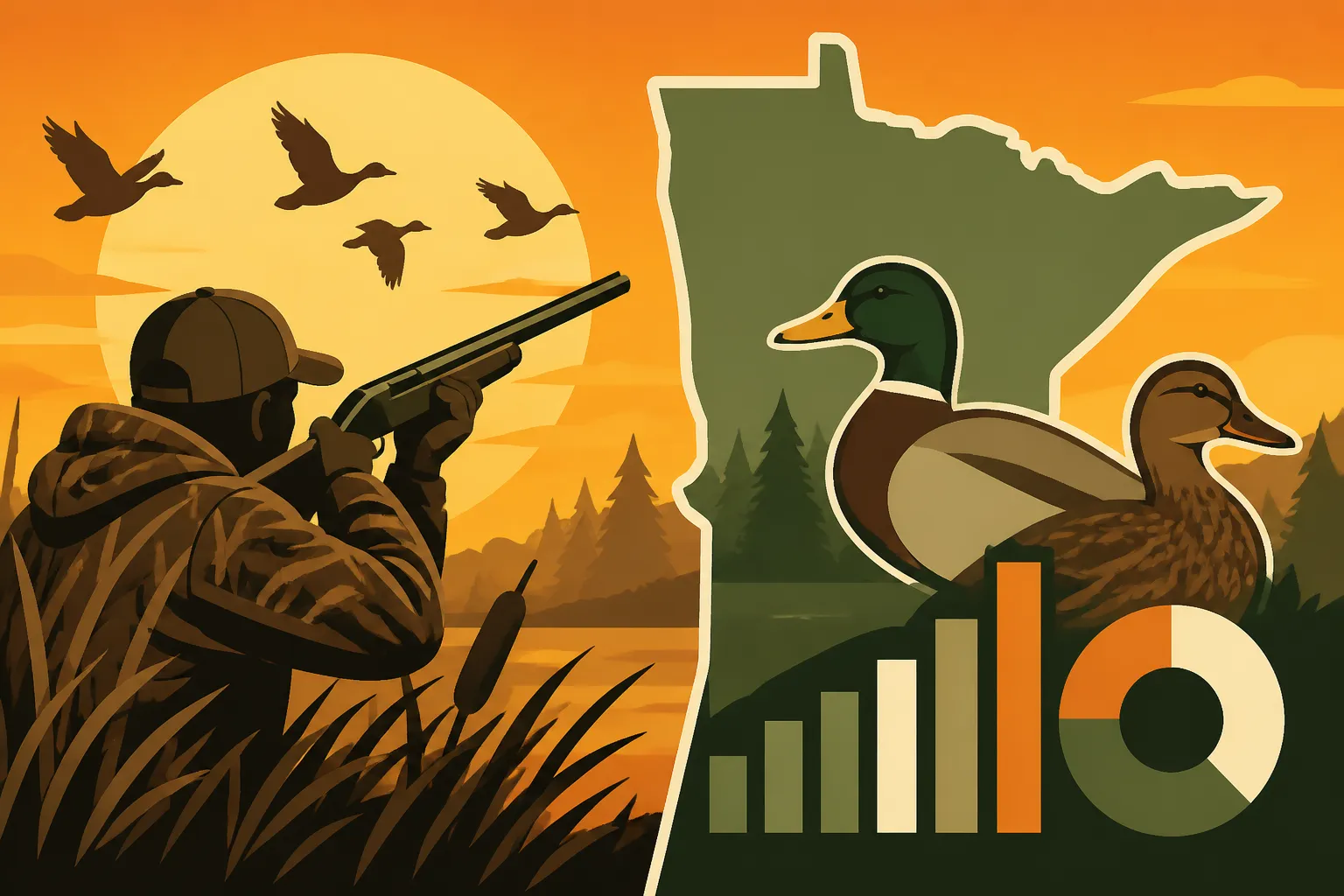
For many of us who live for the sound of whistling wings on a cold autumn morning, understanding what's happening with Minnesota's duck populations is more than just curiosity—it's about knowing what to expect, how to plan our hunts, and feeling connected to the resource we love. It can be frustrating to hear anecdotal reports of "no ducks" one year and "ducks everywhere" the next, leaving you wondering what the real story is. This comprehensive guide will pull back the curtain on how Minnesota's duck harvest numbers are actually gathered, what these statistics genuinely represent, and the many factors that truly influence the success of a waterfowl season, helping you interpret the data like a seasoned pro.
Understanding How Minnesota Tracks Duck Harvest
Getting a clear picture of how many ducks are harvested each year in Minnesota isn't as simple as counting every bird brought home. It's a complex, multi-layered effort involving both federal and state agencies, relying heavily on hunter participation. When you consider the vastness of our state and the sheer number of hunters pursuing ducks, you start to understand why this data collection is such a monumental task. But it’s crucial work, forming the backbone of how future seasons and bag limits are set.
The Federal Harvest Information Program (HIP)
Every migratory bird hunter across the country, including all of us here in Minnesota, is required to register with the federal Harvest Information Program, or HIP, before heading out. This isn't just another stamp to buy; it's the primary way the U.S. Fish and Wildlife Service gets a handle on migratory bird harvest data. When you certify for HIP, you're essentially adding your name to a pool of hunters that might be selected for a national survey.
The core idea behind HIP is simple: rather than trying to survey every single hunter, they select a statistically significant sample. These chosen hunters then receive a questionnaire asking them about their hunting activity and the number of birds they harvested during the season. It’s absolutely vital for hunters to participate truthfully and promptly if selected, because the accuracy of the overall harvest estimates hinges on honest reporting from this sample group. Without it, the data gets skewed, and that can lead to less effective management decisions down the road for species like Minnesota Mallard and Wood Duck Numbers.
Think of it this way: if only the most successful hunters report, or only those who had a terrible season, the picture becomes distorted. HIP aims to get a representative cross-section of all migratory bird hunters, from the weekend warrior to the die-hard daily marsh stalker. So, the next time you get your license, remember that Minnesota HIP Certification for Bird Hunters is more than just a check-box; it's your direct contribution to the science of waterfowl management.
State-Level Surveys and Bag Checks
While HIP provides a crucial national framework, our own Minnesota DNR takes things a step further, supplementing that federal data with more localized efforts. They understand that what's happening on the broad flyway might not always perfectly reflect the conditions in, say, the prairie potholes of western Minnesota versus the big water of Mille Lacs. These state-level efforts help fine-tune the picture and give us a more granular understanding of our specific waterfowl resource.
One common method involves sending out hunter surveys directly to a subset of Minnesota license holders. These might be mail-in questionnaires or even online surveys, delving into details like where hunters pursued ducks, what species they harvested, and how many days they spent afield. This information is invaluable for identifying regional hotspots, understanding local hunting pressure, and evaluating habitat conditions within different parts of the state.
Beyond surveys, you might also encounter conservation officers conducting field bag checks. This is where an officer might approach you at a boat launch or coming out of a marsh and ask to see your harvest. These direct observations provide real-time, on-the-ground data, allowing wildlife managers to verify species identification and tally actual numbers from a specific area on a given day. It’s a bit like taking a snapshot, and when combined with broader survey data, it helps create a much clearer image of our duck resource and how hunters are interacting with it.
What "Harvest Numbers" Really Represent
When you see a headline or a DNR report about "Minnesota Duck Harvest Numbers," it's easy to assume those figures are exact, precise counts of every single duck shot. The reality is a little more nuanced. These numbers are, fundamentally, estimates. They are the best statistical approximations derived from the surveys and methods we just discussed, and it’s important to understand them in that context.
Wildlife biologists and statisticians use sophisticated models to extrapolate the reported harvest from the sample of hunters who responded to surveys to the entire population of licensed hunters. They account for things like non-response rates and the demographics of those who did respond, all to build as accurate a picture as possible. It’s a robust process, but like any statistical estimation, it comes with a margin of error.
What this means for us hunters is that while these numbers are incredibly valuable for understanding trends and making management decisions, they aren't flawless. They can be influenced by how many hunters accurately report, or if there's a particular bias in the sample. For example, if a year saw a really tough opener, maybe discouraged hunters are less likely to fill out their surveys. Understanding that these are estimates, not perfect counts, helps us appreciate the science behind waterfowl management while also recognizing the inherent challenges of tracking wildlife on such a massive scale.
Key Factors Influencing Minnesota's Duck Harvest
Duck harvest numbers don't just happen in a vacuum; they're the result of a complex interplay of environmental factors, population dynamics, and even human behavior. As hunters, we often feel these shifts keenly, whether it's a boom year or a bust. It's truly fascinating to peel back the layers and see how everything connects, from a raindrop in the Dakotas to a flock of mallards settling into a Minnesota Waterfowl Production Area in October.
Habitat Conditions and Water Levels
If there's one thing that dictates the success of a duck season more than any other, it's water. Specifically, the amount and quality of water across the breeding grounds and along migration routes. Minnesota is deeply tied to the health of the prairie pothole region, often called "North America's duck factory." When that region, which stretches into the Dakotas and up into Canada, experiences abundant spring and summer rains, it creates ideal conditions for breeding ducks. More water means more nesting cover, more food, and most importantly, more isolated ponds for pairs to raise their broods.
Conversely, extended periods of drought can be absolutely devastating. Dry potholes mean fewer successful nests, lower brood survival, and ultimately, fewer ducks joining the fall flight. Here in Minnesota, our local water levels also play a huge role. If our own marshes, lakes, and sloughs are low or completely dry, ducks will pass them by, concentrating elsewhere or pushing further south. Hunters trying to float a boat in what was once a prime duck slough know this frustration all too well; you can't hunt what isn't there. Good water creates good habitat, and good habitat produces ducks and holds them during migration.
This connection isn't just about big, obvious changes like statewide droughts. Even subtle variations in water levels can affect hunting success on a local scale. A prime cattail slough might be phenomenal in a wet year, holding birds for weeks, but virtually barren in a slightly drier season. Understanding these fluctuations is key to successful Reading a Pothole for a Morning Flight and adapting your hunting strategy.
Breeding Success and Population Estimates
Before a single duck even thinks about migrating south, its fate for the upcoming hunting season is largely determined by what happens on the breeding grounds in the spring and summer. Wildlife agencies conduct extensive breeding pair surveys, flying transects over vast areas of the northern prairies to count ducks. These surveys give biologists a critical look at the overall health of duck populations and help them forecast the "fall flight"—the total number of ducks expected to head south in the autumn.
High breeding pair numbers and good nesting success generally lead to a larger fall flight, which in turn can lead to higher harvest numbers, assuming other conditions are met. But it’s not just about the number of adult birds; it's also about how many ducklings survive to fledge. Factors like predation on nests, the availability of high-quality nesting cover, and local weather during the brood-rearing period all play into this. A strong hatch means more young, less wary birds, which can contribute significantly to the hunter's bag.
Conversely, a poor breeding season, perhaps due to a late spring blizzard or widespread drought, means fewer new recruits to the population, making for a tougher hunting season. This is why conservation efforts focused on protecting and enhancing breeding habitat in places like the prairie potholes are so incredibly important. Without strong production, there are simply fewer ducks to migrate through our state.
Weather Patterns and Migration Timing
Even with a healthy fall flight predicted, the actual hunting success in Minnesota often boils down to one unpredictable element: the weather. We've all experienced it—a warm, "bluebird" autumn can be absolutely soul-crushing for duck hunters. Without those cold fronts pushing down from the north, ducks tend to linger on northern staging areas or even further north in Canada, reluctant to start their long journey south. When they do eventually move, it might be a slow, drawn-out "trickle migration" over weeks, rather than a dramatic, single-day "mass migration" that truly floods our marshes with new birds.
Conversely, a sharp, early cold front, especially one that brings ice to the northern parts of the flyway, can trigger a mass exodus. Suddenly, every marsh and lake in Minnesota seems to explode with new ducks. These are the days we dream about, when hunters across the state see fresh flights of birds piling into their decoys. But even then, too severe or too early a freeze can push birds right through Minnesota, limiting opportunities to just a few frantic days.
The timing of these weather events is crucial, especially in relation to our season dates. If the big pushes come too early, before the Minnesota Duck Opener Date, or too late, after the season has closed, hunters miss out. It’s a constant gamble, a dance with nature that makes every waterfowl season unique and keeps us checking the long-range forecast with bated breath. Understanding these patterns, perhaps by using scouting tools that incorporate weather like those found on GoHunt, can make all the difference.
Interpreting Trends in Duck Harvest Data
Looking at duck harvest numbers isn't just about counting birds; it's about discerning patterns. A single year's data point can tell you something, but it's the long-term trends and the breakdown by species that truly reveal the health of the resource and the effectiveness of management strategies. It’s like looking at a single photo versus watching a time-lapse video – the video gives you so much more context.
Long-Term Trends vs. Annual Fluctuations
It's easy to get caught up in the harvest numbers from a single season. If you had a fantastic year, you might think the duck population is booming; if it was a bust, you might assume the sky is falling. However, it's crucial to distinguish between annual fluctuations and long-term trends. Waterfowl populations, and thus harvest numbers, naturally ebb and flow from year to year due to variations in weather, habitat, and breeding success. One good year doesn't guarantee the next will be identical, and one tough year isn't necessarily a sign of permanent decline.
Long-term trends, typically spanning five, ten, or even fifty years, are far more telling. These sustained patterns can indicate significant shifts in habitat availability, widespread changes in climate, or the success (or failure) of major conservation initiatives. For example, if harvest numbers for a particular species consistently decline over a decade, it signals a deeper problem that warrants investigation and potential changes in management policy. Conversely, a steady increase over many years suggests a healthy, expanding population. These longer views help us understand the bigger picture of Minnesota Waterfowl on the Mississippi Flyway and inform sustainable hunting practices for generations to come.
Species-Specific Harvest Dynamics
One of the most important nuances when looking at overall duck harvest data is recognizing that "a duck" is not just "a duck." The total duck harvest is a composite of many different species, and their individual populations and harvest dynamics can vary wildly. While mallards might be abundant and contribute a large portion of the overall harvest, other species like canvasbacks or pintails might have much lower numbers and experience different population pressures.
For instance, the breeding success of northern pintails is highly dependent on specific shallow water conditions in certain parts of the prairie. A drought in those critical areas might significantly impact pintail numbers and their subsequent harvest, even if mallard numbers remain robust. Similarly, diver ducks like canvasbacks, redheads, and bluebills rely on different types of deep-water habitats and specific food sources than dabblers. Changes in those specific habitats, or factors affecting their unique migration routes like Diver Hunting on Mille Lacs Open Water, can cause their harvest numbers to fluctuate independently of other species. This is precisely why bag limits and season lengths are often tailored to specific species, reflecting the health of their individual populations rather than a one-size-fits-all approach.
Hunter Participation and Effort
While habitat and duck populations are undoubtedly the primary drivers of harvest numbers, another significant, often overlooked, factor is human effort: how many hunters are out there, and how much time are they spending afield? A lower harvest isn't always a sign of fewer ducks; sometimes, it means fewer hunters or less hunting effort.
Consider a year with high gas prices or a general economic downturn. Some hunters might decide to cut back on their trips, especially if they travel long distances to reach prime hunting grounds. Similarly, a string of unusually warm, pleasant fall weekends might discourage hunters who prefer the crisp, cold conditions that often bring more ducks. If fewer people are hunting, and those who are hunt less frequently, the overall harvest numbers will naturally decrease, even if the duck population itself remains healthy. Tools like GoHunt can help hunters find good spots, but if people aren't putting in the time, the harvest still reflects that.
On the flip side, a widely anticipated "bumper crop" of ducks can energize the hunting community, leading to increased license sales and more days spent in the blind. This surge in hunter participation and effort can push harvest numbers higher, even if the per-hunter success rate remains average. It's a complex equation where biological factors meet human enthusiasm, and both contribute to the final harvest tally.
Using Harvest Data to Inform Your Hunting
Understanding Minnesota's duck harvest numbers isn't just an academic exercise for biologists; it's a practical tool that can genuinely make you a more informed and potentially more successful hunter. By diving into the data, you can move beyond guesswork and start making strategic decisions about where, when, and how you hunt.
Researching Local Hotspots
While statewide harvest numbers give you a broad overview, digging into more localized data, when available, can be incredibly insightful. State wildlife agencies often break down harvest information by region or even by specific wildlife management areas (WMAs). If you see a particular area consistently showing higher harvest numbers for species you target, it's a strong indicator that the habitat there is either consistently good or that the area serves as a significant migration corridor.
You can combine this macro-level information with your own scouting efforts and mapping tools. For example, if a report indicates a strong gadwall harvest in a particular county, you might then use resources like Scouting With the Minnesota Recreation Compass App or a premium hunting app like GoHunt to pinpoint specific public land parcels, identify suitable wetland features, and scout for access points. This allows you to focus your precious hunting time on areas with a higher probability of success, rather than blindly wandering into new territory.
Remember, local knowledge is always king, but combining it with data can give you an edge. Hunters who spend time studying these regional reports often uncover hidden gems or confirm suspicions about productive areas.
Adapting Tactics to Conditions
Harvest data, particularly when viewed in the context of breeding surveys and migration forecasts, can help you adapt your hunting tactics season-to-season. If, for instance, spring breeding surveys indicated a lower-than-average hatch, you might temper your expectations for the early season and consider focusing more on later migration pushes. Or, if the data suggests a strong flight of divers, you might shift your focus from smaller potholes to larger bodies of water, ready to set a decoy spread for Hunting Mille Lacs and Big-Water Divers.
This flexibility is crucial in waterfowl hunting, where conditions can change rapidly. If harvest data from earlier in the season indicates that dabblers are still largely holding north, it might be a sign to prepare for Layout Blind Hunting Minnesota Farm Fields when the corn comes off later in the fall. Conversely, if an early cold snap triggers a massive migration, you'll want to be ready to hit the water immediately, knowing the prime opportunity might be fleeting. Data provides hints; your ability to read and react to those hints is what makes you a good hunter.
It's about having a strategy that isn't rigid but rather responsive to the ducks and the environment. By staying informed on the data, you can make smarter choices about which gear to pack, what kind of calls to use, and whether to focus on Hunting the Mississippi River Backwaters or a local WPA.
Contributing to Conservation Efforts
Finally, and perhaps most importantly, understanding duck harvest numbers reinforces our role as stewards of the resource. The data collected through HIP and state surveys is what allows wildlife agencies to make informed decisions about season lengths, bag limits, and conservation priorities. Without accurate and comprehensive data, it's impossible to manage waterfowl populations sustainably.
As hunters, our participation in these data collection efforts is not just a regulatory requirement; it's a direct contribution to conservation. When you diligently register for Minnesota HIP Certification for Bird Hunters and truthfully complete any surveys you receive, you are directly providing the information needed to ensure healthy duck populations for future generations. This data helps biologists understand everything from population health to habitat use and hunter pressure.
Beyond reporting, supporting organizations that focus on habitat conservation and restoration directly impacts future harvest numbers. Every acre of wetland restored, every upland field maintained for nesting cover, directly translates to more ducks. By understanding the science behind the numbers, we become better advocates for the resource and ensure that the legacy of waterfowl hunting in Minnesota continues for years to come.
Disclaimer
This article is for general informational purposes only and does not constitute professional advice. Laws, prices and regulations vary by location and change over time. Consult a qualified professional for guidance on your specific situation.