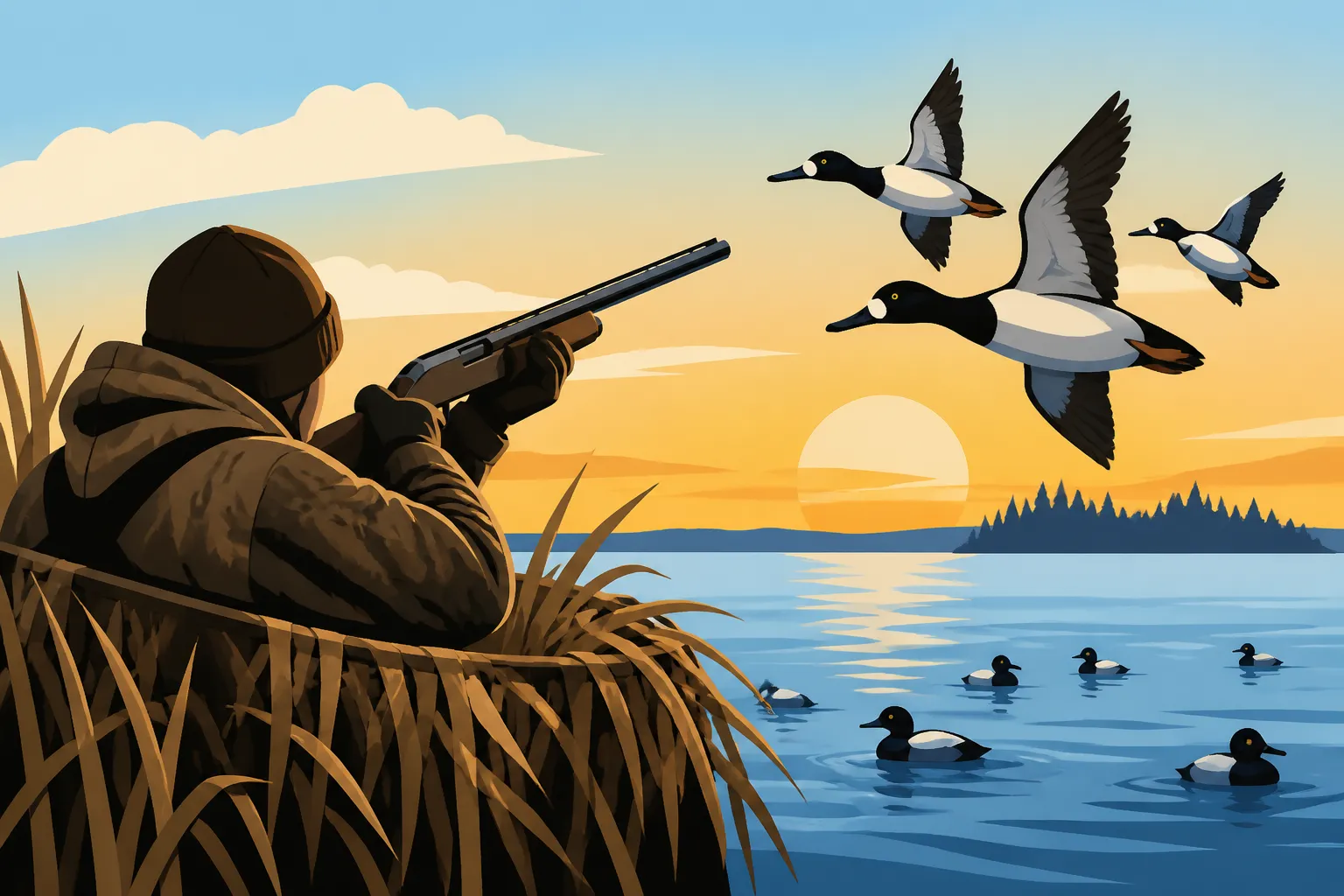
Diver Hunting on Mille Lacs Open Water
Hunting diver ducks on a massive, unforgiving lake like Mille Lacs can feel utterly overwhelming. You’re not dealing with a cozy pothole or a sheltered backwater; you’re up against vast open water, unpredictable weather, and ducks that fly fast and often far from shore. This guide is here to cut through the frustration, offering practical, on-the-water strategies and essential gear advice to help you confidently target diver ducks on Minnesota’s formidable Mille Lacs Lake.
Understanding Mille Lacs: A Diver Hunter's Perspective
Mille Lacs Lake, or "The Big Lake" as many Minnesotans call it, is an incredible body of water, but it demands respect, especially from duck hunters. It's a prime destination for diver ducks, but its sheer size and open nature present challenges unlike almost anywhere else in the state.
The Unique Challenges of Big Water
The first thing you realize when you plan a diver hunt on Mille Lacs is just how big it is. At over 132,000 acres, it's one of Minnesota's largest inland lakes. This means weather can change in a heartbeat. A calm morning can quickly turn into a white-capping gale that makes retrieving ducks dangerous, if not impossible. The waves on Mille Lacs can become truly substantial, easily swamping smaller boats or sending decoys scattering.
This open water also means there's less cover to hide in compared to marsh or river hunting. You're often dealing with flat horizons, making it tough to break up your silhouette. The ducks themselves are often miles from shore, requiring robust boats and a willingness to commit to offshore hunting. Unlike hunting in a smaller, sheltered area, you can’t just pull up to the bank. You’re dealing with wide expanses, often deep water, and a dynamic environment that requires constant vigilance and preparation. The currents, though not as strong as a river, can still subtly shift decoys and influence duck flight patterns, especially near points or submerged structures.
Key Species and Their Habits on Mille Lacs
Mille Lacs is a magnet for various diver duck species during the migration. Knowing what you're targeting and their typical behaviors is half the battle. Redheads, canvasbacks, bluebills (lesser scaup), goldeneyes, and buffleheads are common sights. Each has its own quirks.
- Redheads and Canvasbacks are often considered the "glamour birds" of diver hunting. They're big, fast, and often fly in large, impressive flocks. On Mille Lacs, you'll find them feeding in areas with submerged vegetation or on clam beds, particularly in shallower fringes or over specific reefs and flats. They tend to decoy well to large, spread-out rigs.
- Bluebills (Lesser Scaup) are incredibly numerous during migration and are staples for diver hunters. They are hardy ducks that will tolerate rougher water and can be found almost anywhere on the lake, often preferring slightly deeper water than redheads and canvasbacks but still keying into food sources. They decoy readily, especially to large numbers of decoys.
- Goldeneyes and Buffleheads are smaller, incredibly fast-flying divers. Goldeneyes are often found closer to shore or near rocky points and islands, diving for crustaceans and mollusks. Buffleheads, even smaller, are also common in these areas and can be quite numerous. While not typically the primary target of a "diver rig," they'll often buzz into spreads meant for larger ducks.
Understanding these species means knowing where they prefer to feed and rest on a massive lake like Mille Lacs. This insight is crucial for scouting and setting up your spread effectively. Tools like the GoHunt app, while often associated with big game, can be surprisingly useful for scouting these big water areas, allowing you to mark potential feeding flats or historical resting areas based on depth contours and bottom structure, helping you figure out where the ducks might be concentrating.
Essential Gear for Open Water Diver Hunting
Hunting Mille Lacs isn't a casual affair; it demands serious gear. You need equipment that can stand up to the elements, keep you safe, and effectively entice fast-flying divers.
Decoy Spreads and Rigging for Divers
When it comes to diver hunting on big water, more is often more. You're trying to create a visible, enticing "raft" of ducks that can be seen from a distance.
- Decoy Numbers: A successful diver spread on Mille Lacs often involves 50 to 100+ decoys. Large numbers give the appearance of safety and abundant food, drawing birds from afar. Think about a mix of species that frequent Mille Lacs—redheads, canvasbacks, and bluebills are excellent choices. Many hunters swear by having at least a few dozen canvasback decoys, as they are large and highly visible.
- Keel-weighted Decoys: On open water, decoys need to ride the waves naturally and remain stable. High-quality, keel-weighted decoys are essential. You don't want them flipping over or riding unnaturally.
- Long Lines (Gang Rigs): This is where diver rigging differs significantly from puddle duck hunting. Instead of individual weights, divers are typically set on long lines, often 50 to 100 feet long, with decoys clipped at intervals (e.g., every 5-10 feet). This allows you to deploy and retrieve many decoys quickly and efficiently. Each end of the line has a heavy anchor (5-10 lbs, or even more depending on conditions) to hold it in place. You’ll usually run multiple long lines to create a large V, J, or U-shaped spread, with an open "landing zone" for the ducks. Check out our guide on Decoy Spreads for Minnesota Divers for more specific patterns.
- Motion Decoys: While spinning wing decoys are popular for puddle ducks, they can sometimes look unnatural on open water. However, subtle motion decoys that mimic a duck dipping or feeding can add realism. Consider jerk strings or battery-operated "swimmer" decoys that create ripples.
The overall goal is a spread that looks natural, rides the waves well, and is substantial enough to attract attention on such a vast expanse of water.
Boat, Blind, and Safety Essentials
Your boat is your lifesaver and your mobile hunting platform on Mille Lacs. This is not the place for an undersized jon boat.
- Boat Choice: You need a stable, deep-V boat, at least 16-18 feet long, with a reliable motor. Think aluminum or fiberglass boats commonly used for walleye fishing on large lakes. A sturdy hull is paramount for handling rough water. Many hunters use larger utility boats like a Lund or Alumacraft, often with a powerful 4-stroke outboard. A kicker motor is also a very smart safety measure in case your main engine quits.
- Blinds: On open water, permanent natural cover is nonexistent. You'll either hunt from a specialized boat blind that mounts to your vessel or use a layout boat. Boat blinds are often custom-built frames covered in camouflage netting or fabric, designed to conceal hunters while still allowing for quick shooting. Layout boats, like those offered by Tanglefree or Fatboy, are low-profile, coffin-like boats that you lie down in, completely concealed amidst the decoys. They are incredibly effective but require a tender boat to deploy and retrieve them, and are definitely for the more extreme open-water hunter.
- Safety Gear: This is non-negotiable on Mille Lacs.
- Life Jackets (PFDs): Wear them. Always. Even experienced boaters can get into trouble quickly.
- Marine Radio/Cell Phone: A VHF marine radio is preferred for open water, as cell service can be spotty. Always have a fully charged cell phone in a waterproof bag as a backup.
- GPS/Chartplotter: Essential for navigation, especially if fog rolls in or you need to mark a specific submerged reef. Tools like GoHunt or similar mapping apps can serve this purpose on your phone or a dedicated GPS unit.
- Anchor: A heavy anchor (or two) with plenty of line is critical for holding your boat or layout blind in place.
- Foul Weather Gear: Hypothermia is a real threat. Always have extra layers, a dry bag with spare clothes, and high-quality rain gear.
- First Aid Kit: Always.
- Throw Cushion/Rescue Bag: For quick rescues.
- Paddle/Oars: Even with a kicker motor, a set of sturdy oars can save you in an emergency.
Remember, the DNR often has specific requirements for boats and safety equipment, especially for large bodies of water. Make sure you're compliant.
Clothing and Cold Weather Considerations
Minnesota diver hunting often means cold, wet, and windy conditions. Dressing correctly isn't just about comfort; it's about survival. You can learn more about Layering for a Minnesota Deer Stand and apply many of those same principles to waterfowl.
- Layering System: Start with a moisture-wicking base layer (synthetics or wool), add insulating layers (fleece, down, or synthetic puffies), and top it off with a waterproof and windproof outer shell. You want to be able to add or remove layers as conditions change.
- Insulated Waders: Good quality, insulated waders are essential, especially if you plan on deploying or retrieving decoys in shallow areas near points or bars. Even if you're in a layout boat, you might get wet setting up or retrieving downed birds. Refer to our guide on Waders for Minnesota Marsh Hunting for insights, though you'll want more insulation for big-water diver hunts.
- Gloves and Hats: You lose a lot of heat through your head, so a warm, waterproof hat is critical. Multiple pairs of gloves are a good idea—a thin pair for shooting, and thick, insulated, waterproof gloves for handling decoys and boating.
- Life Vest: As mentioned, always wear a life vest. Modern inflatable PFDs are low profile and allow for good range of motion for shooting.
The key is to stay dry and warm. Once you're wet and cold on Mille Lacs, it's a quick trip to misery and potential danger.
Strategies for Successful Diver Hunting on Mille Lacs
Now that you've got the gear, how do you put it all together to actually find and harvest birds on this behemoth of a lake? It's about combining scouting, understanding conditions, and smart setup.
Scouting and Reading the Lake
You can't just show up on Mille Lacs and expect to find birds. Pre-season scouting, and even mid-season adjustments, are crucial.
- Aerial Maps and Depth Charts: Before you even launch the boat, study detailed maps. Look for submerged islands, rock reefs, sand flats, or areas where current might concentrate food sources. Mille Lacs is relatively shallow across much of its expanse, but identifying these specific features is key. Tools like the GoHunt app or a good lake map on your chartplotter can show you contour lines, bottom composition, and potential structure where divers might feed. The DNR also offers excellent maps detailing lake depths and bottom types.
- "Glassing" from Shore: Drive around the lake's perimeter or use public accesses with good vantage points (like beaches or parks). With powerful binoculars or a spotting scope, scan for rafts of ducks. This tells you where they are feeding and resting. Pay attention to how they are using the lake—are they close to shore, or miles out?
- Monitoring Migration Patterns: Stay informed about Minnesota Waterfowl Migration Timing. Early season might bring different birds than late season. Fronts moving through the state can push in new waves of divers. News from other hunters, online forums, and DNR reports can all be valuable.
- Wind and Weather: Learn to interpret weather forecasts specifically for Mille Lacs. Strong winds from certain directions will make some areas unfishable (and unhuntable), while others might be more protected or funnel birds better. Use resources like NOAA marine forecasts, not just general land-based forecasts.
Remember, divers are dynamic. What worked yesterday might not work today. Be ready to move and adapt based on what you see.
Setting Up for Success: Location and Wind
Once you have a general idea of where birds are, the next step is a strategic setup. This is where the big water really makes a difference.
- Picking Your Spot:
- Relief and Structure: Look for subtle relief changes on the bottom, like the edges of rock reefs or sand flats. Divers feed on the bottom, so areas with abundant food are key.
- Wind Breaks (if any): If the wind is howling, look for the lee side of islands or prominent points that offer even a small amount of protection from the wind and waves. This can be critical for comfortable hunting and safe decoy deployment/retrieval.
- Flight Paths: Observe how ducks are flying into areas. Are they following a specific contour, point, or line? Try to position your spread to intercept these flight paths.
- Utilizing the Wind: On open water, the wind is your friend and your enemy.
- Decoy Movement: Wind creates natural movement in your decoys, making them look alive. Position your spread so the wind catches the decoys, creating ripples and bobbing action.
- Landing Zones: Always set up your decoys with a clear landing zone upwind of your position. Ducks, especially divers, almost always land into the wind. Your blind should be at the "top" or "apex" of your spread, allowing birds to cup their wings and commit directly into your shooting hole.
- Boat Concealment: Use the wind and waves to your advantage for concealment. In rougher conditions, your boat might settle lower in the water, and the choppiness can help break up your silhouette. However, never compromise safety for concealment.
- Spread Patterns: While you'll use long lines, the overall shape matters. A "J" or "V" pattern is common, with the hook or apex pointing upwind. This creates an inviting funnel for ducks to fly into. You want the ducks to focus on the decoys, not on your blind. A common setup is running two long lines parallel to each other, about 20-30 yards apart, with individual decoys or shorter "mini-lines" connecting them or filling in the middle. The goal is to make it look like a large, relaxed feeding raft.
Remember that Mille Lacs is a public waterway. Check the Minnesota Duck Zone Boundaries and any specific regulations for the lake. Being aware of other hunters and giving them space is crucial for a safe and enjoyable hunt.
Calling and Ethical Shooting Practices
Calling divers is different than calling mallards, and responsible shooting is paramount.
- Diver Calling: Diver ducks are not typically "talked into" decoys with long, elaborate routines. Instead, diver calls are usually short, sharp "brrrp" or "purr" notes, often used to get their attention and then to affirm their decision to come in. The focus is more on getting their eyes on your spread and making it look inviting. A simple diver whistle or a mouthpiece call mimicking scaup or redhead calls can be effective. Less is often more.
- Patience and Commitment: Divers are fast. They commit hard, but if they see something wrong, they're gone in an instant. Don't call excessively when they're working the spread. Let the decoys do the work.
- Clean Kills: Because of the open water and often cold conditions, making clean, ethical kills is incredibly important. A wounded diver can be difficult, if not impossible, to retrieve in heavy waves.
- Know Your Range: Practice with your shotgun and loads before the season. Know your maximum effective range, typically 30-40 yards for most waterfowl loads.
- Target One Bird: Pick a single bird and focus on it. Don't "flock shoot."
- Nontoxic Shot: Remember that Nontoxic Shot Is Required in Minnesota for waterfowl hunting. Steel, bismuth, or tungsten loads are necessary. Ensure you have the right shot size for divers—BB, 1, or 2 are common.
- Retrieval: A well-trained retriever is an invaluable asset for diver hunting. If you don't have one, be prepared for potentially difficult hand retrieves, especially in big waves. A long gaff or a boat hook can be useful. Never risk your safety to retrieve a bird. It’s simply not worth it. After a successful day, remember to properly care for your Minnesota Duck Daily Bag Limit and adhere to registration rules. Also, don't forget your Minnesota Federal Duck Stamp Requirement and Minnesota Migratory Game Bird Certification.
Diver hunting on Mille Lacs can be a humbling but incredibly rewarding experience. It's a true test of a waterfowler's skill, gear, and resolve, but with the right preparation, you can experience some of the most exciting duck hunting Minnesota has to offer.
Disclaimer
The information provided in this guide is for informational purposes only and is not a substitute for professional advice or current hunting regulations. Always consult the official Minnesota Department of Natural Resources (DNR) hunting regulations for the most up-to-date rules, seasons, and licensing requirements before heading afield. Hunting involves inherent risks; always prioritize safety and respect wildlife and the environment.