Reading a Pothole for a Morning Flight
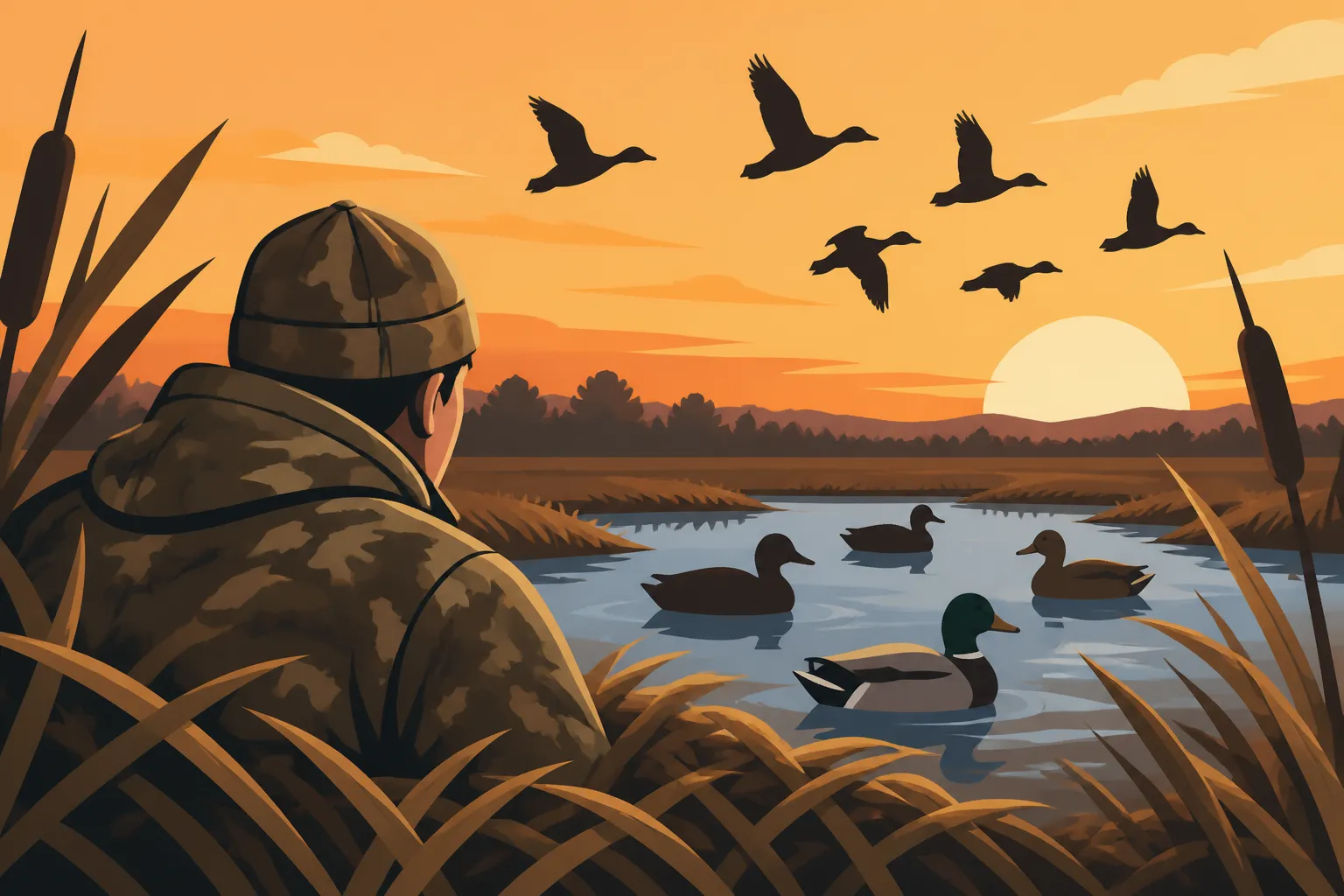
There's nothing quite like the anticipation of a crisp Minnesota morning, the chill air biting at your cheeks, as you await the first whispers of wings overhead. But the heartbreak comes when you’ve hauled all your gear into a promising-looking pothole, set your decoys, huddled in your blind, only for the sky to remain stubbornly empty. This guide is all about giving you the edge, teaching you how to "read" those often-overlooked potholes so you can be right where the ducks want to be, turning those empty skies into productive hunts.
Understanding the Allure of Minnesota's Potholes for Waterfowl
Potholes are the unsung heroes of Minnesota waterfowl hunting, especially in the prairie and transition zones. They're not the sprawling, majestic lakes, nor the vast, flowing rivers. Instead, they're often small, shallow depressions, relics of glacial activity, dotting the landscape. Many hunters overlook them, favoring larger bodies of water, which is precisely why they can be so good. These smaller, more secluded spots offer ducks crucial resources and a sense of security.
The Lure of Shallow Water
Ducks, particularly puddle ducks like mallards, teal, and wood ducks, absolutely love shallow water. Why? Because it’s where their food is! They're dabblers, meaning they tip their bodies forward, tails up, to feed on aquatic vegetation, seeds, and invertebrates just beneath the surface. Deep water offers them little in the way of sustenance they can easily reach. A pothole with a rich, mucky bottom and emergent vegetation is a duck magnet. Think of a shallow area where wild rice or smartweed grows abundantly – that's prime real estate for a hungry bird. You might even find them staging in these shallow waters during the Minnesota Waterfowl Migration Timing, especially during cooler fronts when they need to refuel.
The frustration often stems from seeing a pothole on a map and assuming it's good, only to find it's either too deep, too devoid of food, or too exposed. Ducks are smart; they're looking for an easy meal in a safe spot. If the water's too deep, or the bottom is barren, they'll pass right over it for another spot. It's not just about water being there; it's about the right kind of water.
Water Levels and Vegetation
The dynamic nature of potholes means their attractiveness can change dramatically from year to year, or even week to week, depending on rainfall and seasonal conditions. A low-water year might expose vast mudflats, concentrating food sources and attracting thousands of birds. Conversely, a high-water year could flood out valuable vegetation, making a once-great spot less appealing. It's a constant puzzle to solve.
You’re really looking for that sweet spot: water shallow enough for dabbling, but deep enough to offer some security from predators. The presence and type of vegetation are also critical. Submerged vegetation like sago pondweed or coontail, and emergent plants like cattails, bulrushes, and smartweed, provide both food and vital cover. Cattails, for instance, aren't just for hiding your blind; they offer protection from the wind and can hold birds securely. When scouting, pay close attention to the edges of these vegetation lines. These are often the travel corridors and feeding zones for ducks. Too much open water, and birds might feel exposed; too much thick cover, and they might not be able to land or see a good feeding area. It's a delicate balance you need to discern.
Key Elements to Scout for Success
Scouting is where your hunt truly begins. You wouldn't just show up to deer camp without checking trail cameras or walking the woods, right? The same goes for waterfowl. Especially with potholes, which can be fickle, thorough scouting is non-negotiable. This is where you put in the legwork to separate the duds from the diamonds.
The Right Habitat Mix
When you're out scouting, you're not just looking for water; you're looking for the entire ecosystem a duck needs to thrive. The ideal pothole isn't just a puddle; it's a miniature haven. Look for a mosaic of open water, emergent vegetation, and even some dry land nearby. Open water provides landing zones, especially for mallards and larger puddle ducks. The emergent vegetation, like stands of cattails, bulrushes, or even smartweed, offers crucial concealment for you and your blind, but more importantly, safety and loafing areas for the birds.
Consider what's around the pothole too. Is it surrounded by agricultural fields, like corn or bean stubble? These provide an additional food source that ducks will utilize after their morning dip. Or is it nestled in native grasslands, which offer insects and seeds? The combination of aquatic food, dry field food, and secure roosting/loafing cover makes a spot irresistible. A common frustration is finding a pothole that looks good on its own but is isolated from other food sources, leading to only transient birds. You want a "destination" pothole, not just a pit stop. Think about how deer use different parts of their habitat; ducks do the same.
Identifying Entry and Exit Points
Just like deer have travel routes, ducks often have preferred flight paths into and out of a pothole. This is crucial for your setup. Observe how birds approach the water. Do they follow a tree line? Come in over a low spot in a ridge? Or perhaps they follow a drainage ditch that leads them right to the water's edge? Wind direction plays a huge role here, but even on calm days, ducks tend to use the path of least resistance or the most concealed approach.
Spending time watching birds at dawn or dusk will reveal these patterns. Note where they pitch down and where they lift off. These entry and exit points are often where you'll want to place your decoy spread to give them confidence, and where you'll need to be hidden to get the best shots. Sometimes, a narrow funnel of trees or a break in a cattail line acts as a natural entrance. Understanding these points allows you to optimize your spread and concealment, making your setup appear natural and inviting to incoming birds. Don't be afraid to move your blind a few yards if you notice birds consistently favoring a slightly different approach.
Using Technology for Recon
In this modern age, we have incredible tools at our fingertips that can drastically cut down on blind scouting missions. Aerial imagery, topography maps, and even landowner information are easily accessible. Before you ever lace up your boots, fire up an app like GoHunt. This isn't just for big game; the detailed satellite imagery is phenomenal for identifying potential duck hotspots. You can spot the classic "duck potato" shape of a pothole, see the variations in vegetation density, and even pick out subtle changes in water color that might indicate depth or bottom composition.
Use the layers in GoHunt or other mapping apps to look for public land access points, like Minnesota Waterfowl Production Areas or Minnesota Wildlife Management Areas. These apps can show you field boundaries, elevation changes, and proximity to agricultural fields. I've personally used these tools to find hidden potholes that weren't visible from the road, tucked away behind a stand of trees or a slight rise. You can mark potential blind locations, plan your access routes, and even identify potential areas for Layout Blinds and Marsh Boats if the water is too open for natural cover. This digital recon saves you time and energy, allowing you to focus your physical scouting on the most promising locations. It also helps you avoid trespassing, which is always a good thing.
Setting Up for the Morning Flight
So you've scouted, you've found your honey hole, and now it's time to set the stage for that glorious morning flight. Your setup is paramount – it's the difference between ducks circling confidently within range and flaring wildly at 60 yards. Every detail, from your decoy placement to your personal concealment, matters.
Decoy Spreads for Potholes
When hunting potholes, simplicity and realism often win the day. You don't need hundreds of decoys like you might for Diver Hunting on Mille Lacs Open Water. For a small pothole, a dozen to two dozen decoys, primarily mallards, with a few pintails or teal mixed in, can be incredibly effective. The goal is to mimic a small, contented flock feeding and resting.
Consider the "J-hook" or "U-shape" spread, leaving an open landing zone directly in front of your blind, downwind. Ducks naturally land into the wind, so understanding the prevailing wind direction for the morning is critical. Place your feeding decoys at the top of the "J" or "U" and a few "loafing" decoys slightly outside the main group to give the impression of a relaxed flock. Some hunters swear by a small number of active "motion" decoys, like a jerk string rig or a spinner wing, to add movement and draw attention. However, on heavily pressured public land, sometimes less is more, as too much motion can make birds wary. If you're targeting early season teal, a specific spread of teal decoys can be incredibly effective, especially during the Minnesota Early Teal Season Dates. Don't forget to adjust your spread based on the size of the pothole and the number of birds you're seeing; an overly dense spread in a small area can look unnatural.
Concealment is Key
No matter how perfect your decoy spread, if the ducks see you, the jig is up. Concealment for pothole hunting often means using natural cover. Cattail stands, bulrushes, or willow thickets are your best friends. If natural cover is sparse, you might need a ground blind, carefully brushed in with local vegetation to break up its outline. Sometimes, simply kneeling in a dense patch of reeds is all you need.
The most common mistake hunters make is not paying attention to their silhouette or the sun's position. Hunt with the sun at your back if possible, especially during the morning flight, to keep it out of the birds' eyes and make your blind less visible. Also, think about your entry and exit from the blind. Spooking birds on your way in can ruin the entire morning. Plan a concealed route, possibly even using Entry Routes Through a Cattail Slough or a low ditch. If you're out on a more open pothole, you might need to consider a layout blind, particularly if it's near agricultural fields. Your goal is to blend seamlessly into the environment, becoming just another part of the landscape. And remember, even a slight shift in wind can expose you, so be ready to adjust.
Reading the Ducks and Adapting on the Fly
Even with the best scouting and setup, duck hunting is rarely a set-it-and-forget-it affair. The most successful hunters are those who constantly observe, analyze, and adapt. Ducks are constantly communicating and reacting to their environment, and learning to read those cues is a skill that comes with practice.
Flight Patterns and Wind
Wind is arguably the single most important factor in duck hunting, especially in potholes. As mentioned, ducks land and take off into the wind. This means the wind dictates their approach direction, and consequently, where you should be facing and where your open landing zone should be. A shifting wind can completely change a perfect setup into a bust. Always bring a wind checker or simply observe the reeds and water surface for subtle shifts.
Pay attention to how ducks are working your spread. Are they circling wide? Are they flaring short? These are critical clues. Wide circles often mean they're wary, perhaps seeing something unnatural about your spread or blind. Flaring short could mean they're seeing movement in your blind or that your decoys are too close to the edge of the landing zone, making them uncomfortable. If birds are coming in but not committing, it's time to adapt. This might mean moving your blind, adjusting decoy placement, or even changing your calling strategy. Sometimes, just sitting still and being patient is the best adaptation. Observe their specific Minnesota Duck Daily Bag Limit behaviors; are they mostly mallards? Or a mixed flock with a few early season wood ducks? This can influence your call choices.
Calling Strategies
Duck calling is an art, not a science, and context is everything. In a small pothole, loud, aggressive calling can often be counterproductive, scaring away rather than attracting birds. Think subtle and conversational. A soft "hail call" to get their attention, followed by a series of quiet "feeding chuckles" and "greeting calls," often works best. The goal is to sound like a small, happy flock feeding peacefully.
However, if birds are flying high and seem uninterested, a louder "comeback call" might be necessary to grab their attention. Once they turn, revert to softer, more reassuring calls. The key is to respond to the birds' reactions. If they're heading away, call louder. If they're coming in, call less or just a soft chuckle. Don't be afraid to experiment with different calls and volumes. Sometimes, a series of short, sharp "whistles" can effectively draw in teal or wood ducks. Carrying a variety of calls – a mallard call, a pintail whistle, and a teal call – can be incredibly beneficial. Learning to read the ducks' body language and vocalizations is as important as knowing how to blow your call.
Here’s a quick checklist to help you read and adapt to those Minnesota potholes:
| Pothole Feature/Observation | What it Means for Ducks | Your Adaptation/Action |
|---|---|---|
| Shallow Water | Excellent feeding area for dabblers. | Focus scouting here; set decoys in shallowest areas. |
| Dense Emergent Veg. | Good cover, potential food source, loafing area. | Use as natural blind; find breaks for landing zones. |
| Open Water surrounded by fields | Attracts birds looking to feed and rest. | Place decoys in open water, blind on field edge. |
| No visible birds | Could be too early, too late, or a dead hole. | Relocate; review Minnesota Waterfowl Migration Timing. |
| Birds circling wide, not committing | Wary, seeing something unnatural, or wind shift. | Check blind concealment, adjust decoy spread, reassess wind, lessen calling. |
| Birds flaring short | Seeing movement, too much calling, or bad decoy placement. | Freeze, reduce calling, check decoy spacing (leave big landing zone). |
| Birds landing upwind of spread | Decoys not positioned correctly for wind. | Adjust spread to place landing zone downwind of blind. |
| Wind shifts mid-hunt | Changes flight path, blind exposure. | Re-evaluate blind position, re-angle decoys for new wind. |
| Lots of local birds, few migrators | Early season; focus on common species like mallards, wood ducks. | Use common duck calls; smaller, natural spreads. |
| Mixed species, new birds daily | Peak migration; be ready for anything. | Vary calls, have diverse decoy spread; check Minnesota Duck Zones and Seasons. |
Final Thoughts on Pothole Hunting
Hunting Minnesota's potholes for a morning flight is a uniquely rewarding experience. It demands attention to detail, patience, and a willingness to adapt. From using mapping apps like GoHunt to pick out promising spots and plan your approach, to mastering the subtle art of decoy placement and calling, every step is crucial. Don't get discouraged if a spot doesn't produce immediately; the beauty of potholes is their dynamic nature. Keep scouting, keep learning, and you'll find those magical mornings when the ducks drop in right where you want them, making all the effort worthwhile. Remember, a comfortable pair of Waders for Minnesota Marsh Hunting and warm layers for a Cold-Weather Sitting Strategy in Minnesota can make all the difference to your enjoyment and ability to stay put until the birds commit!
Disclaimer
Hunting is an inherently dangerous activity. Always prioritize safety, understand and follow all Minnesota Department of Natural Resources regulations, and respect private property. This guide is for informational purposes only and does not supersede official hunting regulations or safety guidelines.