Hunting Teal During the Early September Season
The early September teal season in Minnesota is a gift, offering a quick, intense burst of waterfowl action before the main duck opener. But let's be honest, trying to figure out where these speedsters are going to be, how to set up, and what rules apply can feel like trying to nail jello to a tree. This guide is all about cutting through that confusion, helping you understand the regulations, pinpoint those shy little ducks, and get your decoys in the right spot for some fast-flying fun.
Understanding Minnesota's Early Teal Season Regulations
The allure of early teal season is undeniable – a chance to get out in the marsh, hear the whistling wings, and enjoy those crisp morning air before the crowds descend for the traditional duck opener. However, it's not simply a free-for-all. Minnesota, like all states, has specific rules designed to manage this unique hunting opportunity, and understanding them is your first step to a successful and legal hunt. It’s not just about knowing when to shoot, but what to shoot and where.
Key Dates and Legal Species for Teal Season
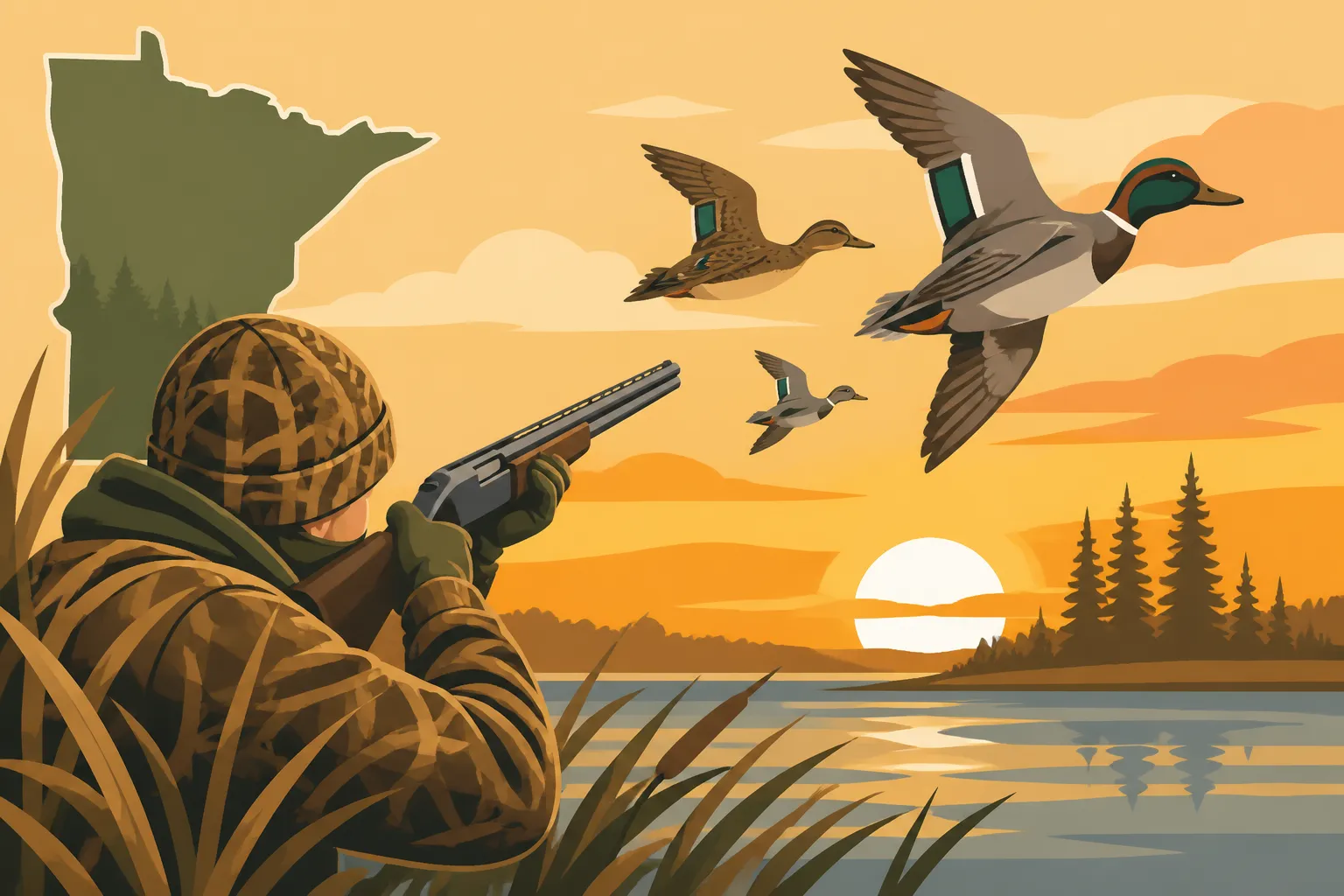
First and foremost, you absolutely need to know the Minnesota Early Teal Season Dates. This isn't a season that runs for months; it's a short, specific window, often just a week or two, in early September. Missing these dates means missing the entire opportunity, so mark your calendar as soon as the DNR announces them. Typically, it coincides with the first or second week of September, making it a perfect transition from summer scouting to autumn hunting. Beyond the dates, the "what" is crucial: only blue-winged, green-winged, and cinnamon teal are legal to harvest during this early period. You cannot shoot other duck species, even if they're mixed in with a flock of teal. This requires quick identification skills, especially when birds are zipping in low light. Misidentifying a hen mallard or a wood duck could lead to a violation, and nobody wants that. It's a real challenge, especially for new hunters, to tell the difference at speed, but practice and patience are key.
The daily bag limit for teal is also something to commit to memory. While the Minnesota Duck Daily Bag Limit changes for the general season, early teal season often has its own generous limits, reflecting the abundance and short migration window of these birds. For example, it's not uncommon to see a daily limit of six teal. This can be a fantastic opportunity to fill your freezer, but only if you stick strictly to teal. Possession limits also apply, meaning you can only have a certain number of ducks in your possession, whether at home or in the field, over multiple days. Always double-check the current year's regulations published by the Minnesota Department of Natural Resources (DNR) to ensure you're compliant. Regulations can sometimes shift slightly year to year based on population surveys and habitat conditions, so a quick check online or with your physical regulations booklet is always wise.
License, Stamps, and Certification Requirements
Just like any other migratory bird hunting, early teal season comes with its own set of paperwork. You can't just grab your shotgun and go. At a minimum, you'll need a valid Minnesota small game hunting license. But wait, there's more! Because teal are migratory birds, you also need the Minnesota Migratory Bird Stamp, which is usually a state-specific requirement. Then there's the big one: the Federal Duck Stamp. This stamp is mandatory for all waterfowl hunters 16 years of age or older across the entire country. Without it, your hunt is technically illegal. These stamps contribute directly to waterfowl conservation and habitat preservation, so while they're an added cost, they're essential for the future of the sport.
Beyond the stamps, you also need to ensure you have your Minnesota HIP Certification for Bird Hunters. HIP stands for Harvest Information Program, and it’s a nationwide program where hunters register annually to provide data on their migratory bird harvests. This data is crucial for wildlife managers to set seasons and bag limits in future years. It’s typically a free, quick registration process when you buy your license, but it's often overlooked. Many hunters mistakenly think buying a duck stamp is enough, but HIP certification is a separate, critical step. Finally, remember that all shot used for waterfowl hunting in Minnesota, including teal, must be non-toxic. This means no lead shot. Steel, bismuth, or tungsten-based loads are the standard. The rule exists to prevent lead poisoning in waterfowl and other scavengers. You can find more details on Where Nontoxic Shot Is Required in Minnesota, but generally, if you're hunting ducks or geese, assume you need non-toxic shot. For a quick reference, here's a checklist:
| Requirement | Description |
|---|---|
| Small Game License | Valid Minnesota small game hunting license. |
| MN Migratory Bird Stamp | State-specific stamp for migratory birds. |
| Federal Duck Stamp | Required for all waterfowl hunters 16+ years old. |
| HIP Certification | Annual Harvest Information Program registration. |
| Non-Toxic Shot | Only steel, bismuth, or tungsten-based loads are permitted for waterfowl. |
Scouting for Early Season Teal Hotspots
You can have the best gear, the perfect calling technique, and a strong understanding of the regulations, but if you're not in a spot where teal want to be, you're just sightseeing. Teal, especially blue-wings, are early migrants. They're often the first ducks to move through Minnesota, meaning they hit shallow, food-rich waters and don't stick around long once the weather starts to hint at autumn. Effective scouting isn't just a suggestion; it's the absolute backbone of a successful early teal hunt. It's about knowing where they're coming from, where they like to rest and feed, and when they're likely to be there.
Identifying Prime Teal Habitat in Minnesota
Teal are lovers of shallow water. Forget the big, deep lakes for early season; you're looking for ephemeral potholes, flooded agricultural fields, shallow margins of larger lakes, and especially the often-overlooked cattail sloughs and small marshes. These are typically the first places to warm up in the sun, leading to a burst of aquatic invertebrate life and lush emergent vegetation like smartweed and sedges, which are prime food sources. Think small, think muddy, think buggy. These are the nurseries for insects, which are a major part of a teal's diet. Often, these spots are on public lands such as Wildlife Management Areas (WMAs) or Waterfowl Production Areas (WPAs), which are managed specifically for waterfowl. When scouting, pay close attention to the water levels. After a dry summer, some usual hot spots might be too low, or even dry, pushing birds to other areas. Conversely, a wet summer might have flooded new areas, creating temporary teal heaven.
A great tool for identifying these potentially productive areas before you even put boots on the ground is a robust mapping application. Many hunters rely on digital mapping platforms like GoHunt, which allows you to overlay public land boundaries, topo maps, and aerial imagery. This can help you find those hard-to-reach potholes or the forgotten back corners of a WMA that might hold birds away from pressure. Zoom in on areas with a mix of emergent vegetation, open water, and proximity to larger bodies of water where birds might loaf during the day. Don't be afraid to try scouting new areas each year, as water conditions and food availability can change drastically. Remember the old saying: "If you want to find ducks, go where the ducks are." For teal, this means shallow, vegetated water.
Pre-Season Scouting Techniques and Timing
The timing of your scouting is almost as critical as the location. Blue-winged teal in particular are some of the earliest migrants. They don't dilly-dally once August rolls into September. So, your scouting needs to happen in the weeks leading up to the season opener. Start in mid-August. Use binoculars or a spotting scope from a distance to avoid disturbing the birds. Drive slowly down gravel roads bordering likely wetlands during dawn and dusk. Look for tell-tale signs: nervous flights of ducks, quick landing and taking off, and especially groups of small ducks that seem to disappear into the vegetation. Pay attention to how they fly – teal have a distinctive, erratic, almost 'bullet-like' flight pattern.
One of the most effective scouting methods is simply to watch for activity. If you see groups of small ducks pitching into a particular slough at last light, you've found a roosting or feeding spot. If you see them pouring out of a field or marsh at dawn, you've found a likely feeding area. Don't just look for ducks on the water; look for them in the air, entering and leaving. Consider using a tool like the Minnesota Recreation Compass App to help identify public lands and their access points. Even if you don't see massive flocks, a steady trickle of small groups of teal indicates a reliable flyway or feeding ground. Remember, teal are social birds; if you find one, you're likely to find more. They're also often quite comfortable with each other, so observing their behavior can tell you a lot about how pressured a spot is or how good the feeding is. Don't forget that scouting isn't a one-and-done affair; check these spots several times leading up to the season, as bird movements can change with weather fronts and feeding patterns.
Essential Gear and Setup for Teal Hunting
Early teal season in Minnesota is usually warm, sometimes even hot, with bright sunshine. This isn't the bone-chilling cold of late-season diver hunting. So, your gear choices should reflect these conditions. You want to be comfortable, concealed, and efficient without overdoing it. Unlike the main duck season, you don't always need a massive spread of decoys or heavy-duty winter clothing.
Decoys, Calls, and Concealment
When it comes to decoys for teal, a small, simple spread is often all you need. Teal are not particularly wary of decoys, and they respond well to visibility. A half-dozen to a dozen teal decoys (blue-wing, green-wing, or a mix) are usually sufficient. Place them in a loose "J" or "U" pattern, leaving an open landing zone right in front of your blind. If you don't have dedicated teal decoys, a few smaller puddle duck decoys like pintails or wigeon can work, but try to avoid large mallard decoys, as they can sometimes deter smaller teal. Motion decoys, such as a spinning-wing decoy or a "pulsator" that creates ripples, can be incredibly effective at drawing in high-flying teal, especially on calm mornings. A small quiver of decoys makes for light packing, which is a big plus when you're hoofing it into a secluded marsh.
Concealment is paramount. Teal have excellent eyesight, and even a slight silhouette against the sky can send them flaring. Given the often-lush green vegetation of early September, a natural blind brushed in with cattails, smartweed, or dogwood is usually ideal. If you're hunting a field edge, a layout blind is perfect. Many hunters find that simply sitting amongst a thick clump of cattails or in a ditch can offer enough cover. Avoid wearing bright colors; stick to camo patterns that blend with the surrounding environment. A camo face mask or face paint can also make a huge difference, breaking up the outline of your face. Remember that the sun will be coming up early, so consider its position when setting up your blind to avoid being silhouetted. Sometimes, the best blind is no blind at all, but rather just blending in with the natural cover.
As for calls, a simple teal whistle is highly effective. Blue-winged and green-winged teal both respond well to a high-pitched whistle, mimicking their excited chatter. You don't need a fancy, expensive call for teal; a basic whistle will do the trick. A standard duck call can also be used for a basic "feed chuckle" to add some realism to your spread, but the whistle is often the primary tool for attracting teal. Practice a bit before the season so you can produce a clear, sharp whistle that carries across the marsh.
Clothing and Footwear for Warm Weather Hunting
Early September in Minnesota can still feel like summer, with temperatures rising quickly after sunrise. Layering is always smart, but lean towards lighter, breathable fabrics. A good moisture-wicking base layer can help prevent overheating and keep you comfortable. Avoid heavy waterproof jackets unless rain is in the forecast. Instead, focus on a good, lightweight, waterproof outer shell that you can easily shed if the sun breaks through. Blaze orange is not required for waterfowl hunting, but you should still prioritize safety. You can find more information about Minnesota Blaze Orange Requirements for different types of hunting if you're curious.
Footwear is crucial, especially if you're slogging through mucky marshes or wading into shallow potholes. Hip waders or chest waders are essential for accessing many prime teal spots and setting up decoys in deeper water. Choose a pair that is comfortable for walking and won't get bogged down in mud. Neoprene waders are generally too warm for early season; lightweight breathable waders are much more suitable. Make sure your boots have good traction, as marsh bottoms can be notoriously slick. Don't forget bug spray! Early September in the marsh is prime mosquito territory, and deer flies can be relentless. A head net can also be a sanity saver if the bugs are particularly bad. A good pair of polarized sunglasses will help you spot incoming birds against the glare of the water and sky. For those longer hauls into remote areas, a game vest or a light backpack can help carry your decoys, shells, and other essentials without weighing you down too much.
Effective Tactics for Decoying and Shooting Teal
You've done your scouting, got your gear, and understand the rules. Now it's time to put it all together. Hunting teal is a fast-paced game, often requiring quick decisions and even quicker reflexes. They come in hot, circle once or twice, and if they don't like what they see, they're gone in a flash.
Optimizing Decoy Spreads and Calling Techniques
The goal with your decoy spread is to create a welcoming, natural-looking scene that invites teal to commit. As mentioned, a small, loose spread of 6-12 teal decoys with an open landing zone is often perfect. Position your decoys so that the prevailing wind will push incoming birds into your shooting lane, usually right in front of your blind. Teal like to land into the wind, so understanding the wind direction is key to your setup. If you have spinning-wing decoys, place them prominently where they can catch the sunlight and be easily seen from a distance. Their flashing motion is often irresistible to passing teal. Some hunters even combine a spinning-wing decoy with a few floating teal decoys in a small puddle for a very active-looking setup.
When calling, remember that less is often more. Teal are chatty, but you don't need to blast a call constantly. Use short, excited whistles to grab their attention when they're far out, and then scale back to softer, more subtle whistles as they approach. If they're cupping their wings and committing, stop calling and get ready to shoot. Overcalling can sometimes flare birds, especially if your calling sounds unnatural. Pay attention to how the birds react; if they respond positively, keep doing what you're doing. If they seem hesitant, try varying your calls or going silent. It's a bit of an art form, but with practice, you'll learn to read their body language. Remember that Reading a Pothole for a Morning Flight requires observation – watching how birds naturally use the wetland will inform your setup.
Shooting Strategies and Common Mistakes
Teal are incredibly fast, agile flyers. This is not like shooting at slow-moving geese or large, lumbering mallards. You'll need to lead them more than you think, often significantly more. Many hunters find success with a modified or improved cylinder choke, combined with smaller shot sizes like 6 or 7 steel. This combination provides a good pattern density for these smaller birds without over-choking, which can lead to missed shots at close range. When a flock commits and comes into your decoys, resist the urge to jump up and shoot too early. Let them cup their wings, drop their feet, and commit to the landing zone. The closer they are, the easier the shot, and the cleaner the kill.
A common mistake is getting too excited and rushing the shot. Breathe, pick a bird, swing through it, and follow through. Don't just point and shoot. Another mistake is trying to take down multiple birds in a single volley. Focus on one bird at a time; shoot, cycle your gun, and then pick another if the opportunity arises. Often, the first shot will cause the flock to flare, presenting new, challenging shots. Practice your swing and lead on clays before the season to get comfortable with fast-moving targets. Pay close attention to your ethical responsibilities – only shoot at birds you can identify as legal teal, and only at ranges where you're confident of a clean kill. A quick, clean kill is always the goal. Consider taking a moment after you shoot to identify downed birds and mark their location, especially if they fall into thick cover. You'll thank yourself later when you're trying to find a bird in the dense cattails.
Maximizing Your Minnesota Teal Hunt Success
Beyond the basic tactics, there are always little things that can make a big difference, especially in the unique conditions of early September in Minnesota. Thinking ahead about logistics, safety, and enjoying the experience will set you up for success.
Accessing Public Lands and Private Land Considerations
Many of the best teal spots in Minnesota are found on public lands, particularly the numerous Wildlife Management Areas (WMAs) and Waterfowl Production Areas (WPAs). These lands are specifically managed for wildlife and public access, making them ideal for new and experienced hunters alike. Using online mapping tools like GoHunt, or the DNR's own Recreation Compass, you can easily identify public land boundaries and potential access points. Be mindful of parking regulations and respect any posted signage. Sometimes, the best spots are a little walk-in, so a good pair of boots and a willingness to carry your gear can pay off.
However, public land can also see significant pressure, especially on opening weekend. Don't be afraid to explore smaller, less obvious potholes or sloughs that others might overlook. These often hold just as many birds and offer a more peaceful hunt. For hunters considering private land, always remember to secure permission before you step foot on the property. Knocking on doors in farm country and politely asking for permission is a time-honored tradition and often yields fantastic results, especially for smaller, overlooked wetlands. Always respect the landowner's property and leave no trace. It’s important to understand Minnesota Trespass and Permission Law to ensure you're always hunting legally and ethically.
Safety, Decoy Retrieval, and Post-Hunt Considerations
Safety should always be your top priority. Ensure your shotgun is in good working order, always point the muzzle in a safe direction, and be absolutely certain of your target and what's beyond it before pulling the trigger. With multiple hunters, clearly communicate shooting lanes and make sure everyone knows where others are positioned. Alcohol and hunting don't mix. Bring plenty of water to stay hydrated, especially on warm mornings, and be aware of your surroundings – snakes, ticks, and deep mud can all be hazards in the marsh.
After a successful shot, retrieving your downed birds quickly is crucial. A good retriever dog is invaluable for this, but if you don't have one, consider bringing a Marsh Boats and Push Poles for deeper water or a long retrieving pole for birds that fall into thick cover. Waders are also essential for wading out to retrieve birds. Teal are small and can be easily lost in dense vegetation. Once retrieved, cool your birds down as quickly as possible. Early September temperatures can spoil game meat fast. A cooler with ice is essential. Field dressing your birds as soon as possible, even right in the marsh, can help prevent spoilage. Consider packing some game bags to keep your birds clean and protected during the trek out. Finally, remember to officially register your harvest if required by any special regulations, although generally, ducks are not individually registered like deer or bear. Just keep an accurate count for your daily and possession limits. Enjoy the delicious reward of your efforts – teal make for excellent table fare!
Disclaimer
The information provided in this article is for general guidance and informational purposes only, and does not constitute legal advice. Hunting regulations in Minnesota can change annually. It is the responsibility of the hunter to consult the most current Minnesota Department of Natural Resources (DNR) regulations and local ordinances before engaging in any hunting activities. Always prioritize safety and ethical hunting practices.