Headlamps for Walking Out After Dark
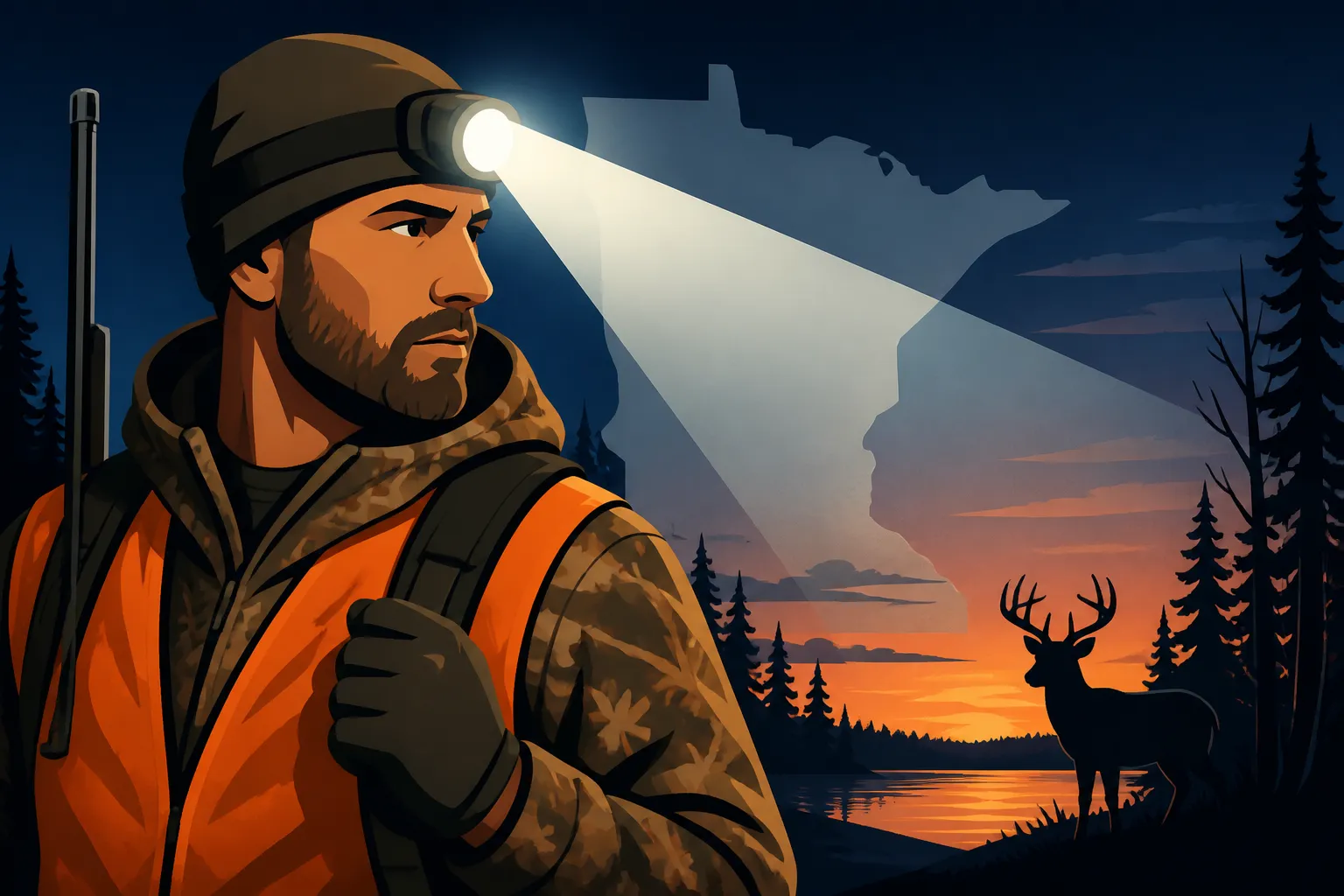
There’s nothing quite like the feeling of watching a glorious Minnesota sunset from your stand or blind, but that beauty quickly gives way to a daunting challenge when it’s time to pack up and head back to the truck. Navigating dense timber, slick marsh edges, or uneven field stubble in the dark is not only frustrating but genuinely dangerous. This guide will walk you through everything you need to know about choosing, using, and maintaining the best headlamps to ensure you always walk out safely and confidently after dark.
Why a Reliable Headlamp is Non-Negotiable for Minnesota Hunters
Minnesota's hunting grounds offer incredible beauty and challenge, but when daylight fades, those challenges intensify significantly. A reliable headlamp transitions from a convenient tool to an absolute necessity, impacting your safety, your ability to recover game, and your overall hunting experience.
Safety First: Navigating Treacherous Terrain in the Dark
It's not just "dark," it's Minnesota dark. This means roots like snare traps, slick rocks hidden under leaves, unexpected changes in elevation, and the dreaded swampy edge that looks solid in daylight. When the sun dips below the horizon in northern Minnesota, especially in those dense public land blocks or thick state forests, true darkness descends quickly and completely. Your eyes, no matter how good your natural night vision, simply cannot compensate for the obstacles that await you on the path back to the truck. A twisted ankle miles from your vehicle is a serious problem, and a fall onto something sharp could be much worse. The peace of mind that comes from clearly seeing every footfall is invaluable.
Think about traversing a cattail slough in the pre-dawn gloom or after sunset. What looked like solid ground in daylight can become a maze of icy puddles, knee-deep mud, or unstable clumps of vegetation. Without a bright, steady beam, every step is a gamble. The same goes for the gnarly root systems and downed timber you'll encounter in big woods areas like the Superior National Forest or parts of the Chippewa National Forest. These are the kinds of places where a momentary lapse in vision can turn a simple walk into a painful ordeal, potentially cutting your hunt short or requiring a much more difficult retrieve.
A reliable headlamp isn't just a convenience; it's a critical piece of safety gear. It illuminates the immediate path ahead, allowing your brain to process obstacles and your body to react instinctively, preventing trips and falls. It provides enough light for you to spot those faint reflective trail markers or the distinct curve of a game trail, ensuring you stay on track and avoid getting disoriented. When you're physically tired after a long day of hunting, your vigilance naturally drops, making clear, hands-free illumination all the more essential for a safe journey back to camp. Keeping your footing is a crucial part of meeting Minnesota Hunter Safety Requirements.
Tracking Game After Sunset: When the Clock is Ticking
Let's face it, sometimes a shot opportunity presents itself late in the day, or a deer just doesn't drop where you can easily see it. The ethical responsibility to recover game is paramount, and often, that recovery needs to happen after legal shooting light has faded. Trying to follow a faint blood trail with a struggling flashlight held between your teeth or tucked under an arm is an exercise in futility and frustration. You need a powerful, focused beam that lets you concentrate on the task at hand.
The difference a quality headlamp makes when blood trailing is astounding. A dim, yellow beam might make a few drops of blood look like water, or worse, obscure them entirely against autumn leaves or dark soil. A bright, clear white light, especially one with adjustable focus, can highlight even the most sparse and difficult-to-see sign. You’ll be able to pick out individual drops, tiny scuffs in the leaves, or faint hair samples that tell you the direction and severity of the hit. This precision is absolutely critical when every second counts, particularly as temperatures drop and a blood trail can quickly freeze or be covered by falling snow or dew.
Moreover, the clock isn't just ticking for the blood trail; it's ticking for the meat. In milder Minnesota autumns, getting an animal field dressed and cooling down promptly is vital to preserve the quality of the venison. A good headlamp extends your effective working hours, allowing you to efficiently Field Dressing a Deer in Cold Weather right where it lays, even if it's well after dark. This not only fulfills your ethical duty but also ensures you're bringing home the best possible table fare. Blood Trailing After Dark in Minnesota becomes a manageable task rather than a panicked scramble.
Efficiency and Comfort: Keeping Your Hands Free
Imagine this scenario: you've finally connected with a nice whitetail. You've got your rifle slung from Hunting Minnesota Now That Rifles Are Legal Statewide, your pack on, and now you need to drag your deer out of the woods. If you're fumbling with a handheld flashlight, you've essentially lost a hand – either it's occupied, or it's awkwardly wedged somewhere, providing poor light and making a heavy task even harder. This is where the hands-free advantage of a headlamp truly shines.
Whether you're field dressing, as mentioned, or simply repacking your gear at your treestand after a long sit, having both hands free to manipulate knives, zippers, and straps is a game-changer. Think about setting up a ground blind in the pre-dawn darkness or taking down a climbing stand as twilight fades; trying to manage tools and ropes while juggling a light source is not just inefficient, it's a recipe for accidents. A headlamp allows you to work with precision and confidence, minimizing wasted time and effort. Treestand Setups in Minnesota Hardwoods are a perfect example where hands-free light is invaluable.
Even loading your gear into the truck at the end of the day or navigating around deer camp after a hunt becomes so much easier. You can tie down a deer on the four-wheeler, organize your muddy boots, or grab a celebratory beverage without having to hold a light. It’s a simple comfort that makes a big difference, transforming frustrating tasks into manageable ones and ensuring your focus remains on the joy of the hunt, not the inconvenience of the dark. The ability to consult your Scouting With the Minnesota Recreation Compass App or a paper map, hands-free, while navigating back to your vehicle is incredibly liberating and efficient.
Key Features to Look For in a Minnesota Hunting Headlamp
Choosing the right headlamp isn't about picking the most expensive or brightest model. It's about finding the right balance of features that suit the specific demands of Minnesota hunting.
Brightness and Beam Patterns: Lumens, Flood, and Spot
When you first start looking at headlamps, "lumens" is probably the first spec you'll notice. While lumens indicate the total amount of light emitted, it's not the only factor, nor is "more always better" for every situation. For most Minnesota hunting scenarios, a headlamp with a maximum output between 200 and 800+ lumens offers a good balance. A lower lumen count might be fine for walking a well-defined trail, but if you're Tracking a Deer in Fresh Minnesota Snow or trying to spot eye-shine at a distance, you'll want more power. Remember that higher lumen settings will always drain batteries faster, so having a good range of settings is key.
Beyond sheer brightness, understanding beam patterns is critical. A "flood" beam provides a wide, diffused light, perfect for illuminating your immediate surroundings – think field dressing, setting up camp, or walking a clear path. It gives you excellent peripheral vision, reducing the tunnel-vision effect some spot beams can create. Conversely, a "spot" beam is a focused, narrow beam that throws light a greater distance. This is invaluable for scanning ahead on a logging road, identifying distant landmarks, or meticulously picking out faint blood sign on the ground. Many quality hunting headlamps offer both, or an adjustable focus that allows you to transition between flood and spot, giving you incredible versatility in the field.
The ability to switch between these patterns, or have an adjustable focus, lets you adapt to the varied Minnesota landscape. Walking a wide, open field edge might call for a broad flood, while entering a dense popple thicket or an alder run requires a tighter spot to penetrate the cover and highlight obstacles. Some advanced headlamps even feature intelligent light sensors that automatically adjust brightness based on your proximity to objects, which can be a real game-changer for conserving battery life and reducing eye strain. Many hunters rely on mapping tools like those found on GoHunt to navigate dense areas, and a powerful flood beam ensures you can clearly see your screen or a paper map without fumbling.
Battery Life and Type: Powering Through Cold Nights
Minnesota hunting often means cold weather, and cold weather is notorious for sucking the life out of batteries faster than you can say "trophy buck." This is why understanding battery type and expected battery life is paramount. Rechargeable lithium-ion batteries are popular for their power output and environmental benefits, but they can be more susceptible to cold-weather performance drops. Alkaline batteries are often more resilient in cold, but they offer less consistent power and can be prone to leaking if left in a device for extended periods, especially after discharge.
When checking specifications, pay close attention to the listed run times at various brightness settings. A headlamp boasting "200 hours" of battery life might only deliver that on its absolute lowest, almost unusable setting. Realistically, you'll want to know how long it will run on a medium-high setting – typically the sweet spot for walking and general tasks – and crucially, how long it will last on its brightest setting for critical moments like tracking. Always assume that the stated battery life will be reduced by 20-40% in freezing temperatures, so plan accordingly by carrying spare batteries or a portable power bank.
For serious late-season hunters, keeping spare batteries warm in an inner pocket can make a huge difference in their performance when swapped in. Some headlamps even feature external battery packs that can be worn under your jacket, protecting them from the biting cold. Consider your charging options: do you have access to an outlet at camp, or will you need a car charger or a portable solar panel for longer trips like those into the Boundary Waters Canoe Area? Thinking through these logistical details before you head out can save you a world of trouble when you're caught far from civilization with a dying light.
Durability and Weather Resistance: Built for the Northwoods
Minnesota weather is famously unpredictable and often unforgiving. Your headlamp isn't just a fair-weather friend; it needs to be a rugged companion that can withstand whatever the Northwoods throws at it. Look for an Ingress Protection (IP) rating, which tells you how resistant the device is to dust and water. An IPX4 rating means it can handle splashes from any direction – good for light rain. An IPX7, however, means it can be immersed in water up to 1 meter for 30 minutes, which is far more reassuring if you're hunting near water bodies or in heavy, driving snow.
The construction materials matter, too. While lightweight plastic might be comfortable, a more robust headlamp with an aluminum housing or reinforced plastic is going to stand up better to accidental drops, bumps against tree branches, or being jostled around in your pack. Buttons should be easy to operate even with gloved hands, yet firm enough to prevent accidental activation. The battery compartment should have a secure, watertight seal to protect the sensitive electronics from moisture, which can quickly lead to corrosion and failure.
Finally, comfort is a key aspect of durability, in a way. If a headlamp is uncomfortable, you won't want to wear it, or you'll be constantly adjusting it, distracting you from your hunt. Look for adjustable, elastic straps that are wide enough not to dig in and can fit comfortably over a hat or a hood. A balanced design, where the battery pack isn't too heavy or positioned awkwardly, will reduce strain during long walks. A padded forehead plate can also significantly improve comfort, especially during an extended Cold-Weather Sitting Strategy in Minnesota where you might need to wear it for an hour or more before heading back.
Red Light Mode: Preserving Night Vision
This is one of those features that once you have it, you'll wonder how you ever lived without it. A red light mode on your headlamp is incredibly valuable for a hunter. The science behind it is simple: red light doesn't cause your pupils to constrict as much as white light does, meaning your eyes remain largely adjusted to the surrounding darkness. This allows you to see more effectively in low-light conditions even after turning off your light, which is crucial for not spooking game and for maintaining your own spatial awareness.
In practical terms, using a red light prevents you from becoming a glowing beacon when you're trying to slip silently into your stand before dawn or sneak out after sunset. You can discretely check your gear, look at your watch, or navigate a short distance to your blind without broadcasting your position to every deer in the county. It's also far less disruptive to your hunting partners in a group setting; imagine being blinded by someone's bright white beam while trying to pack up. A red light is a considerate choice that keeps everyone's night vision intact.
Moreover, while some hunters swear by red light for blood trailing, finding it makes blood "pop" against certain backgrounds, this can be subjective and depends on the specific conditions. However, for general tasks where you need some light but don't want to ruin your night vision or alert game, red light is unequivocally superior. It's perfect for reading a physical map, checking your phone for a Reading Aerial Photos for Big Woods Deer overlay, or even making small adjustments to your rifle scope or bow sight without losing your dark adaptation. This often-underestimated feature is a staple for stealth and situational awareness.
Practical Headlamp Strategies and Maintenance Tips
A great headlamp is only as good as how you use it and care for it. Implementing smart strategies and regular maintenance will ensure your light is always ready when the sun goes down.
Choosing the Right Headlamp for Your Hunt Type
Just like you wouldn't use a waterfowl shotgun for deer hunting, the "best" headlamp isn't a one-size-fits-all solution. Your hunting style and the specific conditions of your Minnesota hunt should influence your choice. For a deer hunter who might be Hunting the Peak Rut in Early November and potentially tracking a buck for hundreds of yards after dark in heavy timber, maximum lumens, a strong spot beam, and long battery life in cold weather are paramount. The ability to switch between intense spot and wide flood is critical for both finding the animal and then safely navigating out.
Contrast that with a spring turkey hunter who might only need to illuminate a short path to their blind in pre-dawn hours or gather decoys after the morning hunt. For them, a lighter, perhaps less powerful, but highly reliable and comfortable headlamp with a good red light option might be sufficient. Similarly, a waterfowler heading to a marsh might prioritize extreme waterproofing and a wide flood beam to set decoys, rather than an ultra-long-range spot beam. Someone doing Deer Drives With Three or Four Hunters might need a brighter light for signaling and clear visibility in deep cover.
It’s always a good idea to consider having a primary headlamp and a smaller, more compact backup light in your pack or pocket. Your primary headlamp can be a robust, feature-rich model, while the backup serves as an emergency light or for quick, less demanding tasks. Before heading out, checking current conditions and scouting potential routes on an app like GoHunt can help you anticipate how much light you'll need for varying terrain and dense cover, ensuring you match your gear to the challenge ahead. Don't just buy the brightest; buy the right brightest for your specific adventure.
Battery Management and Cold Weather Care
One of the most common reasons a headlamp fails in the field isn't a defect, but poor battery management, especially in Minnesota's cold climate. The golden rule is simple: always start your hunt with fresh batteries or a fully charged rechargeable unit. Make it a habit to replace or recharge them after every hunting trip, or at least before heading out for a new one. Carrying spare batteries is non-negotiable, and in freezing temperatures, keep those spares in an inside pocket of your jacket, close to your body, to preserve their charge until needed.
If your headlamp uses standard alkaline batteries, it's wise to remove them if the headlamp will be stored for an extended period, especially in cold or humid conditions. Alkaline batteries can leak when fully discharged or exposed to temperature extremes, potentially corroding the contacts and ruining your light. For rechargeable units, ensure they are fully charged and consider cycling them periodically even during the off-season to maintain battery health. You definitely don't want to be caught in the middle of a Minnesota Muzzleloader Season Tactics trip with dead batteries because you didn't check them.
Beyond physical care, smart usage extends battery life. Resist the urge to constantly blast your headlamp on its highest setting. Use the lowest effective brightness for general walking and tasks, saving the high-lumen output for those critical moments like tracking, verifying a landmark, or if you're navigating particularly rough terrain such as when Hunting Minnesota Cattail Sloughs for Deer. Familiarize yourself with your headlamp’s different modes and brightness levels before you hit the woods; knowing how to quickly adjust them will make you more efficient and help conserve precious power.
Field Maintenance and Troubleshooting
Even the most durable headlamp needs a little love to perform when you need it most. Before every trip, take a moment for a quick inspection. Wipe the lens clean of any dirt, dust, or smudges, as a dirty lens can significantly reduce light output. Check the battery compartment for any moisture or corrosion, and ensure the battery cap is securely sealed. Also, inspect the head strap for wear and tear; a stretched-out or damaged strap won't keep the light secure on your head, making it difficult to aim.
If your headlamp suddenly decides to quit on you in the field, don't panic. First, check the basics: are the batteries inserted correctly? Are they fresh? Sometimes simply re-seating the batteries can fix an intermittent connection. Next, look for obvious damage – a cracked lens, a loose component, or a visibly corroded battery contact. A small piece of fine-grit sandpaper or an eraser can sometimes clean up minor corrosion on contacts, restoring power. It's a good habit to keep a small, multi-tool with you that might have a screwdriver or other implements for basic repairs.
The best troubleshooting is preventative. Don't ignore a flickering light or a loose battery cap, especially when you're preparing for a remote hunt in areas like the Superior and Chippewa National Forest Hunting or even just a long hike out of a deep draw. Address these minor issues promptly at home. Knowing your exact location, perhaps marked on your GoHunt app, can also help you orient yourself if a light failure leaves you disoriented, making a bad situation less critical and helping you find your way back to safety. A well-maintained headlamp is a reliable headlamp, and reliability is priceless in the Minnesota wilds.
Headlamp Features for Minnesota Hunters
| Feature | Ideal for Deer Tracking (e.g., in Big Woods) | Ideal for General Walking/Camp (e.g., Farmland) | Key Considerations for Minnesota Weather |
|---|---|---|---|
| Brightness | 500-800+ Lumens (Strong Spot Beam) | 200-400 Lumens (Wide Flood Beam) | Higher lumens drain batteries faster in cold |
| Beam Pattern | Adjustable spot for distance, flood for close | Wide flood for peripheral vision | Spot for finding distant reflections on snow |
| Battery Type | Rechargeable Li-ion (with warm spares) / Fresh Alkaline | Rechargeable Li-ion / Fresh Alkaline | Keep spares warm; Li-ion often better in cold |
| Battery Life | 2-4 hours on high, 8+ on medium | 4-6 hours on medium, 12+ on low | Expect reduced life in sub-freezing temps |
| Weatherproof | IPX6 or IPX7 (heavy rain/immersion) | IPX4 or IPX5 (splash/light rain) | Essential for snow, sleet, and wet conditions |
| Red Light | Highly Recommended for stealth | Recommended for camp courtesy | Preserves night vision for animals & self |
| Durability | Rugged construction (aluminum/strong plastic) | Durable plastic | Withstands drops, impacts, and cold stress |
| Weight/Comfort | Balanced, comfortable strap for long wear | Lightweight, adjustable | Comfortable over a hat or hood, no slippage |
Disclaimer
This article is for general informational purposes only and does not constitute professional advice. Laws, prices and regulations vary by location and change over time. Consult a qualified professional for guidance on your specific situation.