Hunting the Thirteen Remaining Shotgun-Only Counties
For many Minnesota deer hunters, the recent change allowing rifles statewide was a welcome update, simplifying gear choices and opening up new possibilities. However, if you hunt in one of the thirteen counties that opted out of this change and chose to remain shotgun-only, you know that frustration all too well. This guide is for you, the hunter navigating those unique challenges, and we’re going to dive deep into understanding these zones and how to successfully pursue whitetails within their specific rules.
Understanding the Remaining Shotgun-Only Counties
The landscape of deer hunting regulations in Minnesota shifted dramatically, but not uniformly. While much of the state embraced the flexibility of rifles, a handful of counties chose a different path, keeping the traditional shotgun-only mandate in place. This decision often stems from a mix of historical precedent, local population density, and community preferences for perceived safety in more developed areas.
The Legacy of Shotgun Zones
For decades, many parts of Minnesota, particularly the more populated southern and central regions, were designated as "shotgun-only" zones for firearm deer hunting. The rationale behind this was largely driven by safety concerns, as shotgun slugs generally have a much shorter effective range and less propensity for over-penetration compared to high-powered rifle cartridges. Hunters in these areas adapted their gear and tactics, becoming proficient with slug guns that, for a long time, were less accurate and offered less reach than their rifle counterparts. When the statewide rifle change was enacted, it was a significant shift for a vast majority of hunters. But for those in the counties that opted to retain their shotgun-only status, it felt like being left behind or having to deal with an extra layer of complexity. It's truly frustrating to hear your hunting buddies talk about their new rifle setups while you're still weighing the merits of different slug brands for limited range.
Identifying the Specific Counties
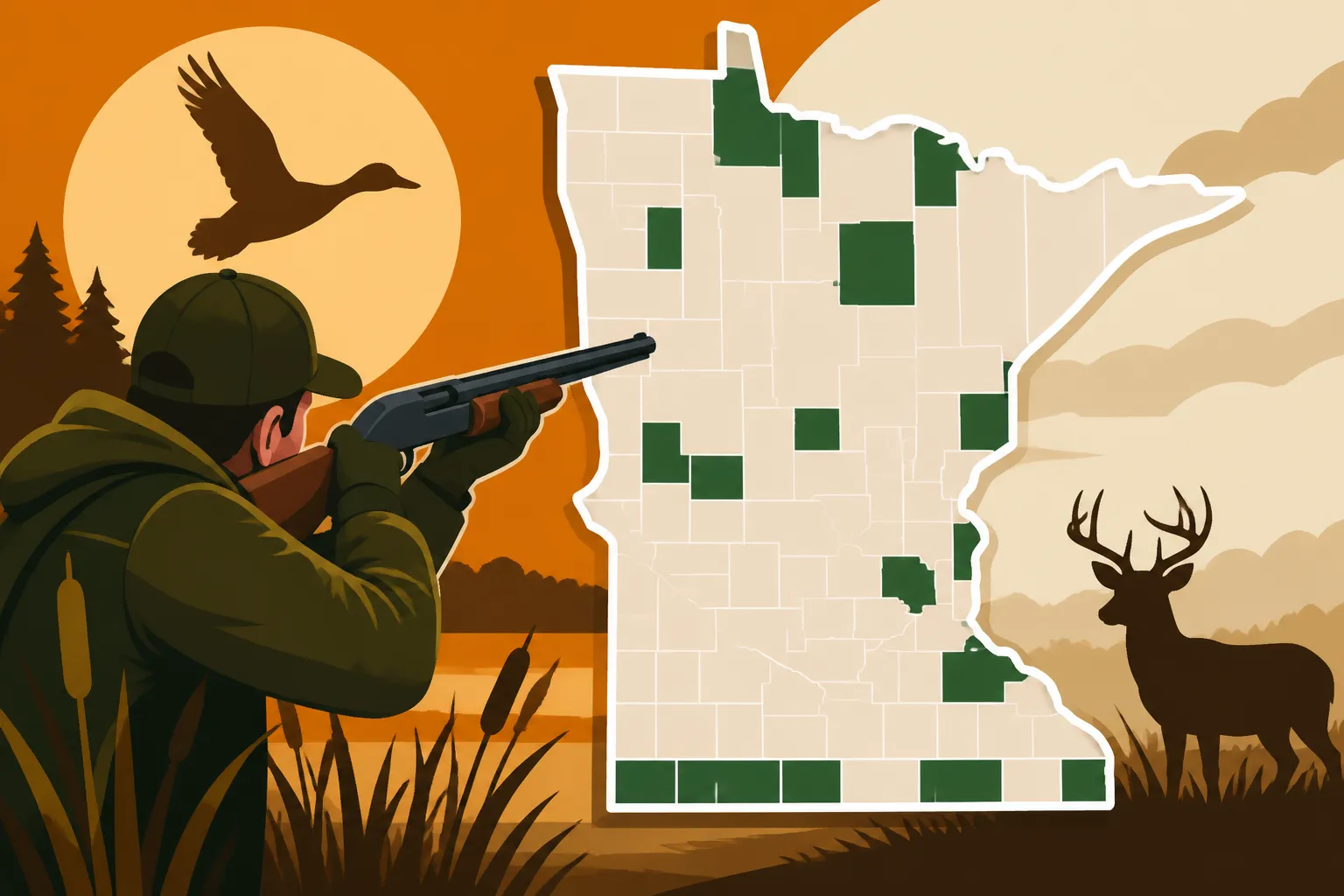
It's crucial to know exactly which counties fall under this shotgun-only rule, as hunting with a rifle in one of these areas would result in a serious violation. As of the most recent updates, these thirteen counties are:
- Anoka
- Blue Earth
- Carver
- Dakota
- Hennepin
- Le Sueur
- Nicollet
- Ramsey
- Rice
- Scott
- Sibley
- Washington
- Wright
These counties are typically characterized by higher population densities, more fragmented landscapes with smaller woodlots, abundant agricultural fields, and often significant urban or suburban sprawl. This combination of factors is precisely why many residents and county officials felt it prudent to maintain the shotgun-only rule, focusing on public safety. Always double-check the latest regulations with the Minnesota DNR, and remember, you can always confirm by Checking Your County's Shotgun-Only Ordinance to ensure you have the most up-to-date information before heading afield. Misinformation can lead to serious consequences, so verify your hunting location's rules explicitly.
Equipment Considerations for Shotgun-Only Hunting
While some hunters might feel disadvantaged by not being able to use a rifle, modern slug gun technology has come a long, long way. Today's dedicated slug guns, paired with the right ammunition and optics, are incredibly accurate and capable tools for harvesting deer out to significant ranges, often comparable to what was once considered effective rifle range for many traditional calibers. It’s all about putting together the right package.
Modern Slug Guns and Ammunition
Forget the old days of inaccurate smoothbore shotguns that "sprayed" slugs in a wide pattern. Modern slug guns are precision instruments. The key differentiator is the barrel. A dedicated slug gun will almost certainly feature a rifled barrel. This barrel has helical grooves, much like a rifle, which impart spin on the slug, stabilizing it in flight and dramatically improving accuracy. These are specifically designed to shoot sabot slugs, which are aerodynamic projectiles encased in a plastic sleeve (sabot) that falls away shortly after leaving the barrel. Brands like Savage, Browning, and Mossberg make excellent dedicated slug guns.
If you’re still hunting with a smoothbore barrel, you’ll be limited to traditional rifled slugs, sometimes called "Foster" or "Brenneke" slugs. These slugs have fins on them designed to allow the slug to compress as it passes through a choke, and the weight distribution is front-heavy, which gives them some stability like a shuttlecock. While they are effective, their accuracy typically drops off rapidly after 75-100 yards. For optimal performance in these shotgun-only zones, especially if you want to push your effective range, investing in a dedicated rifled barrel (either a standalone slug gun or an interchangeable barrel for your existing shotgun) and high-quality sabot slugs is highly recommended. For a deeper dive into the specifics of these firearms, check out our guide on Shotgun Slug Guns for Minnesota Deer.
Optics for Close-Range Hunting
Even though you’re dealing with "shotgun range," that doesn't mean you should skimp on optics. In these often dense, fragmented landscapes, shots can still present quickly, and precise placement is critical, especially when hunting in proximity to human development. A good scope will help you identify your target clearly, ensure proper shot placement, and make the most of those crucial moments.
Many hunters prefer low-power variable scopes for slug guns, something in the 1-4x or 2-7x range. These allow for a wide field of view on the lower settings, which is excellent for tracking deer moving through thick brush or during quick, close encounters, while still providing enough magnification for more precise shots out to your maximum effective range. Red dot sights are another fantastic option, offering extremely fast target acquisition and an uncluttered sight picture, making them ideal for quick shots in dense cover or during deer drives. Regardless of your choice, ensure your optics are durable, waterproof, and can hold zero even after the heavy recoil of slug loads. Illumination can also be a huge benefit for those crucial low-light moments at dawn and dusk. This is similar to considerations for Rifle Scopes for Low-Light Timber, just scaled for different effective ranges.
| Feature | Smoothbore Shotgun (with rifled slugs) | Rifled Barrel Shotgun (with sabot slugs) |
|---|---|---|
| Barrel Type | Unrifled, often with chokes | Fully rifled |
| Ammunition | Rifled (Foster/Brenneke) slugs | Sabot slugs |
| Accuracy | Fair to good, generally < 100 yards | Excellent, often > 150 yards |
| Effective Range | 50-75 yards is typical | 125-175 yards is common, sometimes more |
| Cost | Lower (often uses existing shotgun) | Higher (dedicated gun/barrel + ammo) |
| Versatility | Can also shoot birdshot/buckshot | Slug-specific, limited other uses |
Adapting Hunting Tactics to Shotgun-Only Zones
Hunting in these specific counties means adapting your strategy to match the terrain, the deer behavior, and the limitations of your firearm. It's less about long-range precision and more about understanding movement patterns, funnel points, and getting within that critical 100-150 yard window.
Focusing on Drive Hunting and Still-Hunting
In counties with fragmented cover and smaller private land parcels, organized deer drives can be incredibly effective. Instead of sitting for hours hoping a deer walks by, a well-executed drive puts deer on the move, pushing them towards standers strategically positioned to intercept them. This is where communication, safety, and a clear understanding of the terrain are paramount. For effective drives, especially with smaller groups, understanding how to apply Deer Drives With Three or Four Hunters can be a game-changer. Deer in these areas often know exactly where the safe zones are, and a drive can effectively nudge them out of their comfort zones and into shooting lanes.
Alternatively, still-hunting is another fantastic tactic for these areas. This involves moving incredibly slowly and deliberately through the woods, pausing frequently to scan, listen, and glass for deer. It’s a stealth game, where you’re trying to spot the deer before it spots you. In these zones, deer often hold tight in small pockets of cover. By moving with the wind in your face and using the terrain to your advantage, you can often surprise deer in their beds or while they're feeding in thickets. This method requires immense patience and keen observation skills, similar to Still-Hunting Minnesota Big Woods, though perhaps in smaller, more interrupted blocks of timber. The key is to cover ground, but slowly enough that you're hunting every step, not just walking.
Treestand and Ground Blind Strategies
Whether you're sitting or still-hunting, proper stand placement is critical. In these shotgun-only counties, you're often dealing with smaller woodlots, creek bottoms, and hedgerows that act as natural travel corridors for deer. Identifying these funnels and setting up accordingly can greatly increase your chances. For treestand hunters, focus on pinch points between fields, wooded fingers extending into agricultural land, or edges of thick cover where deer might browse. Consider elevated stands to give you a better vantage point over thick brush and to help your scent disperse above deer level. Treestand Setups in Minnesota Hardwoods can offer excellent advice applicable even in these fragmented landscapes.
Ground blinds are also a powerful tool, especially for hunters who prefer to stay on the ground, need more concealment, or are hunting with youth or new hunters. They offer excellent concealment and can be set up in relatively open areas where a treestand might be impractical. Place them along field edges, near food plots (if available), or at the intersections of deer trails. Blending the blind into its surroundings is paramount; you can really make a difference by Brushing In a Blind on a Field Edge with local vegetation. Remember that deer in these areas are highly accustomed to human activity, so a natural-looking blind, or one that has been placed well in advance, is essential. When using a ground blind, pay extra attention to your entry and exit routes to avoid spooking deer as you approach or leave your setup. Using a mapping application like GoHunt can help identify discreet routes that keep you out of sight and downwind.
Scouting and Understanding Deer Behavior in Pressured Areas
Hunting in these counties often means dealing with deer that are more wary due to increased human presence and hunting pressure. Successful hunters are those who understand how these deer behave and can find the spots that other hunters overlook.
Public Land Scouting and Pressure Management
Even in these more developed counties, there are often pockets of public land, including Wildlife Management Areas (WMAs) or county parks that allow hunting. These areas can be excellent, but they also tend to receive more hunting pressure. Your scouting strategy needs to reflect this. Don't just look for obvious trails; look for the hard-to-reach spots. Use mapping applications like the Scouting With the Minnesota Recreation Compass App or commercial options like GoHunt to pore over aerial photos, identifying thick cover, overlooked corners, or isolated wetland edges that might offer sanctuary to deer.
Focus on areas that require a bit more effort to access—perhaps a longer walk, or a spot only reachable by navigating a tricky marsh. These are often the places where deer will retreat when hunting pressure increases. Look for subtle sign in these areas, like old rubs and scrapes from previous seasons, or tracks indicating regular travel. The goal is to find those little honey holes where deer feel safe, often right under the noses of other hunters. For a more detailed approach, consider the strategies for Finding Ground Others Walk Past, which are particularly relevant in these highly accessible public land settings.
Deer Movement and Food Sources in Developed Areas
Deer in shotgun-only counties are masters of adaptation. They learn to move nocturnally, utilize the smallest strips of cover, and exploit food sources that might surprise you. Understanding their movements means recognizing that they often move between fragmented woodlots, follow creek beds, or use hedgerows as cover, even crossing suburban yards under the cloak of darkness.
Food sources in these areas are diverse. Beyond natural browse, deer heavily rely on agricultural crops like corn, soybeans, and alfalfa. A standing cornfield can be a magnet for deer, offering both food and unparalleled cover. Learning to hunt effectively in these agricultural settings, especially how deer use the edges and interior of a cornfield, is essential. Our guide on Hunting a Standing Cornfield in Farm Country can provide invaluable insights. Don't overlook smaller, less obvious food sources either. Pockets of oak trees, abandoned apple orchards, or even gardens in rural residential areas can attract deer. Scouting these specific food sources and understanding how deer move to and from them will be key to your success.
Safety and Legal Considerations
Hunting in areas with higher population density, even if it's considered rural, brings with it a heightened responsibility regarding safety and adherence to local laws. Given the shotgun-only restriction, these considerations become even more critical.
Blaze Orange and Shooting Lanes
Minnesota has clear blaze orange requirements, and these apply uniformly across all firearm deer seasons. Hunters must wear a visible amount of blaze orange (or blaze pink, if preferred) on their outer clothing during the firearm season. This includes a cap and outer garment above the waist, visible from all sides. You can find all the specifics in our article about How Much Blaze Orange Minnesota Requires. In shotgun-only counties, where shots are typically shorter and cover can be very dense, ensuring you are highly visible to other hunters is absolutely paramount.
Beyond personal visibility, meticulous attention to your shooting lanes and backstops is non-negotiable. Shotgun slugs, while not traveling as far as rifle bullets, can still travel a significant distance and maintain lethal energy. Always be absolutely certain of your target and what lies beyond it. In areas with homes, roads, or other infrastructure, this means being even more disciplined with shot selection. Only take shots where you have a clear, safe backstop that will contain the slug. Clearing shooting lanes around your stand or blind, even if it's only a few yards, is a smart practice to ensure an unobstructed shot and minimize the risk of a deflected slug.
Understanding Local Ordinances and Trespass Laws
While the state sets the overall hunting regulations, some counties or even specific townships might have additional ordinances that impact hunting, such as restrictions on discharging firearms too close to residences or roads. It's always a good idea to check with local county sheriff's offices or municipal clerks if you have any doubts about a specific area. Knowing these local nuances can save you a lot of grief.
Furthermore, with more fragmented land ownership, respecting private property boundaries is more important than ever. Always obtain permission before hunting on private land, even if it's just a small woodlot. Many mapping apps, like GoHunt, offer excellent parcel data that clearly delineates property lines, helping you avoid accidental trespass. Understanding Minnesota Trespass and Permission Law is crucial, as unauthorized entry can lead to fines, loss of hunting privileges, and damage to the reputation of hunters as a whole. Always err on the side of caution: if you're not sure, don't go. A friendly knock on a door can often open up new hunting opportunities and build positive relationships with landowners, which is invaluable in these areas.
Disclaimer
Please note: Hunting regulations and laws can change. This information is intended as a general guide and should not replace direct consultation with the Minnesota Department of Natural Resources (DNR) or local authorities for the most current and accurate regulations before any hunting activity. Always prioritize safety and ethical hunting practices.