Minnesota’s Blaze Orange Requirements
There's nothing quite like the crisp autumn air hitting your face as you step into the Minnesota woods, a thermos of coffee in hand and the promise of deer sign in your heart. But before you even think about grabbing your rifle or bow, there's a critical piece of gear that every hunter in our state absolutely must understand: blaze orange. The regulations around this vibrant color can sometimes feel a little murky, leading to confusion, but getting it right isn't just about following the law; it's about coming home safe to your family. This guide will walk you through everything you need to know about Minnesota's blaze orange requirements, ensuring you're compliant, visible, and safe on every hunting adventure.
Understanding Minnesota's Blaze Orange Mandate
For many hunters, especially those new to the sport or visiting from out of state, the idea of wearing bright orange might seem a little counterintuitive. After all, aren't we trying to blend in with nature? In some contexts, yes, absolutely. But Minnesota's hunting regulations, like those in many other states, prioritize human safety above all else, particularly when firearms are in play. The blaze orange mandate is a cornerstone of this safety philosophy, designed to make hunters highly visible to other hunters, dramatically reducing the risk of accidental shootings.
The Core Requirement: What it Means for Hunters
At its heart, Minnesota's blaze orange requirement is about making sure you stand out like a beacon against the natural backdrop of the woods, especially during periods when firearms are being used for deer hunting. It’s a simple, yet incredibly effective, visual cue that screams, "Hey, I'm a human! Don't shoot!" This is crucial in a state like ours, with vast stretches of public land and a passionate hunting community. Imagine walking through a dense stand of pines on a cloudy November day, and suddenly spotting a flicker of movement. Without blaze orange, that movement could be a deer, a squirrel, or another hunter. With it, there's a clear, unmistakable signal that prevents tragic mistakes.
The regulations specify not just that you wear blaze orange, but how much and where. It’s not enough to just tie a small strip to your hat; there are minimum coverage requirements to ensure you're truly visible from all angles. This thoughtful approach covers your head and outer clothing, creating a significant profile that's hard to miss. These rules are particularly stringent during the firearm deer season when the woods are bustling with activity. Understanding these core requirements is the first step in responsible hunting.
Defining "Blaze Orange" – Color, Coverage, and Material
So, what exactly counts as "blaze orange" in Minnesota? It's not just any old orange. The law specifies a fluorescent or "hunter" orange, a distinct, vivid shade designed for maximum visibility. This isn't your construction worker's neon orange, nor is it the muted autumn hues you might see in fashion. It's that unmistakable, eye-popping orange that truly stands out, even in low light conditions or against fall foliage. This specific color is vital because it's distinct from anything found naturally in the Minnesota landscape.
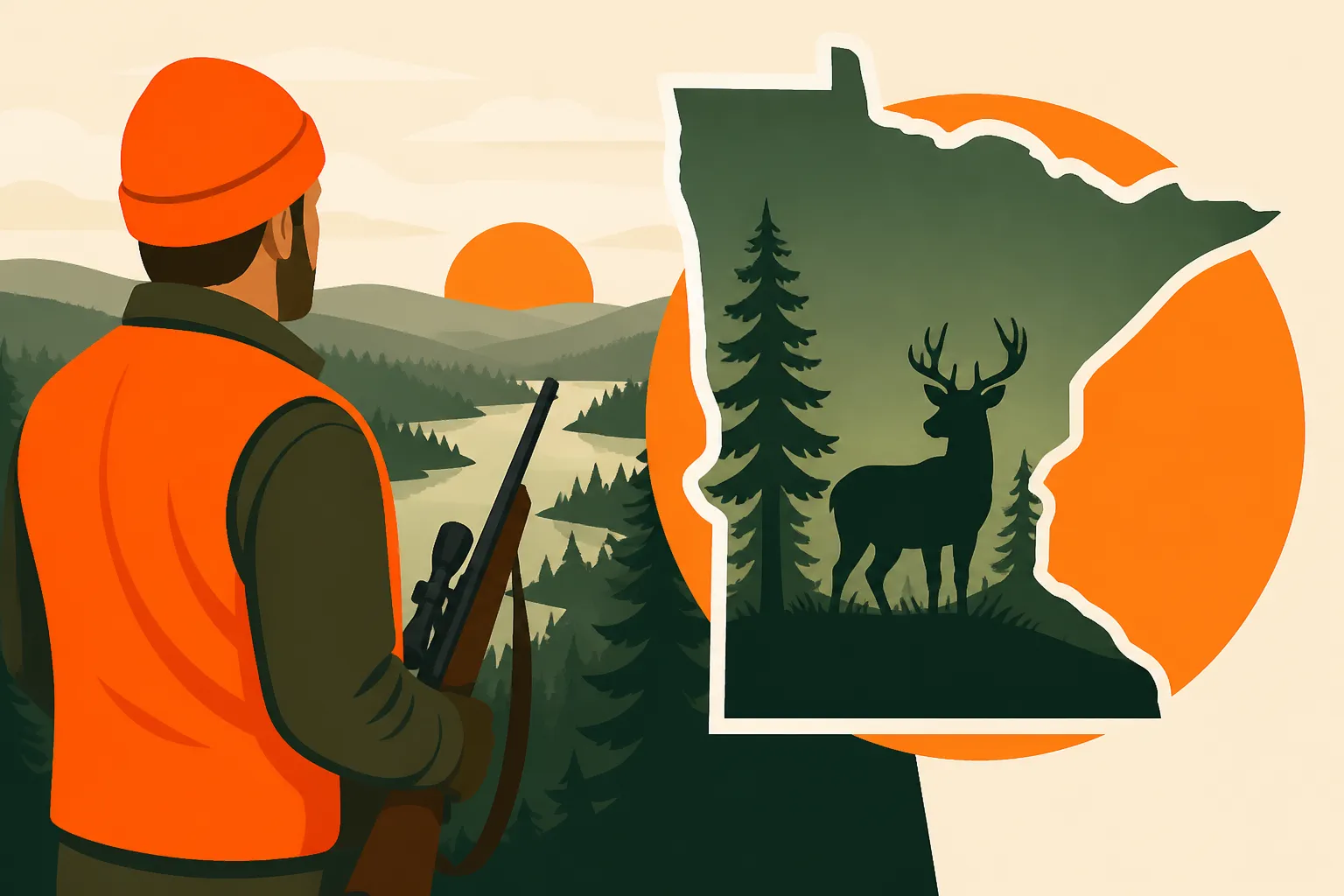
Beyond the color, there are clear guidelines on how much of it you need to wear and where. Typically, this means an outer garment above the waist, like a jacket or vest, that is predominantly blaze orange, and a blaze orange hat. The intent is to create a visible "halo" around your upper body and head, making you easily identifiable to other hunters, regardless of your movement or the terrain. For example, if you're hunkered down behind a log, that blaze orange hat is often the first thing another hunter will see. Material choice is also important; while not strictly regulated beyond color, durable, weather-resistant materials are practical for Minnesota's often chilly and damp hunting conditions. Many hunters find that a good vest and hat combo is the easiest way to meet the requirements. It's often helpful to consult a planning tool like Scouting With the Minnesota Recreation Compass App to visualize how your blaze orange might appear in different types of terrain.
The Philosophy Behind the Rule: Safety First
The driving force behind Minnesota's blaze orange regulations is singular: preventing hunting accidents. Before these rules became commonplace, accidental shootings, particularly those involving misidentification, were far more frequent. Blaze orange acts as a universal identifier, a bright flag that signals "human" to anyone else in the woods. It removes the ambiguity, especially in situations where a hunter might mistake movement, sound, or a flash of natural color for game.
Think of it as a shared understanding, a non-verbal agreement among all hunters to keep each other safe. When everyone adheres to the rule, the entire hunting community benefits from a safer environment. This isn't just about protecting yourself from others; it's also about protecting others from you. By wearing blaze orange, you’re actively contributing to the safety of everyone sharing the hunting grounds. It's a testament to the idea that responsible hunting isn't just about bagging game, but about respecting the land, the animals, and your fellow hunters. This commitment to safety is a core part of Minnesota Hunter Safety Requirements.
When You Absolutely Need to Wear Blaze Orange
While the general principle of blaze orange is clear, the specific times and situations when it’s mandatory can sometimes be a bit of a maze. Minnesota has specific seasons and species that trigger the requirement, and understanding these nuances is key to staying legal and, most importantly, safe. It's not a blanket rule for every single hunting activity, which is where some of the confusion often arises.
Firearm Deer Season: Non-Negotiable Visibility
If you’re hunting deer with a firearm in Minnesota, consider blaze orange your second skin. This is the period when the requirement is most stringent and absolutely non-negotiable. Whether you're hunting in the wide-open spaces of the farm country or deep in the Big Woods Versus Farmland Deer regions, you must wear blaze orange. The regulations state that you need an outer garment, above the waist, that is primarily blaze orange, and a blaze orange hat or cap. This combination ensures maximum visibility, even when you're moving through dense cover or sitting still in a stand.
The firearm deer season, especially the opening weekend in zones like the Minnesota 100 Series Firearm Opener, sees a significant number of hunters in the woods. This increased human density, combined with the power and range of modern firearms, makes the blaze orange mandate incredibly important. It's not just about visibility for other hunters; it also helps search and rescue teams identify you if you get lost or injured. If you're heading out for Hunting Minnesota Now That Rifles Are Legal Statewide, remember that no matter your firearm choice, blaze orange is always on the checklist. Don't leave home without it.
Small Game and Bird Hunting During Overlap Periods
Here’s where it can get a little tricky. If you’re hunting small game like squirrels or rabbits, or upland birds like grouse and pheasants, during a time when the firearm deer season is also open in that area, you are generally required to wear blaze orange. This is a common overlap in many parts of the state, especially during October and November when various seasons coincide. The logic is simple: if there are deer hunters with firearms in the woods, everyone needs to be identifiable.
Imagine you're out Grouse Hunting Minnesota Aspen Cover with your shotgun, focused on flushing birds, while a deer hunter is still-hunting through the same patch of woods. Without blaze orange, you're just another shape in the forest. With it, you instantly signal your presence, preventing any potential misidentification. Always check the specific regulations for your hunting area and time period. A quick glance at the Minnesota Small Game and Upland Bird Seasons dates and overlapping deer seasons on the GoHunt app or website can save you a lot of grief and keep you safe. Many experienced hunters simply make it a habit to wear blaze orange whenever they're afield during the broader fall hunting months, regardless of their specific quarry, just to be on the safe side.
Special Hunts and Specific Regulations
Beyond the general firearm deer and overlapping small game seasons, there are often specific rules for special hunts or particular areas. These might include antlerless hunts, youth seasons, or controlled hunts on specific wildlife management areas. For example, during the Minnesota Youth Early Antlerless Season, participants and their mentors often have specific blaze orange requirements to ensure heightened safety for younger hunters.
It's crucial to consult the official Minnesota DNR regulations for any special hunt you plan to participate in. These rules can sometimes deviate slightly from the general mandate, perhaps requiring more visible coverage or having specific conditions for mentors. Always double-check. The digital resources provided by the state, or apps like GoHunt that integrate this information, are invaluable for staying informed. Never assume that general knowledge covers every unique scenario; a few minutes of research before you head out can prevent legal trouble and ensure everyone's safety.
Situations Where Blaze Orange Rules Differ or Don't Apply
While blaze orange is a steadfast rule during many hunting seasons, it's not universally required for all hunting activities in Minnesota. There are specific exceptions and alternative options that hunters need to be aware of, especially those who pursue game with different methods or during distinct seasons. Understanding these differences is just as important as knowing when to wear it.
Archery Season: A Different Set of Visual Cues
For bowhunters, the rules around blaze orange are generally more relaxed, or even absent, depending on the specific time and location. During the dedicated Bowhunting Minnesota's Long Archery Season, when firearms are not permitted for deer hunting, archers are typically not required to wear blaze orange. The reasoning here is that bows and crossbows have a much shorter effective range than firearms, and the method of hunting often involves more stealth and closer-range engagement. Blending into the environment is a core aspect of successful bowhunting, and blaze orange would frankly be a disadvantage.
However, there's a critical caveat: if the archery season overlaps with any firearm season (for deer or even small game where blaze orange is required), then archers must don their orange gear. This often happens in late October and November when the archery season runs concurrently with portions of the firearm deer season. So, while you might start your archery season in September without orange, you'll need to switch to wearing it as the firearm seasons open up. This is a nuanced but incredibly important distinction. Many dedicated bowhunters use mapping apps like GoHunt to clearly see when and where different seasons overlap, preventing accidental non-compliance. Knowing when to wear blaze orange and when to forgo it is key for both safety and hunting success in your preferred method, whether you're using a vertical bow or considering Crossbow Versus Vertical Bow in Minnesota.
The Emergence of Blaze Pink as an Alternative
In a forward-thinking move, Minnesota, like a few other states, has introduced "blaze pink" as a legal alternative to blaze orange. This option was primarily championed to encourage more women and youth to participate in hunting by offering a different high-visibility color. For some, the traditional blaze orange might not appeal, and blaze pink offers a vibrant, distinct alternative that serves the exact same safety function.
The requirements for blaze pink are identical to those for blaze orange: the same coverage, the same level of saturation, and the same periods of mandatory wear. It's not a lesser alternative; it's an equal one in terms of safety and legal compliance. So, if you or someone you know prefers blaze pink, rest assured that it's a perfectly legal and safe choice in Minnesota. You can read more about this legislative change and its impact in Blaze Pink Options Under Minnesota Law. It's a great example of how hunting regulations can evolve to be more inclusive while maintaining the highest safety standards.
Waterfowl and Turkey Hunting Exceptions
When it comes to hunting migratory birds like ducks, geese, and turkeys, the rules around blaze orange are generally different. For waterfowl hunters, camouflage is king. Whether you're tucked into a layout blind in a cut cornfield during the Minnesota Early Goose Season Dates or hunkered down in a marsh for ducks, the goal is to disappear into your surroundings. Requiring blaze orange would defeat the entire purpose of decoying and concealment necessary for successful waterfowl hunting. Therefore, blaze orange is typically not required for waterfowl hunting, regardless of whether other seasons are open.
Similarly, during the spring and fall turkey seasons, camouflage is the standard. Turkeys have exceptional eyesight and will pick out any unnatural color or movement in an instant. Wearing blaze orange would make it virtually impossible to call in a wary gobbler. Hence, for both Spring Turkey Hunting in Minnesota and Minnesota's Fall Turkey Season, hunters typically wear full camouflage. Again, the principle of overlap applies: if you're turkey hunting in an area where, for some reason, a firearm deer season also happens to be open, you'd need to consider the deer hunting requirements. However, this scenario is rare for turkey seasons, which are usually timed to avoid major deer hunting conflicts. Always check the specific regulations for the species and season you are pursuing to be certain.
| Hunting Activity | Blaze Orange/Pink Required? | Notes |
|---|---|---|
| Firearm Deer Hunting | Yes | Outer garment above waist and hat/cap. |
| Muzzleloader Deer Hunting (when firearm season open) | Yes | Applies during any period concurrent with open firearm deer season. |
| Archery Deer Hunting (when firearm season open) | Yes | If archery season overlaps with any firearm deer season in that area. |
| Archery Deer Hunting (no firearm season open) | No | Pure archery periods do not require it. |
| Small Game Hunting (when firearm deer season open) | Yes | During overlap with any firearm deer season. |
| Small Game Hunting (no firearm deer season open) | No | Dedicated small game periods outside of firearm deer season. |
| Spring Turkey Hunting | No | Camouflage is standard. |
| Fall Turkey Hunting | No | Camouflage is standard. |
| Waterfowl Hunting | No | Camouflage is standard for concealment. |
| Bear Hunting | Yes (often) | Often overlaps with firearm deer season, check specific permit area rules. |
| Predator/Furbearer Hunting | Varies | Depends on overlap with other firearm seasons. Use caution. |
Practical Tips for Maximizing Blaze Orange Effectiveness
Simply owning a blaze orange vest isn't enough; you need to wear it correctly and understand how to maximize its effectiveness in the field. After all, the goal isn't just to be compliant, but to be genuinely safe. Thoughtful application of the rules, combined with smart gear choices, can make a significant difference in your visibility and overall hunting experience. This is where personal responsibility really comes into play.
Proper Placement and Visibility in the Field
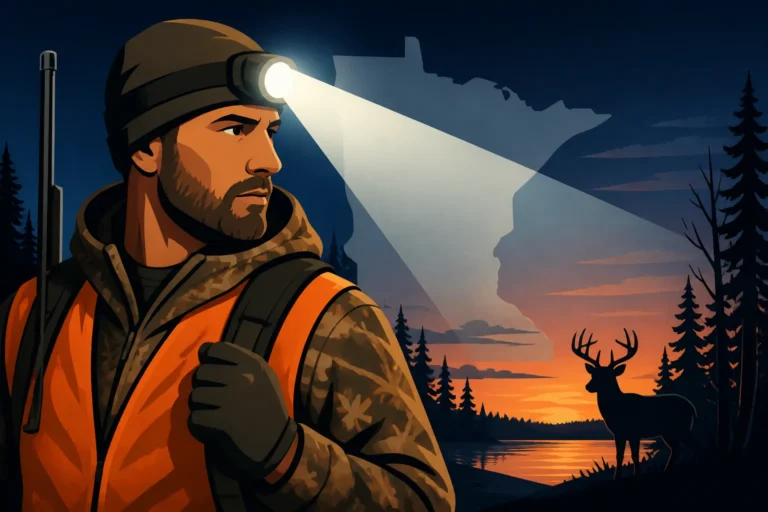
The Minnesota regulations are pretty clear: an outer garment above the waist and a hat or cap. But think about why this placement is specified. The torso and head are typically the highest points of a human body, and often the most visible, especially if you're partially obscured by brush or terrain. A vest or jacket should cover your back, chest, and sides, creating a large, continuous block of color. Your hat should be worn so it's clearly visible from all directions, not pulled down so far that it obscures the orange from above or the sides.
Consider your movements in the woods. When you’re still-hunting, glassing from a ridge, or crawling to a stand, certain parts of your body might be hidden. By ensuring both your upper body and head are covered, you create multiple points of visibility. If you're carrying a pack, make sure it doesn't completely cover your blaze orange vest or jacket. Some hunting packs even come with integrated blaze orange panels or rain covers that serve this purpose. The idea is to present as much visible blaze orange as possible to anyone looking in your direction.
Layering Strategies for Comfort and Compliance
Minnesota weather, especially during the fall hunting seasons, can be incredibly unpredictable. You might start a morning hunt in freezing temperatures, only for it to warm up considerably by midday, or a sudden squall could roll in. This makes layering crucial for comfort. The challenge, however, is to maintain your blaze orange visibility while adjusting your clothing. The key is to make your blaze orange garment your outermost layer.
This means your blaze orange vest or jacket should go over all your other insulating layers, including your heavy wool coat or rain shell. If you need to shed layers, make sure the blaze orange piece is the last one to come off and the first one to go back on if you stop moving. Many hunters opt for a simple, lightweight blaze orange vest that can be easily worn over any combination of clothing, from a long-sleeve base layer to a heavy insulated jacket. This approach ensures you stay comfortable, adapt to changing conditions, and remain compliant with the regulations. Remember, a good hunting apparel system, perhaps from brands like GoHunt, often includes versatile outer layers designed to accommodate blaze orange easily. Dressing for Cold-Weather Sitting Strategy in Minnesota while remaining visible requires careful planning.
Checking Your Gear Before Heading Out
It might sound obvious, but taking a moment to check your blaze orange gear before you leave for the hunt is a critical step many hunters overlook. Has your vest faded over the years from sun exposure and washing? Is your hat still structurally sound, or is it ripped or torn? Does it still meet the "predominantly blaze orange" standard, or is it now mostly camouflage with a few orange accents? These might seem like minor details, but a faded, damaged, or insufficient blaze orange garment might not provide the visibility needed for safety, nor meet legal requirements.
Make it a part of your pre-hunt routine, right alongside checking your rifle scope and packing your lunch. Hold your blaze orange gear up and really look at it. Does it still pop with that unmistakable fluorescent glow? Does it cover enough of your upper body and head? If in doubt, it’s always better to replace it or add a new piece. A new, bright blaze orange vest is a small investment for your safety. Apps like GoHunt can also remind you of gear checklists, ensuring you don't forget essential items for your Minnesota hunt, including your all-important blaze orange.
The Serious Ramifications of Non-Compliance
Ignoring Minnesota's blaze orange requirements isn't just a minor infraction; it carries both legal penalties and, far more importantly, puts lives at risk. It's a rule designed for profound safety, and disregarding it has real, tangible consequences for individuals and the hunting community as a whole. Understanding these ramifications should reinforce the importance of always adhering to the regulations.
Legal Consequences: Fines and Potential Loss of Privileges
The state of Minnesota takes its hunting safety regulations very seriously, and that includes the blaze orange mandate. If you are found hunting without the required blaze orange during a period when it's mandatory, you can face significant legal penalties. This typically starts with a fine, which can be a hefty sum, and court costs. It's not just a slap on the wrist; it's a financial hit that far outweighs the cost of buying compliant gear.
Beyond immediate fines, repeated or egregious violations could lead to more severe consequences, such as the temporary or even permanent loss of your hunting privileges. Losing your hunting license means being barred from participating in a sport you love, sometimes for years. Imagine having your season cut short, or worse, being unable to hunt at all, simply because you didn't wear the right color. It's a preventable situation with serious ramifications that affect your wallet and your passion. This falls under the broader umbrella of Minnesota Wildlife Violation Penalties, which can be quite steep.
The Real-World Safety Hazards You Create
While legal consequences are a deterrent, the most critical ramification of not wearing blaze orange is the inherent danger it creates. You are actively increasing the risk of a hunting accident, not just for yourself, but for every other hunter in the vicinity. Misidentification is a leading cause of hunting accidents, and by failing to wear blaze orange, you are making yourself harder to identify as human.
Consider a scenario where another hunter catches a glimpse of movement through thick brush. Their brain, conditioned to look for game animals, might interpret a subtle movement or a flash of natural color as a deer. Without the unmistakable signal of blaze orange, that split-second decision could turn tragic. You might assume everyone else is being careful, but human error is always a factor, and blaze orange is the safety net designed to mitigate that error. It's a collective responsibility. Every hunter has a role to play in keeping the woods safe for everyone, and wearing blaze orange is one of the most fundamental contributions you can make. This is especially vital when you consider Hunting Pressure on Minnesota Public Land.
Promoting a Culture of Responsibility in the Woods
Ultimately, adherence to blaze orange rules is about more than just following the law; it's about fostering a culture of safety and responsibility within the hunting community. When everyone wears their blaze orange, it reinforces the message that safety is paramount. It sets a positive example for new hunters, especially youth, about the importance of ethical and responsible conduct.
Conversely, when hunters disregard these rules, it erodes that culture. It sends a message that safety can be optional, which is simply unacceptable. As veteran hunters, we have a duty to pass on not just hunting skills, but also the deep respect for safety and wildlife conservation that defines our sport. By consistently wearing blaze orange, and encouraging others to do the same, we help ensure that hunting remains a safe, respected, and cherished tradition in Minnesota for generations to come. It ties directly into the values taught during programs like Minnesota Hunter Safety Requirements, ensuring everyone understands the grave importance of being visible.
Disclaimer
This article is for general informational purposes only and does not constitute professional advice. Laws, prices and regulations vary by location and change over time. Consult a qualified professional for guidance on your specific situation.