Rifle Setups for Minnesota Deer Hunting
The world of Minnesota deer hunting has seen some pretty big shifts lately, and trying to figure out the perfect rifle setup can feel like navigating a maze, especially with all the new regulations and options out there. It’s easy to get overwhelmed by conflicting advice or just not know where to start, leaving you feeling unprepared for opening day. This guide is here to cut through the noise, helping you understand the rules, choose the right caliber, and assemble a rifle setup that’s truly optimized for hunting Minnesota's diverse landscapes and chasing whitetails.
Understanding Minnesota's Evolving Rifle Landscape
For decades, the conversation around deer rifles in Minnesota was largely split down the middle. You had the vast expanses of the northern "Big Woods" where traditional rifle cartridges were king, and then the more densely populated southern and central zones where shotgun slugs were the only legal option for firearms season. This created a distinct divide, often leading hunters to own multiple firearms or restrict their hunting areas. It was a system many found frustrating, limiting both range and choice.
The Shift from Shotgun-Only Zones
Think back to the "good old days" – or maybe the slightly frustrating old days, depending on your perspective. If you hunted south of the traditional rifle line, your primary firearm for deer season was almost certainly a shotgun, often paired with rifled slugs. These slug guns, while effective at closer ranges, had significant limitations when it came to extended shots across a soybean field or even down a long timber cut. You’d often hear stories of hunters watching a deer leisurely stroll out of range, knowing their slug gun simply couldn't make that 150-yard shot with any real confidence. The frustration was real, a blend of missed opportunities and the feeling of being artificially limited by geography.
Then came the big change: the statewide legalization of rifles. This was a monumental shift, driven by legislative efforts and a growing understanding of modern firearm capabilities. It effectively opened up most of Minnesota to the use of traditional centerfire rifle cartridges, promising greater range, flatter trajectories, and more humane harvest opportunities for many hunters. This change acknowledged that modern cartridges, even traditional ones, could be used safely and effectively in areas previously restricted, largely due to concerns about projectile travel and density. It was a breath of fresh air for those who felt shackled by the old rules, finally allowing them to bring their preferred deer rifle to most corners of the state.
Thirteen Remaining Shotgun-Only Counties
Now, before you go selling off your trusty slug gun, it's critical to understand that the statewide rifle legalization came with an important caveat: a handful of counties retained their shotgun-only status. This isn't just a minor detail; it's a make-or-break regulation that can turn a legal hunt into a serious violation if you're not absolutely sure about your location. These thirteen counties, generally located in more densely populated or environmentally sensitive areas, opted to maintain the previous restrictions, often citing public safety concerns related to projectile travel in closer quarters.
Imagine planning your deer camp with friends, everyone excited to use their new rifle setups, only to realize the county your camp is in is still shotgun-only. That could ruin a season faster than a late-season blizzard. It means that while the spirit of statewide rifle hunting is there, the letter of the law demands you verify your specific hunting ground. You might find yourself still needing that slug gun or a straight-wall cartridge rifle if you hunt in one of these particular pockets. Always double-check local regulations and consult resources like the DNR's permit area maps or a tool like GoHunt to confirm the rules for your specific hunting location. Ignorance of the law is never an excuse, and a quick check can save you a significant headache and potential legal trouble. It's a prime example of how specific, hyper-local details still matter greatly in Minnesota hunting. You can find more specific information on these unique areas in Which Thirteen Counties Kept Shotgun-Only Rules.
Why Straight-Wall Rifles Are Now Legal Statewide
Even before the full statewide rifle legalization, Minnesota had introduced straight-wall cartridge rifle options. The logic behind these particular cartridges is fascinating and really speaks to a thoughtful compromise between range and public safety. Unlike traditional bottlenecked rifle cartridges that maintain velocity and energy over long distances, straight-wall cartridges tend to shed energy and drop velocity more rapidly. This means their effective range is generally shorter, and critically, their potential for over-penetration and long-distance travel is reduced, making them a safer option in areas with higher population densities or more fragmented landscapes.
Think of it like this: a high-powered, bottlenecked rifle round might travel for miles if it misses its target or over-penetrates. A straight-wall cartridge, while still powerful and effective for deer, won't carry that energy nearly as far. This characteristic made them an acceptable alternative in former shotgun-only zones, bridging the gap for hunters who wanted more accuracy and range than a slug gun but without the perceived safety risks of traditional rifle rounds. For many, it was a welcome addition, providing an intermediate solution that offered improved performance without violating the underlying safety principles of the restricted zones. Now, with statewide rifle legalization, straight-wall cartridges remain a fantastic, highly effective option for deer hunting, especially if you hunt areas that still feel a bit "tight" or if you simply prefer their ballistics and performance characteristics.
Choosing the Right Caliber for Minnesota Whitetails
Deciding on a rifle caliber for Minnesota deer hunting can feel like picking out a new vehicle – everyone has an opinion, and there are countless options. The "best" caliber truly depends on where you hunt, how you hunt, and your personal preferences regarding recoil and ballistic performance. What works perfectly for a long shot across a cornfield in southwestern Minnesota might be overkill or less agile for a quick snapshot in the dense popple thickets up north.
Versatile All-Around Calibers
For many Minnesota deer hunters, having a rifle chambered in a versatile, all-around caliber is the holy grail. These are the cartridges that can handle most situations you'll encounter, whether you're sitting in a treestand overlooking a small clearing in the hardwoods or spotting a deer sneaking through a brush line on the edge of a field. Cartridges like the .308 Winchester, .270 Winchester, and 6.5 Creedmoor consistently rise to the top of this list for good reason. The .308, for example, is renowned for its manageable recoil, excellent accuracy, and solid knock-down power. It’s a favorite for still-hunters in mixed cover, offering enough punch for a deer at 20 yards but also capable of reaching out to 250-300 yards if the opportunity arises. It’s also incredibly popular, meaning ammunition is widely available in various bullet weights and types.
The .270 Winchester, a classic for good reason, offers a flatter trajectory than the .308, making it a stellar choice for hunters who might see more open country or longer shots. It's known for its speed and effectiveness on deer, though it does have a bit more recoil than the .308, which is something to consider for smaller-framed shooters or those sensitive to recoil. Meanwhile, the 6.5 Creedmoor has surged in popularity, celebrated for its mild recoil, exceptional accuracy, and ballistic efficiency. It’s a fantastic option for both new and experienced hunters, providing a flat-shooting trajectory with enough energy to ethically take whitetails at common hunting distances. Many hunters who used to feel constrained by slug guns now find the 6.5 Creedmoor offers a pleasant shooting experience and superior performance. Each of these calibers offers a blend of power, precision, and availability that makes them excellent choices for tackling the diverse conditions found across Minnesota. If you're looking for a rifle that can do it all, these three are usually at the top of the recommendation list. For more on modern choices, check out 6.5 Creedmoor for Minnesota Big Woods or compare the classics in .308 Versus .270 for Whitetails.
Calibers for the Big Woods and Thick Cover
While versatile calibers are great, sometimes the specific terrain you hunt demands a slightly different approach. In the really dense stuff – the cedar swamps, thick aspen regeneration, or gnarly alder runs of Minnesota's northern reaches – shots are almost always close and quick. Here, the emphasis shifts from long-range precision to fast handling, immediate stopping power, and sometimes, a bit of "brush-busting" capability. This is where cartridges like the .30-30 Winchester, .35 Remington, or even the venerable .45-70 Government truly shine. The .30-30, especially in a lever-action rifle, is practically synonymous with North American woods hunting. Its compact size, quick follow-up shots, and moderate recoil make it a joy to carry and shoot in thick cover. While its effective range is shorter than modern high-velocity rounds, for shots within 150 yards, it's incredibly effective and reliable. The .30-30 in Minnesota Popple Cover provides further insights into this classic.
The .35 Remington offers a similar close-quarters effectiveness with a slightly heavier bullet, providing excellent energy transfer for quick, clean kills. It’s another fantastic option for those who primarily hunt timber. The .45-70 Government, originally a black powder cartridge, has been modernized to deliver immense power, making it a thumper for any deer (or even bear) in its path. Its heavy, large-diameter bullet is less deflected by small twigs and branches, often described as having good "brush-busting" qualities, though no bullet is truly impervious to deflection. These calibers are designed for situations where a deer might appear suddenly at 30 yards and disappear just as fast, demanding a quick, confident shot. They prioritize energy transfer and rapid target acquisition over extended-range ballistics, fitting perfectly into the rhythm of deep woods hunting.
Straight-Wall Cartridge Options
With the changes in Minnesota regulations, straight-wall cartridges have gained significant traction, not just in the remaining shotgun-only counties but also as a preferred option for many hunters statewide. These cartridges offer a unique blend of rifle-like accuracy and power with a ballistic profile that satisfied legislative concerns about projectile travel. The most popular options include the .450 Bushmaster, .350 Legend, and the .44 Magnum (when chambered in a rifle). The .450 Bushmaster delivers a substantial punch, firing a heavy, large-diameter bullet that creates impressive wound channels and transfers a lot of energy to the animal. It has a relatively flat trajectory out to about 200 yards, making it very effective for most deer hunting scenarios in Minnesota. Recoil can be stout, but it’s manageable for most hunters.
The .350 Legend is a newer entry into the straight-wall market, designed specifically to meet these types of legal requirements while offering reduced recoil and a flatter trajectory than many other straight-wall options. It's quickly become a favorite for its ease of shooting and effectiveness on deer, performing admirably out to 200-250 yards. For those who prefer a pistol-caliber carbine, the .44 Magnum, when fired from a rifle, gains significant velocity and energy compared to a handgun, making it a very capable deer cartridge at closer ranges, typically under 150 yards. These straight-wall options provide an excellent bridge for hunters who want rifle performance in areas that were historically restricted or for those who simply appreciate their unique ballistic characteristics. They are particularly well-suited for mixed terrain where shots might range from 50 to 200 yards. For a deeper dive into these options, see Straight-Wall Cartridges Legal in Minnesota.
Rifle Actions: Bolt, Lever, and Semi-Auto Considerations
Beyond the caliber itself, the action type of your rifle plays a huge role in its feel, reliability, and how you interact with it in the field. Each action has its proponents and its specific advantages, influencing everything from reload speed to inherent accuracy.
Bolt-Action Rifles for Precision
The bolt-action rifle is, without a doubt, the most common and arguably the most precise type of rifle action you'll encounter for deer hunting. Its simple, robust design contributes to its exceptional reliability and accuracy. By locking the bolt directly into the barrel or receiver, it creates a very rigid platform that minimizes flex and movement during the firing sequence, leading to consistent shot placement. This precision is why bolt-actions are the preferred choice for long-range target shooting and, by extension, for hunters who prioritize ethical, accurate shot placement at varying distances.
In Minnesota, a bolt-action is a fantastic choice for virtually any hunting scenario. Whether you're patiently waiting in a blind overlooking a cut cornfield, hoping for a 200-yard shot, or slowly still-hunting through a pine plantation, its inherent accuracy gives you confidence. Modern bolt-actions are available in an incredible array of calibers, from the mild-recoiling 6.5 Creedmoor to the powerful .300 Winchester Magnum. While they aren't designed for rapid-fire, a hunter rarely needs more than one or two well-placed shots at a deer. Their reliability in all weather conditions, from crisp autumn mornings to bitter December cold, makes them a go-to choice for serious deer hunters across the state.
Lever-Action for Tradition and Quick Follow-Ups
If bolt-actions represent modern precision, lever-actions embody a classic hunting heritage, particularly in the dense woods. There's a certain romanticism to carrying a lever-action rifle through the timber, a direct link to generations of hunters before us. Beyond tradition, these rifles offer practical advantages that are highly valued in specific hunting situations. Their compact size and excellent balance make them incredibly quick to shoulder and maneuver in tight spaces, whether you're negotiating thick brush or sitting in a small, cramped treestand.
The ability to cycle the action quickly for a follow-up shot without breaking your cheek weld or losing sight of the target is another significant benefit. While not as fast as a semi-automatic, a practiced hunter can run a lever-action with impressive speed. Typically chambered in calibers like the .30-30 Winchester or .45-70 Government, lever-actions are perfect for the "woods gun" role where shots are often under 150 yards. They're robust, reliable, and, for many, simply more enjoyable to carry and operate in certain environments. If your hunting style leans towards active still-hunting in thick cover or you just appreciate the timeless appeal and practical handling of a lever gun, it’s an outstanding choice for Minnesota.
Semi-Automatic and Other Actions
While bolt-actions and lever-actions tend to dominate the Minnesota deer woods, other rifle actions are also legal and can be effective. Semi-automatic rifles, particularly those based on the AR-15 platform, have become increasingly popular. When chambered in legal calibers for deer (like .223/5.56 is generally too small for ethical deer hunting in MN, but legal for larger calibers like .308 or straight-wall options such as .450 Bushmaster or .350 Legend), these rifles offer fast follow-up shots and are highly customizable. Their modular nature allows hunters to tailor them with different optics, stocks, and accessories to suit their specific needs. However, the "tactical" look of some AR-style rifles might not appeal to everyone, and their ergonomics can be different from traditional hunting rifles.
Beyond semi-automatics, you also find pump-action rifles, though they are less common than shotguns with the same action. These offer a similar feel to a pump shotgun, providing quick manual cycling for follow-up shots. Single-shot rifles, while simple and often very accurate, require a complete break in the shooting process to reload, making them less ideal for scenarios where a second shot might be necessary. It's always crucial to confirm that any rifle, regardless of its action, meets Minnesota's specific legal requirements for caliber, magazine capacity, and overall length before taking it into the field. While most hunters will gravitate towards bolt-actions for their precision or lever-actions for their heritage and handling, the variety of actions available means there’s a legal option to suit almost any preference.
Optics: Scopes for Minnesota's Diverse Terrain
Once you’ve got your rifle, the next critical piece of the puzzle is your optics. A quality scope can significantly enhance your accuracy and extend your effective hunting time, especially during those low-light periods at dawn and dusk when deer are most active. Minnesota's varied terrain, from dark timber to open fields, demands careful consideration of your scope choice.
Low-Light and Close-Range Scopes for Timber
Hunting in the "Big Woods" or dense river bottom cover often means shots are measured in yards, not hundreds of yards. Visibility can be limited, with shadows, thick canopy, and tight shooting lanes being the norm. For these conditions, a scope designed for low-light performance and a wide field of view is paramount. Lower magnification scopes, like a 1-4x, 1.5-5x, or a fixed 4x, are excellent choices. They provide a broad sight picture, allowing for quick target acquisition when a deer suddenly steps out of the shadows. A wide field of view also makes it easier to track a moving animal in dense cover, something higher magnification scopes struggle with.
The quality of the glass and coatings in your scope directly impacts its ability to gather light. Investing in a scope with good objective lens size (e.g., 32mm or 40mm) and high-quality multicoated lenses will make a noticeable difference in those crucial minutes at legal shooting light. Some hunters also prefer scopes with illuminated reticles for dark timber, as it helps the reticle stand out against a dark background, making precise aiming easier. While you won't be taking 300-yard shots, having a clear, bright image and a crisp reticle in low light can be the difference between a successful hunt and simply seeing a fleeting shadow disappear. You can learn more about picking the right magnification in Rifle Scope Magnification for Minnesota Deer and Low-Light Performance in a Scope.
Variable Power Scopes for Mixed Terrain
For most Minnesota deer hunters who encounter a mix of timber, openings, and field edges, a variable power scope offers the best versatility. These scopes allow you to adjust the magnification to suit the immediate hunting situation, making them incredibly adaptable. The 3-9×40 and 4-12×40 configurations are arguably the most popular and practical choices. A 3-9×40, for instance, provides a wide field of view at 3x for close-range shots in the woods, allowing you to quickly get on target. When a deer steps out into a clearing or across a field, you can dial it up to 9x for a more precise shot at 150-250 yards.
The 4-12×40 offers a bit more magnification on the high end, which can be beneficial for hunters who regularly take longer shots or simply prefer a bit more precision. However, remember that with increased magnification comes a reduced field of view, which can be a hindrance in dense cover. When choosing a variable power scope, look for clear glass, crisp adjustments, and good eye relief. The ability to quickly and smoothly adjust the magnification in the field without fumbling is also a key consideration. This type of scope is truly the workhorse for Minnesota's varied hunting grounds, allowing you to adapt to whatever the landscape throws at you.
Binoculars and Rangefinders
While your rifle scope is for aiming, a good pair of binoculars and a reliable rangefinder are indispensable tools for any serious Minnesota deer hunter. Binoculars are for scouting, identifying game, and observing deer behavior without having to constantly raise your rifle. An 8x or 10x power binocular is generally ideal for deer hunting. An 8x offers a wider field of view and is easier to hold steady, which is great for scanning dense woods. A 10x provides a bit more detail at longer distances, making it suitable for open country or when trying to pick apart distant cover. Invest in the best quality glass you can afford; clear, bright binoculars reduce eye strain and allow you to see more in low light. Binocular Choice for Minnesota Whitetails delves deeper into this.
A rangefinder, especially as rifles are now legal statewide, has become almost as essential as your rifle itself. Knowing the exact distance to your target is crucial for accurate shot placement, particularly with cartridges that have more drop at longer ranges. This is true whether you’re shooting a traditional rifle round or a straight-wall caliber. Modern laser rangefinders are compact, easy to use, and incredibly precise, giving you a digital readout of the distance with the push of a button. For shots in thick cover, even knowing the distance to a tree at 50 yards can help you mentally calibrate your shot. Don't leave your rangefinder at home, even if you think your shots will be close. It eliminates guesswork and boosts confidence, leading to more ethical kills. For those shorter distances, Rangefinders Under 100 Yards might be of interest.
| Caliber | Typical Range (Effective for Deer) | Recoil Level | Best Use Case | Common Bullet Weights (gr) | Notes |
|---|---|---|---|---|---|
| .308 Winchester | 0-300+ yards | Moderate | Versatile, mixed terrain, big woods, open fields | 150-180 | Excellent all-arounder, great accuracy, widely available ammo. |
| .270 Winchester | 0-400+ yards | Moderate-High | Open fields, longer shots, flatter trajectory | 130-150 | Classic, fast, powerful. |
| 6.5 Creedmoor | 0-400+ yards | Mild | Versatile, precision, lower recoil, open fields | 120-147 | Modern favorite, very accurate, pleasant to shoot. |
| .30-30 Winchester | 0-150 yards | Mild | Thick timber, brush, quick handling | 150-170 | Traditional "woods gun," lever-action favorite. |
| .450 Bushmaster | 0-200 yards (straight-wall) | High | Straight-wall zones, heavy hitting, dense cover | 250-300 | Powerful, legal in all areas, good energy transfer. |
| .350 Legend | 0-250 yards (straight-wall) | Mild | Straight-wall zones, low recoil, effective | 145-180 | Modern, low-recoil straight-wall, good for diverse hunters. |
| .44 Magnum (rifle) | 0-125 yards (straight-wall) | Moderate | Pistol caliber carbine, close-range timber | 200-300 | Good for heavy brush, common in lever-actions, effective within its range. |
Ammunition and Bullet Choice
Choosing the right rifle and scope is only part of the equation; the ammunition you feed it is equally, if not more, important. The performance of your bullet upon impact is what ultimately ensures a quick, ethical harvest. Don't skimp on ammunition, and always choose bullets designed for deer-sized game.
Bullet Construction for Deer Hunting
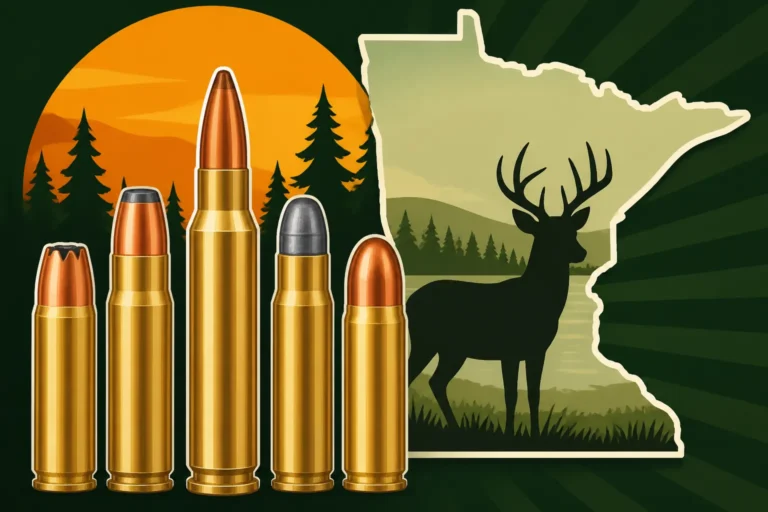
The market is flooded with different bullet types, each engineered for specific performance characteristics. For deer hunting, you're generally looking for a bullet that expands reliably upon impact, creating a significant wound channel to quickly incapacitate the animal, while also retaining enough weight to penetrate vital organs. Soft point (SP) bullets are traditional and effective, featuring an exposed lead tip that initiates expansion. They're a good all-around choice for many calibers and hunting situations.
Ballistic tip bullets, with their polymer tip, are designed for better aerodynamics and often initiate rapid expansion upon impact, making them excellent for shots that require flat trajectories and quick energy dump. However, some argue they can be prone to fragmenting at very close ranges. Bonded bullets, where the lead core is chemically bonded to the copper jacket, offer a balance of reliable expansion and excellent weight retention, leading to deeper penetration, which is desirable for larger deer or less-than-ideal shot angles. Finally, monolithic (all-copper) bullets are gaining popularity, particularly where lead-free ammunition is preferred or required. These bullets expand widely but hold together almost perfectly, providing incredible weight retention and deep, consistent penetration. Understand the characteristics of your chosen bullet and how it performs at the ranges you typically hunt.
Grain Weight and Ballistics
The grain weight of your bullet also significantly influences its ballistic performance and terminal effects. Generally, heavier bullets tend to retain more energy over distance and are less prone to deflection by small obstacles like twigs, earning them the "brush-busting" moniker (though no bullet is truly brush-proof). They often offer deeper penetration. Lighter bullets, conversely, typically achieve higher velocities, resulting in flatter trajectories which can be an advantage for longer shots in open terrain.
For most Minnesota deer hunting, a medium-to-heavy-for-caliber bullet is a wise choice. For example, in a .308 Winchester, a 150-grain or 165-grain bullet is usually an excellent all-around choice. In a .270, a 130-grain or 150-grain performs admirably. For straight-wall cartridges like the .450 Bushmaster, heavier bullets in the 250-300 grain range are common and deliver impressive impact. It's crucial to match the bullet weight to your specific cartridge, rifle, and expected hunting conditions. Experiment with different bullet weights and types at the shooting range to see what performs best in your rifle and for your intended purpose.
Ethical Shot Placement and Practice
No matter how expensive your rifle or how advanced your ammunition, nothing replaces ethical shot placement and consistent practice. The goal of any hunter should be a quick, humane kill, and that starts with putting the bullet where it needs to go: in the vitals. For deer, this typically means the heart and lungs, a roughly dinner-plate-sized area just behind the shoulder. Understanding deer anatomy, anticipating shot angles, and waiting for the right opportunity are far more critical than any gear advantage.
Regular practice at the range is non-negotiable. Don't just sight in your rifle and call it good; practice shooting from various positions you might encounter in the field – off-hand, kneeling, sitting, or using shooting sticks. Know your rifle's capabilities and, more importantly, your own. Can you consistently hit a dinner plate at 200 yards? If not, restrict your shots to shorter distances. The best setup in the world is useless if the hunter can't place the shot accurately under pressure. Invest time and effort in becoming proficient with your chosen setup, because ultimately, your skill and discipline are the most important tools in your hunting kit. For tips on getting that rifle ready, check out Sighting In a Rifle for Minnesota Woods Ranges.
Accessorizing Your Minnesota Deer Rifle
Once you have your core rifle setup – the rifle, scope, and chosen ammunition – there are several accessories that can significantly enhance your hunting experience, improving comfort, stability, and safety in the field.
Slings, Bipods, and Shooting Sticks
Carrying a rifle through Minnesota's varied terrain, from dense woods to open fields, can be tiring. A good quality sling is an absolute necessity for comfortable transport, allowing you to carry your rifle hands-free and distribute its weight. Look for a sling that is comfortable on your shoulder, adjustable, and durable. For those long walks into a stand or through extensive public land, a padded sling can make a world of difference. You can find more advice on this in Slings for a Long Boundary Waters Walk.
For hunters who frequently take shots from a prone position or from a static blind overlooking a field, a bipod can provide rock-solid stability. However, they can be cumbersome in dense timber. A more versatile alternative for many is a set of shooting sticks. These can be quickly deployed from a standing, kneeling, or sitting position, offering much greater stability than an off-hand shot, especially after you've been sitting still in a cold stand for hours. They are light, portable, and can be used in a variety of situations, making them an excellent investment for many Minnesota hunters, especially when hunting open areas or food plots. For tips on using them, see Shooting Sticks for a Farmland Field Edge.
Cleaning and Maintenance Gear
Minnesota's hunting seasons often bring a mix of weather – rain, snow, sleet, and freezing temperatures. Keeping your rifle clean and well-maintained is crucial for its reliability and longevity. A basic cleaning kit should include a cleaning rod, bore brush, patches, bore solvent, and gun oil. After a hunt in wet or snowy conditions, it's vital to wipe down your rifle, clean the bore, and apply a light coat of protective oil to prevent rust. Moisture is the enemy of firearms, and Minnesota weather will test your vigilance.
Pay particular attention to the action and any moving parts, ensuring they are free of debris and lightly lubricated. In extremely cold weather, be cautious about over-lubricating, as some oils can become sluggish or even freeze, hindering proper function. A dry lubricant or very thin oil might be preferable in such conditions. A well-maintained rifle is a reliable rifle, and reliability is paramount when you have that once-in-a-season shot opportunity. Understanding how to care for your rifle after exposure to the elements is key to its performance. Cleaning a Rifle After a Wet Sit offers specific advice.
Safety Gear and Transport
Safety is always the number one priority when handling firearms. Beyond basic firearm safety rules, specific gear and adherence to transportation laws are essential. When not in use, your rifle should always be stored unloaded and, preferably, secured with a trigger lock or in a safe. For transportation in a vehicle, Minnesota law typically requires that firearms be unloaded and either fully enclosed in a case, placed in the trunk (if applicable), or not readily accessible.
A quality rifle case, whether soft or hard, protects your firearm from bumps, scratches, and the elements during transport. Hard cases offer superior protection, especially when traveling long distances or if your rifle is subject to rough handling. Soft cases are lighter and more flexible, often preferred for shorter trips to the range or local hunting spots. Don't forget blaze orange requirements either. During firearm deer season, hunters (and anyone accompanying them) are required to wear blaze orange or blaze pink clothing, ensuring high visibility in the field. Understanding these rules and equipping yourself with the right safety gear is not just about compliance, but about ensuring a safe and responsible hunting experience for everyone. Always confirm Minnesota's specific transport laws before you head out, and remember that Rifle Cases for Travel to Minnesota are more than just an accessory. And of course, never forget How Much Blaze Orange Minnesota Requires.
Finding Your Ideal Minnesota Rifle Setup
Ultimately, the "best" rifle setup is the one that fits your specific hunting style, the terrain you navigate, and your comfort level with the firearm. There’s no one-size-fits-all answer in Minnesota, but by carefully considering your options and personalizing your gear, you can build a setup that gives you maximum confidence in the field.
Consider Your Primary Hunting Area
The first and most critical step in putting together your ideal rifle setup is to honestly assess where you do most of your hunting in Minnesota. Are you primarily navigating the dense, tangled cover of the northern "Big Woods," where shots are typically under 75 yards and visibility is often limited to mere feet? If so, a compact, quick-handling rifle in a brush-friendly caliber like a .30-30 or a straight-wall .350 Legend, topped with a low-magnification scope, might be your perfect match. Maneuverability and fast target acquisition will trump long-range precision here.
Conversely, if your deer season usually takes you to the sprawling agricultural lands of southern or western Minnesota, where deer often cross vast open fields or move along distant tree lines, your needs will shift. Here, a flat-shooting caliber like a .270 Winchester or 6.5 Creedmoor, paired with a variable power scope capable of reaching out to 300+ yards, would be far more advantageous. You need to be able to accurately place a shot at extended distances. Hunters who frequent the bluff country of southeastern Minnesota might need a blend of both, capable of both steep uphill/downhill shots in timbered valleys and crossing power lines or small open pockets. Understanding these distinct environments, as detailed in Big Woods Versus Farmland Deer, is foundational to making smart gear choices. Use mapping tools like GoHunt to scout your areas, identify typical shot distances, and then select your rifle setup accordingly.
Balancing Budget and Performance
Let’s be realistic: hunting gear can quickly become an expensive endeavor. While it's tempting to chase the latest and greatest, you absolutely do not need the most expensive rifle or scope to be a successful and ethical hunter. The key is to find the sweet spot where performance meets your budget, prioritizing quality in critical areas. For instance, while a high-end rifle might offer marginal gains in accuracy, a quality scope with clear glass and reliable adjustments can make a far bigger difference in real-world hunting scenarios.
Don't skimp on essentials like a good scope, durable sling, and reliable ammunition. A mid-range rifle from a reputable manufacturer, paired with quality optics, will serve most Minnesota hunters exceptionally well. Instead of blowing your entire budget on a single item, consider a balanced approach: a solid, accurate rifle, a bright and dependable scope, and a consistent supply of good ammunition for practice. Remember that resale value often follows brand reputation, so choosing well-known manufacturers can also be a smart financial decision in the long run. Many excellent firearms are available at various price points, offering fantastic performance without breaking the bank.
Testing and Familiarity
Perhaps the most overlooked, yet most crucial, aspect of assembling your ideal rifle setup is the time you spend testing it and becoming intimately familiar with it. A rifle, even the "perfect" one on paper, is only as good as the hunter wielding it. This means more than just a quick sight-in before opening day. It means regular trips to the shooting range, practicing from various positions, and understanding how your rifle and ammunition perform at different distances.
Take the time to truly learn your rifle's capabilities. How does it shoot at 50 yards? How about 100, 150, or 200 yards? Does your point of impact shift significantly when shooting from a cold bore versus a warm one? How does recoil affect your follow-up shot? Practice quickly acquiring targets, cycling the action smoothly, and making ethical decisions about when to shoot and when to pass. Spend time with your gear, not just at the range, but in the field (unloaded, of course) during the off-season, getting a feel for carrying it, shouldering it, and moving with it in typical hunting conditions. Tools like GoHunt can help you scout and plan your hunting areas, informing the types of shots you might encounter and the practice you need. A confident hunter, intimately familiar with their rifle setup, is far more effective and ethical than one who simply owns expensive gear but lacks proficiency. Scouting With the Minnesota Recreation Compass App can help you find suitable areas to practice and understand your hunting grounds better, which then informs your practice sessions.
Disclaimer
This article is for general informational purposes only and does not constitute professional advice. Laws, prices and regulations vary by location and change over time. Consult a qualified professional for guidance on your specific situation.