.308 Versus .270 for Whitetails
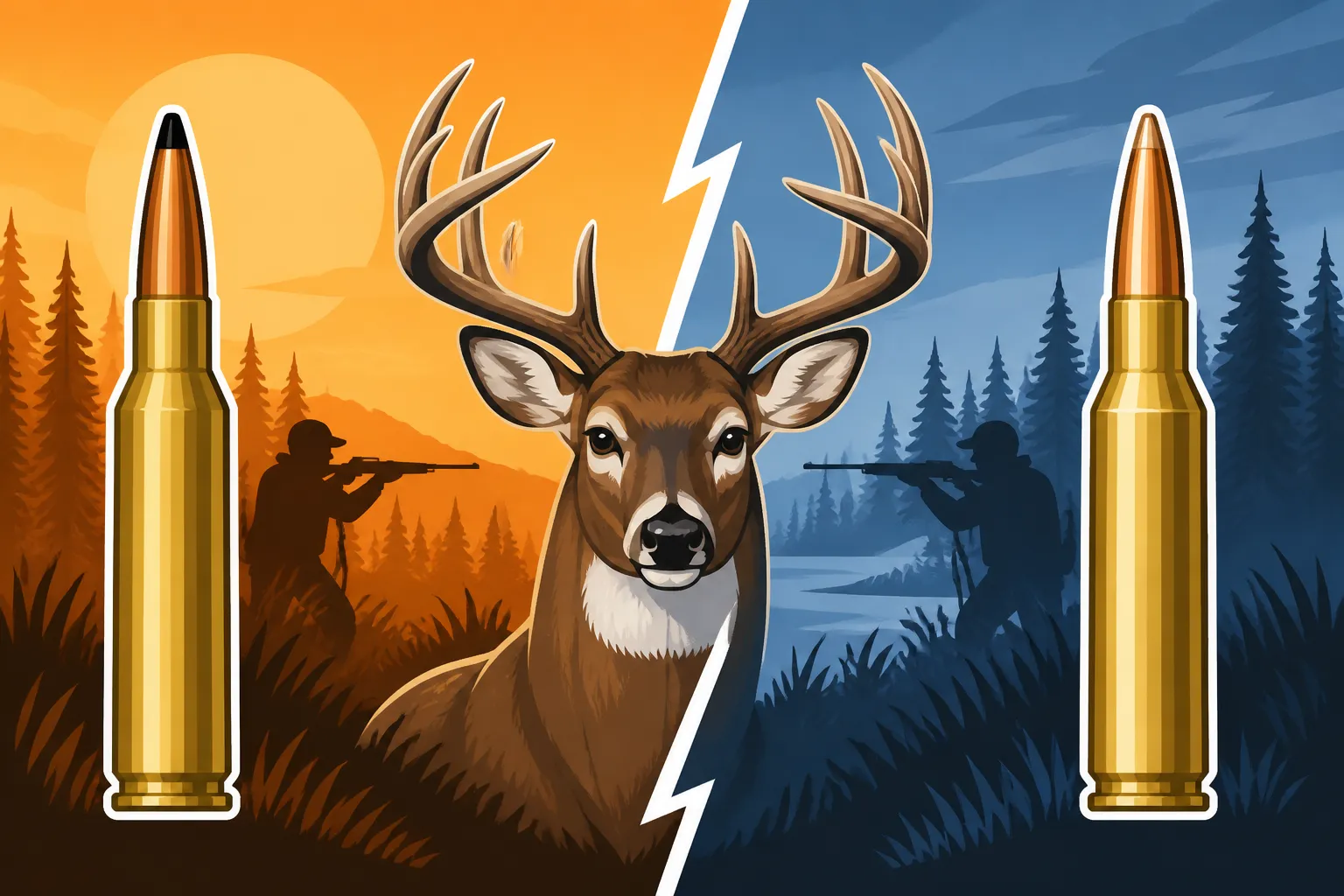
When you're standing in front of a rifle rack, staring at two of the most popular deer hunting cartridges ever conceived—the .308 Winchester and the .270 Winchester—it's easy to feel a bit overwhelmed. Everyone has an opinion, and the debate between these two calibers for Minnesota whitetails can get pretty heated around a deer camp fire. The truth is, both are incredibly capable deer killers, but they achieve that goal in slightly different ways, and understanding those nuances can help you pick the one that best suits your hunting style and the specific Minnesota cover you'll be navigating. This guide aims to cut through the noise and give you a clear, realistic look at what each brings to the timber, the fields, and the bluff country.
The Enduring Appeal of the .308 Winchester
The .308 Winchester is often lauded as the modern classic, a cartridge that excels in a compact, efficient package. It's truly a global cartridge, used by military, law enforcement, and hunters alike, which speaks volumes about its reliability and performance. For many Minnesota deer hunters, especially those operating in thicker cover or on public land where shots are often closer, the .308 has become a go-to choice, and for good reason.
Ballistics and Practical Range in Minnesota Cover
The .308 Winchester shines in its ability to deliver excellent terminal performance within the typical ranges encountered when hunting whitetails in Minnesota. Most shots, particularly in the big woods of northern Minnesota or even along cattail sloughs in farm country, are well within 200 yards. The .308, with common 150-grain or 165-grain bullets, has a relatively flat trajectory out to these distances. It maintains excellent energy transfer, punching through deer effectively. You're not going to be making cross-canyon shots here in Minnesota, for the most part, so the flatter shooting characteristics of some other calibers become less critical. What you need is reliable energy and accuracy where it counts.
Consider a scenario in a dense aspen cut where a buck might appear suddenly at 75 yards, offering a quick shot. The .308 delivers its punch precisely and with authority. Even if that buck steps out into a small clear-cut at 150 yards, you're still well within the .308's comfort zone, and a properly zeroed rifle will put the bullet right where you're looking. This cartridge is designed to perform, and it does so consistently in a wide variety of rifles, from lightweight carbines to heavier bolt-action models. Its reliability is why so many hunters swear by it year after year.
Recoil and Shooter Comfort
One of the often-overlooked advantages of the .308 Winchester is its manageable recoil. Compared to some larger-bore cartridges or even its closest competitors, the .308 tends to have a more moderate kick. This isn't just about comfort; it directly translates to better shooting. When you're not anticipating a harsh jolt, you're more likely to maintain proper form, squeeze the trigger smoothly, and make a more accurate shot. For newer hunters, younger hunters, or anyone who just prefers a less punishing experience at the range, the .308 is incredibly appealing.
Think about it: practicing regularly is key to ethical hunting, and if your rifle thumps you hard every time you pull the trigger, you're less likely to put in the necessary range time. A .308 allows for extended practice sessions without fatigue or developing a flinch. This improved comfort and confidence at the shooting bench directly translates to greater accuracy in the field, which, as we all know, is the ultimate goal. Even if you're a seasoned hunter, less recoil means you can get back on target quicker, which can sometimes be the difference in a follow-up shot situation, though hopefully, you only need one.
Ammunition Availability and Variety
The sheer ubiquity of .308 Winchester ammunition is another huge plus for Minnesota hunters. Walk into almost any sporting goods store, hardware store with a hunting section, or even a larger general retailer, and you're almost guaranteed to find a variety of .308 loads. This isn't just about finding any ammo; it's about finding the right ammo. You'll have a vast selection of bullet weights, from 125-grain options for reduced recoil and varmints, up through the very common 150-grain and 165-grain deer loads, all the way to heavier 180-grain options. This means you can truly dial in the perfect bullet for your rifle and your hunting conditions.
Whether you prefer a simple cup-and-core bullet for dependable expansion or a premium bonded or monolithic bullet for maximum weight retention and penetration, the .308 market has you covered. This vast selection ensures that you can experiment and find what your particular rifle shoots most accurately. Plus, during peak hunting season, when some calibers might become scarce on the shelves, the .308's popularity often means it's still available, saving you a headache before opening weekend.
The Classic Versatility of the .270 Winchester
The .270 Winchester has a legendary status in the hunting world, particularly among those who appreciate flat trajectories and impressive reach. Introduced by Winchester in 1925, it quickly gained a reputation as an outstanding big game cartridge, and it has been a favorite for whitetails, mule deer, and even elk for generations. If you hunt more open country in Minnesota, like the vast farm fields of the southern and western parts of the state, the .270 might just be calling your name.
Flat Trajectory for Longer Shots
The hallmark of the .270 Winchester is its exceptionally flat trajectory, especially with common 130-grain or 150-grain bullets. This characteristic makes it a fantastic choice for those situations where a whitetail might be standing at 250 or even 300 yards. While these are less common shots in much of Minnesota's timbered regions, they certainly present themselves if you're hunting expansive agricultural fields, pipeline clearings, or power lines that stretch for miles.
Imagine you're overlooking a cut cornfield in southern Minnesota, a cold wind whipping across the stubble. A mature buck steps out near the far end, maybe 275 yards away. With a .270 zeroed appropriately, that bullet arrives with minimal drop, increasing your confidence in making a precise shot. You don't have to guess as much about holdover, which simplifies things in the heat of the moment. This extended effective range, while not always needed, provides a significant advantage when the opportunity arises in open areas. Hunting a Standing Cornfield in Farm Country often means needing to reach out.
Energy Transfer and Terminal Performance
Despite its lighter bullet weights compared to many .30-caliber cartridges, the .270 Winchester delivers impressive energy transfer and terminal performance on whitetails. The key is its high velocity. A typical 130-grain .270 bullet zips out of the barrel at speeds that often exceed what a heavier .308 bullet can achieve. This velocity, combined with well-designed hunting bullets, creates hydrostatic shock and often results in quick, clean kills.
When that high-velocity bullet impacts a deer, it expends its energy rapidly and efficiently. This means even with a smaller diameter bullet, you're getting excellent tissue damage and often a fast knockdown. Many hunters report that deer hit with a .270 tend to drop in their tracks or travel only a very short distance, which is always reassuring, especially when hunting dense cover where tracking can be a challenge. It's a testament to the cartridge's design that it achieves such devastating effect on game.
Recoil Considerations for the .270
While not notoriously punishing, the .270 Winchester does tend to have a slightly sharper and more noticeable recoil impulse than the .308. It's not a deal-breaker for most experienced shooters, but it's something to be aware of, especially if you're sensitive to recoil or plan on doing extensive practice sessions. The higher velocity, while beneficial for trajectory and terminal performance, inherently generates more backward thrust.
For hunters who might be smaller in stature, or for youth hunters graduating to a centerfire rifle, the .270 might be a bit much without a good recoil pad or a rifle with some weight to it. This isn't to say it's unmanageable; far from it. Many hunters shoot the .270 their entire lives without issue. But if you find yourself flinching after a few shots at the range, or if you're trying to quickly reacquire a target, the slightly snappier recoil could be a factor. As always, a proper fit for your rifle and a solid shooting technique can mitigate much of this.
Making the Choice: .308 or .270 for Your Minnesota Hunt
The decision between a .308 and a .270 really boils down to your specific hunting environment, personal preferences, and how you prioritize certain characteristics in a hunting rifle. There's no single "best" answer, only the best answer for you. Both calibers have proven themselves countless times in Minnesota's diverse landscapes.
Matching Caliber to Terrain and Hunting Style
When considering which caliber to choose, think about where and how you typically hunt in Minnesota. Are you deep in the Big Woods Versus Farmland Deer areas, where dense timber, thick brush, and short shooting lanes are the norm? If so, the .308's compact size, moderate recoil, and excellent performance out to 200 yards make it an outstanding choice. You're unlikely to need the flatter trajectory of the .270 in such environments, and the .308's ability to be chambered in shorter, handier rifles can be a real advantage when navigating tight cover or climbing into a Treestand Setups in Minnesota Hardwoods.
Conversely, if your hunting grounds lean more towards the open agricultural lands of southern or western Minnesota, where long views across cut fields or wide-open prairies are common, the .270 Winchester starts to make a very strong case for itself. Those 200-300 yard shots become much more probable, and the .270's flat-shooting nature simplifies aiming at those longer distances. If you're often set up on a field edge or in a ground blind overlooking a large expanse, that extra reach and confidence can be invaluable. You might even find yourself using mapping tools, perhaps even something like GoHunt, to analyze the precise contours and distances of your hunting area, which can further inform your caliber choice.
Personal Preference and Shot Placement
Ultimately, the most important factor in ethically harvesting a deer isn't the specific caliber, but rather precise shot placement. A perfectly placed shot with a .243 Winchester will be far more effective than a poorly placed shot with a .300 Winchester Magnum. This is where personal preference and practice come into play. Which rifle do you shoot more accurately and confidently? Which one do you enjoy shooting at the range?
If you can consistently put bullets into a two-inch circle at 100 yards with your chosen rifle, regardless of whether it's a .308 or a .270, you're going to be a successful hunter. Don't let internet debates convince you that one is dramatically superior to the other. Both are more than capable of taking down a Minnesota whitetail cleanly and humanely. The key is finding a rifle and cartridge combination that feels good in your hands, that you can shoot well under pressure, and that you trust implicitly. The best hunting tool is always the one you are most proficient with.
Legality and Practicalities
From a legal standpoint, both the .308 Winchester and the .270 Winchester are perfectly legal for deer hunting throughout Minnesota. The state's recent changes, allowing rifles statewide, removed many of the previous regional restrictions that might have pushed hunters toward shotguns or straight-wall cartridges. So, you don't have to worry about one being legal where the other isn't. Why Straight-Wall Rifles Are Now Legal Statewide changed the game, but it opened the door for all legal rifle calibers, including these two bottlenecked classics.
Practically speaking, consider the cost and availability of ammunition over the long term, though as discussed, both are readily available. Also, think about the weight and size of the rifle itself. A shorter, lighter .308 might be more pleasant to carry during a long still-hunt through thick woods, while a slightly heavier .270 with a longer barrel might help tame recoil and maximize velocity for those longer shots from a stationary position. It's about finding that balance that fits your physical capabilities and hunting routine.
| Feature | .308 Winchester | .270 Winchester |
|---|---|---|
| Typical Range | Excellent out to 250 yards, effective to 300 | Excellent out to 300 yards, effective to 400+ |
| Trajectory | Moderately flat | Very flat, less bullet drop at longer ranges |
| Bullet Weight | Common 150-180 grain | Common 130-150 grain |
| Recoil | Moderate, very manageable | Slightly sharper than .308, still manageable |
| Rifle Size | Often found in shorter, lighter actions | Typically in standard long-action rifles |
| Ammunition | Very common, wide variety of choices | Common, good variety of choices |
| Best for Terrain | Thick woods, brushy areas, medium-range fields | Open fields, clear-cuts, long-range farmland |
| Shooter Type | Newer hunters, recoil-sensitive, all-around versatility | Long-range enthusiasts, open country hunters, experienced |
Beyond the Caliber: Other Factors for Success
Choosing between the .308 and the .270 is a fun debate, but it's just one piece of the puzzle for consistent hunting success here in Minnesota. There are other elements that often have a far greater impact on your ability to harvest a deer ethically and effectively.
Ammunition Selection and Bullet Design
Once you've settled on your caliber, the specific ammunition you choose is incredibly important. Not all bullets are created equal, even within the same caliber. For whitetails, you want a bullet that expands reliably to create a large wound channel but also retains enough weight to penetrate deep, ideally passing through both lungs and possibly the vitals. Look for hunting-specific bullets from reputable manufacturers.
Controlled expansion bullets, like bonded core designs or monolithic copper bullets, are excellent choices as they hold together well and drive deep, even if they hit bone. Standard cup-and-core bullets can also be highly effective, especially with good shot placement, but some premium designs offer an extra margin of performance. Spend some time researching bullet performance and consider how it aligns with your expected shot distances and the size of Minnesota deer. Don't just grab the cheapest box; your shot on a deer is too important for that.
Practice, Practice, Practice
I can't stress this enough: range time is critical. It doesn't matter if you're shooting a .308 or a .270, if you don't know where your rifle shoots, or if you flinch under pressure, you're not doing yourself or the deer any favors. Take your rifle to the range well before the season opens. Practice shooting from various positions—standing, kneeling, sitting, and from a bench. Simulate hunting conditions as much as possible. This means Sighting In a Rifle for Minnesota Woods Ranges for practical distances.
Knowing your rifle's zero and understanding its bullet drop at different ranges will build immense confidence. Try shooting at different distances, not just 100 yards, to truly understand your rifle's capabilities. A few hours at the range can make all the difference when that trophy buck steps out. Consistent practice ensures that when the moment of truth arrives, you're not just aiming, you're executing.
Rifle Setup and Optics
Finally, the rifle itself and its accompanying optics play a huge role. A well-fitted rifle is easier to shoot accurately. Make sure the length of pull is comfortable, and that you can quickly acquire a clear sight picture through your scope. A quality scope, one that holds zero, gathers light well in dim conditions, and has clear glass, is a worthy investment. Rifle Scope Magnification for Minnesota Deer should be chosen for your typical hunting conditions; often, lower magnification is better in thick woods.
Ensure your scope is mounted correctly and securely. Any wobble or loose rings will lead to frustration and missed shots. And don't forget accessories like a good sling for carrying your rifle through the woods, especially if you're venturing far onto public land. A well-maintained, properly set up rifle with quality optics will enhance your hunting experience, no matter which legendary caliber you choose to put through it.
Disclaimer
This article is for general informational purposes only and does not constitute professional advice. Laws, prices and regulations vary by location and change over time. Consult a qualified professional for guidance on your specific situation.