.30-30 in Minnesota Popple Cover
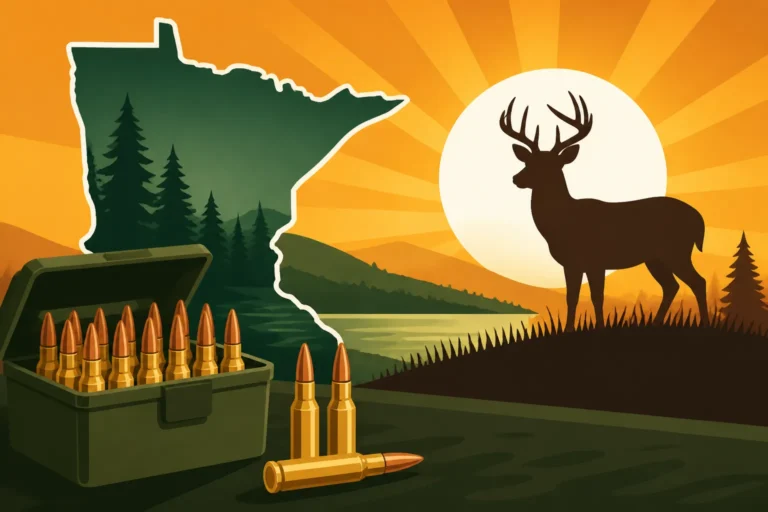
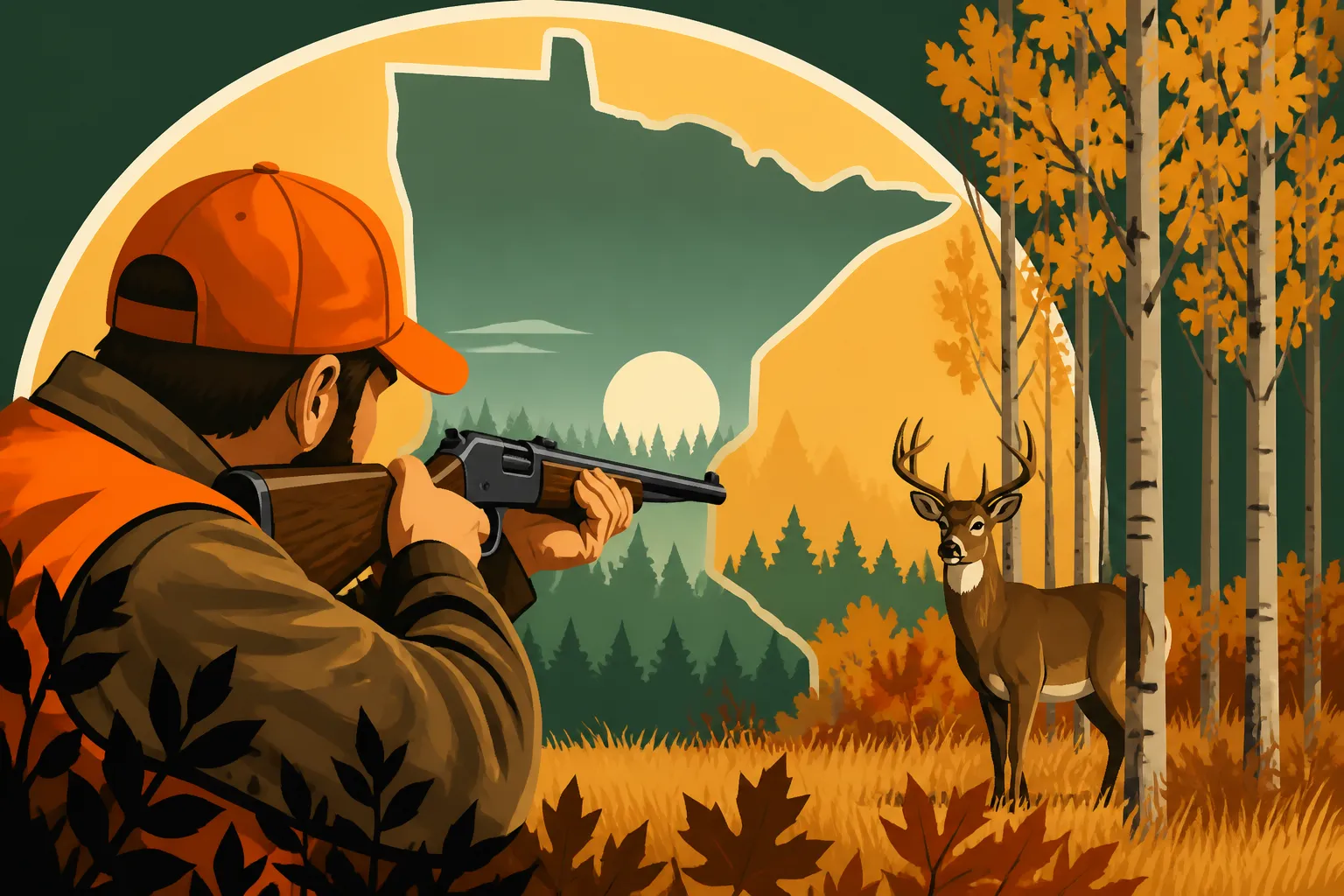
It's a classic Minnesota hunting scenario: you're deep in a thick stand of young aspen, often affectionately called "popple," and the visibility is barely 50 yards. You know a deer could materialize out of nowhere, and a long-range magnum rifle feels utterly out of place. This often leaves hunters wondering if their chosen firearm is truly suited for such close-quarters action. This guide will dive deep into why the venerable .30-30 Winchester, often overlooked in today's high-velocity world, remains an incredibly effective and practical choice for hunting whitetails in Minnesota's dense popple cover, offering practical advice to maximize its potential.
Why the .30-30 Still Shines in Minnesota's Popple
For decades, the .30-30 Winchester has been a staple in deer camps, and for good reason. While modern cartridges boast incredible velocities and flatter trajectories, they often solve problems that don't exist in the thickest parts of Minnesota's deer woods. Here, where shots are typically up close and personal, the .30-30's unique characteristics become distinct advantages. It’s not about sending lead out to 400 yards; it’s about reliable, effective performance in the tightest of spots.
The Enduring Appeal of Lever Actions
There's something inherently balanced and quick-handling about a lever-action rifle chambered in .30-30. Think about slinking through tangled brush or navigating blowdowns – a long, heavy bolt-action with a large scope can feel cumbersome and snag on every branch. The compact nature of a lever gun, with its typically shorter barrel and trim profile, makes it far more maneuverable. This nimbleness is a huge asset when Still-Hunting Minnesota Big Woods or trying to get into a tight treestand setup without making a racket. You can hold it closer to your body, bring it to your shoulder smoothly, and acquire a target rapidly, which is critical when a buck suddenly appears at spitting distance in heavy cover. The classic lever action also carries a certain nostalgic charm, connecting us to generations of hunters who relied on its simplicity and effectiveness.
Many hunters appreciate the quick follow-up shot capability of a lever action. While it's certainly not as fast as a semi-auto, it's often quicker than cycling a bolt-action, especially if you're not accustomed to rapid bolt manipulation. In a dense thicket, a deer might not offer a clean, standing broadside for long, and having the ability to chamber another round with a smooth flick of the wrist can sometimes mean the difference between a filled tag and an empty freezer. This quick handling and instinctive aiming are part of why it's been so popular in brushy terrain for over a century.
Terminal Ballistics and Brush Bucking Myths
Let's cut through some common misconceptions. The idea that a .30-30 "brushes bucks" better than a high-velocity rifle is largely a myth. Any bullet, regardless of its speed, can be deflected by twigs and branches. The key isn't bullet design for brush deflection, but rather the reasonable expectation of shot distances in popple. In truly thick cover, you're looking at shots generally under 75 yards, often much closer. At these ranges, the .30-30's moderate velocity and heavy-for-caliber bullet (typically 150-170 grains) are more than sufficient to deliver devastating energy on a whitetail. It’s designed to expand reliably at these velocities, creating a significant wound channel that leads to quick, humane kills.
The blunt-nosed, flat-point bullets traditionally associated with the .30-30 are designed for safe use in tubular magazines, preventing primer detonation from recoil. However, modern ammunition like Hornady's LEVERevolution uses a flexible polymer tip, allowing for pointed bullet designs that improve ballistic coefficient and extend effective range slightly, while still being safe in a tube mag. Even with traditional flat-nose rounds, the energy transfer at close range is excellent. A 170-grain .30-30 bullet hitting a deer at 50 yards is still carrying significant kinetic energy, more than enough for complete penetration and ethical harvest on even the largest Minnesota whitetail. Focus on shot placement, not trying to shoot through branches, and the .30-30 will perform admirably.
Recoil, Handling, and Quick Follow-Up Shots
One often-overlooked benefit of the .30-30 is its manageable recoil. Compared to many popular deer cartridges like the .30-06 or .300 Win Mag, the .30-30 is a pleasure to shoot. This isn't just about comfort at the range; it translates directly to better shooting in the field. Less recoil means less flinching, more accurate first shots, and quicker sight recovery for potential follow-up shots. When a deer bounds away in a flurry of activity in thick cover, being able to quickly settle back on target without being jarred off line by heavy recoil is a real advantage. The typical weight of a lever-action .30-30 also contributes to its comfortable shooting characteristics.
The overall handling of a .30-30 lever gun in dense woods is simply superior to many other options. When you’re trying to navigate tangled brush, keeping your rifle close and ready, the relatively short overall length and good balance of a .30-30 make it intuitive. It feels like an extension of your body, allowing you to move quietly and deliberately. You’re not fighting the rifle; you’re working with it. This synergy between hunter and firearm allows for faster target acquisition and more precise shooting when those fleeting opportunities arise in the dense popple.
Understanding Popple Cover and the .30-30's Performance
To truly appreciate the .30-30 in this environment, we need to understand the habitat itself. Popple, or aspen, stands are a specific type of cover common across much of Minnesota, particularly in the northern and central parts of the state. It's an environment where deer thrive, but it also dictates a certain style of hunting and rifle performance.
Defining Popple: Habitat and Deer Behavior
"Popple" is the common local term for aspen, particularly young aspen stands that have regenerated after logging or fire. These areas are characterized by a dense growth of slender trees, often just a few inches in diameter, growing incredibly close together. Interspersed with these young aspens, you'll find thick underbrush like hazelnut, dogwood, and various brambles. This creates an almost impenetrable labyrinth, offering incredible cover and browse for deer. A mature buck might live its entire life within a few hundred acres of such cover, rarely venturing into open areas during daylight hours.
Deer use popple cover for bedding, feeding, and as escape routes. The thick canopy provides thermal protection from winter winds and summer heat, while the dense understory offers security. These areas often form natural funnels and travel corridors, but they are incredibly difficult for a hunter to navigate quietly. Understanding this habitat helps us appreciate why longer-range calibers are often overkill. The deer here are accustomed to living in tight quarters, and they are masters of slipping through the brush unseen. When you do encounter one, it's often a surprise, and at very close range. You can often find excellent deer sign, like Scrape Lines Along a Logging Trail, on the edges of these dense stands.
Typical Shot Distances in Thick Cover
Let's be realistic about what kind of shot distances you'll encounter in classic popple cover. Forget 200 or 300 yards. In these dense environments, most shots will be well under 100 yards, often between 20 and 70 yards. I've personally had encounters where a deer popped up at 15 yards, offering only a fleeting shot window. This isn't wide-open farmland hunting; this is true close-quarters combat. For these distances, the .30-30's trajectory is perfectly adequate. Sighted in at 100 yards, a standard 170-grain .30-30 bullet will be only a few inches high at 50 yards and practically dead-on at 100. There's no need to compensate for bullet drop when the deer is practically in your lap.
The challenge isn't bullet drop, but rather identifying the animal, finding a clear shooting lane through the maze of branches, and making a quick, accurate shot. This is where the .30-30's moderate velocity truly shines. You're not burning through expensive powder to achieve speeds you don't need, and the bullet is designed to perform at the velocities it will achieve at these close ranges. Rather than focusing on external ballistics that favor open country, you're selecting a cartridge and rifle that excel at the internal, on-target ballistics needed for thick-cover hunting.
Bullet Construction for Penetration and Expansion
When choosing ammunition for your .30-30 in popple, bullet construction is paramount. You want a bullet that will expand reliably at the .30-30's moderate velocities (typically 2000-2200 fps at the muzzle for a 150-grain bullet) but also hold together well enough to penetrate through the thick hide, muscle, and bone of a whitetail. Traditional cup-and-core bullets, such as those with exposed lead tips or soft points, have proven their effectiveness for decades. These bullets are designed to mushroom upon impact, creating a wide wound channel that quickly incapacitates the animal.
Modern advances, as seen with options like Hornady's LEVERevolution, further enhance this. The polymer tip allows for a more aerodynamic bullet shape, improving energy retention at slightly longer ranges if you happen to catch a deer in a small opening. However, even standard flat-point soft-point bullets from manufacturers like Remington Core-Lokt or Winchester Super-X are excellent choices. Their reliable expansion and sufficient penetration ensure that if you hit a deer correctly, it will be a quick and ethical harvest. Don't overthink it; the core principle is that the bullet must perform optimally at the actual impact velocities you'll be experiencing in the timber, not theoretical maximums. Ammunition Availability Before Opening Day can sometimes be tricky, so it's wise to stock up on your preferred load.
Optimal .30-30 Setup for Thick Timber
A great rifle is only part of the equation; how you set it up makes all the difference in the field. For hunting Minnesota's dense popple, a minimalist and practical approach to your .30-30 setup will serve you best.
Ammunition Selection for Popple Hunting
When it comes to .30-30 ammunition, you have a few excellent choices that are perfectly suited for the dense cover we're talking about. The most common bullet weights are 150-grain and 170-grain. Both are highly effective on whitetails.
- 150-grain bullets: These tend to have a slightly flatter trajectory and higher velocity, which might offer a small edge if you anticipate shots nearing the 100-yard mark in more open sections of the popple.
- 170-grain bullets: These carry a bit more momentum and often offer slightly better penetration on larger-bodied deer, which can be a factor if you're targeting big, mature bucks. They typically expand very well at close range.
As mentioned, traditional flat-point soft points (e.g., Remington Core-Lokt, Winchester Super-X) are time-tested and reliable. For those looking for a slight ballistic upgrade, Hornady's LEVERevolution with its flexible tip is an excellent modern option that safely allows for spitzer-type bullet profiles in tubular magazines. It offers a flatter trajectory than traditional rounds without sacrificing terminal performance at close range. The key is to choose one brand and bullet weight, then stick with it. Practice with it. Know its capabilities.
| Ammunition Type | Bullet Weight (gr) | Bullet Type | Key Advantage in Popple |
|---|---|---|---|
| Traditional Soft Point | 150 or 170 | Flat-Nose Soft Point | Proven terminal performance, reliable expansion |
| Hornady LEVERevolution | 160 | FTX Polymer Tip | Improved aerodynamics, slightly extended effective range |
| Federal Power-Shok | 150 or 170 | Soft Point | Consistent performance, good value |
| Winchester Super-X | 150 or 170 | Power-Point | Time-tested reliability, good energy transfer |
Sights and Optics for Fast Target Acquisition
In thick popple, situations unfold quickly. You need to get on target fast. While a low-magnification scope (1-4x or 2-7x) can be beneficial for those slightly longer shots in small openings, many hunters find success with simpler options. A quality set of receiver (peep) sights or even well-regulated open sights can be incredibly fast and reliable. They eliminate the concern of fogged lenses or parallax issues, and they are practically bombproof in rough conditions. Sighting In a Rifle for Minnesota Woods Ranges is crucial, regardless of your chosen optic.
If you do opt for a scope, keep it small and simple. A 1-4x scope provides a wide field of view at 1x, perfect for close-quarters situational awareness, and enough magnification at 4x for typical timber ranges. Make sure it's mounted low to the receiver to maintain the rifle's natural pointability. An illuminated reticle can also be a significant advantage in the low light of dense woods, especially during the crucial first and last hours of the day. Modern red dot sights are also gaining popularity on lever actions, offering extremely fast target acquisition and precise aiming at typical .30-30 ranges. The goal is to maximize your ability to quickly and accurately place a shot, not to identify antler points at 200 yards.
Sling and Carrying Considerations
When you're still-hunting through miles of dense popple, a comfortable and functional sling is your best friend. You'll often be using both hands to push branches aside, climb over logs, or steady yourself. A quality sling allows you to carry the rifle securely on your shoulder or across your back, keeping your hands free, but still allows for a quick transition to a shooting position. Look for a sling that offers a good grip and doesn't slip, even when wet or cold. Padded slings add comfort during long treks.
Beyond the sling, consider how you physically carry the rifle. In extremely thick stuff, carrying the rifle at the ready, across your chest or in one hand, might be more effective than slung over your shoulder. This allows for immediate action if a deer jumps. However, be mindful of noise. A lever action, with its exposed hammer and lever, can sometimes snag on brush. A piece of electrical tape over the hammer spur can prevent accidental snagging, and ensuring your sling swivels are quiet can reduce metallic clinking noises. Every little bit of stealth helps when you're trying to sneak up on a wary whitetail in its sanctuary. A reliable resource like GoHunt can help you research different sling options and carrying techniques that other hunters find successful in similar terrain.
Tactical Considerations for Hunting Popple with a .30-30
Hunting popple cover is a unique challenge, and success often comes down to strategy and discipline. Your .30-30 is a tool perfectly suited for these tactics, but only if you employ them effectively.
Still-Hunting and Stand Hunting Strategies
Popple cover demands patience and stealth. Still-hunting, moving slowly and deliberately through the woods, stopping frequently to scan and listen, is arguably the most effective tactic with a .30-30 in this environment. Take one or two steps, then pause for several minutes, scanning every shadow and listening for the slightest rustle. Use binoculars to pick apart the dense cover, looking for horizontal lines that don't belong (a deer's back or belly) in a vertical world of trees. The lightweight and balanced nature of the .30-30 makes it ideal for this method, as you're constantly raising and lowering the rifle, or bringing it to the ready. For more on this, check out Still-Hunting Minnesota Big Woods.
Alternatively, stand hunting from a treestand or ground blind can be highly productive, especially near known deer trails, bedding areas, or edges where popple meets a more open habitat. When Treestand Setups in Minnesota Hardwoods are considered, the .30-30's compact size is a huge advantage in tight spaces. You won't be wrestling a long barrel from a shooting rail. For ground blinds, ensure you brush it in thoroughly to blend with the surroundings, especially the dense undergrowth typical of popple. Your shooting lanes from a stand or blind will still likely be short, making the .30-30's performance at close range ideal. Consider setting up along a natural funnel or pinch point within the popple, or where two different types of cover meet.
Shot Placement for Quick Kills
Regardless of the caliber, ethical hunting demands precise shot placement. With a .30-30, particularly at close ranges in thick cover, placing your shot accurately is paramount for a quick and humane kill. Aim for the "boiler room" – the heart-lung area just behind the shoulder. This target zone is relatively large, and a solid hit with a .30-30 bullet will cause massive internal damage, leading to rapid incapacitation. Avoid aiming for the head or neck in a pressured situation, as the margin for error is much smaller. In a quick-developing situation, a broadside or slightly quartering-away shot offers the best opportunity for a clean pass-through of both lungs and potentially the heart.
Even with the .30-30's excellent close-range performance, it's vital to wait for a clear, unobstructed shot. Don't try to shoot through dense brush or even small twigs. While the "brush bucking" myth suggests some bullets are better at it, the reality is any deflection can lead to a wounded animal and a difficult tracking job. Be patient. If the shot isn't clear, don't take it. Let the deer move, or try to reposition for a better angle. Using a reliable mapping application like GoHunt can help you identify open pockets or slight elevation changes that might offer better shooting opportunities within dense cover.
Tracking in Dense Popple
Even with a perfectly placed shot, deer often run a short distance, and tracking is an inevitable part of hunting. In dense popple, tracking can be particularly challenging. The thick undergrowth obscures blood trails, and the numerous deer trails can easily confuse even an experienced tracker. If you shoot a deer with your .30-30, especially if it was a quick, close shot, give it time. If you suspect a solid hit, wait at least 30-60 minutes before beginning to track. This allows the animal to lay down and expire.
When you do start tracking, move slowly and methodically. Mark the spot where the deer was standing when you shot, and the last place you saw it. Look for blood, broken twigs, disturbed leaves, and tracks. In popple, you'll often have to get down on your hands and knees to find the faint blood trail. If the trail becomes too sparse, expand your search in ever-widening circles. Pay attention to the deer's likely escape route – often toward thicker cover or downwind. Don't be afraid to enlist help from experienced trackers or a tracking dog if legal in your area. While the .30-30 delivers a punch, Blood Trailing After Dark in Minnesota or in dense brush requires diligence. A high-quality headlamp is essential if tracking runs late, and always keep safety in mind when pursuing game in challenging terrain.
Disclaimer
This article is for general informational purposes only and does not constitute professional advice. Laws, prices and regulations vary by location and change over time. Consult a qualified professional for guidance on your specific situation.