Bow and Crossbow Setups for Minnesota
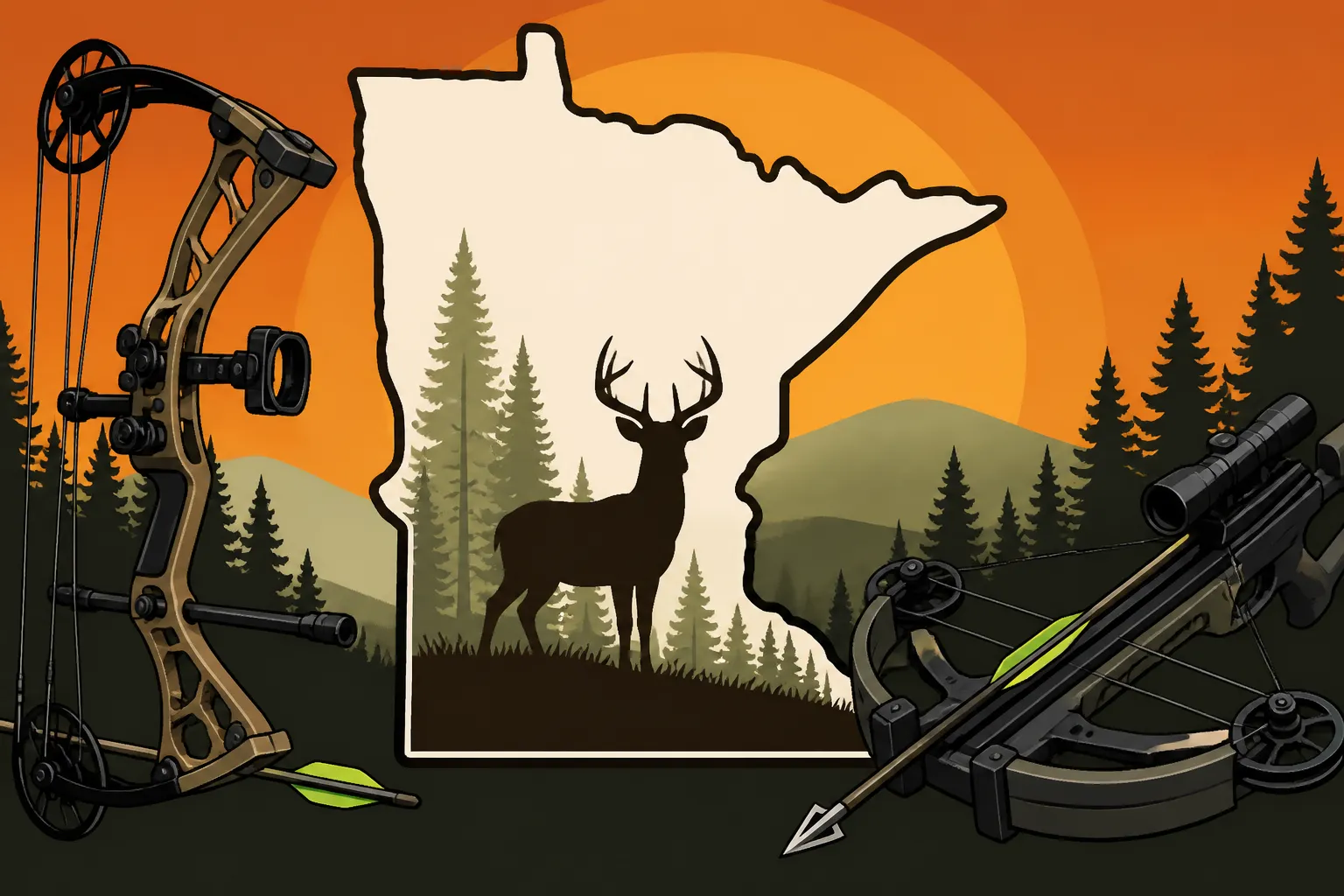
One of the most rewarding ways to chase whitetails in Minnesota is with a bow or crossbow. There’s something truly special about the close-range challenge, the intimate connection with nature, and the sheer patience it demands. But for newcomers, or even seasoned hunters considering a switch, figuring out the right setup can feel like navigating a dense thicket without a compass. From understanding the nuances of vertical bows versus crossbows to dialing in your optics and accessories, the choices can be overwhelming. This guide will meticulously break down everything you need to know to assemble a reliable, effective, and legal bow or crossbow setup for Minnesota's diverse hunting landscapes.
Understanding Minnesota's Bowhunting Regulations
Navigating hunting regulations can sometimes feel like trying to untangle a bird's nest – especially when it comes to specific weapon types. Minnesota has clear guidelines for both vertical bows and crossbows, and understanding these from the outset is crucial for a legal and successful hunt. It’s not just about what you can use, but also when and where you can use it. Misinformation or assumptions can quickly lead to a frustrating experience or, worse, a violation.
Vertical Bow vs. Crossbow Rules
For years, the distinction between vertical bows (compound and recurve) and crossbows was a hot topic among hunters. Minnesota has clarified these rules significantly, making crossbows generally legal for anyone with an archery license during the regular archery season. This wasn't always the case, and many seasoned archers remember when crossbow use was restricted to those with special permits due to age or disability. That changed to make the sport more accessible, which has been a welcome adjustment for many, though some traditionalists still have strong feelings about it.
It's important to remember that while legal for all during archery season, crossbows and vertical bows still operate under the same fundamental archery season dates and restrictions. This means if you're hunting deer, you're looking at the same open and close dates, regardless of whether you're drawing a compound or cocking a crossbow. This unified approach simplifies the season structure, allowing hunters to focus more on strategy and less on weapon-specific timing. However, keep in mind there are still minimum performance standards your equipment must meet to be considered legal and ethical for big game. You'll find the specifics in the hunting regulations booklet, which is your absolute best friend when planning a hunt.
License Requirements and Seasons
Securing the proper licenses and understanding the season framework is your first and most critical step. For bowhunting in Minnesota, you'll need a valid archery deer license, which grants you permission to hunt during the extended archery season. This season often provides some of the most beautiful hunting days, from the mild temperatures of early fall to the crisp, quiet woods of late autumn as the rut begins. Don't forget, if you're planning to hunt other species with your bow, like turkeys during the fall season, you'll need the appropriate turkey tag as well.
The archery season in Minnesota is wonderfully long, often stretching from mid-September right into December. This extended window offers incredible flexibility, allowing you to experience different phases of the whitetail year, from early-season patterns focused on food sources to the intense rut in November and even late-season cold-weather hunting. This long season is one of the biggest draws for many Minnesota archers. Remember that specific dates can vary slightly year to year, so always check the current regulations. Minnesota Archery Season Dates will give you the exact window to plan your hunts around. Also, regardless of your weapon choice, you'll need to make sure you have your Minnesota Resident Hunting License Options or Minnesota Nonresident Hunting License Options in order.
Minimum Draw Weight for Minnesota Deer
When it comes to ethical hunting, ensuring your equipment delivers enough energy to make a clean, quick kill is paramount. Minnesota regulations specify a minimum draw weight for vertical bows used to hunt big game like deer. This isn't just a rule; it's a commitment to responsible hunting. For traditional vertical bows, the minimum draw weight is generally set to ensure sufficient kinetic energy for broadhead penetration. This typically means a bow must have at least a 40-pound draw weight at a 28-inch draw, or an equivalent for shorter draw lengths.
For crossbows, the regulations typically focus on the peak draw weight, which directly relates to the energy stored and transferred to the bolt. While crossbows usually far exceed the minimum kinetic energy requirements due to their design, it's still worth a quick check of the regulations to ensure your specific model is compliant. For both weapon types, remember that these are minimums. Many hunters opt for higher draw weights or more powerful crossbows to provide a greater margin of error and ensure maximum ethical performance in the field. Ultimately, the goal is always a swift, humane harvest. Minimum Draw Weight for Minnesota Deer is a critical detail every archer should be familiar with before heading afield.
Choosing Your Vertical Bow Setup
Opting for a vertical bow – be it a compound or a traditional recurve/longbow – is a deeply personal choice. Many hunters are drawn to the challenge and the satisfaction of mastering a vertical bow. It demands a higher degree of physical engagement and practice, but the rewards of a successful hunt are immense. The market offers a dizzying array of options, so understanding the core components and how they fit together is key to building a setup that feels right for you and performs flawlessly in the varied Minnesota terrain.
Bow Type and Draw Length Considerations
The most common vertical bow for hunting today is the compound bow, revered for its speed, accuracy, and "let-off" feature which makes it easier to hold at full draw. When choosing a compound, your draw length is absolutely critical. An improperly sized bow will hinder accuracy, cause discomfort, and can even lead to injury. Most pro shops can measure your draw length precisely, taking into account your arm span and shooting style. You can also get a good estimate by standing with your arms outstretched and measuring fingertip to fingertip, then dividing by 2.5. Once you know your draw length, you can select a bow with the right cam system and adjust it accordingly.
Traditional bows, like recurves and longbows, offer a different experience entirely. They lack the let-off and sights of a compound, demanding a more intuitive, often instinctual, style of shooting. These bows are beautiful and challenging, appealing to hunters who seek a deeper connection to ancestral hunting methods. While the draw length isn't adjustable in the same way as a compound, it's still vital to select a bow with a draw weight that you can comfortably manage for repeated shots, especially in cold weather or after a long sit in a tree stand. Regardless of your choice, a bow that fits you perfectly is the foundation of accuracy and confidence.
Sight and Rest Selection
Once you've got your bow, dialing in your aiming system is the next step. For compound bows, a good quality sight is non-negotiable. Most hunting sights are multi-pin, allowing you to set pins for different distances – commonly 20, 30, 40, and 50 yards. Some hunters prefer a single-pin slider sight, which offers a clearer sight picture but requires adjustment for each shot distance. Look for sights with bright, durable pins and a rheostat light for low-light conditions, which are common during Minnesota's early mornings and late evenings. A common struggle is finding a balance between brightness and not blooming out the pin in dim light, so adjustable brightness is a huge plus.
The arrow rest is equally important. Drop-away rests are incredibly popular for hunting because they provide full fletching clearance, maximizing accuracy, and then drop out of the way just before the arrow leaves the bowstring, preventing interference. Other options include containment rests, which hold the arrow securely at all times – great for stalking or quick shots but can introduce some fletching contact if not tuned perfectly. Whichever you choose, ensure it's robust, quiet, and precisely installed to maintain consistent arrow flight. A poorly tuned rest can throw off even the most expensive bow.
Arrow and Broadhead Matching
Your arrows and broadheads are what actually get the job done, so they deserve careful consideration. Arrows need to be matched to your bow's draw weight and length, as well as your personal preferences for weight and front-of-center (FOC) balance. Carbon arrows are the most common choice for hunting due to their durability and consistent flight. You'll want to select an arrow spine (stiffness) that is appropriate for your bow's power; an underspined arrow will flex too much and fly erratically, while an overspined arrow won't flex enough, causing similar accuracy issues. Again, a pro shop can help with precise arrow selection and cutting.
Broadheads are where the real debate often lies. You have two main categories: fixed-blade and mechanical (expandable) broadheads. Fixed blades are known for their ruggedness and reliability, performing consistently regardless of impact angle or speed. They require precise tuning to fly exactly like your field points, which can be a bit of a challenge. Mechanical broadheads, on the other hand, typically fly like field points dueaking their blades only upon impact. This often means less tuning effort. However, some hunters worry about mechanical failure, though modern designs are incredibly reliable. Both types, when chosen correctly and sharpened meticulously, are lethal. Fixed Versus Mechanical Broadheads discusses this topic in more detail, helping you decide which is right for your style and the game you pursue.
Optimizing Your Crossbow Setup
Crossbows have gained significant popularity in Minnesota, offering a different set of advantages, particularly for hunters who might struggle with the physical demands of a vertical bow or prefer a rifle-like shooting experience. They are known for their precision and speed, making them a formidable tool in the deer woods. However, like vertical bows, a proper setup is paramount for safety and effectiveness.
Crossbow Type and Power Stroke
Crossbows come in a few main configurations: recurve, compound, and reverse-draw. Recurve crossbows are simpler, often more robust, and quieter, with fewer moving parts, but tend to be wider. Compound crossbows use a system of cams and cables, much like a compound bow, to achieve higher speeds and narrower profiles, which can be a real advantage in a cramped treestand or ground blind. Reverse-draw crossbows are a newer design that moves the riser towards the shooter, allowing for an even more compact and balanced setup. Each type has its pros and cons regarding weight, width, speed, and overall feel.
Regardless of the type, the power stroke (the distance the string travels from rest to full draw) is a key factor in a crossbow's velocity and energy output. A longer power stroke generally translates to higher speeds and kinetic energy. When selecting a crossbow, consider how it balances in your hands, its overall weight (especially if you'll be carrying it long distances), and the noise it makes when fired. Many crossbows are capable of incredible speed, but accuracy always trumps velocity. A comfortable, well-balanced crossbow that you can shoot consistently is far more effective than the fastest one on the market.
Scope and Bolt Selection
Unlike vertical bows, crossbows are designed to be shot with a scope, making optics a critical component of your setup. Crossbow scopes often feature multiple reticles or "dots" calibrated for different distances, much like a rifle scope. Look for a scope with good low-light gathering capabilities, as hunting during dawn and dusk is common. Variable magnification scopes (e.g., 1.5-5x or 2-7x) offer flexibility, allowing you to zoom in for precise shots or zoom out for a wider field of view in thick cover. Durability and fog-proofing are also essential, given Minnesota's often harsh weather. Crossbow Scopes for Minnesota Timber Ranges will dive deeper into what makes a good optic for these specific conditions.
Bolts (crossbow arrows) are just as critical as arrows for a vertical bow. They need to be correctly spined and weighted for your specific crossbow to achieve optimal accuracy and kinetic energy. Most crossbow manufacturers recommend specific bolt weights and lengths for their models. Carbon bolts are standard, offering durability and consistent flight. Using bolts that are too light or too heavy for your crossbow can lead to accuracy issues or even damage the crossbow. It's also important to use straight, fletched bolts with broadheads that are compatible with your crossbow's speed and design. Just like with vertical bows, broadhead choice (fixed vs. mechanical) will impact how your bolts fly and the penetration you achieve.
Cocking Devices and Safety
Cocking a crossbow manually can require a significant amount of force, especially on modern, high-poundage models. This is where cocking devices become indispensable. Rope cockers are simple, lightweight tools that reduce the effort by about 50%, making it manageable for most hunters. Integrated crank cocking devices, either built into the crossbow or detachable, reduce the effort even further, sometimes down to a few pounds, and ensure a perfectly consistent draw every time, which improves accuracy. These are especially valuable for hunters with limited strength or those who plan to shoot multiple times during a practice session.
Safety is paramount with crossbows. They remain cocked and loaded until fired, meaning constant vigilance is required. Always engage the safety immediately after cocking. Never dry fire a crossbow, as this can severely damage the limbs and cams. When decocking, use a proper decocking arrow or a designated decocking target, never just shoot into the ground. Familiarize yourself thoroughly with your specific crossbow's safety features and operating procedures. Responsible handling ensures not only your safety but also the longevity of your equipment. For information on specific regulations, check out Minnesota Crossbow Rules During Archery Season.
Essential Accessories for Minnesota Bowhunters
Beyond the bow or crossbow itself, a suite of accessories can significantly enhance your hunting experience, boost your effectiveness, and contribute to a safer, more enjoyable day in the field. These aren't just "extras"; they're tools that complete your setup and help you adapt to various hunting scenarios in Minnesota's diverse environments.
Quivers, Releases, and Slings
For vertical bow hunters, a reliable quiver and release aid are non-negotiable. Quivers hold your arrows, keeping them protected and readily accessible. There are two main types: bow-mounted quivers, which attach directly to your bow and keep arrows close at hand, and hip/back quivers, which are carried separately. Bow-mounted quivers are convenient but can add weight and affect balance, while hip quivers keep weight off the bow but might snag in brush. Many hunters carry a bow-mounted quiver to the stand, then remove it and hang it separately to reduce bow weight for the shot.
Release aids are crucial for consistent shooting with a compound bow. They ensure a clean release of the string, minimizing torque and maximizing accuracy. Finger releases (like index finger releases) are very common, while thumb releases and hinge releases offer different shooting styles for those seeking ultimate precision. Experiment with different types to find one that feels comfortable and natural in your hand. For crossbows, a sling is incredibly useful, especially if you're hiking into your spot. It distributes the weight, frees up your hands for climbing, and makes long walks through the woods much more tolerable. A good quality padded sling can make a world of difference when you're covering ground.
Rangefinders and Binoculars for Close Encounters
Accuracy in bowhunting is directly tied to knowing your distance to the target. That's where a quality rangefinder comes into play. Unlike rifle hunting where you might have a wider margin for error, a few yards off with a bow can mean a missed shot or, worse, a wounded animal. Rangefinders provide instant, precise distance readings, allowing you to select the correct pin or scope reticle. Look for models that are fast, accurate, and capable of reading through light rain or snow. Angle compensation features are also invaluable, particularly when shooting from a treestand into a valley, as the horizontal distance is what matters for ballistic trajectory. Even small, affordable rangefinders can dramatically improve your accuracy. Rangefinders Under 100 Yards will help you find a great option that won't break the bank.
Binoculars are another often-underestimated tool for bowhunters. While rifle hunters might glass vast distances, bowhunters use binoculars for closer, more detailed observation. They help you pick apart dense cover, identify deer obscured by brush, or confirm antler points without excessive movement. In the dim light of dawn or dusk, good binoculars with light-gathering capabilities can be the difference between seeing an animal and it vanishing into the shadows. An 8x or 10x magnification is usually perfect for bowhunting ranges, offering a good balance of magnification and field of view. Using a Binocular Harnesses Worth Wearing will keep your optics secure and readily accessible without bouncing around.
Scent Control and Camouflage
Deer possess an incredible sense of smell, and ignoring scent control is one of the quickest ways to educate deer and blow your hunt. Scent control isn't just about sprays; it's a multi-faceted approach. This includes washing your hunting clothes in scent-free detergent, storing them in airtight containers, showering with scent-free soap, and using scent-eliminating sprays on your boots and outer layers before heading out. Playing the wind is still your absolute best defense, but minimizing your human odor stack is crucial, especially in areas with high hunting pressure. There are even scent-absorbing carbon clothing lines, though some hunters find them too bulky or warm.
Camouflage helps you blend into your surroundings, breaking up your human outline. Minnesota offers a variety of habitats, from dense northern forests to open agricultural fields, so choosing a pattern that matches your typical hunting environment can be beneficial. For treestand hunting, vertical patterns can help you disappear against a tree trunk, while more open patterns might work better in grasslands or sparse timber. Don't forget the importance of a face mask or face paint, as your exposed skin can shine and alert deer. And for safety, remember that blaze orange requirements for archery hunters apply in some situations, even during archery season, particularly if you are in certain zones or during concurrent firearm seasons. Always double-check the regulations for specific requirements in your chosen hunting area, or you could face issues.
Tuning and Practice for Minnesota Conditions
Having the best bow or crossbow setup money can buy is only half the battle. The other, arguably more important, half is ensuring that setup is perfectly tuned and that you are proficient with it. Hunting in Minnesota means dealing with variable temperatures, changing foliage, and unique terrain, all of which impact your shooting. Consistent practice in realistic conditions is the key to confidence and ethical hunting.
Paper Tuning and Broadhead Tuning
Paper tuning is the initial diagnostic step for any vertical bow setup. By shooting an arrow through a piece of paper a few yards away, you can analyze the tear pattern the fletching makes. A perfect tear is a small, clean hole, indicating the arrow is flying straight out of the bow. If you see horizontal or vertical tears, it means your rest or nocking point needs adjustment. This process is relatively simple but requires precision and patience. It's a fundamental step that ensures your arrow leaves the string cleanly, eliminating a major source of inaccuracy.
Broadhead tuning takes this a step further. After paper tuning, you need to ensure your broadheads fly identically to your field points. For fixed-blade broadheads, this is critical. If they fly differently, you need to make minute adjustments to your rest or even slightly twist the broadhead on the arrow shaft until they group with your field points at all relevant distances. Mechanical broadheads typically fly very close to field points without extensive tuning, but it's still wise to shoot a few practice mechanicals to confirm their flight. This tuning process eliminates any "broadhead wobble" or erratic flight, ensuring maximum penetration and accuracy when it matters most. Skipping this step is a common mistake that leads to frustration in the field.
Practicing from Treestands and Ground Blinds
Most bowhunting in Minnesota involves hunting from elevated treestands or concealed ground blinds. It's a common mistake for hunters to only practice from a flat, level surface. The reality of hunting is far different. Shooting from a treestand introduces new angles and body mechanics that can throw off your shot. Practicing from an elevated position, like an actual treestand in your backyard or a safe platform, is crucial. Pay attention to your anchor points, your form when bending at the waist (not just dropping your arms), and how angle compensation affects your shot placement. It's an entirely different perspective than shooting on flat ground, and you might be surprised by how different it feels.
Similarly, practicing from a ground blind presents its own challenges. The confined space, shooting through mesh windows, and having to shoot from a seated or kneeling position all affect your form and sight picture. Set up your blind and practice shooting from it, especially at odd angles, to identify any obstructions or uncomfortable positions. You might find that your draw length feels different, or that your bow limbs hit the blind roof. Incorporate these realistic scenarios into your practice regimen, and it will build immense confidence for when a trophy buck steps into your shooting lane. You can even check out Ground Blind Anchoring in Wind for tips on setting up a sturdy blind in changeable weather.
Shot Placement and Ethical Hunting
Regardless of your weapon, ethical hunting hinges on precise shot placement. For both vertical bows and crossbows, the goal is always the lung/heart vital zone. This area offers the largest target for a quick, humane kill. Spend time studying deer anatomy, understanding where the vitals lie in relation to the shoulder and leg bones. Remember that the angle of the shot changes depending on the deer's body position and your elevation. A deer quartering away offers a great angle for a lung shot, while a direct frontal shot can be risky due to bone structure.
Practice visualizing these shot angles and vital placements on a 3D target. This is where your GoHunt subscription, with its detailed mapping and topography features, can really help you scout potential stand locations that offer prime shot angles for travel corridors. It's not enough to hit the target; you need to hit the right spot on the target. If you have any doubt about a shot, pass on it. A responsible hunter understands their limitations and prioritizes a clean kill above all else. This commitment to ethics defines us as hunters, and it’s a lesson that takes time and experience to truly internalize.
Maintaining Your Gear for Longevity
Your bowhunting gear represents a significant investment, both financially and in the time you've spent selecting and tuning it. Proper maintenance isn't just about protecting that investment; it's about ensuring your equipment performs reliably and safely when you need it most. Neglecting your gear can lead to diminished performance, unexpected failures, and even safety hazards, especially during a crucial hunting moment in the Minnesota wilderness.
Bow and String Care
For vertical bows, the string and cables are the heart of the system. They endure immense stress with every shot, and proper care is essential. Regularly inspect your string and cables for any fraying, nicks, or separated strands. Apply a quality bowstring wax periodically, typically every few weeks or whenever the string looks dry. This wax penetrates the fibers, protecting them from moisture, abrasion, and UV damage, extending their lifespan significantly. Don't over-wax, though; a thin, even coat is all that's needed.
Beyond the string, routinely check all screws and bolts on your bow (sight, rest, stabilizer, cam modules) to ensure they are tight. Vibration from shooting can loosen fasteners over time. A small allen wrench set is invaluable for this. Keep your cams clean and free of dirt and debris, especially after hunting in dusty or muddy conditions. Periodically, it's a good idea to have a pro shop inspect your bow for cam lean, timing, and overall health. They have the specialized tools and expertise to catch potential issues before they become major problems. A well-maintained bow will shoot consistently, and consistency is key to success.
Crossbow Lubrication and Inspection
Crossbows, with their higher stress levels and sometimes more complex mechanisms, require diligent lubrication and inspection. The rail, where the bolt sits and slides, needs to be lubricated regularly with a recommended rail wax or lubricant. This reduces friction, which protects the string from wear, ensures consistent bolt flight, and contributes to longer string life. Just like vertical bows, inspect your crossbow string and cables frequently for any signs of wear. Crossbow strings are under immense tension, so even small imperfections can quickly escalate.
The trigger mechanism on a crossbow also benefits from occasional cleaning and lubrication, following the manufacturer's guidelines. Check all fasteners, especially those securing the scope and limbs, for tightness. After hunting in wet or dirty conditions, take the time to wipe down your crossbow, clean any mud or debris, and allow it to dry thoroughly before storage to prevent rust on metal components. Paying attention to these details can prevent costly repairs and keep your crossbow in top working order for years of hunting.
Storage and Transport Tips
Proper storage of your bowhunting gear is essential for its longevity. When not in use, store your vertical bow or crossbow in a cool, dry place, ideally in a padded case. A hard case offers the best protection, especially if you transport your gear frequently or check it on an airplane. Soft cases are great for general protection and carrying to and from your vehicle. Avoid extreme temperature fluctuations, as these can affect materials like bowstrings and limb laminations. Never store a crossbow cocked for extended periods, as this can fatigue the limbs and string. Always decock your crossbow after each use or hunt.
When transporting your gear in a vehicle, ensure it's secure and protected from bouncing around, which can knock sights out of alignment or cause damage. Many hunters invest in dedicated bow racks or secure cases within their vehicle. If you're heading deep into the backcountry, consider a well-designed pack that can comfortably carry your bow or crossbow along with your other essentials. A GoHunt app can help you plan your access routes, ensuring your gear isn't subjected to undue stress on rough trails. Ultimately, treating your bowhunting gear with care and respect will ensure it's ready to perform reliably when that moment of truth arrives.
Comparing Vertical Bows vs. Crossbows in Minnesota
The choice between a vertical bow and a crossbow for hunting in Minnesota is a deeply personal one, often influenced by physical ability, hunting style, and personal preference. Both are effective tools for harvesting game, but they offer distinct advantages and disadvantages that are worth considering. Understanding these differences can help you make an informed decision that aligns with your individual needs and hunting goals.
Advantages and Disadvantages of Each
Vertical Bows (Compound/Recurve):
- Advantages:
- Greater Challenge/Reward: Many find the mastery of a vertical bow more physically and mentally demanding, leading to a profound sense of accomplishment.
- Lighter & More Maneuverable: Generally lighter and narrower than crossbows, making them easier to carry through dense brush and maneuver in treestands.
- Quieter: Compounds are typically quieter on the shot than most crossbows.
- More Involved Process: The draw cycle and release are an integral part of the shooting experience.
- Disadvantages:
- Higher Skill Ceiling: Requires more consistent practice to maintain accuracy, especially under pressure.
- Physical Demands: Requires significant strength and stamina to draw and hold at full draw, especially in cold weather.
- Limited Holding Time: Even with let-off, holding at full draw for extended periods can be difficult.
- Weather Sensitivity: String and cam components can be more susceptible to debris and moisture.
Crossbows:
- Advantages:
- Easier to Master: The rifle-like shooting platform often allows for quicker proficiency and accuracy for new shooters.
- Less Physical Demand: Cocking devices reduce effort, making them accessible to a wider range of hunters, including those with physical limitations.
- Can Be Held Indefinitely: Once cocked, a crossbow can be held at the ready for extended periods without fatigue.
- Higher Velocity/Flatter Trajectory: Many crossbows shoot at higher speeds than vertical bows, leading to flatter trajectories and less range estimation error.
- Disadvantages:
- Bulkier/Heavier: Typically heavier and wider, making them cumbersome in tight spaces or during long stalks.
- Louder on the Shot: The sudden release of tension often results in a louder shot report.
- Decocking Required: Must be safely decocked if a shot isn't taken, which can be an added step.
- Less Involved Feel: Some hunters feel it removes some of the "archery" experience.
Here’s a quick overview:
| Feature | Vertical Bow (Compound/Recurve) | Crossbow |
|---|---|---|
| Physical Effort | High (drawing and holding) | Low (cocking device assistance) |
| Learning Curve | Steeper, requires more practice | Flatter, quicker proficiency |
| Accuracy | Excellent with practice, sensitive to form | Excellent, more forgiving of shooter error |
| Portability | Generally lighter and narrower | Heavier and wider, can be cumbersome |
| Holding at Ready | Limited due to fatigue | Can be held indefinitely once cocked |
| Noise | Generally quieter | Often louder due to rapid string release |
| Cost | Varies widely, competitive with crossbows | Varies widely, competitive with vertical bows |
| Recocking | Can be quietly reloaded for follow-up shots (if arrow removed) | Requires decocking if shot isn't taken, then recocking for new shot |
Situational Considerations (Public Land, Specific Seasons)
The type of terrain and hunting pressure you expect in Minnesota can also influence your choice. If you're Still-Hunting Minnesota Big Woods or Hunting Minnesota Cattail Sloughs for Deer, a more compact vertical bow might feel less cumbersome than a wider crossbow, especially when navigating dense undergrowth or tight stands. For hunters who prefer sitting in a wide-open field edge or a strategically placed blind, the added bulk of a crossbow might be less of a concern. Public land often means longer walks and potentially more crowded areas, so mobility and quiet movement are always priorities.
During the Hunting the Minnesota Rut in Early November, when deer are on the move and opportunities can arise quickly, the ability to hold a crossbow at the ready for an extended period can be an advantage. Conversely, the lighter weight of a compound bow might be appreciated during a long still-hunt. Consider how you typically hunt and which weapon best supports that style. Are you still-hunting, ambushing from a stand, or trying to attract deer with calls? Your choice of weapon can genuinely impact how effectively you execute your chosen tactics.
Making the Right Choice for You
Ultimately, the "best" setup is the one that you can shoot accurately, comfortably, and safely. If physical limitations prevent you from consistently drawing a vertical bow, a crossbow opens up the archery season to you without compromising ethics. If you enjoy the challenge and physical engagement of a traditional compound or recurve, that experience is deeply rewarding.
Don't feel pressured by what others are using. Many Minnesota hunters own both a vertical bow and a crossbow, choosing whichever suits a particular hunt or season. The key is to try both if possible. Visit a pro shop, hold different models, draw them back (or cock them), and even shoot them if they have a range. A GoHunt app can help you scout and plan for various hunting scenarios, regardless of your weapon choice, providing crucial map data to inform your decisions. The right choice is the one that empowers you to hunt ethically and confidently in the field, making the most of Minnesota's incredible bowhunting opportunities.
Disclaimer
This article is for general informational purposes only and does not constitute professional advice. Laws, prices and regulations vary by location and change over time. Consult a qualified professional for guidance on your specific situation.