Rabbit Hunting Thick Minnesota Brush
There's nothing quite like the raw, gritty challenge of chasing rabbits and snowshoe hares through Minnesota's truly thick brush. It’s not for the faint of heart, or for those who prefer wide-open spaces and easy shots. If you’ve ever found yourself pushing through a dense tangle of dogwood, alder, or young popple, wondering if you’re ever going to see daylight again, let alone a cottontail, then you know the unique frustration and immense satisfaction this type of hunting brings. This guide is all about diving deep into those gnarly thickets, sharing the strategies, gear, and mindset you need to come out successful, even when the cover feels impenetrable.
The Challenge and Reward of Minnesota's Thick Brush
Minnesota's landscape offers an incredible variety of hunting opportunities, but when it comes to small game like rabbits and hares, the real action often lies in the stuff that makes you sweat and swear. We're talking about those places where the vegetation grows so dense you can barely see your feet, let alone a bounding cottontail. It's tough hunting, no doubt, but that’s precisely why it’s so rewarding. When you finally flush a bunny from an impenetrable briar patch, the triumph is all the sweeter.
Identifying Prime Rabbit and Hare Habitat
When you're looking for rabbits or snowshoe hares, "thick" isn't just a general term; it refers to specific types of dense cover that offer food, shelter, and escape routes. Understanding these habitats is the first step to success. Cottontail rabbits tend to favor brushy field edges, overgrown fencerows, abandoned farmsteads, and the thick undergrowth found along creek bottoms or in young forest clearings. Think of places where saplings, wild rose bushes, honeysuckle, and blackberry brambles create an almost solid wall. These areas provide the perfect blend of browse and protection from aerial and ground predators.
On the other hand, snowshoe hares, especially in the northern half of the state, are masters of the conifer swamp and dense young aspen or spruce thickets. They thrive where balsam fir, black spruce, and tamarack grow so close together that a human struggles to push through. Often, you'll find them in areas of regenerating timber, where young trees have exploded after a logging operation, creating an unbelievably dense maze. Sometimes these areas are near larger stands of mature timber, offering a transition zone. Using tools like the GoHunt app can be incredibly useful here, as you can study aerial photos to pinpoint these distinct cover types even before you set foot in the woods. Their detailed satellite imagery can reveal subtle changes in vegetation density that might indicate prime rabbit or hare real estate.
Understanding Rabbit Behavior in Dense Cover
Rabbits and hares aren't just in thick cover by accident; it's their strategy for survival. In these dense environments, they have a "sit tight" mentality. A cottontail tucked under a brush pile or in the heart of a briar patch will often let you walk right past it, relying on its camouflage and the sheer density of its hiding spot to remain undetected. This is why a slow, methodical approach is absolutely critical. They know these thickets intimately, able to navigate through tunnels and escape routes that you, as a human, simply cannot follow.
Snowshoe hares, particularly with their amazing winter camouflage, are even more adept at vanishing. In a spruce swamp, a snowshoe hare can disappear as if by magic, often only flushing when you're practically stepping on it. When they do flush, they don't usually run far, often circling back or diving into the nearest dense clump of fir. Both species tend to be most active during low-light periods – dawn and dusk – when they'll venture out from their daytime cover to feed. During hunting hours, especially after the sun is up, expect them to be bedded down deep within the heaviest cover they can find. This means you need to be willing to get right into the thick of it, because that’s exactly where they’re going to be.
Tactics for Flushing Rabbits from Gnarly Thickets
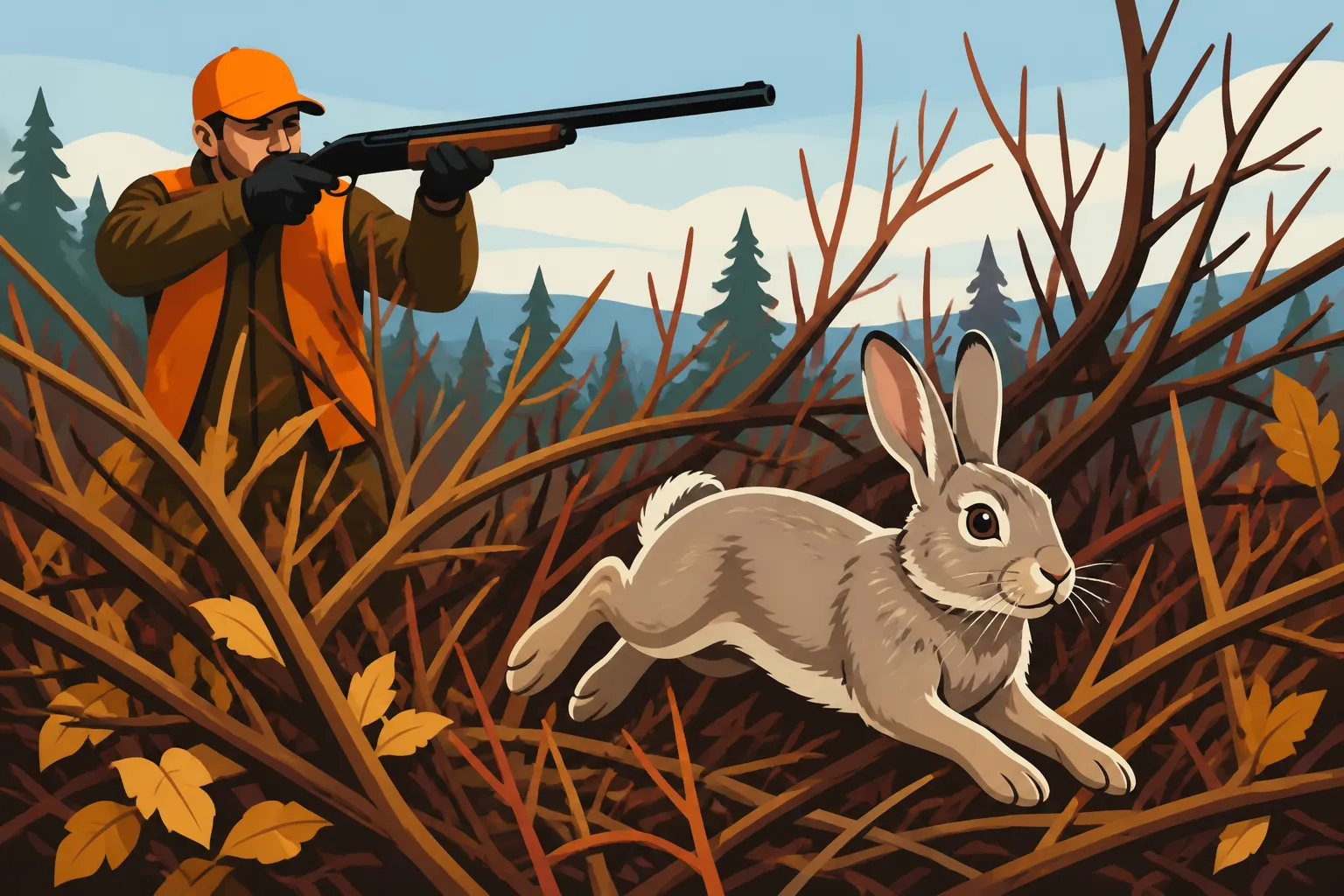
Hunting rabbits in thick brush is less about stealthy stalking and more about aggressive, systematic flushing. It’s hard work, demanding persistence, and a willingness to push through whatever vegetation stands in your way. But the payoff is a fast-paced, exciting hunt with plenty of action. You need to be ready for quick, close-range shots.
Slow and Deliberate Still-Hunting Approaches
For the solo hunter, or a small group without dogs, still-hunting through thick brush is a viable and often very productive tactic. The key here is "slow and deliberate." Don't just walk; pick apart the cover. Imagine you're a slow-moving predator, meticulously examining every nook and cranny. Pause frequently, often for a minute or more, letting the woods settle and watching for any movement. Rabbits, especially cottontails, will often break cover or shift positions when they think a threat has passed, only to realize you're still there.
When you approach a brush pile or a thicket, don't walk around it; walk into it, or at least along its densest edge, kicking and shuffling your feet. Bang your shotgun butt on trees, rustle branches, and make some noise. This agitation is often what it takes to get a tight-sitting rabbit to bolt. When working through an area, move in a grid pattern or systematic sweeps to ensure you cover all potential hiding spots. It's exhausting work, but it means fewer rabbits get left behind. Consider how you'd apply similar focus if you were Still-Hunting Minnesota Big Woods, but with an even greater emphasis on pushing through cover rather than simply moving quietly.
Harnessing the Power of Dogs
Let's be real: if you want to maximize your success in thick rabbit cover, especially for cottontails, a good dog is an absolute game-changer. Beagles, Basset Hounds, and other small game hounds are specifically bred for this kind of work, with noses that can pick up scent trails in even the densest undergrowth. The excitement of hearing a beagle "jump" a rabbit and start barking on the trail is one of the purest joys of small game hunting. These dogs are relentless, pushing rabbits out of cover that you could never penetrate on your own.
When running dogs in thick brush, communication is key. The dogs do the flushing, but you, as the hunter, need to anticipate where the rabbit will go. Rabbits often run in circles when pursued, especially if they're familiar with the area. Position yourself on likely escape routes or where the cover thins out slightly. Be patient, listen to your dog's cadence, and be ready for a quick shot. Make sure your dogs are properly trained and equipped for the conditions, perhaps even considering protective vests for really nasty stuff. For specific advice on breed behavior, you might want to delve into topics like Running Beagles on Minnesota Snowshoe Hares, even if you're targeting cottontails, as the principles of working with hounds remain similar.
Organizing Effective Rabbit Drives
When you're hunting with a group, organizing a drive can be incredibly effective for clearing large areas of dense brush. This tactic works well for both cottontails and snowshoe hares. Designate "pushers" and "blockers." The pushers enter the thick cover from one side, moving systematically through it, making noise, and kicking brush. The blockers position themselves strategically at the far end or along the sides of the thicket, waiting for rabbits to be pushed out.
For a successful drive, prior scouting of the area is crucial. Understand the boundaries of the thicket, identify potential escape corridors, and communicate clearly with everyone in your group. Walkie-talkies can be invaluable here, especially if the cover is so thick that visual contact is difficult. Ensure everyone knows the shooting lanes and safety considerations. The energy and combined effort of a group drive can move a lot of game that a solo hunter might miss, transforming frustratingly thick cover into a productive hunting ground. Before heading out, it's always a good idea to refresh on general safety and scouting practices, perhaps by reviewing resources like Scouting Minnesota Public Land Before Season.
Essential Gear for Busting Minnesota Brush
Hunting thick brush in Minnesota demands specific gear that can withstand the abuse, keep you safe, and give you the best chance at success. You’re going to get scratched, snagged, and wet. Being prepared makes all the difference between a miserable outing and a memorable one.
Shotguns, Chokes, and Ammo Choices
For rabbit hunting in dense cover, a shotgun is king. You're almost always going to be taking quick, close-range shots at moving targets, often through small windows in the vegetation. A 12-gauge or 20-gauge pump or semi-automatic is ideal, offering quick follow-up shots if needed. Over/under or side-by-side shotguns also work well, especially for their lighter weight and balance in tight quarters. Shorter barrels (24-26 inches) are often preferred as they maneuver better in thick tangles and dense woods.
When it comes to choke, an open choke like improved cylinder or skeet is usually your best bet. The goal is to get a wide, forgiving pattern at very close ranges, typically 10-25 yards. Full or modified chokes will pattern too tightly and lead to more missed shots or excessively damaged game at these distances. For ammunition, standard field loads with #6 or #7.5 shot are perfect for cottontails, offering plenty of knockdown power without overkill. For the larger snowshoe hares, especially in winter, some hunters prefer #4 or #5 shot for a bit more punch, but #6 usually does the trick. You might want to review Choke Choice for Fast Flushes for more in-depth considerations or even Shot Size for Grouse and Woodcock to understand pellet energy and density for various small game.
| Gear Category | Specific Item | Key Feature for Thick Brush | Why it Matters |
|---|---|---|---|
| Firearm | 12 or 20 Ga. Shotgun | Shorter Barrel (24-26") | Better maneuverability in tight spaces, less snagging. |
| Choke | Improved Cylinder (IC) or Skeet | Wider shot pattern at close range | Increases hit probability on fast-moving, close targets. |
| Ammunition | #6 or #7.5 Shot (Cottontail) / #4 or #5 Shot (Snowshoe Hare) | Appropriate pellet size for game | Ensures clean kills without excessive meat damage. |
| Clothing | Durable Briar Pants / Chaps | Thorn and abrasion resistance | Prevents tears, scratches, and keeps you comfortable. |
| Footwear | Waterproof, Insulated Boots | Ankle Support, Traction | Keeps feet dry, warm, and prevents slips in rough terrain. |
| Navigation | GPS Device / Phone App (GoHunt) | Offline maps, tracking | Prevents getting lost, helps mark game and points of interest. |
| Protection | Shooting Glasses, Gloves, Blaze Orange | Eye/Hand protection, visibility | Safety from flying debris, thorns, and other hunters. |
Dressing for the Tangle: Protection and Warmth
Forget your quiet, soft hunting clothes for this endeavor. When you're busting brush, durability and protection are paramount. Briar pants or chaps are an absolute must. These heavy-duty pants are designed to withstand thorns, sharp branches, and constant abrasion. Brands like Filson, Orvis, or even some of the more rugged workwear companies make excellent options. Without them, your ordinary hunting pants will be shredded in a single outing, and your legs will look like you lost a fight with a bobcat.
Layering is also critical, especially during Minnesota's variable fall and winter seasons. You'll be working hard, generating a lot of heat, but then you might pause, and the cold will seep in. Start with a good moisture-wicking base layer, add an insulating mid-layer (fleece or wool works great), and top it with a durable, brush-resistant outer shell. Don't forget tough, thorn-resistant gloves and sturdy, waterproof boots with good ankle support. You’ll be stepping over, through, and around all sorts of uneven, hidden obstacles, so keeping your feet dry and stable is vital. It's not unlike the considerations for Boots for Walking Minnesota Popple Cuts, where ruggedness and support are key. And, of course, blaze orange is always a non-negotiable safety item, even for small game.
Navigation and Game Retrieval in Dense Woods
Getting turned around in thick, featureless brush is alarmingly easy. A reliable GPS device or a smartphone app with offline mapping capabilities is a non-negotiable piece of gear. Apps like GoHunt offer detailed topographical maps and aerial imagery that can help you orient yourself, mark your starting point, and track your progress. Knowing exactly where you are and how to get back to your vehicle is crucial, especially if you venture deep into a large WMA or State Forest. You don't want to find yourself wandering around after dark, asking yourself Using Recreation Compass Without Cell Service.
Once you've flushed and shot a rabbit, retrieving it from the thicket can be its own challenge. If you're using a dog, they'll usually handle the retrieval. Without a dog, be methodical. Mark the spot mentally or with your GPS if possible. Walk directly to where you saw the rabbit fall. Often, they'll drop just inside the edge of the cover. If it's a longer recovery into extremely dense stuff, a game carrier or even a small sled (in winter) can be helpful to drag your quarry out, minimizing contact with thorns and wet brush. Don't underestimate the physical toll of dragging multiple rabbits out of a nasty thicket.
Winter's White Ghosts: Hunting Snowshoe Hares
While cottontails are a blast to hunt in the fall, Minnesota's snowshoe hares offer a unique and exhilarating challenge, especially once the snow flies. Their ability to turn pure white for winter, combined with their preference for deep conifer swamps, makes them true "white ghosts" of the Northwoods.
Locating Snowshoe Habitat in Winter
Snowshoe hares are found primarily in the coniferous and mixed forests of northern and central Minnesota. Think of areas dominated by spruce, balsam fir, tamarack, and dense stands of young aspen. These habitats offer them both food (bark, twigs, buds) and crucial thermal and escape cover. In winter, look for areas with extremely dense undergrowth – often so thick you can barely see into it. These might be regenerating clear-cuts, the fringes of bogs, or dense river bottom thickets.
Fresh snow is your best friend when hunting snowshoes. It makes their tracks incredibly obvious, even if their bodies are perfectly camouflaged. Look for their distinct tracks, which are much larger than a cottontail's, and often lead into the densest cover. You'll also see small, round droppings and clipped twigs where they've been feeding. Areas with an abundance of small conifers, especially balsam fir, are often prime spots. If you're exploring new territory, consult mapping tools available through GoHunt to identify suitable forest types and timber cuts. This kind of advanced scouting can drastically cut down on wasted time, focusing your efforts on high-probability areas for Rabbit and Hare Hunting in Minnesota.
Strategies for Tracking and Flushing Hares
Hunting snowshoes is often a game of tracking. After a fresh snowfall, head to known hare habitat and start looking for tracks. Once you find a set of fresh tracks, follow them, paying close attention to where they lead into the thickest cover. Snowshoes will often create a network of tunnels and runways within these dense thickets. As you follow the tracks, move slowly and deliberately, constantly scanning ahead and to the sides. They will often sit incredibly tight, relying on their camouflage.
When they flush, be ready for a fast, erratic dash. Unlike cottontails that often dive into the nearest hole, snowshoes tend to run through the dense cover. Take your shot quickly and be prepared for follow-up shots. If you have a dog, this is where they truly shine, as they can track and push the hares out of cover that you simply couldn't penetrate. If hunting without a dog, a group drive is also highly effective. Pushers go through the thickets, while blockers wait on the edges or at natural funnels where the hares are likely to run. The thrill of spotting that flash of white against the snow, then connecting on a shot, is a quintessential Minnesota winter hunting experience.
Disclaimer
Please remember that hunting regulations, seasons, and licensing requirements can change. Always consult the latest Minnesota Department of Natural Resources (DNR) official publications before heading afield. This guide is for informational purposes only and should not be considered a substitute for legal advice or official DNR regulations.