Canvasbacks on the Mississippi River
Hunting canvasbacks on Minnesota's majestic Mississippi River is an experience many waterfowlers dream of, but it's far from a casual morning hunt. These magnificent diving ducks, often called the "King of Ducks" for good reason, present unique challenges and demand a dedicated approach. If you've ever watched a flock of cans bomb through the sky with their distinctive power and speed, you know the thrill. But finding and successfully hunting them on a system as immense and complex as the Mississippi can feel overwhelming. This guide will dive deep into understanding canvasbacks, pinpointing their preferred habitats on the mighty Mississippi, and arming you with the strategies you need to approach hunting them effectively and ethically.
The King of Ducks: Understanding Minnesota's Canvasbacks
Canvasbacks are more than just another duck; they're a symbol of wild, untamed waters and a serious challenge for any hunter. Their discerning nature and preference for specific, nutrient-rich environments make them a coveted prize. To hunt them successfully on the Mississippi, you first have to truly understand them.
Identifying the "Can" in Flight and on the Water
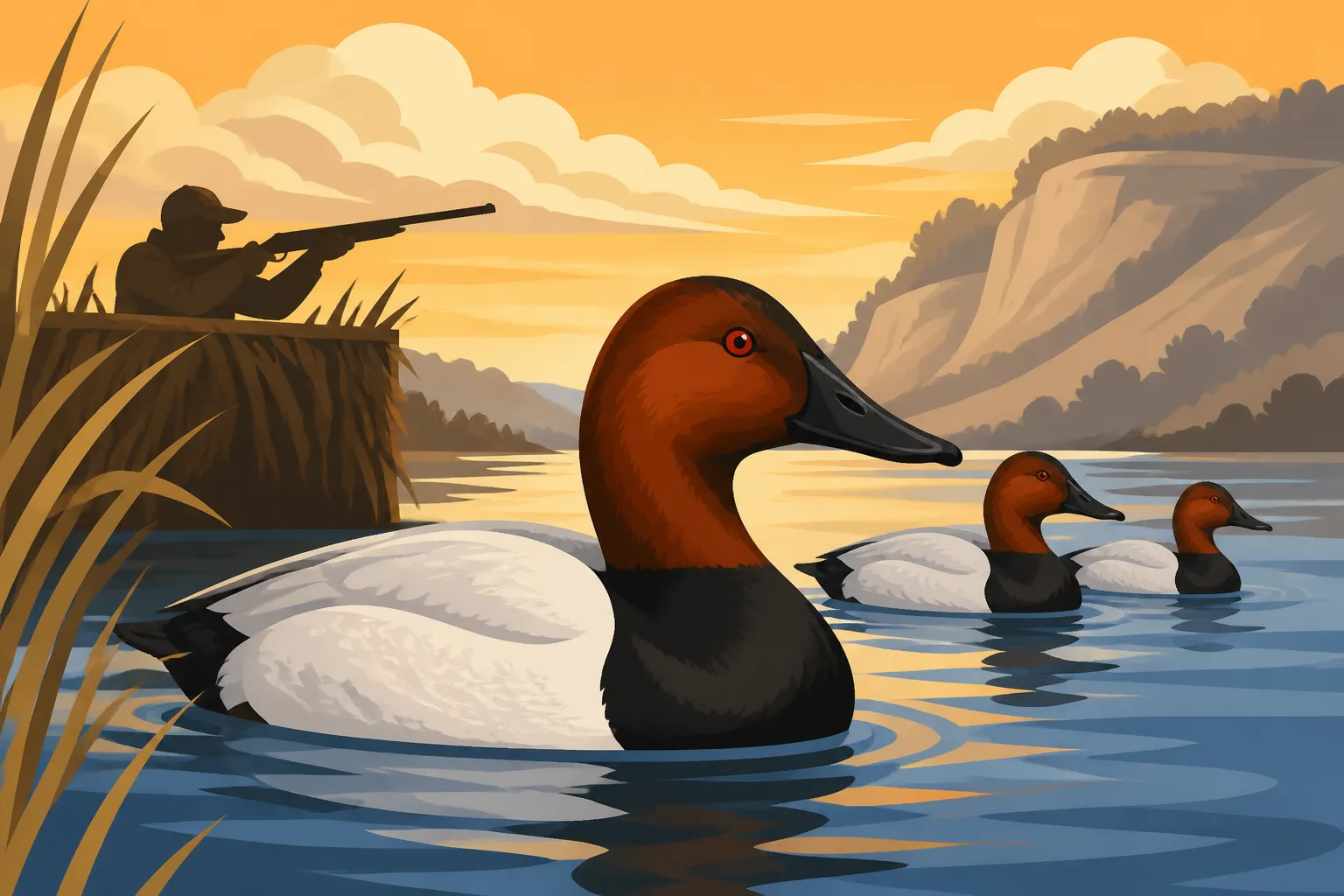
When you're out on the river, distinguishing a canvasback from other divers like redheads or bluebills is crucial. The drake canvasback is truly unmistakable: a striking white body, black chest, and that distinctive rusty-red head and neck, all culminating in a long, sloping black bill that gives its head a wedge-like appearance. The hen is a bit more subdued, with a grayish body and a lighter brown head, but still retains that classic sloped bill profile. In flight, their size and speed are remarkable. They fly with powerful, steady wingbeats, often in long, V-shaped lines or undulating strings, appearing almost like flying cigars against the sky. They can cover incredible distances quickly, often flying high before committing to a decoy spread.
What truly sets canvasbacks apart, however, is their diet. They are primarily vegetarians, almost exclusively feeding on submerged aquatic vegetation (SAV) like wild celery (Vallisneria americana) and sago pondweed. This specific dietary preference is the biggest clue to finding them on the Mississippi. If you can locate abundant, healthy beds of these plants in the river's backwaters and shallow main channel areas, you've found canvasback country. Without these food sources, cans simply won't be there in numbers.
Migration Patterns on the Mississippi Flyway
The Mississippi River is a superhighway for migratory waterfowl, and canvasbacks are no exception. They breed in the prairie potholes of the north-central United States and Canada, and as autumn deepens and cold fronts push south, they begin their journey down the Mississippi Flyway. For Minnesota hunters, understanding this timing is key. Early in the waterfowl season, you might see small groups, but the bulk of the canvasback migration typically hits Minnesota in late October and early November. This aligns perfectly with the progression of colder weather and, crucially, before ice-up pushes them further south.
These birds aren't just passing through; they're looking for critical staging areas where they can rest and, most importantly, refuel. The vast, fertile backwater complexes of the Mississippi River, particularly the upper pools, provide exactly that. These areas offer abundant food and relatively secure resting zones. Tracking weather patterns, especially major cold fronts and freezes to the north, can help predict when the next wave of canvasbacks will descend upon Minnesota's stretch of the river. Keeping an eye on aerial surveys and local reports, perhaps through a platform like GoHunt, can give you a significant advantage in anticipating their arrival and concentration.
Prime Habitat: Finding Canvasbacks on the Mississippi River
The Mississippi River, particularly its navigable pools in southeastern Minnesota, is a globally significant resource for canvasbacks. It's not just a river; it's an intricate tapestry of channels, islands, sandbars, and vast backwater lakes, all interconnected and constantly influenced by the current. Pinpointing where canvasbacks concentrate requires a deep understanding of these distinct features.
The Backwater Systems and Navigable Pools
When most people think of hunting the Mississippi, they often envision the sprawling backwater systems. These areas are absolutely critical for canvasbacks. Imagine vast, shallow bays and marshy lakes tucked behind the main river channel, protected from the direct current and boat traffic. These calmer waters are where the wild celery and sago pondweed flourish, creating literal underwater buffets for diving ducks. Pools 4, 5, 7, and 8 of the Mississippi River in Minnesota are renowned for their canvasback concentrations. Pool 4, especially the expansive Lake Pepin, is legendary.
Within these pools, look for areas with dense aquatic vegetation. Canvasbacks will raft up in huge numbers, sometimes hundreds or even thousands strong, feeding throughout the day and resting in the security of the large flock. Scouting these areas, often from a distance with good optics, is paramount. You'll need to identify specific feeding beds and travel corridors these birds use between resting areas and prime foraging grounds. The topography of the river bottom, combined with current breaks created by islands and points, creates a mosaic of ideal habitat. For a deeper dive into hunting these specific areas, check out Hunting the Mississippi River Backwaters.
Big Water Divers: Open Expanse and Current
While the backwaters are crucial, canvasbacks also utilize the more open, big water expanses of the Mississippi. They are, after all, true divers, comfortable in deeper, more exposed conditions than many other duck species. On the main channel, they will often congregate in areas where the current creates upwellings or eddies that concentrate their preferred food sources. Islands, major sandbars, and points that jut out into the main flow can create current breaks where birds will rest and feed.
These birds crave a sense of security that large, open water provides. If they're not in the backwaters, they're often out on the big water where they can see danger coming from a long way off. Hunting these areas demands specialized gear and a healthy respect for the river's power. Strong anchors are essential, and reliable boats capable of handling choppier conditions are a must. Platforms like GoHunt can be incredibly useful for analyzing hydrographic maps of the Mississippi, helping you identify subtle changes in depth and current that might indicate submerged vegetation beds or protected resting spots on the big water. Just as important as locating food is understanding where birds go to escape pressure and find security. For similar big water hunting considerations, you might find tips in Diver Hunting on Mille Lacs.
Strategies for Pursuing the Redhead King
Hunting canvasbacks on the Mississippi is a chess match against a highly intelligent and wary bird. It requires patience, careful planning, and the right gear. Forget run-and-gun tactics; this is about setting up smart and waiting for the right moment.
Decoying and Blind Setups
When it comes to decoying canvasbacks, bigger is often better. These birds are used to seeing massive rafts of their kin, so a large spread of decoys, often 5 to 8 dozen or more, can be incredibly effective. Magnum-sized decoys are a huge advantage, as they offer better visibility from the high altitudes these birds often fly at. The layout of your spread is critical. A long "main line" of diver decoys, extending out into the open water like a landing strip, with a pocket created for landing in front of your blind, is a classic and effective setup. Often, a few confidence decoys, like coots or even a goose or two, placed closer to the blind, can add to the realism.
Your blind setup needs to be virtually invisible. On the Mississippi, this often means utilizing natural cover on islands, sandbars, or along shorelines. Building a natural blind from driftwood, reeds, or cattails that blends seamlessly with the surroundings is paramount. If you're hunting more open water, a boat blind or layout blind can be incredibly effective. A layout blind, carefully brushed in on a mud flat or shallow island, provides a low profile that allows you to disappear. For inspiration on effective camouflaged setups, consider reading Layout Blinds and Marsh Boats. Remember, canvasbacks have exceptional eyesight, so any unnatural lines or shiny surfaces will send them veering away.
Calls, Guns, and Ammunition
Unlike dabbling ducks that respond to complex calling sequences, canvasbacks are generally not heavily called birds. A simple, low-volume "growl" or "burp" call, mimicking their contented feeding sounds, can sometimes be effective as a confidence call or to turn birds that are on the edge of your spread. Overcalling will almost always spook them. The focus should be on your spread and concealment.
As for firearms, a 12-gauge shotgun is the standard. Canvasbacks are large, tough birds, and they are often taken at longer ranges than dabblers, especially if they're wary. A modified or improved cylinder choke is often preferred for divers to get a good pattern at varying distances, but some hunters opt for a full choke for extended range. Nontoxic shot is, of course, required for all waterfowl hunting. Steel shot in sizes BB, 1, or 2 are popular choices. When selecting your ammunition, prioritize velocity and pellet count to ensure clean kills at range. For detailed recommendations on what to load up with, check out Waterfowl Loads for Minnesota Divers. Always remember ethical hunting practices: wait for birds to be within effective killing range before taking a shot to minimize cripples.
Scouting and Adaptability
The Mississippi River is a dynamic system, constantly changing with water levels, current, and boat traffic. This means that successful canvasback hunting demands diligent scouting and a high degree of adaptability. Pre-season scouting is non-negotiable. Spend time on the river looking for those crucial submerged aquatic vegetation beds, identifying resting areas, and observing flight patterns. A good pair of binoculars and a spotting scope are your best friends.
Technology can be a huge asset here. Using mapping applications with satellite imagery, especially those that include bathymetric data, can help you locate potential feeding areas. Platforms like GoHunt, with their detailed mapping features and potential for community insights, can significantly cut down on scouting time. However, there's no substitute for eyes on the water. Once the season starts, conditions can change daily. A strong wind can move birds to more sheltered areas, while rising water can cover food sources or open new ones. You need to be prepared to move your setup, adapt your spread, and react to the birds' behavior. Don't be afraid to pull up stakes and relocate if the birds aren't cooperating where you are. For general advice on finding new spots, Scouting Minnesota Public Land Before Season offers valuable perspectives.
Critical Mississippi River Features for Canvasbacks and Hunters
| Mississippi River Feature | Typical Canvasback Use | Common Hunting Approach | Key Hunter Challenges |
|---|---|---|---|
| Large Backwater Bays | Primary feeding on SAV (wild celery, pondweed), secure loafing | Layout blinds, boat blinds on points, large diver spreads (magnums) | Access (shallow water), retrieving birds, strong current at inlets, pressure |
| Main Channel Current Breaks | Feeding in moderate current, resting in calmer eddies near islands | Boat blinds tucked into islands or deep-water points, strong anchoring | Boat traffic, swift current, long retrieves, finding subtle breaks |
| Open Water Expanses (e.g., Lake Pepin) | Vast resting rafts, feeding on deeper vegetation beds | Layout boats, large diver spreads (often hundreds of decoys), specialized big-water gear | Wind, waves, long runs to downed birds, specific boat requirements |
| River Mouths/Tributaries | Staging areas, occasional feeding, transition zones | Jump shooting, smaller spreads in calmer pockets, focused on flight paths | Unpredictable bird movement, often heavily pressured, complex currents |
| Protected Island Edges | Resting, seeking shelter from wind or sun, loafing | Natural blinds, boat blinds, small confidence spreads | Limited space, potential for being sky-busted, understanding wind direction |
Conservation and the Future of Canvasback Hunting
Our ability to pursue canvasbacks on the Mississippi River isn't just about sharp shooting and clever setups; it's intrinsically linked to robust conservation efforts. As hunters, we have a vital role to play in ensuring these magnificent birds continue to thrive for generations to come.
Hunter's Role in Management and Sustainability
Every time a hunter purchases a license and a federal duck stamp, they are directly contributing to waterfowl conservation. These funds are channeled into habitat restoration, land acquisition, and crucial research projects that directly benefit canvasbacks and countless other species. Minnesota's Minnesota Federal Duck Stamp Requirement is just one example of this vital financial support. Respecting bag limits, which are carefully set based on population data and breeding success, is another critical aspect of responsible hunting. For canvasbacks, these limits are often more restrictive than for other species, reflecting their slower reproductive rates and specific habitat needs.
Beyond monetary contributions and legal compliance, ethical hunting practices are paramount. This means making clean, decisive shots to minimize wounding loss, and diligently retrieving every bird. A well-placed shot and swift retrieval are not just about respect for the animal, but also about maximizing the harvest within established limits and ensuring that every bird taken is utilized. Understanding Minnesota Duck Harvest Numbers helps paint a broader picture of the health of our waterfowl populations and the impact of hunting.
Habitat Challenges and Success Stories
The Mississippi River, while a rich resource, faces ongoing habitat challenges. Siltation, invasive species like zebra mussels (which can impact water clarity and native vegetation), and changes in water levels due to river management can all affect the health of those critical wild celery and sago pondweed beds that canvasbacks depend on. Climate fluctuations and changing weather patterns also impact migration timing and food availability.
However, there are many conservation success stories on the Mississippi. Organizations like Ducks Unlimited, the U.S. Fish and Wildlife Service, and the Minnesota Department of Natural Resources work tirelessly to restore and protect wetlands, manage water levels, and control invasive species. Hunters, through their financial contributions and volunteer efforts, are often at the forefront of these initiatives. By actively participating in habitat projects, reporting observations, and advocating for sound conservation policies, hunters ensure that the king of ducks continues to grace the skies and waters of Minnesota's Mississippi River for many more seasons to come. It’s a privilege to hunt these birds, and with that privilege comes the responsibility to safeguard their future.
Disclaimer
This article is for general informational purposes only and does not constitute professional advice. Laws, prices and regulations vary by location and change over time. Consult a qualified professional for guidance on your specific situation.