How Close a Minnesota Mentor Must Stay
It’s a common scenario: you’re thrilled to take a young hunter out into the Minnesota woods, perhaps for their first deer hunt or a spring turkey adventure. You’ve got all the gear, the licenses are squared away, but then a nagging question starts to creep in – just how close do you actually need to stay to them? It feels like there’s a fine line between giving them space to learn and experience the hunt, and ensuring you’re legally compliant and keeping them safe. This guide is here to untangle the specifics of Minnesota’s mentor requirements, particularly focusing on that often-confusing "direct supervision" distance, so you can hunt confidently and responsibly.
Understanding Minnesota's Mentored Youth Hunting Program
Minnesota is deeply committed to fostering the next generation of hunters, and our mentored youth hunting program is designed to do just that – provide a safe, educational, and exciting introduction to the outdoors. It’s not just about getting a license; it’s about passing on traditions, ethics, and critical safety skills under the watchful eye of an experienced hunter. The spirit of the law is to ensure that while young people gain valuable experience, they do so with a safety net provided by an adult.
Who Needs a Mentor and Why It Matters
First, let's clarify who falls under the mentored hunting umbrella. In Minnesota, any hunter under the age of 12 must be accompanied by a licensed hunter age 18 or older when hunting big game. For small game, this age threshold extends to under 16 if they haven't completed a firearms safety course. It's a critical distinction. If your young hunter has already earned their Minnesota Firearms Safety Certificate for Youth or their adult firearms safety equivalent, and meets the age requirements for unsupervised hunting, the "mentor" rules, specifically the close proximity aspects, might not strictly apply to them anymore. However, if they are legally required to be mentored, then understanding these rules is paramount. This foundational requirement is about more than just checking a box; it’s about accident prevention and instilling good habits from the very beginning. It's why programs like Who Needs Minnesota Hunter Safety Training are so vital for our hunting heritage.
The Purpose of Direct Supervision for Young Hunters
The underlying purpose of direct supervision is quite simple: safety, instruction, and legal responsibility. A mentor isn't just a warm body next to a young hunter; they are an active teacher and guardian. They're there to help identify game, ensure ethical shots, confirm targets, provide immediate assistance in case of a misfire or an injury, and to reinforce good decision-making. Imagine a young hunter, heart pounding, trying to make their first shot. Having a calm, experienced mentor right there to whisper encouragement or offer a last-second safety correction can be the difference between a successful, safe hunt and a dangerous mistake. It’s a chance to build confidence and learn invaluable lessons that can’t be taught from a textbook. For many, this mentorship is a cherished family tradition, marking important milestones in a young person's life in the outdoors.
Defining "Direct Supervision" in the Field
This is where the rubber meets the road, and often, where confusion truly sets in for many Minnesota hunters. The phrase "direct supervision" can feel a bit vague when you’re out in varying terrain. Is it 10 feet? 50 feet? Can you be in a different treestand if you can still see them? Minnesota law aims for clarity, but real-world hunting conditions don't always cooperate.
The Legal Wording and Its Interpretation
Minnesota's regulations typically define "direct supervision" as meaning the mentor must be "within immediate proximity" and "able to take immediate control of the firearm or bow." While "immediate proximity" isn't given an exact number of feet, it implies both visual and verbal contact must be maintained at all times. Think of it this way: if something unexpected happens – a safety issue, a question about target identification, or a need for help with tracking – could you physically intervene or verbally guide the youth immediately? This isn't about being in the same general area; it's about being actively engaged in their hunt. For example, if you're hunting deer during Minnesota's Firearm Deer Season by Zone with a youth, being in separate ground blinds 50 yards apart with a dense thicket between you probably wouldn't qualify as direct supervision, even if you could technically yell to them. The intent is to prevent situations where a young hunter might act unsupervised due to distance or obstruction. Many hunters utilize mapping tools, such as those found on GoHunt, not just for scouting new areas but also for visualizing terrain and ensuring their setup for a mentored hunt meets these direct supervision criteria. It helps them plan stand placement with line of sight in mind.
Visual and Verbal Contact: What It Really Means
"Visual and verbal contact" is the cornerstone of direct supervision. This means you need to be able to see the youth, and they need to be able to see you, at all times. Furthermore, you need to be close enough to speak to them in a normal or slightly raised voice and have them hear and understand you. This is crucial for real-time instruction and safety checks.
Consider these examples:
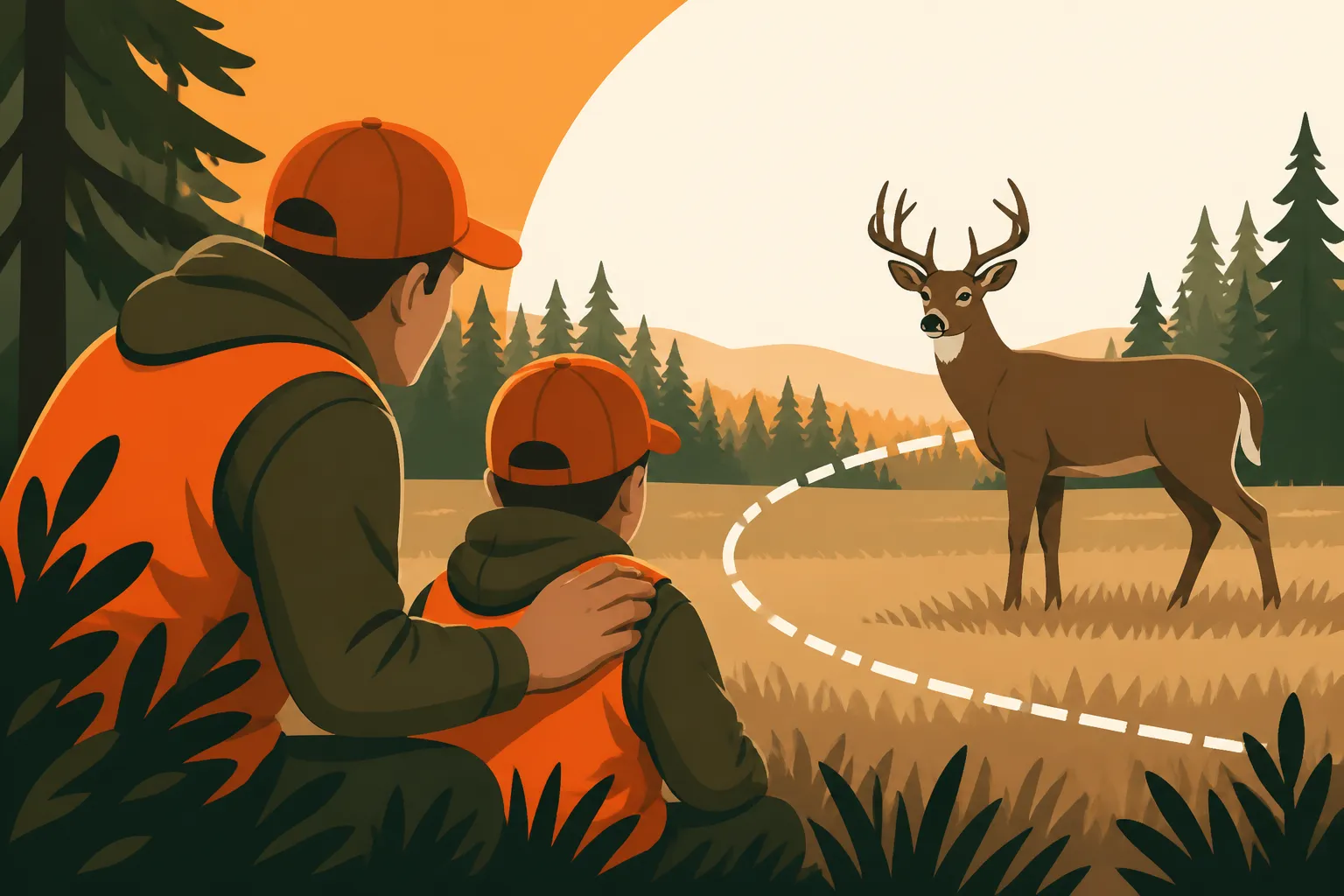
- Good: You and the youth are sitting side-by-side in a ground blind or in adjacent treestands (with all proper safety precautions, of course) that are no more than 10-15 feet apart, in clear view of each other. You can easily communicate, and you're within arm's reach to assist.
- Problematic: You're in a stand overlooking a field edge, and the youth is 40 yards away in a small clump of trees, even if you can mostly see them. A deer comes in, and they ask a question you can't quite hear over the wind, or you see them making a questionable move and can't quickly intervene. This isn't "immediate."
- Unacceptable: You’ve set the youth up in a prime spot on a logging trail and you've decided to still-hunt a ridge 100 yards away, planning to meet up later. While you're technically in the same general area, you have neither visual nor verbal contact, and certainly no ability to take immediate control. This setup directly violates the spirit and letter of the law for a supervised youth.
The interpretation emphasizes continuous, active oversight. It’s not just about being in the same zip code; it’s about sharing the immediate hunting experience and decision-making space. Before any hunt, a good mentor will review Minnesota Hunter Safety Requirements with their young charge, reinforcing the critical role of supervision.
Practical Scenarios and Common Challenges
Real-world hunting isn't always a perfectly open field. Minnesota offers diverse terrain, from thick northern forests to rolling farmland, and each presents unique challenges to maintaining direct supervision. Understanding how to adapt while staying compliant is key.
Hunting in Thick Cover vs. Open Fields
The type of terrain you're hunting in will significantly impact how "direct supervision" plays out.
-
Thick Cover (e.g., Northern Minnesota woods, dense cattail sloughs): In areas like those described in Still-Hunting Minnesota Big Woods or Hunting Minnesota Cattail Sloughs for Deer, maintaining visual contact can be incredibly difficult, even at very close distances. You might need to be literally shoulder-to-shoulder, or at least within touching distance. If you're walking through dense brush, the youth should be right next to you, not trailing 20 feet behind. If sitting, consider a two-person ground blind or two chairs placed very close together. The temptation to "spread out" to cover more ground is strong, but for a mentored youth, it’s simply not an option if you’re trying to meet the legal standard of immediate control. This also applies to archery season in Minnesota, where shots are often closer and the need for precision and ethical judgment is paramount.
-
Open Fields (e.g., Farmland edges, prairie potholes): In more open environments, visual contact is easier, but distance can still be deceiving. A youth might be able to see you 100 yards away in a cut cornfield, but could you actually take control of their firearm or bow if needed, or effectively whisper instructions? Probably not. Even in open fields, keeping the youth within 10-20 yards, and often closer, is a much safer and more legally sound approach. This means ensuring that no matter the setup – whether it's Layout Blind Hunting Minnesota Farm Fields or still-hunting a field edge – the mentor is always within that critical range for intervention.
Mentor Distance by Weapon Type and Game
While Minnesota's definition of direct supervision largely remains consistent across hunting types for youth requiring mentorship, the practical application might feel different.
-
Firearms (Rifles, Shotguns, Muzzleloaders): For firearms, the ability to take immediate control is paramount. This typically means being close enough to physically grab the firearm if a dangerous situation arises, or to verbally stop a shot and have that command instantly recognized and obeyed. For a younger, less experienced hunter, this could mean being within an arm's reach. You'll want to be able to guide their aim, check their target, and ensure proper muzzle control at all times. Whether it's during Muzzleloader Deer Hunting in Minnesota in December cold or the regular firearm season, the principles remain the same.
-
Archery (Vertical Bows, Crossbows): While the physical threat of an errant arrow might seem less than a bullet, the principles of ethical hunting and shot placement are equally critical. A mentor needs to be close enough to help a youth range a target, confirm vital zones, and ensure a clean, ethical shot. They also need to be able to physically stop a shot if the target is unclear or the shot angle is poor. This still means maintaining very close proximity, within easy speaking and visual distance, where you can physically intervene if necessary to prevent a poor shot. It's not uncommon for mentors and youth to share a large two-person stand when Treestand Setups in Minnesota Hardwoods are involved. The GoHunt platform can be helpful here too, allowing hunters to mark their precise locations on a map and ensure they remain within legal proximity for supervision during the hunt.
-
Small Game (Squirrels, Rabbits, Game Birds): Even for small game, where the pace can be faster and movement more fluid, direct supervision is a must. If a young hunter is carrying a firearm, the mentor must be able to take control. When Hunting Squirrels in Minnesota Hardwoods or Grouse and Woodcock Hunting in Minnesota, the youth should walk immediately beside the mentor or directly in front, with the mentor maintaining a close, watchful eye on muzzle control and target identification. This is particularly important when game bursts out unexpectedly.
Here's a quick reference table for guidance:
| Scenario / Game Type | Typical Mentor-Youth Distance (Approximate) | Key Supervision Aspects | Notes |
|---|---|---|---|
| Big Game – Firearms | 0-15 yards (often closer, arm's length) | Visual, verbal, and physical intervention possible | In a blind or stand, side-by-side or very close. In thick cover, almost touching. Ensure ability to grab weapon. |
| Big Game – Archery | 0-20 yards (often closer) | Visual, verbal, and physical intervention possible | Similar to firearms, focus on shot ethics and target identification. Physical intervention to stop an unsafe or unethical shot. |
| Small Game – Firearms | 0-10 yards (often walking side-by-side) | Visual, verbal, and ability to take immediate control | Emphasize muzzle control and target identification, especially during quick-action flushes. |
| Observation/Scouting | Flexible, as long as safety is maintained | Visual/verbal contact still highly recommended | If no weapon is present, distance can be greater, but still within comfortable communication range for teaching and discussion. Use Scouting Minnesota Public Land Before Season as a guide. |
Ensuring Safety and Compliance Beyond Distance
While the physical proximity of a mentor is a central pillar of Minnesota’s mentored hunting rules, it’s far from the only aspect of responsible youth hunting. A truly effective mentorship goes much deeper, encompassing thorough preparation, continuous instruction, and setting a strong ethical example.
Pre-Hunt Planning and Safety Briefings
Before you even step foot in the woods, the mentorship begins. This means sitting down with the young hunter and going over everything: the specific rules for the hunt, the game you’re pursuing, the hunting area, and most importantly, a thorough safety briefing. Discuss the four cardinal rules of firearms safety until they can recite them backward and forward. Talk about shot angles, target identification, and what to do if they see game when you don't. For any hunting trip, whether it’s deer, turkey, or small game, establishing clear communication signals is vital, especially if you anticipate any situations where verbal communication might be challenging. Hunters who leverage tools like GoHunt for their planning often create waypoints for safety zones or rendezvous points, adding another layer of preparation. Don’t forget about Minnesota Blaze Orange Requirements, ensuring both mentor and youth are visible and safe, especially during firearm seasons.
Continuous Instruction and Ethical Guidance
Mentorship is an ongoing process throughout the hunt. It's not just about the moment of the shot; it's every step of the way. When you're Hunting the Minnesota Rut in Early November, explain why bucks behave the way they do. Teach them how to read sign, identify tracks, and understand deer behavior. After a shot, guide them through the tracking process, teaching patience and persistence. Discuss shot placement and the importance of ethical recovery. If a shot isn't taken, or if an opportunity is passed up, explain why that decision was made. This continuous dialogue shapes their understanding of responsible hunting. It’s also an opportunity to teach them about Minnesota Deer Registration Rules and the importance of proper reporting.
Leading by Example and Fostering Responsibility
Perhaps the most important aspect of mentorship is leading by example. Young hunters learn far more from watching you than from simply listening. Demonstrate proper firearm handling, respect for wildlife, ethical shot selection, and adherence to all regulations, including Minnesota Shooting Hours and Legal Methods. Show them how to properly field dress an animal, care for the meat, and respect the animal harvested. Encourage them to ask questions and foster an environment where learning is encouraged, and mistakes are seen as opportunities for growth, not failure. The goal is to cultivate responsible, knowledgeable, and ethical hunters who will carry on these traditions for years to come. Ultimately, the "how close" rule is just one piece of a much larger, and incredibly rewarding, puzzle that builds character and connection to the wild.
Disclaimer
The information provided in this guide is intended for general informational purposes only and does not constitute legal advice. Hunting regulations in Minnesota can change, and interpretations may vary. It is always the hunter's responsibility to consult the most current Minnesota Department of Natural Resources (DNR) regulations and local ordinances before engaging in any hunting activities. Always prioritize safety and ethical hunting practices.