Chronic Wasting Disease in Minnesota Deer
The fear and uncertainty surrounding Chronic Wasting Disease (CWD) in our beloved Minnesota deer herd can be absolutely gut-wrenching for any hunter. It’s a complex, often confusing issue that has dramatically changed how we approach deer season, from scouting to processing. This guide aims to cut through the noise, offering clear, detailed insights into what CWD is, how it affects our deer, and what every hunter needs to know and do to protect our state’s incredible whitetail legacy.
Understanding Chronic Wasting Disease: What Every Minnesota Hunter Needs to Know
CWD is a scary term that gets thrown around a lot, and for good reason. It represents a significant threat to deer populations across North America, including right here in Minnesota. But what is it, really? And why is it so different from other diseases we encounter in wildlife?
What Exactly is CWD?
At its core, Chronic Wasting Disease isn't caused by a bacteria or a virus, which is often where the confusion begins. Instead, it's a neurological disease caused by abnormal proteins called prions. These prions are misfolded proteins that cause normal proteins in the brain and spinal cord to misfold as well. Think of it like a domino effect that slowly but surely destroys the brain tissue of infected animals. This process is always fatal, and there is no known cure or vaccine for CWD.
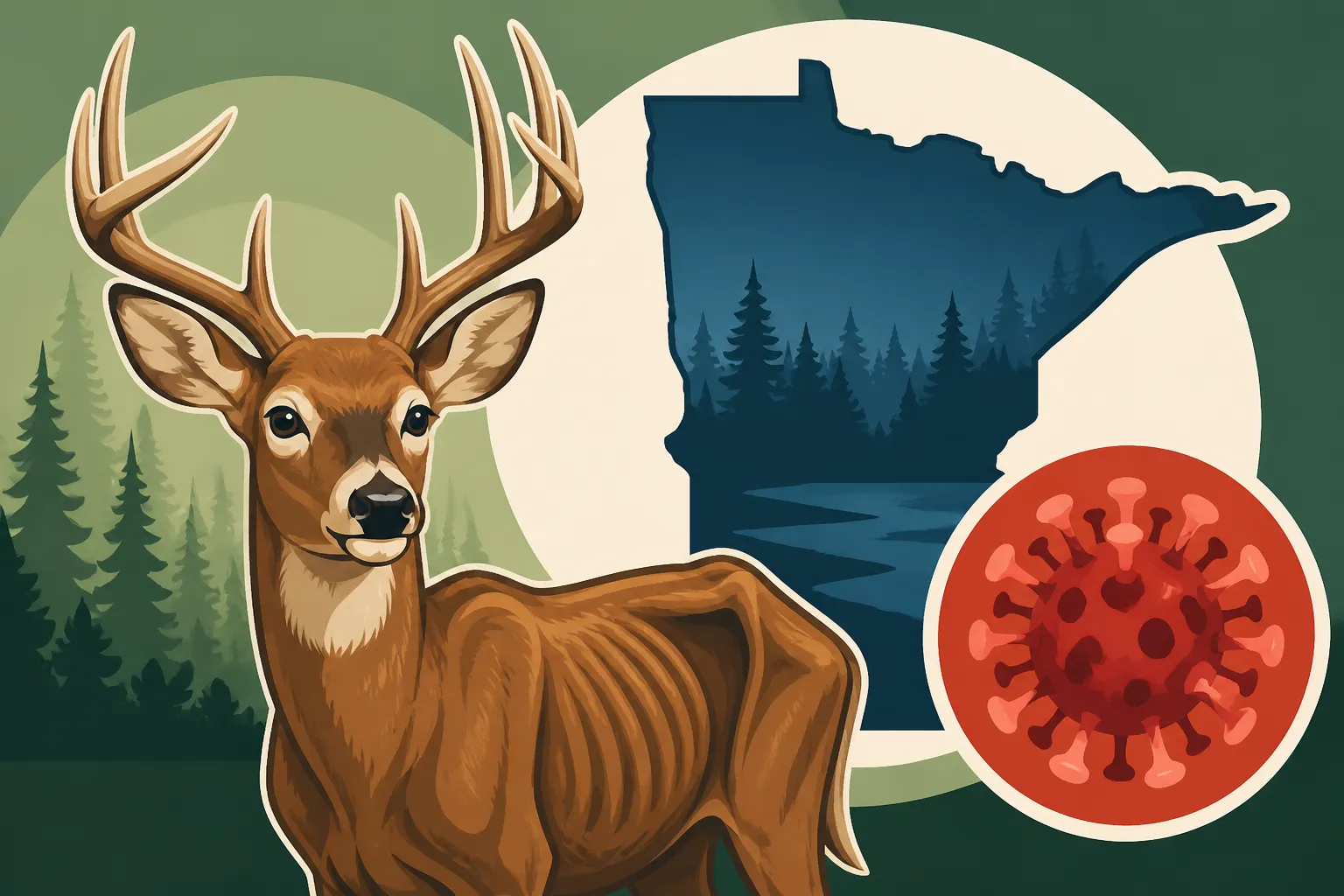
The disease primarily affects deer, elk, and moose, all members of the cervid family. Once an animal is infected, it can take a long time for symptoms to appear—sometimes a year or more. This long incubation period is one of the reasons CWD is so insidious and difficult to manage. By the time a deer starts showing signs, it's likely been shedding infectious prions into the environment for a considerable amount of time. Visible symptoms in deer can include drastic weight loss (hence "wasting"), stumbling, lack of coordination, listlessness, excessive drooling, and a vacant stare. You might see a deer that just seems "off," often acting disoriented or fearless of humans. However, it's crucial to remember that a deer can appear perfectly healthy right up until the late stages of the disease. This makes visual identification extremely unreliable, especially for hunters.
How CWD Spreads Among Deer
The way CWD spreads is a major part of why it's such a tough challenge. It’s not just about direct contact between infected and healthy animals, though that certainly plays a role. CWD prions are incredibly resilient and can persist in the environment for years, even decades.
Deer can contract CWD through direct contact, such as nose-to-nose interaction, or by indirect contact with contaminated environments. This includes exposure to saliva, urine, and feces from an infected animal. Imagine a deer licking a branch, then another deer coming along and licking the same spot – that's a potential transmission route. Carcass parts left in the woods, particularly brain and spinal cord tissue, are also highly infectious and can contaminate the soil. This environmental persistence is why concentrated areas, like bait piles or mineral licks where many deer gather, are considered high-risk sites for accelerated CWD transmission. When you have multiple deer consistently visiting the same small area, depositing bodily fluids and potentially infected material, you create a CWD hotspot. This is a big part of the thinking behind the Minnesota Feeding and Baiting Bans in CWD Zones that many hunters have had to adjust to.
Why CWD is Such a Concern for Minnesota's Deer Herd
The stakes are incredibly high for Minnesota. Our white-tailed deer are not just an iconic part of our landscape; they're vital to our ecosystem, our cultural heritage, and our economy. CWD poses a multi-faceted threat that goes far beyond just a few sick animals.
First, there's the long-term impact on deer populations. While CWD doesn't typically cause rapid, widespread die-offs like some acute diseases, its slow, persistent nature can lead to significant population declines over time. As more deer become infected and die, the overall health and size of the herd can diminish, impacting future hunting opportunities. This could mean fewer deer, smaller deer, and potentially changes to hunting regulations to try and manage herd health. Second, CWD presents immense management challenges for the Minnesota Department of Natural Resources (DNR). It requires extensive monitoring, testing, and sometimes controversial management strategies like targeted culling in infected areas. This is a costly and resource-intensive effort.
Finally, there's the psychological impact on hunters and the public. The thought of harvesting a CWD-positive deer, even if it appears healthy, can be unsettling. It raises questions about food safety and can diminish the overall enjoyment of the hunt. If public trust erodes, or if hunters decide to sit out the season due to CWD concerns, it could lead to reduced hunter participation, which in turn impacts conservation funding derived from license sales. Organizations like GoHunt are doing a great job in providing up-to-date information to help hunters understand these complex issues and stay engaged. We've seen how CWD risk to the Minnesota Elk Herd is also a major concern, given the smaller, more vulnerable populations of these magnificent animals in our state.
Minnesota's History with CWD: The Unfolding Story
Understanding where we've been with CWD in Minnesota helps us grasp the current situation and the direction we're headed. It's a story of discovery, adaptation, and ongoing vigilance.
The First Cases and Early Response
Minnesota wasn't immune to CWD forever. The unwelcome news first hit in 2010 when the disease was detected in a captive deer herd in Olmsted County, near Rochester. This was a wake-up call, but the real game-changer for wild deer came in 2016. That's when CWD was confirmed in wild deer in southeastern Minnesota, specifically near Preston in Fillmore County. This discovery was particularly concerning because it was in our wild, free-ranging deer population, signaling a much more challenging battle ahead.
The initial response from the Minnesota DNR was swift and focused on containment. This involved increased surveillance, mandatory testing in specific areas, and targeted removal efforts to try and reduce the prevalence of the disease. They also established initial CWD Management Zones where special rules applied. It was a learning process, with everyone – from the DNR to local hunters – scrambling to understand this new threat and figure out the best way forward. Early efforts to gather data, understand the spread, and engage the public were crucial, as highlighted in details about How CWD was first found in Minnesota.
Identifying CWD Zones and Management Areas
To combat CWD effectively, the DNR divides the state into different zones based on the known presence and risk of the disease. These aren't static lines on a map; they're dynamic areas that can change as more information is gathered.
- CWD Management Zones: These are areas where CWD has been detected in wild deer. Here, the most stringent regulations apply, often including mandatory CWD testing of harvested deer, carcass movement restrictions, and strict feeding and baiting bans. The goal is to intensely monitor and manage the disease to prevent further spread. Examples include areas in southeastern Minnesota where the disease has been persistent.
- CWD Surveillance Zones: These zones are typically adjacent to or near Management Zones, or in areas where CWD might be suspected. They often have increased voluntary or targeted mandatory testing to detect any new spread early. The regulations here might be less restrictive than in Management Zones but are still designed to keep a close eye on the situation.
- Outside CWD Zones: The rest of the state, where CWD has not been detected. While these areas have fewer restrictions, the DNR still encourages vigilance and reporting of sick deer.
Understanding CWD Management Zones in Minnesota is critical for hunters because the rules you must follow depend entirely on where you harvest your deer. A deer taken just a few miles down the road might fall under completely different regulations. These zones are communicated through DNR maps and publications, and GoHunt provides excellent resources for quickly checking your permit area's status.
Key Milestones in Minnesota's CWD Battle
Minnesota's fight against CWD has seen several significant moments that have shaped our current strategies. Each new detection, policy change, or scientific finding has contributed to our understanding and approach.
One major milestone was the establishment of the statewide Minnesota's Four-Year CWD Testing Rotation. This systematic approach ensures that different quadrants of the state are intensively monitored on a rotating basis, providing a broader picture of CWD prevalence over time. It helps the DNR detect new outbreaks and adapt management strategies before the disease can become too established. Another key moment involved policy adjustments related to carcass movement. As the understanding of prion persistence grew, so did the restrictions on transporting certain deer parts out of CWD-positive areas. These measures, while sometimes inconvenient for hunters, are deemed necessary to prevent prions from being spread to new, unaffected regions. This has directly influenced how hunters can handle their harvest, especially for those who travel long distances from their hunting grounds to their homes.
Research efforts, often in collaboration with universities and federal agencies, have also been critical. This includes studies on deer movement patterns, environmental persistence of prions, and potential genetic resistance in deer populations. These scientific endeavors help refine our management tactics, moving from reactive responses to more proactive, evidence-based strategies. Every year brings new data, new challenges, and new adjustments to how we as hunters, and the DNR, deal with CWD.
Navigating Minnesota's CWD Regulations: What Hunters Must Do
The regulations surrounding CWD can feel like a moving target, and it’s a major source of frustration for many hunters. But these rules are in place for a crucial reason: to slow the spread of CWD and protect our deer. Staying informed and compliant isn't just a legal requirement; it's a vital part of being a responsible steward of our wildlife.
Mandatory Testing and Sampling Requirements
If you hunt in a CWD Management or Surveillance Zone, mandatory testing of your harvested deer might be required. This is one of the most direct ways the DNR gathers data on the disease's prevalence and spread.
- Where and When: The specific permit areas and seasons where mandatory testing is required can vary year to year. You must check the current Minnesota DNR hunting regulations annually for the most up-to-date information. Typically, mandatory testing focuses on permit areas within established CWD Management Zones or those designated as Surveillance Zones during specific firearm seasons. For example, you might see that certain areas in the southeast or north-central part of the state have mandatory testing for hunters taking deer during the first firearm season. Knowing Which Quadrant Requires Mandatory CWD Testing in upcoming years helps prepare for what's ahead.
- How to Submit a Sample: When mandatory testing is in effect, hunters usually have a few options:
- Self-Service Sampling Stations: Many CWD zones will have designated sampling stations (often refrigerated sheds or kiosks) where you can deposit the head of your deer. You'll need to follow clear instructions, often involving filling out a card with your license number and deer permit area.
- DNR Staffed Stations: On certain opening weekends or during specific timeframes, DNR staff or volunteers might be available at check stations to collect samples and answer questions.
- Mail-In Kits: In some cases, the DNR might offer mail-in kits for hunters in specific areas, allowing you to collect the lymph node sample yourself and send it in. This is a great option for those who might not live close to a physical station.
The critical takeaway is to always verify if your hunting location is subject to mandatory testing before you head out. If it is, make sure you understand the collection process and the deadlines. This information is usually detailed in the annual hunting regulations booklet and on the DNR's website. GoHunt is also an excellent resource for breaking down these regulations into digestible formats, often providing map overlays to quickly identify CWD-affected areas.
Carcass Movement Restrictions and Why They Matter
This is a rule that often catches hunters off guard, especially if they're used to simply loading up their deer and taking it straight home. However, restricting the movement of deer carcasses from CWD-positive areas is one of the most crucial tools to prevent the accidental spread of prions to new regions.
The main principle is this: if you harvest a deer in a CWD Management or Surveillance Zone, you cannot transport the "high-risk" parts of that carcass out of the zone until you receive a negative CWD test result. High-risk parts include the brain, spinal cord, eyes, spleen, and lymph nodes—these are the tissues where CWD prions concentrate.
So, what can you transport? Generally, you can move:
- Deboned meat
- Clean skull plates (antlers attached to a portion of the skull)
- Antlers separated from the skull
- Hides with no brain or spinal cord tissue attached
- Upper canine teeth
- Finished taxidermy products
For a hunter, this means rethinking your post-harvest plan. If you hunt in a CWD zone, you might need to field dress your deer and either quarter it or debone it on site, leaving the vertebral column and head in the zone. Some hunters opt to get their deer processed at a butcher within the CWD zone itself, ensuring all high-risk waste is properly managed there. It's a logistical challenge, no doubt, but one that is absolutely vital for protecting areas like northern Minnesota's vast deer range from the disease. The details on Minnesota Carcass Movement Restrictions are laid out clearly in the regulations, and it's your responsibility to know them.
Feeding and Baiting Bans in CWD Zones
Another significant regulation in CWD Management and Surveillance Zones is the ban on feeding and baiting deer. This one hits hard for many hunters and wildlife enthusiasts who enjoy providing supplemental food or using bait to attract deer.
The reasoning behind these bans is directly tied to how CWD spreads. When you concentrate deer at a bait pile, a mineral lick, or a feeding station, you increase the likelihood of direct contact between animals. More importantly, you create a hotspot where infectious prions can accumulate in the environment through saliva, urine, and feces. As more deer visit that site over time, the concentration of prions grows, escalating the risk of transmission to healthy animals.
This means:
- No placing out corn, apples, sugar beets, or any other food for deer.
- No mineral blocks or liquid supplements designed to attract deer.
- This ban typically extends throughout the year, not just during hunting season, because the goal is to prevent the unnatural congregation of deer at any time.
While these bans can be controversial and require a change in long-standing practices for some, they are considered a critical component of CWD management strategies. They aim to reduce the artificial congregation of deer and allow for more natural dispersion, thereby minimizing opportunities for prion transmission. Hunters should always consult the specific regulations for their deer permit area to understand if these bans apply. This is clearly explained in the rules governing Minnesota Feeding and Baiting Bans in CWD Zones.
Practical Steps for Hunters: Minimizing Risk and Staying Compliant
As hunters, we're on the front lines of CWD management. Our actions, from how we handle a harvested deer to where we get our information, directly impact the health of the herd. Taking practical steps not only keeps us compliant but also makes us part of the solution.
Field Dressing and Processing Deer Safely
Handling a deer in a CWD-affected area requires a little extra thought and care, both for your safety and to prevent environmental contamination. The good news is that CWD prions are primarily found in brain, spinal cord, lymph nodes, and spleen, not typically in muscle meat, though standard precautions are always wise.
- Wear Gloves: This is a good practice for field dressing any deer, but it’s especially important in CWD zones. Disposable nitrile gloves provide a barrier and are easy to discard safely.
- Minimize Contact with High-Risk Tissues: When field dressing, try to avoid puncturing the intestinal tract or exposing yourself directly to brain or spinal cord tissue. While muscle meat is generally considered safe, cross-contamination is always a possibility.
- Consider the Gutless Method: This technique involves quartering the deer and removing the meat from the carcass in the field, leaving the gut pile, head, and spinal column largely intact. This minimizes the handling of internal organs and the bulk of the high-risk tissues, which can then be left in the CWD zone for proper disposal. It’s an efficient way to manage Field Dressing a Deer in Cold Weather and especially useful when adhering to carcass movement restrictions.
- Clean Your Tools Thoroughly: After processing, clean knives, saws, and other tools with a 50/50 bleach and water solution. While prions are extremely difficult to destroy, this can help reduce potential contamination.
- Personal Hygiene: Always wash your hands thoroughly with soap and water after handling any deer, regardless of CWD status.
If you’re planning on Donating Venison in Minnesota from a CWD zone, make sure you understand the specific requirements for tested, negative deer. Most donation programs will require a confirmed negative CWD test before accepting meat from affected areas.
Disposing of Carcass Waste Responsibly
Where and how you dispose of carcass waste, particularly the parts considered high-risk, is incredibly important for preventing the spread of CWD. You cannot simply dump these parts anywhere, especially not outside a CWD zone.
- Leave High-Risk Parts in the Zone: If you harvest a deer in a CWD Management Zone, the head (containing brain tissue and lymph nodes) and spinal column must remain within that zone. This can mean burying them on site (if on your own property and regulations allow), or taking them to designated CWD carcass disposal sites.
- Designated Disposal Sites: The DNR often provides specific collection sites or dumpsters within CWD zones for hunters to deposit heads and other high-risk carcass waste. These sites are managed to ensure proper disposal, typically in landfills designed to contain such materials. Always check for these locations if you’re hunting in a CWD-affected area.
- Avoid Spreading Prions: Never transport high-risk parts across CWD zone boundaries. This is the cardinal rule. Imagine moving a potentially infected head from a known CWD area to an entirely new region, then leaving it in the woods. That's a direct pathway for introducing the disease to a pristine herd. It’s a serious offense and carries heavy penalties, but more importantly, it undermines all the collective efforts to protect our deer.
- Check Local Regulations: Always confirm specific disposal guidelines for the permit area you're hunting. These can vary, so a quick check of the DNR website or the regulations booklet is a must.
Responsible disposal is a collective effort, and every hunter plays a part in mitigating the spread of this tenacious disease.
Interpreting CWD Test Results and Next Steps
The waiting game for CWD test results can be agonizing, especially when you have a freezer full of meat. Understanding the process and what to do with the results is crucial.
- Turnaround Time: The time it takes to get results can vary. During peak hunting season, when labs are swamped with samples, it might take several weeks. However, the DNR strives to process samples as quickly as possible. You can often check the status of your sample online using your license number or the sample ID. Details on How Long Minnesota CWD Results Take are usually provided on the DNR website.
- Negative Result: If your deer tests negative for CWD, congratulations! This means you can proceed with confidence, enjoying your venison. You’ll typically receive an email or postcard notification.
- Positive Result: A positive CWD test result is, understandably, upsetting. If your deer tests positive, the DNR will contact you directly. They will provide guidance on what to do with the carcass and any meat you may still possess. The recommendation is always to not consume meat from a CWD-positive animal. While there are no confirmed cases of CWD transmission to humans, public health agencies like the CDC advise against eating CWD-positive meat out of an abundance of caution. The DNR will also collect information from you to help track the disease.
- DNR Communication: The DNR is committed to transparency. They update CWD surveillance maps and publish test results regularly on their website, showing exactly How Many Minnesota Counties Have Found CWD and the prevalence rates. This public data helps hunters stay informed about the disease's distribution. Organizations like GoHunt also summarize this information, making it more accessible to the hunting community.
Ultimately, CWD testing is a vital part of protecting both the deer herd and the safety of hunters. By participating and understanding the results, you contribute directly to the health of Minnesota's wildlife.
The Broader Impact of CWD: Beyond the Harvest
CWD isn't just about individual deer or a single hunting season. Its effects ripple out, touching everything from habitat management to the very fabric of our hunting traditions. Understanding these broader impacts helps us appreciate the gravity of the situation and the importance of our role as hunters.
Effects on Deer Populations and Habitat Management
The long-term presence of CWD in a deer herd can significantly alter its dynamics and the way wildlife managers approach habitat. It's not always an immediate, dramatic collapse, but rather a slow, persistent drain on the population's health and resilience.
In areas with high CWD prevalence, we can see a decline in deer density over time. This happens because the disease is always fatal, and as more animals become infected, the mortality rate increases. Over decades, this can lead to fewer deer on the landscape. Beyond just numbers, CWD can also impact the age structure of the herd, potentially leading to fewer older bucks and does, which are critical for breeding and maintaining genetic diversity. This affects the quality of the hunting experience and the long-term health of the population.
From a habitat management perspective, CWD introduces new complexities. Strategies that might have worked well for a healthy, CWD-free herd might need to be re-evaluated. For example, in areas with CWD, managers might focus on dispersal rather than concentration, meaning less emphasis on creating large, attractive food plots that could gather deer in one spot. Instead, they might encourage a more distributed food source or different forest management practices to reduce high deer densities in specific areas. This can sometimes conflict with traditional hunting tactics, requiring hunters to adapt their approach, perhaps by focusing more on Scouting Minnesota Public Land Before Season to understand natural deer movement rather than relying on bait. The very nature of Minnesota Deer Population Estimate calculations and goals might shift in response to persistent CWD.
The Hunter's Role in CWD Mitigation
Hunters are undeniably the most important partners in the fight against CWD. We are the eyes and ears in the woods, and our participation in testing and adherence to regulations provides critical data and helps slow the spread.
- Ethical Responsibility: As ethical hunters, we have a responsibility to be informed about CWD, understand the science behind the regulations, and comply with all rules. This isn't just about avoiding a ticket; it's about being a true conservationist. It means taking the time to educate ourselves, even when the information is complex or inconvenient.
- Compliance is Key: Every time a hunter submits a sample for mandatory testing, or correctly disposes of carcass waste, or refrains from baiting in a CWD zone, they are directly contributing to CWD mitigation efforts. These individual actions, multiplied by tens of thousands of hunters, create a powerful force against the disease.
- Community Involvement: Get involved! Attend local DNR meetings, ask questions, and share accurate information with your hunting buddies. Help dispel myths and promote responsible hunting practices within your community. Your voice and actions matter. Groups like GoHunt often host forums and provide platforms for hunters to discuss these issues and stay connected.
Ultimately, the future health of Minnesota's deer herd, and the continuation of our hunting heritage, depends heavily on an informed, engaged, and compliant hunting community.
Public Perception and the Future of Hunting
CWD doesn't just impact deer and hunters; it shapes how the broader non-hunting public views deer and hunting itself. This public perception is crucial for maintaining support for wildlife management efforts and the very existence of hunting.
News of CWD can create anxiety among non-hunters, particularly concerning the safety of deer meat and the potential for the disease to spread. Sensationalized headlines or misinformation can erode public trust in wildlife management agencies and even cast a negative light on hunting. If the public starts to view hunting as part of the problem, or if they lose confidence in the safety of consuming wild game, it could have long-lasting consequences for hunting's social license.
To counter this, hunters have a vital role in demonstrating responsible stewardship. By openly discussing CWD, participating in testing, and emphasizing safe handling practices, we can help educate the public and build confidence. It’s about being transparent, factual, and showing that hunters are committed to the health of the resource, not just the harvest. Preserving the Minnesota Deer Camp Traditions for future generations means actively engaging in these discussions and showcasing our commitment to conservation. Educational resources, like those provided by GoHunt, help bridge the knowledge gap between hunters and the general public, fostering a better understanding of the complexities of wildlife disease management.
Dispelling Myths and Understanding Realities About CWD
In the age of information, or often, misinformation, it’s easy for myths about CWD to take root. As hunters, it’s our responsibility to seek out accurate, science-based facts and help correct common misconceptions.
CWD Transmission to Humans: A Current Scientific View
This is, understandably, the biggest fear surrounding CWD for many people. The question of whether CWD can jump the species barrier to humans is a critical one.
- No Confirmed Cases: As of now, there have been no confirmed cases of CWD in humans. This is a crucial fact that needs to be widely understood. Extensive research has been conducted, and continues to be done, specifically looking for evidence of human infection.
- CDC Recommendations: Despite no confirmed human cases, public health agencies like the Centers for Disease Control and Prevention (CDC) still advise extreme caution. Their recommendation is to not consume meat from a CWD-positive animal. This is a precautionary measure, considering the disease's devastating effects on cervids and the theoretical possibility of cross-species transmission, even if not yet observed.
- Ongoing Research: Scientists continue to study CWD and its potential to infect other species, including primates, under laboratory conditions. This research helps us understand the disease better and allows public health officials to make informed recommendations. While the science evolves, the current consensus is that the risk to humans is considered extremely low, but not zero, hence the cautious approach.
For hunters, this means adhering to testing protocols in CWD zones, avoiding consumption of positive animals, and practicing safe field dressing. It's about being prudent, not panicked.
Common Misconceptions About CWD Control
There are a lot of ideas floating around about how to "solve" CWD, and some of them are based on wishful thinking rather than scientific reality.
- "Just Cull All the Deer": Some argue for widespread culling to eradicate the disease. While targeted culling can be part of a management strategy to reduce prevalence in specific, contained areas, a complete eradication of deer in large landscapes is often impractical, costly, socially unacceptable, and not guaranteed to eliminate the environmentally persistent prions. It's also incredibly difficult to execute effectively in wild, free-ranging populations.
- "It's Just a Natural Disease Cycle": While wildlife populations naturally experience disease, CWD is fundamentally different. It's always fatal, the prions persist indefinitely in the environment, and there's no evidence of natural immunity or herd-level recovery without intervention. It's not a "cycle" that simply runs its course.
- "Only Big Bucks Get It": CWD can affect deer of any age or sex. While older deer might have had more time to be exposed and develop symptoms, fawns and yearlings can also carry the disease. This is why testing protocols often include all harvested deer, not just mature animals.
- "Private Land is the Answer": Some believe that managing CWD is solely a public land issue or that private landowners can simply fence off their properties. While private landowners play a crucial role, deer move across boundaries, making isolated management efforts largely ineffective. A comprehensive, landscape-level approach is necessary.
Understanding these realities helps us focus our efforts on strategies that are actually effective, even if they are challenging.
Resources for Hunters: Staying Informed and Engaged
Staying current on CWD information can feel like a full-time job, but there are reliable sources out there to help you navigate the complexities.
- Minnesota DNR Website: This is your primary, official source for CWD information, regulations, maps, testing results, and updates. Make it a habit to check it annually before the season opens and periodically throughout the year. The DNR provides details on everything from Finding a Minnesota CWD Sampling Station to specific zone rules.
- Local DNR Offices: Don't hesitate to call or visit your local DNR office. Wildlife managers and conservation officers are excellent resources and can provide region-specific information and answer your questions directly.
- Hunter Education Programs: Continuing education is key. Attend hunter education refresher courses or CWD-specific informational sessions often hosted by local conservation groups or the DNR.
- Reputable Hunting Organizations and Media: Organizations like GoHunt are great for condensing complex DNR information into user-friendly formats, often with maps and breakdowns relevant to specific hunting areas. They frequently publish articles and updates, helping hunters stay current. Just be sure the source is well-researched and cites official information.
By actively seeking out accurate information, you become an educated advocate for Minnesota's deer herd, equipped to make responsible decisions and share knowledge with others.
Future Outlook and Ongoing Research in Minnesota
The fight against CWD is a long-term endeavor, with no easy answers. But there is hope in the ongoing commitment of the DNR, researchers, and dedicated hunters to find better solutions and protect our deer.
DNR Strategies and Long-Term Goals
The Minnesota DNR's approach to CWD is dynamic, evolving with new scientific understanding and field data. Their strategies are multifaceted, focusing on containment, monitoring, and long-term health.
- Continued Surveillance and Testing: The rotational CWD testing plan for different state quadrants will continue to be a cornerstone of their strategy. This allows for broad-scale monitoring and early detection of new outbreaks.
- Adaptive Management: The DNR constantly reviews and adjusts its regulations based on the latest CWD detections and scientific findings. This means permit area boundaries, testing requirements, and carcass movement rules can change, emphasizing the need for hunters to check regulations annually.
- Education and Outreach: A major goal is to keep hunters and the public informed about CWD, its risks, and what they can do to help. This includes public meetings, online resources, and collaborations with hunting groups.
- Reducing Disease Prevalence: In established CWD Management Zones, strategies often focus on reducing deer densities through increased harvest opportunities. The idea is that fewer deer in an area means less deer-to-deer contact and less environmental contamination, thus slowing the disease's spread. This is often where decisions about Intensive, Managed and Lottery Permit Areas come into play, offering different levels of antlerless harvest.
The long-term goal is to contain CWD, prevent its spread to new areas, and maintain healthy, huntable deer populations across the state for generations to come.
Research and Innovation in CWD Detection and Management
Science is at the heart of our ability to fight CWD, and ongoing research holds the key to future breakthroughs. Minnesota is part of a broader network of researchers constantly working on new approaches.
- Improved Detection Methods: Scientists are working on faster, more sensitive CWD tests that could potentially be used in the field or with different tissue samples, making detection more efficient. Imagine a quick, reliable live-animal test in the future!
- Genetic Resistance: Research is exploring whether some deer possess natural genetic resistance to CWD. If such genes can be identified, it could inform breeding programs or management strategies to promote resistance in wild populations.
- Environmental Remediation: Efforts are underway to find ways to inactivate or remove prions from contaminated soil and water. This is a huge challenge given the prions' resilience but offers long-term hope for cleaning up high-risk areas.
- Vaccine Development: While still in early stages, scientists are exploring the possibility of developing a CWD vaccine for deer. This would be a game-changer, but developing an effective and deployable vaccine for wild animals is incredibly complex.
These innovations are not just theoretical; they represent the future tools we may have in our arsenal against CWD. Organizations like GoHunt keep their readers informed about such developments, providing a crucial link between scientific progress and the hunting community.
How Hunters Can Continue to Contribute
Your role as a hunter in Minnesota's CWD fight doesn't end after you've submitted your sample or processed your deer. It's an ongoing commitment to conservation.
- Report Sick Deer: If you see a deer exhibiting symptoms consistent with CWD (severe weight loss, abnormal behavior, drooling), report it immediately to the DNR. Your observations are invaluable for early detection.
- Continued Participation in Testing: Even if testing isn't mandatory in your area, consider submitting a voluntary sample if available. The more data the DNR has, the clearer the picture of CWD prevalence.
- Advocacy: Support organizations that fund CWD research and advocate for science-based wildlife management policies. Your voice as a hunter has power.
- Practice Good Stewardship: Continue to follow all regulations, practice ethical hunting, and be a positive ambassador for hunting. This includes being mindful of Hunting Pressure on Minnesota Public Land and ensuring your actions don't inadvertently contribute to disease spread.
- Stay Informed: Make it a point to regularly check official DNR updates and reputable hunting news sources. Tools like GoHunt can provide curated, relevant information, helping you understand and adapt to evolving CWD strategies.
The future of Minnesota's deer hunting is inextricably linked to our collective response to CWD. By staying engaged, informed, and responsible, we can ensure that future generations can continue to enjoy the incredible hunting opportunities our state offers.
CWD Zone Regulations Summary
Here's a quick overview of how regulations generally differ across CWD zones in Minnesota. Always verify current rules for your specific permit area.
| Regulation / Zone Type | CWD Management Zone | CWD Surveillance Zone | Outside CWD Zones |
|---|---|---|---|
| Mandatory Testing | Often Required (specific seasons/areas) | Sometimes Required (targeted surveillance) | Not Required |
| Carcass Movement | Highly Restricted (cannot leave zone with high-risk parts) | Restricted (often cannot leave zone with high-risk parts) | No Restrictions (for CWD, check other rules) |
| Feeding & Baiting Ban | Banned Year-Round | Often Banned Year-Round | Permitted (check local ordinances) |
| Reporting Sick Deer | Highly Encouraged | Highly Encouraged | Encouraged |
| Disposal of Waste | Designated Sites / Leave in Zone | Designated Sites / Leave in Zone | General Waste Rules (check local) |
Disclaimer
The information provided in this guide is for general informational purposes only and is not a substitute for official Minnesota Department of Natural Resources (DNR) regulations. Hunting laws and CWD management strategies can change annually. Always consult the most current Minnesota DNR hunting regulations and local ordinances before engaging in any hunting activities.