Which Quadrant Requires Mandatory CWD Testing in 2026
It's completely understandable to feel a bit overwhelmed trying to keep up with all the deer hunting regulations in Minnesota, especially when it comes to something as serious and constantly evolving as Chronic Wasting Disease (CWD). The rules change, zones shift, and trying to remember which permit area has what specific requirements can feel like a full-time job. This guide is here to cut through the confusion and give you a clear, detailed picture of which quadrant of Minnesota will require mandatory CWD testing for deer harvested in 2026, and what that means for you as a hunter.
Understanding Minnesota's Approach to Chronic Wasting Disease
Chronic Wasting Disease is a serious, fatal neurological disease that affects deer, elk, and moose. It's caused by abnormal proteins called prions that can spread through bodily fluids and remain in the environment for years, making it a persistent challenge to manage. For us hunters, it's not just about the health of the deer herd; it's about the future of our hunting traditions and ensuring the venison we bring home is safe for our families. Minnesota, like many states, has been working tirelessly to monitor and manage CWD since it first appeared.
The Minnesota DNR takes CWD extremely seriously, and for good reason. Early detection and rigorous management are crucial to containing the disease and minimizing its spread throughout the state's deer population. We've seen how CWD can impact deer herds in other states, and no one wants to see that happen here in our beloved Gopher State. The DNR's strategy involves a multi-pronged approach: widespread surveillance, targeted testing in known CWD zones, and a rotating quadrant plan for mandatory sampling to get a better overall picture of the disease's presence. It's a complex dance, but it's all designed to protect our deer for generations to come. You can read more about the overall challenge in our article on Chronic Wasting Disease in Minnesota Deer.
Deciphering the Statewide CWD Testing Quadrant Plan
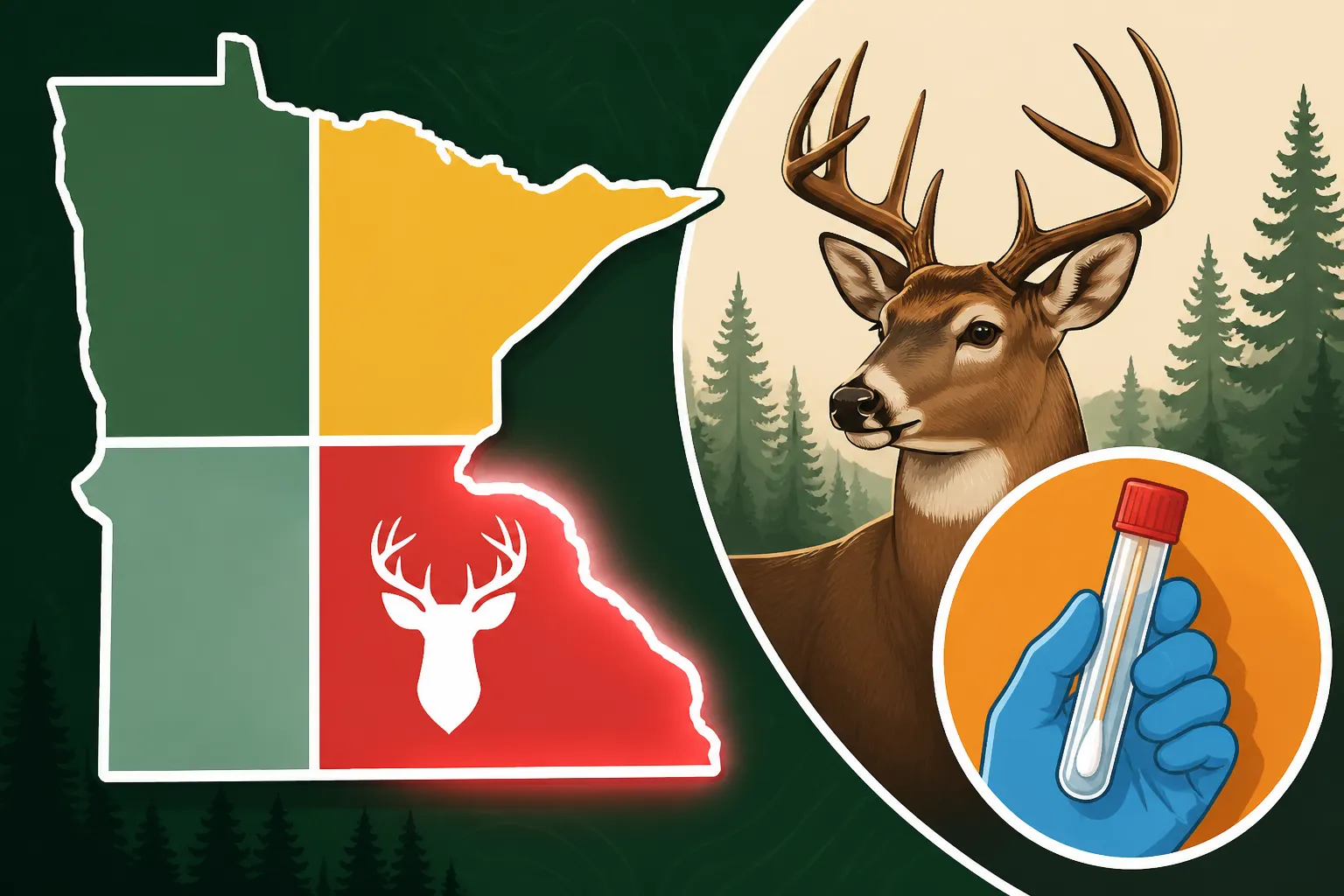
To gain a comprehensive understanding of CWD prevalence across the state and adapt management strategies accordingly, the Minnesota DNR implemented a statewide CWD sampling plan based on a four-year rotation by geographic quadrant. This means that each year, a different section of the state steps into the spotlight for mandatory CWD testing. This systematic approach allows the DNR to focus resources, collect data efficiently, and detect any potential new hotspots.
The quadrant plan is a thoughtful way to cover the entire state over time without overwhelming hunters with mandatory testing every single season. It provides predictability, at least for a few years out, allowing hunters to anticipate when their regular hunting grounds might fall into a mandatory testing zone. This doesn't mean CWD isn't monitored in other areas; it's simply a targeted approach for broad surveillance. Think of it like a rotating spotlight, shining intensely on one area each year, while still keeping an eye on the rest of the stage. Understanding Minnesota's Statewide CWD Quadrant Plan can really help you anticipate future requirements.
Here’s a quick overview of the rotation as it stands:
| Year | Quadrant Requiring Mandatory Testing | Affected Regions (General) | Notes |
|---|---|---|---|
| 2023 | Northeast Minnesota | Duluth, Grand Rapids | Initial year of the statewide rotation. |
| 2024 | Central Minnesota | Brainerd, St. Cloud | Expanding surveillance to the heart of the state. |
| 2025 | Southeast Minnesota | Rochester, Winona | Focusing on areas with existing CWD management zones. |
| 2026 | Northwest Minnesota | Bemidji, Thief River Falls | Bringing mandatory testing to the vast northern forests and plains. |
It’s essential to remember that this quadrant plan applies to general surveillance. Specific CWD Management Zones or Surveillance Zones, which we'll discuss shortly, have their own ongoing rules regardless of the quadrant rotation. Always check the DNR website or your hunting permit area specifics, as these zones can pop up or shift based on new detections.
Mandatory CWD Testing in 2026: The Specifics for Hunters
Now, let's get down to the brass tacks: for the 2026 deer hunting season, it will be the Northwest Minnesota quadrant that requires mandatory CWD testing for all deer harvested within its boundaries. This vast region includes a significant portion of Minnesota's diverse landscapes, from dense forests to prairie fringes, and represents a crucial area for CWD surveillance.
For hunters who plan to pursue deer in areas like the Beltrami, Clearwater, Kittson, Marshall, Pennington, Polk, Red Lake, or Roseau counties, and other adjacent areas falling within the designated Northwest quadrant, you will need to participate in mandatory CWD sampling. This is not just a suggestion; it's a requirement to help the DNR track the disease. This means that if you're out chasing whitetails in the big woods around Bemidji or working the farmlands near Stephen, and you punch your tag, that deer will need to go through the CWD sampling process. Tools like the GoHunt app can be incredibly helpful here, as they often have updated public land maps with CWD zones overlaid, making it easier to see if your favorite hunting spot falls into the mandatory testing area.
What Mandatory Testing Entails
When your hunting area falls under mandatory CWD testing, there are specific steps you'll need to follow after successfully harvesting a deer:
- Registration First, Always: Before anything else, you must register your deer. In Minnesota, this can usually be done online or via phone. This step is critical and needs to happen regardless of CWD testing requirements.
- Head Submission: For mandatory testing, you will be required to submit the deer's head (with at least 4-6 inches of neck attached) at an official CWD sampling station. These stations are typically set up by the DNR in convenient locations within or near the mandatory testing zone during the opening weekends of the firearm season, and sometimes for portions of the archery and muzzleloader seasons.
- Finding a Sampling Station: The DNR will publish a list of CWD sampling stations closer to the hunting season. These might include self-service stations (where you collect your own sample or deposit a head in a designated cooler) or staffed stations (where DNR staff or volunteers assist you). It’s a good idea to scout these locations beforehand, perhaps using a detailed mapping platform like GoHunt to pinpoint the nearest one to your hunting camp or home. Our guide on Finding a Minnesota CWD Sampling Station can also be a big help.
- Tagging Your Sample: You’ll need to ensure your deer’s head is properly tagged with your site ID (from registration) and other necessary information. Clear instructions will be available at each sampling station.
- Carcass Movement Restrictions: In mandatory testing zones, and especially within CWD Management or Surveillance Zones, there are often strict rules about moving deer carcasses out of the area until a negative CWD test result is confirmed. Typically, you can take the boned-out meat, quarters, hides, and clean skull plate with antlers (if no brain tissue is present) out of the zone, but the entire head and spinal column might need to stay.
- Results Notification: Once your sample is submitted, the DNR will process it. You can usually check the CWD test results online using your site ID. Be patient, as results can take a few weeks. Find out How Long Minnesota CWD Results Take so you know what to expect.
Imagine this scenario: you're hunting public land in the Beltrami Island State Forest, known for its challenging terrain and big deer. You finally connect with a mature buck on opening morning of the firearm season. After field dressing, you load it up. Before heading home, you consult your GoHunt map, which confirms you're in the 2026 mandatory CWD testing quadrant. You then navigate to the nearest CWD drop-off site, ensuring you follow all the registration and tagging protocols. This extra step is just part of being a responsible hunter.
CWD Management Zones Beyond the Quadrant Rotation
While the quadrant plan is designed for broad surveillance, it's crucial to understand that Minnesota also has specific CWD Management Zones and CWD Surveillance Zones. These are areas where CWD has been detected, and they often have continuous, more stringent regulations that supersede the general quadrant rotation rules. This means if you're hunting in one of these zones, even if it's not the year for its quadrant's mandatory testing, you might still face mandatory testing requirements, carcass movement restrictions, and even feeding or baiting bans.
These zones are typically located in the southeast portion of the state, where CWD has been more persistently found, but new detections can lead to the establishment of new zones anywhere in Minnesota. For example, some areas in the southeast, like certain permit areas around Fillmore and Houston counties, have had ongoing mandatory testing for years due to confirmed CWD cases. These aren't going away just because it's not the southeast's year in the quadrant rotation. Knowing about CWD Management Zones in Minnesota is vital for hunters who frequent these areas.
Key Restrictions in CWD Management and Surveillance Zones:
- Mandatory Sampling: Often required throughout the entire deer season, regardless of weapon choice, not just on opening weekends.
- Carcass Movement Restrictions: Generally, you cannot transport a whole deer carcass out of a CWD Management or Surveillance Zone. Only boned-out meat, clean skull plates, hides, and finished taxidermy are allowed to leave.
- Feeding and Baiting Bans: To reduce deer congregation and potential CWD transmission, feeding and baiting deer are typically banned in these specific zones. This is a significant change for many hunters who rely on these methods, so it's critical to be aware. Read more on Minnesota Feeding and Baiting Bans in CWD Zones.
Staying informed about these localized zones is just as important as understanding the statewide quadrant plan. The DNR's website is the ultimate authority, but supplemental tools and resources, like many online hunting platforms, often provide excellent visual aids for these complex zone boundaries.
Preparing for the Season and Beyond
As hunters, we play a critical role in managing and combating CWD. By complying with testing requirements, understanding carcass movement restrictions, and being mindful of baiting bans, we're actively contributing to the health of Minnesota's deer herd. The 2026 season for Northwest Minnesota will be a significant data-gathering period, helping the DNR make informed decisions for the future.
Before you head out into the field, whether it's 2026 or any other year, make it a habit to check the current DNR regulations for your specific hunting permit area. Don't rely solely on what you heard last year or from a buddy. Regulations can and do change. The DNR offers excellent online resources, including interactive maps that highlight CWD zones and sampling locations. Being proactive ensures you're hunting legally and responsibly.
Think about how you'll handle your deer if you harvest one in a mandatory testing zone. Do you have a plan for getting it to a sampling station? Will you be quartering it in the field if carcass movement restrictions apply? Having these thoughts organized beforehand can save a lot of stress and ensure compliance. We all want to enjoy our time in the woods and fill our freezers, and a little preparation goes a long way in navigating these important CWD protocols.
Disclaimer
Please note that hunting regulations, including those pertaining to Chronic Wasting Disease (CWD) testing and management zones, are subject to change by the Minnesota Department of Natural Resources (DNR). While every effort has been made to provide accurate and up-to-date information in this guide, it is essential for all hunters to consult the most current official Minnesota DNR hunting regulations and CWD updates before participating in any hunting activities. This article is for informational purposes only and does not supersede official DNR publications or laws.