Bow Cases for Travel to Minnesota
There's nothing quite like the excitement of planning a bowhunting trip to Minnesota, but let's be honest, the moment you start thinking about getting your precious bow from point A to point B, a little knot of anxiety can form in your stomach. Will it arrive safely? Will something get bent or broken? It's a completely valid concern, especially when you've invested so much time and money into your equipment. This guide is all about helping you conquer that worry, focusing on how to choose and pack the best bow cases for traveling to Minnesota, ensuring your gear is protected and ready to hit the woods.
Why a Reliable Bow Case is Non-Negotiable for Minnesota Hunts
When you're dreaming of chasing whitetails during Bowhunting Minnesota's Long Archery Season, the last thing you want is to arrive at your destination with a damaged bow. Your bow isn't just a piece of equipment; it's a precision instrument, finely tuned and critical to your success in the field. Traveling, whether by air, car, or even a bumpy ATV ride to a remote stand, subjects your bow to stresses it simply isn't designed to handle without proper protection. Neglecting a good case is like sending your prized fishing rod through a wood chipper – a recipe for disaster.
Protecting Your Precision Equipment from the Journey
Think about all the delicate components on your bow: the cams, string, cables, sight, and stabilizer. Each one is vulnerable to impact, vibration, and moisture. A good bow case acts as a sturdy shield, absorbing shocks and impacts that would otherwise wreak havoc on your setup. A small bend in a cam or a slight shift in your sight pins can throw off your accuracy completely, turning a potential harvest into a frustrating miss.
Imagine a scenario: you've just landed in Duluth, picked up your rental truck, and you're heading north towards the Superior National Forest for a week of bowhunting. The roads are rough, gravel crunching under the tires, and your gear is bouncing in the bed of the truck. Without a proper case, every bump is a potential calibration killer. Even seemingly minor jostles can loosen screws or cause internal damage that's hard to spot until you're drawing back on a deer. It’s an expensive gamble to rely on hope when a solid case offers genuine peace of mind, letting you focus on the hunt, not on whether your bow survived the drive.
Meeting Travel Regulations and Airline Rules
Traveling with archery equipment, especially by air, isn't as simple as just throwing it in a suitcase. Airlines have strict regulations for sporting equipment, and bowing to these rules often means using a specific type of case. Typically, a hard-sided case that can be securely locked is mandatory for checked luggage. This isn't just about protecting your bow; it's a security measure, ensuring that the equipment can't be easily accessed or tampered with during transit.
Beyond airlines, consider other modes of transport. If you're using a bus service, or even just sharing a packed vehicle with hunting buddies, having a robust, lockable case protects against accidental damage and theft. Nobody wants to be held up at airport security because their bow isn't properly cased, or worse, have it lost or stolen because it wasn't secure. Understanding and complying with these regulations is a crucial part of your overall hunt planning, almost as important as understanding Minnesota Hunter Safety Requirements or applying for your Minnesota Resident Hunting License Options.
Choosing the Right Bow Case for Your Minnesota Adventure
The "right" bow case really depends on how you plan to travel and the type of bow you shoot. There's a big difference between tossing a recurve into the back of your own pickup for a local hunt and checking a compound bow onto a cross-country flight. Let's break down the main categories so you can make an informed decision.
Soft Cases: Light Duty and Limited Travel
Soft bow cases are essentially padded bags, often made of durable Cordura or similar fabric. They're lightweight, usually less expensive, and offer a decent amount of padding for short, less rigorous trips. If you're driving your personal vehicle a short distance to a local range or a nearby deer stand, a soft case can work. It keeps dust off your bow, prevents minor scratches, and might have a few pockets for accessories like releases or a rangefinder.
However, for travel to Minnesota, especially if you're coming from out of state, soft cases generally aren't recommended. They offer minimal protection against hard impacts, crushing, or theft. An airline will almost certainly reject a bow in a soft case as checked luggage, and even in the bed of a truck, they won't stand up to heavy gear piled on top or shifting during bumpy rides. Think of a soft case as a dust cover and a convenient way to carry your bow over your shoulder for very short distances, not as serious travel armor. If your hunting trip involves significant mileage or commercial transport, it's really not the tool for the job.
Hard Cases: The Gold Standard for Protection
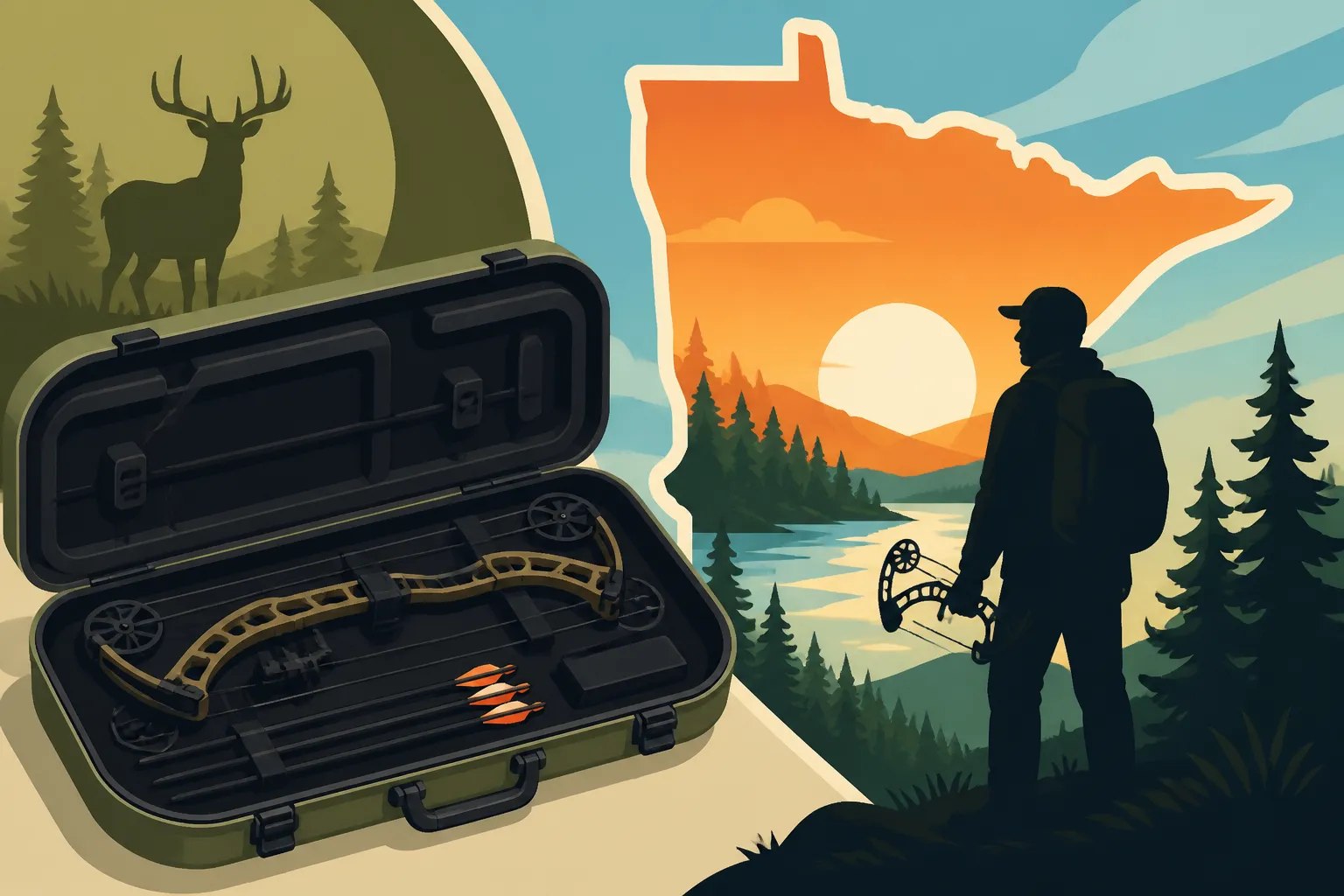
When it comes to serious travel, especially by air, a hard bow case is the undisputed champion. These cases are typically constructed from high-impact plastic or even aluminum, designed to withstand significant abuse. They feature dense foam interiors that can be custom-cut to cradle your bow securely, preventing it from shifting or being damaged by impacts. Many hard cases also incorporate wheels and sturdy handles, making them much easier to maneuver through airports or across rough terrain at a Minnesota Deer Camp Costs.
The key benefits of a hard case for a Minnesota hunting trip are multifold. First, unmatched protection. Second, compliance with airline security rules; most require a hard-sided, lockable case for firearms and archery equipment. Third, peace of mind. Knowing your bow is encased in a virtually impenetrable shell allows you to focus on the other aspects of your trip, like scouting potential locations with mapping tools from GoHunt or refining your Treestand Setups in Minnesota Hardwoods. While they are heavier and more expensive than soft cases, the investment pales in comparison to replacing a damaged bow or missing out on a hunt due to broken gear.
Specialized Cases for Different Bow Types
Not all bows are created equal, and neither are their cases. A traditional recurve or longbow that can be broken down into limbs and a riser might fit into a more compact case, often a sturdy hard tube or a smaller, rectangular hard case. These typically require less space and can sometimes be more easily packed alongside other gear.
For compound bows, the most common choice for many Minnesota deer hunters, you'll need a case specifically designed for its shape. These are usually rectangular with ample width to accommodate the cams and limbs without undue stress. If you shoot a Crossbow Versus Vertical Bow in Minnesota, you'll need an even larger, wider case to accommodate the stock and broader limb assembly. Some cases are universal, designed with customizable foam that you can cut to fit any bow, while others are molded for specific brands or models. Always measure your bow from cam to cam and axle to axle, and factor in any attached accessories like sights and stabilizers, before purchasing a case to ensure a perfect fit.
Key Features to Prioritize in a Travel Bow Case
Once you've decided on a hard case, there are several key features that can elevate its protective capabilities and make your travel experience smoother. Don't skimp on these details; they make a significant difference in the longevity of your bow and the ease of your journey.
Durability and Materials: Surviving the Journey
The primary function of a bow case is protection, so the materials and construction are paramount. Look for cases made from high-density, impact-resistant plastics like polypropylene or high-grade aluminum. These materials can withstand the bumps, drops, and general rough handling that often comes with travel. Pay attention to the hinges and latches – they should be robust, preferably metal, and designed to hold the case securely closed even under stress. Flimsy plastic latches are a weak point and prone to breaking.
Some premium cases feature reinforced corners and internal ribbing to increase structural integrity. Think about the overall rigidity of the case when it's empty. Can you twist or flex it easily? If so, it might not provide adequate crush protection for your expensive equipment. A really good case will feel like a tank when you pick it up, instilling confidence that whatever happens to the outside, your bow will be safe and sound within.
Security Features: Keeping Your Investment Safe
Given the value of your bowhunting gear, security is a huge concern. A good travel case should have multiple padlock attachment points. These should be reinforced with metal, not just plastic, to prevent them from being easily pried open. For air travel, make sure the case is compatible with TSA-approved locks. These locks allow TSA agents to open and inspect your case without damaging it, which is crucial for hassle-free travel.
Beyond the physical locks, a case that doesn't scream "expensive hunting gear inside" can also be a subtle security feature. While a hardcore case is unmistakable, avoiding flashy colors or overt branding might deter opportunistic thieves. Always ensure your bow case is locked when it leaves your sight, whether it's in the back of your vehicle while you grab a coffee or waiting on the baggage carousel at Minneapolis-St. Paul International. A small investment in quality locks is negligible compared to the cost of a lost or stolen bow.
Interior Design: Snug Fit and Accessory Storage
The inside of your bow case is just as important as the outside. The best cases feature thick, dense foam that can be customized to fit your bow perfectly. Some come with pluck-and-pull foam, allowing you to create precise cutouts for your bow, arrows, and accessories. Others use convoluted "egg crate" foam that compresses around your gear. The goal is a snug fit that prevents any movement during transit. Even a little wiggle room can lead to wear, scratches, or calibration issues.
Consider how you'll store your accessories. Many cases have dedicated compartments or pockets for items like your quiver, release aid, rangefinder, broadheads, and perhaps even a small repair kit. Keeping these items organized and secure within the case prevents them from bouncing around and potentially damaging your bow. When planning your Minnesota hunt, knowing that all your vital gear, from your main bow to your Bow Sights for Timber Shots and extra Arrow Weight for Short Shots, is safely contained in one place will reduce pre-trip stress significantly.
| Feature | Soft Case (Typical) | Hard Case (Recommended for Travel) |
|---|---|---|
| Material | Padded fabric (Cordura, nylon) | High-impact plastic, aluminum, reinforced composites |
| Protection | Minimal against impact, crushes, moisture, theft | Excellent against impact, crushes, moisture, theft |
| Security | Zippers (can be locked with small padlock) | Multiple reinforced padlock points, often TSA-compatible |
| Interior | Thin padding, some pockets, bow straps | Dense, customizable foam (pluck-and-pull or convoluted), accessory compartments |
| Durability | Low to moderate, prone to tears and wear | High, designed for extreme conditions and rough handling |
| Mobility | Lightweight, shoulder strap | Heavier, often with wheels and robust handles |
| Cost | Low | Moderate to High |
| Airline Travel | Not permitted for checked firearms/archery equipment | Required and suitable for checked firearms/archery equipment |
| Road Travel | Fine for short, personal vehicle trips | Ideal for all road travel, protects against shifting loads |
Packing Your Bow for Ultimate Travel Security
Once you've invested in a quality bow case, proper packing is the final, crucial step to ensure your equipment arrives in Minnesota hunt-ready. It's not just about tossing your bow in; it's about strategic placement and extra precautions.
Disassembling and Securing Components
Before placing your bow in its case, it's wise to remove any easily detachable or vulnerable accessories. This usually includes your sight, stabilizer, and quiver. Many hunters also remove their arrow rest if it's a model with delicate moving parts. Wrap these items individually in soft cloth or bubble wrap and secure them in dedicated compartments within your case. This prevents them from becoming projectiles inside the case if it's jostled, or from putting undue pressure on your bow's riser or limbs.
For compound bows, ensure the cams and string are not under any tension or pressing against the case walls. Some hunters even put a small piece of foam or cloth between the cams and limbs to prevent any rubbing or damage to the finishes. If your case doesn't have custom-cut foam, you can use additional layers of foam or soft towels to create a snug, protective fit around all parts of your bow. This meticulous approach goes a long way in safeguarding your investment, whether you're heading to the metro-area hunts or deeper into the big woods for a Hunting the Minnesota Rut in Early November.
Padding and Protecting Vulnerable Areas
Beyond removing accessories, identify any particularly vulnerable points on your bow that might need extra attention. This could be the delicate fiber optic pins on your sight, the fine tuning screws on your rest, or the actual cam and axle areas. Use extra foam, bubble wrap, or even thick socks to provide additional cushioning around these areas. Ensure broadheads are stored in a dedicated, secure broadhead box, never loose in the case where they could cut foam or, worse, damage your bow or injure someone handling the case.
Think about moisture as well. If you're traveling during wet weather or to a cold, damp environment like Minnesota in the late fall, a small desiccant pack inside the case can help absorb any moisture and prevent rust or corrosion on metal components. This is especially important for muzzleloaders, but even bows have metal parts that can suffer from prolonged exposure to humidity. Making these extra efforts ensures your bow is not only physically intact but also functioning optimally when it's time to sight it in for your hunt.
Labeling and Documentation
This might seem basic, but it's often overlooked. Clearly label your bow case with your name, address, and contact information. Consider putting a secondary label inside the case as well, just in case the exterior tag is lost. If you're flying, place a printout of your itinerary and contact details inside the case. Some hunters even take a photo of their packed bow and the contents of the case before closing it, just for their records in case of damage or loss.
Finally, keep all your bow's documentation, such as serial numbers and purchase receipts, easily accessible in a separate, secure location (like your carry-on luggage), not with the bow itself. This information is invaluable for insurance claims or law enforcement if your bow is ever lost or stolen. Proper documentation and labeling provide an extra layer of security and make recovery much easier, letting you worry less about gear and more about Scouting Minnesota Public Land Before Season.
Disclaimer
This article is for general informational purposes only and does not constitute professional advice. Laws, prices and regulations vary by location and change over time. Consult a qualified professional for guidance on your specific situation.