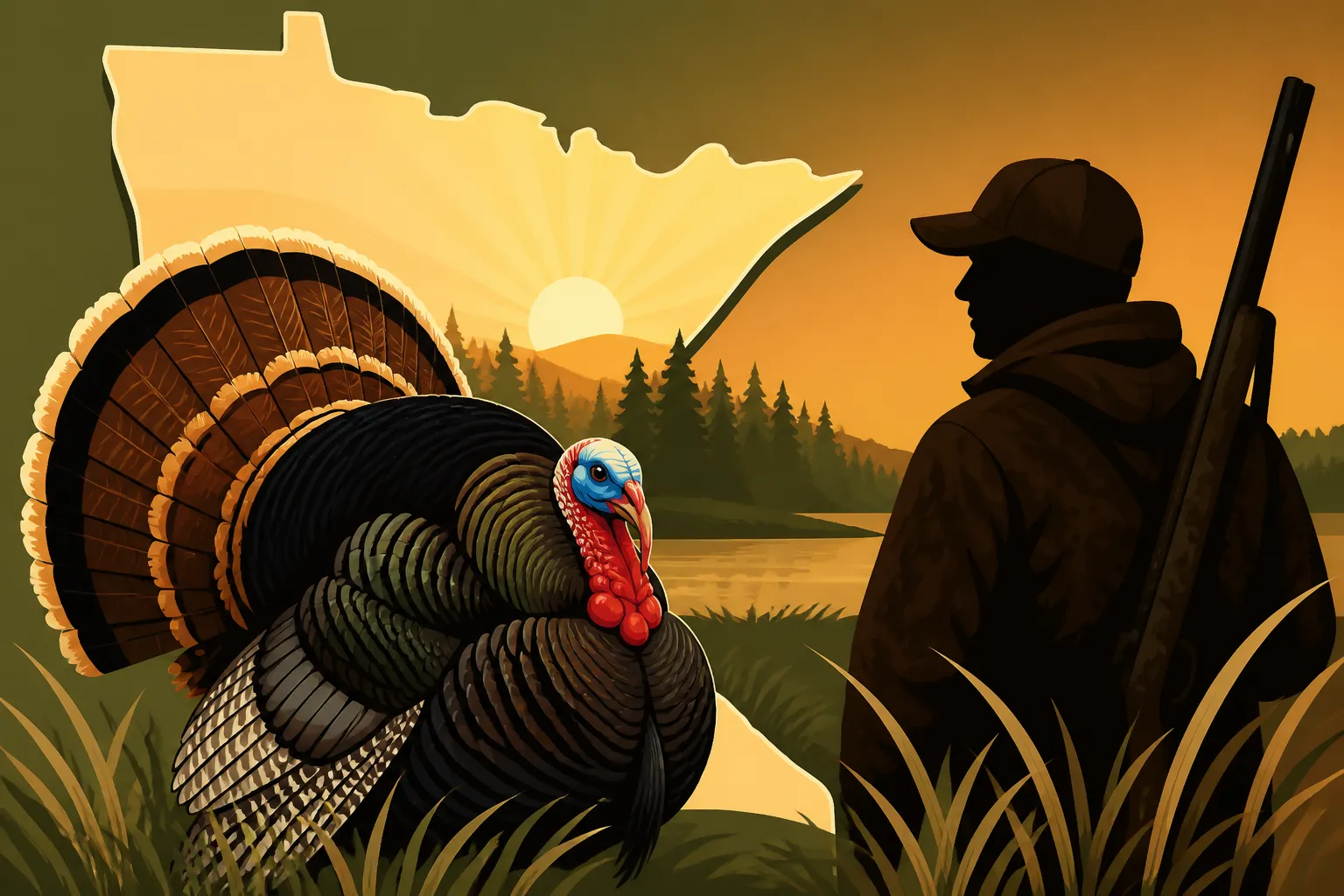
Minnesota Record Book Gobblers
Every spring, that unmistakable gobble rips through the Minnesota woods, stirring a primal urge in us turkey hunters. We spend months dreaming of that moment, but let's be honest, we're often chasing not just any tom, but a truly impressive one – a gobbler that stands out from the rest. This guide isn't just about bagging a bird; it's about understanding what makes a "record book gobbler" here in Minnesota, where to find those elusive giants, and the strategies to put one on the ground and, perhaps, in the record books.
What Truly Makes a Minnesota Record Book Gobbler?
For many turkey hunters, merely harvesting a gobbler is a huge accomplishment. The thrill of the chase, the close-range calling, the heart-stopping moment when they step into view – it's all part of the magic. But then there's that next level, that desire to find a truly exceptional bird, one that boasts impressive qualities that might just qualify it for the record books. It's a quest that many of us embark on, and it brings its own set of challenges and rewards.
Understanding the National Wild Turkey Federation (NWTF) Scoring System
When we talk about "record book gobblers" in the turkey hunting world, we're almost always referring to the National Wild Turkey Federation (NWTF) scoring system. Unlike deer, where antlers are the primary focus, turkeys are scored based on a combination of factors that reflect the bird's maturity and dominance. It’s not just about one impressive feature; it’s about the whole package. This can be frustrating because you might get a bird with an incredibly long beard, but if its spurs are short, it won’t rank as high. Similarly, a bird with monster spurs but a broken or short beard often misses the mark. It takes a truly exceptional bird to combine all these attributes.
The NWTF scoring system for wild turkeys is pretty straightforward, but it requires precise measurements:
- Beard Length: Measured in sixteenths of an inch from the skin to the end of the longest bristle. Multiplied by two. If a bird has multiple beards, only the longest one counts for the score, although hunters often brag about multi-bearded birds.
- Spur Length: Measured in sixteenths of an inch along the outside curve from the point where the spur emerges from the scaly leg skin to the tip of the spur. Both spurs are measured and added together.
- Live Weight: The gobbler's live weight in pounds and ounces. This is added directly to the total score.
So, a hypothetical bird might score like this:
- Beard: 10 inches = 160 sixteenths * 2 = 320 points
- Spurs: 1.25 inches (left) + 1.375 inches (right) = 2.625 inches total = 42 sixteenths total
- Weight: 22 lbs, 8 oz = 22.5 points
- Total Score: 320 + 42 + 22.5 = 384.5 points
It’s important to note that the NWTF recognizes five subspecies of wild turkeys, and each has its own record book. In Minnesota, we're almost exclusively talking about the Eastern wild turkey. Getting a bird into the top tiers of the NWTF record book takes a combination of factors that truly denote an old, dominant tom that has survived multiple seasons and bred successfully. Finding such a bird is difficult, let alone calling it in and closing the deal.
Beyond the Score: The Intangibles of a Trophy Tom
While the NWTF score provides an objective measure, many hunters agree that a true "trophy tom" isn't solely defined by numbers. There's an intangible quality to some birds that simply makes them more memorable, regardless of their official score. Perhaps it's a bird that outsmarted you for years, or one that came in silent, unexpectedly, testing every fiber of your patience. Maybe it's a bird with a unique fan pattern or a particularly battle-scarred appearance that tells a story of survival.
We often talk about the weight of a gobbler, even though it's the smallest component of the NWTF score. A 25-pound Minnesota gobbler is a massive bird, a true brute of the woods, and something to be incredibly proud of. Minnesota Turkey Population Trends show a healthy and growing population, but birds of this caliber are always rare. The sheer size and muscle of such a bird, along with the length of its spurs – those sharp, bony daggers that speak volumes about its age and fighting prowess – often leave a more lasting impression than a few extra sixteenths on a beard. Many hunters will display a bird proudly with 1.5-inch spurs even if the beard isn't record-breaking. It truly symbolizes an old, wise bird that has earned its stripes.
Where the Big Toms Hide: Minnesota's Prime Turkey Territory
Minnesota's wild turkey restoration has been a phenomenal success story, and How Turkeys Were Restored to Minnesota is a testament to dedicated conservation efforts. Today, we have robust populations across much of the state, but certain areas consistently produce larger, older birds that are more likely to make the record books. It’s no secret that the older a bird gets, the more opportunities it has to grow impressive beards and spurs, and survival often comes down to genetics, habitat, and cunning.
The Bluff Country Advantage in Southeastern Minnesota
If you're serious about hunting a record book gobbler in Minnesota, your sights should be firmly set on the southeastern part of the state. This region, often referred to as "bluff country," is characterized by its steep, forested river valleys, diverse hardwood timber, and scattered agricultural fields. This unique topography provides everything a wild turkey needs to thrive: abundant food sources like acorns, insects, and waste grain; dense roosting cover on the steep slopes; and plenty of escape terrain from predators and human pressure. It's a complex landscape that makes hunting challenging, but it's also where the biggest, wariest birds can grow old.
Counties like Houston, Fillmore, Winona, and Goodhue consistently rank high in Minnesota Spring Turkey Harvest Numbers and for producing large birds. These areas are known for having Where Minnesota Turkeys Are Densest, which means more birds mature and survive to trophy size. The patchwork of private and public lands here allows some birds to find sanctuary, making them harder to hunt but also giving them the chance to age. The rolling terrain and thick timber often funnel birds, but it also creates challenging calling scenarios where gobblers can hang up, just out of sight. Hunters who learn to navigate this landscape and exploit its features have a distinct advantage.
Northern Expansion and Emerging Opportunities
While southeast Minnesota remains the undisputed king for trophy gobblers, the expanding turkey population means that opportunities are emerging in other parts of the state. As Poult-to-Hen Ratios and What They Mean show continued success in reproduction, birds are pushing further north and west, establishing themselves in areas they haven't been seen in decades. Central Minnesota, with its mix of hardwoods and agricultural land, is increasingly producing solid gobblers. Even pockets of northern Minnesota are seeing turkeys thrive, often around river corridors or areas with significant oak stands.
These newer turkey ranges might not have the long history of record-book birds, but they offer less pressured opportunities. A gobbler in a less-hunted area might be more responsive to calls and less wary than its bluff country cousins. While the average age might be slightly lower, these areas can still surprise you with a mature tom that's managed to avoid hunters. Using resources like GoHunt or other mapping apps to identify potential turkey habitat, focusing on timber blocks near agricultural fields, and looking for signs of roosting can pay dividends in these lesser-known areas. Checking Best Minnesota Counties for Turkeys can give you a good starting point for your research, but don't be afraid to explore areas a little off the beaten path.
Strategies for Tagging a Trophy-Class Bird
Chasing a record book gobbler isn't about luck, though a little never hurts. It's about meticulous preparation, understanding turkey behavior, and executing a sound hunting strategy. These older birds are the professors of the woods; they’ve earned their seniority by avoiding predators and hunters alike. They often come in silent, circle wide, or "hang up" just out of range, gobbling their heads off but refusing to commit. This is the frustration every turkey hunter knows, but it's also the challenge that makes harvesting a trophy bird so rewarding.
Pre-Season Scouting and Intelligence Gathering
Before the season even opens, your work should begin. Scouting is absolutely critical when targeting a trophy bird. You need to know where these birds are roosting, where they feed, and their travel corridors. Spend time in the woods listening for distant gobblers, looking for tracks, droppings, and dusting bowls. Pay particular attention to potential roost trees – often the tallest trees on a ridge or along a river bottom. Where Minnesota Gobblers Roost can give you clues.
Utilize mapping tools from GoHunt or similar providers to identify potential areas. Look for mature timber, especially oak stands, near open fields or food plots. Identify natural funnels and bottlenecks that could bring a bird into range. If hunting public land, also scout for evidence of other hunters and try to find overlooked pockets of habitat. Trail cameras can be incredibly useful for identifying specific birds and their patterns, but be mindful of Trail Camera Rules on Minnesota Public Land if you’re using them. Understanding the lay of the land, and knowing where birds feel safe and where they move, is the first step in outsmarting a wise old tom.
Mastering the Call for Wary Gobblers
Calling is the heart of turkey hunting, but calling for a record-book bird often requires a different touch. These birds have heard it all. Aggressive, nonstop calling might work on a juvenile gobbler, but an old tom will likely hang up, expecting the hen to come to him. The key is often subtlety, patience, and knowing when to shut up.
Start with soft, seductive calls – yelps, clucks, and purrs – to pique his interest. If he gobbles back, try to mimic his intensity. If he's hot, you can be a bit more assertive, but if he's not committing, back off. Sometimes, total silence after a few calls can be the most effective strategy, letting his curiosity get the better of him. Remember, you're trying to convince him that a desirable hen is just out of sight, playing hard to get. Grunt Calls in Mature Minnesota Timber aren't just for deer; subtle turkey sounds can also be crucial. Pay attention to his reactions. If he starts drumming, he’s close. If he’s gobbling his head off but not moving, try a fly-down cackle off the roost, then go silent. Read the situation. A wise old tom requires nuance.
Patience, Persistence, and Positioning
Harvesting a record book gobbler demands an incredible amount of patience and persistence. You might have a bird gobble on the roost for an hour straight, only to fly down and go the other way. You might have a bird hang up at 100 yards, refusing to take those last crucial steps. This is where When Minnesota Gobblers Go Quiet can test your resolve. Don't give up too early. Often, if you leave a hung-up bird and come back a few hours later, or even the next day, the situation can change.
Positioning is also paramount. When you set up, ensure you have a clear shooting lane, but also enough cover to break up your outline. Always set up with a tree wider than your shoulders at your back for safety. Think about the most likely direction the bird will approach and set your decoys accordingly, ensuring they are visible but not too far out. If a bird is continually hanging up, consider moving your setup slightly, or trying a different approach altogether. Sometimes, getting aggressive by moving on a gobbling bird, especially if he's staying put, can pay off. This "run-and-gun" tactic on public land can be effective if done carefully. Setting Up Against a Big Oak can provide excellent cover and a natural backdrop for your decoys. Sometimes, the smallest change in your setup can make all the difference between a hung-up bird and one strutting into range.
Here's a quick look at the attributes that contribute to a gobbler's NWTF score:
| Attribute | Description | How It's Measured | Contribution to Score |
|---|---|---|---|
| Beard Length | Longest beard from skin to tip. | Measured in sixteenths of an inch, then multiplied by 2 | Major |
| Spur Length | Length of both spurs along the outside curve. | Measured in sixteenths of an inch, then added together | Significant |
| Live Weight | Gobbler's weight at time of harvest. | Measured in pounds and ounces, then added directly | Minor, but can be crucial |
From the Field to the Record Book: The Documentation Process
After all the scouting, calling, and patient waiting, you've finally put down that incredible Minnesota gobbler. The adrenaline is still pumping, and you're admiring your trophy. Now, if you suspect it might be a record-book contender, there's a specific process to follow to ensure it gets the recognition it deserves. Don't rush this part; proper care and documentation are essential.
Proper Care and Measurement for Official Scoring
The first step after harvesting is to handle your bird with care, especially if you think it's a record. Avoid damaging the beard or spurs. If possible, keep the bird cool and protected until you can get it officially measured. For the NWTF, a gobbler must be field-dressed for scoring, but the head, beard, and spurs must remain intact. If you plan to mount the bird, make sure your taxidermist understands you want it officially scored first.
When it comes to the actual measurements, precision is key. Beard length should be measured from the skin where it emerges to the very tip of the longest bristle, in a straight line. Spurs are measured along their outside curve, from where they emerge from the leg to their tip. Again, sixteenths of an inch are critical here, so a flexible tape measure or ruler that goes down to that increment is ideal. It’s always best to have an official NWTF scorer perform the measurements, but understanding how it's done yourself can help you assess your bird's potential.
Submitting Your Gobbler to the NWTF Records
Once your bird is measured, and you're confident it meets the minimum entry requirements for the NWTF record book, the submission process begins. You'll need to fill out an official NWTF scoring sheet, which typically requires information about the hunter, the date of harvest, and the specific measurements. The measurements must be taken by an official NWTF scorer, or a certified measurer from a similar recognized organization. This ensures accuracy and prevents inflated scores.
You’ll usually need a clear photograph of the gobbler, often including the beard and spurs, along with the completed scoring sheet. There's usually a small fee to submit your bird for entry. While many hunters are driven by the personal accomplishment, having your name in the NWTF record book is a fantastic way to recognize the quality of your bird and the skill involved in harvesting it. It's a badge of honor that truly distinguishes a hunter who has gone above and beyond in the pursuit of Minnesota's most impressive gobblers.
This article is for general informational purposes only and does not constitute professional advice. Laws, prices and regulations vary by location and change over time. Consult a qualified professional for guidance on your specific situation.