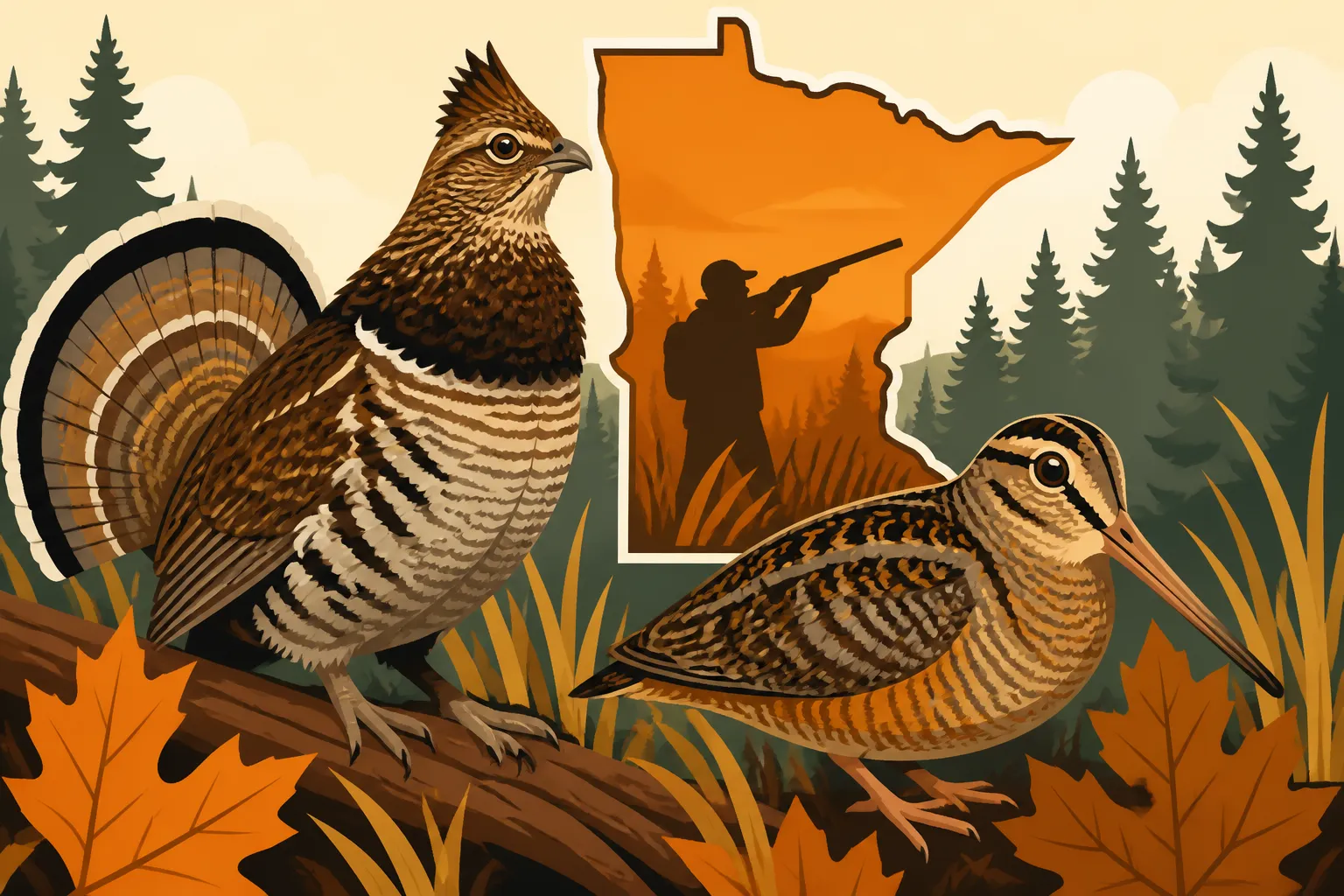
Ruffed Grouse and Woodcock in Minnesota
Few things are as frustrating for a Minnesota upland hunter as walking miles of seemingly perfect cover, only to hear a thunderous grouse flush behind you, or spot a secretive woodcock only for it to vanish into the alder before you can even raise your gun. It’s enough to make you wonder if you’re doing something wrong, or if these elusive birds are just too smart. This comprehensive guide is designed to demystify ruffed grouse and woodcock hunting in Minnesota, providing you with the insights into their habits, habitat, and effective strategies to turn those frustrating walks into exhilarating flushes.
Understanding Ruffed Grouse: The King of the Northwoods
The ruffed grouse, often called the "King of the Northwoods," is a bird steeped in legend and revered by upland hunters. Its explosive flush and cunning ability to navigate dense cover make it a truly challenging and rewarding quarry. If you want to consistently put these birds in your vest, you need to understand them from the ground up.
The Ruffed Grouse Life Cycle and Behavior
Ruffed grouse are incredibly tied to their habitat, especially throughout their life cycle. Spring brings the iconic drumming of the male, a deep, resonant sound produced by rapidly beating his wings against the air to attract a mate. You'll typically hear this drumming from a specific log or stump, known as a drumming log, which serves as his territory marker and display stage. Hens, after mating, will build a simple nest on the ground, often at the base of a tree or under a fallen log, laying around 8-14 eggs.
Once the chicks hatch, usually in late May or early June, they are precocial, meaning they can move and feed themselves almost immediately. The brood will stay together, often following the hen through dense, bug-rich cover like young aspen stands or alder bottoms, feeding heavily on insects for rapid growth. As fall approaches, the broods begin to break up, and the young birds disperse, sometimes traveling significant distances to find their own territories, a phenomenon often called "the crazy season" due to young birds seemingly flying into anything. Their diet is diverse, shifting with the seasons from insects and tender greens in spring and summer to buds, catkins (especially aspen and birch), and berries in the fall and winter. This dietary flexibility allows them to thrive in varied forest environments. Their primary defense is camouflage and immobility, but when pressed, they burst into a thunderous, twisting flight that can be incredibly disorienting, often putting obstacles like tree trunks between themselves and a perceived threat.
Minnesota Ruffed Grouse Cycles
One of the most talked-about aspects of ruffed grouse populations in the upper Midwest is their cyclical nature. Minnesota Ruffed Grouse Cycles typically run on a 9 to 11-year pattern, with populations soaring to high numbers before crashing dramatically, only to slowly rebuild again. While the exact causes of these cycles are still debated among biologists, the most widely accepted theory points to a complex interplay between predator-prey dynamics (specifically snowshoe hare and their predators like lynx and goshawks, which then switch to grouse when hare numbers decline) and habitat quality or even disease.
Understanding where Minnesota currently sits in this cycle is crucial for setting your expectations. While statewide surveys by the Minnesota DNR provide an overview, local populations can vary significantly. For instance, in some northern counties known for strong grouse numbers like Beltrami or Itasca, you might find pockets of good bird numbers even in a lower part of the cycle if local habitat conditions are exceptional. Conversely, a poor year might make finding birds feel like searching for needles in a haystack. Checking the Minnesota DNR's annual Ruffed Grouse Drumming Survey results can give you a general idea of trends, but ultimately, boots on the ground in specific cover types will tell the real story. Hunters should always adjust their hunting intensity and expectations based on these cycles. A "down" year might mean fewer flushes, but it's still a fantastic excuse to be out in the woods.
Identifying Prime Grouse Cover
When you’re walking the woods, you're not just looking for "trees"; you're looking for specific types of trees and specific stages of forest growth that grouse rely on. The absolute bedrock of good grouse habitat in Minnesota is young to mid-successional aspen. Aspen stands that have been clear-cut 8-20 years ago are often prime real estate. These young trees create a dense, vertical cover that grouse adore for escape from aerial predators, and they provide abundant buds for winter food. Think of it as a natural fortress. As the aspen ages, the understory thins out, and the habitat becomes less appealing to grouse, though mature aspen can still offer some food sources.
Beyond aspen, look for mixed stands that include conifers like spruce or fir, especially in northern Minnesota. These evergreens provide crucial thermal cover during harsh winters, offering refuge from biting winds and deep snow. Grouse will "bud up" in these conifer stands, feeding on needles and buds when other food sources are buried. Alder thickets, particularly those bordering aspen stands or along creek bottoms, can also be dynamite, offering both food and dense cover. Often, where you find one good cover type, you'll find others in close proximity, creating a diverse and resilient habitat mosaic that supports healthy grouse populations. Areas with diverse age classes of aspen, interspersed with alder and conifers, tend to hold the most birds consistently.
Decoding Woodcock: The Timberdoodle's Unique Ways
Often overlooked in favor of their showier cousin, the ruffed grouse, woodcock are equally fascinating and provide a unique, often intense, hunting experience. These migratory shorebirds of the forest floor, affectionately known as "timberdoodles," have specific habitat needs and behaviors that, once understood, can lead to incredible days afield.
Woodcock Migration and Habits
Unlike the resident ruffed grouse, woodcock are true migratory birds, traveling thousands of miles each spring and fall. Minnesota sits squarely in their migration corridor, making timing everything for a successful woodcock hunt. They typically arrive in Minnesota in late March to April, following the thaw as the ground becomes workable for their specialized bills. Males quickly establish singing grounds, performing their famous "sky dance" display at dawn and dusk, spiraling high into the air with whistling wings before plummeting back to earth while vocalizing. This unique courtship display is a sure sign that woodcock are back.
Throughout spring and summer, they breed and raise their young, with broods usually hatching in May. By late September and into October, as northern cold fronts begin to push through and the ground starts to freeze, woodcock initiate their southbound migration. They are primarily nocturnal, feeding heavily on earthworms at night by probing moist soil with their long, flexible bills. During the day, they roost in dense, often wet, cover, relying on their superb camouflage to avoid detection. Their flight is typically slower and more deliberate than a grouse, often rising vertically above the cover before leveling out, offering a slightly different shot presentation.
Key Woodcock Habitat Requirements
Woodcock are less about specific tree species and more about soil and cover density. Their entire existence revolves around earthworms, which means they need moist, soft soil where they can easily probe. This is why you'll often find them concentrated in alder runs, willow thickets, and the edges of creek bottoms or beaver ponds. These areas typically have rich, loamy soil that stays damp, providing an abundance of their primary food source. Young aspen stands, particularly those with a lot of heavy undergrowth and perhaps a lower, wet spot, can also be excellent woodcock cover.
Crucially, woodcock also demand dense overhead cover for daytime roosting. They want to be hidden from predators, both aerial and ground-based, which means head-high brush and small trees. This makes those impenetrable-looking alder and willow tangles, which might seem too thick for grouse, absolute magnets for timberdoodles. While their habitat needs differ from grouse, there's a significant overlap in areas like young aspen cuts that border a marsh or creek. This overlap often allows for exciting mixed-bag opportunities, where you might flush a grouse and a woodcock within minutes of each other. Knowing these specific requirements helps you narrow down your search and focus on areas where these unique birds are most likely to be found.
Timing the Minnesota Woodcock Flight
Successfully hunting woodcock in Minnesota is largely a game of timing. While you can find resident birds throughout the season, the truly spectacular hunting comes with the arrival of migratory birds, often referred to as "the flight." This influx typically begins in late September and can last through late October, sometimes into early November, depending on the weather. The key trigger for these movements is usually a strong cold front pushing down from Canada, often bringing a sharp drop in temperature and sometimes the first hard frost.
When these fronts move through, woodcock from farther north are spurred to move south, staging in prime feeding and resting areas in Minnesota before continuing their journey. This is when a good alder run can go from holding a few birds to dozens overnight. Regions in northern and central Minnesota, particularly those with extensive alder and young aspen habitat, tend to experience the flight first. As the season progresses, these birds, and those from farther north, move into central and southern Minnesota. Tracking weather patterns and paying attention to reports from fellow hunters or local DNR officials can help you hit the peak of the flight. However, don't overlook the early season birds either; those resident woodcock can provide excellent action, especially on milder days. Remember that the window for peak migration can be fleeting, sometimes only lasting a few days in a particular spot before the birds move on.
Prime Minnesota Habitats for Grouse and Woodcock
Minnesota boasts some of the finest upland hunting habitat in the country, but knowing where to focus your efforts can make all the difference. The state's diverse landscapes, from the big woods of the north to the fragmented forests of central regions, offer unique opportunities for both ruffed grouse and woodcock.
Aspen Management and Minnesota Grouse
The health of Minnesota's ruffed grouse population is inextricably linked to the management of its aspen forests. Aspen is a pioneer species, meaning it's one of the first trees to regenerate after a disturbance like fire or clear-cutting. These disturbances are crucial because they create the dense, young forest stands that grouse need. The Minnesota Department of Natural Resources (DNR) actively manages state forests and Wildlife Management Areas (WMAs) through carefully planned clear-cuts to create a mosaic of different age classes of aspen.
When a clear-cut happens, the aspen roots send up thousands of suckers, creating an incredibly dense thicket within a few years. This young growth provides unparalleled escape cover for grouse chicks and adults alike. As the stand matures, say into the 10-25 year range (pole-stage), it continues to offer good cover and food. Older aspen, while not as good for escape cover, still provides drumming logs and food sources. Areas like the Savanna State Forest, George Washington State Forest, and numerous WMAs in counties such as Aitkin, Cass, Itasca, and St. Louis are managed with grouse in mind, and can be fantastic places to hunt. Public land managed for grouse, such as that described in Grouse Hunting Minnesota Aspen Cover, is often clearly marked and accessible. Organizations like the Ruffed Grouse Society also play a vital role, working with landowners and agencies to promote active forest management that benefits these iconic birds.
Alder Runs and Creek Bottoms for Woodcock
While aspen is king for grouse, alder runs and creek bottoms are the undisputed domain of the woodcock. These low-lying, often wet areas, characterized by dense thickets of alder, willow, and sometimes young softwoods, provide the perfect combination of moist, soft soil for earthworms and overhead cover for roosting. You'll often find these "runs" snaking along river and stream corridors, in low pockets within larger aspen forests, or bordering marshy areas. The key is that rich, dark, and often muddy soil.
When scouting for woodcock, look for areas where water tends to collect or drain slowly. Beaver activity can also create excellent woodcock habitat by flooding areas and promoting the growth of dense, moisture-loving vegetation. While woodcock are the primary target in these spots, it's not uncommon to flush a ruffed grouse as well, especially if the alder run transitions into a young aspen stand or a mixed forest edge. The two species, though having distinct primary habitats, often coexist in these transitional zones, making for exciting hunting opportunities. Don't be afraid to get your boots wet; the best woodcock cover is rarely dry.
Northern Forests vs. Central/Southern Habitat
Minnesota's grouse and woodcock opportunities vary significantly depending on whether you're hunting the vast northern forests or the more fragmented, agricultural landscapes of central and southern Minnesota. The northern part of the state, encompassing counties like Aitkin, Itasca, St. Louis, Beltrami, and Koochiching, is often considered the heart of Minnesota's grouse country. Here, you'll find expansive tracts of public land within national forests (like the Superior and Chippewa) and numerous state forests and WMAs. These areas are characterized by extensive aspen, birch, and conifer forests, offering seemingly endless cover. The sheer scale of these forests means less hunting pressure in many spots, but it also requires more effort in scouting and walking to find those concentrated pockets of birds. Here, the challenge is often finding the birds in the vastness, as discussed in Northern Minnesota Deer Density which can also apply to grouse movement.
Central and southern Minnesota offer a different experience. While the overall density of birds might be lower due to more fragmented habitat, excellent hunting can still be found in specific areas. These regions often feature smaller state forests, WMAs, and private woodlots interspersed with agriculture. Here, grouse and woodcock might be concentrated in very specific pockets of good cover—a perfect 10-year-old aspen cut, a hidden alder swamp, or a dense woodlot surrounded by fields. The advantage here can be proximity for many hunters, and often a higher ratio of woodcock in certain wetter areas. You might also encounter less competition from other hunters if you've done your homework. For a broader perspective on population trends, checking Minnesota Ruffed Grouse Numbers Today can help you assess the overall health of the bird populations in these different regions.
| Feature | Ruffed Grouse | American Woodcock |
|---|---|---|
| Primary Habitat | Young to mid-successional aspen, mixed hardwoods | Moist, soft soil in alder/willow thickets, wet aspen |
| Diet Focus | Buds, catkins, berries, insects | Earthworms, some insects |
| Flight/Flush | Explosive, horizontal, twisting, often behind cover | Slower, often vertical, more direct once airborne |
| Migration | Resident (non-migratory) | Migratory (spring arrival, fall departure) |
| Key Sound | Male drumming (spring) | Male "peent" and whistling wings (spring sky dance) |
| Best Hunting Time | October (leaf drop) into early November | Late September through October (peak migration) |
| Camouflage | Bark-like browns and grays | Leaf litter-like browns and mottles |
Best Seasons and Weather for Upland Bird Hunting
Timing your upland hunts with the changing seasons and understanding how weather impacts bird behavior can significantly improve your success. Minnesota offers a relatively long upland season, providing opportunities from early fall right into the depths of winter.
Early Season Advantages and Challenges
Minnesota's upland season for ruffed grouse and woodcock typically opens in mid-September. This early period offers some distinct advantages. First, bird numbers are generally at their highest due to the summer's successful breeding. You might find several birds from a single brood still grouped together. Second, hunting pressure can be lower in the first couple of weeks, especially on weekdays, as many hunters are focused on deer scouting or other activities. This is also when you're likely to encounter the first wave of migratory woodcock from farther north.
However, the early season presents its own set of challenges. The most significant is the dense foliage. Leaves are still on the trees, making it incredibly difficult to see flushing birds and get a clear shot. You'll often hear more flushes than you see. Warm weather can also be an issue, both for hunter comfort and, more critically, for dogs. Overheating is a real concern for your canine companion, and scenting conditions can be poor on hot, dry days. Ticks and mosquitos can also be relentless. Despite these hurdles, the early season offers a unique experience, with vibrant fall colors and the chance to find birds before they become more pressured. Remember to check Minnesota Grouse Season Dates and Minnesota Woodcock Season Dates for exact opening days each year.
Peak Season Opportunities: October to Mid-November
For many dedicated upland hunters, late September through mid-November represents the "golden window" for grouse and woodcock in Minnesota. This period offers the best balance of bird activity, falling leaves, and favorable weather. As October progresses, the hardwoods begin to shed their leaves, dramatically improving visibility in the woods. This is when those frustrating "ghost flushes" behind thick cover start to turn into legitimate shot opportunities. The cooler temperatures also mean better scenting conditions for dogs, who can work harder and more effectively without overheating.
The first hard frosts of October often trigger significant woodcock migration, bringing a new influx of birds into prime cover. You might experience the "second flush" phenomenon with grouse, as they become more active and less camouflaged by foliage. Around the peak of the deer rut in early November, grouse can be surprisingly active, moving more freely. This time of year often brings crisp, invigorating days that are perfect for covering ground. While hunting pressure may increase, especially on weekends, the improved conditions and active birds often make it worth it. Focusing on these mid-season conditions is key to maximizing your chances.
Late Season Tactics in the Snow
As Minnesota transitions into late November and December, upland hunting shifts dramatically. Deep snow can cover much of the ground, and temperatures drop significantly. This is undoubtedly the most challenging period for grouse and woodcock, but it also offers unique opportunities for the dedicated hunter. Woodcock will have mostly departed Minnesota by this time, pushed south by the freezing ground and lack of food. However, ruffed grouse remain.
Challenges include navigating deep snow, which is exhausting for both hunters and dogs. Grouse will also change their behavior, often "budding up" in conifer trees (spruce, fir, cedar) to feed on the buds, or seeking dense thermal cover. This makes them harder to find on the ground in the traditional aspen cuts. However, the snow also offers advantages: it can make tracking birds easier, revealing where they've been feeding or roosting. Birds might also be more concentrated in specific patches of heavy cover that offer warmth and food. In areas with lighter snow, it might be possible to even spot grouse perched in trees, or still-hunting quietly along logging trails, a tactic sometimes used for Flushing Grouse Without a Dog. While colder, a late-season hunt in a silent, snow-covered forest holds a special kind of magic, often with less competition from other hunters.
Essential Gear and Dog Training for Minnesota Upland Birds
Being prepared with the right gear and, if you're lucky enough to have one, a well-trained bird dog, can turn a difficult hunt into a memorable success. Upland hunting in Minnesota's diverse and often rugged terrain demands thoughtful consideration of your equipment and canine companion.
Shotguns, Loads, and Chokes for Upland Hunting
Choosing the right scattergun for Minnesota's thick cover is paramount. While some opt for a 12 gauge, many experienced grouse and woodcock hunters prefer the lighter, faster-swinging 20 gauge. The reduced recoil and quicker handling of a 20 gauge, especially in dense alder thickets and popple cuts, can make a significant difference when trying to connect with a fast-flushing bird. Side-by-side or over/under shotguns are popular for their balance and ability to quickly select between two different chokes, but pump and semi-automatic shotguns are also very effective. You can learn more about this in Best Shotgun Gauge for Minnesota Grouse.
For loads, 7.5 or 8 shot are generally considered ideal for both grouse and woodcock. These smaller pellets provide a dense pattern, crucial for hitting fast-moving birds at close range without over-penetrating. When it comes to chokes, open patterns are your friend. Improved Cylinder (IC) and Skeet chokes are often favored, especially for the first shot. Many hunters use a combination, such as an Improved Cylinder in the first barrel and a Light Modified or Modified in the second, to cover varying flush distances. This allows for a wider pattern for the close, explosive flush and a slightly tighter pattern for a bird that might put a little more distance between you and them. Don't be afraid to experiment and pattern your shotgun to see what works best with your chosen loads. Check out Choke Choice for Fast Flushes for more detailed insights.
Clothing, Navigation, and Safety Gear
Upland hunting in Minnesota often means traversing varying terrain and enduring changeable weather, making proper clothing and safety gear non-negotiable. Layering is key: start with a moisture-wicking base layer, add insulating layers (fleece or wool are excellent), and top it with a durable, briar-resistant outer layer. You'll want good briar pants or chaps to protect your legs from thorns and thick brush. Waterproof, comfortable boots are essential, as you'll often be walking through wet grass, swamps, and snow; rubber boots are often preferred for their waterproof qualities.
Safety is paramount. Minnesota requires blaze orange during firearm deer season for hunters and those accompanying them, and it's always a smart choice for upland hunting during other seasons too, especially on public land. Refer to How Much Blaze Orange Minnesota Requires for specific regulations. A quality upland vest with ample shell loops, a large game pouch, and hydration capacity is invaluable. For navigation, a reliable GPS unit or a smartphone app like GoHunt or onX Hunt is crucial for staying found and identifying public land boundaries. Don't forget a compass and map as a backup, and a first-aid kit for both yourself and your dog. A whistle for your dog, a headlamp, and a fully charged phone are also must-haves for any serious outing.
Training and Working Your Bird Dog
While you can certainly hunt grouse and woodcock without a dog, a well-trained bird dog elevates the experience to an entirely different level. Whether you prefer a pointing breed (like a German Shorthaired Pointer, English Setter, or Brittany) or a flushing breed (like a Springer Spaniel or Labrador Retriever), a good dog significantly increases your chances of finding and retrieving birds, especially in Minnesota's dense cover. The core of effective dog work in upland hunting revolves around several key commands: "whoa" or "hup" (to stop instantly), "heel" (to walk beside you), and a reliable recall. For pointing breeds, honoring another dog's point is also a critical skill.
Training should focus on steadiness to wing and shot, ensuring your dog doesn't break prematurely, allowing you time to get a shot and preventing lost birds. Quartering patterns, where the dog works back and forth in front of the hunter, are also vital for systematically covering ground. Exposure to wild birds is arguably the most important training element; start early and often. Work with your dog in varying cover types and conditions, preparing them for the thick stuff they'll encounter in Minnesota. Understanding your dog's range and natural instincts is key; some dogs naturally work closer, while others need gentle encouragement to stay within gun range. Always carry water for your dog, especially on warmer days, and monitor them for signs of fatigue or injury. Investing time in your dog's training pays dividends in the field, making them a true hunting partner.
Effective Hunting Strategies and Tactics
Upland hunting for grouse and woodcock is as much about strategy and observation as it is about shooting. The dense cover and the birds' evasive nature demand a thoughtful approach to consistently put them in the game bag.
Working Cover Systematically
One of the biggest mistakes new upland hunters make is simply wandering through the woods. To be successful, you need to work the cover systematically. Think of the habitat as a grid or a series of lanes. If you're hunting with a dog, train them to quarter back and forth in front of you, covering ground efficiently within gun range. Without a dog, you'll need to develop your own systematic approach. Walk in a zigzag pattern, or follow the contours of the terrain, like a ridge line or the edge of a swamp. This ensures you cover potential bird-holding areas thoroughly rather than just walking past them.
Pay close attention to transitions in habitat—where an aspen cut meets an alder swamp, or where thick cover borders a more open logging trail. These edges are often prime locations. Also, don't be afraid to pause frequently. Many times, a grouse or woodcock will hold tight, allowing you to walk right by, only to flush once you've passed. By pausing for 5-10 seconds, you give nervous birds a chance to make their move, often revealing their location. Use terrain features to your advantage; walk into the wind when possible, as this can help carry scent to your dog and muffle your approach. Consider tactics like those detailed in Grouse Hunting Minnesota Popple Cuts when you find yourself in those dense, birdy areas.
Hunting With and Without a Dog
The decision to hunt with or without a dog significantly impacts your tactics. Hunting with a well-trained bird dog is undeniably an advantage. Dogs, with their superior sense of smell, can locate birds that would be impossible for a human to find, holding them on point for a grouse, or flushing them within gun range for a woodcock. They can also retrieve birds from dense cover that you might otherwise lose. A dog allows you to cover ground more effectively, knowing that every potential pocket of cover is being thoroughly investigated. The partnership with a good dog is one of the most rewarding aspects of upland hunting.
However, many successful grouse and woodcock hunters operate without a canine companion. When hunting dog-less, you need to hone your own senses and be more deliberate. Walk slowly and deliberately, taking frequent pauses. Pay attention to subtle signs like droppings, dusting areas, or disturbed leaves. Listen intently for the rustle of leaves, the soft "peent" of a woodcock, or the faint whir of a grouse's wings. Without a dog, you often become the "flusher." Focus on walking through the densest cover, pushing birds out. Some hunters even coordinate "mini-drives" with a friend or two, walking parallel lines through cover to push birds towards a shooter. While it can be more challenging, hunting without a dog is entirely possible and deeply satisfying, as explored in Flushing Grouse Without a Dog.
Understanding the Flush and Shot Opportunity
The flush is the moment of truth in upland hunting, and it varies significantly between grouse and woodcock. A ruffed grouse flush is an explosion of wings and sound, often startling even the most seasoned hunter. They typically burst from cover low and fast, twisting through trees, often putting a barrier between themselves and you almost instantly. The key is to keep your gun mounted, swing smoothly through the bird, and shoot quickly but accurately. Don't try to stop their flight; track their movement. Safety is paramount; ensure you have a clear background and know exactly what's beyond your target before pulling the trigger.
A woodcock flush, by contrast, is usually slower and more vertical. They tend to rocket straight up from the ground, often reaching the top of the cover before leveling out and flying off. This gives you a slightly longer window to react and get your gun up. While seemingly easier, their slower flight can sometimes make you rush the shot. Again, focus on a smooth swing. In both cases, the shot is often at close range, typically within 20-30 yards, so an open choke is essential. Anticipation plays a huge role; always be ready, gun at a ready position, especially when walking through prime habitat. The exhilaration of a successful shot on a challenging flush is what keeps us coming back season after season.
Conservation and Future of Minnesota's Upland Birds
The continued health of Minnesota's ruffed grouse and woodcock populations is not guaranteed; it depends heavily on sound conservation practices, active habitat management, and the support of the hunting community. Understanding these factors is crucial for ensuring these birds thrive for generations to come.
Habitat Preservation and Management
For both ruffed grouse and woodcock, habitat is the single most critical factor influencing their populations. As discussed earlier, grouse depend on young, regenerating aspen forests, while woodcock need moist, rich soil with dense overhead cover, often found in alder and willow thickets. The challenge in modern conservation is that forests naturally mature, and without disturbance, suitable young habitat declines. This is where active forest management, often through clear-cutting, becomes vital. While it might look drastic initially, a properly planned clear-cut initiates the regeneration cycle that creates prime grouse and woodcock habitat for years to come.
The Minnesota DNR, through its Forestry and Wildlife divisions, plays a significant role in this, managing state forests and WMAs to provide a mosaic of different age classes of timber. Non-profit organizations like the Ruffed Grouse Society and Audubon Minnesota also work tirelessly to advocate for and implement habitat projects, educating the public about the benefits of early successional forest management. Beyond clear-cuts, maintaining healthy riparian zones (areas along rivers and streams) is essential for woodcock. Hunters play a role too by supporting these organizations and understanding that sometimes, what looks like destruction (a clear-cut) is actually a vital part of creating robust wildlife habitat.
Climate Change and Other Threats
While habitat management is paramount, Minnesota's upland birds face broader environmental challenges. Climate change, with its potential for more extreme weather events, poses a significant threat. Milder winters, while seeming benign, can disrupt the natural predator-prey cycles that influence grouse populations. Unpredictable spring thaws and refreezes can impact woodcock breeding success by affecting earthworm availability. Longer periods of drought can dry up critical woodcock feeding grounds.
Beyond climate, diseases like West Nile Virus, though its impact is still being studied, have been linked to declines in grouse populations in some areas, as discussed in West Nile Virus in Minnesota Grouse. Increased suburban development and fragmentation of forest lands also reduce the overall available habitat, making it harder for birds to find suitable breeding and foraging areas. Predators, both natural and introduced, also take their toll, and changes in predator populations can have cascading effects. Conservation efforts must adapt to these evolving threats, incorporating climate resilience into management plans and monitoring disease prevalence.
Hunter's Role in Sustainable Populations
Hunters are, and always have been, key conservationists. Our passion for these birds directly translates into funding and advocacy for their future. Every hunting license and federal duck stamp purchased contributes to wildlife management and habitat restoration. Beyond financial support, ethical hunting practices are fundamental. This includes respecting bag limits, ensuring clean kills to minimize suffering, and retrieving all downed birds. Participating in surveys, such as the Ruffed Grouse Drumming Survey, or simply reporting your hunting observations to the DNR can provide valuable data to wildlife managers.
Engaging with local chapters of organizations like the Ruffed Grouse Society or Pheasants Forever (many of which also do work that benefits woodcock and grouse) strengthens the collective voice for upland bird conservation. By being responsible stewards of the land and its wildlife, hunters ensure that the tradition of pursuing Minnesota's ruffed grouse and woodcock remains vibrant for generations of outdoor enthusiasts. Our continued involvement is the best guarantee for the future of these magnificent birds.
Troubleshooting Common Upland Hunting Challenges
Even with the best preparation and understanding, upland hunting throws curveballs. The nature of the birds and the terrain means you're bound to face frustrations. Recognizing and addressing these common challenges can help you stay persistent and, ultimately, more successful.
Dealing with Dense Cover and Visibility
The most frequent complaint among grouse and woodcock hunters, especially early in the season or in particularly prime spots, is the sheer density of the cover. You'll hear flushes, maybe even multiple birds, but never get a clear look, let alone a shot. This can be incredibly disheartening. We've all been there—the sound of thunder, the flash of brown, and then silence, leaving you wondering what just happened.
One strategy to combat this is to focus on the edges of extremely dense cover. Birds often feed in the thick stuff but might flush into slightly more open areas, like logging trails, old skidder paths, or the transition zone where a swamp meets a hillside. Walking these more open lines, while still staying within range of the dense cover, can sometimes give you those crucial extra milliseconds. Another tactic is to slow down even further. Stop often, wait, and listen. A bird that was holding tight might flush after you've passed the immediate area, giving you a wider angle. Also, consider the angle of the sun and how it affects visibility through the canopy. Sometimes, simply adjusting your line of travel by a few yards can open up a shooting lane you didn't know existed. It's a mental game as much as anything; stay patient and accept that not every flush will be a shot opportunity. Reviewing strategies like Reading Aerial Photos for Big Woods Deer can also help identify subtle breaks in dense canopy that can create small openings for shooting lanes or bird movement.
Finding Birds During Low Cycle Years
As we discussed with the Minnesota Ruffed Grouse Cycles, there will be years when bird numbers are simply down. During these low cycle years, it's easy to get discouraged, feeling like you're walking endlessly with no reward. This is when adaptability and a willingness to cover more ground, and think outside the box, become essential. Don't expect the same flush rates as a peak year; adjust your expectations to appreciate every bird encountered.
During a low cycle, birds will often be more concentrated in the very best habitat. That means focusing your efforts on those perfect 8-15 year old aspen cuts with good undergrowth, or the absolute prime alder runs for woodcock. It might require driving further or walking deeper into public land to find those undisturbed pockets. Instead of hunting large tracts, focus on smaller, isolated patches of ideal cover that might be overlooked. You might also find birds concentrated around specific food sources that are abundant that year, such as a strong berry crop. This is a time to consult the DNR's annual drumming survey results for Minnesota Ruffed Grouse Numbers Today to identify regions that may still be holding stronger numbers than the statewide average. Persistence and a positive attitude are vital; every bird flushed in a low cycle year feels like a true trophy.
Handling Difficult Dog Situations
A bird dog is an invaluable partner, but even the best-trained dogs can present challenges in the field. Minnesota's varied terrain, from thick alder swamps to deep snow, can create situations where your dog gets into trouble. Overheating is a primary concern on warm early-season days, especially for high-energy breeds. Always carry plenty of water and monitor your dog for signs of fatigue or heat stress. If they're panting heavily or lagging, it's time for a break, or even to call it a day.
Getting lost is another common fear. GPS collars have become a game-changer for tracking dogs in dense cover, but always have a backup plan, like a reliable whistle. Train your dog for a strong recall command. Sometimes, a dog might get on a running deer, especially in areas with high deer populations. This is a difficult habit to break and requires consistent, firm training with e-collars if necessary, focusing on "whoa" or "leave it" commands around deer scent. Lastly, injuries can happen in rough cover. Always carry a basic first-aid kit for your dog (antiseptic wipes, paw balm, bandages). If your dog isn't performing well, seems lethargic, or is struggling in the cover, don't push them. Their safety and well-being should always take precedence over a few more flushes. GoHunt maps, with their detailed satellite imagery and property lines, can be incredibly helpful for keeping track of your dog's movements and finding them if they range too far.
Disclaimer
The information provided in this guide is for general informational purposes only and is not intended as legal advice. Hunting regulations, seasons, and permit requirements are subject to change. Always consult the most current Minnesota Department of Natural Resources (DNR) hunting regulations and local ordinances before heading afield. Safety should be your number one priority when hunting.