Minnesota Deer Vehicle Collisions
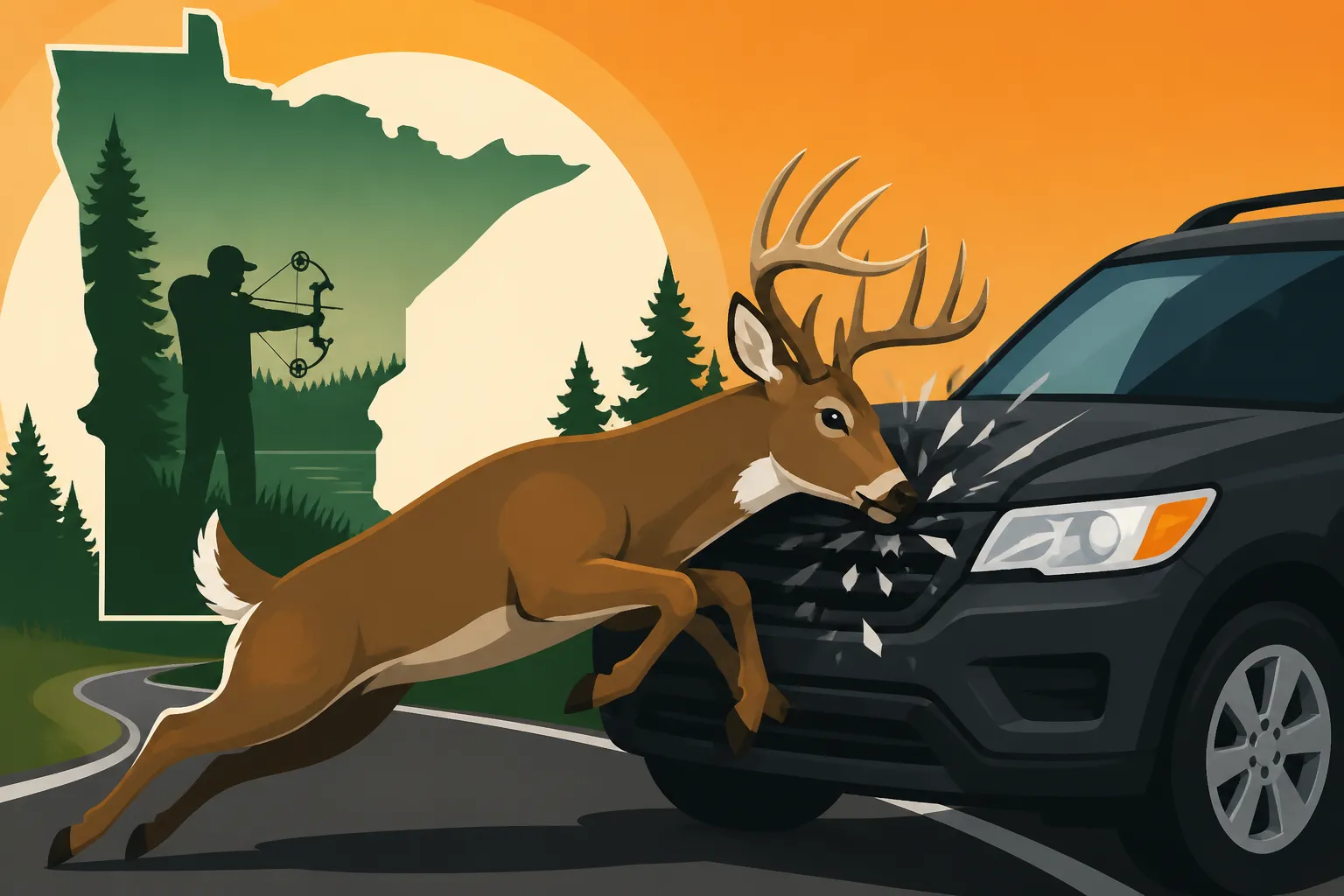
Hitting a deer with your vehicle is one of those jarring, terrifying moments no one ever wants to experience. One minute you're driving along, minding your own business, and the next, there's a sickening thud, shattered glass, and the immediate panic of what just happened. It's not just about the damage to your car, which can be extensive and costly; it's also about the risk of injury to yourself or your passengers, and the heartbreaking reality of an animal's life lost. This guide is here to help you understand why deer-vehicle collisions are such a persistent problem across Minnesota, what proactive steps you can take to dramatically reduce your risk, and precisely what you need to do in the immediate aftermath should the unthinkable occur.
Understanding Why Deer-Vehicle Collisions Are So Common in Minnesota
Minnesota's landscape, rich with forests, farmlands, and sprawling natural areas, provides an ideal home for a thriving white-tailed deer population. While this abundance is a boon for hunters and wildlife enthusiasts, it also means that our roads frequently intersect with deer travel corridors, leading to a significant number of vehicle collisions each year. It’s not just bad luck; it’s a confluence of deer behavior, seasonal patterns, and human activity.
Peak Seasons and Times of Day for Deer Activity
If you've driven enough miles in Minnesota, you've probably noticed that certain times of the year, and even certain hours of the day, seem to bring more deer sightings on the road. This isn't your imagination; it's directly linked to the deer's natural biological rhythms and daily routines. Understanding these patterns is the first step in knowing when to be extra vigilant.
The absolute prime time for deer-vehicle collisions in Minnesota is during the fall, specifically from late October through November. This period corresponds directly with the whitetail rut, the breeding season when bucks are actively seeking out does. During the rut, deer, especially bucks, are far more mobile and less cautious than at any other time of the year. Their focus is squarely on reproduction, which often means they're paying less attention to passing vehicles and more attention to scent trails or the presence of other deer. This increased movement, combined with shorter daylight hours that force many commutes into twilight or full darkness, creates a perfect storm for collisions. If you want to understand more about deer activity during this time, you can delve into When the Minnesota Rut Peaks, which offers insights into their behavior.
Beyond the fall rut, dawn and dusk are consistently high-risk periods throughout the entire year. Deer are what we call "crepuscular" animals, meaning they are most active during these low-light conditions. They move from their daytime bedding areas, which are often in dense cover, to feeding areas like agricultural fields, forest clearings, or even suburban gardens, and then back again. For many Minnesotans, these peak deer movement times unfortunately coincide exactly with morning and evening commutes to work or school. The reduced visibility at dawn and dusk makes it incredibly difficult to spot a deer until it's directly in your path, leaving precious little time to react.
It's also worth noting that other, less pronounced peaks in deer activity can contribute to collisions. Late spring and early summer, for instance, see the birth of fawns, and soon after, the dispersal of yearlings. These young deer, often driven away by their mothers as new fawns arrive, are inexperienced and sometimes disoriented as they search for new territories. They might cross roads in unfamiliar areas, making their movements highly unpredictable. Any time deer are pressured, whether by hunting activity or even just other deer, they can make sudden, erratic movements, darting across roads without warning. Understanding Minnesota Deer Herd Size can also give context to the overall prevalence of these animals on our landscape.
Habitat and Landscape Influence on Deer Movement
Minnesota's diverse geography plays a significant role in where and why deer cross roads. From the sprawling fields of the south to the dense forests of the north, and even into our more developed suburban fringes, deer are constantly moving between different habitat types. These movements, driven by their basic needs for food, water, and cover, often lead them directly into the path of vehicles.
Deer are creatures of habit and efficiency. They often utilize linear features in the landscape as natural travel corridors. Think about wood lines bordering fields, brushy creek bottoms winding through open country, or even old logging trails and fence rows. These features offer them cover and a sense of security as they move from one area to another. Roads, by their very nature, often intersect these established pathways. A quiet country road might cut directly through a well-used deer trail connecting a dense cedar swamp to a prime oak ridge. Hunters frequently use tools like the Minnesota Recreation Compass App or other mapping software, such as those offered by GoHunt, to identify these natural funnels and travel corridors when planning their hunts. Drivers can implicitly benefit from this knowledge by recognizing areas where these features converge on roads.
In agricultural areas, which cover a large portion of southern and western Minnesota, deer are heavily drawn to crops like corn, soybeans, and alfalfa. They'll bed down in dense cover nearby, such as small woodlots, cattail sloughs, or CRP grasslands, and then move out into the fields to feed, particularly at night. This consistent movement between bedding and feeding sites means they'll frequently cross local roads and highways that crisscross these farmlands. If you've ever been Hunting Minnesota Farmland Deer, you know just how prevalent deer can be in these agricultural settings. The edges of these fields, where cover meets open ground, are prime crossing points.
Even in more developed or suburban areas, deer adapt remarkably well. They'll use green spaces, riparian corridors along rivers and creeks, and even larger backyards as travel routes. When these routes are interrupted by roads, they'll simply cross, often at points that seem random to us but are entirely logical to them. As human development continues to expand, it inevitably pushes deer into more confined areas, increasing their proximity to roads and the likelihood of unexpected encounters.
| Risk Factor | Description | Peak Times/Seasons | Driving Precaution |
|---|---|---|---|
| Rutting Season | Increased deer movement as bucks actively seek does, often less cautious. | October – November (Peak in Early Nov) | Extreme vigilance, reduced speed, especially dawn/dusk. |
| Dawn & Dusk | Deer are crepuscular, most active during twilight hours. | Year-round, especially when commuting. | Use high beams (when safe), scan shoulders. |
| Young Deer Dispersal | Yearlings leave their mothers to find new territories; fawns become more independent. | Late Spring – Early Summer | Be aware in wooded or transitional areas. |
| Habitat Edges | Areas where forest meets fields, or dense cover meets open spaces (roadsides). | Year-round | Expect crossings where cover is close to the road. |
| Poor Weather | Fog, heavy rain, snow can reduce visibility, making deer harder to see and react to. | Year-round, dependent on conditions | Slow down significantly, increase following distance. |
| Blind Curves/Hills | Limited sight lines reduce reaction time to deer suddenly appearing. | Year-round | Approach with caution, assume presence, be ready to brake. |
Proactive Steps to Minimize Your Risk on Minnesota Roads
While you can't control deer behavior, you absolutely can control your driving habits and your awareness behind the wheel. Minimizing your risk of a deer-vehicle collision in Minnesota involves a combination of defensive driving techniques and a realistic understanding of your vehicle's capabilities and limitations. Taking these proactive steps can make a real difference, potentially saving you from a costly and traumatic experience.
Defensive Driving Strategies in Deer Country
When you're driving through known deer country, whether it's the Big Woods up north or the bluff country of Southeast Minnesota, your mindset needs to shift. It's not enough to just watch the road directly in front of you; you need to be actively scanning, anticipating, and ready to react. This heightened sense of awareness is your best defense against a sudden deer encounter.
The first and most critical strategy is constant vigilance. Don't just look at the lane markings; actively scan the shoulders and ditches for any sign of movement, eyes reflecting in your headlights, or even the subtle outline of a deer standing just off the road. Deer rarely travel alone. If you see one deer cross in front of you, always assume there are more following closely behind. This is particularly true during the rut when groups of deer are moving together. Your peripheral vision becomes as important as your direct gaze. Hunters use tools like GoHunt to understand game distribution and likely travel routes, knowledge that can translate to a driver's awareness of high-risk areas.
Reducing your speed, especially during those peak deer activity times (dawn, dusk, and the fall rut), is paramount. Slower speeds give you more precious seconds to react if a deer suddenly darts out. It also significantly reduces the force of impact if a collision does occur, potentially lessening damage to your vehicle and the severity of injury to yourself. A few miles per hour can make a huge difference in stopping distance and collision outcome. Pay extra attention in areas where the road is bordered by dense cover, or along known travel corridors that might be revealed when Reading Aerial Photos for Big Woods Deer.
Utilize your vehicle's lighting to its full potential. Use your high beams whenever it is safe to do so, especially on rural roads with no oncoming traffic. High beams can illuminate deer further off the road and cause their eyes to reflect, giving you an earlier warning. However, be mindful of other drivers and dim your lights promptly. Fog can also severely limit visibility, so proceed with extreme caution in misty or foggy conditions, reducing your speed to match your sight distance.
Finally, know what to do if a collision appears unavoidable. Your instinct might be to swerve wildly, but this can often lead to a much worse outcome. Swerving to avoid a deer can cause you to lose control of your vehicle, sending you into oncoming traffic, off the road into a ditch, or colliding with a fixed object like a tree. The general advice from safety experts is to brake firmly and stay in your lane. While hitting a deer is terrible, hitting another car or a tree at high speed is almost always more dangerous for the occupants of your vehicle.
Understanding Vehicle Safety Features and Limitations
Modern vehicles are equipped with an array of safety features designed to protect occupants in a variety of collision scenarios. While these are invaluable, it's important to understand what they can and cannot do when it comes to deer. No vehicle is truly "deer-proof," but certain features can certainly mitigate the damage and enhance occupant safety.
Vehicle design, with its engineered crumple zones and advanced airbag systems, is your primary passive defense. Crumple zones are specifically designed to absorb and dissipate kinetic energy during an impact, diverting it away from the passenger compartment. Airbags deploy rapidly to cushion occupants and prevent them from striking hard interior surfaces. These systems work together to protect you, whether the impact is with another vehicle or a large animal like a deer. Ensuring your seatbelt is always fastened correctly maximizes the effectiveness of these safety features.
Many drivers consider aftermarket deer deterrents, such as ultrasonic whistles or reflective strips. The idea is that these devices will either emit a high-pitched sound that scares deer away or make your vehicle more visible. However, scientific studies on the effectiveness of these devices have been largely inconclusive or have shown minimal impact on deer behavior. While they might provide some peace of mind, it's unwise to rely on them as your sole or even primary defense. They are not a substitute for active, defensive driving.
The most fundamental safety components of your vehicle—your tires and brakes—are often overlooked in deer collision discussions, but they are absolutely critical. Well-maintained brakes with good pads and rotors, combined with tires that have adequate tread depth and are properly inflated, provide maximum stopping power. In an emergency braking situation, every foot of stopping distance matters. Regularly inspecting your tires and having your brakes checked are basic maintenance steps that could prevent a deer collision or reduce its severity.
For those who frequently drive in extremely high-risk areas or whose livelihoods depend on their vehicles (like utility workers or truckers), aftermarket protection like brush guards or "moose bumpers" might be considered. These sturdy additions are designed to protect the front end of your vehicle from significant damage in an animal strike. While they can be effective in reducing damage to critical components like radiators and headlights, they are not foolproof and won't prevent all damage or eliminate the risk of injury. They can also add considerable weight and potentially interfere with airbag sensor deployment in some cases, so careful research and professional installation are essential.
What to Do Immediately After a Deer Collision in Minnesota
Even with the most careful driving and all the preventative measures, a deer-vehicle collision can still happen. The moments immediately following the impact are often chaotic and frightening. Knowing exactly what steps to take can help ensure your safety, protect your rights, and guide you through the process of dealing with vehicle damage and the animal itself.
Prioritizing Your Safety and Documenting the Scene
Your safety and the safety of your passengers are the absolute top priority after a collision with a deer. The adrenaline rush can make it hard to think clearly, but taking a moment to breathe and follow a set procedure is crucial.
First and foremost, if your vehicle is still operable and it's safe to do so, pull it to the side of the road, away from traffic. Turn on your hazard lights immediately to alert other drivers to your presence. If your vehicle is disabled in a traffic lane, or if you're on a blind curve, assess the situation carefully before exiting the vehicle. If it's too dangerous to exit, stay put and call for help. Once you're in a safe location, check yourself and any passengers for injuries. Even minor bumps can be more serious than they initially appear, so don't dismiss pain or discomfort.
After ensuring personal safety, your next step is to contact emergency services if necessary. Dialing 911 is appropriate if anyone is injured, if your vehicle is severely damaged and undrivable, or if the collision has created a significant traffic hazard. Even if there are no injuries, it's often advisable to contact local law enforcement (e.g., the county sheriff or State Patrol) to report the incident. They can assess the scene, assist with traffic control, and, importantly, generate an official accident report. This report is invaluable for your insurance claim down the road. Some insurance companies even require a police report for deer collision claims.
Documenting the scene is a critical step for your insurance company. Use your smartphone to take clear photos of the damage to your vehicle from various angles. Also, photograph the deer itself, if it's visible, and the general location of the accident, including any relevant road signs or landmarks. Note the exact time of the collision, the prevailing weather conditions, and the condition of the road (wet, icy, dry). Gather contact information for any witnesses, if available. This thorough documentation will streamline your insurance claims process and provide a clear record of the incident. It’s also wise to always keep a basic emergency kit in your vehicle, including a flashlight, reflective triangles or flares, and a first-aid kit, all of which will be incredibly useful in this type of situation.
Handling the Deer and Understanding Carcass Removal
Once the immediate safety and documentation steps are complete, you'll need to address the situation with the deer itself. This can be an emotionally difficult moment, and it's important to proceed with caution and follow proper procedures.
Under no circumstances should you approach an injured deer. A wounded animal, particularly one as large as a deer, can be incredibly unpredictable, aggressive, and dangerous. It might kick, bite, or try to run, posing a serious risk to anyone who gets too close. Maintain a safe distance and leave the handling of an injured animal to trained professionals, such as law enforcement or conservation officers. Your safety is not worth the risk.
If the deer is deceased, many people wonder if they can keep the animal. In Minnesota, the general rule is that you cannot simply take a road-killed deer without proper authorization. To legally possess a deer killed in a collision, you must report the incident to law enforcement or the Minnesota Department of Natural Resources (DNR) and often obtain a permit or tag. This ensures proper record-keeping and prevents illegal harvesting. Regulations can vary slightly by county or specific situation, so always confirm with the responding officer or the DNR. This process is distinct from regular Minnesota Deer Registration Rules that hunters follow, but it still involves official channels to claim the animal. While some hunters use tools like GoHunt to track game populations, this particular scenario is about post-collision protocol.
Regarding carcass removal, if the deer is on a busy road or highway, law enforcement or the county highway department will typically handle its removal to prevent further hazards to traffic. On less-traveled rural roads, the responsibility might fall to the property owner adjacent to the road, or in some cases, the carcass may be left for nature to reclaim. Again, it's best to confirm the exact procedure with the authorities who respond to your collision. Following their guidance ensures you adhere to local regulations and avoid any unintended legal issues related to carcass disposal.
Disclaimer
This article is for general informational purposes only and does not constitute professional advice. Laws, prices and regulations vary by location and change over time. Consult a qualified professional for guidance on your specific situation.