Finding Sign in Minnesota Big Woods
The vast, unbroken expanses of Minnesota's Big Woods can feel like an intimidating maze when you're trying to locate deer, especially those elusive mature bucks. It's easy to get lost in the endless timber, feeling like you're just wandering aimlessly without a clue where the deer might be. This guide is all about cutting through that frustration, helping you learn how to effectively read the subtle and not-so-subtle signs left behind by whitetails, transforming your Big Woods hunts from guesswork into strategic pursuits.
The Unique Challenges of Minnesota's Big Woods
Hunting the Big Woods of northern Minnesota is a beast entirely different from sitting on a food plot in farm country. Here, deer aren't concentrated by agricultural fields or small woodlots. They have endless cover, and that means they can roam widely, often staying far from human disturbance. It's a real test of patience and woodcraft.
Understanding the Landscape and Its Impact on Deer Movement
Imagine walking through miles of dense aspen, thick stands of mature oaks, or swampy lowlands peppered with cedar and tag alder. This is the typical Big Woods environment. Unlike the more open farmland where deer movements are often predictable between bedding and feeding, Big Woods deer have an abundance of both. They don't have to travel far to find food, and bedding cover is literally everywhere. This makes their patterns incredibly difficult to pin down.
The sheer scale means a deer might use an area for a day or two and then move miles away without much apparent reason to us, but for them, it's just another patch of suitable habitat. Factors like logging operations, which create new growth and clear-cuts, can drastically shift deer movement patterns overnight. A few years ago, I was hunting a fantastic stand of oaks that had consistent deer activity. Then, a commercial logging operation came through a mile away, and suddenly, the deer seemed to vanish from my area, likely shifting towards the fresh browse and cover the cut provided. This constant evolution of the forest means that what was a hot spot last year might be dead quiet this year. Understanding how timber cuts and natural features like ridges and swamps influence deer travel is paramount. A valuable tool to help you visualize these shifts is using mapping software like the one provided by GoHunt, which allows you to overlay different habitat types and topographical features.
The Elusiveness of Big Woods Whitetails
Big Woods whitetails, especially mature bucks, are notoriously reclusive. They've learned to avoid human contact like the plague. They use the thick cover to their advantage, often moving silently and staying just out of sight. You might walk within 50 yards of a bedded buck and never know it. Their survival depends on their ability to melt into the landscape. This elusiveness means that finding fresh sign isn't just about stumbling upon it; it's about actively seeking it out in areas where these deer feel safe and are likely to leave clues.
Think about it from their perspective: every sound, every scent, every visual cue is a potential threat. They'll often bed in the thickest cover available, using wind to detect danger and escape routes to vanish. This is why you rarely see large groups of deer in the Big Woods like you might on agricultural fringes. Here, they're more spread out, often solitary, and always on high alert. To find them, you need to think like them and focus on those subtle hints they leave behind, rather than expecting to see deer everywhere you go. If you're looking for guidance on where these cautious animals prefer to rest, our article on Where Big Woods Bucks Bed in Minnesota can offer some excellent starting points.
Key Sign to Look For on the Ground
When you’re deep in the Minnesota Big Woods, your eyes become your best scouting tool. Every broken branch, every disturbed leaf, every impression in the soil tells a story. Learning to read these subtle cues is how you start to piece together the puzzle of deer movement.
Scrapes and Rubs: More Than Just Antler Art
Scrapes and rubs are the deer's personal billboards, their way of communicating with each other. Too often, hunters see a rub and think, "A buck was here!" and move on. But there's so much more to it.
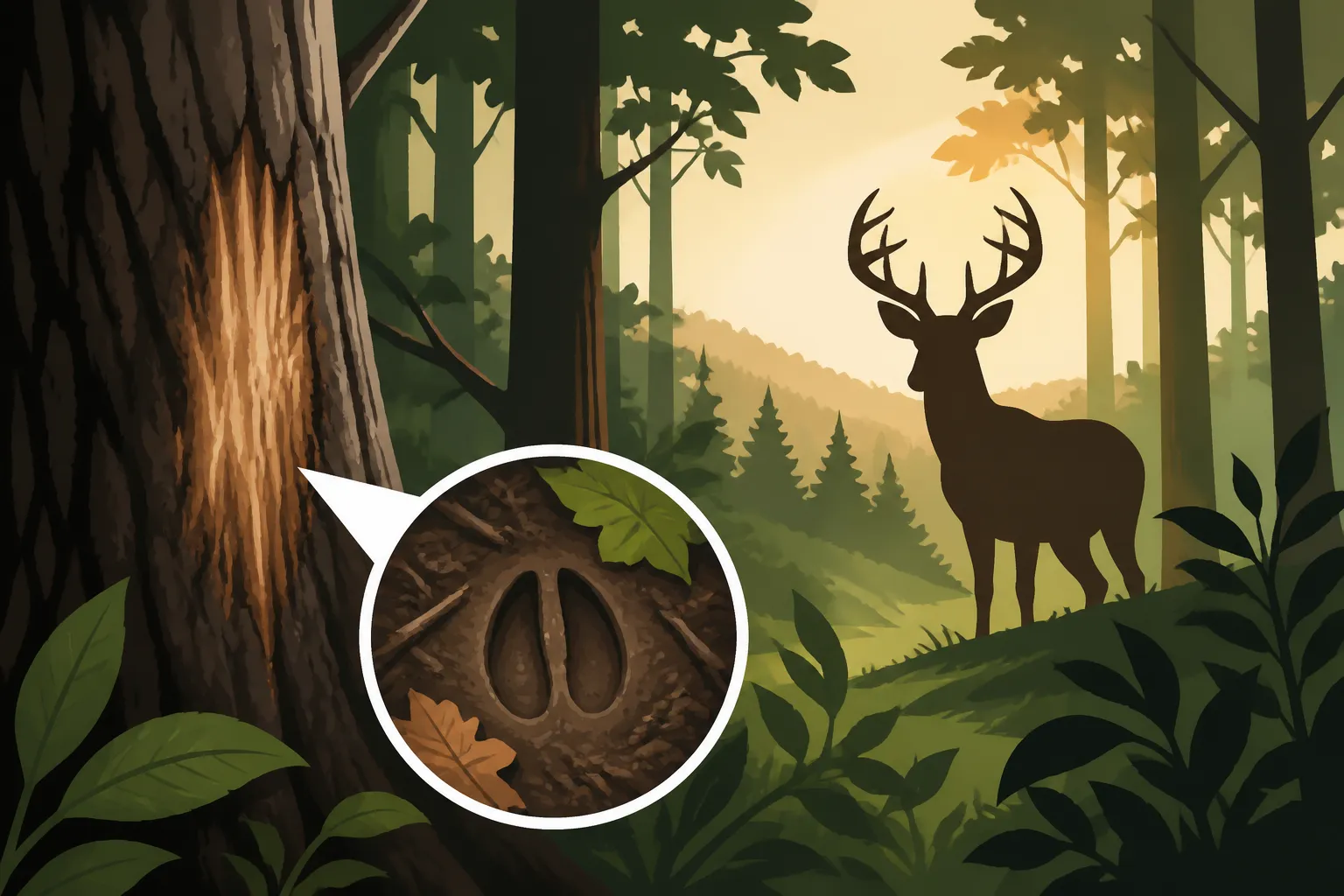
- Rubs: These are where bucks scrape their antlers against trees, leaving behind polished wood. They're often indicators of a buck's presence and direction of travel. A single rub is interesting, but a line of rubs, especially those on larger saplings or small trees, tells you a buck is actively marking a travel corridor or working a specific area. Check the height of the rubs too; higher rubs usually indicate an older, taller buck. Fresh rubs will have bright, moist wood showing, while older ones will be dull and weathered. Look for clusters of rubs, particularly those leading to or from bedding areas, or along transition lines where different cover types meet. They might be using these lines as a preferred travel route, a "highway" through the dense timber.
- Scrapes: These are patches of disturbed earth, usually under an overhanging branch, where a buck has pawed away leaves and dirt, and then urinated. The overhanging branch (the "licking branch") is just as important as the pawed ground, as deer will rub their pre-orbital glands on it. Scrapes are primarily scent communication hubs. During the pre-rut and rut, bucks will visit these regularly, checking for does and leaving their own scent. Fresh scrapes will have moist, recently disturbed earth and strong deer odor. Like rubs, a single scrape is a clue, but a series of scrapes along a travel corridor, or a large "community scrape" that multiple deer visit, is a major hot spot. These are prime locations to set up a trail camera or a stand, especially when you're Hunting the Rut in Late October or Hunting the Peak Rut in Early November. Remember, not all scrapes are equally important; primary scrapes in high-traffic areas are gold.
Tracks, Trails, and Droppings: The Subtle Storytellers
These signs are everywhere, and often overlooked, but they are absolutely crucial for understanding deer activity, especially when trying to discern the general traffic patterns in a vast area.
- Tracks: Finding a track isn't hard, but interpreting it takes practice. Look for freshness: crisp edges mean recent activity, while weathered or filled-in tracks are older. Pay attention to size: larger, splayed tracks can indicate a heavier deer, possibly a mature buck. But more importantly, look for direction and frequency. Are all the tracks heading in one general direction? Are there many tracks in a particular area, suggesting a crossing or a feeding spot? This helps you determine travel patterns. In softer ground near swamps or along creek bottoms, tracks can be remarkably clear, giving you a perfect snapshot of recent movement.
- Trails: Deer are creatures of habit, and they prefer the path of least resistance. They create faint but discernible trails through the undergrowth, especially in thicker areas. These aren't always super obvious "game trails" like you might see in more open country. In the Big Woods, they can be subtle, almost invisible if you're not looking closely. Look for bent grass, broken twigs at deer height, disturbed leaf litter, or worn paths through moss. Funnels – natural pinch points that force deer movement into a concentrated area, like a narrow strip of high ground between two swamps or a saddle in a ridge – are where these trails become most apparent. Hanging a stand on a major trail through a funnel is a classic tactic, and our guide on Hanging a Stand on a Big Woods Funnel delves into this in detail. Mapping tools like GoHunt can help you identify these topographical funnels before you even step foot in the woods.
- Droppings (Scat): This might not be the most glamorous sign, but it's incredibly informative. Fresh droppings are shiny, moist, and dark. Older droppings are dull, dry, and often lighter in color. The amount of droppings can indicate how much time deer spend in an area. Piles of fresh droppings near a feeding area (like an oak flat after a good acorn crop) tell you deer are consistently feeding there. Pellets scattered over a wider area indicate travel. Size can also be a rough indicator of age – larger, more clumped droppings typically come from bigger deer. Analyzing droppings, combined with other signs, helps confirm active feeding and bedding locations. If you're seeing a lot of droppings in a specific area, it's worth investigating further, especially if it coincides with a good food source. Knowing if it was Hunting After a Poor Acorn Year can tell you a lot about where deer won't be concentrated, helping you refine your search for other food sources they might be using.
Leveraging Technology for Efficient Sign Scouting
The Big Woods can be overwhelming, but modern technology can be your best friend in breaking down these vast areas into manageable, searchable chunks. You don't have to wander aimlessly anymore.
Aerial Imagery and Mapping Tools
Gone are the days of relying solely on paper topo maps. Satellite imagery and digital mapping apps have revolutionized how we scout. Tools like GoHunt (and others like onX Hunt, BaseMap) allow you to view the landscape from above, revealing features you might never notice on the ground.
- Identifying Key Features: Use these maps to pinpoint potential funnels, saddles, ridge lines, and swamp edges. You can identify mature timber stands, recent clear-cuts, and even areas with thicker thermal cover just by zooming in. Remember that logging operations often create new roads or trails that aren't on older maps, and these can be excellent access points or deer travel corridors. The ability to see these features helps you narrow down where deer should be traveling. Our article on Reading Aerial Photos for Big Woods Deer explains how to interpret these images to your advantage.
- Marking Waypoints: As you scout, use your app to mark every piece of sign you find: rubs, scrapes, fresh tracks, bedding areas, and potential stand sites. Over time, you'll build a comprehensive map of deer activity. This allows you to visualize patterns, identify high-traffic corridors, and understand how deer are using the terrain. This is far more effective than trying to remember every detail in a dense forest.
- Checking Property Boundaries: On public land, it's critical to know where you stand. Mapping apps clearly show property lines, ensuring you stay within legal hunting areas. This is especially important near private parcels that might adjoin public forests. Knowing these boundaries helps you hunt confidently and avoid trespassing issues. For more on navigating public land, check out Scouting Minnesota Public Land Before Season.
Trail Cameras as Your Remote Eyes
Trail cameras are a game-changer for Big Woods hunting, providing undeniable proof of what deer are doing when you're not there. They can help confirm your suspicions about a travel corridor or a scrape line.
- Confirming Activity and Patterns: Set up cameras on rubs, scrapes, major trails, and natural funnels. After a week or two, pull the cards. The photos will tell you which deer are using the area, when they're moving (day vs. night), and in what direction. This data is invaluable for predicting when and where to hunt. You might find that a promising trail is only used after dark, prompting you to look for a bedding area closer by. Or, you might discover a particular buck consistently moving through a specific pinch point.
- Monitoring Scrapes and Funnels: During the rut, placing cameras on active scrapes can show you which bucks are visiting them and how often. This information is crucial for timing your hunts. Similarly, cameras on funnels can reveal daily traffic patterns. If you're curious about optimal camera placement, consider our guide on Where to Hang a Camera on a Logging Trail.
- Minimizing Pressure: Using trail cameras effectively means less time physically scouting and disturbing the area. Each time you walk into a potential hunting spot, you leave scent and create disturbance. Cameras allow you to gather intelligence remotely, keeping your presence to a minimum, which is critical for hunting wary Big Woods deer. Remember, deer are sensitive to human intrusion, and minimizing your footprint is key to success.
Putting It All Together: Interpreting the Sign for Hunting Success
Finding sign is one thing; understanding what it means for your hunt is another. It's about connecting the dots and forming a coherent picture of deer behavior in an often-chaotic environment.
Patterning Deer Movement Based on Sign
The goal isn't just to find a rub, but to understand the story all the rubs, scrapes, tracks, and trails tell together.
- Connect the Dots: If you find fresh rubs leading towards a thick cedar swamp, and then pick up fresh tracks entering that swamp, it’s a strong indicator of a bedding area. If those tracks then exit the swamp on the opposite side, leading to an oak ridge with fresh droppings, you’ve just mapped a bedding-to-feeding travel corridor. This is where your marked waypoints on your mapping app become invaluable, allowing you to visually connect these different pieces of sign. When scouting, always try to work from one piece of sign to the next, asking yourself "Why are they here? Where are they coming from? Where are they going?" This thought process is essential for truly Reading a Ridge for Northern Minnesota Deer and understanding how deer use the terrain.
- Consider Time and Conditions: Remember that deer movement is dynamic. Fresh sign tells you recent activity, but weather, hunting pressure, and food availability can shift patterns. A strong cold front might push deer to feed more heavily, while heavy hunting pressure might make them more nocturnal. Always consider how these external factors might influence the sign you're seeing. For instance, Wind and Thermals on a Minnesota Ridge will heavily influence where deer feel safe to travel and bed.
- Identify Core Areas: By consistently finding fresh sign in a particular region – multiple rub lines, active scrapes, and numerous fresh tracks – you've likely identified a core area for deer activity. This doesn't mean deer are always there, but it indicates it's a significant part of their range. These core areas are where you should focus your efforts for a stand setup.
Adapting Your Strategy to Big Woods Dynamics
Hunting Big Woods deer is rarely a "set it and forget it" kind of game. You have to be willing to adapt, especially since deer patterns are less fixed.
- Mobile Hunting: Unlike static stand hunting over food plots, Big Woods hunting often requires a more mobile approach. This might mean still-hunting through known travel corridors or setting up a lightweight, portable stand or saddle and moving it every day or two until you find fresh sign. If you're interested in being more mobile, our article on Still-Hunting Minnesota Big Woods offers great advice. Don't be afraid to pull up stakes if the sign goes cold.
- Focus on Funnels and Pinch Points: These are your absolute best friends in the Big Woods. Whether it’s a narrow strip of dry ground between two bogs, a saddle between two ridges, or a creek crossing, funnels concentrate deer movement, making your chances of intercepting a deer much higher. These are the places where the random, widespread movement of Big Woods deer becomes predictable, even if only for a short stretch. Setting up a stand near these points can significantly increase your odds.
- Go Deep, or Hunt the Edges: Big Woods deer often avoid areas with high human traffic. Sometimes, the best strategy is to hike deep into public land, getting away from the main trails and roads. These are the areas where fewer hunters venture, and deer often feel safer. Conversely, you can also focus on the overlooked edges – the very fringes of public land where it meets private, or small pockets of public land that other hunters ignore. As our article Finding Ground Others Walk Past discusses, these spots can be goldmines. It's about How Far to Walk From a Forest Road to get away from the easy access hunters usually gravitate towards.
- Be Patient and Persistent: Big Woods hunting is a marathon, not a sprint. You might scout for days, only to find sparse sign. But when you do find that consistent pattern, or that fresh, hot sign, your persistence will pay off. Don't get discouraged by the vastness; instead, break it down, focus on the details, and trust the sign you're finding.
Interpreting Deer Sign: A Quick Reference
Here’s a simple table to help you quickly interpret the most common types of deer sign you'll encounter in the Big Woods.
| Type of Sign | Appearance/Characteristics | What it Indicates | Implications for Hunting |
|---|---|---|---|
| Fresh Rub | Bright, moist wood; bark stripped; often on saplings. | Recent buck activity; marking territory; direction of travel (usually from narrower end to wider end of rub). | Indicates active buck presence. Follow rub lines to find travel corridors. Good for a Treestand Setups in Minnesota Hardwoods. |
| Old Rub | Dull, weathered wood; sometimes covered in lichen. | Buck activity in a previous season or earlier in the current season. | Still marks a potential travel corridor, but current activity needs confirmation with fresher sign. |
| Fresh Scrape | Disturbed, moist earth; strong deer odor; overhanging "licking branch" with scent. | Current buck activity; primary communication hub for deer; checking for does during pre-rut/rut. | High-priority area. Consider a stand within scent range, or place a trail camera. Use Grunt Calls in Mature Minnesota Timber or Rattling Volume in Thick Popple Cover. |
| Old Scrape | Dry, caked earth; leaves blown back in; no strong odor. | Previous deer communication site. | May be reactivated, but current value is low. Look for fresher scrapes nearby. |
| Fresh Tracks | Crisp, well-defined edges; often moist. | Very recent deer movement (within hours to a day). | Follow carefully to determine direction and potential destination (bedding/feeding). |
| Old Tracks | Weathered, rounded edges; possibly filled with debris. | Past deer movement (days to weeks). | Shows general travel patterns, but not current activity. |
| Well-Used Trail | Worn path through vegetation; broken twigs; compressed leaves. | Consistent, repeated deer movement along this route. | High-percentage ambush point. Prime location for a stand or ground blind. |
| Fresh Droppings | Shiny, dark, moist pellets or clumps. | Recent feeding or bedding activity. Amount indicates time spent. | Deer are using this area regularly. Indicates a feeding spot or an active bedding area if combined with other sign. |
| Old Droppings | Dry, faded, often scattered. | Past deer activity. | Still shows deer were present, but not necessarily current patterns. |
Disclaimer
The information provided in this guide is for general educational and informational purposes only. Hunting regulations and conditions in Minnesota can change rapidly. Always consult the most current Minnesota Department of Natural Resources (DNR) regulations and local ordinances before engaging in any hunting activity. Safety should always be your top priority in the field.