Grunt Calls in Mature Minnesota Timber
The silence of mature Minnesota timber can be deafening, making you feel like the only living thing for miles, even when you know a big buck is probably slipping through the shadows nearby. It’s incredibly frustrating when you’ve put in the scouting time, found the perfect stand location, and still can’t seem to coax that elusive whitetail into range. This comprehensive guide is dedicated to helping you master the art of using grunt calls specifically within the unique challenges and opportunities presented by Minnesota's mature, dense timber.
The Unique Dynamics of Grunt Calls in Dense Minnesota Timber
Hunting in Minnesota's mature timber—whether it’s the towering hardwoods of the bluff country, the expansive conifer forests of the north, or the mixed stands found across the central regions—presents a vastly different calling environment than open agricultural fields. The dense canopy, thick underbrush, and rolling terrain fundamentally change how sound travels and how deer react. Understanding these dynamics is crucial for effective grunt calling.
Why Mature Timber Demands a Different Approach
In open country, sound carries far, and a deer can often see the source of a call from a distance. In dense timber, however, sound is absorbed and muffled by trees, leaves, and terrain. This means your calls won't travel as far, and more importantly, they often sound like they're coming from closer than they actually are. Deer are accustomed to hearing a wide range of sounds in their environment, but a grunt call can cut through the natural noise in a way that truly grabs their attention. It’s not about volume as much as it is about realism and knowing when to introduce that sound into the otherwise quiet woods. You’re trying to replicate a sound they expect to hear, but in a way that suggests a new deer has just entered their immediate area.
How Sound Travels and Deer React in Thick Cover
Think about trying to shout across a clear-cut versus shouting in a dense cedar swamp. The difference is stark. In mature timber, sound waves bounce off tree trunks, get absorbed by foliage, and are generally attenuated rapidly. This works to your advantage when grunting, as it allows you to call more subtly without alarming deer far away. A deer might hear your grunt call from 50-75 yards out and perceive it as being much closer, prompting them to investigate cautiously. This caution is key; you want them curious, not spooked. The dense cover also gives a curious buck a sense of security as he approaches, allowing him to use the terrain and vegetation to his advantage to circle downwind or approach from an unexpected angle. This is why stand placement, especially considering Wind and Thermals on a Minnesota Ridge, is paramount when attempting to call.
Deciphering Different Grunt Call Types and Their Application
Not all grunts are created equal, and using the right sound at the right time can make all the difference. Deer communicate through a variety of vocalizations, and grunt calls mimic some of the most common and compelling sounds made by whitetail bucks.
The Contact Grunt: "Where Are You?"
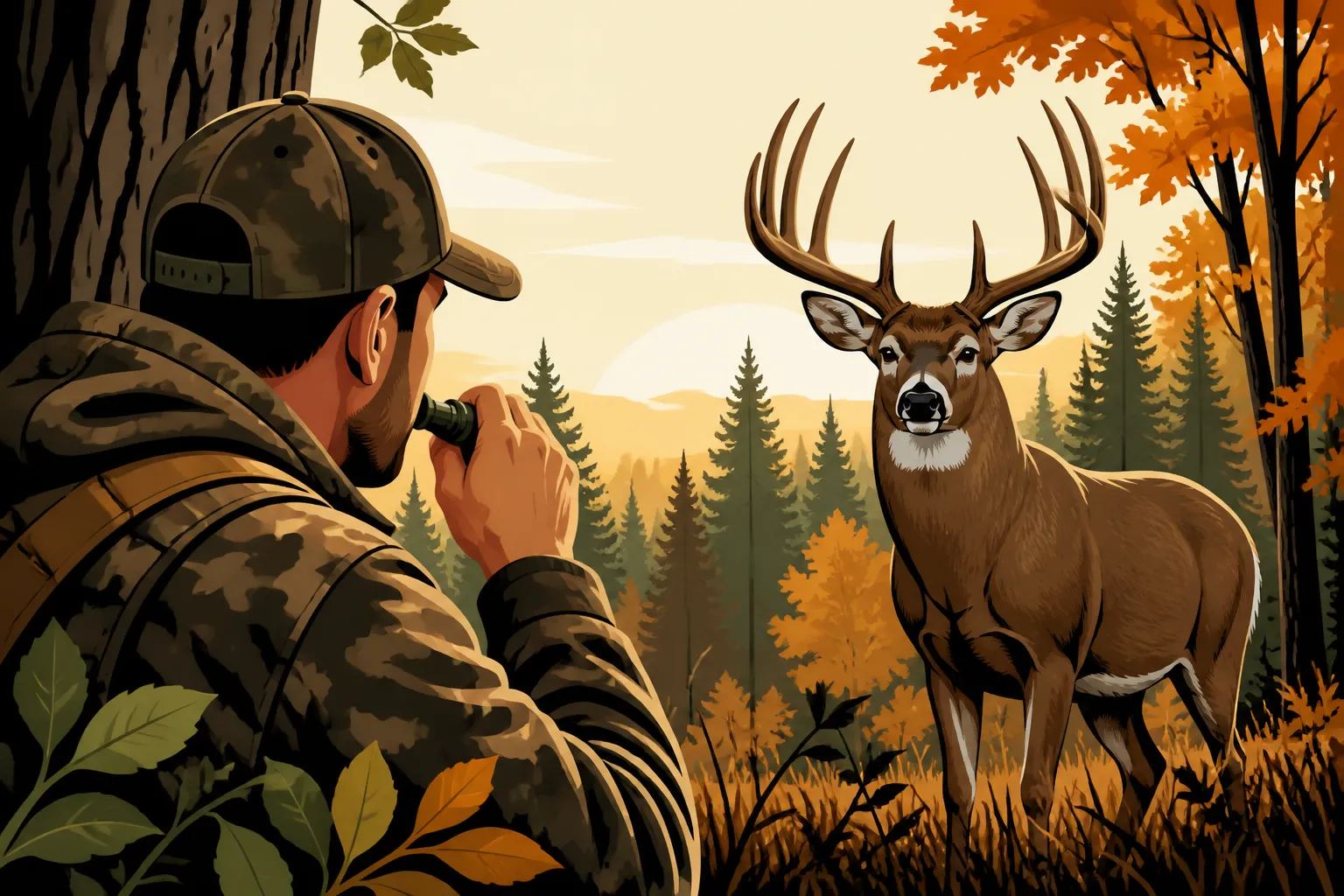
The contact grunt is perhaps the most versatile and least aggressive grunt call you can make. It's a soft, drawn-out "urrppp" sound that deer use to communicate their presence to each other, often when they're simply moving through the woods or trying to locate other deer. In mature Minnesota timber, this is your bread and butter call for most situations outside the peak rut.
- When to Use It: This call is excellent for blind calling, especially when you suspect deer are in the area but you haven't seen them. It's also great for stopping a deer that's walking too fast or heading in the wrong direction. A soft contact grunt can often make a deer pause, crane its neck, and look for the source, giving you precious seconds to take a shot or reassess.
- Technique: Keep it soft and infrequent. A single, clear contact grunt every 15-20 minutes can be enough to pique a deer's interest without overdoing it. Imagine you're just letting another deer know you're in the neighborhood.
The Tending Grunt: "I've Found Her!"
The tending grunt is a series of short, choppy grunts made by a buck that is actively trailing or "tending" a hot doe. It's a more excited and persistent vocalization than a contact grunt, signaling a buck that's highly focused on breeding. This call is incredibly effective during the pre-rut and peak rut, particularly when Hunting the Rut in Late October or Hunting the Peak Rut in Early November.
- When to Use It: Use tending grunts when you want to simulate a breeding scenario, potentially drawing in an aggressive dominant buck or a curious younger buck looking for action. This works best when you're set up near known bedding areas or travel corridors where does are likely to pass through.
- Technique: Deliver 3-5 short, sharp grunts in quick succession, perhaps followed by a pause and another series. You can also mix in a soft doe bleat if your call allows it, to enhance the illusion. Remember, the buck making these sounds is agitated and focused, so a little more intensity is appropriate.
The Challenge Grunt: "Get Out of My Territory!"
The challenge grunt is the most aggressive grunt a buck makes, often accompanied by snort-wheezes (though most grunt tubes don't replicate this). It’s a deep, guttural, and prolonged grunt, signaling dominance and a readiness to fight for a doe or territory. This call is a risky but high-reward play, primarily effective during the rut when bucks are feeling territorial and pumped full of testosterone.
- When to Use It: Deploy the challenge grunt when you see a dominant buck that isn't responding to other calls, or if you want to pull a buck off a hot doe (though this is harder). It’s an "all or nothing" call, as it can either draw a buck in aggressively or send him running if he perceives the challenge as too great or you as an actual threat.
- Technique: Make a single, long, deep, and forceful grunt. Wait to see the buck's reaction. If he lowers his head, stiffens, or looks directly at your location, he might be coming in hot. Be ready. This is not a call for casual use.
A Comparative Look at Grunt Types
To help visualize when and why to use different grunts, here's a quick table:
| Grunt Type | Sound Description | Primary Purpose | Best Time to Use | Risk Level |
|---|---|---|---|---|
| Contact Grunt | Soft, drawn-out "urrppp" | Locate deer, stop moving deer, signal presence | Pre-rut, Rut, Post-rut (most versatile) | Low |
| Tending Grunt | 3-5 short, choppy "urrp-urrp" | Simulate active breeding, excite curious bucks | Pre-rut, Peak Rut | Medium |
| Challenge Grunt | Single, deep, guttural "UURRRRP" | Challenge dominant bucks, aggressive confrontation | Peak Rut (when bucks are most territorial) | High |
Advanced Tactics for Grunt Calling in Minnesota's Big Woods
Calling in mature timber isn’t just about making the right sound; it’s about context, timing, and preparation. Your setup, understanding of deer movement, and patience are just as critical as the call itself.
The Importance of Strategic Stand Placement and Entry/Exit Routes
In dense timber, deer have the advantage of concealment. They will almost always try to circle downwind of a call to scent-check the source before committing. This makes your stand placement absolutely critical. You need to position yourself where you can intercept a buck trying to scent-check you. Often, this means setting up with a natural barrier downwind (like a steep ridge, an uncrossable swamp, or a clear-cut edge) that forces the deer to approach from a direction you can cover.
- Example Setup: If you're hunting a ridge line in northern Minnesota, consider setting up on the leeward side with the prevailing wind quartering towards a bench or saddle. A deer circling downwind will likely travel along the ridge, giving you a broadside shot as he tries to get your wind. Many hunters find success by utilizing mapping tools like GoHunt to analyze terrain features, identify these natural funnels, and pinpoint ideal ambush points well before the season. Understanding Where Big Woods Bucks Bed in Minnesota can also inform these decisions.
- Entry/Exit: Since noise and scent are magnified in the quiet woods, pay extra attention to your entry and exit routes. Use topography, creek beds, or dense brush to conceal your approach and departure. Avoid walking through areas where you expect deer to be bedded or actively moving, especially if you plan on calling.
Volume Control and Realistic Calling Sequences
Because sound doesn't carry as far and gets muffled, you need to be smart about volume. Overcalling in dense timber can easily spook a deer that suddenly finds itself too close to an unexpected sound.
- Start Soft: Always begin with soft, subtle contact grunts. If you don't get a response after 15-20 minutes, you can slightly increase the volume or switch to a tending grunt if it's the right time of year.
- Vary Your Sequence: Don't just make one type of grunt repeatedly. Mix it up based on the situation. A common sequence might be:
- A few soft contact grunts. Wait 10-15 minutes.
- If no response, maybe another set of contact grunts, slightly louder, or if it's rutting season, a series of tending grunts. Wait 10-15 minutes.
- If you see a buck but he's not responding, assess if a challenge grunt is appropriate, or perhaps a fawn bleat if he seems interested in finding other deer.
- Think of it like a conversation, not a monologue. You’re trying to elicit a response, not just make noise. This is particularly different from Rattling Volume in Thick Popple Cover where crashing antlers need more sound to cut through.
Patience is a Virtue (and a Necessity)
Deer in mature timber are often older, wiser, and more cautious. They aren't going to come running in like a dog to a whistle. They will take their time, use the cover, and circle.
- Wait It Out: After a calling sequence, be prepared to sit absolutely still for at least 20-30 minutes. A buck might be slowly making his way in, testing the wind, or trying to pinpoint your exact location. Many hunters give up too soon.
- Scan Constantly: Your eyes should be working overtime, especially in thick cover. Look for subtle movements: a flick of an ear, a patch of dark hide, a horizontal line in a vertical world. Use your binoculars regularly to pick apart dense brush, especially in the direction you expect a buck to approach. Platforms like GoHunt allow you to mark potential approach routes directly on your map, helping you visualize where to focus your attention.
Common Grunt Calling Mistakes and How to Avoid Them
Even seasoned hunters make mistakes, and when it comes to calling in dense timber, small errors can have big consequences.
Overcalling and Calling Too Loud
The biggest mistake is often simply doing too much. In the close quarters of mature timber, a loud, frequent caller sounds unnatural and alarming.
- The Fix: Always start softly and use minimal calls. If you're not getting a response, it's usually better to be quiet and let natural curiosity work, rather than ramping up the volume or frequency. Deer in these environments are used to subtlety. Think of it as inviting them in for a quiet chat, not shouting across a football field.
Failing to Account for the Wind and Deer Behavior
Ignoring the wind is a cardinal sin in deer hunting, especially when calling. A buck will almost always try to get downwind of the call, and if he catches your scent, your hunt is over.
- The Fix: Always set up with the wind in your favor, anticipating a downwind approach from the deer. Use terrain features to your advantage to funnel deer into shooting lanes before they can get your scent. For detailed advice on this, check out my guide on Treestand Setups in Minnesota Hardwoods. Also, understand that not every deer will respond to a call. If a buck is locked onto a hot doe, no amount of grunting will pull him away. Recognize when to call and when to simply observe.
Poor Visibility and Lack of Shooting Lanes
Calling a deer into thick cover is great, but if you can't see him to shoot, it's frustrating. Many hunters get excited by the prospect of calling and forget to trim lanes.
- The Fix: Before you even think about calling, ensure you have multiple, clear shooting lanes in the directions you anticipate a deer approaching. This might mean bringing a small saw or pruners into the woods with you. A buck might only offer a fleeting glimpse through a small window in the brush, and you need to be ready to capitalize on it. This also ties into Scouting Minnesota Public Land Before Season where you can identify these areas.
Giving Up Too Soon After a Call
Deer are patient, and you need to be more so. A buck might take 10, 20, or even 30 minutes to cautiously approach the source of a grunt call, especially if he’s an older, more dominant animal.
- The Fix: After each calling sequence, commit to remaining absolutely still and silent for at least half an hour. Resist the urge to fidget, look at your phone, or move around. Many big bucks have been seen by hunters who were about to give up, only for the deer to materialize silently from the dense timber. You might even find success when Still-Hunting Minnesota Big Woods and periodically grunting as you move.
Grunt calling in mature Minnesota timber is an art, not a science. It requires patience, keen observation, and an understanding of how deer use their environment. By mastering the different grunt types, controlling your volume, and strategically placing yourself, you'll significantly increase your chances of coaxing that elusive whitetail into range. Whether you’re trying to locate a deer by blind calling or trying to stop a buck in his tracks, a well-placed grunt can turn a quiet sit into an unforgettable encounter.
Disclaimer
Hunting is an inherently dangerous activity. Always prioritize safety, adhere to all local, state, and federal hunting regulations, and ensure you have the necessary licenses and permits. The information provided in this guide is for educational purposes only and should not replace proper hunter education and responsible practices.