Hunting a Standing Cornfield in Farm Country
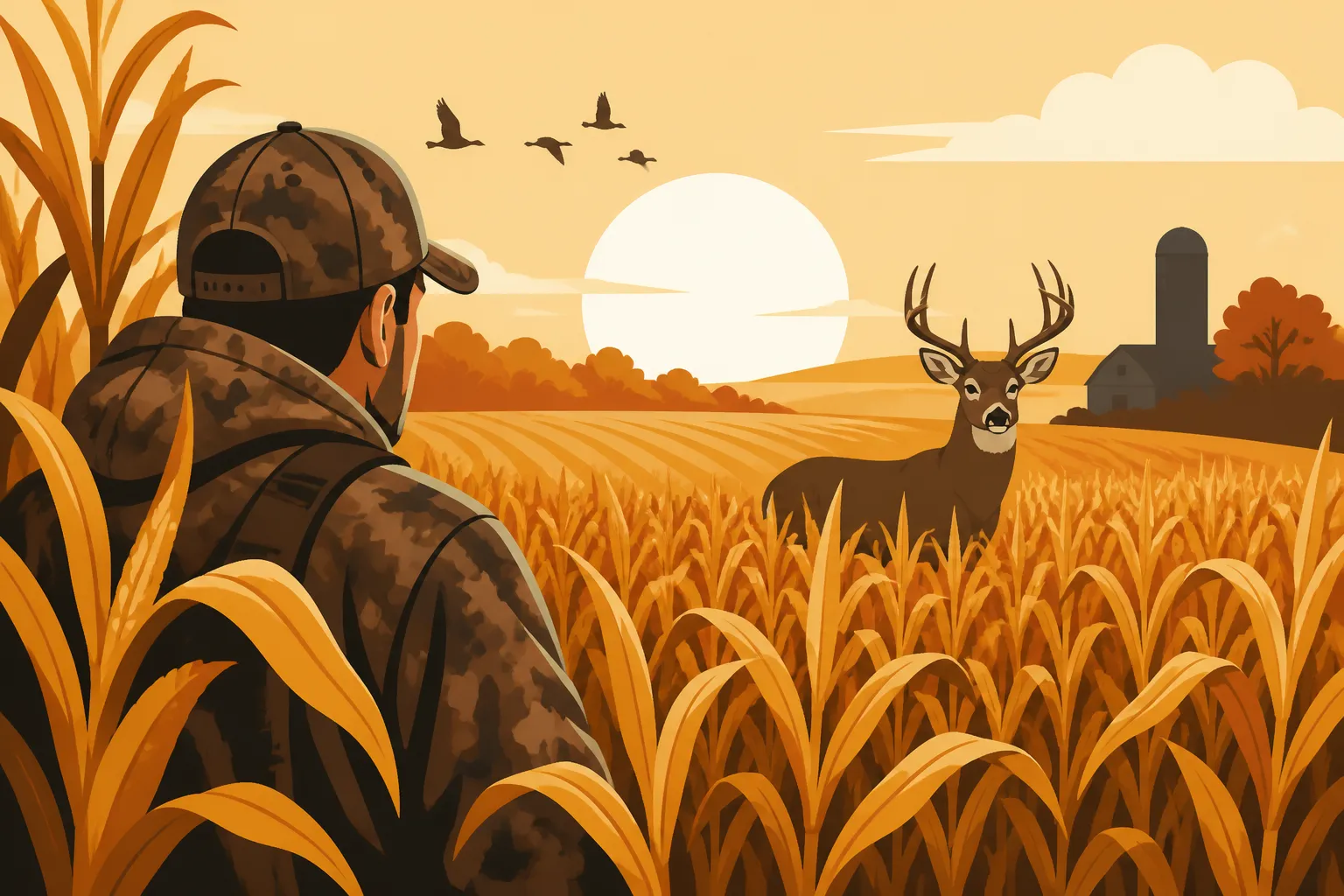
You've been there, right? You're sitting on the edge of a vast Minnesota cornfield, watching a gorgeous sunset paint the sky, convinced a big buck is about to step out. Then, darkness falls, and you've seen nothing but shadows. It’s incredibly frustrating when those deer seem to vanish into thin air, only to reappear weeks later when the combines finally roll. Hunting standing cornfields in farm country can feel like trying to find a needle in a haystack, but with the right approach and a bit of know-how, you can unlock this challenging, yet incredibly rewarding, hunting opportunity. This guide will walk you through the nuances of targeting whitetails in the golden mazes of Minnesota's agricultural heartland.
The Allure and Challenge of Standing Corn
Standing cornfields aren't just pretty backdrops for a fall hunt; they are vital, dynamic ecosystems for deer, offering a complex blend of food, cover, and security. Understanding why deer flock to these areas, and the difficulties they present to hunters, is the first step toward cracking the code.
Why Deer Love Standing Corn
Imagine you're a deer. The world is full of dangers, and you're constantly looking for food and shelter. Now, picture a dense field of mature corn stalks stretching for acres. It's a five-star hotel for whitetails. The towering stalks provide incredible visual and acoustic cover, allowing deer to move largely undetected. They can bed down in the middle of a field, completely hidden from predators and human disturbance. This security is paramount, especially in areas with significant hunting pressure.
Beyond just cover, standing corn is a buffet. The kernels are packed with carbohydrates, offering a crucial energy source, particularly as the weather turns colder. Deer will actively browse the ears, even knocking them down to get at the kernels on the ground. This makes corn an undeniable magnet for deer, especially from late summer through the late firearm and muzzleloader seasons. It’s a prime example of Late-Season Food Sources for Minnesota Whitetails that deer will gravitate towards when other natural food sources become scarce or less appealing due to snow cover. They’ll use the stalks for bedding during the day, then slip out to feed on fallen kernels or browse nearby bean fields after dark.
The Hunter's Dilemma: Finding Deer in the Rows
While the deer find sanctuary in the corn, hunters often find themselves in a labyrinth. The sheer density and height of the stalks make visibility almost zero beyond a few yards. You can't see far, and the rustling leaves make it hard to hear subtle deer movements. This lack of visibility is the biggest challenge. Tracking deer sign, like rubs, scrapes, or tracks, becomes nearly impossible once you're a few rows deep.
Another major hurdle is access. Many large cornfields are on private land, which means you'll need to secure permission before you even think about stepping foot in them. This brings its own set of challenges, often requiring persistent and polite Knocking on Doors in Minnesota Farm Country. Even with permission, navigating the rows can be disorienting, and without a clear plan, you risk bumping deer or getting lost yourself. The wind swirls unpredictably within the rows, making scent control an absolute nightmare, and thermals can be tricky to read in flat, open landscapes compared to a hilly, wooded environment.
Scouting and Strategy Before the Hunt
You wouldn't head into a wilderness area without a map and a plan, and standing cornfields are no different. Effective scouting and strategic thinking are absolutely critical for success in these environments. Forget just wandering in; you need a blueprint.
Interpreting Field Edges and Entry Points
The edges of a cornfield are your most valuable intel source. Deer, for all their love of corn, still need to get in and out. Look for trails that lead directly into the standing corn from woodlots, CRP fields, shelterbelts, or even drainage ditches. These are your highways. Pay close attention to where these trails meet the field edge – these are often well-worn paths, sometimes with tracks or droppings, indicating consistent use.
It's not just about finding any trail; it's about finding the best trails. Deer are creatures of habit and efficiency. They'll often use the shortest, most concealed route between bedding and feeding areas, or between different patches of cover. If a cornfield borders a small woodlot, look for heavy trails where the deer are entering the corn from the timber. These can be prime ambush points. Tools like the GoHunt app are invaluable here, allowing you to layer satellite imagery with property boundaries to identify potential funnels, pinch points, and cover transitions along the edges of standing corn. You can pinpoint specific spots where deer might naturally hesitate or slow down before disappearing into the rows, giving you a better shot opportunity.
Beyond trails, look for "staging areas" just inside the field edge or in nearby cover. These are spots where deer might mill around for a bit before fully committing to the open field or disappearing into the corn. These subtle transition zones can be fantastic places to set up.
Wind, Thermals, and Deer Movement in Corn
Understanding wind and thermals is always critical, but it takes on a different dimension in standing corn. Inside the dense rows, the wind doesn't blow uniformly. It swirls, creates eddies, and can make even a steady breeze unpredictable. This makes scent control incredibly difficult. Your best bet is to approach from a direction that puts the prevailing wind in your favor, blowing your scent away from where you expect deer to be entering or exiting the field.
Thermals, the rising and falling air currents, are usually associated with elevation changes. While cornfields are generally flat, subtle drainage ditches, low spots, or even the slight elevation of a nearby road can create micro-thermals that affect deer movement. In the morning, as the sun warms the ground, air will rise. In the evening, as the air cools, it will sink. This means deer entering the field in the evening might be sensitive to sinking scent, and those leaving in the morning might catch rising scent. Always consider the time of day and the sun's position when planning your approach and setup. For more general guidance on how air currents affect deer, you might find Wind and Thermals on a Minnesota Ridge insightful, though you'll need to adapt the principles to the flatter, more obstructed environment of a cornfield.
| Wind/Thermal Consideration | Strategy in Standing Corn |
|---|---|
| Swirling Wind Inside Rows | Approach with prevailing wind in your favor; consider scent-eliminating sprays or suits. |
| Prevailing Wind Direction | Set up downwind of expected travel lanes, aiming to have your scent blow away from the deer's approach. |
| Morning Thermals (Rising) | Hunt from a low position (ground blind) downwind of where deer might be bedding. |
| Evening Thermals (Sinking) | Hunt from a slightly elevated position if possible (though limited in corn), or focus on ground blinds positioned for a crosswind. |
| Field Edge Obstructions | Use natural windbreaks (woodlots, buildings) to your advantage, or as indicators of wind redirection. |
Tactics for Hunting Standing Corn
Once you've done your scouting, it's time to put a plan into action. Hunting standing corn requires a combination of patience, strategic positioning, and sometimes, a little controlled chaos.
Static Ambush from Field Edges
For many hunters, the most effective tactic is setting up a static ambush on the edge of the cornfield. This means finding a strategic location where you can cover a known deer trail or a pinch point where deer are likely to enter or exit. Your options here usually involve ground blinds, existing natural cover, or occasionally, a treestand if there are suitable trees nearby.
Ground Blinds: A well-placed and brushed-in ground blind is a fantastic tool for cornfield hunting. It offers concealment, breaks up your silhouette, and helps contain some of your scent. Focus on locations where a trail directly enters the corn or where two cover types converge. Make sure your blind is brushed in thoroughly, using natural materials from the area, such as corn stalks, branches, and grass. This not only camouflages the blind but also helps to integrate it into the environment, making it seem less intrusive to wary deer. Read up on Brushing In a Blind on a Field Edge for expert tips on making your hideout disappear. Deploying a ground blind also offers an advantage for Using a Ground Blind on Minnesota Public Land scenarios, providing mobility and concealment.
Natural Cover: Sometimes, the best blind isn't bought, it's found. A brush pile, a drainage ditch with tall weeds, or even a line of tall cedars can provide enough cover for an ambush. The key is to break up your outline and remain absolutely motionless. You'll need to be hyper-aware of your scent and the wind direction if you're not in a fully enclosed blind.
Treestands (Limited): While less common right next to standing corn, if there's an adjacent woodlot or a single large tree with good visibility into the field edge, a treestand can offer a significant advantage, especially for spotting deer movements inside the first few rows. However, your visibility will still be limited to the immediate perimeter of the field.
Strategic Drives and Pushes
Sometimes, deer are just too deep in the corn, and a static sit won't cut it. This is where strategic drives or pushes come into play, often requiring a small group of hunters. This isn't about haphazardly running through the field; it's about understanding how deer will react and creating controlled movement.
The "Walk-Through" Push: This usually involves one or two "drivers" slowly walking through a section of standing corn, pushing deer towards "blockers" strategically positioned on the downwind side of the field edge, or at the end of the field where the corn meets another cover type. The drivers should move slowly and deliberately, pausing frequently to listen. Deer in corn often won't bolt; they'll try to sneak around you, double back, or simply lay tight. The goal isn't to scare them into a full sprint but to nudge them slowly.
"Funnel" Drives: If you can identify a natural funnel within or around the cornfield – perhaps a narrow strip of corn between two woodlots, or a section where the corn narrows down to meet a creek bottom – you can use a smaller push to encourage deer into that funnel where blockers are waiting. Communication is key during these drives; walkie-talkies or cell phones (if service allows) can help coordinate positions. These drives are particularly effective in larger, contiguous blocks of corn that deer use as core bedding areas. For general tactics on drives, consider reading Deer Drives With Three or Four Hunters to adapt strategies to your cornfield scenario.
Important Safety Note: Any time you're conducting a drive, especially in limited visibility, safety is paramount. Blaze orange is a must for all participants, and clear communication about zones of fire and hunter positions is absolutely non-negotiable.
Setting Up Ground Blinds Inside the Corn
For the truly adventurous and patient hunter, sometimes the best place to be isn't on the edge, but in the corn. This tactic is extremely challenging but can be incredibly effective for mature bucks that rarely leave the safety of the rows during daylight.
Creating an Internal Blind: This involves identifying a key internal intersection of deer trails, or a small opening or "pocket" within the cornfield where deer might bed or gather. You then carefully, and with minimal disturbance, create a small hideout. This might involve tying back a few stalks, using a small pop-up blind, or simply wearing ghillie-style clothing and sitting tight against a dense cluster of stalks. You need to be aware of local regulations, as some areas may have rules against modifying vegetation.
Access and Scent: Accessing an internal blind is the trickiest part. You need to pick a route that minimizes disturbance, preferably along a ditch or a low-lying area that deer don't use as frequently. Your entry and exit routes should be planned meticulously, and you absolutely must hunt with the wind in your favor. A single mistake with scent or noise can blow your entire hunt. This is where your GoHunt app might come in handy for marking precise entry/exit points and blind locations to avoid getting disoriented deep in the rows. This technique requires an extreme level of patience and scent management, but it can pay off big.
Gear and Considerations for Cornfield Hunting
Just like any specialized hunting scenario, success in standing corn often hinges on having the right gear and paying attention to specific details.
Optics and Shot Placement
Visibility in standing corn is severely limited. Forget spotting deer at long ranges. Most shots will be relatively close, often under 75 yards, and through small shooting lanes. This means your optics choices should reflect that reality.
Rifle Scopes: You don't need a high-magnification scope. A 1-4x, 2-7x, or even a fixed 3x or 4x scope is often ideal for quick target acquisition in tight quarters. Clear glass is more important than high power. An illuminated reticle can be a huge advantage in the low light conditions often found within or on the edges of standing corn, especially during dawn and dusk. For more on matching your rifle setup to the Minnesota environment, check out Sighting In a Rifle for Minnesota Woods Ranges, as many of those principles apply here. When considering a rifle, something like a .30-30 or a straight-wall cartridge like the .450 Bushmaster, now legal statewide, offers plenty of knockdown power for the ranges you'll be shooting in the corn. For longer shots on a field edge, Shooting Sticks for a Farmland Field Edge can provide a stable platform.
Binoculars/Rangefinders: While you won't be glassing vast distances, good binoculars can still help scan field edges or confirm details. A compact 8×42 pair is usually sufficient. A rangefinder is crucial for confirming distances in ambiguous terrain, especially when you might have only a small window to shoot. Knowing the exact range to that buck just inside the corn can make all the difference.
Shot Placement: Because shots are often close and potentially rushed, prioritize precise shot placement. Aim for the vitals. Be mindful of potential deflections if a deer is standing partly behind stalks. Waiting for a clear, broadside shot is always the best policy.
Clothing and Scent Control
Hunting standing corn, especially in late fall and early winter, means dealing with specific environmental challenges that impact clothing and scent.
Layering for Comfort and Scent: Cornfields can be damp, especially in the mornings, and as the season progresses, cold winds can cut right through you. Layering is key. Start with a moisture-wicking base layer, add insulating layers (fleece or down), and top it with a windproof and water-resistant outer layer. You'll be sitting for long periods, so warmth is paramount. Consider Insulated Boots for All-Day Sits to keep your feet warm and dry.
Blaze Orange: Minnesota's blaze orange requirements apply in firearm seasons. Ensure you have enough visible blaze orange, even if you're in a blind, to be safe and legal. Remember, in firearm season, you must wear at least one article of clothing above the waist that is blaze orange or blaze pink, and it must be visible from all sides. If you're doing a drive, everyone should be highly visible.
Scent Control is Paramount: We talked about swirling winds; this means scent control is even more critical. Shower with scent-eliminating soap, wear clean hunting clothes, and store them in scent-proof bags. Use scent-eliminating sprays on your clothes, boots, and gear before heading out. The goal is to minimize your human odor as much as possible, knowing that perfect scent elimination is rarely achievable. It’s an uphill battle, but every little bit helps.
Disclaimer
Please remember that hunting regulations and land access rules can change. Always check the current Minnesota Department of Natural Resources (DNR) regulations before heading into the field. This guide provides general information and should not be considered a substitute for official DNR guidelines or landowner permission.