Setting Up on a Clear-Cut Edge
Hunting the edges of a clear-cut in Minnesota can feel like trying to solve a puzzle with half the pieces missing. You know the deer are in there, hunkered down in that incredible, thick cover, but getting a good read on their movements or finding a clear shot often seems like a fool's errand. It's frustrating to stare at a sea of brush and know there's prime habitat just out of reach. This guide is all about demystifying those clear-cut edges, helping you understand why deer love them and, more importantly, how you can set up effectively to intercept those elusive whitetails as they transition in and out.
Understanding the Allure and Challenges of Minnesota Clear-Cuts
When you look at a clear-cut, especially one that's a few years old and growing back thick, it might just look like an impassable mess. But to a deer, it’s a five-star resort. Understanding this perspective is the first step to hunting these areas successfully.
Why Deer Love Clear-Cuts (and You Should Too)
Clear-cuts, particularly those that are 5-15 years old, are absolute magnets for deer in Minnesota's big woods and even some transitional farmland areas. They offer an unparalleled combination of food and cover, which are the two most critical needs for whitetails.
Think about it: when a forest stand is clear-cut, sunlight finally hits the forest floor. This explosion of light triggers a burst of new growth. Suddenly, there’s an abundance of young aspen, maple, oak sprouts, willow, and a variety of forbs and shrubs. These young, tender plants are highly palatable and nutritious, providing a buffet of browse for deer from spring right through late fall. It's like the deer equivalent of an all-you-can-eat salad bar that constantly replenishes itself. This constant, high-quality food source is a primary reason why you'll find deer activity concentrated around these areas.
Beyond the food, clear-cuts provide incredible security and thermal cover. The dense tangle of young trees, brush, and downed limbs creates an impenetrable fortress. Deer can bed down in these areas, feeling safe from predators (including hunters), and remain hidden while still having access to food. The thick canopy, even of young trees, helps to insulate them from harsh winds and extreme temperatures, making it a critical bedding area, especially as the season progresses and the weather turns cold. If you’re trying to figure out Where Big Woods Bucks Bed in Minnesota, a regenerating clear-cut should always be high on your list. This cover isn't just for deer either; it's also prime habitat for other game animals like ruffed grouse. Many times, while scouting for deer, you'll hear the explosive flush of a grouse from a thick popple patch right on the edge of a clear-cut, making it a great spot for Grouse Hunting Minnesota Popple Cuts as well.
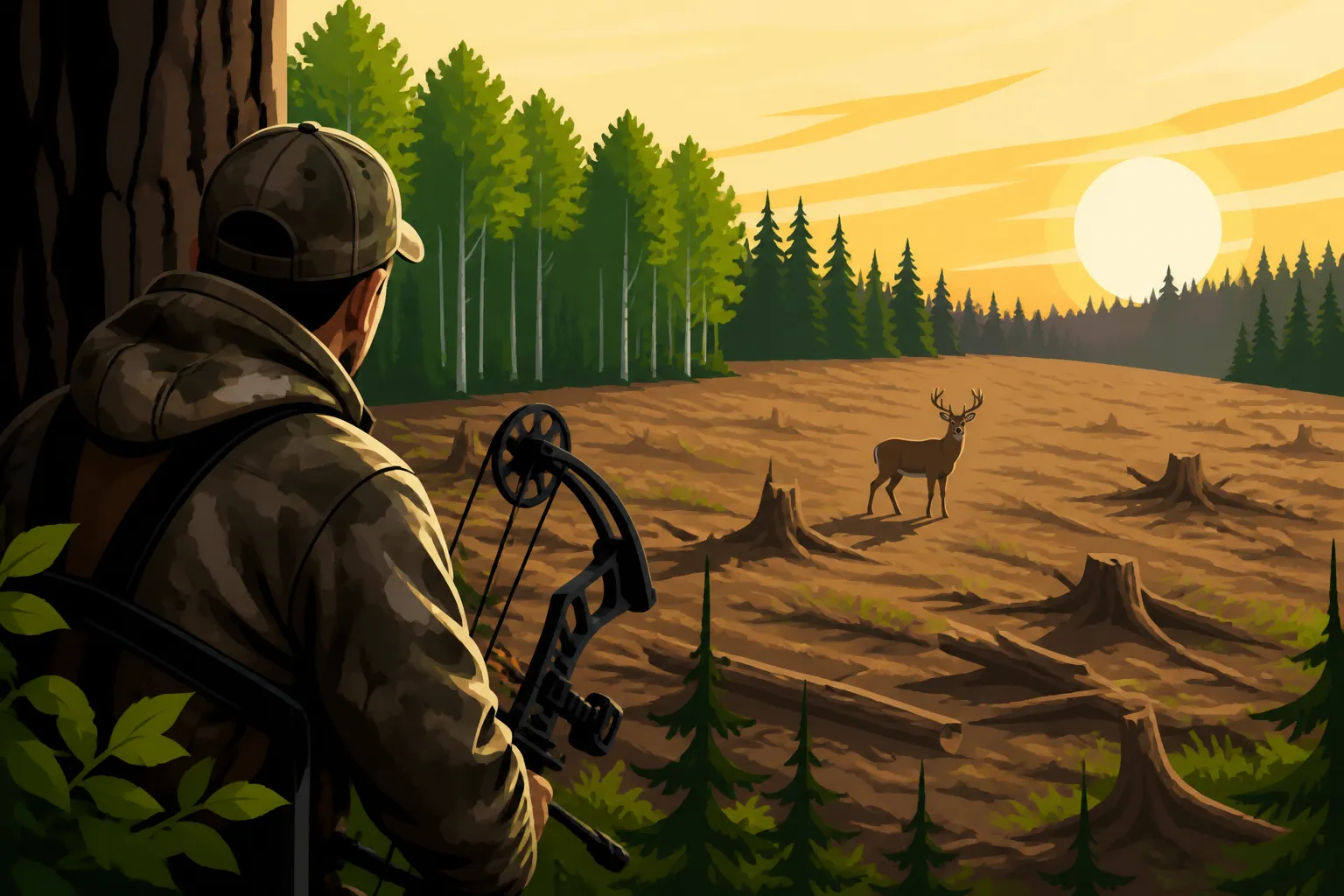
The edges of these clear-cuts naturally become transitional zones. Deer will stage just inside the thick cover before moving out into more open timber or fields to feed, and they’ll slip back into the thicket to bed or escape pressure. This makes the edges, where two distinct habitat types meet, prime ambush points.
The Hunter's Dilemma: Finding the Edge Amidst the Chaos
Despite all the benefits, hunting a clear-cut presents its own set of unique challenges. One of the biggest frustrations is the sheer density of the cover. It's often impossible to see more than 20-30 yards into the thicket, making it difficult to spot deer moving within it or even to discern clear travel paths. This limited visibility means that while deer might be everywhere, getting a clean, ethical shot can be incredibly tough.
Another significant hurdle is understanding and predicting wind currents and thermals. In a uniform stand of mature timber, wind patterns might be somewhat predictable. However, a clear-cut, with its uneven terrain, varying heights of new growth, and proximity to taller timber, creates chaotic micro-thermals and swirling winds. Your scent might be carried in one direction, only to eddy back and swirl into the clear-cut, alerting any deer downwind. It's a constant battle against scent detection.
Accessing clear-cuts can also be a nightmare. The dense growth makes quiet movement nearly impossible, and trying to push through a thicket to get to a stand location can create so much noise and disturbance that you push all the deer out before you even settle in. Then there's the pressure from other hunters, especially on Minnesota public land. If a clear-cut is easily accessible, chances are other hunters are eyeing it too, which can make deer even warier and more nocturnal in their movements. Overcoming these challenges requires meticulous planning and a deep understanding of deer behavior in these specific environments.
Mastering Your Pre-Season Scouting Strategy
Effective hunting on a clear-cut edge starts long before the season opener, often months in advance. Your pre-season scouting is what separates a frustrating sit from a successful hunt.
Leveraging Technology for Initial Reconnaissance
In today’s age, the first step in scouting shouldn't involve your boots, but your thumbs. Start with powerful mapping applications like Google Earth, onX Hunt, or GoHunt. These tools are invaluable for gathering intelligence from the comfort of your home.
When you're staring at an aerial image, look for several key features around and within clear-cuts:
- Distinct Edges and Fingers: Clear-cuts rarely have perfectly straight edges. Look for fingers of thick cover that extend into more open timber, or conversely, points of timber that jut into the clear-cut. These are natural funnel points that deer will often follow.
- Saddles and Low Spots: If the clear-cut is on a ridge or varied terrain, identify saddles or low points where deer might cross from one side to another, especially if it leads to another bedding or feeding area.
- Transition Lines: Notice where the clear-cut transitions into other habitat types – mature hardwoods, pines, marsh, or agricultural fields. These transitions are high-traffic areas.
- Potential Entry/Exit Routes: Look for existing trails, old logging roads, or natural drainages that could serve as relatively quiet access routes to your potential stand locations without disturbing deer.
By using the various layers available in apps like GoHunt, you can even discern changes in vegetation type, historical logging activity, and property boundaries. This digital groundwork allows you to pinpoint areas of interest before you ever step foot in the woods, saving you valuable time and effort. It's a game-changer for Scouting With the Minnesota Recreation Compass App or any other digital mapping solution. Knowing how to read these aerial photos for Reading Aerial Photos for Big Woods Deer is a skill worth developing.
Boots-on-the-Ground Verification
While technology is an amazing starting point, nothing beats actual "boots-on-the-ground" scouting. This is where you confirm your theories and find the subtle clues that satellite images can't show.
Walk the edges of the clear-cut, but do so carefully and strategically, especially if it's nearing hunting season. You don't want to blow deer out of their bedding areas before opening day. Focus on identifying active deer sign:
- Rubs and Scrapes: Look for fresh rubs on small trees along the edge, indicating bucks are working these transition zones. Scrapes, particularly those along logging trails or openings, are communication hubs for deer.
- Tracks and Trails: Find well-worn deer trails leading into and out of the clear-cut. Pay attention to how deer enter and exit, especially relative to the wind. Are they paralleling the edge before diving in? Are they crossing in specific low spots?
- Bedding Areas: While you might not want to penetrate deep into the clear-cut before the season, look for signs of bedding just inside the thicker edges. Higher ground within the clear-cut, or particularly dense pockets of regeneration, are common bedding spots. You’ll often find fresh droppings or depressions in the leaves.
- Confirm Wind Patterns: Carry a small squeeze bottle with scent-free powder or a milkweed pod to observe localized wind currents. Even on a seemingly calm day, you'll notice thermals dropping into the clear-cut in the morning and rising out of it in the evening. Understanding Wind and Thermals on a Minnesota Ridge is crucial here.
As you scout, you’ll start to see patterns. The more time you spend observing these clear-cuts in person, the better you'll understand how deer use them. This is where the initial GoHunt recon combined with your physical presence really pays off, allowing you to fine-tune your approach and pinpoint the exact locations for your stand or blind.
Strategic Stand and Blind Placement on the Edge
Once you've done your homework, both digitally and on foot, it's time to decide where to set up. This decision is paramount and can make or break your hunt.
Reading the Wind and Thermals for Optimal Advantage
Understanding wind and thermals isn't just important during scouting; it's the absolute make-or-break factor for your actual hunt. Deer rely heavily on their sense of smell, and a single mistake with your wind direction will send them packing.
- Morning Hunts: In the morning, as the air cools, thermals generally drop. This means your scent will be carried downhill and settle into lower areas. If you're hunting an elevated position near a clear-cut that's on a slope, plan to have your stand on the uphill side, with the prevailing wind carrying your scent away from where deer are likely to enter the clear-cut or drop into it. Deer returning to bed in the clear-cut will typically approach from higher ground or through areas where their scent won't be easily detected.
- Evening Hunts: As the sun warms the earth, thermals rise. Your scent will be carried uphill. For an evening hunt, you'll want to be set up on the downhill side of where deer are expected to emerge from the clear-cut to feed. The rising thermals will carry your scent up and away, ideally over the deer's heads.
- Prevailing Winds: Beyond thermals, always consider the dominant wind direction for your area in Minnesota. Most of the time, especially during hunting season, you'll find prevailing westerly or northwesterly winds. You'll need multiple stand setups to accommodate different wind directions.
- Clear-Cut Specifics: Clear-cuts, with their broken canopy and uneven ground, can create unpredictable eddies and swirls. Always use a wind checker frequently. Don't assume the wind at your stand height is the same as it is at ground level or further into the thicket. Playing the wind on the edge means understanding where deer are likely to come from, and ensuring your scent path never intersects with their approach.
Selecting Your Ideal Setup Location
The choice between a treestand and a ground blind depends on the specific clear-cut edge, available trees, and your personal hunting style.
Treestand Setups
Treestands offer a significant advantage in clear-cut environments due to elevation. Getting above a deer's line of sight and, more importantly, above their primary scent detection zone, is critical.
- Pinch Points and Funnels: Look for trees positioned at natural pinch points along the clear-cut edge. These could be narrow strips of timber between the clear-cut and another feature (like a swamp or a field), or a spot where the clear-cut's growth pattern forces deer into a smaller travel corridor. These funnels maximize your chances of deer passing within shooting range. This is especially true when you're looking for Hanging a Stand on a Big Woods Funnel.
- Dominant Trails: Position your stand overlooking a well-used trail that clearly leads into or out of the clear-cut. Deer will often follow the path of least resistance.
- Elevation for Scent Control and Visibility: An elevated position not only helps to disperse your scent more effectively but also provides a better vantage point over the dense cover of the clear-cut. You might be able to spot deer moving just inside the edge that you wouldn't see from the ground. For detailed advice on this, check out our guide on Treestand Setups in Minnesota Hardwoods.
Ground Blind Setups
Ground blinds are another excellent option, especially if suitable trees are scarce or you prefer the comfort and concealment they offer.
- Thick Edges: Ground blinds excel in areas where the edge itself is exceptionally thick, offering natural cover to set the blind into. This allows you to blend in seamlessly.
- Concealment and Brushing In: The key to a successful ground blind is meticulous concealment. You need to brush it in extensively with natural vegetation from the area. Think about breaking up its outline completely, making it look like a natural part of the landscape. Our guide on Brushing In a Blind on a Field Edge offers some excellent tips that apply here too.
- Advantages: Ground blinds are great for maintaining warmth in cold Minnesota weather, perfect for hunters with limited mobility, or for hunting with youth who might struggle in a treestand. They also allow for more movement inside without being detected. For more insights, refer to Using a Ground Blind on Minnesota Public Land.
Here’s a quick comparison to help you weigh your options:
| Feature | Treestand on Clear-Cut Edge | Ground Blind on Clear-Cut Edge |
|---|---|---|
| Scent Control | Good, elevated position helps disperse scent, but wind is key. | Challenging, scent pooling at ground level. Requires strict wind management. |
| Visibility | Excellent, elevated view over dense cover. | Limited to shooting lanes, often eye-level. |
| Concealment | Natural tree cover, but silhouette can be an issue if not careful. | Requires extensive brushing in; offers complete enclosure. |
| Comfort | Varies by stand type; exposed to elements. | Enclosed, better for warmth and weather protection. |
| Setup Time | Can be quicker for hang-ons; climbers are fast; ladders slower. | Requires time for brushing in and blending. |
| Best Use | Funnels, trails, areas needing elevated visibility/shot angle. | Thick cover, limited suitable trees, cold weather, youth/mobility. |
When scouting your specific spots, make sure to consider these factors. GoHunt's detailed satellite imagery can even help you identify potential blind locations by highlighting areas of dense ground cover or natural depressions where a blind could be tucked away.
Entry and Exit Routes: The Underrated Key to Success
You can have the perfect stand setup, but if your entry and exit routes blow deer out of the area, your efforts are wasted. This is arguably the most underrated aspect of hunting clear-cuts. Deer in these thick environments are incredibly sensitive to pressure.
- Undetectable Approaches: Plan your route to your stand or blind so that you are not walking through known bedding areas, active feeding zones, or along heavily used deer trails. Use natural features like ditches, creek beds, old logging roads that are no longer used by deer, or even low-lying areas that might be less desirable for deer travel.
- Wind Awareness: Always plan your entry and exit with the wind in mind. If the wind is blowing your scent directly into the clear-cut, consider an alternative route or wait for a different day.
- Minimizing Disturbance: Move slowly and quietly. Avoid snapping branches or making excessive noise. Wear outer layers that are silent. If you’re hunting on public land, this is even more critical because deer are already accustomed to human presence and are very wary. Understanding Hunting Pressure on Minnesota Public Land is essential. The goal is to be a ghost entering and leaving the woods, leaving no trace of your presence that would alert deer.
- Pre-dawn/Post-dusk Movement: If you're heading in before first light or leaving after dark, use a headlamp sparingly and on a low red-light setting. This helps preserve your night vision and is less intrusive to wildlife.
- Alternative Routes: Ideally, have a couple of different entry and exit routes for each spot, allowing you to adapt to changing wind conditions or unexpected deer activity. This strategy is part of Finding Ground Others Walk Past by being smarter about how you interact with the land.
Executing Your Hunt and Adapting to Conditions
You've scouted, you've set up, now it's time to hunt. Clear-cuts can be dynamic, and being able to adapt to changing conditions and deer behavior is crucial.
Patience and Persistence on the Edge
Hunting clear-cuts often requires a different kind of patience. These aren't typically "early morning rush" type hunts, although deer can be returning to bed in the early hours. Deer often feel incredibly secure within the dense cover, meaning they might not emerge until very late in the day, or just before legal shooting light ends. You might spend hours seeing nothing, only to have a buck magically appear on the edge as dusk settles.
Morning hunts near a clear-cut edge often involve intercepting deer returning from feeding areas to bed down inside the thicket. Position yourself accordingly, anticipating their return. Evening hunts, conversely, are about catching deer as they emerge from the bedding cover to feed. Be prepared to sit for extended periods, remaining still and alert. It's a waiting game, but the reward of a mature buck stepping out of that impenetrable cover can be immense. Trust your scouting and commit to the long haul.
Calling and Decoy Strategies (When Appropriate)
While clear-cuts are thick, calling and even decoy strategies can sometimes be effective, especially during the rut.
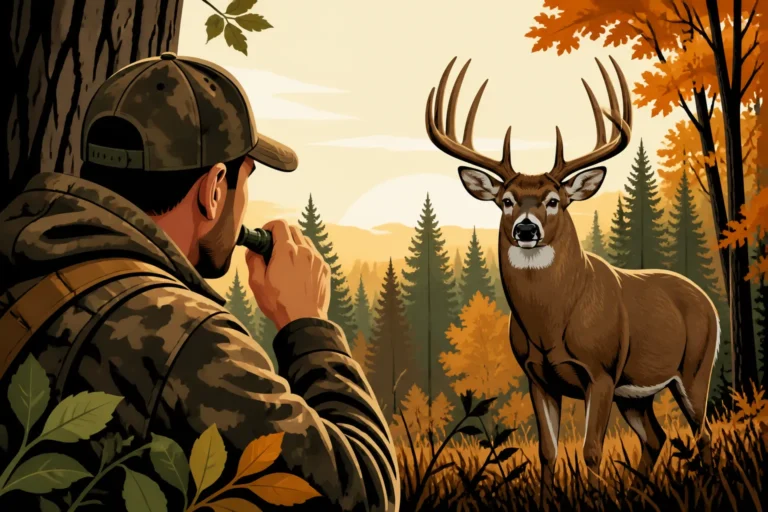
- Grunt Calls and Rattling: During the rut, a well-timed grunt call or some aggressive rattling can sometimes pull a curious buck out of the thick cover. The dense cover itself can actually make calls sound more realistic and less localized, drawing deer closer as they try to pinpoint the source. However, use caution; subtle calling is often best. Overcalling can make wary Minnesota bucks even more hesitant. If you're interested in Rattling and Grunting in Minnesota, remember that the thick cover of a clear-cut might muffle the sound, so adjust your intensity. For more nuanced advice on Grunt Calls in Mature Minnesota Timber, consider how the call will carry through the regenerating growth.
- Decoy Placement: Decoys can be tricky in thick clear-cuts. Visibility is limited, and deer might not see the decoy until they are very close. If you do use a decoy, place it where it's visible along a primary travel path, ideally downwind of your setup, so deer have to walk past your stand to scent-check it. Ensure it's not so deep in the thicket that it's completely obscured. A single doe or young buck decoy is often less intimidating than a large buck decoy in pressured areas.
Post-Shot Strategy and Recovery
Getting a shot at a deer on a clear-cut edge is often a fleeting opportunity. Due to the limited visibility and the deer's natural caution, shots can be quick and sometimes at odd angles. It's paramount to be patient for the absolute best shot opportunity.
- Shot Placement: Prioritize a clean, ethical shot. If you're unsure, let the deer walk. A wounded deer in a clear-cut is an extremely difficult recovery.
- Mark the Spot: If you do take a shot, immediately mark the exact spot where the deer was standing and where you last saw it. Use a piece of blaze orange ribbon, a distinct tree, or use the "mark waypoint" feature on your GoHunt GPS app. This seemingly small detail becomes incredibly important when you're trying to track through dense cover.
- Wait Before Tracking: Unless you saw the deer drop, give it time. For a suspected gut shot, wait at least 6-8 hours, or even longer if conditions allow (e.g., cool weather overnight). For a solid lung or heart shot, waiting 30-60 minutes is usually sufficient. Rushing a wounded deer in a clear-cut will only push it deeper into the thickest cover, making recovery exponentially harder.
- Tracking in Dense Cover: When you do begin tracking, move slowly and deliberately. Look for blood, broken twigs, disturbed leaves, and tracks. In a clear-cut, the blood trail might be sparse due to the thick vegetation. Get on your hands and knees if necessary. GoHunt's tracking feature can be invaluable here, allowing you to plot your path and mark blood spots, making it easier to see your progress and avoid losing the trail. For a comprehensive guide, check out Tracking a Deer in Fresh Minnesota Snow or Blood Trailing After Dark in Minnesota if conditions are right. Be prepared for a challenging, sometimes hours-long, recovery effort.
Clear-cuts are challenging environments, but with diligent scouting, strategic setup, and patient hunting, they can be some of the most rewarding places to find mature deer in Minnesota. Don't be intimidated by the thick stuff; learn to embrace it.
Disclaimer
Please note that hunting regulations, seasons, and permit requirements can change. Always consult the latest official Minnesota Department of Natural Resources (DNR) regulations before planning any hunt. This guide is for informational purposes only and does not supersede state laws.