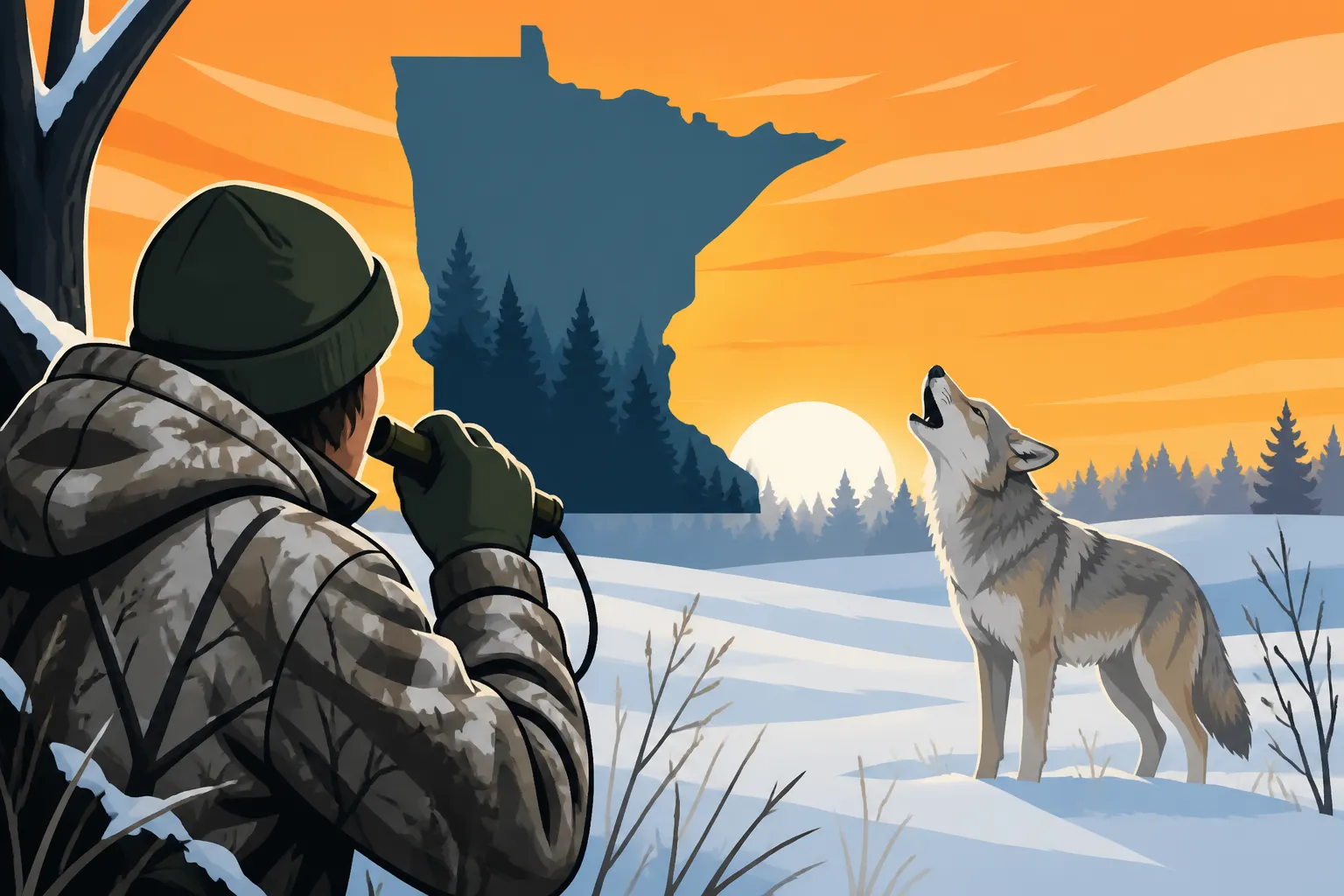
Coyote Calling in a Minnesota Winter
There’s nothing quite like the silence of a crisp Minnesota winter morning, the world blanketed in fresh snow, yet underneath that pristine facade, a silent predator roams. Coyotes become incredibly active and often bolder when the deep snows of December and January set in, making them a prime target for hunters looking to sharpen their skills and help manage local wildlife populations. This comprehensive guide will walk you through everything you need to know to successfully call in coyotes during the most challenging, yet rewarding, season in Minnesota.
Understanding the Winter Coyote
Winter transforms the landscape and, with it, the behavior of every animal, including coyotes. The frigid temperatures, deep snow, and scarcity of easy meals force these intelligent canids to adapt, and understanding these adaptations is key to bringing them into range.
Winter Behavior and Pack Dynamics
When the snow flies and temperatures plummet, coyotes often become more visible. Their natural prey, like deer, rabbits, and mice, are harder to find and catch, pushing coyotes to work harder and sometimes range further for food. This increased hunger makes them more susceptible to calling, as the sound of a distressed animal or a territorial challenge represents a potential meal or an intruder. During winter, coyotes often consolidate into small, family-based packs, especially if they’re targeting larger prey like deer. You'll notice their tracks often appear in groups, or converge at certain points. These packs are usually led by a dominant male and female, with their offspring from the previous spring often tagging along. The presence of a pack means more ears to hear your call, but also more eyes and noses to detect you, adding to the challenge. They’ll also be more territorial, responding aggressively to howls, which can be an excellent way to locate them.
Prey Identification and Hunger Drives
Coyotes are opportunistic predators, and in winter, that means they'll take whatever they can get. While rabbits and rodents remain staples, the deep snows can make these small prey incredibly difficult to pinpoint and capture. This shifts their focus. They'll often follow deer trails, looking for a weakened or injured animal, or scavenging on carcasses left by other predators or hunters. Knowing what they're primarily hunting in your specific area is crucial. If you're in an agricultural zone, they might be keying in on pheasants or cornfield rodents. In the deep woods, it could be snowshoe hares or deer. The common thread is hunger. Their energy expenditure is higher in winter, and calories are vital. This intense hunger makes them much more likely to commit to a call, especially one that sounds like a struggling or injured animal. This is why distress calls are often so effective in the colder months.
Coyote Vulnerability in Snow
Deep, crusty snow can be a real game-changer for coyote hunters. While coyotes are well-adapted to snow with their relatively large paws, sustained deep snow can still make travel difficult and exhausting, especially for smaller or older animals. If you have soft, deep snow, coyotes may stick to established trails, logging roads, or frozen waterways where travel is easier. This predictability can be an advantage. Conversely, a hard crust that supports their weight, but breaks under a deer's hooves, gives coyotes an advantage in a chase. They become efficient hunters in these conditions, able to run on top of the snow while their prey sinks. Pay close attention to recent snowfall and temperature changes. A fresh dusting might make tracks easier to read, while a deep, cold snap can make coyotes desperate for calories. Understanding these nuances lets you predict where they might be traveling and what kind of calls they’ll respond to most readily.
Essential Gear for Winter Coyote Calling
Winter coyote hunting in Minnesota isn't just about calling; it's about being prepared for the elements. The right gear can make the difference between a successful hunt and a miserable one.
Staying Warm: Layering for Extreme Cold
Minnesota winters are no joke, and sitting still for extended periods in sub-zero temperatures requires serious thermal protection. Layering is your best friend. Start with a moisture-wicking base layer – synthetics or merino wool are excellent choices that pull sweat away from your body, preventing dangerous chills. Next, add insulating mid-layers, such as fleece or down, to trap warmth. Finally, your outer layer needs to be windproof, waterproof, and breathable. Brands like Sitka or First Lite make excellent hunting-specific gear designed for extreme cold. Don't forget extremities: an insulated hat, neck gaiter, and quality mittens (with finger access for shooting) are non-negotiable. Chemical hand warmers and foot warmers can also be a lifesaver, tucked into gloves or boots. Remember, if you're cold and uncomfortable, you'll be distracted and less likely to focus on the hunt. For more advice on enduring the chill, check out our guide on Clothing for a Minnesota November.
Optics for Long-Range Shots in Open Country
Coyote hunting often happens at longer ranges, especially in open agricultural fields or frozen lake beds. Quality optics are paramount. A good pair of binoculars, at least 8x or 10x, is essential for scanning distant fields, identifying approaching coyotes, and distinguishing them from other animals or objects. Look for binoculars with excellent low-light performance, as coyotes are often most active during dawn and dusk. When it comes to your rifle scope, variable magnification (e.g., 3-9x or 4-12x) offers versatility, allowing you to scan at lower power and dial up for precision shots. Consider models with illuminated reticles for better visibility in dim conditions. A rangefinder is also an invaluable tool, especially when shooting across vast, snow-covered expanses where distances can be deceiving. Knowing the exact yardage eliminates guesswork and improves accuracy. Many of these principles apply to deer hunting as well, so our article on Optics for Minnesota Big Woods and Farmland can offer broader insights.
Electronic Calls vs. Hand Calls: Pros and Cons
Both electronic calls and hand calls have their place in a winter coyote caller's arsenal.
- Electronic Calls: These are incredibly versatile, offering a wide array of sounds from rabbit distress to coyote howls and pup distress. They allow you to place the sound source away from your position, drawing the coyote's attention away from you. Many modern e-calls come with remote controls, letting you adjust volume and change sounds without moving. Brands like Foxpro and ICOtec are popular and reliable. The downside? They require batteries, which can drain quickly in extreme cold, so always carry spares. They also tend to be more expensive.
- Hand Calls: More affordable and never run out of batteries, hand calls give you a direct connection to the sound. They require more practice to master a variety of realistic sounds but offer immediate responsiveness. Open-reed calls are great for volume and versatility, while closed-reed calls are often easier for beginners. They're also much more compact and lighter to carry. The main drawback is that the sound originates directly from you, potentially drawing the coyote's eyes to your position.
Many experienced callers use a combination of both. An e-call can provide a baseline distress sound, while you add realism or specific vocalizations with a hand call.
Rifles and Ammunition for Winter Conditions
When choosing a rifle for winter coyote hunting, reliability in cold weather is key. Bolt-action rifles are generally robust and less prone to freezing issues than semi-automatics. Caliber choice is also important. Something fast and flat-shooting with minimal recoil is often preferred for coyotes. Popular calibers include .223 Remington, .204 Ruger, 6.5 Grendel, and .22-250 Remington. The flat trajectory helps with those longer shots across open country. If you're wondering about deer calibers, our guide to Best Rifle Calibers for Minnesota Whitetails might offer some crossover thoughts.
Ammunition choice leans towards lighter, faster bullets designed for varmints, often with frangible tips that expand rapidly. This helps to prevent over-penetration and dangerous ricochets, especially if you're hunting near agricultural buildings or on public land. Ensure your rifle is zeroed properly for the conditions you'll be hunting in, ideally out to 200-250 yards. And always carry enough ammunition, as follow-up shots might be necessary. Keep your rifle clean and well-lubricated with cold-weather-specific lubricants to prevent sluggish action in freezing temperatures.
Mastering the Art of Coyote Calling
Calling in a coyote is a blend of art and science, requiring patience, stealth, and a good understanding of what sounds will pique their interest.
Decoding Coyote Vocalizations
Coyotes use a complex array of vocalizations to communicate, and understanding them helps you choose the right calls.
- Howls: These are used for communication over long distances, to locate pack members, or to announce their presence. A lone howl can be a great way to "locate" coyotes, getting them to respond and reveal their position. Group howls signify a pack and can be used to elicit a challenge from other coyotes.
- Yips and Barks: Shorter, sharper sounds often indicating excitement, alarm, or warning. A bark sequence can sometimes sound like a territorial dispute.
- Whimpers and Growls: Closer-range communication, often between pups and adults, or during dominance displays.
- Distress Calls: These are often the most effective for calling in hungry coyotes in winter. Sounds like a dying rabbit, a fawn distress, or even a bird in distress can mimic a vulnerable prey animal, signaling an easy meal.
The key is to mimic these sounds realistically and at appropriate volumes. Practice in advance, and listen to real coyote recordings to fine-tune your technique.
Setting Up for Success: Wind, Sun, and Concealment
Your setup is as crucial as your calling sequence. Coyotes have an incredible sense of smell and keen eyesight, especially in a snow-covered landscape where contrast is high.
- Wind: Always, always play the wind. Coyotes will almost invariably circle downwind of your call to scent-check the area before committing. Set up so the wind is blowing from the direction you expect the coyote to approach, towards your setup, or quartering. This way, any coyote trying to get downwind will have to pass in front of you. GoHunt's mapping features can be incredibly useful for planning your approach and predicting wind direction in relation to terrain.
- Sun: Try to set up with the sun at your back, shining into the coyote's eyes. This makes it harder for them to spot you and easier for you to see them.
- Concealment: In winter, a hunter in dark clothing stands out starkly against white snow. Wear white camo or a snow suit to break up your outline. Utilize natural cover like tree lines, brush piles, or even the subtle contours of the land. If using an electronic call, place it 50-100 yards upwind of your position to draw attention away from you. Ensure you have a clear shooting lane for where you expect the coyote to appear.
Call Sequences and Durations for Different Scenarios
There's no single "magic" call sequence, but a good strategy involves varying your sounds and durations.
- Start with a Locator Howl: If you're unsure if coyotes are in the area, a series of lone howls or group howls can often get a response, letting you know where to focus. Wait a few minutes after the howl to see if you hear a reply.
- Initial Distress Sequence: Begin with a loud, attention-grabbing distress call (e.g., rabbit in distress) for 30-60 seconds. Then, pause for 1-2 minutes.
- Varying Intensity: After the initial burst, switch to shorter, less intense bursts of the distress call, perhaps 15-30 seconds every 2-5 minutes. Coyotes might be circling, and you want to keep them interested without over-calling.
- Introduce Coyote Vocalizations: If coyotes are hanging up or seem hesitant, try introducing some coyote vocalizations. A challenge howl, a pup distress, or even a female invitation howl can sometimes seal the deal, especially if you suspect a breeding pair.
- Duration: Be patient! Many coyotes won't charge in immediately. A typical stand should last at least 20-30 minutes, especially in winter when they might be moving slower through snow. Some seasoned hunters will sit for 45 minutes to an hour on a promising stand.
A good table for call types and sequences:
| Call Type | Purpose | When to Use (Winter) | Electronic vs. Hand Call Preference | Notes |
|---|---|---|---|---|
| Rabbit Distress | Mimics injured rabbit, appeals to hunger | Always a strong opener, especially when coyotes are hungry | Both, E-call for continuous sound | Start loud, then taper off. Vary pitch and duration. |
| Fawn Distress | Mimics young deer in trouble, appeals to larger prey drive | Effective in areas with deer. Can draw in larger coyotes/packs. | E-call for realism | Less frequent, longer bursts. Be patient. |
| Rodent Squeaks | Mimics mice/voles, subtle, for close-in work or shy coyotes | Good for dense cover or when coyotes are very close but hidden | Hand call (mouth-blown) | Low volume, intermittent. Great for getting a hung-up coyote to take a few more steps. |
| Lone Howl | Locates coyotes, establishes presence | To find coyotes before a stand, or to challenge a distant one | Hand call for natural sound, E-call for volume | Listen for replies. Don't over-howl; just enough to get a response. |
| Group Howl/Yips | Simulates pack, challenges other coyotes | To challenge a pack or stimulate a territorial response | E-call for complex sounds | Can be very effective, but might also make wary coyotes hold back if they perceive a larger "threat." |
| Pup Distress | Mimics lost or injured pup, appeals to parental instinct | Can draw in protective adults, especially later in winter/early spring | E-call for realism | Emotional call, can provoke aggressive investigation. |
| Female Invitation | Simulates a receptive female, effective during breeding season (late winter) | Late January/February when breeding ramps up | E-call (specific sounds) | Use sparingly and with good concealment, as males will be very focused on scent. |
Reading the Minnesota Winter Landscape
Minnesota’s winter landscape offers diverse terrains, from vast agricultural fields to dense northern forests, each presenting unique challenges and opportunities for coyote calling.
Identifying Key Habitat and Travel Corridors
Coyotes, like all animals, are creatures of habit. In winter, their habits are heavily influenced by the need for food, cover, and efficient travel.
- Farm Country: In southern and western Minnesota, coyotes often frequent field edges, shelterbelts, and drainage ditches. These areas provide cover, travel lanes, and access to rodents, pheasants, and deer that might be feeding in leftover cornfields or food plots. Look for brushy draws, stands of cattails, or woodlots within ag land. These linear features act as natural travel corridors and ambush points. You might find them hunting along a frozen river or stream bank, too. Checking your county's specific lay of the land using a mapping tool like GoHunt can reveal these subtle features that are often coyote magnets.
- Big Woods/Transition Zones: In central and northern Minnesota, the landscape shifts to more timbered areas. Here, coyotes will use logging roads, deer trails, clear-cuts, and the edges of swamps or thickets. They often hunt the fringes of denser cover, where they can ambush deer or snowshoe hares moving between bedding and feeding areas. Look for bottlenecks or funnels created by terrain features that concentrate animal movement. Even in the Big Woods Versus Farmland Deer dynamic, coyotes adapt their strategies.
- Waterways: Frozen rivers, lakes, and marshes can become superhighways for coyotes, offering easier travel than deep snow. They'll also patrol these areas for animals that might have fallen through thin ice or are vulnerable near water sources.
Snow Conditions and Coyote Movement
Snow isn't just a pretty backdrop; it's a critical factor in coyote movement and hunting strategy.
- Fresh, Deep Snow: After a heavy snowfall, coyotes may be less active, hunkering down or sticking to well-worn trails and roads to conserve energy. This can be a great time to track them and find fresh sign. Their tracks will be clearly visible, indicating their recent travel routes.
- Crusted Snow: This is often a hunter's friend. If the snow has a hard crust that supports a coyote's weight but breaks under a deer or rabbit, coyotes gain a significant advantage. They become highly efficient hunters in these conditions, and you'll often find them actively patrolling for vulnerable prey.
- Bare Patches/Thin Snow: Sometimes, wind-blown areas or south-facing slopes might have less snow. Coyotes will often frequent these spots as they offer easier travel and better access to small rodents.
- Temperature: Bitter cold often means coyotes are more desperate for calories and will respond more readily to calls. Milder days might see them more relaxed and less urgent.
Knowing how to interpret the snow is like reading a newspaper for hunters. Our article on Tracking a Deer in Fresh Minnesota Snow provides some basic tracking principles that can be adapted for coyotes.
Locating Coyotes in Farm Country vs. Big Woods
The approach to locating coyotes varies significantly by habitat.
- Farm Country (Southern & Western MN): Drive and glass. Use your binoculars to systematically scan field edges, shelterbelts, and distant woodlots from high vantage points. Coyotes often expose themselves more in open country. Early mornings and late afternoons are prime times. Look for movement, or even just a tell-tale dark spot against the snow. You can also use locator howls from your vehicle before setting up. Remember to respect private land and understand the rules for Hunting Small Private Tracts in Minnesota.
- Big Woods (Central & Northern MN): Here, you'll rely more on tracks and sounds. Walk logging trails and forest roads, looking for fresh tracks. Listen for distant howls, especially at dawn and dusk. Setting up near clear-cuts, recent timber harvests (like those often managed for Grouse Hunting Minnesota Aspen Cover), or the edges of swamps can be productive, as these are areas where deer and other prey concentrate, and coyotes follow. Scouting beforehand using aerial photos or an app like GoHunt is invaluable for identifying these key features. The dense cover makes visuals difficult, so understanding their travel patterns is even more critical.
Post-Call Strategy and Follow-Up
The call sequence might be over, but your work isn't done. What happens after the shot, or if a coyote hangs up, is just as critical to success.
Shot Placement and Tracking in Snow
When a coyote finally commits and presents a shot, aiming for the vitals (chest cavity) is crucial for a quick, humane kill. Their small stature and often quick movements make precise shot placement challenging. A well-placed shot behind the shoulder will typically drop them quickly.
If the coyote doesn't drop immediately but shows signs of being hit (flinches, hunches, runs off erratically), you must track it. Snow is your best friend here, providing a clear blood trail. Take note of the exact spot where the coyote was when you shot and where it disappeared. Give it a few minutes if possible, especially if you didn't see it drop. Then, slowly and methodically follow the tracks. Look for blood, disturbed snow, or signs of struggle. Tracking in deep snow can be difficult, but diligent effort often pays off. Knowing the local rules for Blood Trailing After Dark in Minnesota is also important, as light fades quickly in winter.
What to Do When Coyotes Hang Up
It's a common frustration: a coyote comes in but stops just out of range, or circles downwind and then disappears. This is called "hanging up," and it happens frequently with wary coyotes.
- Patience: Often, they just need more time. Stay perfectly still and continue with very subtle, soft distress calls or whimpers. Sometimes, a long period of silence followed by a single, soft sound can draw them closer.
- Change Calls: If they hang up on a rabbit distress, try a pup distress or a subtle bird in distress. A different sound might be the trick to making them feel more secure or curious.
- Introduce a Howl: If they're clearly wary but still observing, a short, soft challenge howl might sometimes be enough to provoke an aggressive response and bring them in.
- Decoy: Some hunters use a coyote decoy (often a simple silhouette) placed near the e-call. This can give the real coyote something to focus on besides your hidden position, making them feel safer to approach.
- Reposition: If they absolutely refuse to come closer after a long wait, mentally note their direction of travel and consider repositioning for another stand, trying to get ahead of them or closer to their travel corridor. Sometimes, they just win the round, and that's part of the game.
Field Care and Transport
Once a coyote is down, proper field care is important, especially if you plan to keep the hide or meat.
- Hide Care: If you intend to have the hide tanned, immediate skinning is best, especially in milder winter temperatures where spoilage could occur. If it's truly frigid, you have a bit more time, but freezing the carcass solid before skinning can make the process harder. Protect the hide from blood and dirt.
- Meat Use: While not as popular as deer, coyote meat is edible. Some people use it for stews or sausages. If you plan to consume it, treat it like any other game meat: field dress promptly and cool the carcass as quickly as possible.
- Transport: Depending on where you hunt, you might need to carry the coyote out. A simple sled can be invaluable for dragging animals through deep snow, saving your back from unnecessary strain. This is a common strategy for larger game, as detailed in our guide on Sleds and Drags for Snow Country. Always ensure you're in compliance with any registration or reporting requirements, though coyotes typically don't have the same strict rules as deer or bear in Minnesota.
Safety and Ethics in Winter Calling
Hunting in winter comes with increased risks and responsibilities. Staying safe and ethical ensures a positive experience for everyone.
Public Land Etiquette and Awareness
Minnesota boasts millions of acres of public hunting land, from Wildlife Management Areas to State Forests. When calling coyotes on these lands, awareness of other users is paramount.
- Know Your Boundaries: Always verify land ownership using a reliable mapping app (like GoHunt or the DNR's Recreation Compass) to avoid trespassing. Our guide on Scouting With the Minnesota Recreation Compass App is a great resource.
- Hunter Density: Public lands, especially those easily accessible, can see pressure from deer hunters during their respective seasons, ice anglers, snowmobilers, and cross-country skiers. Be mindful of others. Avoid setting up near popular trails or ice fishing access points.
- Visual Identification: In snow, hunters wearing blaze orange (or blaze pink) are highly visible. Even though blaze orange isn't legally required for coyote hunting, wearing it, especially when moving between stands or on shared access points, is a wise safety precaution, particularly if deer seasons are open or adjacent.
- Bullet Trajectory: Be acutely aware of your backdrop. A flat-shooting rifle caliber means your bullet can travel a significant distance. Always have a safe backstop and know what's beyond your target.
Working with Landowners
Much of Minnesota's prime coyote habitat lies on private land, especially in agricultural regions. Gaining permission from landowners is often key to consistent success.
- Respect is Key: Always ask for permission before entering private land. A polite knock on the door, a brief introduction, and a clear explanation of what you want to do (coyote hunting) is the best approach.
- Offer Assistance: Landowners often welcome coyote hunters because coyotes can prey on livestock or young game animals (like fawns and turkey poults). Frame your request as a benefit to them. You might even offer to help with other tasks or share game.
- Follow Rules: Abide by any specific rules or requests the landowner has regarding vehicle access, gates, or areas off-limits.
- Be a Good Steward: Leave no trace. Pack out all your trash, including spent shell casings. If you harvest a coyote, make sure to dispose of the carcass respectfully or take it with you. Building good relationships with landowners can lead to long-term hunting opportunities.
Night Hunting Rules for Minnesota Coyotes
Coyotes are often most active at night, and Minnesota does allow night hunting for coyotes under specific conditions, which can be an incredibly effective method in winter. However, these rules are strict and require careful adherence.
- Specific Rules: Generally, night hunting for coyotes requires a small game license, and often involves specific equipment restrictions (e.g., limits on artificial lights, often requiring red or green filters). There might also be restrictions on the use of certain firearms at night.
- Local Ordinances: Always check local ordinances, as some townships or counties may have stricter rules regarding firearm discharge or noise at night.
- Safety First: Night hunting dramatically increases the risk. Always hunt with a partner, communicate constantly, and confirm your target and backstop with 100% certainty before shooting. Utilize quality lights, and never point a light or firearm at anything you haven't positively identified. Understanding all the nuances of Night Hunting Rules for Minnesota Coyotes is non-negotiable before attempting it.
Coyote calling in a Minnesota winter is an exhilarating pursuit that hones your hunting skills, tests your resilience against the elements, and offers a unique opportunity to interact with the wild side of the state. With the right preparation, gear, and ethical mindset, you’ll be well on your way to success.
Disclaimer
Please remember that hunting regulations and laws can change. Always consult the current Minnesota Department of Natural Resources (DNR) regulations and local ordinances before heading afield. This guide is for informational purposes only and does not supersede official legal requirements.