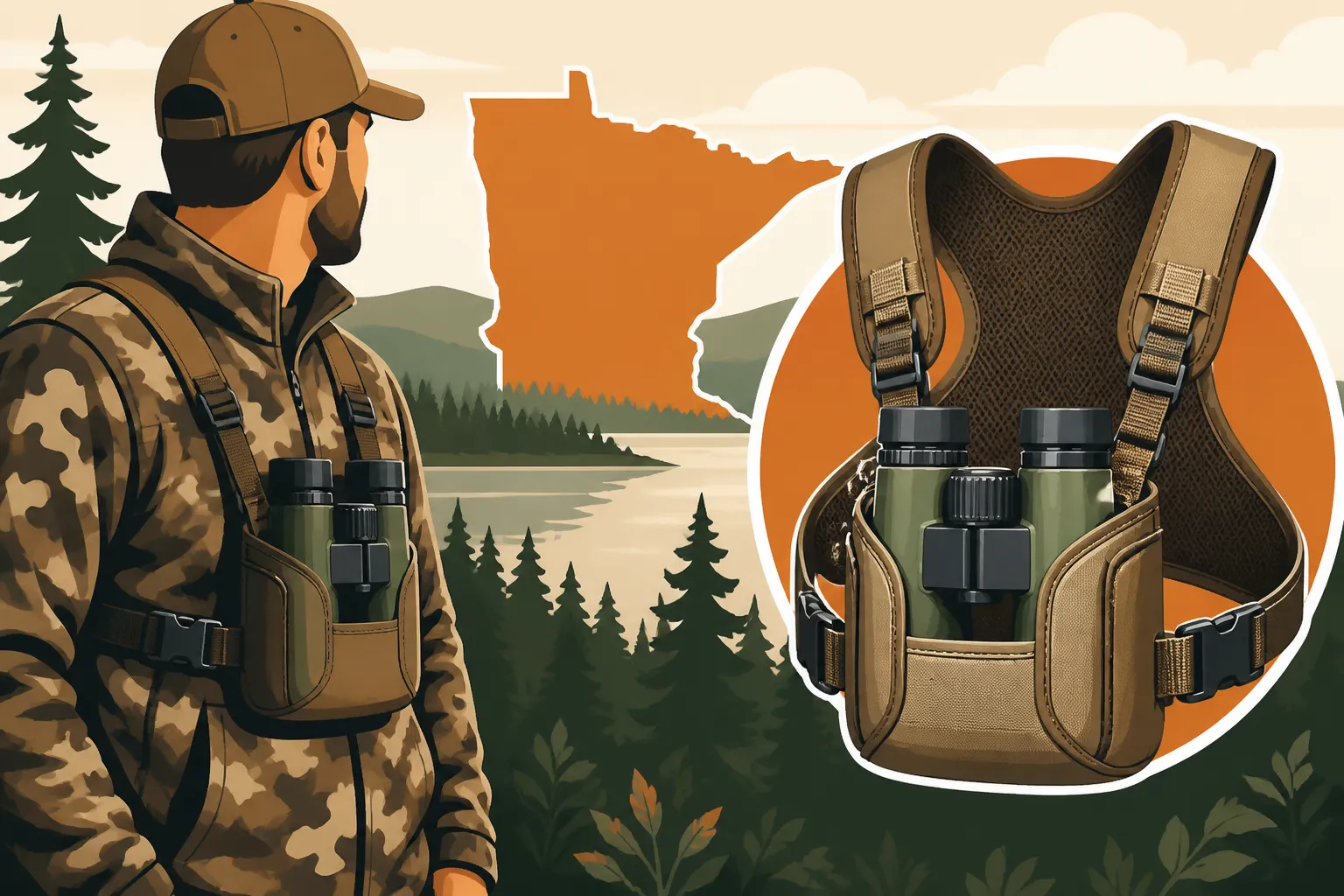
Binocular Harnesses Worth Wearing
Many Minnesota hunters have experienced that gut-sinking moment: their expensive binoculars swinging wildly, thudding against their chest while climbing a stand, or worse, dangling by a flimsy neck strap as they try to navigate thick brush. It’s frustrating when your crucial optics are a liability instead of an asset. This guide is dedicated to exploring the world of binocular harnesses, helping you understand why they're not just an accessory, but an essential piece of gear for comfortable, efficient, and ultimately more successful hunting across Minnesota's diverse landscapes.
Why a Harness, Not Just a Neck Strap?
Let's be honest, almost every hunter starts out with the neck strap that came with their binoculars. It seems simple enough, right? Just hang them around your neck and you're good to go. But spend more than an hour in the field, particularly in Minnesota's varied terrain, and you'll quickly discover the limitations and outright frustrations of this basic setup. A good binocular harness isn't just a nicety; it's a fundamental upgrade that addresses several key issues, transforming how you carry and access your most important scouting tool.
The Neck Strap Nightmare
Picture this: you're still-hunting through a thick stand of popple in northern Minnesota, trying to move as silently as possible. Every step you take, those expensive optics swing, clanking against your rifle or thumping against your chest. Not only is it noisy, potentially spooking the very deer you're trying to sneak up on, but it's also incredibly distracting. Then there's the discomfort. The weight of your binoculars, even a relatively lightweight pair, quickly starts to dig into your neck, especially after hours of walking, kneeling, and crawling. It pulls and chafes, making you constantly readjust, which again, means more movement and noise. It’s a frustrating cycle that pulls your focus away from the hunt itself.
Moreover, imagine the simple act of bending over to pick up shed antlers or clear a branch. Without warning, your binoculars can swing forward, catching on brush, getting tangled in your backpack straps, or even worse, smashing into the ground or a tree trunk. This kind of unexpected impact is a quick way to damage your lenses, throw off the prism alignment, or even crack the housing – a costly mistake that a simple neck strap does little to prevent. It's truly a nightmare scenario for any hunter who values their gear and their stealth in the woods.
Comfort and Weight Distribution
The biggest immediate benefit of a binocular harness is how it distributes weight. Instead of all that pressure bearing down on a single point on your neck, a harness spreads the load across both shoulders and your upper back. This ergonomic design significantly reduces fatigue, allowing you to carry your binoculars comfortably for an entire day in the field, whether you're stalking deer in the Minnesota's Firearm Deer Season by Zone or glassing ducks on the open water. This makes a profound difference in your stamina and overall enjoyment of the hunt.
With the weight properly distributed, your binoculars feel lighter, and they stay put. There's no bouncing, no swinging, no constant readjusting. This stability is crucial when you need to quickly bring your optics up to your eyes to spot a flicker of movement or identify a distant gobbler. The design ensures that your binoculars are always in a consistent, easy-to-reach position, ready for action without fumbling or unnecessary motion. It's about making your optics an extension of yourself, rather than a burdensome accessory.
Protection for Your Optics
Beyond comfort and stability, a well-designed binocular harness offers superior protection for your valuable optics. Many modern harnesses incorporate a primary compartment that fully encloses the binoculars, shielding them from the elements, dust, and accidental bumps. Think about trudging through wet snow during Muzzleloader Deer Hunting in Minnesota or enduring a sudden downpour while Hunting Minnesota's Fall Turkey Season. That protective enclosure keeps your lenses clear and dry, preventing moisture from seeping into delicate internal components.
This level of protection is paramount, especially when you've invested in quality glass. High-end binoculars are built to last, but they're not indestructible. A hard case built into a harness acts as a buffer against accidental drops, impacts against tree trunks while climbing into a stand for Treestand Setups in Minnesota Hardwoods, or simply the rigors of being jostled around in a pack or ATV. The peace of mind that comes from knowing your binoculars are safe and secure is invaluable, allowing you to focus on the hunt without worrying about damaging your essential gear. Hunters who use sophisticated planning tools like GoHunt to maximize their scouting and in-field efficiency know that protecting their optics is a critical part of a successful strategy.
Key Features to Look For in a Binocular Harness
Choosing a binocular harness isn't just about picking the first one you see. There's a wide range of designs and features, each catering to different hunting styles and preferences. To get the most out of your investment, it's vital to consider what really matters when you're out in the Minnesota wild. The best harness will seamlessly integrate into your hunting routine, enhancing your capabilities rather than adding complications.
Secure and Silent Access
The primary function of a harness is to hold your binoculars securely, but just as important is the ability to access them quickly and silently. When a big buck steps out of the timber, or a flock of ducks cups its wings over a pothole, every second and every sound counts. Look for harnesses with closures that are robust enough to keep your binoculars in place during strenuous movement but can be opened with one hand, without fumbling, and without making a loud ripping sound. Magnetic closures or silent buckles are often preferred over noisy Velcro, which can be a deal-breaker in quiet hunting situations.
The draw system should allow the binoculars to be smoothly pulled out and returned without snagging. Some harnesses feature tethers that keep your binoculars attached to the harness even when removed from the main compartment, preventing accidental drops. This is especially useful if you're leaning out of a tree stand or navigating steep terrain in Hunting Southeast Minnesota Bluff Country. Fast, fluid, and quiet access means you spend less time fumbling and more time focusing on your target.
Storage and Organization
While the main job of a harness is to carry your binoculars, many models offer additional storage, turning them into a compact, accessible "command center" for essential small items. Think about what you frequently need close at hand during a hunt: a rangefinder, a wind checker, an extra call, your hunting license, or even a small snack. Side pockets, front pouches, and internal dividers can help keep these items organized and prevent them from rattling around.
Consider what you carry regularly and how easily you need to reach it. A harness that allows you to store your Rangefinders in Thick Popple Cover right next to your binoculars means you don't have to dig through your main pack when that shot opportunity arises. Some harnesses even offer modular attachments, allowing you to customize your setup with additional pouches for things like a small first-aid kit or your phone. This level of organization can significantly streamline your movements and efficiency in the field, a principle often emphasized by advanced hunting platforms like GoHunt that help hunters organize their entire season.
Material Durability and Weather Resistance
Minnesota weather can be notoriously unpredictable, swinging from mild autumn days to frigid blizzards in a matter of hours. Your binocular harness needs to be built to withstand these conditions. Look for durable, abrasion-resistant materials like Cordura nylon or similar synthetics that can stand up to thick brush, barbed wire fences, and the general wear and tear of hunting. Reinforced stitching and high-quality zippers are also indicators of a well-made product that will last more than a season or two.
Weather resistance is also crucial. A harness that offers water-resistant or even waterproof properties will protect your optics from rain, snow, and morning dew. Many models incorporate DWR (Durable Water Repellent) coatings or internal waterproof liners. Keeping your binoculars dry is not just about extending their lifespan; it's about ensuring clarity when you need it most. Fogged lenses or moisture inside the optics can ruin a hunt, so investing in a harness that provides adequate weather protection is a smart move for any serious Minnesota hunter.
Different Styles of Binocular Harnesses and Their Uses
The market for binocular harnesses has exploded in recent years, moving far beyond just a simple elastic strap. Today, you'll find a variety of designs, each with its own advantages and ideal applications. Understanding these different styles will help you pinpoint the best fit for your specific hunting pursuits, whether you're navigating the deep woods or glassing expansive fields.
Full Chest Pack Systems
Full chest pack systems are perhaps the most popular choice among serious hunters, and for good reason. These harnesses typically feature a primary, enclosed compartment that cradles your binoculars, often with a magnetic or silent buckle flap for quick access. What sets them apart is the integration of additional pockets and pouches, effectively creating a mini-pack that rides on your chest. You'll often find side pockets for rangefinders, front pockets for wind checkers, calls, or tags, and sometimes even a back panel for maps or hydration reservoirs.
These systems are fantastic for hunters who want to keep frequently used items immediately accessible without having to reach into a backpack. For someone Hunting the Rut in Late October and needing to grab grunt calls or rattling antlers at a moment's notice, a chest pack is invaluable. The robust design also offers excellent protection for your optics, shielding them from the elements and impacts. While they can be a bit bulkier than other styles, the trade-off in organization and accessibility is often well worth it, especially for all-day sits or extensive scouting trips. Many dedicated hunters who rely on detailed information from resources like GoHunt to plan their expeditions find these comprehensive systems perfectly complement their meticulous approach to hunting.
Traditional Elastic Harnesses
The traditional elastic binocular harness is the evolution of the simple neck strap. It uses a series of adjustable elastic straps that crisscross your back, distributing the weight over your shoulders and upper torso. The binoculars attach directly to the front straps, resting against your chest. These harnesses are characterized by their minimalist design and lightweight feel. They don't typically offer integrated storage or a protective enclosure for the binoculars themselves, leaving your optics exposed to the elements.
This style is a solid choice for hunters who prioritize a lightweight, low-profile setup and already have other systems for carrying their gear, like a dedicated hunting pack. They prevent the uncomfortable bouncing and neck strain associated with neck straps and keep your binoculars easily accessible. For hunters covering a lot of ground in relatively open country, or those who prefer to keep their chest area clear for bow drawing or shouldering a rifle, a traditional elastic harness can be a great compromise. They are often more affordable and less cumbersome than full chest packs, making them an excellent entry-level option or a preferred choice for minimalist hunters.
Minimalist Harnesses for Streamlined Movement
A sub-category emerging within the harness market is the minimalist harness, often designed for highly active hunters or those in specific scenarios. These might be even more stripped-down than traditional elastic harnesses, sometimes using a single broad strap over one shoulder or a very lightweight mesh design. The focus here is on reducing bulk and weight to an absolute minimum while still providing better stability than a neck strap. They often feature quick-release buckles, allowing the hunter to shed the harness quickly if needed.
Consider a hunter who plans to Run-and-Gun Turkey Tactics on Public Land. Every ounce and every snag point matters. A minimalist harness ensures the binoculars stay put during fast movements through thick cover, but without adding any unnecessary bulk or heat buildup. They offer little to no protection for the optics and no additional storage, demanding that other gear be carried separately. However, for those who value extreme agility and a barely-there feel, these streamlined options can be perfect. They are for the hunter who needs immediate access to their optics for a quick scan and nothing else.
| Harness Type | Key Features | Pros | Cons | Ideal Use Case |
|---|---|---|---|---|
| Full Chest Pack | Enclosed optics compartment, multiple pockets, robust construction | Excellent protection, great organization, quick access | Can be bulky, sometimes hotter, more expensive | All-day deer hunting, extensive scouting, cold/wet weather, carrying many small essentials, hunters using tools like GoHunt |
| Traditional Elastic | Elastic straps, simple attachment points | Lightweight, comfortable, prevents bouncing | No optics protection, no extra storage | Minimalist hunters, warm weather, light use, when a separate pack carries other gear |
| Minimalist | Ultra-light materials, minimal straps, barebones | Extremely lightweight, maximum freedom of movement | Minimal protection, no storage, less robust stability | Run-and-gun turkey hunting, light and fast excursions, specific scenarios where bulk is a critical detriment |
Choosing the Right Harness for Your Minnesota Hunt
Minnesota's hunting landscape is incredibly diverse, from the vast, dense forests of the north to the rolling farmlands and prairie potholes of the south. Just as you wouldn't use the same rifle for elk as you would for squirrels, you shouldn't expect one binocular harness to be optimal for every hunting scenario. The best harness for you will depend heavily on the type of terrain you'll be covering, the game you're pursuing, and the prevailing weather conditions.
Big Woods and Northern Forests
Hunting the Hunting Minnesota Now That Rifles Are Legal Statewide in the sprawling big woods of northern Minnesota presents unique challenges. This terrain is often thick with young aspen, mature hardwoods, and dense conifer stands, making silent movement paramount. Here, a full chest pack system often shines. The enclosed compartment provides crucial protection against branches, thorns, and wet snow, keeping your valuable 8×42 Versus 10×42 in the Woods lenses clear and dry. The added pockets are perfect for small, critical items like a compass, a headlamp for walking out after dark, or your GPS unit (or smartphone with a mapping app like GoHunt, which many hunters now rely on for navigating public lands).
The stability of a chest pack prevents your binoculars from swinging and clanking as you push through brush or climb into a stand. This stealth factor is huge when you’re trying to sneak within bow range or quietly set up for a rifle shot. While slightly bulkier, the protection and organization it offers outweigh the minor inconvenience. When you're spending hours still-hunting, glassing thick cover, or waiting patiently on a stand, the comfort and quick, silent access of a well-designed chest pack are indispensable.
Farmland and Open Country
In the rolling farmlands and open prairie regions of southern and western Minnesota, hunting often involves more glassing and less bushwhacking. Whether you're chasing pheasants in Pheasant Hunting Minnesota Farmland or trying to spot deer across a sprawling cornfield, your binoculars will see constant use. Here, a more streamlined approach might be preferred. A traditional elastic harness or even a minimalist design could be a great choice. These allow for unencumbered movement and quick transitions from glassing to shouldering your shotgun or rifle.
While protection from heavy brush might be less of a concern, dust, dirt, and occasional rain still pose a threat. If you opt for a more open harness, consider a separate protective cover for your binoculars, or ensure your optics themselves are particularly robust and weatherproof. The goal here is quick, uninhibited access and comfort over long periods of walking and standing. Because you might be carrying a larger pack with more gear, a less bulky harness leaves your chest area clear, making it easier to carry your shotgun or rifle comfortably. You might even find yourself reaching for a rangefinding binocular in these wide-open spaces, and a harness designed for Rangefinding Binoculars Worth the Cost would be key.
Waterfowl and Upland Bird Considerations
Waterfowling and upland bird hunting in Minnesota come with their own unique demands. For duck and goose hunters dealing with wet, muddy, and often frigid conditions, extreme durability and weather resistance are non-negotiable. A full chest pack with a truly waterproof or highly water-resistant outer shell is paramount. Imagine Hunting the Mississippi River Backwaters – your gear will inevitably get wet. The harness should keep your binoculars dry and functional, even after a splash or a steady rain. Quick access is still important, but the focus shifts heavily to protection from the elements.
For upland bird hunters pursuing grouse in Grouse Hunting Minnesota Aspen Cover or woodcock in alder runs, mobility is king. You'll be walking miles, busting through thick cover, and making quick swings with your shotgun. A traditional elastic or minimalist harness could be ideal here. They offer excellent freedom of movement and keep your binoculars from snagging on branches. Since bird hunters often carry a vest for shells and birds, a harness that doesn't add significant bulk to the chest area is often preferred. The key is balance: enough stability to keep your optics in place, but minimal enough to not impede your swing or add unnecessary weight over a long day afield. No matter the pursuit, having your optics readily available for Scouting Minnesota Public Land Before Season or during the hunt is vital, and a reliable harness makes all the difference.
Disclaimer
This article is for general informational purposes only and does not constitute professional advice. Laws, prices and regulations vary by location and change over time. Consult a qualified professional for guidance on your specific situation.