8×42 Versus 10×42 in the Woods
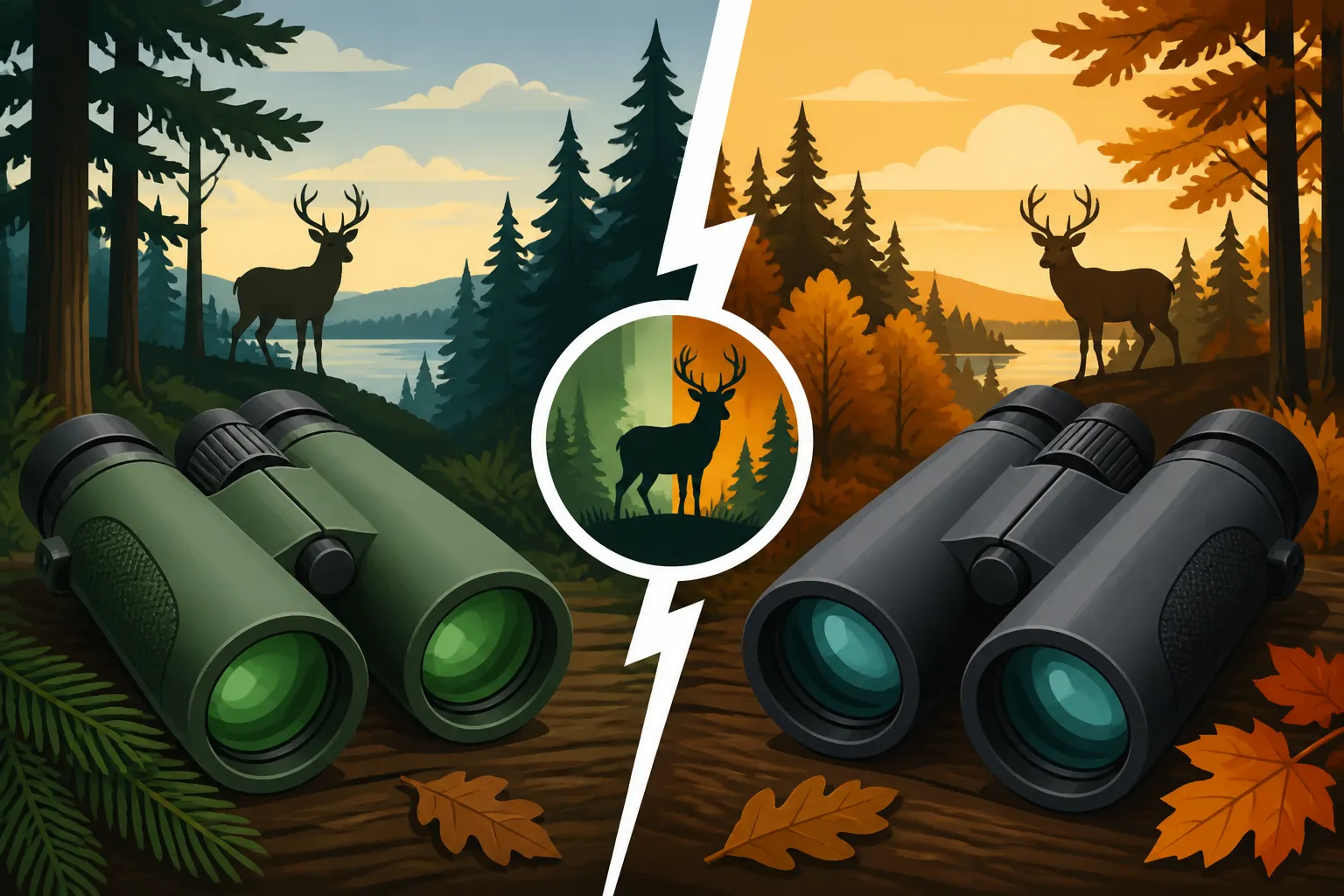
Oh, the age-old question that keeps many a Minnesota hunter staring at optics displays, isn't it? You're standing there, weighing two seemingly similar binoculars, 8×42 and 10×42, wondering which one will truly serve you best when you're deep in the hardwoods, peering across a vast CRP field, or trying to pick apart a thick cattail slough. It's a real head-scratcher because while the numbers are close, their practical application in our diverse Minnesota landscapes can feel worlds apart. This guide is all about helping you unpack that dilemma, offering a realistic look at how each magnification performs in the unique hunting scenarios we encounter right here in the Land of 10,000 Lakes.
Understanding the Numbers: Magnification and Objective Lens
Before we dive into the nitty-gritty of how these binoculars perform in the field, let's just quickly break down what those numbers actually mean. It’s easy to get lost in the jargon, but understanding the basics will empower you to make an informed decision for your next hunting adventure, whether you're chasing whitetails or searching for grouse.
The Basics of Binocular Specs
When you see "8×42" or "10×42," the first number refers to the magnification. So, an 8x binocular makes an object appear eight times closer than it would to your naked eye, while a 10x makes it appear ten times closer. Simple enough, right? The second number, the "42," refers to the diameter of the objective lens in millimeters. This is the big lens at the front of the binocular that gathers light. A larger objective lens generally means more light can enter the binocular, which is a huge factor, especially during those crucial low-light periods at dawn and dusk when deer are most active.
So, in both our 8×42 and 10×42 examples, you're looking at a 42mm objective lens, which is a very popular and versatile size for hunting binoculars. It strikes a great balance between light-gathering capability and overall size/weight, making them comfortable to carry all day, whether you're still-hunting a ridge or sitting in a treestand. This common objective lens size means that the primary difference you'll be evaluating is the magnification.
Light Gathering and Exit Pupil Explained
The objective lens size (42mm in this case) plays a crucial role in how bright and clear your image appears, especially as the light fades. But it’s not just the objective lens alone. The "exit pupil" is an important concept here. It’s the diameter of the light beam that leaves the eyepiece and enters your eye. You calculate it by dividing the objective lens diameter by the magnification.
For an 8×42 binocular, the exit pupil is 42 / 8 = 5.25mm.
For a 10×42 binocular, the exit pupil is 42 / 10 = 4.2mm.
Why does this matter? In bright daylight, your eye's pupil might constrict to around 2-3mm, so both binoculars provide more than enough light. However, in low light conditions – like the dim woods just before legal shooting light or right at dusk – your pupils can dilate to 5-7mm (and sometimes even more for younger eyes). An 8×42, with its larger 5.25mm exit pupil, delivers a wider column of light to your eye. This translates to a brighter, more comfortable image during those critical low-light periods, giving you a noticeable advantage when trying to pick out a deer's antler tine against a shadowed backdrop. This can be a real game-changer when Hunting the Rut in Late October or when you're patiently waiting for legal shooting hours to begin.
The Practical Edge of 8×42 in Minnesota's Cover
When you're slogging through the thick stuff, whether it's dense aspen regeneration, a maze of tamarack, or tight hardwoods, the 8×42 often feels like a natural extension of your eyes. It has distinct advantages that make it a favorite for many Minnesota hunters, especially those who spend a lot of time in close-quarter environments.
Wider Field of View for Close Quarters
One of the biggest benefits of an 8x magnification is its wider field of view (FOV). This means you see a broader area through your binoculars at any given distance. Think about it: if you're still-hunting through a dense cedar swamp or carefully walking the edge of a thick bedding area, deer often appear suddenly and close. A wider FOV allows you to scan more ground, pick up movement faster, and follow a moving animal more easily without having to pan your binoculars constantly.
Imagine you're deep in the Still-Hunting Minnesota Big Woods trying to pick apart the shadows. A wider field of view is invaluable for quickly identifying a deer's ear twitch or the flick of a tail before it vanishes. It’s less like looking through a straw and more like an enhanced view of the world around you. When the cover is tight, and engagement distances are typically under 100 yards, being able to see more of the immediate surroundings without constantly shifting your optics can mean the difference between seeing a deer and having it ghost you.
Steadier Image for Prolonged Glassing
Holding binoculars perfectly steady for extended periods is tough, even for the most seasoned hunter. That subtle shake from your hands or even a slight breeze is magnified through the lenses. With an 8x magnification, this hand shake is less pronounced than with a 10x. This translates to a steadier, more comfortable image, which is incredibly important when you're trying to resolve fine details.
Consider sitting in a Treestand Setups in Minnesota Hardwoods for hours, patiently watching a distant logging road or a rub line. With 8x binoculars, you'll experience less eye fatigue and a more stable image, allowing you to glass longer and more effectively. This stability is particularly helpful if you're trying to discern whether that brown blob through the branches is a stump or part of a deer, or if you're trying to count points on a buck moving through thick cover at first light. A more stable image means a clearer picture, and in hunting, clarity often leads to confidence in your shot decision.
Low-Light Performance in Early Morning and Late Evening
As discussed with the exit pupil, the 8×42 truly shines during those magical, yet challenging, low-light periods. Minnesota hunters know that deer are often most active right at the edges of daylight. Whether it’s the pre-dawn gloom as you settle into your stand or the fading light of dusk when a big buck might finally step out, the ability to gather every last photon of light is paramount.
An 8×42 provides a brighter image than a 10×42 in these conditions because it delivers a larger exit pupil to your eye, more closely matching your dilated pupils in the dim light. This brightness can help you see subtle details that might be lost with a higher magnification, like the distinct outline of an antler against dark timber or the slight movement of a deer feeding in a shadowed corner of a food plot. For those crucial first and last 30 minutes of legal shooting light, when a trophy animal might be on the move, that extra bit of brightness from an 8×42 can give you the precious seconds you need to make a responsible and ethical harvest.
When 10×42 Still Shines Brightest
While the 8×42 has its undeniable advantages in the dense timber, there are certainly scenarios in Minnesota where a 10×42 binocular truly earns its keep. For hunters who find themselves regularly surveying expansive landscapes or needing that extra boost to confirm details at longer ranges, the 10×42 can be the superior choice.
Reaching Out Across Open Spaces
Minnesota isn't just thick woods; we have plenty of open country too, especially in the southern and western farming regions, or even sprawling marsh edges in the north. If your hunting often involves glassing vast agricultural fields, open prairie, or the edges of large bodies of water, that extra magnification of a 10×42 becomes incredibly useful.
Imagine sitting on a bluff overlooking a Hunting a Standing Cornfield in Farm Country or scanning the endless cattail edges for a deer bedded down. The 10x magnification allows you to effectively shrink the distance, bringing those distant objects into clearer view. You can pick apart a field for longer, notice subtle changes in the landscape, and potentially spot deer much further away than you could with an 8x. This is where a scouting tool like GoHunt, with its detailed mapping layers, really comes into its own, helping you identify these open areas for strategic long-range glassing. It allows you to cover more ground visually without physically moving, conserving energy and minimizing disturbance.
Identifying Detail at a Distance
Sometimes, it's not just about seeing that there's a deer, but about seeing what kind of deer it is. Is it a doe, a spike, or that mature buck you've been chasing all season? When you're trying to distinguish antler points, assess body size, or determine if a legal antlerless deer is present at several hundred yards, the 10x magnification provides a significant advantage.
Think about a crisp November morning, and you spot a deer moving along a distant tree line or a Scrape Lines Along a Logging Trail that you've been watching. With 10x magnification, you'll be better equipped to pick out those crucial details that help you decide if it's an animal you want to pursue. This is especially true when hunting in permit areas where antler restrictions or antlerless quotas are in play, as in How the Antlerless Lottery Works. That extra two-power can turn a fuzzy "maybe" into a confident "yes" or "no," preventing unnecessary stalks and saving valuable hunting time.
The Trade-offs of Increased Magnification
While the added power of a 10×42 is great for distance, it comes with some trade-offs. The first is that narrower field of view we discussed. In thick cover, this can make it harder to find and track animals. If a buck breaks cover quickly and runs, it’s easier to lose him in a 10x view than an 8x.
Second, the increased magnification also amplifies hand shake. Even the steadiest hands will find a 10x binocular harder to hold perfectly still than an 8x. This can lead to a less stable, and therefore less clear, image, negating some of the benefit of the higher magnification. To counteract this, many hunters who opt for 10x binoculars often carry a small tripod or monopod, especially if they plan on prolonged glassing sessions from a fixed position, which is excellent for Optics for Minnesota Big Woods and Farmland scouting.
| Feature | 8×42 Binocular | 10×42 Binocular | Ideal Minnesota Scenario |
|---|---|---|---|
| Magnification | 8x (Objects appear 8x closer) | 10x (Objects appear 10x closer) | |
| Objective Lens | 42mm | 42mm | Both offer good light gathering for their size. |
| Exit Pupil | 5.25mm | 4.2mm | 8×42 is brighter in low light (better matches dilated eye pupil). |
| Field of View | Wider | Narrower | 8×42 better for dense woods, quick target acquisition. 10×42 for open fields. |
| Image Stability | More stable (less hand shake amplified) | Less stable (more hand shake amplified) | 8×42 better for handheld, prolonged glassing. 10×42 benefits from tripod. |
| Detail Resolution | Good at close to mid-range | Better at long-range (150+ yards) | 8×42 for identifying movement in timber. 10×42 for antler scoring across fields. |
| Low Light | Superior brightness and clarity | Good, but slightly dimmer than 8×42 | 8×42 for crucial dawn/dusk periods in the woods. |
| Best Use Case | Thick timber, brush, still-hunting, eastern MN, northern MN, archery | Open fields, prairie, long-range scouting, western MN, southern MN, rifle hunting |
Choosing Your Companion for Minnesota Hunts
Ultimately, the choice between an 8×42 and a 10×42 comes down to understanding your primary hunting style and the typical terrain you’ll be navigating in Minnesota. There’s no single "right" answer for everyone; it’s about finding the best fit for you.
Your Hunting Style Dictates Your Gear
Consider how you typically hunt. Are you primarily a still-hunter, meticulously picking apart dense cover in the big woods of northern Minnesota, or a bowhunter waiting in a stand overlooking a thick bedding area? If so, the wider field of view and superior low-light performance of an 8×42 will likely serve you better. You're less concerned with identifying tiny details at 300 yards and more focused on quickly acquiring a deer that appears silently at 50 yards. For this style, an 8×42 will be less fatiguing over a long day of walking and scanning, making it easier to keep your eyes sharp for Finding Sign in Minnesota Big Woods.
On the other hand, if you spend most of your time in the agricultural landscapes of southern Minnesota, glassing vast cornfields, bean fields, or large sections of CRP, then the 10×42 might be your preferred optic. That extra magnification will help you spot deer much further out, allowing you to plan your approach or confirm trophy potential from a distance. Similarly, if you plan to hunt the late firearm season from a stationary position where long-range visibility is key, a 10×42 could give you the edge. No matter your preference, understanding the specific features of Binocular Power for Big Woods Hunting can help.
Ergonomics, Weight, and Durability
Beyond the optical performance, don't overlook the practical aspects of carrying and using your binoculars all day. A quality pair of 8x42s or 10x42s from a reputable brand will feel solid in your hands, have smooth focus wheels, and be built to withstand the rigors of a Minnesota hunting season – cold, damp, snow, and occasional bumps.
Weight can be a factor, especially if you're covering a lot of ground. While the difference between an 8×42 and a 10×42 of the same model might be minimal, every ounce counts on a long hike. Consider a comfortable binocular harness to distribute the weight and keep your optics readily accessible yet secure against your chest. Think about how well they fit your hands, how easy they are to adjust with gloves on, and their general ruggedness. A dependable pair of binoculars is an investment that will last for many seasons, so choosing one that feels good to use is just as important as the numbers.
Don't Forget to Test Them Out
The best advice I can give any hunter trying to decide between these two fantastic options is to try them out in real-world conditions. Visit a sporting goods store, step outside, and look at objects at varying distances and in different lighting conditions. Better yet, if you have a friend with one or the other, ask to borrow them for a scouting trip.
Pay attention to how steady you can hold each, how quickly you can acquire a target, and how comfortable they feel to your eyes over time. What looks good in a brightly lit store might feel different in the dim light of a Minnesota forest. This hands-on experience is invaluable for making a truly personal choice. You'll quickly discover what feels natural and what allows you to pick out the subtle details that matter most for your hunting success. And remember, a good pair of binoculars, whether 8x or 10x, is a vital piece of gear that complements everything from your Rifle Scopes for Low-Light Timber to your Scouting Minnesota Public Land Before Season efforts.
Disclaimer
This article is for general informational purposes only and does not constitute professional advice. Laws, prices and regulations vary by location and change over time. Consult a qualified professional for guidance on your specific situation.