Deer Sleds for Snow Country
There’s a moment every Minnesota deer hunter knows well: the shot connects, the deer drops, and then you’re faced with the daunting task of getting your hard-earned prize back to the truck. While a rush of adrenaline might get you to the deer, the sight of a heavy buck lying in a foot of fresh, wet snow can quickly replace elation with dread. This guide is all about turning that dread into relief by making game retrieval significantly easier and more efficient in Minnesota's snowy conditions using a deer sled.
Why a Deer Sled is a Game Changer in Minnesota Snow
Let's be honest, few things are as physically demanding and outright miserable as dragging a dead deer through deep snow without the right tools. We've all been there, covered in sweat, lungs burning, and questioning every life choice that led us to this moment. But in Minnesota, where snow can arrive early and stick around through late-season hunts, a deer sled isn't just a luxury; it's often a necessity for a successful and less painful recovery.
The Reality of Winter Deer Recovery
Imagine this scenario: you're out during the Muzzleloader Tactics in December Cold season, the snow has finally arrived, blanketing the woods in a pristine, but ultimately challenging, white layer. You've connected with a beautiful buck just before legal shooting hours end, and it's piled up about a quarter-mile back in a thick stand of aspens. You hike back to it, filled with pride, only to realize the snow is now knee-deep in places, soft and heavy. Trying to hoist a 150-pound deer by its antlers or a rope, sinking with every step, quickly turns your triumph into a brutal test of endurance. Your boots fill with snow, your hands freeze, and every step feels like wading through concrete. This is the common, exhausting reality for many Minnesota hunters, especially when pursuing those elusive late-season deer.
Even if you're hunting during the regular firearm season and an unexpected snowfall hits, the struggle is real. You might find yourself on uneven terrain, navigating through tangled brush and over downed logs, all while trying to maintain traction in the slick snow. Without a sled, you're looking at a multi-hour ordeal, potentially risking injury or even spoiling meat if you can't get it out efficiently. It's not just about the distance; it's about the sheer resistance the snow creates against the deer's hide, acting like a giant brake with every pull.
How Sleds Reduce Effort and Prevent Injury
This is where the deer sled truly shines, transforming a Herculean task into a manageable one. The fundamental principle is simple: a sled significantly reduces friction. Instead of dragging a rough hide directly over the snow, which creates immense resistance, you're gliding a smooth, durable plastic surface. This vastly decreases the effort required to move the same weight. It’s the difference between pushing a box across rough pavement and pushing it across ice; the latter is always easier.
Beyond just making the pull easier, a sled acts as a protective barrier. It elevates the deer slightly off the snow, preventing it from getting caked in snow, mud, and debris, which is crucial for maintaining meat quality, especially after you've completed Field Dressing a Deer in Cold Weather. More importantly, it dramatically reduces the strain on your back, shoulders, and knees. Trying to lift and drag a heavy deer can lead to painful muscle strains, pulled ligaments, or worse. With a sled, you're using more of your core and legs for pulling, distributing the load more effectively and minimizing the risk of those common post-hunt aches and pains. I’ve known too many hunting buddies who’ve thrown out a back trying to haul a big whitetail without proper gear, and that’s a mistake easily avoided.
Types of Deer Sleds and What to Look For
Choosing the right deer sled can feel a bit overwhelming with the various options available, but understanding the key features will help you pick one that stands up to Minnesota's tough winter conditions. It's an investment that pays dividends in comfort and efficiency over many hunting seasons.
Material and Construction Matters
When you’re pulling a heavy animal over frozen ground, through brush, and across who-knows-what, the material and construction of your sled are paramount. Most quality deer sleds are made from high-density polyethylene (HDPE). This plastic is renowned for its durability, flexibility in extreme cold, and slick surface. Cheaper plastics can become brittle in sub-zero temperatures, leading to cracks and breakage when you hit a buried log or rock. You definitely don’t want your sled failing halfway through a long drag out of a remote spot when you’re Hunting Deer in Deep Northern Minnesota Snow. Look for a material that feels robust and has some flex to it, rather than being thin and rigid.
Beyond the material, examine the thickness and overall rigidity of the sled. A flimsy sled will fold and buckle under the weight of a heavy deer, increasing drag and making it harder to steer. Good sleds maintain their shape, even with a large buck loaded inside. Also, pay close attention to the tow points—where your rope or harness attaches. These should be reinforced, often with metal grommets or thick, molded plastic. Weak tow points are a common failure point, and you don’t want your rope ripping through the sled when you’re trying to Recovering a Deer From a Frozen Slough. Some sleds, like those from reliable brands, offer excellent construction that ensures longevity. Even GoHunt offers tips on selecting durable outdoor gear for tough conditions.
Size, Shape, and Features for Minnesota Hunters
The ideal size and shape of your deer sled will depend largely on the kind of deer you're pursuing and the terrain you'll be covering. If you're consistently after those hefty northern big woods bucks, you'll want a longer and wider sled to accommodate their larger frames. Conversely, if you primarily hunt smaller farmland deer or plan to use the sled for hauling gear, a more compact option might suffice. A good rule of thumb is to measure the average length of a mature deer in your hunting area and add a foot or two for good measure, ensuring the head and legs can be fully contained.
Many sleds feature a tapered design at the front, which helps them track straighter and glide more easily over obstacles. Raised edges or sides are another excellent feature, as they help keep the deer securely in place, preventing it from sliding off the sled when navigating uneven ground or hills. This also helps keep the deer cleaner, minimizing contact with snow, dirt, and mud. Some sleds come with integrated ropes or handles, while others simply provide tow points, leaving the choice of tow system up to you. For serious winter dragging, a separate, comfortable tow harness with shoulder straps or a waist belt is a game-changer, allowing you to use your body weight more efficiently and keep your hands free. The sled itself should be the workhorse, but a good tow system is the engine that makes it all worthwhile, especially on those long hauls required when Hunting Boundary Waters Canoe Country Deer.
Practical Tips for Using Your Deer Sled in Minnesota
Having a deer sled is one thing; using it effectively to maximize its benefits is another. A few simple practices can make a world of difference in how easily and safely you can retrieve your deer, ensuring you get your quarry out of the woods with minimal hassle.
Loading and Securing Your Harvest
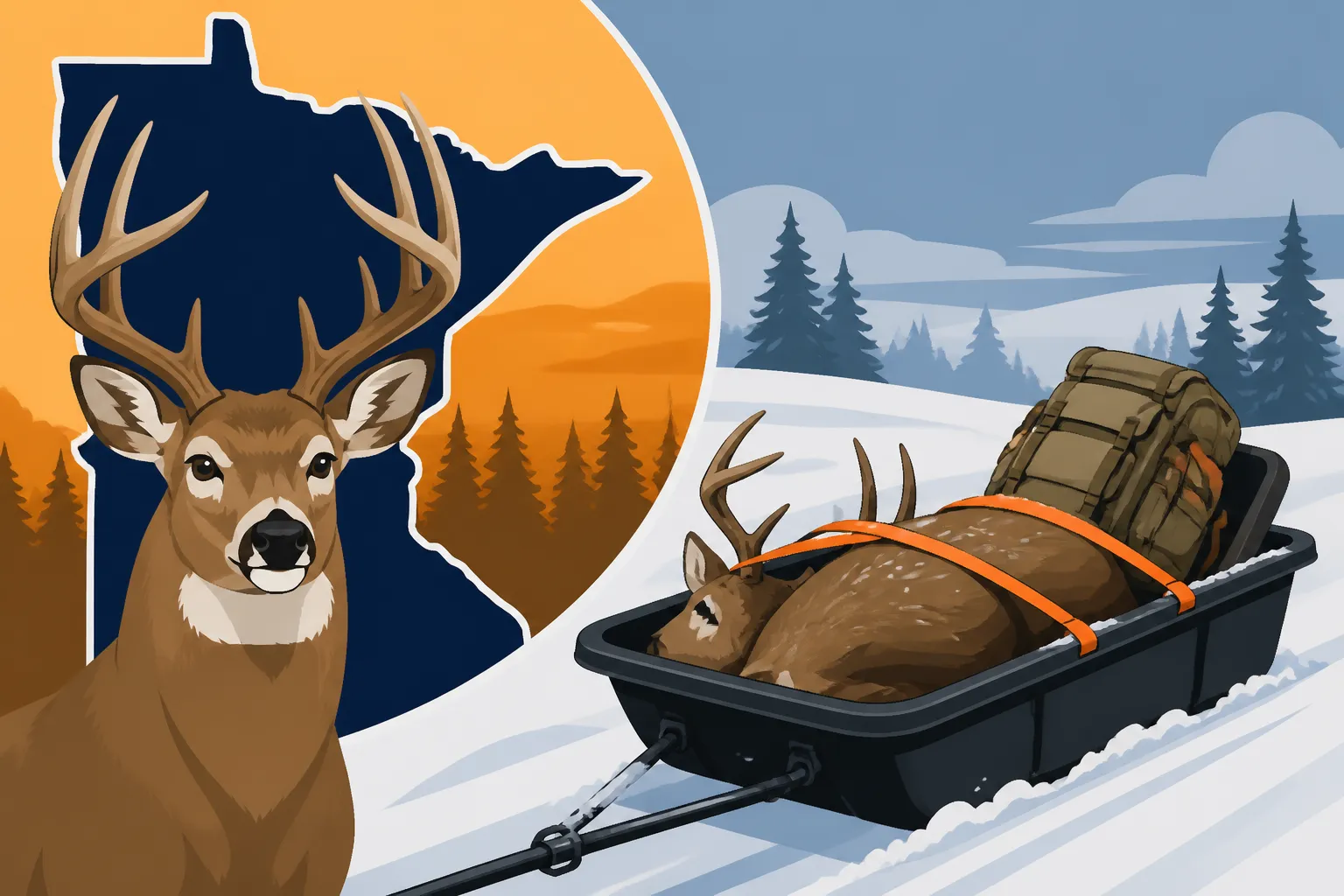
Proper loading is the first step to an effortless drag. Position the deer head-first into the sled, or at least with the heaviest part of the deer centered. This helps with balance and minimizes the chance of the deer wanting to flip out of the sled during the pull. If you've field dressed the animal, orient it so the opening is facing up, preventing snow and debris from entering the cavity. For larger bucks, especially those with impressive racks, try to position the antlers to ride high or use some strategic padding (like a jacket) to prevent them from digging into the snow and acting as a brake.
Once positioned, securing the deer is crucial. While many sleds have raised edges, a couple of heavy-duty straps or an extra rope can make all the difference, especially when navigating rough terrain. Run the straps over the deer's body and through the molded tie-down points on the sled. This prevents the deer from shifting, which can cause the sled to become unbalanced or flip, adding unnecessary frustration to an already arduous task. Don't be afraid to cinch it down tightly; a secure deer is a happy deer (and a happy hunter!). This attention to detail can save you time and effort, letting you focus on the trail out.
Towing Techniques and Navigation in Snowy Terrain
The way you pull your sled can dramatically impact your energy levels and overall safety. Instead of relying solely on your arms and back, engage your legs and core. A good tow harness, preferably one that distributes the weight across your shoulders or waist, is invaluable for this. Lean into the pull, taking short, controlled steps. When you’re Cold-Weather Sitting Strategy in Minnesota for hours, you want to conserve energy for the walk out, and proper towing is key. If you're hunting with a partner, taking turns pulling can be a huge help, or one person can pull from the front while the other pushes or guides from the rear, especially when going uphill or around tight corners. This is particularly effective during Deer Drives With Three or Four Hunters when you might have multiple animals to move.
Navigating obstacles like fallen logs, thick brush, or steep ditches requires a bit of finesse. Instead of trying to drag the sled straight over a large log, try to angle it, using the log as a pivot point. If the snow is uneven or crusty, be prepared for the sled to want to wander. Keep a steady pace and be mindful of your footing. For particularly challenging sections, such as a steep bank or crossing a frozen creek that may have thin spots, consider temporarily unloading some gear or even the deer itself, moving it piece by piece, then reloading. Patience and a willingness to adapt your technique to the specific terrain are your best allies in getting your deer back to the truck.
Maintenance and Storage of Your Sled
Like any piece of valuable hunting gear, a deer sled benefits from a little TLC. After each use, especially after a successful retrieval, take the time to clean your sled. Rinse off any blood, dirt, or debris. A stiff brush and some warm, soapy water will do the trick. Not only does this keep your sled hygienic, but it also prevents any lingering scents from attracting curious critters to your storage area. Check the sled for any signs of damage – cracks, excessive wear on the bottom, or frayed tow points. Minor cracks can sometimes be repaired with specialized plastic repair kits, but significant damage might mean it’s time for a replacement.
Proper storage is also important for prolonging the life of your sled. Avoid leaving it exposed to direct sunlight for extended periods, as UV rays can degrade plastic over time, making it brittle. Store it flat or on its side in a garage or shed where it’s protected from the elements. If you lean it against a wall, ensure it's not pressing against anything that could cause it to warp under its own weight or heat, especially if your garage gets warm. A well-maintained sled will serve you faithfully for many seasons, becoming a cherished part of your Minnesota Deer Camp Traditions.
Beyond Deer: Other Uses for Your Snow Sled
While a deer sled is, as the name suggests, primarily designed for deer recovery, its utility in Minnesota's snowy landscape extends far beyond just hauling out your trophy buck. Think of it as a versatile winter workhorse, ready to assist with a multitude of tasks that make your time in the outdoors more enjoyable and less strenuous.
Hauling Gear to and From the Stand
One of the most overlooked benefits of a deer sled is its capacity to haul other hunting gear. Those long treks into remote stand locations, especially during the colder months when you're packing extra layers and maybe a heater for a comfortable Cold-Weather Sitting Strategy in Minnesota, can be exhausting even without a deer. Instead of making multiple trips or straining under a heavy pack, throw your climbing sticks, portable treestand, ground blind, backpack, thermos, and even a bag of decoy shells into your sled.
This is particularly useful when setting up a new spot deep in the woods or packing out camp after a successful hunt. Imagine effortlessly gliding your heavy gear across snow-covered trails that would otherwise be a brutal slog. It saves your energy for the hunt itself and allows you to bring more comfort items, like a portable chair or a larger heater, ensuring you can stay out longer and remain focused. This also makes the process of getting in and out of those hard-to-reach areas, which often see less hunting pressure, significantly more appealing.
Retrieving Other Game and Supplies
The versatility of a deer sled doesn't stop with whitetails. If you're lucky enough to draw a bear tag and find yourself with an early snowfall during bear season, that sled can be a lifesaver for hauling a heavy black bear. For those who enjoy winter pursuits, it's perfect for transporting traps, snares, or the furbearers you've harvested back to your vehicle. Even if you're not hunting, a sled is incredibly useful around a winter cabin or property.
Need to bring a heavy load of firewood from the woodpile to the cabin? Load it in the sled. Transporting fishing gear, augers, and a portable ice house out onto a frozen lake? The sled is your friend. It's also fantastic for packing out camping supplies during winter expeditions or even just hauling bags of birdseed to your feeders. Essentially, any heavy, bulky item you need to move across snowy or slick terrain becomes a much easier task with a durable sled. It's a simple tool that, once you own it, you'll wonder how you ever managed without it, especially during a typical Minnesota winter.
| Feature | Basic Deer Sled (e.g., small utility sled) | Mid-Range Deer Sled (e.g., dedicated game sled) | Premium Deer Sled (e.g., specialized heavy-duty) |
|---|---|---|---|
| Material | Standard polyethylene, thinner | High-density polyethylene (HDPE), good thickness | Heavy-duty HDPE, extremely thick and flexible |
| Durability in Cold | Moderate, can become brittle | Good, designed for cold weather | Excellent, resists cracking in extreme cold |
| Size/Capacity | Smaller, fits average deer, limited gear | Medium to large, accommodates most deer & some gear | Large, extra-long, fits large bucks & substantial gear |
| Sides/Edges | Low or none, deer may slide out | Raised sides, helps secure deer | High, reinforced sides for maximum security |
| Tow Points | Simple rope holes, sometimes unreinforced | Molded, often reinforced grommets | Heavy-duty, integrated metal or reinforced loops |
| Bottom Design | Flat, can catch on obstacles | Smooth, slightly tapered front | Ultra-smooth, aggressive taper for easy gliding |
| Tow System | Rope included (hand-pull) | Often includes a basic hand rope | Often sold separately for custom harness options |
| Price Point | Lower | Moderate | Higher |
| Best For | Occasional use, smaller deer, short distances | Regular use, various deer sizes, typical Minnesota conditions | Frequent use, large deer, remote, rugged terrain, heavy loads |
Disclaimer
This article is for general informational purposes only and does not constitute professional advice. Laws, prices and regulations vary by location and change over time. Consult a qualified professional for guidance on your specific situation.