Best Rifle Caliber for Minnesota Deer
Choosing the right rifle caliber for deer hunting in Minnesota can feel like stepping into a heated debate at deer camp. With our diverse landscapes—from the thick timber and swamps of the north to the open fields of farm country and the bluff lands of the southeast—what works for one hunter might feel completely out of place for another. This guide aims to cut through the noise, helping you understand the factors that truly matter when selecting a caliber perfectly suited for pursuing whitetails across our beautiful state.
Understanding Minnesota's Diverse Deer Hunting Environments
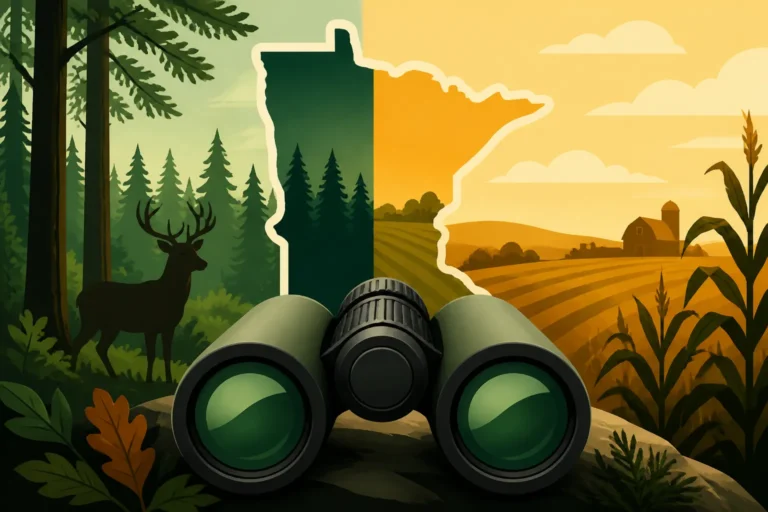
Minnesota isn't a monolithic hunting ground; it's a tapestry of varied terrain, and what works best in one region might be overkill or underpowered in another. A caliber that's perfect for a 200-yard shot across a soybean field might be a terrible choice for a 30-yard snap shot in dense popple.
The Northern Big Woods and Forest Zone
Up north, in areas like the Superior National Forest or the expansive public lands of Aitkin and Itasca counties, you're often dealing with extremely thick cover. Think dense stands of aspen, sprawling cattail swamps, and seemingly endless spruce and tamarack bogs. Here, shots are typically close, often under 100 yards, and frequently much closer – sometimes just a stone's throw away. Visibility can be severely limited, and a deer can disappear into the brush in seconds. The biggest challenge isn't usually hitting a distant target, but rather getting a clean shot through small lanes in the timber or quickly acquiring a moving deer. Penetration through light brush can be a factor, though generally, you should always aim for a clear shot. Recoil isn't as much of a concern for accuracy since distances are short, but a quick follow-up shot might be needed if a deer is moving. Understanding the nuances of hunting Boundary Waters Canoe Country deer and grouse or Where Big Woods Bucks Bed in Minnesota can further inform your caliber decision for these tight quarters.
Central Farmland and Transition Zones
As you move south, especially through central Minnesota and into the agricultural belt, the landscape changes dramatically. Here, you'll encounter a mix of woodlots, shelterbelts, standing cornfields, and wide-open prairies. Deer often use these diverse habitats, moving between thick cover in small woodlots and feeding in agricultural fields. Shot distances can vary wildly. You might have a 25-yard shot on a deer slipping through a willow thicket, or a 250-yard shot on a buck crossing a cut cornfield at dawn. The ability to handle both close-range punch and extended-range accuracy becomes more important. Wind drift can also be a factor in open fields, which favors cartridges with higher ballistic coefficients. Having the right tools for Hunting a Standing Cornfield in Farm Country or knowing how to use Layout Blind Hunting Minnesota Farm Fields can be crucial in these areas.
Southeast Minnesota Bluff Country
The dramatic topography of Southeast Minnesota's bluff country, with its steep hills, deep valleys, and winding river bottoms, presents yet another unique challenge. Deer here often traverse the slopes, bedding on benches and feeding in the valley fields. Shots can range from very close in timbered draws to surprisingly long across open coulees. The angles can be tricky, often requiring shots either uphill or downhill. Bullet trajectory becomes a significant consideration, as does the ability to confidently place a shot at varying distances without excessive holdover or holdunder. Understanding how to Reading a Ridge for Northern Minnesota Deer (even though it's technically northern, the principles apply to bluff country ridges) and Hunting Southeast Minnesota Bluff Country will definitely help you navigate these unique environments.
Key Factors for Choosing Your Deer Rifle Caliber
When standing in front of a gun counter, the sheer number of caliber options can be overwhelming. To simplify, let's break down the most important considerations for Minnesota deer hunting.
Range and Bullet Drop
How far do you realistically expect to shoot? This is probably the single most critical question. If your hunting is strictly limited to dense woods where 75 yards is a long shot, a fast-shooting, flat-trajectory magnum might be excessive and loud. Conversely, if you hunt wide-open farm fields where 200-300 yard shots are possible, a slower, heavy bullet with significant drop might require more compensation than you're comfortable with. Modern optics and rangefinders have made long shots more ethical, but bullet drop still needs to be managed. For the average Minnesota hunter, setting your rifle to be zeroed at 100 or 150 yards is usually a good compromise, providing a relatively flat trajectory for most likely shot opportunities. Many hunters find success by considering Sighting In a Rifle for Minnesota Woods Ranges.
Knockdown Power and Ethical Killing
"Knockdown power" is a term often debated, but it boils down to delivering enough energy to ethically and quickly harvest a deer. Minnesota deer aren't tanks, but they're resilient animals. You need a bullet that can penetrate vital organs and create a devastating wound channel. This is less about brute force and more about bullet construction and placement. A well-placed shot from a .243 Winchester is far more effective than a poorly placed shot from a .300 Win Mag. However, having sufficient energy reserves at longer ranges or for less-than-ideal angles provides an important margin of error. Most common deer calibers, when using appropriate bullet weights and designs, deliver more than enough energy. For ethical considerations, you'll also want to consider what might be the Minimum Rifle Caliber for Minnesota Deer.
Recoil and Shooter Comfort
Let's be honest: flinching from recoil leads to poor shooting. A powerful magnum caliber might have impressive ballistics on paper, but if you can't shoot it accurately and comfortably, it's a liability. Recoil sensitivity varies greatly among individuals. If you find yourself anticipating the shot and developing a flinch, you'd be far better off with a lighter recoiling caliber that you can shoot with confidence and precision. Modern rifle designs, muzzle brakes, and recoil pads can mitigate recoil, but sometimes a lighter caliber is simply the better choice for consistent accuracy. Don't let ego dictate your caliber choice; a deer won't know the difference if it's hit precisely.
Ammunition Availability and Cost
While most popular deer calibers are readily available, some more obscure or newer cartridges can be harder to find, especially during peak hunting season. It's always a good idea to ensure your chosen caliber has a good supply of hunting-specific ammunition at your local sporting goods store or preferred online retailer. Practice is essential for ethical hunting, and if you can't afford to shoot your rifle frequently due to expensive or scarce ammunition, your proficiency will suffer. Consider the long-term cost and availability. Brands like Hornady, Federal, and Remington generally produce reliable hunting ammunition across a wide range of popular calibers. It can be a real headache to find yourself scrambling for Ammunition Availability Before Opening Day when the season is just around the corner.
Popular and Recommended Calibers for Minnesota Deer
Now that we've covered the factors, let's dive into some of the specific calibers that are well-suited for Minnesota's varied deer hunting conditions.
.243 Winchester
The .243 Winchester is a fantastic choice for many Minnesota hunters, especially those who are recoil-sensitive or primarily hunt smaller deer in open-to-moderate terrain. It's known for its flat trajectory and excellent accuracy, making it a joy to shoot.
- Pros: Very low recoil, excellent accuracy, flat trajectory out to 200-250 yards, widely available and affordable ammunition, suitable for youth and smaller-framed shooters.
- Cons: Some hunters question its energy for larger bucks or longer shots, especially if bullet placement isn't perfect or if heavier bone is encountered. While it can certainly harvest deer ethically, bullet choice (heavier, bonded bullets) becomes more critical than with larger calibers.
- Minnesota Scenario: Ideal for chasing deer through open farm fields in southwestern Minnesota or along field edges where shots might stretch, or for a younger hunter learning the ropes in the northern hardwoods where shots are close. Many hunters debate Is a .243 Enough for Minnesota Whitetails?. My take is that with modern, quality hunting bullets and good shot placement, it absolutely is.
6.5 Creedmoor
The 6.5 Creedmoor has taken the shooting world by storm in recent years, and for good reason. It offers an exceptional balance of low recoil, flat trajectory, and impressive terminal performance.
- Pros: Very accurate, excellent ballistic efficiency (meaning it carries energy well and resists wind), moderate recoil, and a good selection of high-performance hunting bullets. It's more than capable for shots out to 300 yards and beyond with the right shooter.
- Cons: Ammunition can sometimes be a bit pricier than more common cartridges like the .308 or .30-06, and selection might not be as vast in every local store.
- Minnesota Scenario: A superb all-around choice for Minnesota. It excels in open farmland where longer shots are possible, but its mild recoil also makes it practical for quick follow-up shots in denser cover. If you're looking for 6.5 Creedmoor for Minnesota Big Woods, it will certainly get the job done, but its advantages shine more in slightly more open country.
.30-30 Winchester
Ah, the classic .30-30. This lever-action favorite has probably taken more Minnesota deer than any other cartridge. It’s a quintessential brush gun, beloved for its short-range effectiveness.
- Pros: Extremely effective at close range (under 150 yards), moderate recoil, typically found in light, handy lever-action rifles which are great for still-hunting thick cover.
- Cons: Significant bullet drop and limited effective range beyond 150 yards, which makes it less suitable for open field hunting. Not as accurate at longer ranges compared to modern cartridges.
- Minnesota Scenario: If you spend your deer season still-hunting or driving deer in the dense woods of northern Minnesota, the 30-30 in Minnesota Popple Cover is a classic for a reason. Its compact rifle platforms are perfect for navigating heavy brush and getting on target quickly for close shots.
.308 Winchester
The .308 Winchester is arguably one of the most versatile and popular deer calibers worldwide, and Minnesota is no exception. It offers an excellent blend of power, range, and manageable recoil.
- Pros: Excellent balance of power and recoil, effective out to 300+ yards, superb accuracy, widely available and affordable ammunition in a huge variety of bullet types, fits into short-action rifles making them more compact.
- Cons: Recoil is noticeable but generally manageable for most hunters; some might prefer the flatter trajectory of lighter calibers at extreme ranges.
- Minnesota Scenario: A true workhorse for any Minnesota deer hunting situation. Whether you're in the big woods or across a cut cornfield, the .308 can handle it. It's also an excellent choice if you're comparing .308 Versus .270 for Whitetails, often winning out on recoil and short-action rifle design.
.270 Winchester
The .270 Winchester is another classic, renowned for its flat trajectory and effectiveness on medium to large game. It's a favorite among hunters who appreciate a potent, long-range cartridge.
- Pros: Very flat shooting, excellent energy retention at range, proven track record on deer and larger game, good selection of hunting ammunition.
- Cons: Recoil is a bit more stout than a .308 for some, though still manageable for most. It typically comes in long-action rifles, which can be slightly longer and heavier.
- Minnesota Scenario: Perfect for hunters who anticipate longer shots in open country or across wide river bottoms in bluff country. Its flat trajectory means less holdover guesswork at extended distances. It’s also a solid choice for Rifle Calibers for Minnesota Bear if you find yourself with a bear tag.
.30-06 Springfield
The venerable .30-06 Springfield has been serving hunters faithfully for over a century. It's a powerful, versatile cartridge capable of taking any game animal in North America.
- Pros: Tremendous power and energy for deer and larger game, effective at long range, wide variety of bullet weights available for different applications, very common and accessible ammunition.
- Cons: Recoil is significant, potentially leading to a flinch for sensitive shooters, especially in lighter rifles. It's more than most people need for deer, though it certainly gets the job done.
- Minnesota Scenario: While perhaps more power than strictly necessary for Minnesota whitetails, its versatility makes it a good choice if you only own one rifle and occasionally hunt larger game like elk out west, or if you simply prefer a heavy-hitting cartridge. It’s well-suited for any deer hunting environment, from thick woods to open fields, but its power might be overkill for the closest timber shots.
Making Your Final Decision: Matching Caliber to Your Hunting Style
With so many excellent choices, how do you narrow it down? It comes down to honest self-assessment and understanding your actual hunting conditions.
Assess Your Typical Hunting Distances
Take a good, hard look at where you hunt most often. Are you almost exclusively sitting in a stand overlooking a small food plot at 70 yards? Or are you prone to spot-and-stalk across vast private farmlands where 250-yard shots are the norm? If you're honest about your typical range, you can eliminate many calibers that are either too much or not enough. A great way to plan and visualize shot distances is by utilizing mapping tools. Services like GoHunt provide detailed satellite imagery and property line information, allowing you to estimate distances and shot opportunities from potential stand sites or stalking routes. This can be invaluable for truly understanding your practical shooting range in different parts of Minnesota.
Consider Your Comfort with Recoil
This is non-negotiable. If a rifle kicks you hard enough to make you dread practice or anticipate the shot, you will shoot poorly. Don't fall into the trap of thinking "more power" always equals better. A well-placed shot from a .243 is infinitely more ethical and effective than a flinched shot from a .300 Win Mag that wounds an animal. If you're unsure, try shooting a few different calibers at a range, perhaps by borrowing from a friend or trying out a rental.
Factor in Rifle Weight and Portability
The caliber often dictates the rifle it comes in. Lighter calibers can be found in lighter, handier rifles, which are a blessing if you're Still-Hunting Minnesota Big Woods or packing in for miles to reach a remote stand. Heavier, magnum calibers often come in heavier rifles designed to soak up recoil, which might be less enjoyable to carry all day. Think about your physical capabilities and how much walking you'll actually be doing. A lightweight rifle in a moderate caliber can be a joy to carry, making you a more mobile and effective hunter.
Don't Forget Straight-Wall Cartridges for Special Zones
While Minnesota has largely moved away from shotgun-only zones, there are still a handful of counties where specific rules might apply, or where some hunters simply prefer straight-wall cartridges for tradition or local ordinance. While modern rifles chambered in popular straight-wall cartridges like the .450 Bushmaster or .350 Legend offer surprising accuracy and power for the ranges they're designed for, they have a much more pronounced bullet drop compared to necked-down rifle cartridges. If you happen to hunt in one of the Which Thirteen Counties Kept Shotgun-Only Rules you’ll want to be especially aware of your specific county's regulations. Even if you don't hunt these specific areas, it's worth knowing that Why Straight-Wall Rifles Are Now Legal Statewide changed the game for many hunters in former shotgun-only areas.
To help you visualize some popular options, here’s a quick comparison:
| Caliber | Typical Bullet Weight (gr) | Effective Deer Range (yards) | Recoil (Relative) | Best For Minnesota Scenarios |
|---|---|---|---|---|
| .243 Winchester | 80-100 | 200-250 | Very Low | Youth, recoil-sensitive, open field, smaller deer, varmints |
| 6.5 Creedmoor | 120-147 | 300+ | Moderate | All-around, open fields, accurate long-range, moderate recoil |
| .30-30 Winchester | 150-170 | 150 | Moderate | Dense timber, brush, still-hunting, lever-action preference |
| .308 Winchester | 150-180 | 300+ | Moderate | All-around, versatile, compact rifles, widely available |
| .270 Winchester | 130-150 | 300+ | Moderate-High | Open country, longer shots, flatter trajectory |
| .30-06 Springfield | 150-180 | 300+ | High | All-around, large game, single rifle for all North America |
| .350 Legend | 150-280 | 200 | Low-Moderate | Straight-wall zones, close-medium range, low recoil |
| .450 Bushmaster | 250-300 | 200 | High | Straight-wall zones, heavy hitting at close range |
Ultimately, the "best" rifle caliber for Minnesota deer isn't a single answer etched in stone. It's the one you can shoot accurately and confidently, that matches your typical hunting environment, and that you enjoy practicing with. Modern bullets have vastly improved the performance of even traditionally "smaller" calibers. Don't overthink it to the point of paralysis. Pick a proven deer caliber, practice diligently, and focus on ethical shot placement. Your success will come from skill, not just raw power.
Disclaimer
This article is for general informational purposes only and does not constitute professional advice. Laws, prices and regulations vary by location and change over time. Consult a qualified professional for guidance on your specific situation.