Wool Versus Synthetics in Wet Snow
There's nothing quite like a crisp Minnesota morning in the woods, but those magical moments can quickly turn miserable when a beautiful snowfall becomes a relentless, soaking sleet. We've all been there: what started as fluffy flakes soon transforms into a heavy, wet mess that seems to penetrate every layer, leaving you shivering and utterly defeated. The age-old debate between wool and synthetic clothing becomes a crucial, almost existential, question when you're facing down one of Minnesota's infamous wet snow events. This guide is going to dive deep into the real-world performance of both materials, helping you understand which one will keep you warmest, driest, and most comfortable when the weather turns truly nasty.
Understanding Minnesota's Wet Snow Conditions
Minnesota's weather is notoriously fickle, capable of throwing a blizzard, a thaw, and freezing rain all in the same week. This unpredictability means that preparing for wet snow isn't just about packing an extra layer; it's about understanding how your clothing will react when it gets saturated, and how that impacts your core temperature and overall comfort in the field. Ignoring this crucial detail can quickly turn a promising hunting trip into a survival exercise in misery.
The Unique Challenge of Early Season Snow
Imagine it's late October or early November. You've been scouting for Hunting the Minnesota Rut in Early November, maybe you're in the 100 series zone, and the forecast called for a light dusting. Instead, you wake up to a heavy, wet snow clinging to every branch, often accompanied by temperatures hovering just above or right at freezing. This isn't the dry, fluffy stuff you can shake off. This is dense, moisture-laden snow that melts on contact with anything even slightly warm, including your jacket or pants.
When you're hiking through timber, brushing against snow-covered branches, or sitting still as the flakes accumulate, this early season wet snow is insidious. It soaks through quickly, particularly if your outer layers aren't truly waterproof. The real frustration comes when you've dressed for the cold, but the wet is the true enemy. Your body heat accelerates the melting, which in turn saturates your clothing faster. This isn't just uncomfortable; it rapidly diminishes the insulating properties of many fabrics, leading to a profound chill that can be hard to shake once it sets in.
Late-Season Slush and Sleet
Fast forward to December, or even January, especially if you're out for Muzzleloader Tactics in December Cold or Hunting Deer in Deep Northern Minnesota Snow. The temperatures are definitely colder, often below freezing, but Mother Nature still loves to throw a curveball with sleet or freezing rain, sometimes mixed with heavy, wet snow. This scenario presents an even more complex challenge because now you're not just dealing with saturation; you're dealing with evaporative cooling on a grand scale, combined with biting winds.
When sleet or wet snow accumulates on your gear in sub-freezing temperatures, it can freeze into a crust on your outer layers, then melt against your body, trapping moisture. This creates a terrible cycle where your body expends massive amounts of energy trying to warm up, only to have that warmth wick away or be nullified by the dampness. The weight of saturated clothing also becomes a factor, making movements more strenuous and adding to fatigue. Furthermore, if you're trying to keep sensitive gear like your rifle or muzzleloader dry, as in Keeping a Muzzleloader Dry in Lake-Effect Snow, the pervasive wetness is a constant battle. This extreme wet-cold combination is where the choice between wool and synthetics truly shines—or fails.
The Enduring Power of Wool
For generations, hunters, trappers, and outdoor enthusiasts have relied on wool. It's a classic for a reason, steeped in tradition and proven performance in harsh conditions. While modern synthetics have come a long way, wool still holds some unique advantages, especially when the weather turns sloppy with wet snow.
Natural Insulation and Moisture Management
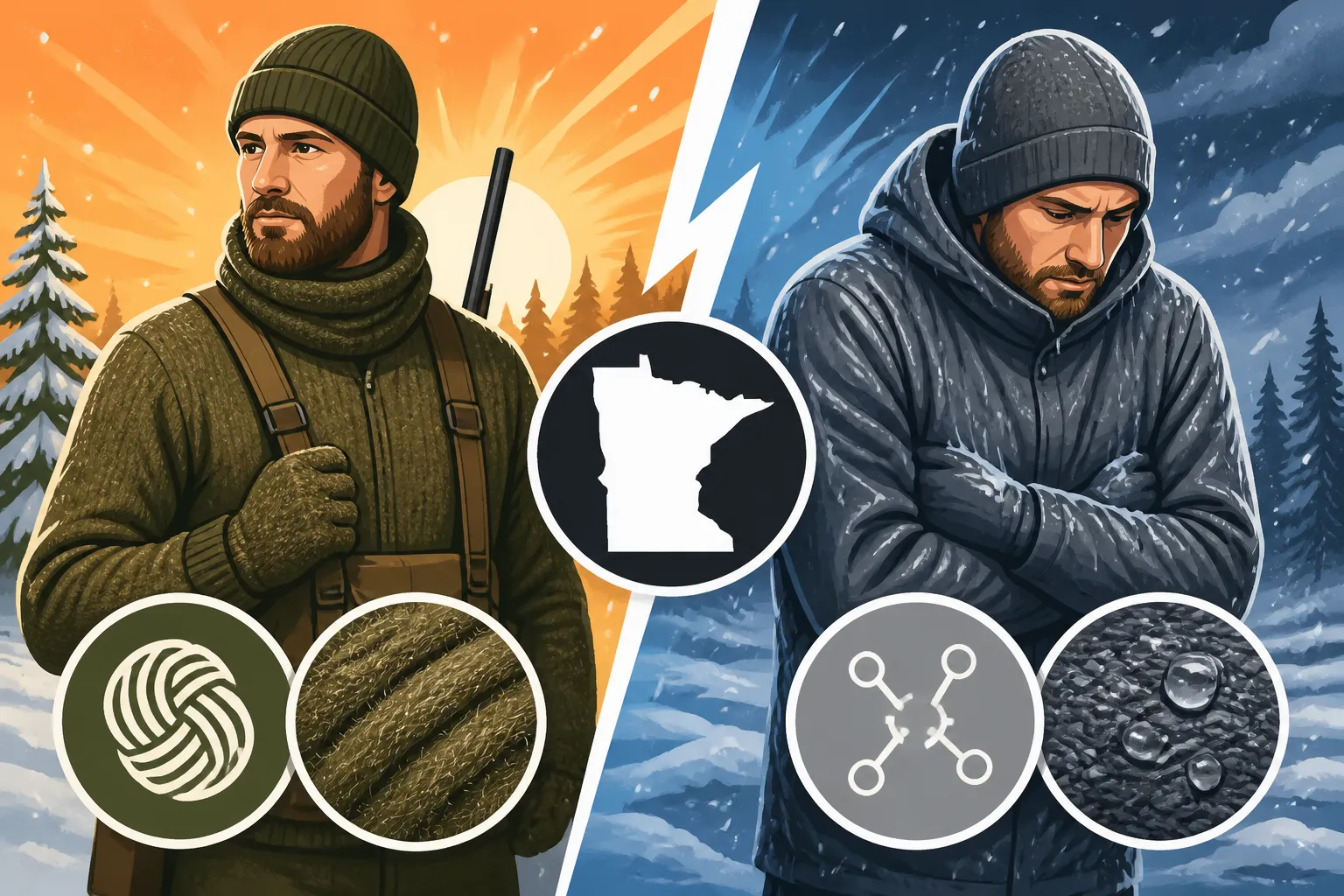
The most celebrated characteristic of wool, particularly high-quality merino wool, is its incredible ability to insulate even when wet. Unlike many materials that collapse and lose their loft when saturated, wool fibers are naturally crimped. This crimp creates tiny air pockets that trap warmth, and these pockets largely remain intact even as the wool absorbs moisture. It's like having a built-in buffer against the cold. A wool garment can actually absorb a significant percentage of its weight in water—up to 30%—before it even feels wet to the touch. This means that as that early season wet snow melts against your jacket, the wool is pulling the moisture into its core, away from your skin, rather than just becoming a soggy, cold mess.
Consider a scenario where you're still-hunting through heavy cover, pushing through snow-laden pines. You're working up a sweat, but the snow is also melting on you. A wool base layer, perhaps a merino blend you picked out after looking at gear reviews on a site like GoHunt, will manage both your internal perspiration and the external wetness. It pulls the sweat away from your skin, and simultaneously absorbs the melting snow, maintaining a relatively stable microclimate next to your body. This makes a huge difference in sustained comfort, especially during stop-and-go activity or when you transition from movement to a static sit in a blind.
Odor Control and Durability
Another often-overlooked benefit of wool, particularly for hunters, is its natural resistance to odor. Wool fibers have a complex structure that inhibits the growth of bacteria responsible for body odor. This isn't just a comfort thing; it's a critical hunting advantage. After a few days in the woods, especially if you've been working hard and sweating, synthetic garments can start to smell quite strong, which can certainly alarm wary game. Wool, however, can be worn for days, even weeks, without developing that tell-tale funk. This means less laundry and more stealth in the field, crucial for close encounters with a whitetail.
Beyond odor, wool is remarkably durable. While it might seem delicate, quality wool can withstand years of abuse in the field. Its natural elasticity allows it to stretch and return to shape, resisting wrinkles and tears better than many synthetics. Think about an old wool coat that's been passed down through generations of hunters—it's seen countless seasons, brushed against thorns, endured downpours, and still performs. It might develop a few snags, but it holds together. This longevity, while often coming with a higher initial price tag, means that a good set of wool hunting clothes is an investment that pays dividends over many hunting seasons.
The Modern Edge of Synthetics
While wool boasts a venerable history, modern synthetic fabrics have revolutionized outdoor clothing in recent decades. Engineered for specific performance characteristics, synthetics offer compelling advantages that make them a serious contender, especially when dealing with Minnesota's challenging wet snow conditions.
Quick Drying and Lightweight Properties
One of the undeniable strengths of synthetic materials like polyester, nylon, and various fleece blends is their quick-drying nature. Unlike wool, which absorbs water into its fibers, most synthetics are hydrophobic, meaning they resist water absorption. Instead, moisture tends to cling to the surface of the fibers. This structural difference allows synthetics to shed water much faster, whether through evaporation or by simply being shaken off. If you get drenched by a melting snow shower, a synthetic outer layer will dry significantly faster than a comparable wool garment. This is a massive advantage on multi-day hunts or when you need your gear to be ready for the next morning after a wet evening.
Beyond drying time, synthetics are generally much lighter than wool for a given level of warmth. This lightweight property makes them highly packable and ideal for hunters who cover a lot of ground or need to carry their gear deep into public land. Imagine trying to Still-Hunting Minnesota Big Woods for miles in heavy, wet snow. Every ounce matters. A full set of synthetic layers will be noticeably lighter than an equivalent wool setup, reducing fatigue over a long day. This also makes them excellent choices for outer shells, as they add minimal weight while providing crucial wind and water resistance, often featured in Rain Gear for a Minnesota Downpour.
Advanced Wicking and Breathability
Modern synthetics are often engineered with intricate fiber structures designed specifically for active wicking. These technical fabrics effectively pull sweat and moisture away from your skin and transfer it to the outer surface of the fabric, where it can evaporate more readily. This is crucial for maintaining core body temperature, particularly during periods of high activity followed by periods of rest, which is common in many hunting scenarios. If you're busting brush or climbing a ridge, you're going to sweat. A good synthetic base layer will move that moisture away, preventing that clammy, chilling sensation when you stop moving.
The breathability of many synthetic fabrics is also exceptional. While a thick wool sweater can be incredibly warm, it can sometimes feel a bit stifling during exertion. Many synthetics, especially those designed for active sportswear, allow for excellent airflow, preventing overheating while still providing insulation. This balance of warmth and breathability is vital in conditions where you might be working hard, generating heat, but still need protection from the external cold and wet snow. Choosing the right synthetic layers is about finding the right balance for your activity level, and resources like GoHunt can sometimes offer insights from other hunters on what performs best in varied conditions.
Performance Showdown: Wet Snow Edition
When Minnesota's weather takes a turn for the truly miserable, drenching you with heavy, wet snow, the theoretical advantages of wool versus synthetics become very real, very quickly. It’s no longer about personal preference; it’s about what will keep you functioning and safe. Let’s break down how these materials stack up when soaked to the bone.
Insulation Retention in Damp Conditions
This is perhaps the most critical battleground for wet snow hunting. When saturated, which material continues to provide meaningful insulation? This is where wool traditionally shines and often outperforms synthetics. As we discussed, wool fibers can absorb a significant amount of moisture internally without compromising their loft or ability to trap air. This means a wool mid-layer, even when damp from melted snow or sweat, will continue to keep you considerably warmer than many wet synthetics.
Imagine you're hunkered down for a long sit, part of your Cold-Weather Sitting Strategy in Minnesota, and a wet snow squall rolls through. Your outer shell might shed most of it, but inevitably, some moisture can seep in or build up from internal perspiration. If your insulating layer is wool, you’ll feel less of that immediate, biting cold. The warmth-to-weight ratio of wool when wet is truly impressive. Synthetics, while great when dry, tend to compress and lose much of their insulating air pockets as soon as they get truly wet. Think of a wet fleece jacket: it still offers some protection, but it won't feel nearly as warm as its dry counterpart, and you'll likely feel a cold, clammy sensation. The fibers themselves don't provide insulation, but rather the trapped air does. When water displaces that air, insulation plummets.
Weight and Bulk When Wet
While wool retains insulation better when damp, there's a trade-off: it becomes significantly heavier when saturated. A wool jacket or pair of pants that absorbs 30% of its weight in water will feel noticeably heavier and bulkier. This added weight can be cumbersome, especially if you're hiking through thick cover or dragging a deer out of a slough. It adds to fatigue and can make movement less fluid. The material also tends to sag and can feel quite unpleasant against the skin due to the sheer volume of water it holds.
Synthetics, on the other hand, typically gain much less weight when wet because their fibers don't absorb water. The moisture might cling to the surface, but it doesn't permeate the material in the same way. This means a synthetic garment, even when drenched, won't feel as heavy or bulky as its wool counterpart. This can be a huge advantage for high-activity hunting or when navigating challenging terrain. You might be just as cold due to the loss of insulation, but you won't be lugging around as much waterlogged material. This distinction is important for overall mobility and endurance, especially on longer hunts.
Drying Time in the Field
When you're out in the wild, without access to a warm cabin or drying rack, how quickly your clothes dry can be a matter of comfort and even safety. Synthetics have a clear advantage here. Because they hold less water within their fibers, synthetics dry much, much faster than wool. A synthetic base layer might be noticeably dry within a few hours (or even less with body heat and airflow) after being soaked, while a wool layer could take considerably longer, sometimes overnight, to fully dry in cool, damp conditions.
Consider a scenario where you fall into a shallow creek or get caught in a sudden deluge of freezing rain. Getting your clothes to dry quickly is paramount. Synthetics allow for faster recovery, reducing your exposure to prolonged cold and the risk of hypothermia. This rapid drying time means you're less likely to put on damp clothes the next morning. Wool, while still insulating when damp, can feel perpetually clammy if it doesn't get a chance to completely dry out, which can be a real psychological drain on multi-day excursions. When planning a hunt where quick recovery from wet conditions is paramount, the drying speed of your gear is a vital consideration, one you might even research on hunting forums or platforms like GoHunt before making your final choices.
Practical Considerations for Minnesota Hunters
Beyond the technical performance of wool versus synthetics, there are several real-world factors that every Minnesota hunter must weigh before making their gear choices. These practical considerations can significantly impact your comfort, your budget, and the longevity of your hunting wardrobe.
Cost and Longevity
Let's talk dollars and cents. Generally speaking, high-quality merino wool garments tend to have a higher upfront cost than comparable synthetic pieces. A premium wool base layer or mid-layer can be a significant investment. However, this higher price tag often comes with superior longevity. Wool, with proper care, can last for many seasons. It's naturally resilient, resists pilling, and as mentioned, holds up well against wear and tear in the field. Think of it as an heirloom piece for your hunting kit.
Synthetics, on the other hand, offer a wider range of price points. You can find very affordable synthetic options, but the performance and durability will often reflect that lower cost. Higher-end technical synthetics can rival wool in price, but they are often specifically engineered for extreme performance, like advanced waterproofing or breathability. While durable, some synthetics, especially fleece, can show signs of wear faster, such as pilling or a reduction in loft over time. When you're making a gear investment, it's worth considering the long-term value: will you replace the synthetic piece every few years, or will the wool garment be a steadfast companion for a decade or more? This type of cost-benefit analysis often comes up when researching gear options, and online resources, including comprehensive reviews found through platforms like GoHunt, can provide valuable real-world user experiences on longevity.
Layering Strategies
Regardless of whether you lean towards wool or synthetics, a smart layering system is absolutely non-negotiable for hunting in Minnesota's unpredictable weather. You simply cannot rely on a single heavy garment. The genius of layering lies in its adaptability: you can add or subtract layers as your activity level, the temperature, and the precipitation change throughout the day. This is especially true when navigating varying conditions from Clothing for a Minnesota November to the depths of winter.
For your base layer, directly against the skin, both wool and synthetics excel. Synthetics are fantastic at wicking away sweat during high exertion, while wool provides warmth and odor control. A common strategy, highlighted in many articles about Base Layers for a Minnesota November, is a lightweight synthetic base for strenuous activity, or a mid-weight wool base for colder, more static hunts. Over that, a mid-layer of either fleece (synthetic) or heavier wool provides insulation. Finally, an outer shell is crucial for protection from wind, rain, and that relentless wet snow. This shell is almost always synthetic, designed to be waterproof and windproof, such as what you'd need for Rain Gear for a Minnesota Downpour. The key is to avoid cotton at all costs, as it absorbs moisture and loses all insulating value, becoming a dangerous cooling blanket. Effective layering means you're prepared for anything, whether you're climbing into a treestand for Layering for a Minnesota Deer Stand or busting through brush.
Care and Maintenance
How you care for your hunting clothing directly impacts its performance and lifespan. Wool and synthetics have different care requirements. Wool, especially merino, can be delicate. It often requires cold water washing, gentle cycles, and air drying to prevent shrinking, stretching, or damage to its delicate fibers. Machine drying, especially on high heat, is generally a no-go for wool, as it can felt the fibers and ruin the garment's integrity. While some modern wool blends are more robust, always check the label.
Synthetics, in contrast, are generally much easier to care for. Most can be machine washed and dried, making them convenient for hunters who don't want to fuss with special laundry routines after a long trip. However, it's important to use appropriate detergents, especially for technical outer shells, to maintain their water-repellent treatments. Over-washing or using harsh detergents can degrade the performance of synthetic fabrics, reducing their wicking abilities or damaging waterproof membranes. Regardless of the material, always read the care tags, as proper maintenance is key to getting the most out of your gear and ensuring it performs when you need it most, like during an all-day sit requiring Insulated Boots for All-Day Sits.
Making Your Choice: Blending the Best
Ultimately, there isn't a single "best" answer in the wool vs. synthetics debate for Minnesota's wet snow. Both materials have incredible strengths and some weaknesses. The savviest hunters don't choose one over the other; they strategically combine them to create a system that maximizes performance for their specific hunting style and anticipated conditions.
Hybrid Systems for Optimal Performance
The smartest approach to outfitting yourself for Minnesota's unpredictable hunting seasons, especially those with wet snow, often involves a hybrid layering system that leverages the best attributes of both wool and synthetics. Think of it as building a customizable defense against the elements. A great starting point for many hunters is a lightweight synthetic base layer, particularly if your hunt involves a lot of hiking or active movement. These base layers excel at rapidly wicking perspiration away from your skin, keeping you dry from the inside out. For example, if you're doing deer drives on Deer Drives With Three or Four Hunters, you'll generate a lot of sweat, and a synthetic base will move that moisture efficiently.
Over that synthetic base, a mid-layer of high-quality merino wool can provide exceptional warmth, even if it gets damp from external moisture or residual sweat. This creates a powerful combination: the synthetic deals with internal moisture, and the wool provides robust insulation while resisting odor. Finally, an outer shell made of a durable, waterproof, and breathable synthetic material is essential. This outer layer is your shield against the actual wet snow, sleet, and wind, ensuring that the moisture stays on the outside while allowing your internal moisture to escape. By blending these materials, you get the best of both worlds: superior moisture management from synthetics and unmatched warmth retention from wool.
Matching Gear to Your Hunt Style
Your ideal gear setup isn't just about the weather; it's profoundly influenced by your personal hunting style and activity level. Are you a still-hunter who sits for hours on end, or do you prefer to actively pursue game? Each approach dictates a different emphasis on warmth, breathability, and quick-drying capabilities.
For the hunter who spends long hours in a treestand, possibly doing a Cold-Weather Sitting Strategy in Minnesota waiting for a buck during Hunting the Rut in Late October, insulation retention, even if damp, is paramount. Here, a full complement of wool mid-layers, coupled with an insulated, waterproof synthetic outer shell, might be the superior choice. The wool's ability to maintain warmth when wet will be more forgiving if some moisture breaches your outer layer or if you get a little sweaty on the hike in. Comfort during those long, static periods, where warmth is key, trumps concerns about a little extra weight if it gets wet.
Conversely, if you're a highly active hunter, perhaps Run-and-Gun Turkey Tactics on Public Land or actively scouting new ground in early season, synthetics might be your go-to for base and mid-layers. Their superior wicking and quick-drying properties will manage your sweat effectively, preventing chilling during periods of rest. You'll likely prioritize lightweight and less bulk, even if it means a slight compromise on wet insulation compared to wool. For these active hunts, a reliable online resource like GoHunt can help you plan your route and assess terrain, which further influences your gear choices by helping you anticipate exertion levels and potential weather changes. Understanding your hunting habits and the unique challenges of Minnesota's wet snow will guide you to the perfect blend of wool and synthetic gear for your next adventure.
| Feature / Material | Wool (especially Merino) | Synthetics (e.g., Polyester, Fleece) |
|---|---|---|
| Insulation When Wet | Excellent (retains loft/warmth) | Poor to Fair (collapses, loses loft) |
| Drying Time | Slow | Fast |
| Weight When Wet | Significantly heavier | Minimal weight gain |
| Odor Resistance | Excellent (natural antimicrobial) | Poor to Fair (can get smelly quickly) |
| Wicking Performance | Good (absorbs internally, moves moisture) | Excellent (moves moisture quickly to surface) |
| Breathability | Good (can feel warm during high exertion) | Excellent (engineered for airflow) |
| Durability | Excellent (resists pilling/tears with care) | Good (can pill, may degrade over time) |
| Cost | Generally higher upfront | Varies widely, can be more affordable |
| Maintenance | More delicate (cold wash, air dry) | Easier (machine wash/dry, but check technicals) |
Disclaimer
This article is for general informational purposes only and does not constitute professional advice. Laws, prices and regulations vary by location and change over time. Consult a qualified professional for guidance on your specific situation.