Hunting Minnesota Cattail Sloughs for Deer
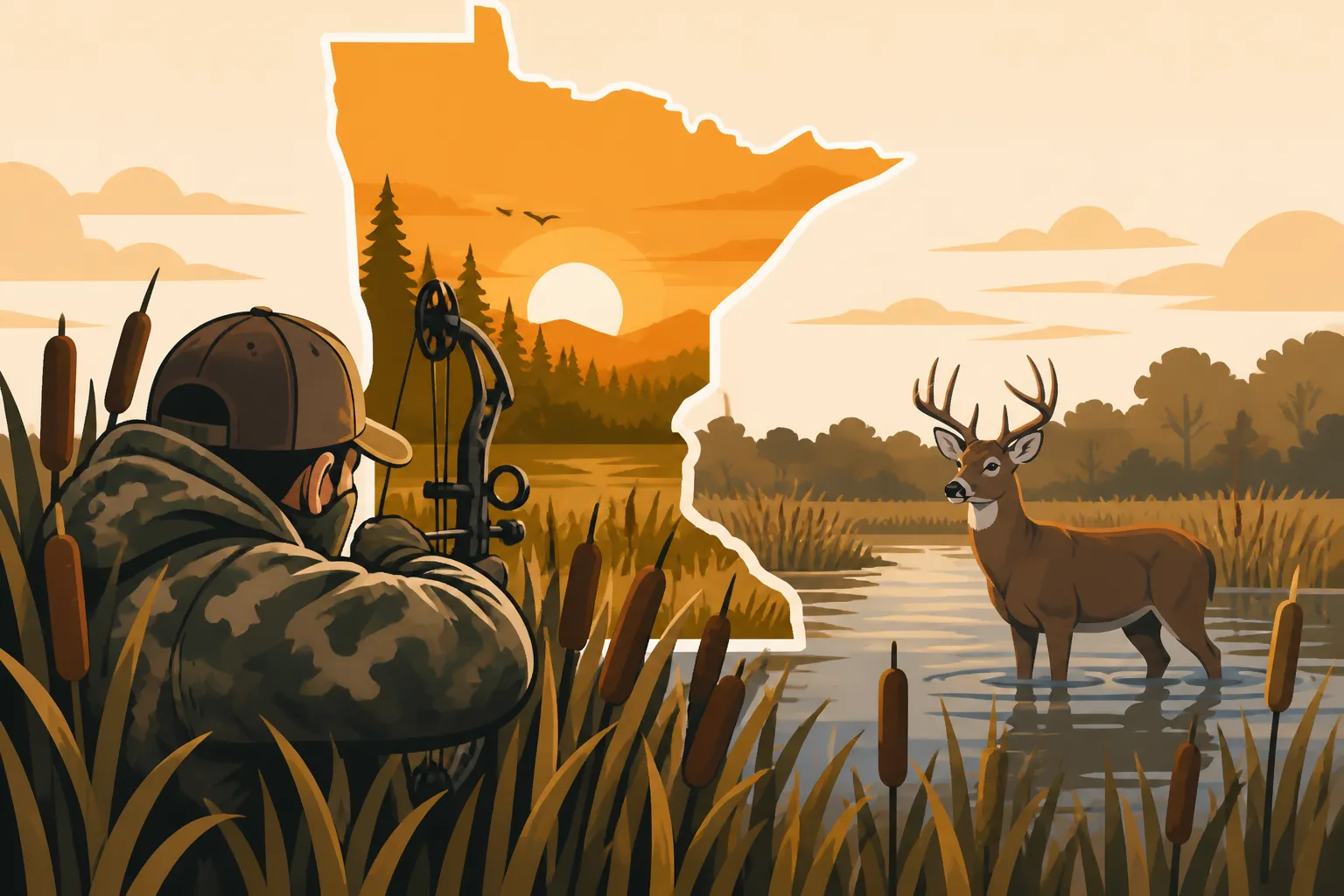
Minnesota deer hunters often feel a pang of frustration when eyeing those dense, impenetrable cattail sloughs. They look like prime deer real estate, but the thought of slogging through waist-deep water, thick mud, and tangled vegetation often deters even the most determined hunter. This guide is here to tell you that these daunting landscapes are actually some of the most productive, overlooked spots for big whitetails, and we're going to break down how to effectively hunt them, turning those frustrations into success.
Understanding the Cattail Slough Ecosystem for Deer
Cattail sloughs, those vast, marshy areas choked with towering cattails, are far more than just watery obstacles. For a Minnesota whitetail, they represent a fortress, a sanctuary, and often, a pantry. Understanding why deer utilize these areas is the first step to unlocking their secrets.
Why Deer Love Cattail Sloughs
Deer seek out cattail sloughs for a trifecta of reasons: exceptional security cover, thermal protection, and a surprising array of food sources. Think about it from a deer's perspective. When hunting pressure ramps up, where do deer go? They vanish into the thickest, nastiest cover they can find, and a vast cattail slough fits that bill perfectly. The dense, interwoven stalks create a visual and physical barrier that most predators, human or otherwise, are reluctant to penetrate. This means less disturbance and a feeling of safety, making these areas prime bedding locations.
Beyond security, sloughs offer critical thermal cover. In the cold Minnesota winters, those thick cattail stalks trap air and create a microclimate that can be several degrees warmer than the exposed timber or fields. This insulation helps deer conserve energy, especially after heavy snowfalls or during bitter cold snaps. On the flip side, during hot early season days, the shade and proximity to water can offer a cooler retreat. Moreover, many sloughs aren't just water-filled; they often have slightly elevated islands or humps of dry ground within them, offering deer a truly comfortable, dry bed hidden deep within the marsh.
While they might not seem like a buffet, cattail sloughs and their edges also provide valuable forage. Deer will browse on the tender shoots of young cattails, various sedges, and other emergent aquatic vegetation. The drier edges and transition zones often host preferred browse species, forbs, and even acorns from nearby oak ridges. Bucks especially will cruise these edges, checking for does and leaving sign, making these transition zones critical for hunting. The deeper you understand this symbiotic relationship, the better equipped you'll be to predict deer movement.
Reading Slough Edges and Transitions
The real key to hunting cattail sloughs effectively isn't always slogging through the deepest mud (though sometimes that's necessary!). More often, it's about understanding and intercepting deer movement along their edges and through transition zones. Deer are creatures of efficiency; they'll use the path of least resistance whenever possible, even within dense cover.
Look for subtle elevation changes, even a slight rise of a few inches, that offers drier ground. These often become natural travel corridors. Ditch lines, whether natural or man-made, that cut through or run along the edge of a slough are like deer highways. They provide consistent, slightly drier footing and concealment. Think of where a timber edge meets the cattails, or where a finger of dry ground extends into the marsh. These are classic pinch points and funnel areas where deer are forced to condense their movement.
Spend time identifying where deer enter and exit the slough. This might be a well-worn trail leading from a cornfield into the cattails, or a faint path emerging from the slough into a patch of timber. You'll often find these entry/exit points are accompanied by fresh rubs and scrapes, especially during the pre-rut and rut phases, indicating consistent buck activity. Observing these subtle details, both from afar and with careful on-foot scouting, will help you pinpoint the precise locations where you can set up to intercept deer moving into or out of their slough sanctuary.
Scouting Cattail Sloughs: Before the Season and During
Effective scouting is the backbone of successful hunting, and this holds especially true for challenging environments like cattail sloughs. You need a multi-pronged approach, leveraging technology and keen observation, to reveal the hidden patterns of deer movement.
Pre-Season Aerial Reconnaissance and On-Foot Scouting
Before you even step foot near a slough, start with an aerial view. Tools like the mapping features offered by GoHunt are invaluable here. You can pour over satellite imagery and topographic maps from the comfort of your home, identifying the overall shape and size of the slough, potential access points, and surrounding cover. Look for those subtle fingers of dry land extending into the cattails, patches of timber or brush within the marsh, or distinct changes in vegetation density that might indicate higher ground. These are all potential bedding areas or travel corridors.
Once you have a few promising spots identified, it’s time for on-foot scouting, ideally in the late summer or early fall before the hunting season begins in full swing. This is when you can still navigate the edges with relative ease and when deer sign from the previous season might still be visible. Your goal is to confirm what you saw on the maps and find fresh sign. Walk the perimeter of the slough, paying close attention to any trails leading in or out. Look for rub lines, old scrapes, and discarded antlers from the previous winter. When you identify where deer are likely entering these areas, you'll be able to plan your Entry Routes Through a Cattail Slough effectively. Remember, quiet and minimal-impact scouting is crucial. You don’t want to disturb deer that are already using the slough as a sanctuary before the season even starts.
Identifying Key Sign Within the Slough
Stepping into the slough itself requires careful thought and timing, often best done when water levels are lower or the ground is frozen. Once inside, you're looking for undeniable evidence of deer activity. The most obvious sign will be well-worn deer trails cutting through the thick cattails. These aren't always easy to spot from a distance, so you'll need to be observant, looking for broken stalks, flattened vegetation, and hoof prints in any muddy sections. These trails will lead you to the deer's inner sanctum.
Pay close attention to bedding areas. These are often slightly elevated, drier patches of ground or dense clumps of brush within the slough where deer have repeatedly bedded down. You'll see depressions in the vegetation, sometimes with a few deer hairs left behind. If you find fresh droppings or urine, you know the spot is currently active. While primary scrapes are less common deep within a slough, you might find rubs on any small trees or brush islands, indicating a buck has been working the area. Understanding the difference between fresh sign and old, sun-baked or water-logged sign is vital. For more general advice, consider dedicating time to Scouting Minnesota Public Land Before Season. High water levels can obviously obscure sign, so be mindful of recent precipitation when interpreting what you find.
Effective Access and Stand Placement Strategies
Getting to your spot undetected and positioning yourself for a shot are paramount when hunting the wary whitetails that call cattail sloughs home. These dense environments demand strategic planning for both entry and exit.
Stealthy Entry and Exit Routes
The biggest challenge with hunting sloughs is often just getting in and out without being busted. Deer in these areas are often pressured animals, hyper-alert to any foreign scent or sound. Wind direction is your absolute best friend and worst enemy. Always, and I mean always, approach a slough with the wind in your favor, blowing your scent away from where you expect deer to be. Thermals play a huge role, especially in damp, low-lying areas. In the mornings, thermals generally fall, pushing your scent downhill and into the slough. In the evenings, they rise, carrying your scent upwards. Plan your access routes to account for this.
Consider using existing features that offer natural concealment and quieter footing. Frozen ground in the late season can be a godsend, allowing you to walk silently where earlier in the year you'd be sinking into mud. Old drainage ditches, creek beds, or even a subtle ridge line that parallels the slough can provide excellent cover for your approach. You might even consider donning waders and slowly, carefully wading in along the edge of the slough, using the water to mask your scent and sound. The key is to think like a deer, imagining how they would move, and then finding a path that mimics their stealth while keeping your presence hidden.
Optimal Stand Locations and Types
When it comes to stand placement around a cattail slough, you're generally looking at two main scenarios: setting up on the edge or venturing into an island within the slough itself. For edge setups, look for mature trees that offer good concealment and a commanding view of a known travel corridor or pinch point where deer enter or exit the slough. A sturdy treestand, like those often recommended for Treestand Setups in Minnesota Hardwoods, placed 15-20 feet up, can give you a clear shot over the top of the cattails and a wider field of view. Be sure to trim shooting lanes well in advance if possible, but sparingly, to avoid alerting deer.
Alternatively, if you've identified a dry island or a cluster of taller brush within the slough that acts as a bedding or staging area, a well-brushed-in ground blind can be incredibly effective. Make sure it's positioned downwind of any expected deer movement and offers multiple shooting lanes. Many hunters find success with a comfortable, scent-controlled ground blind when navigating these tricky environments. When using mapping tools like GoHunt, you can mark potential stand locations and entry routes directly on your maps, helping you visualize and plan your hunt before you even get there. No matter your choice, ensure your stand is secured properly and your shooting lanes are clear for those quick, close-range opportunities typical of slough hunting. To get more specific on how these work, read up on Using a Ground Blind on Minnesota Public Land.
Hunting Tactics for Minnesota Cattail Sloughs
Once you've done your scouting and have your stand or blind set, it's time to put some proven tactics into play. Hunting sloughs often requires a different mindset than open timber or field edges, focusing on slow, deliberate movements or coordinated efforts.
Still-Hunting and Drives in Sloughs
Still-hunting a cattail slough can be an incredibly effective, albeit challenging, way to fill a tag. This isn't about covering a lot of ground quickly; it's about moving at a snail's pace, often taking several minutes to take a single step. Focus on the drier edges, fingers of high ground, or any subtle trails that cut through the denser vegetation. Pause frequently, listening intently for the rustle of deer moving through the stalks, and scanning for any horizontal lines (a deer's back) in a vertical world (the cattails). Wear waterproof, quiet clothing, and keep your rifle or bow at the ready. This method works well when deer are bedded tight and you're slowly trying to nudge them into an opening or towards a waiting partner.
For a more active approach, particularly on larger sloughs, small deer drives can be highly successful. These are best done with two to four hunters. One or two "pushers" slowly and deliberately walk through a section of the slough, trying to move deer towards "standers" positioned on known escape routes or pinch points. Communication is absolutely critical, especially in such dense cover. Two-way radios are a must. The pushers should move slowly, stopping frequently, and even making some noise to gently encourage deer to move, rather than spooking them into a dead run. This is a tactic that thrives on coordination and knowing exactly where deer are likely to break out. For more details on these smaller efforts, check out Deer Drives With Three or Four Hunters.
Hunting the Rut and Late Season
The rut offers a unique opportunity in cattail sloughs. Bucks, driven by the urge to find does, become less cautious and will often cruise the fringes of sloughs or even venture into them if does are bedding there. A slough that was seemingly devoid of buck sign in early October can suddenly erupt with activity during peak rut. Bucks will check every entry and exit point, looking for hot does. Setting up on a funnel or pinch point where the slough meets timber or a field can be incredibly productive during this time. Aggressive calling, like rattling and grunting, can sometimes pull a curious buck out of the thick cover. If you plan to focus on this timeframe, be sure to read up on Hunting the Peak Rut in Early November.
The late season, particularly after deep snowfalls and bitter cold, also makes sloughs magnets for deer. Those thick cattails provide invaluable thermal cover, making deer eager to bed there. Furthermore, a frozen slough simplifies access dramatically, allowing hunters to walk across areas that were previously impassable quagmires. Deer will often concentrate in these thermal sanctuaries, only leaving to quickly access nearby food sources. Targeting these limited food sources and their connection to the slough can be a deadly late-season strategy. Consult Late-Season Food Sources for Minnesota Whitetails to maximize your chances.
Here's a quick comparison of hunting tactics in sloughs throughout the season:
| Season Phase | Primary Deer Behavior in Slough | Recommended Tactics | Key Considerations |
|---|---|---|---|
| Early Season | Bedding for security, seeking cooling cover | Edge stands, still-hunting edges | Wind, quiet entry, early morning/late evening hunts |
| Pre-Rut / Rut | Bucks cruising edges for does, does seeking refuge | Stands on pinch points/funnels, calling | Wind, aggressive calling, increased deer movement |
| Late Season | Seeking thermal cover, limited movement to food | Stands on travel corridors to food, small drives | Frozen ground access, deep snow, focus on warmth |
Gear and Preparation for Slough Hunting
The unique environment of a cattail slough demands specific gear choices to ensure comfort, safety, and success. Being properly equipped can make the difference between an enjoyable hunt and a miserable one.
Essential Clothing and Footwear
The most critical clothing decision for slough hunting revolves around staying dry and warm. High-quality, breathable waders are often indispensable, especially if you anticipate wading through water and mud. Look for models with good insulation if you're hunting in cold weather. Alternatively, robust rubber boots, preferably knee-high or even hip-boots, can work for shallower sloughs. Ensure they are well-insulated for comfort during long sits or cold pushes. Think about brands like Lacrosse or Muck Boot for reliable options. Layering is key: start with a moisture-wicking base layer, add insulating layers (fleece or wool are excellent), and top it with a waterproof and windproof outer shell. Your outer layer should also be quiet to avoid spooking game in the close quarters of a slough. Don't forget a warm hat and gloves, even if you think the temperature is mild, as wading through cold water can quickly chill your core. And, of course, always remember Minnesota's blaze orange requirements during the firearm seasons.
Weapons and Optics Considerations
When it comes to weapons for slough hunting, you're generally looking at close-to-medium range shots, often in thick cover. With Minnesota's updated regulations, hunters now have more flexibility. For many, a rifle chambered in a cartridge suitable for the woods, like a .30-30, .308, or 6.5 Creedmoor, will be a versatile choice. These calibers offer ample power for whitetails and can handle the varied ranges you might encounter, from a quick 30-yard shot in the cattails to a 100-yard shot across an opening. For those in the few remaining Which Thirteen Counties Kept Shotgun-Only Rules, a good slug gun remains a viable option. If you're pondering Choosing a Rifle Now That Shotgun Zones Are Gone, remember that maneuverability in dense cover is important.
Optics should prioritize low-light performance and a wide field of view. A scope with a 1-4x or 2-7x magnification range is often ideal, allowing for quick target acquisition at close range while offering enough zoom for slightly longer shots if they present themselves. An illuminated reticle can be a huge advantage in the dim light of a slough or during dawn and dusk. Binoculars are still useful for scanning edges and open pockets, but compact 8×32 or 10×42 models are usually sufficient. Lastly, a reliable GPS unit or a mapping app like the one GoHunt provides on your phone is crucial for navigation. It's incredibly easy to get disoriented in the homogenous landscape of a vast cattail slough, so always know where you are and how to get back to your starting point. Make sure to zero your rifle appropriately; Sighting In a Rifle for Minnesota Woods Ranges will serve you well for these conditions.
Retrieval and Game Care Challenges
The shot is made, the deer is down—congratulations! Now comes arguably the hardest part of hunting a cattail slough: retrieval and proper game care. These dense, wet environments pose significant challenges that require patience and preparation.
Tracking and Recovery in Dense Cover
Tracking a deer in a cattail slough can test the most experienced hunter's patience. The thick vegetation, often matted down by water and mud, makes blood trailing incredibly difficult. After the shot, give the deer ample time, especially if it's a marginal hit, to expire peacefully. Patience is your best friend here; rushing in can push a wounded deer deeper into the impenetrable cover. Mark the spot of the shot, and if possible, the last place you saw the deer.
When you begin tracking, move slowly and methodically. Look for broken cattail stalks, disturbed mud, or any discernible path through the vegetation. Blood may be sparse, or it might be washed away by water. If you lose the trail, spread out and grid-search the area, slowly expanding your search pattern. Focus on any openings, slight rises, or denser clumps of cover where a deer might seek refuge. Having a partner can significantly aid in this process, helping you cover more ground and spot subtle clues. A good headlamp is essential if you find yourself tracking as daylight fades. Remember, ethical recovery is paramount, no matter how challenging the terrain.
Extracting a Deer from a Slough
Once you've located your deer, the real work begins. Extracting a deer from a cattail slough is physically demanding, often requiring significant effort and ingenuity. If the ground is frozen solid, a deer sled can be a lifesaver, allowing you to slide the deer out with less friction. However, in muddy or watery conditions, a sled can be more of a hindrance than a help. In these scenarios, a heavy-duty game cart might work on the drier edges, but usually, it's brute force and teamwork that gets the job done.
You might need to quarter the deer in the slough to make it manageable, especially if you're alone or the retrieve is long. This means field dressing the animal right where it fell, and then separating the major muscle groups or deboning them into game bags. This is a messy but often necessary step in slough hunting. Having strong game bags on hand is crucial for this method. If you're fortunate enough to hunt with a partner or two, using drag ropes and taking frequent breaks is essential. Remember that the cold weather can be your friend here, helping to preserve the meat. Read up on Field Dressing a Deer in Cold Weather for important tips. If you find yourself in the unenviable position of having to recover a deer from truly submerged or frozen conditions, consulting advice on Recovering a Deer From a Frozen Slough can be a game-changer. Despite the difficulty, the venison from a slough whitetail is well worth the effort.
Disclaimer
Please remember that hunting regulations, seasons, and permit area boundaries can change. Always consult the official Minnesota Department of Natural Resources (DNR) website and regulations handbook before planning any hunting trip. This guide offers general advice and personal experiences and should not be considered a substitute for official DNR information.