Optics for Minnesota Big Woods and Farmland
Choosing the right optics for hunting in Minnesota can feel like a daunting task, a real head-scratcher when you consider the vast differences between the dense, shadowy Northwoods and the wide-open expanse of the southern farm fields. Many hunters wrestle with whether to prioritize light-gathering for dark timber or magnification for long-range glassing, often ending up with gear that's perfectly adequate for one scenario but frustratingly ill-suited for another. This comprehensive guide will walk you through the nuances of selecting binoculars, rangefinders, and rifle scopes perfectly tailored for the varied challenges and opportunities that Minnesota's diverse hunting landscapes present.
The Unique Demands of Minnesota Hunting Environments
Minnesota isn't a one-size-fits-all hunting state, and neither should your optics strategy be. From the rugged terrain of the Iron Range to the rolling prairie of the southwest, each environment presents its own set of optical challenges and advantages. Understanding these differences is the first step in making informed gear choices that will genuinely enhance your time in the woods and fields.
Big Woods: Shadows, Brush, and Close Encounters
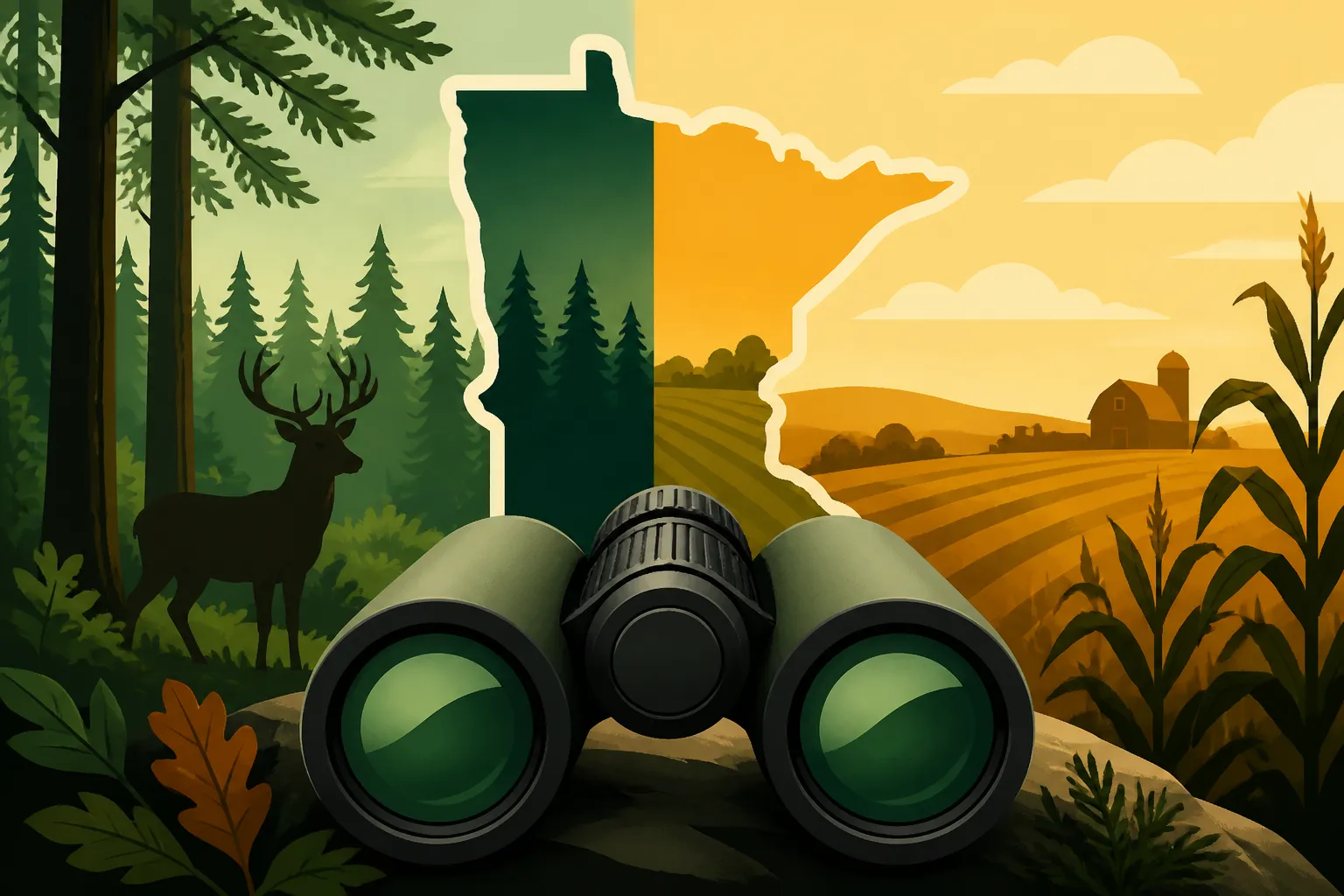
The Big Woods of northern Minnesota, encompassing vast tracts of state and national forests, are a world unto themselves. Here, deer, moose, and bear often inhabit dense conifer stands, thick aspen regeneration, and deep alder swamps. Visibility can be severely limited, sometimes to mere dozens of yards. Sunlight struggles to penetrate the canopy, creating perpetual shadows even on bright days. In this environment, your primary optical concerns shift dramatically. You're not looking for extreme magnification to spot a deer a mile away; instead, you need excellent light-gathering capabilities to discern subtle movement in low light, a wide field of view to quickly scan brushy areas, and often, less magnification overall to prevent a "tunnel vision" effect. Hunting Minnesota Now That Rifles Are Legal Statewide means you might be carrying a rifle designed for longer shots, but the reality of the timber often dictates quick, close-range opportunities. You're trying to pick apart shadows, identify game through a maze of branches, and make split-second decisions as a deer ghosts through the undergrowth. A small, compact binocular with good low-light performance and a quality rifle scope that excels at 2-7x or 3-9x magnification are often ideal for these conditions, prioritizing brightness and a generous field of view over sheer power.
Farmland: Open Fields and Long Sightlines
Contrast that with the farmlands of southern and western Minnesota. Here, the landscape often rolls gently, dominated by corn and soybean fields, interspersed with small woodlots, shelterbelts, and cattail sloughs. Sightlines can stretch for hundreds of yards, sometimes even over a mile. When Hunting Minnesota Farmland Deer, spotting distant deer moving between cover, bedded in a CRP field, or feeding on standing corn is a common scenario. This is where magnification truly shines. You'll want binoculars with higher power to resolve details at extreme distances and rifle scopes capable of holding a tight group at 200, 300, or even 400 yards. Light-gathering is still important, especially during dawn and dusk feeding times, but the ability to pick out a tine on a buck across a quarter-section becomes paramount. Spotting scopes, which might seem overkill in the Big Woods, suddenly become invaluable tools for detailed observation without disturbing game. Your optics here are less about quick reaction and more about patient, deliberate scouting and precision shooting.
Transition Zones: Where Worlds Collide
Then there are the vast transition zones, the areas where the Big Woods begin to give way to more agricultural landscapes, or where large tracts of public forest meet private farm fields. These areas offer a unique blend of both challenges. You might be still-hunting a timber edge where a large field opens up, or setting up a treestand overlooking a small food plot nestled within a block of hardwoods. In these "fringe" areas, versatility is key. Your optics need to perform adequately in both close quarters and at extended ranges. A good all-around binocular, perhaps 8x or 10x, with decent light transmission, paired with a rifle scope that offers a broad magnification range (like 3-12x or 4-16x) often fits the bill. The ability to quickly adjust from scanning thick cover to identifying a deer far out in a field is crucial. It’s in these zones that hunters often find themselves wishing they had both sets of specialized optics, highlighting the need for versatile choices or a well-thought-out compromise.
Binoculars: Your Eyes in the Field
Binoculars are, without a doubt, one of the most fundamental and versatile optical tools a hunter can possess. They are your primary scouting instrument, your go-to for identifying distant animals, and your safety net for confirming what you're looking at before raising a rifle or bow. For Minnesota's varied landscapes, selecting the right pair involves more than just picking the highest magnification.
Magnification and Objective Lens Size for Minnesota
When you look at binocular specs, you'll see numbers like "8×42" or "10×50." The first number, 8x or 10x, refers to the magnification. An 8x binocular makes objects appear 8 times closer, while a 10x makes them 10 times closer. The second number, 42 or 50, is the diameter of the objective lens in millimeters, which is the front lens that gathers light.
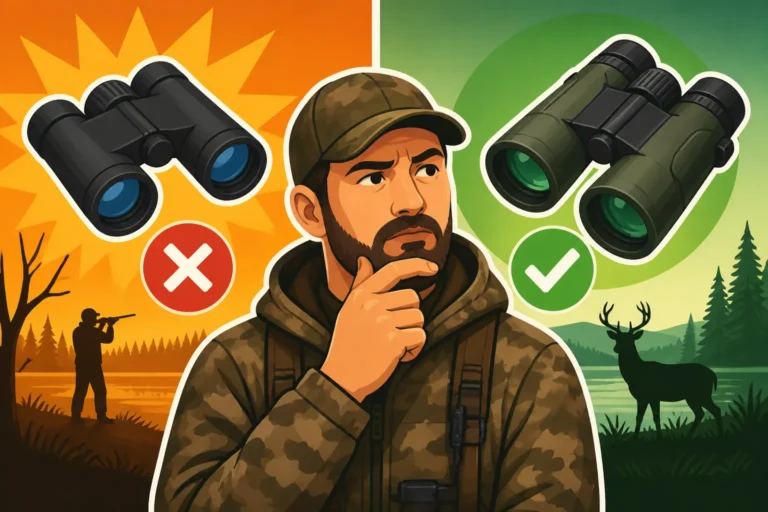
- For the Big Woods and dense cover: An 8x or even 7x magnification is often preferred. Why? Because lower magnification typically means a wider field of view, which is incredibly helpful when scanning thick brush for movement or trying to follow a deer quickly through trees. It also results in a steadier image, reducing hand shake, which is a real benefit when you're cold or tired. An 8×42 is a fantastic all-around choice for its balance of magnification, light gathering, and portability. The 42mm objective lens gathers plenty of light for those shadowy timber conditions.
- For Farmland and open country: A 10x magnification starts to make more sense. The extra power helps you pick apart distant treelines, identify deer bedded in tall grass, or scout an entire field from a distance. While it narrows the field of view slightly and can be more susceptible to hand shake, the ability to resolve fine details at long range is invaluable. A 10×42 is a very popular choice. If you're doing a lot of dedicated, tripod-mounted glassing on open ground, some hunters even opt for 12×50 or higher, though these become bulkier and harder to hold steady freehand. Reading Aerial Photos for Big Woods Deer can help with initial scouting, but binoculars are essential for on-the-ground confirmation.
Understanding Field of View and Eye Relief
Beyond magnification and objective lens size, two other specifications significantly impact your experience:
- Field of View (FOV): This refers to the width of the area you can see through the binoculars at a given distance, usually expressed in feet at 1,000 yards. A wider FOV is critical in dense cover, allowing you to scan more area quickly and track moving animals without losing them. Lower magnification almost always equates to a wider FOV. In the Big Woods, where you might only see glimpses of a deer, a wide FOV can be the difference between spotting it and having it slip by undetected. For open farmland, a slightly narrower FOV with higher magnification is less of a hindrance, as your targets are often static or moving predictably across a large, open area.
- Eye Relief: This is the distance your eye can be from the eyepiece and still see the full, unvignetted image. This is particularly important for hunters who wear eyeglasses. If the eye relief is too short, you won't be able to see the entire field of view comfortably with your glasses on. Most modern binoculars offer generous eye relief, often 15mm or more, and feature adjustable eyecups that twist up or down to accommodate both eyeglass wearers and those without. Always test binoculars with your glasses on if you wear them to ensure a comfortable viewing experience.
Durability and Weatherproofing for Minnesota's Extremes
Minnesota's weather is famously unpredictable and can throw everything from humid summer days to bitter December cold, often within the same hunting season. Your binoculars need to be built to withstand these extremes.
- Waterproofing: Look for binoculars that are truly waterproof and fog-proof. This means they've been O-ring sealed and purged with an inert gas like nitrogen or argon. This prevents moisture from entering the housing and also keeps the internal lenses from fogging up when moving from a warm cabin to cold outdoor air. A little drizzle or even heavy snow shouldn't compromise your ability to see.
- Armor Coating: Many quality binoculars feature a rubberized armor coating. This not only provides a better grip, especially with cold or wet hands, but also adds a layer of protection against minor bumps and drops. It helps absorb shock and prevents dings and scratches that can compromise the optical integrity.
- Lens Coatings: Modern binoculars boast multiple layers of anti-reflective coatings on all air-to-glass surfaces. These "fully multi-coated" lenses significantly increase light transmission, reduce glare, and enhance contrast and color fidelity. This is crucial for picking out a deer in dim light or identifying subtle details against a busy background, especially when Hunting the Minnesota Rut in Early November when light can be fleeting. These coatings also provide some level of scratch resistance, though care should always be taken to protect the lenses.
Rangefinders: Precision in Every Scenario
Once considered a luxury, a rangefinder is now an indispensable tool for serious hunters in Minnesota, particularly with the varied distances you'll encounter. Gone are the days of guessing yardage or relying solely on holdover charts. A good rangefinder provides the critical information you need for an ethical shot, whether you're deep in the Big Woods or eyeing a buck across a sprawling field.
When a Rangefinder Becomes Indispensable
There are countless scenarios where a rangefinder proves its worth in Minnesota:
- Bowhunting: This is perhaps where a rangefinder is most critical. Whether you're in a Treestand Setups in Minnesota Hardwoods or a ground blind, knowing the exact distance to your target is paramount for accurate arrow placement. Even a few yards off can mean the difference between a clean kill and a missed opportunity or, worse, a wounded animal. Before a shot opportunity arises, range key landmarks around your stand – trees, stumps, trails – so you have reference points for quick decisions.
- Rifle Hunting: While less critical at very close ranges, a rangefinder becomes invaluable once shots extend beyond 100 yards, especially in open country or when hunting through varied terrain. Sighting In a Rifle for Minnesota Woods Ranges correctly means understanding your bullet's trajectory, and a rangefinder ensures you know the exact starting point for that trajectory. It eliminates doubt and allows you to adjust your aim with confidence, especially in the variable wind conditions of an open field.
- Muzzleloader Season: Muzzleloader Tactics in December Cold often involve limited visibility and perhaps fewer opportunities for practice shots. Given the flatter trajectories of modern muzzleloaders compared to some older designs, precise rangefinding helps extend your effective range and ensures an accurate shot.
- Varying Terrain: Hunting the bluff country of Southeast Minnesota, or areas with rolling hills, can create optical illusions. A deer might look closer or farther than it actually is. A rangefinder cuts through the guesswork, giving you the true line-of-sight distance, and sometimes even a compensated distance for angled shots.
Key Features for Varying Terrain
Not all rangefinders are created equal, and some features are more beneficial depending on your primary hunting environment:
- Magnification: Most hunting rangefinders come with a fixed magnification, typically 6x or 7x. This is usually sufficient for acquiring targets out to several hundred yards. Higher magnification can make it harder to hold steady, especially when ranging small targets like deer.
- Targeting Modes: Look for modes that help in specific situations. A "brush mode" or "tree mode" will prioritize the closest target, which is invaluable in the Big Woods where you might accidentally range a branch instead of the deer behind it. Conversely, a "long-range mode" or "last target priority" can be helpful in open farmland, ensuring you range the deer instead of a blade of grass in front of it.
- Speed and Accuracy: You want a rangefinder that gives you a reading quickly and consistently. There's nothing worse than fumbling with a slow unit as a deer walks off. Accuracy is also critical, ideally within +/- 1 yard.
- Maximum Range: Consider the maximum range advertised. While many claim ranges of 1,000+ yards, realistic performance on small, non-reflective targets like a deer often drops significantly. For Minnesota, a unit reliably ranging deer out to 400-600 yards is more than enough for most rifle hunting scenarios, and 50-70 yards is plenty for bowhunting.
- Compact Size and Ergonomics: A rangefinder should be easy to hold, operate with one hand, and fit comfortably in a pocket or binocular harness. Cold, gloved hands need responsive buttons.
Angle Compensation: A Mountain Hunter's Friend (Even in Hills)
While Minnesota isn't known for its towering peaks, many parts of the state have significant elevation changes, particularly in the bluff country of the southeast or along steep river valleys. This is where angle compensation becomes a valuable feature.
- The Principle: When you shoot uphill or downhill, gravity acts on the bullet differently than on a flat shot. A laser rangefinder measures the line-of-sight distance. However, for an uphill or downhill shot, the "effective horizontal distance" (the distance gravity perceives) is actually shorter than the line-of-sight distance. If you use the line-of-sight distance, you'll often shoot high.
- How it Helps: Rangefinders with angle compensation (often labeled "ARC" for Angle Range Compensation or similar) calculate this effective horizontal distance and display it. This allows you to use your normal flat-ground holdover or sight settings, ensuring an accurate shot. Even on a slight incline or decline in a Reading a Ridge for Northern Minnesota Deer situation, this feature can make a subtle but important difference, giving you greater confidence in your shot placement. It removes one more variable from the complex equation of making an ethical shot.
| Optic Type | Primary Use Case (Minnesota) | Key Features for Big Woods | Key Features for Farmland |
|---|---|---|---|
| Binoculars | Scouting, identifying, general observation | 7x-8x magnification, wide FOV, excellent low-light | 10x-12x magnification, strong light gathering |
| Rangefinder | Distance measurement for ethical shots | Brush mode, fast acquisition, angle compensation | Long-range mode, high accuracy, angle compensation |
| Rifle Scope | Precision aiming, target acquisition | Low-end magnification (2-4x), wide FOV, bright reticle, low-light | High-end magnification (9-16x+), clear at max zoom, fine reticle |
| Spotting Scope | Long-range scouting, detailed observation | (Generally not ideal for Big Woods) | High magnification (20-60x), steady tripod mount, clear glass |
Rifle Scopes: Clarity, Brightness, and Reliability
Your rifle scope is the direct link between your eye and your target. It needs to provide a clear, bright image, allow for precise aim, and hold its zero through bumps, drops, and recoil. For Minnesota hunting, the choice of scope is heavily influenced by the typical shot distances and light conditions you expect to encounter in either the Big Woods or the open farmland.
Magnification Ranges for Big Woods vs. Farmland
Just like with binoculars, the ideal magnification range for your rifle scope differs significantly based on your hunting environment:
- Big Woods and Dense Cover: In areas where shots are typically under 100 yards, and often much closer, a scope with a low minimum magnification is paramount. A 1-4x, 2-7x, or 3-9x scope is often perfect. The 1x or 2x setting offers an incredibly wide field of view, allowing for fast target acquisition when a deer jumps at close range in thick cover. Higher magnification in such an environment can actually be a detriment, making it harder to find the animal in the scope's narrow field of view. Low-light performance is often prioritized here, as shots frequently occur in dim timber conditions at dawn or dusk. Simplicity and ruggedness are key.
- Farmland and Open Country: When you're consistently making shots at 150 yards and beyond, you'll appreciate more magnification. A 3-9x is a classic all-around choice that still serves well, but many hunters in open country opt for 3-12x, 4-16x, or even higher, like 4.5-18x or 6-24x. The higher end of the magnification allows you to precisely place your shot on a deer across a field. However, remember that too much magnification can make it difficult to find a moving target quickly, even in open country. A balanced approach that provides both a usable low end and a powerful high end is often best for these areas. Rifle Setups for Minnesota Deer Hunting often focus on this versatility.
Low-Light Performance and Objective Lens Size
Minnesota hunting seasons, especially for deer, often mean prime hunting hours are at dawn and dusk. This is when game is most active, but light is at its lowest. This makes low-light performance a critical factor for any scope used in Minnesota.
- Objective Lens Size: The second number in a scope's specification (e.g., 3-9×40 or 4-16×50) refers to the diameter of the objective lens. A larger objective lens can gather more light, potentially offering a brighter image in dim conditions. However, there are trade-offs. Larger objective lenses make a scope heavier, bulkier, and require higher scope rings, which can affect cheek weld and overall rifle balance. For a balanced approach, a 40mm or 42mm objective is excellent for most conditions, offering good light gathering without excessive bulk. If absolute low-light performance is your top priority, particularly for extended sits in deep timber, a 50mm or even 56mm objective might be considered, but be mindful of the added weight and size. Remember, Low-Light Performance in a Scope isn't just about objective size; the quality of the glass and coatings plays an even more significant role.
- Glass Quality and Coatings: This is arguably more important than objective lens size for low-light performance. High-quality glass with advanced multi-coatings will transmit more light, offer better contrast, and provide a clearer image than a larger objective lens with inferior glass. Investing in a scope with premium glass is often the best way to ensure you can see clearly during those critical minutes at legal shooting light.
Reticle Choices for Minnesota Deer
The reticle is the aiming point inside your scope, and there's a dizzying array of options. For Minnesota deer hunting, simplicity and functionality often win out.
- Duplex or German #4: These are classic, simple reticles characterized by thick outer posts that narrow to a fine crosshair in the center. They're excellent for quick target acquisition in thick cover, as the thick posts draw your eye to the center, even in low light. They're also precise enough for most ethical shots on deer.
- BDC (Bullet Drop Compensating) Reticles: These reticles feature multiple aiming points (dots, hashes, or lines) below the main crosshair, designed to correspond to specific distances (e.g., 200, 300, 400 yards) for a particular cartridge. They can be very useful for Hunting the Rut in Late October in open farmland, allowing for quick holdover adjustments without needing to dial turrets. However, they need to be calibrated for your specific rifle and ammunition, and they can clutter the sight picture in thick woods.
- Illuminated Reticles: An illuminated reticle can be a game-changer in very low light or when aiming at a dark target against a dark background, such as a black bear in deep shadows. A small, adjustable red dot or crosshair allows you to see your aiming point without washing out your target. This is particularly useful in dense woods or during muzzleloader season when Keeping a Muzzleloader Dry in Lake-Effect Snow means you're already battling tough conditions.
Spotting Scopes: For the Serious Farmland Scout
While binoculars are essential for mobile scouting and general observation, and rifle scopes are for aiming, a spotting scope fills a specialized niche: detailed, long-range observation. For most Big Woods hunters, a spotting scope is overkill, but for serious farmland scouts, it's an invaluable tool for gaining an edge.
When to Consider a Spotting Scope
A spotting scope really shines when you need to study distant animals without disturbing them or to pick apart expansive landscapes for subtle signs of game.
- Serious Farmland Scouting: If you spend hours glassing vast agricultural fields, CRP grounds, or distant woodlots, a spotting scope is your best friend. It allows you to identify a buck's antler characteristics, determine the sex of a deer at a quarter-mile, or count points with precision. You can watch deer patterns, feeding habits, and travel routes from a safe, non-intrusive distance. This is crucial for successful Hunting a Standing Cornfield in Farm Country or a large alfalfa field.
- Elk or Bear Scouting (Limited in MN): While Minnesota's elk population is small and highly regulated, and bear hunting often involves bait sites or hounds, for any extended observation of these larger animals, a spotting scope would be the go-to. For example, understanding How Many Elk Minnesota Has doesn't mean you'll be able to spot them easily without powerful optics.
- Target Shooting and Load Development: Outside of hunting, spotting scopes are fantastic for seeing bullet holes on paper targets at long ranges, making them indispensable for load development and sighting in your rifle.
- Sharing the View: With a spotting scope, multiple people can take turns observing the same animal without jostling for position like with a single pair of binoculars. This is great for teaching new hunters or sharing the experience with friends.
Key Specifications and Tripod Needs
Spotting scopes come with their own set of considerations:
- Magnification Range: Typical hunting spotting scopes range from 15-45x, 20-60x, or even 25-75x. The higher the magnification, the more detail you can resolve, but also the more susceptible the image is to heat mirage and atmospheric conditions.
- Objective Lens Size: Similar to binoculars, a larger objective lens (60mm to 95mm are common) gathers more light, resulting in a brighter image, especially at higher magnifications or in low light. Again, this comes with increased size and weight.
- Angled vs. Straight Eyepiece: Angled eyepieces are more comfortable for extended viewing sessions, especially when glassing uphill or from a low position. Straight eyepieces are quicker to find targets with and sometimes preferred by those who move a lot.
- Glass Quality: Just like with rifle scopes, premium ED (Extra-low Dispersion) or HD (High Definition) glass is highly recommended for spotting scopes to minimize chromatic aberration (color fringing) and provide crisp, true-to-life images, even at high magnifications.
- Tripod: A spotting scope is virtually useless without a sturdy tripod. Any vibration will ruin the image at high magnification. Invest in a good quality, stable tripod that can be adjusted to comfortable viewing heights. Carbon fiber models offer a good balance of stability and portability. Consider a pan-head for smooth scanning.
Digiscoping for Scouting Records
Digiscoping is the art of attaching a smartphone or small digital camera to your spotting scope (or even binoculars) to capture photos or video of what you're seeing. This has become an increasingly popular and powerful tool for serious scouts.
- Documentation: Imagine spotting a giant buck a half-mile away. Instead of just relying on memory, you can capture a high-resolution image or video. This allows you to review details later, share with hunting partners, or track the animal's antler growth over time.
- Patterning: By documenting sightings with dates, times, and locations, you can start to build a comprehensive picture of deer movements and patterns. This visual data is far more compelling than written notes alone.
- Social Sharing: Of course, it's also a great way to share your outdoor experiences with friends and family, showing them exactly what you're seeing without them needing to be there. Many hunters use apps like Scouting With the Minnesota Recreation Compass App to log sightings, and digiscoped images can complement this data perfectly. Adapters are widely available that securely mount your phone to the eyepiece of most spotting scopes. While it takes a little practice to get steady, clear shots, the results can be incredibly rewarding.
Care and Maintenance of Your Optics in Minnesota's Climate
No matter how high-quality your optics are, they're an investment, and like any investment, they need proper care and maintenance, especially when exposed to Minnesota's often harsh and variable hunting conditions. Neglect can lead to fogging, scratches, or even internal damage that compromises performance.
Protecting Against Moisture and Condensation
Minnesota weather runs the gamut, from humid early archery seasons to freezing rain and heavy snow in November and December. Moisture is the archenemy of optics.
- Rain Covers and Harnesses: Always use the objective and eyepiece covers that come with your optics when not actively using them. For binoculars, a good chest harness not only keeps them readily accessible but also protects them from bumps and the elements. Many harnesses have built-in rain fly options.
- Drying Out: If your optics get wet, resist the urge to wipe them vigorously, as this can scratch the lenses. Instead, gently shake off excess water, then use a soft, lint-free microfiber cloth to carefully blot them dry. Allow them to air dry completely in a warm, dry environment (but not hot, like on a wood stove!) before storing them in a sealed case. Leaving them in a cool, damp case can lead to mildew or internal fogging.
- Temperature Acclimation: Moving from a warm vehicle or cabin to freezing outdoor air can cause external lenses to fog. To minimize this, try to let your optics acclimate slowly. Keep them in a case or covered while they adjust to the external temperature. If they do fog, be patient; it will usually dissipate on its own. Never breathe on lenses or try to wipe fog off with anything other than a dedicated lens cloth, as this can leave smudges. Muzzleloader Tactics in December Cold often involve these temperature swings, so being prepared is key.
Cleaning Lenses in the Field
It's inevitable that your lenses will get dusty, smudged, or splattered with mud or rain in the field. Knowing how to clean them correctly is vital to avoid damage.
- Blow, Brush, Then Wipe: The golden rule for cleaning optical lenses is to always remove any loose debris or dust before wiping. Use a can of compressed air (designed for electronics, not general purpose) or a soft lens brush to gently remove particles. Dust and grit are abrasive and can scratch your coatings if rubbed across the lens.
- Lens Cleaning Solution and Microfiber Cloth: Once loose debris is gone, use a specialized lens cleaning solution (never window cleaner or harsh chemicals) and a clean, lint-free microfiber lens cloth. Apply a small amount of solution to the cloth, not directly to the lens, and gently wipe in a circular motion from the center outwards. Always carry a dedicated lens cloth in your pack; paper towels, shirt sleeves, or tissues contain wood fibers that can scratch delicate lens coatings.
- Prevention: The best cleaning is prevention. Keep lens caps on when not in use, use a binocular harness with covers, and try to avoid touching the lenses with your fingers. Hunting Pressure on Minnesota Public Land means you're often moving through thick cover, exposing your gear to more bumps and debris.
Long-Term Storage and Pre-Season Checks
Once the season ends, proper storage ensures your optics are ready for the next adventure.
- Clean and Dry: Before long-term storage, give all your optics a thorough cleaning. Make sure they are completely dry, inside and out. Remove any batteries from rangefinders or illuminated reticle scopes to prevent corrosion.
- Protective Cases: Store binoculars and spotting scopes in their padded cases or a dedicated dry box. Scopes can remain mounted on your rifle, but ensure the rifle is also properly stored.
- Environment: Store optics in a cool, dry place with stable temperature and humidity. Avoid attics, basements, or garages where temperature and humidity can fluctuate wildly, leading to issues like fungus growth on internal lens elements.
- Pre-Season Check-Up: Before opening day, pull out all your optics. Check the lenses for any smudges or damage. Test all moving parts – focus wheels, diopter adjustments, magnification rings. Check batteries in rangefinders and illuminated reticles. For rifle scopes, a quick check at the range to confirm zero is always a good idea. Applying for the Antlerless Lottery Before September 10 means you've got a deadline, but also time to get your gear in order before the seasons really kick off. Taking the time for this annual inspection can save you immense frustration in the field.
Brands and Value: Investing in Your Vision
When it comes to optics, the old adage "buy once, cry once" often rings true. While you don't need to break the bank, investing in quality glass generally pays dividends in performance, durability, and enjoyment. There's a wide spectrum of brands and price points, and finding the sweet spot depends on your budget and how serious you are about your hunting.
Balancing Cost with Performance
Optics can range from a few hundred dollars to several thousand. The significant price differences typically reflect:
- Glass Quality: This is the biggest factor. Premium optics use ED (Extra-low Dispersion) or HD (High Definition) glass, which virtually eliminates chromatic aberration (color fringing) and produces incredibly sharp, true-to-color images. Mid-range optics use good quality glass, but might have slight chromatic aberration or less edge-to-edge clarity. Budget optics often use standard glass, which can result in noticeable color fringing and softer images.
- Lens Coatings: Top-tier optics feature proprietary, multi-layered anti-reflective coatings on all air-to-glass surfaces, maximizing light transmission and contrast. Less expensive optics might have fewer or less advanced coatings.
- Construction and Durability: Higher-end optics often feature magnesium alloy or aerospace-grade aluminum housings, which are lighter and more robust than the plastic bodies found in some entry-level models. Internal mechanisms are built with tighter tolerances for consistent performance.
- Features: More expensive optics often include advanced features like angle compensation in rangefinders, illuminated reticles with multiple brightness settings, wider magnification ranges, and advanced reticle designs.
It’s crucial to balance what you need with what you can afford. For someone primarily hunting the Big Woods at close ranges, an ultra-expensive long-range spotting scope might be an unnecessary luxury. Conversely, a hunter planning a once-in-a-lifetime trip for Minnesota elk (a very rare tag indeed) or serious farmland deer might justify a higher investment for superior optical performance.
Entry-Level vs. High-End Optics
Let's break down what you can expect at different price points:
- Entry-Level (Often under $300-$400): You can find functional binoculars, rifle scopes, and rangefinders in this category. They will typically get the job done for basic needs, especially at closer ranges and in good light. Don't expect top-tier low-light performance or extreme durability. They might have narrower fields of view, less comfortable eye relief, and less crisp images. However, for a beginner or someone on a tight budget, these can be a good starting point to get into the field.
- Mid-Range (Roughly $400-$1,000): This is often the sweet spot for many Minnesota hunters. Here, you start getting excellent value for your money. You'll find binoculars and scopes with much better glass, superior lens coatings, improved light transmission, and more robust construction. Many scopes in this range offer versatile magnification and useful features. Rangefinders will be faster and more accurate with better targeting modes. This is where most serious hunters will find their workhorse optics that perform reliably across a wide range of Minnesota conditions.
- High-End (Over $1,000+): At this level, you're looking at optics from premium manufacturers known for their absolute best-in-class performance. Expect flawless image quality, exceptional low-light capabilities, pinpoint precision, and bomb-proof construction. These optics often come with exceptional warranties and are built to last a lifetime. For hunters who demand the absolute best, who hunt in the most challenging conditions, or who spend an immense amount of time glassing, this investment is often worth it.
Where "GoHunt" Helps Hunters Find Information
Navigating the vast world of optics can be overwhelming, with so many brands, models, and specifications to consider. This is where reputable resources like GoHunt can be incredibly helpful for Minnesota hunters. GoHunt, among other well-regarded platforms, offers a wealth of information including:
- Expert Reviews and Comparisons: They often provide in-depth, unbiased reviews of binoculars, rangefinders, and rifle scopes, comparing different models across various price points and highlighting their strengths and weaknesses. These reviews often include real-world testing that goes beyond spec sheets.
- User Feedback: Beyond expert opinions, sites like GoHunt often feature user reviews, giving you insights from fellow hunters who have actually used the gear in the field. This can be invaluable for understanding how an optic performs in conditions similar to what you'll face in Minnesota.
- Educational Content: They publish articles and guides that break down complex optical concepts, helping you understand terms like eye relief, field of view, and lens coatings, so you can make a more informed decision.
- Gear Finders and Filters: Many platforms allow you to filter optics by type, price range, magnification, and specific features, helping you narrow down your choices based on your personal needs and budget for Hunting Minnesota Now That Rifles Are Legal Statewide or any other season.
By leveraging such resources, Minnesota hunters can cut through the marketing jargon and make a truly educated decision when investing in the optics that will serve them best in our state's diverse and challenging environments.
Disclaimer
This article is for general informational purposes only and does not constitute professional advice. Laws, prices and regulations vary by location and change over time. Consult a qualified professional for guidance on your specific situation.