Minnesota’s Fifteen Bear Permit Areas
Trying to figure out where you can even begin to hunt bear in Minnesota can feel like cracking a secret code. With all the permit areas, the lottery system, and the different regulations, it's easy to get overwhelmed before you even put boots on the ground. This guide is here to break down Minnesota's fifteen distinct bear permit areas, helping you understand each one and navigate the application process to maximize your chances of tagging a bruin.
Navigating Minnesota's Bear Permit System
Minnesota's bear population is a true success story, with healthy numbers thriving across much of the state. However, managing this population effectively, balancing hunting opportunity with conservation goals, requires a structured approach. That's where the permit areas come into play. It's not just a free-for-all; thoughtful management ensures the long-term health of our black bear resource.
Why Permit Areas Exist for Bear Hunting
The Minnesota Department of Natural Resources (DNR) uses a permit area system to carefully manage the bear population. Think of it like a jigsaw puzzle where each piece represents a distinct region of the state, and the number of hunting permits issued for that piece is determined by the specific bear population goals for that area. This system allows the DNR to regulate harvest levels, ensuring that hunting pressure is distributed appropriately and that the bear population remains stable and healthy. Without these regulated zones, certain areas could face overhunting, while others might become overpopulated, leading to increased human-bear conflicts. It's a strategic approach to maintain ecological balance and provide sustainable hunting opportunities year after year. Understanding this fundamental reason helps you appreciate why simply buying a license isn't enough; you need to successfully draw a permit for a specific area.
These areas are drawn based on habitat suitability, bear density, and historical harvest data. Some areas are prime bear country, with vast forests, ample food sources, and low human populations, naturally supporting higher bear numbers. Others might be transition zones, where bears are present but in lower densities, often interacting more with agricultural lands or suburban fringes. The DNR monitors these populations closely, using research, harvest reports, and public input to set quotas for each area. This ensures that the overall Minnesota's Black Bear Population remains robust while still allowing hunters to pursue these magnificent animals.
The General Structure of Minnesota's Bear Management Zones
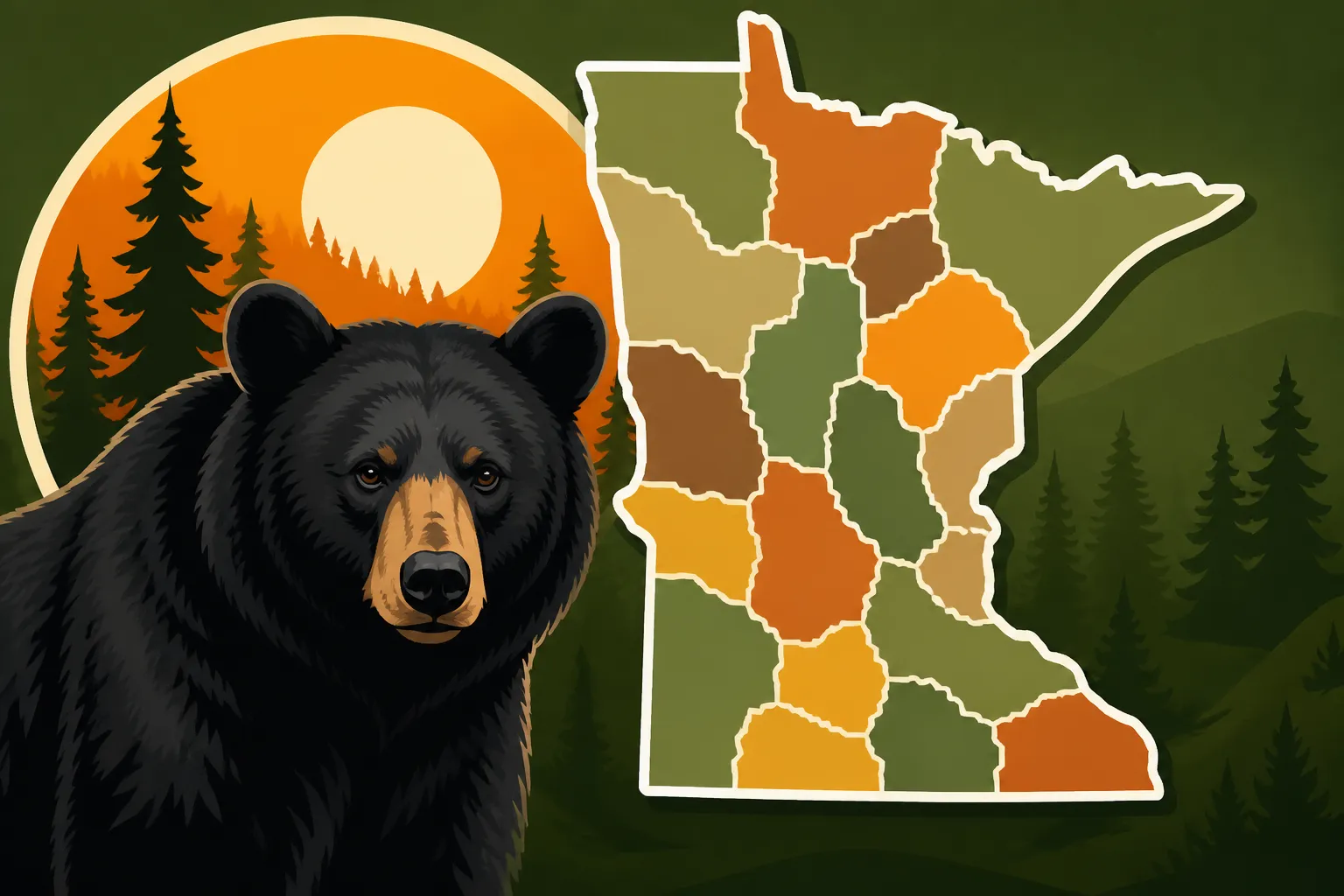
Minnesota divides its bear hunting landscape into a series of numbered permit areas, alongside one unique "No-Quota" zone. The numbered areas, ranging from 11 through 81 (though not all numbers are currently active or exclusively bear-specific), are typically found in the central and northern forested regions of the state. These are the zones where the vast majority of bear hunting takes place and where you'll need to participate in the lottery system to secure a permit. Each of these areas has a specific permit quota determined annually by the DNR, based on their population assessments. These quotas can fluctuate from year to year, influenced by factors like prior harvest success, cub survival rates, and overall habitat conditions.
The No-Quota area, on the other hand, is a distinct anomaly. It's a vast expanse covering a significant portion of northwest Minnesota, where permits are not limited. Hunters can purchase a license and hunt this zone without going through the lottery. This typically reflects areas where bear densities are lower, or where specific management goals aim to encourage a higher harvest rate due to potential conflicts or population growth in certain pockets. For hunters who prioritize getting a tag over hunting a specific, high-density area, the No-Quota zone offers a more straightforward path. Knowing this general structure is the first step in deciding where to focus your efforts, whether you're chasing the thrill of a high-density forest permit or the guaranteed access of the No-Quota zone.
A Closer Look at the Fifteen Bear Permit Areas
Let's dive into the specifics of Minnesota's bear permit areas. Each one presents a unique set of challenges and opportunities, reflecting the diverse landscapes found across the state's bear range. Understanding these differences is crucial for any hunter hoping to increase their odds of success. From the deep, sprawling forests of the northeast to the more mixed-habitat transition zones, each area requires a slightly different approach.
The Forest Zones: Core Bear Country
These are the quintessential bear hunting areas, characterized by vast tracts of timber, ample water, and natural food sources like berries, nuts, and grubs. These zones often have higher bear densities and are where many hunters focus their efforts, particularly those interested in baiting or using hounds. Areas like 13, 25, and 27 in the northeast, or 41 and 43 further west, are classic examples.
-
Permit Area 13 (Northeast): This zone is part of the deep boreal forest, bordering Canada and Lake Superior. It's known for its rugged terrain, dense conifer stands, and a strong population of mature bears. Access can be challenging, with many areas requiring extensive hiking or ATV use on forest roads. Hunters here often focus on baiting around logging cuts, old clearings, or along remote waterways. If you’re looking for a wilderness experience with the potential for a large bear, this area delivers, but be prepared for a physically demanding hunt. The sheer size of this area means that Scouting Minnesota Public Land Before Season is absolutely essential, possibly weeks or even months in advance.
-
Permit Area 25 (North Central): Situated in the heart of Minnesota's traditional bear range, Area 25 encompasses a mix of hardwoods, pines, and swampy lowlands. This area offers good access via county and state forest roads, making it popular for bait hunters. The bear density is consistently high, and successful harvests are common. Hunters often report seeing multiple bears at bait sites, increasing the chances of choosing a mature animal. It's a fantastic choice for those newer to bear hunting or those looking for a more accessible yet productive experience.
-
Permit Area 27 (Northeast/Central): Similar to Area 13 but slightly less rugged, Area 27 still offers vast forested landscapes with excellent bear habitat. It includes parts of the Superior National Forest and various state forests. Bear populations here are robust, and opportunities abound for both bait and spot-and-stalk hunters, particularly along forest edges and near wetlands. This area has a strong history of producing large bears, benefiting from diverse food sources. Public land is plentiful, but hunter pressure can be moderate, especially on accessible parcels.
-
Permit Area 41 (Northwest): This expansive area in northwest Minnesota includes a mix of large timber tracts, agricultural interfaces, and significant swamp complexes. It’s a productive bear zone, though the habitat is somewhat different from the boreal forest further east. Bears here often utilize standing cornfields and other agricultural resources in addition to natural forest foods. This creates unique challenges and opportunities, especially for hunters willing to scout for travel corridors between forest and fields. The success rates here are typically strong, reflecting a healthy bear population adapted to a more varied landscape.
-
Permit Area 43 (North Central): Extending south into more mixed-use lands, Area 43 still retains significant forest cover. It’s known for good bear numbers and is popular due to its relative proximity to population centers. It offers varied terrain, from dense woodlands to open bogs, providing a diverse environment for bears. Baiting is a popular method here, with many hunters establishing sites well in advance. Understanding When Minnesota Bear Season Opens is key, as early baiting can be critical to success in these areas.
Transition Zones and Their Unique Challenges
These areas are often located at the fringes of prime bear habitat, where forests transition into agricultural lands or more settled areas. Bear densities might be lower than in core forest zones, but opportunities can still be excellent, especially for hunters willing to adapt their tactics. Hunting here might involve more scouting for natural food sources or targeting travel corridors between different habitat types.
-
Permit Area 11 (Northeast Fringe): This area is a more southerly extension of the northeastern forests, featuring a mix of forest and agricultural lands. Bear populations are good, but they are often more spread out and can be more elusive due to increased human activity. Hunters in Area 11 might find success focusing on edges where timber meets fields, or baiting in secluded woodlots surrounded by agriculture. It requires a keen understanding of bear movement patterns and a willingness to adapt to a landscape that isn't purely wilderness.
-
Permit Area 12 (Northeast/North Central): This zone is similar to Area 11, bridging core forest with more developed areas. It still boasts substantial timber but also has a stronger human presence. Bears here can be wary, but they are present and often grow to considerable size due to varied diets. Hunters who excel at Hunting Bear Without Bait or Dogs might find success by still-hunting secluded timber blocks or focusing on natural food sources like oak ridges. The challenge here is finding those hidden pockets of bear habitat that see less human disturbance.
-
Permit Area 24 (North Central Fringe): Situated west of the denser forest zones, Area 24 offers a blend of woodlands, wetlands, and agricultural interfaces. Bear numbers are solid, and the habitat provides excellent opportunities, particularly for those who do their homework. Successful hunters often scout for corridors connecting forest cover with food sources like berry patches or cornfields. Using mapping tools like GoHunt can be invaluable for identifying these transitional areas and pinpointing potential bait sites or ambush locations.
-
Permit Area 26 (North Central): This permit area lies southeast of Area 25 and is another productive zone, but with slightly more varied habitat. It has a good mix of state and county forests, but also private land and scattered farms. Bears here can be quite large, benefiting from diverse food sources. It’s a great area for baiting but also offers good opportunities for those who prefer to scout for natural food cycles and set up ambushes. The accessibility makes it a popular choice, so be prepared for moderate hunter numbers, especially on public land.
-
Permit Area 31 (Central): Located further south in central Minnesota, Area 31 represents a true transition zone where forest cover becomes more fragmented. Bear densities are lower than in the northern core, but a persistent population exists. Hunters here will need to be diligent in scouting for sign, likely focusing on smaller, isolated woodlots, river bottoms, or dense swamps that provide cover. Success here often comes down to careful observation and adapting to a landscape where bears are present but might not be as abundant or as accustomed to human presence.
-
Permit Area 44 (Northwest Fringe): This area in northwest Minnesota often borders the No-Quota zone and agricultural lands. It features pockets of quality bear habitat within a more open landscape. Bears are present, but their movements can be influenced by farming activities. Hunters might focus on natural corridors, river breaks, or larger woodlots. This area can be particularly good for those who like to combine different hunting strategies, such as setting bait near a forest edge and also still-hunting nearby cover. GoHunt's detailed maps can assist in identifying these crucial habitat intersections.
-
Permit Area 45 (West Central): Area 45 is one of the more western permit areas, where suitable bear habitat is more isolated. Bear numbers are lower, making drawing a tag more challenging, and hunting success requires significant effort. This is often an area for dedicated hunters who know the land intimately or are willing to put in extensive pre-season scouting. Focus would be on large wetlands, river drainages, and remote forest blocks.
-
Permit Area 51 (East Central): This area in east-central Minnesota is another transition zone, with a mix of woodlands, lakes, and some agricultural presence. Bear densities are moderate, and opportunities exist for patient hunters. Public land in this area can be patchy, so gaining private land access may be beneficial. Bears here are often wary due to more frequent human encounters.
-
Permit Area 61 (Southeast): One of the southernmost bear permit areas, 61 is characterized by fragmented forests and a strong agricultural influence. Bear populations are lower, and tags are highly coveted due to the limited number issued. Hunting here is a true challenge, often requiring extensive knowledge of specific properties or public land pockets where bears persist. Success is hard-won and a testament to persistent scouting and strategic hunting.
-
Permit Area 81 (Southwest): Area 81, though technically a permit area, has extremely limited bear populations and tags are rarely if ever offered. It’s important to note for completeness, but typically not a practical option for bear hunting.
The No-Quota Area: A Different Strategy
The No-Quota area is unique because, as the name suggests, there's no limit to the number of permits issued. If you purchase a bear license, you can hunt here without participating in the lottery. This large area covers much of northwestern Minnesota, extending into the Red River Valley.
- Characteristics: The No-Quota area is largely agricultural, with scattered small woodlots, extensive cattail sloughs, and river bottoms. Bear density is generally lower than in the core forest zones, and bears are often more nomadic, ranging widely across the fragmented habitat.
- Hunting Strategy: Hunters in this area often focus on scouting for fresh sign along river corridors, near standing cornfields, or around isolated islands of timber within the prairie. Spot-and-stalk can be effective in more open country, and baiting is also allowed, typically in small woodlots that provide cover. While a tag is guaranteed, success is far from it, requiring significant effort to locate bears. This area can be a good option for those who want a bear hunting experience without the uncertainty of the lottery, or for those interested in a different kind of hunt where bears are less habituated to human presence. It's a vast region where understanding habitat types, perhaps with the help of GoHunt's mapping features, is critical.
Here's a simplified table summarizing key aspects of the active permit areas:
| Permit Area | General Location | Primary Habitat | Average Bear Density | Lottery Difficulty | Common Hunting Method |
|---|---|---|---|---|---|
| 11 | NE Fringe | Mixed Forest/Ag | Moderate | Medium | Baiting, Still-hunt |
| 12 | NE/NC | Forest/Mixed | Moderate-High | Medium-Hard | Baiting, Still-hunt |
| 13 | Northeast Wilderness | Boreal Forest | High | Hard | Baiting, Spot-stalk |
| 24 | NC Fringe | Forest/Wetland/Ag | Moderate-High | Medium | Baiting, Spot-stalk |
| 25 | North Central Forest | Mixed Forest | High | Medium | Baiting, Hounds |
| 26 | North Central | Mixed Forest/Private | High | Medium | Baiting, Still-hunt |
| 27 | NE/Central Forest | Dense Mixed Forest | High | Medium-Hard | Baiting, Hounds |
| 31 | Central | Fragmented Forest/Swamp | Low-Moderate | Hard | Still-hunt, Ambush |
| 41 | Northwest Forest | Mixed Forest/Ag | High | Medium | Baiting, Spot-stalk |
| 43 | North Central | Mixed Forest | High | Medium | Baiting, Hounds |
| 44 | Northwest Fringe | Woodlots/Ag/Wetland | Moderate | Medium | Baiting, Still-hunt |
| 45 | West Central | Isolated Cover | Low | Hard | Still-hunt, Scouting |
| 51 | East Central | Mixed Forest/Lakes | Low-Moderate | Hard | Baiting (private) |
| 61 | Southeast | Fragmented Forest/Ag | Very Low | Very Hard | Ambush, Scouting |
| No-Quota | Northwest (Red River Valley) | Agricultural/Woodlots | Low | Guaranteed | Spot-stalk, Baiting |
Note: "Lottery Difficulty" is a general estimation based on demand and permit availability, not a guarantee.
Understanding the Bear Lottery and Application Process
For most of Minnesota's prime bear hunting zones, simply deciding where you want to hunt isn't enough; you'll need to successfully draw a permit through the annual lottery. This system ensures fair access and helps the DNR manage harvest numbers effectively. It can feel like a game of chance, but understanding how it works and leveraging preference points can significantly improve your odds over time.
How the Minnesota Bear Lottery Application Works
The bear lottery in Minnesota is an annual process where hunters apply for a chance to receive a permit for one of the designated permit areas. Applications are typically accepted starting in early spring, usually April 1st, with a deadline in early May. You'll specify your first and second choice permit areas during this application. It's crucial to understand that if you draw a permit for your first choice, your second choice is ignored. If you don't draw your first choice, then your second choice is considered, but only if there are leftover permits available after all first-choice applicants have been processed.
The lottery itself prioritizes applicants based on preference points, which we'll discuss next. If you successfully draw a permit, you'll be notified, and you can then purchase your bear license. If you don't draw, you'll receive a preference point for the following year, which is a small consolation but a valuable asset for future applications. Missing the application deadline, which is typically in early May, means you miss out on a chance to hunt the permit areas that year and also lose the opportunity to gain a preference point. Staying on top of these deadlines is paramount for consistent participation in the lottery. Details on applying can be found in the comprehensive guide on Minnesota Bear Lottery and Permit Areas.
Preference Points: Your Key to Drawing a Tag
Preference points are the lifeblood of drawing a bear permit in Minnesota's lottery system. For every year you apply for a bear permit and do not draw one, you accumulate a preference point. The more preference points you have, the higher your priority in subsequent lotteries. Think of it as a weighted drawing: applicants with more points get their names put into the "hat" more times, or are considered first, increasing their statistical chance of drawing a tag. This system is designed to reward persistent applicants, ensuring that those who have waited the longest eventually get a permit.
It's not uncommon for hunters to accumulate several preference points, especially for highly desirable areas with limited quotas, before finally drawing a tag. Some of the most popular areas, particularly those known for high bear densities or larger bears, can require many years of accumulating points. You lose all your accumulated preference points once you draw a permit. This system encourages long-term participation and thoughtful planning. Utilizing a tool like GoHunt can help you research past draw odds for each permit area, giving you a better idea of how many points you might need for your desired zone. This kind of data-driven insight is crucial for making informed application choices.
Applying for a Leftover Bear License in August
What happens if you don't draw a permit in the initial lottery, or if you missed the application deadline altogether? All is not lost! Minnesota offers leftover bear licenses for sale, typically starting in early August. These are permits that were not allocated during the initial lottery process, often for less-demanded permit areas or for the No-Quota zone.
- Availability: Leftover permits are sold on a first-come, first-served basis. They often go quickly, especially for more desirable areas that might have had a few extra permits. The No-Quota area permits are always available as leftovers because they are never limited in the first place. This can be a great option for hunters who are flexible with their hunting location or those who prioritize simply getting a bear tag for the year. Information on Buying a Leftover Bear License in August is released annually by the DNR, so keep an eye on their announcements.
- Strategy: If you plan to pursue a leftover license, be ready to act fast on the announced sale date and time. These are typically available online or through license vendors. While you might not get your absolute top-choice permit area, it's a solid pathway to a bear hunting opportunity, especially if you're willing to hunt the No-Quota zone. Remember, you do not gain a preference point if you purchase a leftover license without having applied in the main lottery. If you applied in the main lottery, didn't draw, and then purchase a leftover, you do still earn a preference point for that year.
Strategic Considerations for Each Permit Area
Once you understand the permit system, the next step is to strategize where and how you want to hunt. Each permit area, with its unique characteristics, lends itself to different approaches. Successful bear hunting isn't just about drawing a tag; it's about understanding the specific challenges and opportunities that each area presents and tailoring your tactics accordingly.
Evaluating Bear Density and Hunter Pressure
One of the first things to consider when selecting a permit area is the bear density. Areas with higher bear densities, typically in the core forest zones like Area 25 or 27, offer a greater likelihood of encountering bears. More bears mean more opportunities to establish successful bait sites, more tracks for hound hunters to follow, and generally more activity for still-hunters to capitalize on. However, high bear density often correlates with higher hunter pressure.
High hunter pressure, particularly on public lands, can make bears more wary. They might become nocturnal, avoid heavily trafficked areas, or be more challenging to lure to bait sites. In these areas, finding secluded pockets of habitat, getting off the beaten path, or establishing bait sites well away from roads becomes crucial. Conversely, areas with lower bear densities, such as the No-Quota zone or the more peripheral permit areas, might have less hunter pressure. While encounters are rarer, the bears you do find might be less wary, offering different kinds of opportunities for stealthy hunters. Researching Minnesota Bear Harvest Numbers for different areas can give you insights into both bear density and hunter success rates, which often reflect pressure.
Public Land Access and Terrain Diversity
The amount and accessibility of public land varies wildly between permit areas, and this is a critical factor for many hunters. Some areas, particularly in northern Minnesota, boast vast tracts of national and state forest land, offering abundant public hunting opportunities. Others, especially in the more agricultural or developed transition zones, might have limited public access, requiring hunters to seek private land permission.
- Forest Zones: Areas like 13, 27, and parts of 41 offer extensive public lands, often with a network of forest roads and trails. However, "access" doesn't always mean "easy." Many of these areas are rugged, requiring long hikes, ATV use, or even canoe access into remote blocks. The sheer size can be daunting, but it also offers the chance to find unpressured bears.
- Transition/No-Quota Zones: Here, public land might be more fragmented, consisting of smaller state forests, wildlife management areas (WMAs), or walk-in access (WIA) parcels. Hunters in these areas may need to spend considerable time identifying these public pockets or focusing on securing permission from private landowners. The terrain diversity also plays a role. Areas with large swamps, dense timber, or rugged hills offer more cover and sanctuary for bears, making them harder to hunt but potentially more rewarding for those who brave the challenge. Using digital mapping apps, like those often integrated with GoHunt, can be indispensable for identifying public land boundaries, scouting terrain features, and planning your approach.
Choosing Your Hunting Method: Baiting, Hounds, or Spot-and-Stalk
Minnesota offers flexibility in bear hunting methods, but not all methods are equally effective or practical in every permit area. Your preferred hunting style should heavily influence your permit choice.
- Baiting: This is by far the most popular method in Minnesota. It involves establishing bait sites with tempting foods to attract bears to a specific location for a shot. Baiting is highly effective in areas with good bear densities and sufficient cover, such as the core forest zones (e.g., Areas 25, 27, 43). It requires significant time and effort in the weeks leading up to the season to establish and maintain bait sites. A good resource for this method is Baiting Bears in Minnesota's Forest Zone.
- Hound Hunting: Using trained hounds to track and tree bears is a thrilling and effective method, but it requires specialized dogs and equipment. Hound hunting is primarily practiced in the extensive forested areas where bears have room to run, and where dog teams can navigate the terrain (e.g., Areas 25, 27, 43). Not all areas are suitable due to terrain or private land restrictions. For those interested, consider guides on Running Hounds for Minnesota Bears.
- Spot-and-Stalk/Still-Hunting: This method involves actively seeking out bears by walking quietly through suitable habitat, observing from a vantage point, or targeting natural food sources. It's often employed in the No-Quota area where bears might be seen crossing open fields or along river bottoms, or in permit areas where baiting isn't preferred or practical. It's also a valid method in dense forests, often focused on fresh sign, berry patches, or acorns. This method demands patience, stealth, and a deep understanding of bear behavior. If this is your preferred method, reading up on Hunting Bear Without Bait or Dogs might be beneficial.
Your chosen method will dictate what type of terrain and access you need, directly impacting which permit area will give you the best chance of success.
Essential Regulations and Post-Harvest Procedures
Congratulations, you’ve put in the work, navigated the permit system, chosen your area, and now you have a bear on the ground. The hunt isn't over yet! There are crucial regulations regarding post-harvest procedures and safety that every bear hunter must follow. Ignoring these can lead to serious legal trouble and compromise meat quality.
Minnesota Bear Registration Rules and Requirements
Once you've harvested a bear, registering it with the Minnesota DNR is a mandatory step. This process helps the DNR collect vital data on harvest numbers, bear health, and population trends, which in turn informs future management decisions. The specific rules for Minnesota Bear Registration Rules generally require you to register your bear within 48 hours of harvest or within 24 hours of arriving at your residence or temporary lodging. This can usually be done online, by phone, or at an authorized registration station.
When you register your bear, you'll need to provide details such as the permit area where it was taken, the date of harvest, and your license information. You'll also typically be required to present the bear's skull, and sometimes a tooth, for biological sampling. This allows the DNR to determine the bear's age and health, providing critical data for their population models. Failing to register your bear or not providing the required samples is a serious violation, so make sure you're aware of the specific requirements for the current season well in advance.
Carcass Movement and Handling Bear Meat Safely
After the shot, proper care of your bear carcass is paramount, both for meat quality and to comply with regulations, especially concerning disease management. The most important step is to field dress your bear promptly to allow the carcass to cool down. Bear meat can spoil quickly, particularly in warm weather, so getting the guts out and the body cavity cooled is critical for preserving the quality of the meat.
- Carcass Movement: There are specific rules regarding the movement of bear carcasses, particularly related to Chronic Wasting Disease (CWD), although CWD is primarily a deer concern. However, general regulations apply to prevent the spread of other potential diseases. For instance, you might not be able to transport certain parts of the carcass outside of specific zones. Always check the current Minnesota hunting regulations for the most up-to-date information on carcass movement restrictions.
- Meat Handling: Bear meat is delicious and versatile, but it must be cooked thoroughly due to the potential for trichinosis. Freezing does not kill trichinosis parasites, so a meat thermometer is your best friend when preparing bear. Cook all bear meat to an internal temperature of at least 160°F (71°C). Prompt processing and proper storage, such as chilling in coolers with ice or getting it to a freezer quickly, are essential. For comprehensive advice on ensuring your harvest is safe and delicious, refer to articles like Handling Bear Meat Safely.
Blaze Orange and Other Safety Guidelines
Safety is always the top priority when hunting, and bear hunting is no exception. While blaze orange requirements for bear hunting differ from deer hunting, understanding them is vital.
- Blaze Orange: In Minnesota, when hunting bear during the firearm deer season in areas that are also open to firearms deer hunting, hunters (and those accompanying them) are required to wear blaze orange or blaze pink. This typically means a jacket and cap that are at least 50% blaze orange or pink. However, if you are strictly bear hunting outside of the firearm deer season, the blaze orange requirement does not apply. Always double-check the current regulations, especially if your bear hunt overlaps with other seasons. A quick reference for general rules is Minnesota Blaze Orange Requirements.
- Other Safety Tips:
- Know Your Target and Beyond: Bears can be elusive, and sometimes a shot presents itself quickly. Always identify your target positively and be aware of what is beyond it.
- Hunt with a Partner: Especially in rugged bear country, having a hunting partner is smart for safety and for help with recovery.
- Bear Spray: While hunting bears, carrying bear spray is always a good idea for close encounters, especially if you're baiting or scouting in dense cover.
- First Aid Kit: A well-stocked first aid kit is essential, particularly when hunting in remote areas.
- Communication: Have a reliable way to communicate, whether it's a fully charged cell phone (though service can be spotty in many bear areas) or a satellite communication device.
Following these regulations and safety guidelines ensures not only a successful hunt but also a responsible and safe experience in Minnesota's beautiful bear country.
Disclaimer
The information provided in this guide is for general informational purposes only and does not constitute legal advice. Hunting regulations, permit area boundaries, and seasons are subject to change by the Minnesota Department of Natural Resources (DNR). It is the hunter's sole responsibility to consult the official Minnesota DNR hunting regulations annually and ensure full compliance with all applicable laws and rules before participating in any hunting activities.