Minnesota Fisher and Bobcat Permits
Hunting bobcats and fishers in Minnesota offers an incredibly rewarding challenge, yet the permit system can feel like navigating a dense thicket of regulations. It’s easy to get frustrated trying to understand application deadlines, lottery odds, and specific zone requirements, especially when all you want to do is head afield or set your traps. This comprehensive guide is designed to cut through that confusion, giving you a clear, detailed roadmap to successfully acquiring and utilizing Minnesota's fisher and bobcat permits, ensuring you're fully prepared for the season.
Understanding Minnesota's Furbearer Management
Minnesota manages its furbearer populations, like fisher and bobcat, with a careful hand. These aren't your typical abundant small game species; they require specific attention to ensure healthy numbers for future generations. The permit system is the DNR's primary tool for this delicate balance, ensuring that we can all continue to enjoy the pursuit of these elusive animals.
Why Permits for Fisher and Bobcat?
Unlike hunting squirrels or rabbits, where you simply need a small game license, pursuing fisher and bobcat demands an additional, species-specific permit. This isn't just bureaucratic red tape; it's a critical conservation measure. Both fishers and bobcats have lower reproductive rates and larger home ranges compared to many other furbearers. Without strict management, including limited permits, it would be all too easy to overharvest these populations, leading to declines that could take years, even decades, to recover. The Minnesota Department of Natural Resources (DNR) uses these permits to control the harvest pressure, particularly in areas where populations might be more sensitive or slow to rebound.
Moreover, the permit system is an invaluable data collection tool. Each permit issued and each animal registered provides the DNR with crucial information. They track harvest rates, success rates in different permit areas, and overall population trends. This data helps biologists understand the health of the furbearer populations, identify any potential issues, and make informed decisions about future seasons. For instance, if harvest numbers consistently drop in a specific zone, it might signal a need to reduce permits or even close the season temporarily to allow the population to recover. It's a feedback loop designed to protect the resource while still providing hunting and trapping opportunities. The ability to collect this precise data on specific species allows for more nuanced management compared to, say, a blanket small game season.
Finally, these permits help balance hunter and trapper opportunity with sustainable resource use. There's a strong passion for pursuing these unique furbearers, and interest often outstrips the sustainable harvest potential in certain desirable areas. The lottery system (which we’ll get into shortly) ensures equitable access to these limited opportunities while maintaining the ecological integrity of the populations. It prevents a free-for-all that would quickly decimate these beautiful animals, ensuring that the privilege of pursuing them remains available for many years to come. This careful approach helps avoid the boom-and-bust cycles that can plague unmanaged wildlife populations.
The Difference Between Fisher and Bobcat Seasons
While both fisher and bobcat require special permits, their management and typical seasons often diverge due to their distinct biological needs, historical population trends, and geographic distributions within Minnesota. Understanding these differences is key to planning your furbearer pursuits.
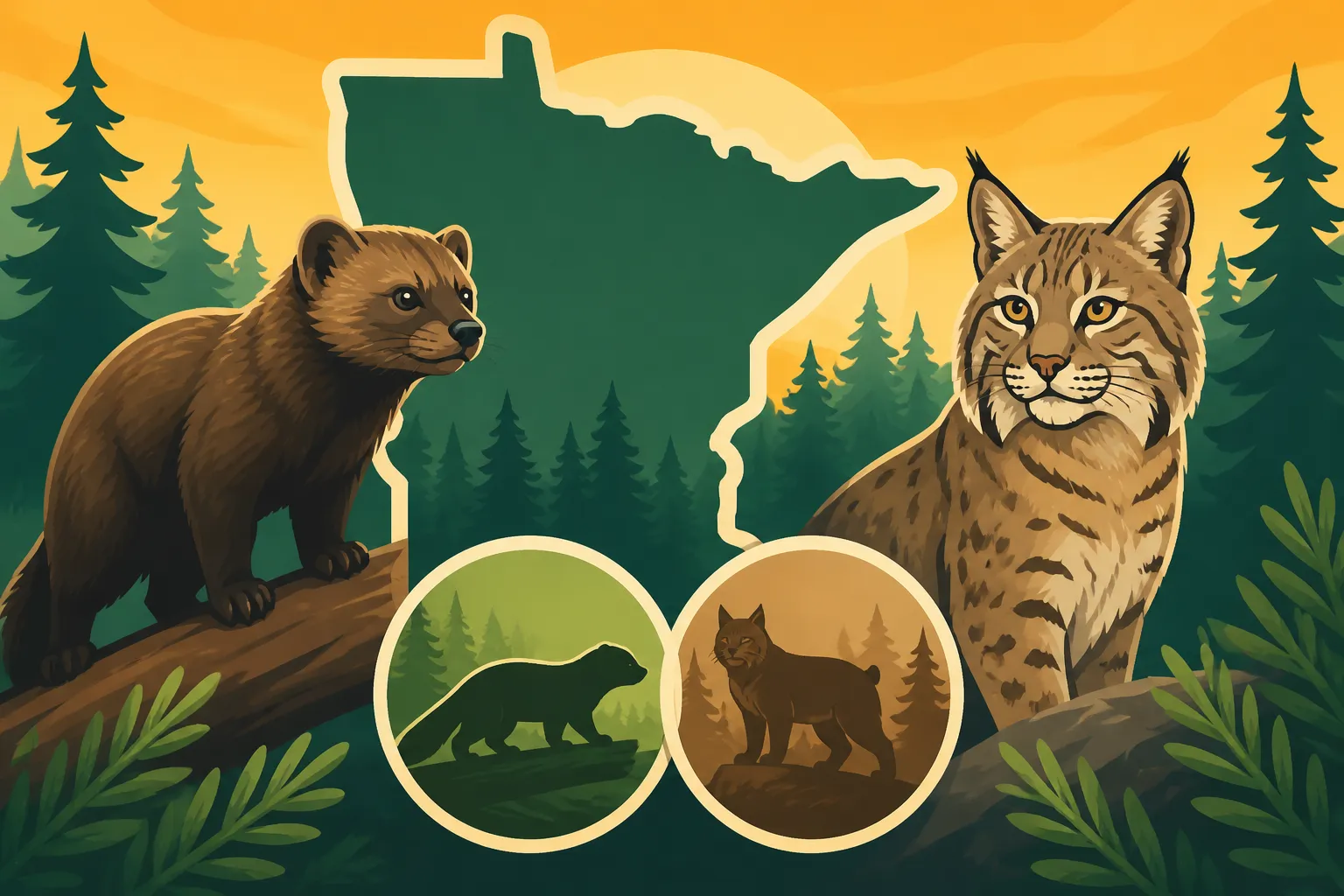
Fishers, those elusive members of the weasel family, are primarily found in Minnesota's northern forests. They thrive in mature conifer and mixed hardwood-conifer forests, often associated with dense canopy cover and abundant small prey like snowshoe hares and red squirrels. Their population numbers tend to be more sensitive to habitat changes and severe winters, so their seasons are typically shorter and more geographically restricted. You'll find most fisher permit areas concentrated in the northern two-thirds of the state, reflecting their preferred habitat. The DNR often aligns fisher seasons with other northern furbearer seasons, which can sometimes overlap with deer hunting in the later parts of the firearm season, requiring careful planning for those who wish to pursue both.
Bobcats, on the other hand, have a broader distribution, extending into some of Minnesota's central and even southeastern regions, although they are most abundant in the forested areas of the north. They are adaptable animals, capable of utilizing various habitats from dense forests to brushy farmlands, as long as there's sufficient cover and prey. Because of their somewhat more robust and widespread populations compared to fishers, bobcat seasons might be slightly longer or have more permit areas available, though they are still tightly controlled. Their harvest limits are also typically very strict, often one per hunter/trapper per season, mirroring the cautious approach taken with fishers. Each species represents a unique challenge and opportunity, making it crucial to consult the specific regulations for the upcoming season to confirm the exact dates and zones for both.
Navigating the Application Process for Fisher and Bobcat Permits
The application process for fisher and bobcat permits can feel a bit like a high-stakes lottery, and in many ways, it is. But with a clear understanding of the timelines and mechanisms, you can maximize your chances of success. It's not just about luck; it's about being informed and persistent.
Key Dates and Deadlines
One of the most critical aspects of securing a fisher or bobcat permit is simply knowing when to apply. Miss a deadline, and you're out of luck for the entire season. The application period for these specific furbearer lotteries typically opens in late summer or early fall. For example, in past years, the application window often fell between mid-August and early September. You generally have about a two to three-week window to submit your application. It's a short period, so marking your calendar and setting reminders is absolutely essential. Many hunters and trappers use online tools or apps like GoHunt to keep track of these crucial dates, ensuring they don't accidentally let an opportunity slip by.
Once the application period closes, there's a waiting game. The DNR then conducts the lottery drawing. Typically, applicants are notified of their drawing success (or lack thereof) by early to mid-October. This notification is usually sent via email, so make sure your contact information is up to date in the DNR's eLicense system. Knowing this notification timeline helps manage expectations and allows you to pivot your hunting and trapping plans if you weren't drawn. If you're planning on a diverse season, knowing your permit status for species like bobcat or fisher will help you finalize your plans, perhaps focusing more on Trapping Minnesota Furbearers or Predator and Furbearer Hunting in Minnesota if you didn't draw a coveted permit.
If you are one of the lucky few drawn for a permit, your journey isn't over yet. There's usually a specific timeframe, often a couple of weeks, within which you must purchase your permit. This step is non-negotiable; if you don't purchase it by the deadline, your permit will be forfeited and likely offered to an alternate. It’s easy to get excited and forget this final administrative step, but it’s just as important as the initial application. Always double-check your email and your eLicense account if you suspect you might have been drawn.
The Lottery System and Preference Points
The demand for fisher and bobcat permits often far exceeds the supply, especially in prime furbearer habitats. To allocate these limited opportunities fairly, the Minnesota DNR employs a lottery system. When you apply, you're essentially entering a drawing for a chance to receive a permit for a specific permit area. It's not uncommon for some zones, particularly those with strong populations or easy access, to have significantly higher application rates, making them much harder to draw. This system ensures that everyone, regardless of experience or connections, has an equal shot, at least initially.
To reward persistent applicants, Minnesota utilizes a preference point system. If you apply for a fisher or bobcat permit and are unsuccessful in the drawing, you'll typically be awarded a preference point. The more preference points you accumulate, the better your odds of drawing a permit in subsequent years. For instance, if you have 3 preference points, your name might be entered into the drawing three times, plus once for your current application, effectively giving you four chances compared to a first-time applicant's one. This system encourages continuous participation in the lottery, even if you don't expect to draw every year. Many dedicated furbearer enthusiasts apply year after year, building up their points, viewing it as an investment in future opportunities. It's a common strategy to maximize your odds. Analyzing draw odds, especially for different permit areas, is a valuable exercise. Websites and tools, like those you might find on GoHunt, can sometimes offer insights into historical draw odds, helping you decide which zones might be worth applying for based on your accumulated preference points.
It’s crucial to understand that preference points are often specific to the species (fisher vs. bobcat) and sometimes even to the type of permit (e.g., resident vs. non-resident). Losing a year of application means you don't gain a point, effectively pushing your successful draw further into the future. Some permit areas might be drawn every year with zero points, while others require several points to have a reasonable chance. Make sure to consult the specific DNR regulations for "Minnesota Fisher and Bobcat Permits" each year, as the rules for preference points and permit area boundaries can occasionally be adjusted. This meticulous attention to detail can be the difference between heading out for a prized furbearer and staying home.
License Requirements Beyond the Permit
Securing a fisher or bobcat permit is a significant step, but it's not the only piece of the puzzle. To legally pursue these furbearers, you'll need to ensure you meet several other foundational licensing and education requirements. Overlooking these could lead to serious legal trouble and a ruined season.
First and foremost, you must possess a valid Minnesota resident or non-resident trapping license or a small game license with furbearer endorsement, depending on how you plan to harvest the animal. The specific type of license required can vary, so it’s critical to verify this with the current DNR regulations. A small game license is typically sufficient for hunting furbearers, while a trapping license is explicitly for setting traps. If you're planning to run a full Trapping Minnesota Furbearers operation, you'll definitely need the dedicated trapping license. You can find detailed information on Minnesota Trapping License Cost and purchase options through the DNR’s eLicense system.
Secondly, hunter education or trapper education requirements are mandatory for most individuals born after a certain date (currently January 1, 1979, for hunter education, with similar requirements for trapper education). If you haven't completed these courses, you'll need to do so before you can legally purchase a hunting or trapping license and, by extension, your furbearer permit. These courses cover crucial aspects of safety, ethics, wildlife identification, and conservation principles. Minnesota also offers a Mentored Youth Hunting Program that allows individuals under the age of 16 to hunt or trap without prior certification, provided they are accompanied by a licensed adult mentor. However, the goal should always be to complete the Minnesota Hunter Safety Requirements and/or trapper education as soon as possible to ensure full compliance and responsible participation.
It's a good practice to carry proof of all your licenses and permits while afield, whether it's on your phone via the DNR's eLicense app or physical copies. Conservation officers regularly check for compliance, and having everything in order makes for a much smoother experience. Don't let a technicality derail your hard-earned permit.
Hunting and Trapping Regulations for Permitted Furbearers
Once you've successfully drawn and purchased your permit, the real work begins: preparing for the hunt or trap season. Minnesota has specific regulations designed to ensure humane take, public safety, and the continued health of its furbearer populations. Familiarity with these rules is paramount for a successful and legal season.
Legal Methods and Equipment
The regulations surrounding legal methods and equipment for fisher and bobcat are quite detailed, especially for trappers. For those planning to trap, you must adhere to specific rules regarding trap types, sizes, and placement. For example, Minnesota has strict guidelines on foothold trap jaw spreads, snare wire diameters, and body-grip trap sizes to minimize the incidental capture of non-target animals, such as deer or domestic pets. You can't just set any trap anywhere. Generally, traps must be set in a manner that takes the animal quickly and humanely. Specific examples include requirements for guarding or shielding larger body-grip traps (like Conibear 220s) when set on land to protect non-target species, or prohibitions on setting traps within certain distances of public roads or buildings without landowner permission. Always check the annual Minnesota Furbearer Regulations booklet for the most up-to-date and comprehensive list of legal trap types and modifications.
For hunters pursuing bobcats, legal methods are typically more straightforward, often involving firearms or archery equipment. While there isn't usually a specific "bobcat caliber" restriction, hunters must use legal methods for taking small game in general. This might include rimfire rifles (like a .22LR for close-range shots), centerfire rifles, or shotguns with appropriate shot sizes. It's crucial to be aware of shooting hours, as most furbearer hunting must occur during legal daylight hours, contrasting with some predator hunting, such as Coyote Calling in a Minnesota Winter, which might allow night hunting under specific conditions. When still-hunting or using predator calls, ensure you're on legal hunting land, which could be anything from Minnesota Wildlife Management Areas to vast stretches of Superior and Chippewa National Forest Hunting.
Regardless of your chosen method, understanding the regulations concerning bait and lure is also essential. There are rules about the types of bait you can use, how much, and where it can be placed. For instance, using protected game animals as bait is generally illegal, and there might be restrictions on placing bait within certain distances of dwellings or public areas. These rules are designed to prevent nuisance issues, minimize disease transmission, and maintain fair chase principles. Consult your DNR regulations booklet before setting any traps or bait sites.
Reporting and Tagging Requirements
A successful harvest of a fisher or bobcat comes with a mandatory administrative step: proper tagging and registration. This isn't just a formality; it's a critical part of the DNR's management strategy, allowing them to accurately track harvest numbers and monitor population health. Failing to properly tag and register your animal can result in fines and loss of hunting/trapping privileges.
Immediately upon harvesting a fisher or bobcat, you are required to attach the specific permit tag that was issued to you. This tag must be securely fastened to the animal, often through a slit in the ear or around a leg, and remain attached until the animal is officially registered. The tag serves as proof that you legally took the animal under your permit. It’s an easy detail to overlook in the excitement of a successful take, but it's absolutely vital. Having a permanent marker and some zip ties or strong cord in your pack specifically for tagging can save you a headache later.
Following the tagging, you must register your harvested animal. Minnesota typically requires registration within a specific timeframe, often 24 or 48 hours of harvest. This can be done online through the DNR's website, by phone, or sometimes at designated in-person registration stations. The registration process usually asks for details such as the date and time of harvest, the specific permit area, and the sex of the animal. If you plan to head to more remote areas, such as when Running a Trapline in Northern Minnesota, ensure you have a plan for how and when you'll access internet or phone service to meet the registration deadline. The information gathered during registration is invaluable to the DNR for assessing harvest pressure and making future management decisions.
Additionally, the DNR sometimes requests specific biological samples from harvested furbearers, particularly for research purposes. This might include a tooth for aging, a tissue sample for genetic analysis, or a stomach content sample to study diet. If requested, information on how to collect and submit these samples will be provided. While often voluntary, contributing these samples is a great way to participate in scientific conservation efforts and ensure the long-term health of these furbearer populations.
Carcass Movement and Disease Considerations
While Chronic Wasting Disease (CWD) is primarily a concern for cervids like deer and elk, general rules around carcass movement and disease awareness are still important for furbearer hunters and trappers. It’s always best to be informed and practice responsible handling.
Currently, there are no specific CWD-related carcass movement restrictions directly targeting fisher or bobcat. The primary focus of CWD regulations in Minnesota, including the Minnesota Carcass Movement Restrictions, is on deer, elk, and moose. These rules prevent the spread of prions that cause CWD by limiting the movement of certain high-risk parts (like brain, spinal cord) from CWD management zones. However, furbearers, as scavengers, could theoretically consume infected deer carcasses. While there's no evidence of CWD transmission to furbearers or humans through furbearers, it's a good reminder to handle all wildlife with care.
A more direct concern for furbearers is the presence of other wildlife diseases, such as rabies, distemper, or mange. It’s important to be able to recognize signs of illness in any animal you harvest. Animals acting abnormally, appearing emaciated, having unusual lesions, or exhibiting neurological symptoms should be reported to the DNR. Never handle visibly sick or deceased animals with bare hands. General safe handling practices, such as wearing gloves when field dressing or skinning any furbearer, are always recommended. This protects you from potential zoonotic diseases and also helps maintain the quality of the fur or meat.
Proper carcass disposal is also a part of responsible hunting and trapping. Avoid leaving carcasses in highly visible areas or where domestic animals might access them. If you’re not taking the meat (which is an option for many furbearers like fisher), ensure the remains are disposed of respectfully and in accordance with any local regulations. Being mindful of these practices contributes to overall wildlife health and positive public perception of hunting and trapping.
| Permit Type | Application Period (Approx.) | Notification (Approx.) | Season Dates (Varies Annually by Zone) | Bag Limit | Preference Points | Key Requirement |
|---|---|---|---|---|---|---|
| Fisher | Mid-Aug to Early Sept | Early to Mid-Oct | Dec – Jan (Northern Zones) | 1 per season | Yes | Trapping/Small Game License |
| Bobcat | Mid-Aug to Early Sept | Early to Mid-Oct | Dec – Jan (Various Zones) | 1 per season | Yes | Trapping/Small Game License |
Note: All dates and season lengths are approximate and subject to change annually by the Minnesota DNR. Always consult the current year's official regulations booklet.
Disclaimer
Please be aware that hunting and trapping regulations, season dates, and permit requirements are subject to change annually by the Minnesota Department of Natural Resources (DNR). While we strive to provide accurate and up-to-date information, it is your responsibility to consult the official Minnesota DNR hunting and trapping regulations for the current year before participating in any hunting or trapping activities. This content is for informational purposes only and does not constitute legal advice.