How Elk Returned to Northwest Minnesota
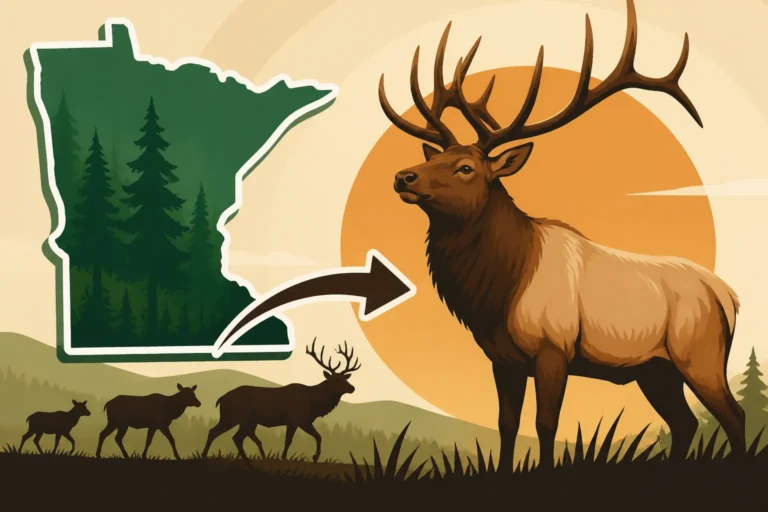
For many folks who grew up in Minnesota, the idea of wild elk roaming our woods and prairies might sound like something out of a history book, or maybe a distant western state. It’s hard to imagine, given their absence for so long. But the truth is, these majestic animals once thrived here, and thanks to dedicated conservation efforts, they've made a remarkable comeback in the northwestern corner of our state. This guide is dedicated to unraveling the fascinating, and often challenging, story of how elk returned to Northwest Minnesota, offering a deep dive into their history, the reintroduction process, and the ongoing work to ensure their future.
The Echoes of the Past: When Elk Roamed Minnesota
It’s easy to forget that Minnesota wasn’t always just deer country. Centuries ago, before the widespread settlement of European pioneers, our landscape was home to a much broader array of wildlife, including healthy populations of elk. Their presence was a natural part of the ecosystem, influencing everything from forest regeneration to predator-prey dynamics.
Original Range and Decline
Historical records, early explorer accounts, and archaeological findings paint a picture of elk ranging across a significant portion of what we now call Minnesota. While they were most concentrated in the vast prairies and woodland edges of the west and northwest, there's evidence suggesting their range extended into the central and even southeastern parts of the state. Imagine these magnificent animals, some weighing over 700 pounds, moving across the same land where we now chase whitetails or hunt pheasants. They were an integral part of the fabric of pre-settlement Minnesota.
However, as European settlement intensified in the 18th and 19th centuries, the pressures on elk populations became insurmountable. The rapid conversion of prairies to farmlands, the clearing of forests for timber and agriculture, and the sheer scale of unregulated market hunting quickly pushed elk to the brink. It was a rapid and devastating decline, not just for elk, but for many large game species across North America. By the early 1900s, the last native wild elk in Minnesota were considered extirpated, a tragic loss for the state's natural heritage. It's a sobering reminder of how quickly human activity can impact even the most robust wildlife populations.
Factors Leading to Extinction
The disappearance of Minnesota’s elk wasn’t due to a single cause but rather a perfect storm of environmental and human pressures. Unregulated market hunting played a massive role, with hunters slaughtering animals not just for personal sustenance but to supply burgeoning urban markets with meat and hides. There were no bag limits, no seasons, and no real thought given to conservation, simply because the concept barely existed at the time. This commercial exploitation of wildlife was unsustainable and incredibly destructive.
Beyond hunting, habitat conversion was equally devastating. The rich prairies of western Minnesota, prime elk habitat, were quickly plowed under for crops. Forests were logged without regeneration in mind, fragmenting the remaining wild spaces. Elk, being large grazers and browsers, require vast tracts of diverse habitat to thrive, and these were rapidly shrinking. Furthermore, as domestic livestock became more prevalent, diseases carried by cattle could spread to wild elk, weakening populations already under immense stress. Without a concerted conservation ethic or established game laws, the odds were stacked against them. It was a bleak time for Minnesota's wildlife, and the loss of the elk was a stark symbol of that era.
A New Hope: The Elk Reintroduction Saga Begins
The idea of bringing elk back to Minnesota wasn't a new one, but early attempts faced significant hurdles. It took decades of learning, careful planning, and dedicated effort from a diverse group of stakeholders to truly set the stage for their successful return.
Early Reintroduction Attempts
The dream of seeing elk back in Minnesota's wild places didn't just appear out of nowhere in recent decades. In fact, some of the earliest documented attempts to reintroduce elk in Minnesota date back to the early 20th century, notably around Itasca State Park. These initial efforts, while well-intentioned, often faced immense challenges. Many of the first transplanted elk succumbed to disease, struggled to adapt to new habitats, or dispersed widely, making population management difficult. There was also a significant lack of public understanding and acceptance, as communities were still grappling with the concept of wild game populations existing alongside agriculture.
These early failures, however, weren't in vain. They provided invaluable lessons for future conservationists. Researchers and wildlife managers began to understand the critical importance of careful disease screening of donor animals, the need for robust habitat suitability assessments, and, perhaps most crucially, the necessity of strong community engagement. Without local support, particularly from landowners who would live with the elk, any reintroduction effort was destined to fail. This early trial-and-error period laid the groundwork, highlighting both the biological and social complexities involved in bringing a large, charismatic species back from extirpation.
The Role of the DNR and Conservation Partners
By the late 20th century, the Minnesota Department of Natural Resources (DNR), alongside various conservation organizations and local partners, began to seriously evaluate the feasibility of elk reintroduction. This time, however, the approach was far more strategic. The first critical step was identifying suitable habitat – areas that could sustain a wild elk population with minimal conflict. Northwest Minnesota, with its unique blend of forest fringes, brushlands, and agricultural fields, stood out. This region offered the diverse forage and cover elk require, while also being relatively less populated than other parts of the state.
Securing funding and political will was another monumental task. It wasn't just about finding the right animals or the right land; it was about building consensus among diverse groups, from agricultural producers concerned about crop damage to outdoor enthusiasts eager for a new species. Organizations like the Rocky Mountain Elk Foundation, tribal nations, and local conservation groups played pivotal roles in advocating for the elk, providing financial support, and fostering community dialogue. The DNR meticulously planned the sourcing of donor elk, focusing on healthy animals from established herds in other states or Canadian provinces, ensuring they were disease-free and genetically robust. This collaborative, science-driven approach was a stark contrast to earlier, less organized efforts, and it was absolutely essential for the success that followed.
Successful Restoration in Northwest Minnesota
The culmination of all this planning and dedication truly began to manifest in the late 1980s and 1990s. This period marked the most significant reintroduction events, specifically targeting areas within Kittson and Marshall Counties. Elk were carefully captured in places like Canada and released into designated zones in Minnesota, often into holding pens for a period of acclimatization before their final release into the wild. It was a nail-biting process, watching these magnificent animals step out into their new home, wondering if they would adapt.
Initially, the growth of the herds was slow but steady. Elk are not known for rapid population explosions, and their survival is dependent on calf recruitment, winter severity, and minimal human-caused mortality. There were challenges with elk dispersing into areas where they weren't wanted, and some initial conflicts with landowners. However, the consistent efforts of the DNR, backed by the aforementioned partners and a growing wave of public support, helped to mitigate many of these issues. Over time, these reintroduced elk adapted, reproduced, and began to establish themselves, gradually forming the distinct herds we recognize today. This successful restoration was not a quick fix, but a testament to sustained, patient conservation work that truly paid off, bringing a symbol of wild Minnesota back to life. This slow but steady process is a powerful example of why effective conservation takes time and persistence, a lesson that When Elk Were Reintroduced to Minnesota explores further.
Elk in the Present Day: Minnesota's Growing Herds
Today, when you talk about elk in Minnesota, you're primarily talking about the populations that have become established in the far northwest. These aren't vast herds like you might find in Montana or Colorado, but they are a thriving, growing part of our state's biodiversity, managed carefully to balance wildlife needs with human interests.
The Kittson and Marshall County Elk Herds
Currently, Minnesota is home to three distinct elk herds, all located in the northwestern part of the state, primarily within Kittson and Marshall Counties. Each herd has its own character and challenges, shaped by the specific landscape it inhabits.
The Caribou-Vita herd is arguably the most well-known and often considered the original core of the reintroduction. Primarily residing in northeastern Kittson County, straddling the Canadian border, this herd is often found in the more forested, brushy areas. Its estimated population fluctuates, but recent figures often place it in the range of 50-70 animals. These elk are often a bit more elusive, utilizing dense cover along the forest fringe.
The Kittson Central herd is another significant group, typically found further south in Kittson County, often in a more mixed prairie and agricultural landscape. This herd has shown strong growth and often has a higher population, recently estimated around 120-150 animals. They're more likely to be seen utilizing agricultural fields, which, while providing excellent forage, also brings them into closer contact (and sometimes conflict) with farmers.
Finally, the Grygla herd is located primarily in northeastern Marshall County. This is generally the smallest of the three herds, with an estimated population of 40-50 animals. This herd also inhabits a mix of brushland, wetland, and agricultural areas. It's truly incredible how these different groups have carved out their niches.
Collectively, these herds represent a significant conservation victory. The overall population of Minnesota's wild elk has seen a positive trend over the past few decades, indicating successful adaptation and reproduction. While numbers might seem small compared to the thousands of deer, for a species brought back from extirpation, it's a testament to resilience and dedicated management. Understanding the specific dynamics of The Kittson and Marshall County Elk Herds is key to appreciating this ongoing success. For those curious about the exact figures, The Kittson County Elk Herd Size can offer more granular details.
Elk Management Zones and Objectives
Managing a growing population of large ungulates like elk in a state where they were once absent is a complex balancing act, and the Minnesota DNR approaches it with careful consideration. The state has established specific management zones corresponding to the ranges of these three herds. The overarching goal is not necessarily to have elk everywhere, but to maintain healthy, viable, and socially acceptable populations in these designated areas.
The objectives typically include:
- Population Targets: Setting a desired population range for each herd, aiming for numbers that can thrive ecologically while minimizing conflicts with human activities, especially agriculture.
- Habitat Management: Working to enhance and protect suitable elk habitat, often involving collaboration with private landowners and federal agencies on land restoration projects.
- Public Hunting Opportunities: While extremely limited, regulated hunting is an important management tool. It helps control population growth, especially in areas where elk might wander into conflict zones, and generates revenue for conservation efforts. It also fosters public acceptance and gives hunters a chance at a truly once-in-a-lifetime experience. For a deep dive into the process, check out Minnesota Elk Lottery Rules.
- Conflict Mitigation: Developing strategies to address crop damage and other landowner concerns, which are vital for maintaining social tolerance for elk.
Each zone has its own nuanced plan, taking into account the unique ecological and social landscapes. The DNR continuously evaluates these objectives based on current population data, habitat conditions, and feedback from local communities. The long-term vision is to ensure that elk remain a cherished, self-sustaining component of Minnesota's natural heritage. Hunters interested in pursuing an elk tag would do well to familiarize themselves with these specific Minnesota Elk Hunt Zone Boundaries.
Research and Monitoring Efforts
Effective wildlife management is built on a foundation of sound scientific research and continuous monitoring, and Minnesota's elk are no exception. The DNR employs a variety of techniques to keep a close eye on the health and movements of these herds, ensuring that management decisions are data-driven.
One of the most critical tools is the use of radio telemetry and GPS collars. Elk are periodically captured and fitted with collars that transmit their location, allowing biologists to track their movements, understand their home ranges, and identify critical habitat use patterns. This data is invaluable for understanding how elk navigate the landscape, where they feed, where they bed, and how they interact with agricultural lands. Aerial surveys are also conducted, especially during winter months when elk are more visible against the snow, to get accurate population counts and assess herd composition (e.g., bull-to-cow ratios, calf-to-cow ratios). Remote cameras strategically placed in known elk areas further help monitor activity, identify individual animals, and even spot potential health issues.
Public sighting reports are also surprisingly vital. Local residents and hunters often provide valuable, anecdotal information about where and when they're seeing elk, helping to fill in gaps in the more intensive scientific monitoring. Resources like GoHunt, which offer tools for researching specific game species and their ranges, could be incredibly useful for hunters and wildlife enthusiasts wanting to contribute to this understanding or simply to learn more about the elk's behavior. This collaborative approach ensures that the DNR has the most comprehensive picture possible of Minnesota's elk, enabling them to make informed decisions for the future of these magnificent animals. For those hoping to catch a glimpse of these incredible animals, Elk Viewing in Northwest Minnesota offers some great tips.
Navigating the Future: Challenges and Opportunities for Minnesota Elk
While the return of elk to Minnesota is a conservation success story, their future is not without its hurdles. Balancing the ecological needs of a large wild animal with the realities of an agricultural landscape and the ever-present threat of disease requires ongoing vigilance and adaptive management strategies.
Agricultural Conflicts and Habitat Loss
One of the most persistent and significant challenges for Minnesota's elk herds is the potential for conflict with agricultural interests. Elk, especially those in the Kittson Central herd, often utilize private farm fields for forage, particularly during harsh winters or in late summer when crops are mature. A herd of elk can cause substantial damage to corn, soybeans, or other valuable crops, leading to understandable frustration for landowners. This issue is not unique to Minnesota, but it is particularly sensitive in a state with such a strong agricultural foundation.
The DNR has developed various strategies to mitigate these conflicts, including compensation programs for crop damage, direct payments to landowners for providing habitat, and even the use of hazing techniques or temporary fencing to deter elk from certain fields. However, these are often reactive measures, and the long-term solution lies in proactive habitat management that provides ample natural forage away from high-value crops. The continuous pressure of agricultural expansion and development means that prime elk habitat is always at risk of fragmentation or conversion, making it a constant uphill battle to ensure these animals have enough room to roam without causing undue economic hardship for farmers. It’s a delicate dance between conservation goals and economic realities.
Disease Management and CWD Risk
Another critical concern for Minnesota's elk, and indeed for all cervid populations, is the threat of disease, particularly Chronic Wasting Disease (CWD). While Minnesota's wild elk herds have thankfully remained free of CWD to date, the disease has been detected in deer in other parts of the state, and its impact on elk populations in western states has been devastating. CWD is always a specter hanging over any elk management program. This is why strict surveillance and testing protocols are in place for both deer and elk, especially in areas near elk ranges. The potential for CWD Risk to the Minnesota Elk Herd is something the DNR takes very seriously, and it informs many of their disease monitoring efforts.
Beyond CWD, other diseases like brucellosis (which can cause abortions in livestock and wild cervids) and bovine tuberculosis are also closely monitored. While less prevalent, the risk of disease transmission between wild elk and domestic livestock, or even among wild cervids, necessitates careful management. This often involves specific testing of harvested animals, monitoring herd health, and implementing strict carcass movement restrictions in certain areas. It's a continuous, proactive effort to safeguard the health of these vulnerable populations and prevent widespread outbreaks that could derail decades of conservation work.
Balancing Conservation with Limited Hunting Opportunities
The presence of wild elk in Minnesota is a source of immense pride for many, and the opportunity to hunt them, however rare, is a highly coveted privilege. The state manages its elk hunting opportunities through an extremely limited lottery system, issuing only a handful of tags each year. This scarcity often leads to incredibly low odds for applicants, but it's a necessary measure to ensure the long-term health and growth of the herds. The very limited nature of the hunt is explored in Why Minnesota Keeps the Elk Tag So Limited.
Hunting plays a vital role in elk management. It helps to control population numbers, especially in areas where herds might be growing beyond their social tolerance levels or causing too much agricultural damage. It also provides important data to biologists on herd health and age structures. Furthermore, the revenue generated from licenses supports conservation efforts. For hunters, researching these limited opportunities is part of the challenge and excitement. Platforms like GoHunt, with their data and research tools, can be invaluable for understanding hunting odds, application deadlines, and general herd information, though the competition remains fierce.
The challenge lies in balancing the desire for more hunting opportunities with the imperative to grow and sustain a healthy elk population. It’s about managing expectations while also fostering public support for elk, ensuring that future generations of Minnesotans can still marvel at these magnificent creatures. If you're considering applying, keep a close eye on the Minnesota Elk Lottery Application Deadline, as these opportunities are truly once-in-a-lifetime. Even with extremely limited tags, competition is fierce, as highlighted in discussions around Elk Hunting Odds in Kittson County. The DNR must also consider the role of natural predators like wolves; while not a primary limiting factor, Wolves and Minnesota Elk Calves is another aspect of natural mortality that influences population dynamics.
| Herd Name | Primary Counties | Estimated Population (2023) | Key Habitat Type | Management Priority |
|---|---|---|---|---|
| Caribou-Vita | Kittson (NE) | 50-70 | Forest Fringe / Brushland | Population growth, habitat connectivity |
| Kittson Central | Kittson (Central) | 120-150 | Prairie / Agricultural Mosaic | Crop damage mitigation, sustainable growth |
| Grygla | Marshall (NE) | 40-50 | Wetland / Brushland / Farm | Population stability, genetic diversity |
| Total (approx.) | Northwest Minnesota | 210-270 | Diverse | Overall herd health, social tolerance |
Note: Population estimates can fluctuate annually based on surveys, calf recruitment, and winter mortality. These numbers are approximate and based on recent DNR reports for How Many Elk Minnesota Has.
Disclaimer
Please remember that hunting regulations, seasons, and wildlife population estimates can change frequently. Always consult the official Minnesota Department of Natural Resources (DNR) website and regulations handbook for the most current and accurate information before planning any hunting activities.