Minnesota Wolf Delisting History
The topic of wolf management in Minnesota is one that often sparks passionate debate, and for good reason. For decades, the majestic timber wolf has been a symbol of our wild Northwoods, yet its presence also brings very real challenges for livestock owners and sometimes, even for deer hunters. Understanding the complex and often contentious history of wolf delisting in our state is crucial for anyone interested in Minnesota's wildlife, and this guide will walk you through the journey of how these animals went from federally protected to briefly hunted and back again.
The Early Days: Protecting a Symbol of the Northwoods
Before we delve into the back-and-forth of delisting, it’s important to understand the historical context. The story of wolves in Minnesota is one of incredible resilience and a testament to conservation efforts.
Near Eradication and Federal Protection
For many years, wolves across the United States faced intense persecution. Driven by fears, misunderstandings, and real conflicts with livestock, government-sponsored bounty programs and widespread hunting pushed the gray wolf (or timber wolf, as we often call it here) to the brink of extinction in the lower 48 states. By the mid-20th century, Minnesota stood as virtually the only state south of Canada with a continuous, viable population of wild wolves. Everywhere else, they were either gone or hanging on by a thread in isolated pockets.
This dire situation led to a monumental shift in how we viewed and managed these predators. In 1974, the gray wolf was listed under the federal Endangered Species Act (ESA) throughout the contiguous United States. This designation was a game-changer, providing a powerful legal framework for their protection. It meant that it became illegal to kill, harm, or harass wolves, and federal resources were directed toward their recovery. For Minnesota, this cemented our role as a vital sanctuary, a stronghold from which wolf populations could potentially expand into other regions where they had been extirpated.
Successful Recovery in Minnesota
Under the protective umbrella of the ESA, Minnesota's wolf population did more than just stabilize; it thrived. The wolves, given space and protection, slowly but surely reclaimed their old territories. Their numbers grew steadily, demonstrating the effectiveness of the ESA and the inherent adaptability of these incredible animals. This recovery wasn't without its challenges, of course. Increased wolf numbers led to more interactions with humans, including depredation on livestock and, for some, concerns about their impact on deer populations. However, from a purely conservation standpoint, the recovery was a resounding success. Minnesota's role became even more significant as wolves began to disperse from our borders, naturally repopulating parts of Wisconsin and Michigan.
For many hunters and outdoor enthusiasts, witnessing the return of the wolf was a powerful symbol of wildness. Knowing that these apex predators were once again roaming our forests was a source of pride, even if it brought a new dynamic to the hunting landscape. The success of the wolf's recovery eventually set the stage for the very debates about delisting that would come to define the modern era of wolf management. It also meant that we started gathering more data on Minnesota's Wolf Population and understanding Where Minnesota Wolves Live in greater detail.
A Rollercoaster Ride: Delisting Attempts and Court Battles
The journey of wolf management in Minnesota has been anything but a straight line. It's been a winding path of scientific assessment, political debate, legal challenges, and emotional appeals.
The First Attempts to Remove ESA Protection
As Minnesota's wolf population grew beyond the recovery goals set by the federal government, the conversation naturally shifted from protection to management. The U.S. Fish and Wildlife Service (USFWS) began to propose delisting the gray wolf in the Western Great Lakes region, which includes Minnesota, Wisconsin, and Michigan. The rationale was straightforward: the species had recovered. It was no longer "endangered" or "threatened" according to the biological criteria. The idea was that state wildlife agencies, with their local expertise and resources, were perfectly capable of managing the robust wolf population within their borders.
The proposals were often met with mixed reactions. Hunters and ranchers, who often bore the brunt of wolf-livestock conflicts and sometimes felt the impact on deer herds, generally supported delisting. They wanted state control, which they hoped would allow for more flexible management tools, including regulated hunting seasons and more efficient depredation control measures. Conservation groups, while acknowledging the biological recovery, often expressed concerns about the long-term viability of the population if federal protections were completely removed. They worried about the adequacy of state management plans and the potential for a return to widespread hunting.
The Role of Legal Challenges and Litigation
This is where the story gets particularly complex and, frankly, a bit frustrating for many involved. Every time the USFWS moved to delist the wolf in the Western Great Lakes, lawsuits followed. Environmental and animal welfare organizations consistently challenged these decisions in federal court, arguing that the delisting was premature, that state management plans weren't sufficient, or that the overall recovery across the species' historic range wasn't complete.
These legal battles became a recurring theme. A common argument from the plaintiffs was that while Minnesota's population was healthy, the broader species in other parts of the country still needed federal protection. These legal maneuvers often focused on the interpretation of the Endangered Species Act itself, specifically what constitutes a "recovered" species and whether distinct population segments could be managed differently. This created a cycle of delisting decisions being made based on biological science, only to be reversed by judges based on legal interpretations or procedural issues. It meant that rules could change rapidly, and hunters or landowners relying on current information might find themselves caught in regulatory whiplash. During these periods of uncertainty, tools like GoHunt's mapping features and regulatory updates could become incredibly valuable for understanding which rules were currently in effect across different regions, especially when the legal status of wolves was in flux.
Back and Forth: Delisted, Relisted, Delisted Again
The result of these persistent legal challenges has been a dizzying back-and-forth on the wolf's federal status. To illustrate just how much of a rollercoaster it's been, let's look at a simplified timeline:
| Year/Period | Event | Legal Status in Minnesota | Implications |
|---|---|---|---|
| 1974 | Listed under ESA | Federally Protected | Population recovery begins |
| Early 2000s | First delisting proposals | Debated / State Management Planned | Optimism for local control |
| 2007-2009 | Delisted, then relisted by court | Fluctuating | Uncertainty for managers & public |
| 2012-2014 | Delisted, state hunting seasons | State Managed / Hunted | Controversial, first regulated seasons in decades |
| 2014-2020 | Relisted by court | Federally Protected | Return to strict federal oversight |
| 2020-2022 | Delisted by USFWS (Trump administration) | State Managed / Hunted (briefly) | Brief window for state management, then reversal |
| 2022-Present | Relisted by court | Federally Protected | Current status, no state hunting currently allowed |
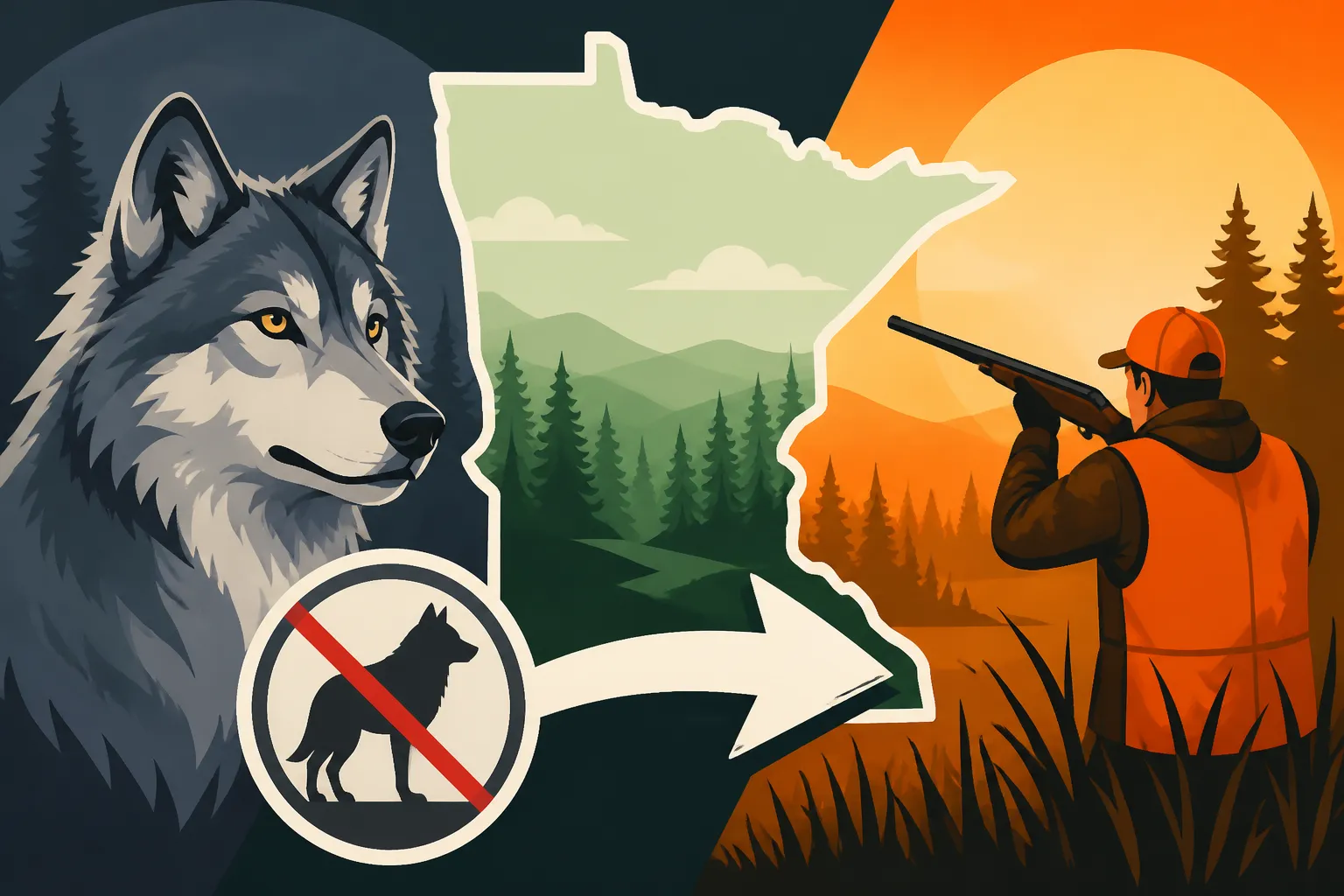
As you can see, wolves in Minnesota have moved in and out of federal protection multiple times over the past couple of decades. Each time they were delisted, the state worked quickly to implement its own management plan, which usually included provisions for controlled hunting seasons. This gave Minnesota hunters a brief opportunity to pursue a limited number of wolves, managing populations in specific areas. However, each time, a court challenge effectively put the wolves back under federal protection, immediately halting any state-run seasons and reverting to strict federal oversight. This cycle has left many Minnesotans, from wildlife managers to farmers to hunters, feeling frustrated by the lack of long-term stability in wolf management policy. It also makes tracking which Game You Cannot Hunt in Minnesota a moving target.
State Management vs. Federal Oversight: The Ongoing Debate
The recurring theme in Minnesota's wolf delisting history is the tension between local control and federal oversight. Both sides have valid points, making finding a universally accepted solution incredibly difficult.
Minnesota's Preparedness for State Management
One of the consistent arguments for delisting has been Minnesota's robust and well-developed wolf management plan. Our state wildlife agency has invested considerable time and resources into understanding Minnesota's Black Bear Population and Minnesota's Wolf Population, including extensive research on wolf ecology, population dynamics, and depredation patterns. During periods when wolves were delisted, the state was ready with a comprehensive plan that included several key components:
- Population Monitoring: Continuous tracking of wolf numbers and distribution to ensure a healthy, stable population.
- Depredation Control: Protocols for addressing conflicts with livestock, often involving lethal removal of problem wolves in specific situations, but only after non-lethal methods were attempted or deemed impractical.
- Limited Harvest Opportunities: Regulated hunting and trapping seasons, designed to provide recreational opportunities, generate revenue for conservation, and potentially help manage wolf populations in areas with high human-wolf conflict. These seasons were always highly regulated, with strict quotas and designated zones.
The state's perspective has always been that it can effectively manage wolves within its borders without federal intervention, relying on sound science and local needs. The ability to use tools like hunting allows for adaptive management, which can help mitigate conflicts and maintain public tolerance for wolves, which is crucial for long-term conservation.
The Impact on Hunters and Ranchers
The back-and-forth status of wolves has had direct and often challenging impacts on those who live and work alongside them. For ranchers and livestock owners in wolf country, depredation is a very real economic threat. When wolves are federally protected, the process for obtaining permits to lethally remove a wolf preying on livestock can be more cumbersome and restrictive. When delisted, state agencies often have more immediate and flexible options to help mitigate these losses.
For hunters, the impact has been primarily one of uncertainty. When wolves were delisted and state hunting seasons were initiated, it was a significant event for many. It allowed for a unique hunting experience and, for some, was seen as a way to potentially influence local deer populations. However, the subsequent relistings meant that these seasons were abruptly canceled, often after significant planning and anticipation. This unpredictable environment makes it difficult to plan hunting trips or to incorporate wolf management into broader land management strategies. Tools like GoHunt that provide up-to-date regulatory information become even more critical in such a volatile situation, helping hunters navigate these changing rules. It's not just about what you can hunt, but understanding the presence of other apex predators and their impact on game like deer, which affects how you approach Still-Hunting Minnesota Big Woods or Hunting the Minnesota Rut in Early November.
Conservation Perspectives and Future Pathways
On the other side of the debate are the conservation organizations and many members of the public who advocate for continued federal protection. Their arguments often center on broader ecological principles and the long-term recovery of the species across its entire historic range, not just in Minnesota. They might argue that while Minnesota's population is robust, other populations are still recovering, and delisting in one region could set a negative precedent or undermine genetic connectivity. Concerns about the ethics of hunting wolves, the potential for overharvest, and the importance of wolves as a keystone species in their ecosystems are also frequently voiced.
The ongoing debate reflects deeply held values about nature, wildlife, and how humans should interact with apex predators. As of now, wolves in Minnesota remain federally protected, meaning state-regulated hunting seasons are not permitted. However, the legal landscape is dynamic. Future attempts to delist the wolf are always a possibility, and the process would likely involve renewed scientific review, public comment periods, and, almost certainly, further legal challenges. The discussion about whether Minnesota, and other states, are truly ready and able to manage their wolf populations independently from federal oversight continues to simmer, an issue that will undoubtedly remain a focal point for wildlife enthusiasts and policymakers for years to come. Understanding their diet, or What Wolves Eat in Northern Minnesota, also plays into these conservation discussions.
Current Status and What It Means for Minnesota Hunters
After years of legal battles and shifting regulations, the current status of wolves in Minnesota is clear, at least for now. This understanding is vital for any hunter or outdoor enthusiast navigating our beautiful state.
Federal Protection Returns
As of a federal court ruling in early 2022, gray wolves in Minnesota are once again federally protected under the Endangered Species Act (ESA). This means that they are managed by the U.S. Fish and Wildlife Service, and all state-level hunting or trapping seasons are suspended. For the time being, killing a wolf is prohibited except in specific circumstances, such as immediate defense of human life, or under a federal permit to address livestock depredation issues.
For Minnesota hunters, this re-establishes wolves as a species that cannot be legally hunted. While they remain a significant part of the Northwoods ecosystem, interacting with deer, moose, and other game, they are not a target species. This means planning your hunt without considering a wolf tag, and focusing instead on your primary quarry, whether it's deer, bear, or small game. The information on Game You Cannot Hunt in Minnesota will include wolves for the foreseeable future, until their federal status changes again.
Living with Wolves
Despite being federally protected, wolves are a vital and active component of Minnesota's natural world. Their presence influences deer behavior, scatters prey animals, and is a constant reminder of the wildness that still exists in our state. For hunters, this means being aware of wolf activity in your hunting areas. Seeing wolf tracks, scat, or hearing a distant howl can be an exhilarating experience, but it's also a cue to understand the dynamics of the ecosystem you're in.
State agencies, even under federal protection, still play a role in managing conflicts. They work within federal guidelines to address situations of Wolf Depredation on Minnesota Livestock, often using a combination of non-lethal deterrence and, when necessary, lethal removal under strict federal permits. Public education about living and recreating in wolf country is also a key component of current management. For example, understanding the difference between Timber Wolves Versus Coyotes in Minnesota is important for proper identification in the field.
Looking Ahead
The history of wolf delisting in Minnesota has shown us that the status of these animals is rarely static. The debate over whether they should be managed by the states or remain under federal protection is deeply rooted in science, law, and differing conservation philosophies. While wolves are currently federally protected, it's highly likely that attempts to delist them will resurface in the future. The biological health of Minnesota's wolf population, as detailed in reports like How Many Wolves Minnesota Has, continues to meet or exceed recovery goals, which remains a strong argument for state management from many perspectives.
For now, Minnesota hunters and outdoor enthusiasts should appreciate these magnificent creatures as an integral part of our landscape, respecting their protected status. Staying informed about any potential policy changes through official sources, and resources like GoHunt, is always a good idea, as the saga of wolf management in Minnesota is far from over.
Disclaimer
This article is for general informational purposes only and does not constitute professional advice. Laws, prices and regulations vary by location and change over time. Consult a qualified professional for guidance on your specific situation.