Minnesota Deer Herd Size
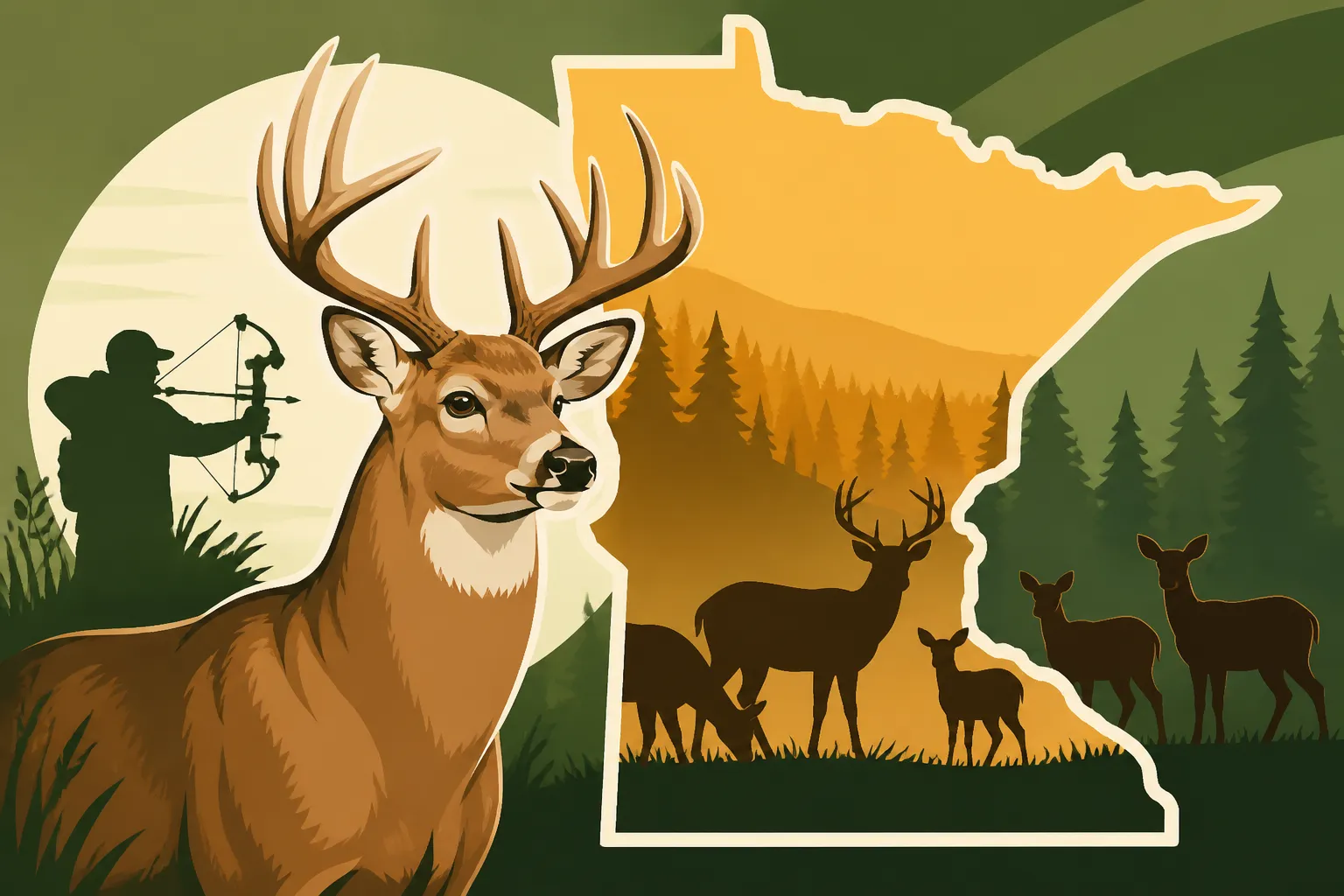
It can be incredibly frustrating to head out into the woods or fields season after season and feel like the deer numbers just aren't what they used to be, or conversely, be overwhelmed by them. Understanding the ebb and flow of Minnesota's deer population isn't just about statistics; it's about predicting movements, planning your hunt, and appreciating the health of the herd you're pursuing. This guide will walk you through how the Minnesota deer herd size is understood, what makes it change, and how that knowledge can make you a more informed and often more successful hunter.
Understanding Minnesota's Deer Population Estimates
When you read about deer numbers in Minnesota, it's not simply a count of every deer running around. That would be impossible! Instead, wildlife managers rely on a careful blend of science, observations, and hunter feedback to arrive at their best estimates. It's a complex dance of data, and knowing how those numbers come to be can help you interpret what they truly mean for your hunting plans.
The Science Behind the Numbers
Wildlife agencies don't just guess at deer numbers. They employ a variety of scientific methods to estimate population trends and densities. One common approach involves sophisticated modeling that takes into account factors like harvest data (how many deer hunters report taking), fawn recruitment (how many young deer are born and survive), and overwinter survival rates. They'll also use techniques such as aerial surveys in specific areas, especially in the northern forest where visibility can be good after a fresh snow, to get a direct snapshot of deer per square mile. These methods give biologists a baseline understanding of how the herd is growing or declining, and allow them to make informed decisions about permit area designations and antlerless harvest goals. This deep dive into the numbers is crucial for understanding How the DNR Counts Minnesota Deer.
Think of it like trying to figure out how many cookies are in a jar without actually dumping them all out. You might count how many crumbs are left after each person takes one, how many new cookies get baked, and how many are still left each morning. It's not perfect, but it gives you a pretty good idea. Similarly, deer population estimates use various indicators to paint a picture of the overall herd health and density. This scientific rigor helps ensure that management decisions are grounded in the best available information, even if no one can truly count every single whitetail.
Why Estimates Vary by Region
Minnesota is a vast and ecologically diverse state, stretching from the dense Northwoods to the sprawling agricultural fields of the south and west. It shouldn't come as a surprise, then, that deer populations and their densities vary wildly depending on where you are. A square mile in the Boundary Waters Canoe Area Wilderness will support far fewer deer than a square mile of prime agricultural land in the southeastern bluff country. Factors like food availability, cover, winter severity, and even human population density all play a significant role.
For instance, the heavily forested areas up north might have fewer deer per square mile, but those deer often have larger home ranges and can be older, more elusive bucks. In contrast, farmland areas tend to have higher densities due to abundant food sources from crops, leading to more deer overall, though perhaps smaller average body sizes or younger age structures. Wildlife managers categorize the state into different zones and permit areas, each with its own specific management goals and, consequently, its own unique deer population dynamics. This regional variation is why you'll see different antlerless permit allocations across the state, reflecting localized herd objectives.
The Role of Hunter Input
While scientific surveys and modeling provide the backbone of deer population estimates, hunter input is an absolutely vital piece of the puzzle. Every time a hunter registers a deer, that data point contributes to the overall understanding of the herd. This includes not just the total number of deer harvested, but also details like the sex, age, and location of the harvest. This information is invaluable for tracking trends in Minnesota Deer Harvest Records.
Beyond registration, hunters often participate in surveys, reporting their observations on the number of deer seen, their success rates, and even specific factors like fawn sightings or winter mortality. Tools like the GoHunt app or similar online resources can even allow hunters to log their observations and harvest details, contributing to a broader understanding of local conditions. This grassroots data, when aggregated, provides a nuanced layer of information that complements the scientific models, giving wildlife managers a more complete picture of the state's deer herd. Your input, whether through mandatory registration or voluntary surveys, directly impacts how deer are managed in your favorite hunting areas.
Factors Influencing Deer Herd Dynamics
Minnesota's deer herd is never static. It's a living, breathing entity that constantly fluctuates based on a myriad of environmental pressures. Understanding these factors can help you make sense of why deer numbers might be up one year and down the next, and why your hunting experience might differ from season to season. It's all part of the natural rhythm of the wild.
The Impact of Harsh Winters
Anyone who has spent a winter in Minnesota knows just how brutal it can be. For deer, a long, cold winter with deep snow can be incredibly challenging, sometimes devastating. Deep snow makes it harder for deer to move and access food, forcing them to expend more energy. Prolonged cold drains their reserves, and even deer in good condition can succumb to starvation or succumb to predators more easily when weakened. Fawns and older deer are particularly vulnerable during these times.
A severe winter can significantly reduce a deer population, especially in northern regions where deer yards (wintering areas) are critical but still present immense challenges. This is why you often hear about How Severe Winters Hit Northern Deer Herds and how quickly a population can rebound or decline based on just one or two bad winters. Conversely, mild winters can lead to high overwinter survival rates, especially among fawns, resulting in a noticeable bump in deer numbers and often better antler growth for bucks the following fall. These cycles of harsh and mild winters are a major driver of year-to-year population changes.
Habitat Changes and Food Availability
Deer are incredibly adaptable creatures, but they still rely on specific habitats to thrive. The availability of food and cover dictates how many deer an area can support, and changes to that habitat can have a profound impact on local herd sizes. In agricultural areas, deer often benefit from abundant crop fields, but they also need nearby cover for bedding and protection. Changes in farming practices, such as larger monoculture fields or less diverse crop rotations, can affect their food sources and movement patterns.
In the northern forests, timber harvesting practices, forest fires, and natural succession all play a role. Young, regenerating forest growth provides crucial browse and cover, supporting higher deer densities than mature, closed-canopy forests. For instance, Why Popple Cuts Grow Grouse is also relevant to deer, as young aspen stands offer excellent food and cover for both species. Urban sprawl and development also fragment habitats, pushing deer into smaller, more confined areas, which can lead to localized overpopulation or increased conflicts with humans. The healthier and more diverse the habitat, the more resilient and robust the deer herd tends to be.
Predation and Disease Pressure
While often debated among hunters, predation and disease are natural and significant factors in regulating deer populations. Minnesota is home to a healthy wolf population in its northern forests, and coyotes are found throughout the state. Both predators can impact deer numbers, particularly fawns and weakened adults. While a healthy, well-fed deer herd can generally withstand typical predation levels, periods of deer stress, such as after severe winters, can make deer more susceptible.
Beyond predators, diseases like Chronic Wasting Disease (CWD) and epizootic hemorrhagic disease (EHD) pose significant threats. CWD is a neurological disease that is always fatal and has no cure. Its presence, particularly in CWD Management Zones in Minnesota, necessitates specific management strategies, including targeted antlerless harvests, to control its spread and reduce deer densities in affected areas. EHD, while often more localized and sporadic, can also cause significant die-offs in specific regions during hot, dry summers. Monitoring these disease pressures is a critical component of deer herd management and can lead to localized declines in population.
Regional Differences in Minnesota's Deer Herd
Minnesota's landscape diversity means that deer populations are far from uniform across the state. A successful hunting strategy often hinges on understanding these regional distinctions and adapting your approach to the specific conditions of each area. The challenges and opportunities for deer hunters are as varied as the terrain itself.
Northern Forest: Big Woods Challenges
The vast northern forest, often referred to as the "Big Woods," presents a challenging environment for deer. While it offers immense tracts of public land, such as the Superior and Chippewa National Forests, the deer density here is typically lower than in agricultural areas. Food sources are naturally less concentrated, and severe winters can take a heavy toll. Deer often rely on conifer stands for winter cover, known as deer yards, which provide some thermal protection and limited browse.
Hunters in these areas often find that deer are more spread out, and larger home ranges mean they might not see as many deer as their counterparts in farmland. However, the deer that do thrive here tend to be older, more wary, and can grow impressive antlers due to lower population densities and less competition for resources. Scouting is paramount in these areas, often involving looking for sign around regenerating clear-cuts or along travel corridors between cover. Hunters using tools like GoHunt's mapping features often spend countless hours digitally scouting for these subtle advantages before ever stepping foot in the dense timber to understand Northern Minnesota Deer Density.
Central and Transition Zones: Balancing Act
The central and transition zones of Minnesota, where agriculture begins to blend with more forested and wetland habitats, represent a dynamic middle ground for deer populations. Areas like those surrounding Brainerd or St. Cloud often have a mix of small woodlots, agricultural fields, cattail sloughs, and suburban edges. This diverse habitat can support healthy deer populations, sometimes quite high, as deer benefit from both natural cover and agricultural food sources.
These zones often experience a balancing act between the pressures of farming, development, and recreational hunting. Deer can become quite visible and numerous, but they also learn quickly how to navigate human landscapes. Hunters in these areas might find success by focusing on property edges, small woodlots, or overlooked pockets of cover, like brushy ravines or river bottoms. Management in these areas often aims to maintain a healthy herd while addressing potential conflicts with landowners, balancing hunter opportunity with local tolerance for deer.
Farmland and Southeast Bluff Country: High Potential
If you're looking for high deer densities in Minnesota, the agricultural regions, especially the southeast bluff country, are often where you'll find them. The abundance of corn, soybeans, and other crops provides a consistent and high-quality food source that allows deer populations to flourish. The rolling hills, deep ravines, and hardwood forests of the southeast provide excellent cover and bedding areas, creating a perfect storm for robust deer herds. This is part of Why Southeast Minnesota Grows Big Bucks.
In these areas, it's not uncommon to see large numbers of deer. Hunter success rates can be very high, and wildlife managers often issue more antlerless permits to help manage these thriving populations. The challenge here often shifts from finding deer to finding mature deer that have learned to evade pressure. Public land can be scarce and highly pressured, making private land access incredibly valuable. For hunters aiming to fill their freezer, or pursue a trophy buck, these areas offer incredible potential, but also demand careful consideration of hunter ethics, property boundaries, and advanced tactics to navigate potentially high deer and hunter densities.
How Hunters Can Interpret and Use Herd Data
Understanding the official estimates and the factors behind them isn't just academic; it has real, practical implications for how you approach your hunt. Being an informed hunter means you can adjust your strategies, contribute to sound management, and ultimately enjoy a more fulfilling experience in the field.
Adjusting Hunting Strategies to Herd Trends
When you hear that deer numbers are down in your favorite permit area, it doesn't necessarily mean you should give up. It means you might need to adjust your strategy. In areas with lower deer densities, focusing on pinch points, funnels, and primary travel corridors becomes even more critical. You might need to cover more ground or sit longer, more patiently, knowing that fewer deer are moving through the landscape. For example, understanding Hunting the Rut in Late October or Hunting the Peak Rut in Early November is crucial, as deer movement during these periods can temporarily concentrate animals regardless of overall density.
Conversely, if numbers are high, you might have more flexibility in where you hunt. You could focus on targeting specific age classes of bucks, or simply enjoy a higher probability of encountering deer. It might also mean more competition on public lands, so finding ground others walk past becomes a key tactic. Checking out tools like the GoHunt platform can help you identify areas where success rates are historically higher or where specific herd characteristics might align with your hunting goals. Always remember that local conditions can vary significantly even within a single permit area.
The Importance of Antlerless Harvest
One of the most direct ways hunters contribute to deer herd management is through antlerless harvest. In permit areas where deer numbers are healthy or even above objective, the issuance of antlerless tags is a crucial tool for controlling population growth, maintaining herd health, and minimizing deer-human conflicts. By reducing the number of does, you directly impact the reproductive potential of the herd for the following year.
It can be a tough decision to shoot a doe, especially if you're holding out for a buck. However, if you're hunting in a designated antlerless permit area, taking a doe is often the best way you can help manage the herd responsibly. This practice helps ensure the long-term health of the deer, preventing overbrowsing of habitat and reducing the potential for disease spread like CWD. Pay close attention to announcements about Applying for the Antlerless Lottery Before September 10 and The Antlerless Lottery Deadline in Minnesota to secure your antlerless opportunities. Responsible antlerless harvest is a cornerstone of effective deer management in Minnesota.
Beyond the Numbers: Individual Deer Quality
While herd size and density are important, many hunters also focus on the quality of individual deer, particularly antler size and body weight. While population numbers give a broad overview, individual deer quality is heavily influenced by factors like age structure, nutrition, and genetics within a localized area. In areas with lower deer densities and abundant food, bucks often have the opportunity to grow older and express their full antler potential.
Conversely, in areas with very high deer densities, even if there are a lot of deer, individual deer might be smaller, younger, and have less impressive antlers due to intense competition for food and resources. This is where Minnesota Buck Age Structure becomes a key indicator. By looking beyond just the total numbers and considering the age structure and habitat quality in your specific hunting zone, you can gain a deeper understanding of the potential for encountering mature, high-quality deer. It’s about more than just counting; it’s about understanding the entire ecosystem.
Disclaimer
This article is for general informational purposes only and does not constitute professional advice. Laws, prices and regulations vary by location and change over time. Consult a qualified professional for guidance on your specific situation.