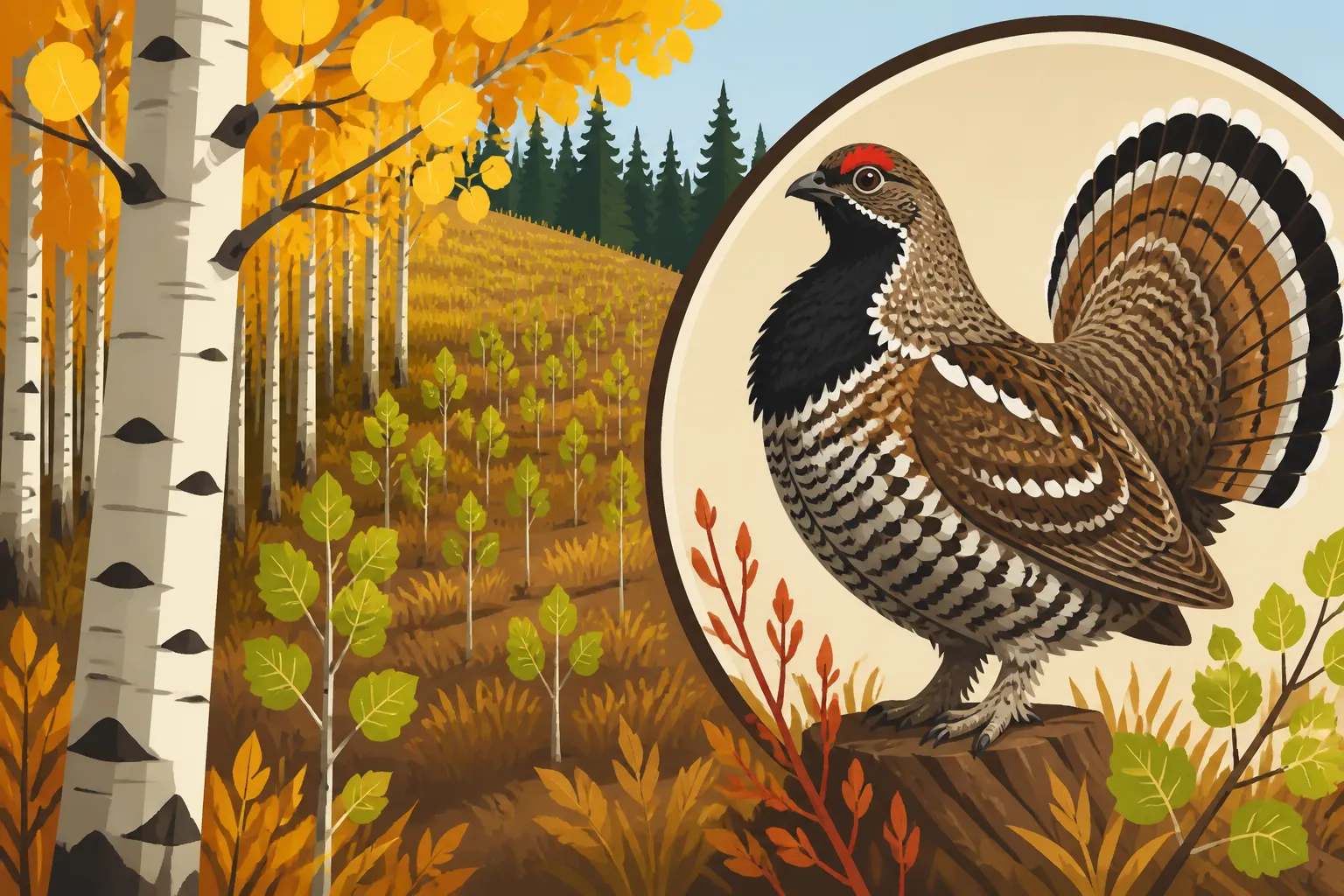
Aspen Management and Minnesota Grouse
One of the biggest frustrations for grouse hunters in Minnesota is when you walk for miles through what looks like prime cover, only to flush nothing. It can be disheartening, making you wonder if the birds are even there or if you’re just in the wrong spot. This guide will walk you through the essential connection between aspen management and thriving ruffed grouse populations in our great state, helping you understand where to find those elusive birds and why certain woods hold more grouse than others.
The Critical Link Between Aspen and Ruffed Grouse in Minnesota
When you're out there, trudging through the crisp fall air, listening for that tell-tale thump-thump-thump of a ruffed grouse taking flight, you're often surrounded by aspen. It’s no coincidence. Aspen trees, affectionately known as "popple" by many of us up north, are not just part of grouse habitat; they are the absolute cornerstone of it in Minnesota. Without healthy, diverse aspen stands, our ruffed grouse numbers would be a fraction of what they are today. This isn’t just about having trees; it’s about having the right kind of trees at the right stages of growth, providing everything a grouse needs to survive and thrive.
Why Aspen is the Gold Standard for Grouse Habitat
Think about what a ruffed grouse needs to make a living in the harsh Minnesota environment: food, shelter from predators, and places to raise their young. Aspen provides all of this in spades, at various stages of its life cycle. Young aspen shoots, especially after a fresh cut, are a prime food source, packed with nutrients. As the trees mature, their buds become a critical winter food for grouse, allowing them to survive when other food sources are buried under snow. Beyond food, the dense, thick cover of regenerating aspen stands offers unparalleled protection from avian predators like hawks and owls, and terrestrial threats like coyotes and bobcats. A grouse hidden in a thicket of young popple is incredibly difficult for any predator to spot, let alone catch.
This preference for aspen is deeply ingrained in the species. Many hunters spend countless hours seeking out these areas, understanding that the health of the aspen directly correlates to the number of birds they'll encounter. It's a relationship as old as the Minnesota woods themselves. If you've ever wondered why some patches of woods feel "grousey" and others don't, often it comes down to the quality and diversity of the aspen within them. It’s the dynamic nature of these stands that truly makes them special. To learn more about where these birds thrive, check out our guide on Best Minnesota Counties for Grouse.
Understanding the Lifecycle of Aspen and Grouse Needs
Aspen is a pioneer species, meaning it’s often one of the first trees to colonize an area after a disturbance like a wildfire or a clearcut. What makes aspen unique and so beneficial for grouse is its method of reproduction. Unlike many other trees that rely primarily on seeds, aspen spreads extensively through suckers – new shoots that sprout from the roots of existing trees, often forming vast, genetically identical colonies. When a stand of aspen is cut or burned, the root system sends up an incredible number of suckers, creating an incredibly dense, almost impenetrable forest of young trees. This rapid, prolific regeneration is exactly what grouse need.
- Early Successional Stage (0-10 years): This is the ultimate nursery and escape cover. The dense tangle of young aspen provides vital protection for brooding hens and their chicks from predators. It's also where you'll find an abundance of insects, a crucial protein source for growing grouse.
- Middle Successional Stage (10-25 years): As the aspen grows, the canopy closes, and some of the understory thins, but it still offers good cover and begins to produce buds for winter food. Drumming logs and roosting sites also become more prevalent.
- Mature Stage (25+ years): Older aspen stands, while providing less dense cover, are vital for winter food (buds) and drumming sites. However, without disturbance, these stands eventually become too open and lose their value for protective cover, leading to a decline in grouse numbers.
Understanding these stages is key to effective Grouse Hunting Minnesota Aspen Cover. A mix of all these age classes, often within a short walking distance, creates a mosaic habitat that can support grouse year-round, year after year.
Deciphering Aspen Management Techniques for Grouse
Many of us look at a recently clearcut forest and might see a mess, or even a tragedy. But for ruffed grouse, and for savvy hunters who understand habitat, it’s a beacon of hope. The controlled management of aspen timber is one of the most effective tools we have to ensure healthy, vibrant grouse populations in Minnesota. It’s a deliberate, scientific process that mimics natural disturbances, creating the diverse age classes that are so critical.
Clearcutting: The Most Impactful Method for Regeneration
Clearcutting is exactly what it sounds like: harvesting all trees in a given area. While it might seem drastic, especially when viewed from a road, it's incredibly effective for aspen. As we discussed, aspen regenerates primarily through root suckers. When the mature trees are removed, sunlight floods the forest floor, stimulating those dormant root systems to explode with new growth. You’ll see thousands of young aspen saplings shooting up, creating an incredibly dense, almost impenetrable thicket within a few years.
This dense young growth is a haven for grouse. It offers perfect thermal cover, protects against aerial predators, and provides an abundance of tender shoots and insects. Hunters often find the most birds in clearcuts that are 5-15 years old. Any older and the canopy might be starting to close too much, thinning out the understory. Any younger, and the cover might be too sparse, or the trees too small to offer maximum benefit. Knowing How Old a Cut Should Be for Grouse can significantly increase your success rates. Many state and federal lands, managed by the Minnesota Department of Natural Resources (DNR) or the U.S. Forest Service, employ this method specifically with wildlife in mind. Timber sales are often designed not just for economic gain, but also for habitat improvement, particularly for game species like ruffed grouse and deer.
Controlled Burns and Other Less Common Approaches
While clearcutting is king for aspen, other methods can also play a role in habitat management. Controlled, or prescribed, burns are less common for direct aspen regeneration in Minnesota simply because aspen regenerates so vigorously after cutting. However, fire can still be a valuable tool to remove competing vegetation, stimulate understory growth, and improve overall forest health, which indirectly benefits grouse. Fire can also create open areas that are crucial for drumming sites or dusting baths for grouse.
Other approaches include selective logging or thinning, but these are generally less effective for creating the dense, early successional aspen stands that grouse absolutely require. Thinning operations might leave some residual aspen, but the goal is often to promote other species or larger diameter trees, rather than creating the dense, multi-stemmed growth that provides maximum cover. For serious grouse enthusiasts and land managers, understanding the nuances of these different techniques is essential for creating and maintaining premier grouse cover. These management efforts are often detailed in forest management plans, which can sometimes be accessed through agencies like the DNR, giving you an edge in Scouting Minnesota Public Land Before Season.
The Ideal Age and Structure of Aspen Stands for Ruffed Grouse
It’s not just any aspen that makes good grouse habitat. It’s about having a variety, a patchwork quilt of different ages and densities. If you've ever walked into a mature, open aspen stand with little undergrowth and found it devoid of birds, you quickly learn this lesson. Grouse are creatures of edge and cover, and they need specific structural elements at different times of the year and throughout their lives.
Young, Dense Aspen for Brooding and Escape Cover
Imagine a mother grouse with a brood of chicks. Their survival depends on concealment. This is where those young, regenerating aspen stands, typically between 5 and 15 years old, become absolutely vital. These stands are characterized by an incredibly high stem count – thousands of slender young trees per acre, often referred to as "popple whips." This creates a dense, vertical wall of vegetation that makes it nearly impossible for predators to spot movement on the forest floor.
During the summer months, these thickets are buzzing with insects, providing critical protein for rapidly growing chicks. The shade also offers thermal cover on hot days. When a predator, be it a hawk or a fox, attempts to move through this impenetrable cover, the grouse can easily detect their approach and often flush with enough warning to escape. This is why when you're grouse hunting, you'll often find birds holding tight in the thickest stuff, even when flushed multiple times. They know their safety lies in that dense cover. You might even find them in Grouse Hunting Minnesota Popple Cuts, which are essentially areas where this kind of regeneration is happening.
Mature Aspen for Food Sources and Drumming Sites
While the young stuff is crucial for survival, mature aspen stands, those 25 years and older, still play a critical role, especially outside of the nesting season. As winter approaches, and other food sources become scarce or buried under snow, the buds of mature aspen trees become a primary food source for ruffed grouse. These buds are rich in energy and allow grouse to maintain their body condition through the cold months. You'll often see signs of grouse feeding on these buds, with clipped twigs littering the snow beneath older aspen.
Furthermore, mature aspen stands provide vital drumming sites. The drumming display, where the male grouse rapidly beats his wings to create a thumping sound, is a key part of their mating ritual. Males typically choose large, fallen logs, often surrounded by moderately dense cover, within mature aspen stands. These logs offer an elevated platform from which to broadcast their presence and defend their territory. So, while you might not flush as many birds from an older, more open stand, it doesn't mean it's not important. A truly productive grouse hunting area will have a blend of both young, dense cover and nearby mature aspen, creating a complete habitat package. Many hunters rely on Minnesota Grouse Drumming Surveys to get an idea of where populations are strong.
| Aspen Age Class | Primary Benefit for Grouse | Hunting Strategy Implications |
|---|---|---|
| 0-5 years | Regeneration, some initial cover | Too dense for hunting, but indicates future prime habitat. |
| 5-15 years | Brooding, escape cover, food | Prime hunting. Birds hold tight. Work slowly and methodically. |
| 15-25 years | Transition cover, food, roosting | Good hunting, especially edges. Can be productive if other cover is nearby. |
| 25+ years | Winter food (buds), drumming sites | Hunt edges of these stands, look for drumming logs. Best when adjacent to younger cuts. |
Finding and Hunting Managed Aspen Areas in Minnesota
Knowing what grouse need is one thing; finding where that habitat actually exists on the ground, and then successfully hunting it, is another challenge entirely. It's a skill that comes with experience, but with the right tools and a little guidance, you can significantly shorten your learning curve. Many hunters feel overwhelmed by the sheer amount of public land in Minnesota, not knowing where to start. The good news is, a lot of that land is actively managed for species like grouse.
Utilizing Public Land Resources and Mapping Tools
The Minnesota Department of Natural Resources (DNR) and federal agencies like the U.S. Forest Service are excellent resources for identifying actively managed aspen areas. Their websites often feature forest management plans, timber harvest schedules, and even maps highlighting recent cuts. Sometimes, contacting a local forester or wildlife manager can provide invaluable, up-to-date information on where the best habitat work has been done recently.
Beyond government websites, modern mapping apps have revolutionized how we find and interpret habitat. Tools like GoHunt or OnX Hunt allow you to layer aerial imagery with public land boundaries, timber cut data, and even topographical maps. You can literally scout from your couch, identifying potential clearcuts, logging roads, and transitional zones that scream "grouse habitat." Look for areas with a mosaic of different age classes of aspen. A recent cut next to a slightly older cut, perhaps bordered by a mature stand, creates the perfect "edge effect" that grouse love. This attention to detail can transform your hunting experience from aimless wandering to targeted, strategic pursuit. For more general advice, consider our insights on Hunting Minnesota's New Statewide Rifle Rules to understand how land use might change.
Identifying Productive Cuts and Transition Zones
Once you've identified potential areas on a map, the real work (and fun!) begins in the field. When you're walking through the woods, pay close attention to the age and density of the aspen. As mentioned, cuts that are 5-15 years old are often dynamite. Look for areas where the young aspen is so thick you can barely push through it. These are the spots where grouse will hold tight, relying on their camouflage and the dense cover for protection.
Don't overlook the transition zones – the edges where different age classes of aspen meet, or where aspen transitions into conifer stands, oak ridges, or alder runs. These "edges" are natural travel corridors and feeding areas for grouse. They offer a blend of cover and food sources that are incredibly attractive. For example, a young aspen cut bordering a mature pine stand offers excellent brooding cover with nearby thermal protection. A bird dog, if you hunt with one, will naturally work these edges and thickets. Even if you're Flushing Grouse Without a Dog, knowing these zones helps you focus your efforts. These are the places where you’ll consistently find birds throughout the season, from the crisp days of early September to the snow-dusted woods of late fall.
Challenges and Considerations in Aspen Management for Grouse
While aspen management is a proven winner for grouse, it's not without its complexities and challenges. It’s a delicate balance of ecological needs, economic realities, and the ever-present variables of nature. As hunters and conservationists, understanding these broader issues helps us advocate for and appreciate the work being done.
Balancing Timber Production with Wildlife Needs
For many years, timber harvesting was primarily driven by economic factors – getting logs to the mill. While this still holds true, there's a growing recognition of the role sustainable forestry plays in wildlife habitat. In Minnesota, many state and federal forest management plans now explicitly incorporate wildlife objectives, including those for ruffed grouse. This means that harvest decisions consider not just the board feet of timber, but also the creation of optimal age classes and structural diversity for game species.
However, this isn't always a perfect marriage. Sometimes, the most economically viable harvest strategy might not perfectly align with the ideal habitat prescription. For instance, loggers might prefer to cut larger, older stands, while grouse might benefit more from a rotational cut that creates a mosaic of smaller, younger patches. It takes careful planning, collaboration between foresters and wildlife biologists, and public input to strike the right balance. This is why organizations like the Ruffed Grouse Society play such a vital role, working to educate landowners and advocate for forest management practices that prioritize grouse habitat. Their efforts often lead to specific projects that directly benefit grouse numbers, which you can read more about in articles like Minnesota Ruffed Grouse Cycles.
The Cyclical Nature of Grouse Populations and Aspen Health
Another layer of complexity is the inherent variability in both grouse populations and aspen health. Ruffed grouse, like many other northern game birds, exhibit well-documented population cycles, typically peaking and dipping over roughly a 10-year period. This natural fluctuation means that even with perfect aspen management, grouse numbers won't always be sky-high. Factors like severe winters, predator populations, and disease can all influence the cycle.
Furthermore, aspen stands themselves aren't static. They grow, age, and eventually decline. While management can extend their utility for grouse, an unmanaged aspen stand will eventually grow too old and open to provide good cover. Other issues, like aspen diseases or insect outbreaks, can also impact forest health. Managers must constantly adapt to these changes, planning future cuts and considering long-term ecological health. It's a continuous process of renewal and adaptation, ensuring that the critical habitat components are always available somewhere within the landscape. This dynamic nature means that finding good spots for Grouse and Woodcock Hunting in Minnesota can sometimes feel like chasing a moving target.
The Future of Aspen Management and Ruffed Grouse Hunting in Minnesota
Looking ahead, the commitment to active forest management, particularly for aspen, remains crucial for the future of ruffed grouse hunting in Minnesota. As landscapes change due to development, climate, and other factors, proactive management becomes even more vital. Hunters, conservationists, and land managers must continue to work together to ensure these critical habitats endure.
Collaboration and Funding for Habitat Initiatives
The success of aspen management for grouse relies heavily on collaboration. State agencies, federal partners, private landowners, and conservation organizations all have a part to play. Initiatives that pool resources and expertise can create larger, more impactful habitat projects. Funding, of course, is a significant piece of this puzzle. Programs that support private landowner incentives for active forest management, or public funding for timber sales and habitat improvements on state and national forests, are essential. Organizations like the Ruffed Grouse Society actively work with private landowners to implement beneficial cutting practices, transforming otherwise unproductive woods into vibrant grouse cover.
As hunters, our license dollars and conservation stamp purchases often contribute directly to these efforts. Understanding where our money goes and supporting policies that prioritize habitat work is a powerful way to ensure the long-term health of our grouse populations. This includes supporting programs that fund research into the best management practices and monitor the effectiveness of current strategies. Every successful grouse flush often begins years earlier with a timber sale or a planned burn.
Adaptable Hunting Strategies for Changing Landscapes
Given the dynamic nature of both grouse populations and forest habitats, successful grouse hunters need to be adaptable. What was prime cover five years ago might be less productive today, while a new cut might be just coming into its own. This means being willing to explore new areas, staying current with DNR and Forest Service mapping tools, and keeping an eye out for fresh timber sales. The data available through platforms like GoHunt can provide a competitive edge, showing recent timber harvests and historical bird locations.
It also means being flexible with your hunting tactics. Some years, the birds might be holding tighter in the thickest cover, requiring a slower, more deliberate approach with a tight-choked shotgun and heavy loads. Other years, if the populations are higher, they might be more scattered, favoring a faster, more expansive strategy with an open-choked Upland Guns for Popple and Alder. Paying attention to the Minnesota Grouse Season Dates and local conditions, like recent weather patterns and food availability, will always give you an advantage. The key is to embrace change as an opportunity, rather than a frustration, knowing that good habitat is constantly being created somewhere in our great state.
Disclaimer
The information provided in this guide is for general informational purposes only and is not intended as legal advice. Hunting regulations and land management practices can change, and it is the hunter's responsibility to verify all current rules, regulations, and permit requirements with the Minnesota Department of Natural Resources or relevant land management agencies before engaging in any hunting activities. Always prioritize safety and ethical hunting practices.