How CWD Spread Into Southeast Minnesota
The news hit hunters in Minnesota's bluff country like a gut punch: Chronic Wasting Disease, or CWD, had been detected in wild deer in the southeast. For years, we'd watched the devastating disease creep closer from neighboring states, always hoping Minnesota would be spared. This guide will walk through the complex journey of how CWD established a foothold in our beloved deer herd in Southeast Minnesota, the impact it's had, and what it means for the future of hunting in the region.
The Initial Discovery and Hunter's Disbelief
When CWD was first confirmed in wild deer in Southeast Minnesota, it wasn't just a biological finding; it was a deeply emotional blow to the hunting community. For many, deer hunting is more than just a pastime; it’s a way of life, a tradition passed down through generations. The idea of this insidious disease threatening the very health of the herd, and potentially the future of those traditions, was incredibly unsettling.
First Confirmed Wild Deer Case
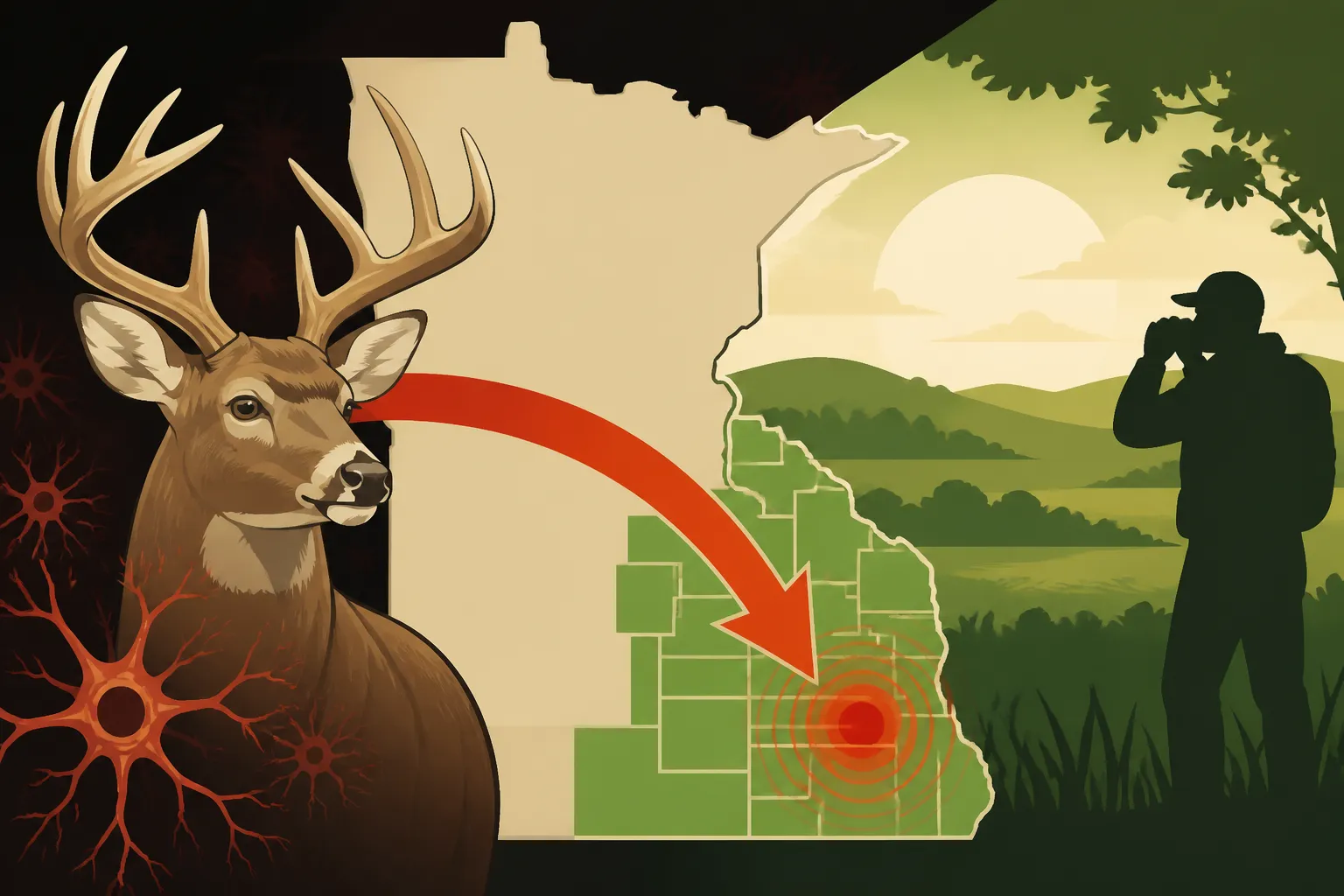
The first documented case of CWD in a wild white-tailed deer in Minnesota occurred in 2016 in Fillmore County. This wasn't some isolated incident in a remote corner of the state; Fillmore County, nestled deep in the heart of Southeast Minnesota’s bluff country, is a prime deer hunting area, renowned for its strong deer populations and rugged terrain. It’s a place where hunters dedicate countless hours scouting, hanging stands, and pursuing big bucks. The confirmation of CWD here sent shockwaves not just through the local community, but across the entire state.
Before this, the disease had only been found in captive cervid facilities within Minnesota, but never in a truly wild deer population. This distinction was critical, as once it’s in the wild herd, containment and eradication become monumentally more challenging, if not impossible. The initial deer was a doe harvested during the firearms season, and subsequent testing confirmed the worst fears. This single positive test immediately triggered a cascade of intensive surveillance and management actions that continue to this day. It underscored the vulnerability of even seemingly healthy populations to this slow-moving, deadly threat.
Immediate Hunter Reactions and Fears
The news brought a mix of reactions, from disbelief and frustration to genuine fear. Many hunters struggled to grasp the reality of it, questioning how it could have happened. There was immediate concern about the health of the venison they consumed and shared with family. Would hunting still be safe? Would the deer herd be decimated? These questions were heavy on everyone's minds, especially those who had hunted these blufflands for decades.
Hunters, being intimately connected to the land and the animals they pursue, often feel a profound sense of stewardship. To learn that an incurable, fatal disease was now present in "their" deer herd was a tough pill to swallow. There were also concerns about the economic impact on small towns that rely on hunting season revenue, from local diners and gas stations to sporting goods stores. The hunting community became acutely aware that their beloved tradition was now under an unprecedented threat, and the sense of uncertainty was palpable. Many turned to resources like the Minnesota DNR website or outdoor news outlets for the most up-to-date information, trying to make sense of the unfolding situation and understand what their role might be in mitigating the spread.
Understanding CWD and Its Grave Threat
To truly grasp the significance of CWD's arrival in Southeast Minnesota, we need to understand exactly what this disease is, how it functions, and why it poses such a persistent and grave threat to deer populations and hunting traditions. It’s not just "another deer disease"; it’s a game-changer.
What Exactly Is Chronic Wasting Disease
Chronic Wasting Disease is a neurological disease that affects cervids – deer, elk, moose, and caribou. It's caused by abnormal proteins called prions, which are misfolded versions of normal proteins found in the brain and spinal cord. When these prions accumulate, they cause sponge-like holes in the brain, leading to a host of debilitating symptoms. The scary part? CWD is always fatal. There is no vaccine, no treatment, and no cure. Once an animal contracts it, its fate is sealed, though it can take months or even years for symptoms to become apparent.
The prions are incredibly resilient, able to persist in the environment for years, resisting extreme temperatures and disinfectants. This makes decontamination of infected areas virtually impossible. Imagine a tiny, invisible enemy that can linger in the soil, plants, and even water, waiting for its next host. That's the challenge CWD presents. Because it’s a prion disease, it’s distinct from bacterial or viral infections, behaving in ways that defy conventional disease management strategies. Understanding Chronic Wasting Disease in Minnesota Deer is crucial for any hunter in the state.
How CWD Spreads Among Deer
CWD spreads primarily through direct animal-to-animal contact, particularly through saliva, urine, and feces. Deer are social creatures, often congregating at food sources, water, and mineral licks, creating ample opportunities for transmission. A seemingly healthy deer can be shedding prions long before it shows any outward signs of illness, unknowingly infecting its herd mates and contaminating the environment. This is why high deer densities can exacerbate the spread; more deer in a smaller area means more opportunities for direct contact and environmental contamination.
Indirect transmission is also a major concern. Infected prions can be shed into the environment, contaminating soil, plants, and water sources. Other deer can then pick up these prions by grazing or consuming contaminated forage. This environmental persistence is what makes CWD so incredibly difficult to eradicate once it takes hold. Carcasses of infected animals left in the field can also contribute to environmental contamination as they decompose. It's a complex web of transmission that underscores the need for vigilant monitoring and responsible carcass disposal, especially in areas with known CWD presence like Southeast Minnesota.
Tracing the Path: Possible Entry Vectors
Understanding how CWD actually arrived in Southeast Minnesota is a complex puzzle, and experts consider a few primary potential pathways. It wasn't necessarily one single event, but possibly a combination of factors that allowed the disease to establish itself in the wild deer population.
The Captive Cervid Connection
One of the most heavily scrutinized potential pathways for CWD spread into wild populations across North America has been through captive cervid facilities, such as deer farms. These operations raise deer and elk, often for antler velvet, meat, or hunting preserves. Unfortunately, these facilities, if not properly managed, can serve as reservoirs for the disease. If CWD is present in a captive herd, there's always a risk of transmission to wild deer. This can happen through breaches in fencing, allowing captive and wild deer to interact, or even through environmental contamination from pens that borders wild deer habitat.
In Minnesota, CWD has been detected in several captive cervid facilities over the years, some even predating the first wild case in Fillmore County. While specific links are incredibly difficult to definitively prove for every wild case, the close proximity of some infected captive facilities to areas where wild CWD has been found raises serious questions. Many believe that breaches, either accidental or through lax management, from these operations have played a role in the broader spread of the disease. This concern is why states like Minnesota have stringent regulations and testing requirements for captive cervid herds, though the debate about their efficacy and the potential risk they pose continues. This link is often discussed when considering Where CWD Was First Found in Minnesota.
Natural Deer Migration and Movement
Deer are not static creatures; they move. Bucks, particularly during the rut, can travel significant distances in search of does or new territory. Even does will shift their home ranges. Southeast Minnesota borders Iowa and Wisconsin, both states with established CWD populations in their wild deer herds. It is entirely plausible that an infected wild deer from a neighboring state could have naturally migrated across the border into Minnesota, bringing the prions with it. This is a common concern for states bordering CWD-affected areas.
The unique topography of Southeast Minnesota, with its interconnected river valleys, vast bluffs, and extensive timber, provides excellent habitat that allows deer to move relatively unhindered over long distances. While deer might not typically cross entire state lines as part of their daily routine, a long-range movement by an infected animal, perhaps a young buck dispersing from its birth area, could easily introduce the disease into new territory. Once introduced, even by a single infected animal, the prions can then begin to spread through the local population and contaminate the environment. This natural dispersal highlights the challenge of managing a disease that doesn't respect state or county lines.
Unregulated or Illegal Practices
While less documented, the potential for unregulated or illegal human-assisted movement of infected carcasses or deer parts also poses a risk. For instance, if a hunter harvests an infected deer in a CWD-positive area and then transports that carcass, or even specific parts like brain or spinal cord tissue, into a CWD-negative area before proper disposal or testing, they could inadvertently introduce the disease. This is why stringent Minnesota Carcass Movement Restrictions are now in place, especially when bringing deer in from out of state or moving them between CWD management zones.
Furthermore, illegal baiting or feeding practices can concentrate deer, increasing nose-to-nose contact and the likelihood of prion exchange if CWD is present in the local herd. While not necessarily an introduction mechanism, these activities can certainly accelerate the spread once CWD is established. Hunters sometimes move deer for various reasons, some legitimate and some less so, and without full awareness of CWD risks, these actions could have unintended consequences. The message from wildlife agencies is clear: understand and adhere to all regulations regarding carcass movement and feeding, as irresponsible actions can have severe, long-lasting impacts on the deer herd.
The Role of Deer Movement and Habitat in Spread
Once CWD was introduced to Southeast Minnesota, understanding why it has persisted and spread within the region requires a look at the unique characteristics of the deer population and their habitat. It's not just about introduction; it's about favorable conditions for establishment and growth.
High Deer Densities and Social Behavior
Southeast Minnesota, particularly the bluff country, has historically supported robust white-tailed deer populations. While high deer densities can be desirable for hunters, they also create a perfect storm for CWD transmission. More deer in close proximity mean more opportunities for direct contact through nose-to-nose interaction, shared feeding sites, and overlapping territories. Imagine a large family gathering where everyone is sharing drinks and food; the likelihood of passing on a common cold increases significantly. CWD prions behave similarly.
Deer are social animals, often forming groups, especially during winter or in areas with concentrated food sources. These social aggregations facilitate the exchange of bodily fluids like saliva and urine, which are primary vectors for prion shedding. Even when deer appear healthy, they could be shedding infectious prions for months or years, unknowingly contributing to the environmental load and infecting other deer. The DNR often considers deer density when designating CWD Management Zones in Minnesota and implementing specific harvest strategies to help reduce disease transmission rates.
Interconnected Habitat and Movement Patterns
The landscape of Southeast Minnesota, carved by the Root and Whitewater Rivers and their numerous tributaries, is characterized by steep, forested bluffs interspersed with agricultural fields and scattered woodlands. This creates a mosaic of habitat types that are ideal for white-tailed deer. The connected nature of these forest corridors and river bottoms allows deer to move extensively throughout the region. This free-ranging movement, while natural, also means that an infected deer can travel a considerable distance, potentially spreading prions to new sub-populations.
For example, a buck traversing several miles through river bottoms during the rut, or a doe leading her fawns to a new feeding area, could be shedding prions along its path, contaminating trails, bedding areas, and food plots. Tools like those offered by GoHunt could be invaluable for hunters to visualize and understand deer movement patterns in various terrain types, which indirectly helps grasp potential CWD spread. The challenging terrain also makes surveillance and targeted removals, often a key management tool, incredibly difficult. It's not always easy to access every remote pocket of deer habitat, allowing the disease to potentially fester in areas less visible to human monitoring.
Management and Surveillance Efforts in Minnesota
The moment CWD was confirmed in the wild herd, the Minnesota DNR swung into action, implementing a multifaceted approach to try and contain the disease and prevent its further spread. This has meant significant changes for hunters and a massive undertaking for wildlife managers.
Mandatory CWD Testing and Surveillance
One of the most critical components of Minnesota’s CWD response has been widespread surveillance, including mandatory CWD testing in designated areas. In Southeast Minnesota, particularly in the initial CWD Management Zones (like Permit Area 603, which covers parts of Fillmore, Olmsted, and Winona counties), hunters harvesting deer during specific seasons are often required to submit their deer for CWD testing. This isn't just an inconvenience; it's a vital tool for understanding the disease's prevalence and geographic distribution.
These testing efforts help the DNR track the disease, identify new hot spots, and determine if it's spreading or receding in certain areas. Sampling stations are set up during the hunting season, where DNR staff or trained volunteers collect lymph node samples from harvested deer. Hunters play a crucial role in this process, as their cooperation is essential for gathering the necessary data. Without robust hunter participation, it would be impossible to get an accurate picture of the disease's presence in the wild. If you're hunting in a CWD zone, knowing Finding a Minnesota CWD Sampling Station is paramount. The DNR also conducts targeted surveillance outside of hunting season, using techniques like road-killed deer collection or specialized culling efforts to monitor for the disease year-round.
Targeted Harvest and Carcass Restrictions
To combat CWD, the DNR has employed targeted harvest strategies in affected areas, aiming to reduce deer densities and potentially remove infected animals. This often means increased antlerless quotas or special hunt opportunities to bring down the overall deer population in CWD management zones. The rationale is that fewer deer mean less direct contact and less environmental contamination, thereby slowing the spread of the disease. While sometimes unpopular with hunters who prefer higher deer numbers, these measures are considered essential by wildlife disease experts.
Additionally, strict Minnesota Carcass Movement Restrictions have been implemented. Hunters harvesting deer in CWD zones are generally prohibited from moving whole carcasses outside of those zones, with exceptions for boned-out meat, cleaned skull plates, and hides. This measure is designed to prevent humans from inadvertently transporting infected prions to new, unaffected areas. Specialized processing facilities within CWD zones are often available to help hunters comply with these rules. Furthermore, there are specific Minnesota Feeding and Baiting Bans in CWD Zones, as these activities can concentrate deer and facilitate prion transmission.
CWD Prevalence in Southeast Minnesota
Over the years, the mandatory testing and surveillance efforts have provided a clearer, though concerning, picture of Minnesota CWD Prevalence Rates in Southeast Minnesota. While rates can vary, certain permit areas have shown consistent CWD positives, indicating the disease is established and, in some cases, slowly expanding its footprint.
Here’s a simplified look at the general trend in Southeast Minnesota CWD areas:
| Year Range | General Prevalence Trend | Key DNR Actions | Affected Counties (Examples) |
|---|---|---|---|
| 2016-2018 | Low, initial detection | Mandatory testing, carcass restrictions, increased antlerless tags | Fillmore, Olmsted |
| 2019-2021 | Gradual increase, spread to new areas | Expanded testing, targeted culling, enhanced outreach | Fillmore, Olmsted, Winona, Houston |
| 2022-Present | Continued presence, variable rates, ongoing management | Intensive & Managed Permit Areas, public land special hunts | Fillmore, Olmsted, Winona, Houston, Mower, Goodhue |
Note: This table provides a simplified overview. Actual prevalence rates and specific actions vary year to year and by specific permit area.
The data from these efforts helps inform the DNR's adaptive management strategies, including the Minnesota's Four-Year CWD Testing Rotation for various parts of the state. It’s a constantly evolving situation, and vigilance remains the key to understanding and responding to the disease.
Long-Term Outlook and Hunter Responsibilities
The presence of CWD in Southeast Minnesota is a reality that hunters, landowners, and wildlife managers must continue to grapple with. It changes the dynamic of deer hunting, but it doesn't have to end it. Understanding the long-term outlook and embracing personal responsibility are crucial.
Future of Deer Hunting in Affected Areas
The future of deer hunting in CWD-affected areas of Southeast Minnesota will undoubtedly look different than it did a decade ago. It's likely that CWD testing will remain a consistent part of the hunting season in these zones, and carcass movement restrictions will continue to be enforced. Hunters might need to adapt to lower deer densities in some areas as management efforts focus on disease control. This could mean adjusting expectations for harvest success and perhaps even altering hunting strategies.
However, hunting will continue. The DNR is committed to managing the deer herd and providing hunting opportunities, even with the challenge of CWD. It will require continued cooperation between hunters and wildlife agencies, a willingness to adapt, and a strong commitment to ethical hunting practices. The good news is that hunters are resilient, and the passion for pursuing white-tailed deer runs deep in Minnesota's heritage. Hunters will continue to be the eyes and ears on the ground, helping the DNR monitor the health of the herd and adapt management strategies as needed. It's a challenging road ahead, but one that can be navigated with informed effort.
The Hunter's Role in CWD Mitigation
As hunters, we are on the front lines of CWD mitigation. Our actions, both individually and collectively, have a significant impact on slowing the spread and managing the disease. First and foremost, always comply with all CWD-related regulations, including mandatory testing, carcass movement rules, and baiting/feeding bans. These rules are in place for a reason – to protect the herd.
Beyond compliance, consider these crucial responsibilities:
- Get Your Deer Tested: If you harvest a deer in a CWD-affected area or CWD Surveillance Zones in Minnesota, always submit it for testing. This data is invaluable.
- Proper Carcass Disposal: If you process your deer yourself, ensure you dispose of any high-risk parts (brain, spinal cord, lymph nodes) in designated landfills that can safely contain CWD prions. Never leave these parts in the field in a CWD area. This is especially important when considering Moving a Deer Out of a CWD Zone.
- Report Sick Deer: If you observe a deer exhibiting CWD symptoms (emaciation, drooling, neurological issues), report it immediately to the DNR. These animals can be critical for surveillance.
- Stay Informed: Keep up-to-date with the latest CWD information from the Minnesota DNR. The situation is dynamic, and regulations can change. GoHunt often provides state-specific regulation summaries that can be a good supplement to official DNR communications.
- Advocate for Responsible Practices: Talk to fellow hunters about CWD and encourage best practices. Education is a powerful tool in this fight.
By embracing these responsibilities, Minnesota hunters can continue to be stewards of the land and its wildlife, ensuring that future generations can also experience the profound joy of hunting the mighty white-tailed deer in our beautiful state. The fight against CWD is a marathon, not a sprint, and our collective commitment will be the key to its long-term management.
Disclaimer
Always consult the official Minnesota Department of Natural Resources (DNR) regulations for the most current and accurate information regarding hunting seasons, licensing, and CWD management protocols. This article provides general information and perspectives, and should not be considered a substitute for official DNR guidelines.