Minnesota Fall Turkey Season Rules
There’s nothing quite like the crisp air and vibrant colors of an autumn morning in Minnesota, but for many turkey hunters, the shift from spring’s booming gobblers to the often-elusive fall flocks can feel like an entirely different game. The rules, the tactics, and even the mindset required are unique, leaving many of us scratching our heads about how to navigate the season effectively. This guide is dedicated to untangling the specifics of Minnesota's fall turkey season rules, helping you confidently pursue these wary birds and fill your freezer.
Understanding the Basics of Minnesota's Fall Turkey Season
Fall turkey hunting in Minnesota is a fantastic opportunity, offering a very different experience than the spring pursuit of strutting gobblers. Instead of focusing on breeding rituals, the fall season is all about locating flocks and using different calling strategies. However, before you even think about tactics, it’s crucial to understand the foundational rules that govern this hunt. Misunderstanding dates, zones, or legal methods can quickly turn a hopeful outing into a frustrating one.
Key Dates and Season Structure
Minnesota's fall turkey season typically opens in early October and runs through late October, with a possible extension into early November in some areas. Unlike the staggered spring periods, the fall season usually consists of one continuous block of time. This extended window gives hunters ample opportunity to scout, adapt to changing conditions, and plan multiple outings if necessary. It’s a generous season, but knowing the exact dates for the current year is paramount. Always double-check the Minnesota Department of Natural Resources (DNR) regulations booklet or their website to confirm, as dates can shift slightly year to year. For those who feel like they're constantly looking up dates, remembering the core window is a great start, but the specific start and end points are non-negotiable for a legal hunt. You'll find specific information by checking the official Minnesota Fall Turkey Season Dates.
The season is generally divided into a "statewide" opportunity within a designated Zone D. This simplifies things considerably compared to the spring's numerous permit areas and multiple hunting periods. While spring hunting might require you to apply for a specific permit area lottery, the fall season is much more accessible. This means if you purchase a fall turkey license, you're generally good to go across the large designated hunting zone, making it easier to explore new public lands or respond to intel on where birds are holding.
General License Requirements and Costs
To hunt fall turkeys in Minnesota, you absolutely need a valid turkey license for the fall season. It's not interchangeable with your spring license, so don't get caught out thinking last spring's tag will do. You'll also need a small game license if you don't already have one, as turkeys fall under this general category. For Minnesota residents, the turkey license cost is typically quite reasonable, encouraging participation. Non-residents, of course, face higher fees, but the opportunity to hunt the diverse Minnesota landscape often makes it worth the investment. These licenses can usually be purchased online through the DNR's e-license system, at most sporting goods stores, or from authorized agents across the state.
Remember, along with your license, you'll need to carry proof of it while hunting, whether that's a physical copy or an electronic version on your phone. Beyond the license itself, there’s no specific turkey stamp required like there is for pheasants or waterfowl, but make sure you’ve covered all your bases for general small game hunting if that’s also on your agenda. Taking a moment to confirm all your paperwork before heading afield is a simple step that can save a lot of headaches later, ensuring you comply with all Minnesota Resident Small Game License Cost requirements.
Legal Hunting Hours and Methods
Minnesota’s fall turkey season adheres to strict legal shooting hours, mirroring most other game species. Generally, you can hunt from one-half hour before sunrise to one-half hour after sunset. This is crucial to remember; it’s not a full day affair where you can shoot at first light or last light. Early morning and late evening are prime times for turkeys, so maximizing those legal windows is key to success. Setting your alarm and being in position well before legal shooting time is a common practice among seasoned hunters, allowing birds to move naturally while you’re already camouflaged and set up.
When it comes to legal methods, shotguns and archery equipment are the primary tools for fall turkey hunting. Rifles are generally not permitted for turkey hunting in Minnesota, regardless of the recent statewide changes for deer hunting. For shotgunners, 20-gauge, 12-gauge, and 10-gauge are popular choices, and you're limited to using shot, not slugs. The shot size must be number 4 or smaller, meaning nothing larger than #4 shot is legal. Archery equipment includes vertical bows and crossbows, with specific draw weight and broadhead requirements. Modern crossbows have become increasingly popular, offering an accessible and effective option for many hunters, but always check the specific regulations. Ensuring your equipment meets all the requirements for Minnesota Shooting Hours and Legal Methods is a must.
Navigating Permit Areas and Bag Limits
While the fall turkey season is generally more lenient than spring, there are still specific rules about where you can hunt and how many birds you can harvest. Understanding these nuances is critical, especially when planning multi-bird hunts or traveling to different parts of the state. It’s not just about getting a license; it’s about understanding the specific geographic and numerical constraints.
Zone D and Statewide Opportunities
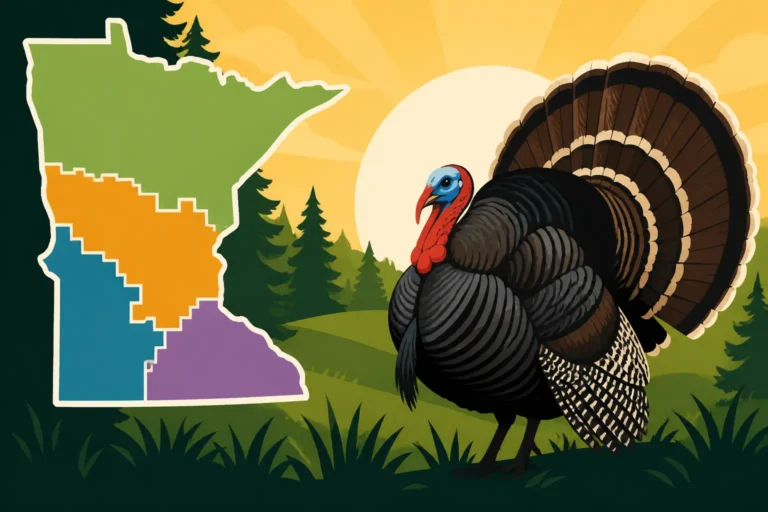
The vast majority of Minnesota's fall turkey hunting takes place within what the DNR designates as "Zone D." This is a significant portion of the state, primarily encompassing the prime turkey habitats found in southern and central Minnesota. This expansive zone simplifies planning for many hunters, as it covers a wide array of terrain, from agricultural fields to sprawling timber blocks and river bottoms. The beauty of Zone D is its accessibility; generally, if you have a fall turkey license, you can hunt anywhere within this zone where hunting is otherwise permitted (i.e., not private land without permission, or specific refuges that are closed).
However, it's important to recognize that while it's "statewide" in a practical sense for most, it's really "statewide within Zone D." There are still areas, particularly in the far northern reaches of Minnesota, where wild turkey populations are sparse or non-existent, and thus, hunting opportunities are not provided. The focus of the fall season is placed where the birds thrive and management deems it appropriate. This broad allowance within Zone D encourages hunters to scout and explore, without the added complexity of multiple small permit areas that characterize the spring season. Hunters using apps like GoHunt can easily overlay DNR land boundaries to confirm they're within Zone D and on accessible public land.
Maximizing Your Harvest with Multiple Tags
One of the most appealing aspects of Minnesota's fall turkey season, especially compared to the often-limited spring, is the opportunity to purchase multiple licenses. Hunters are typically allowed to purchase up to three fall turkey licenses, each valid for one bird. This means that if you're skilled and lucky enough, you could harvest up to three turkeys in a single fall season. This generous bag limit is a huge draw for those looking to stock their freezer with wild game or for hunters who simply love the challenge of the fall hunt.
However, each license is for one bird. You can't just buy one license and shoot three. Each bird harvested must have a corresponding tag. So, if your goal is to take multiple birds, plan on purchasing multiple licenses upfront. This flexibility allows for a much more relaxed approach to the season, as you don't feel the immense pressure of only having one chance at a single bird. It means you can afford to learn and adapt throughout the season, and if you tag out early on one bird, you can re-strategize for your next. Always remember to check the exact Minnesota Turkey Bag Limit for the current year, as regulations can occasionally be updated.
| Fall Turkey License Type | Max Purchase Limit | Bag Limit Per License | Valid Zone | General Season Dates (Approx.) |
|---|---|---|---|---|
| Fall Turkey License | 3 | 1 Turkey | Zone D | Early Oct. – Early Nov. |
Understanding Fall Turkey Registration
After successfully harvesting a fall turkey, the next critical step is to register your bird. In Minnesota, deer and bear registration moved to an online/phone system years ago, and turkeys often follow a similar, simplified process. While specific procedures can vary, you'll generally need to register your turkey electronically, either online through the DNR website or by phone. This usually needs to be done within 48 hours of harvest or before you process the bird or take it out of the state.
The registration process collects important data for wildlife managers, helping them track harvest numbers and monitor the health of the turkey population. It’s a simple but vital responsibility for every hunter. You'll typically be asked for information such as the date and time of harvest, the permit area (or general zone, in the case of Zone D), the bird's sex (tom, hen, or unknown), and the method of take (shotgun or archery). Failing to register your turkey is a violation and can result in fines, so don't overlook this crucial step. Always keep your registration confirmation handy, whether it's a confirmation number or a printed tag, especially if you plan to transport the bird.
Strategies for a Successful Fall Hunt
Fall turkey hunting is a completely different ballgame from spring. You're not calling in lovestruck gobblers; you're often targeting family groups or bachelor flocks and trying to capitalize on their social instincts. This requires a shift in mindset and tactics, focusing more on locating and scattering birds, then calling them back together.
Locating Flocks After Summer Dispersal
As summer transitions to fall, the turkey dynamics change dramatically. Spring breeding is long over, and hens are raising their poults. These family groups often consolidate, forming larger flocks, sometimes merging with other hens and their broods. Bachelor groups of gobblers also form up, often staying somewhat separate from the hens. The key to fall hunting success is locating these flocks. They're typically no longer tied to specific breeding areas, but rather to food sources and secure roosting sites.
This means scouting becomes paramount. Spend time driving rural roads at dawn and dusk, listening for yelps and clucks as birds leave and return to roosts. Pay close attention to agricultural fields, especially corn and soybean fields after harvest, where turkeys will feed on waste grain. Wooded river bottoms, oak ridges with mast crops like acorns, and even newly cut logging trails can be prime locations. Look for tracks, droppings, and scratch marks in the leaves. Using digital mapping tools like GoHunt, which allows you to overlay aerial imagery with public and private land boundaries, can be incredibly helpful for identifying potential food sources and travel corridors. Once you find a consistent flock, you’ve got a much better chance of success. This kind of diligent scouting helps you predict where Minnesota Turkeys Are Densest.
The Art of Breaking and Calling Fall Flocks
Unlike spring, where you might try to lure a single gobbler to your setup, fall hunting often revolves around the "break and call" method. Once you've located a flock, the goal is to intentionally scatter them. This can be done by running at them, yelling, or even shooting into the air (if safe and legal, and not directly at a bird). The idea is to make them fly or run off in all directions, causing them to become disoriented and anxious to regroup.
After the birds have scattered, you settle into a position, ideally where you scattered them or where they’ll naturally want to regroup. Then, you wait. After about 15-30 minutes, you start calling. Soft, reassuring "kee-kee" runs, lost yelps, and clucks are your bread and butter. You're mimicking a lost turkey trying to find its flock mates. The natural instinct of turkeys to regroup is incredibly strong, especially with young birds. Often, the scattered birds will begin to answer your calls, eventually working their way back to your position. This can lead to multiple birds coming in, offering excellent shot opportunities. Mastering Breaking Up a Fall Turkey Flock is a core fall turkey skill.
Decoy Use and Field Tactics
While not always necessary for the break-and-call method, decoys can certainly play a role in fall turkey hunting, especially in open field scenarios or when hunting more wary birds. A couple of hen decoys can provide a visual target that adds realism to your calling, reassuring incoming birds that it's safe to approach. Sometimes, a jake or even a full gobbler decoy can be used if you're trying to appeal to the pecking order within bachelor groups, but generally, a less aggressive hen setup is preferred for fall flocks.
When hunting field edges, particularly along cut corn or soybean fields, decoys can be incredibly effective. Set them up where birds will naturally see them as they enter the field to feed. Remember to always place your decoys so that incoming turkeys will present a clear, ethical shot. Don't place them too close to your setup, giving birds an opportunity to pick you out before they're in range. Combining decoys with subtle calling and patience can be a deadly tactic. For more insights on how to place your fake birds, research Decoy Placement for Pressured Minnesota Birds. Understanding how to hunt these productive areas is vital, so also look into Turkey Tactics for Farmland Field Edges.
Gear and Safety Considerations for Fall Turkeys
Having the right gear and keeping safety top-of-mind are non-negotiable for any hunting pursuit, and fall turkey hunting is no exception. From your firearm to your camouflage, every piece of equipment plays a role in your success and, more importantly, your well-being in the field.
Shotgun and Ammunition Choices
For shotgun hunters, the 12-gauge remains the most popular choice for turkeys, offering a wide array of ammunition options and sufficient stopping power. However, a 20-gauge can be just as effective, especially with modern turkey loads, and is often a lighter, more maneuverable option, which can be a real benefit if you're covering a lot of ground. Regardless of gauge, a tight choke is crucial for turkeys. Extra-full or even super-full turkey chokes help to concentrate your pattern for dense, lethal hits on the turkey's head and neck, which is the only ethical shot placement. If you're pondering what to carry, check out Turkey Shotgun Gauge Choice.
When it comes to ammunition, dedicated turkey loads with larger, harder shot (like #4, #5, or blended sizes) are designed to deliver maximum energy and penetration. Popular brands like Federal Premium's Heavyweight TSS, Winchester Long Beard XR, and Remington Nitro Turkey offer excellent performance. Always pattern your shotgun with your chosen choke and ammunition before the season. This means shooting at a target (ideally a turkey head target) at various distances to understand your gun's effective range and pattern density. Knowing your maximum ethical range is vital for clean kills and avoiding wounded birds. Don't just assume your gun shoots "good enough"; prove it at the range. More on this topic can be found in Turkey Chokes and Patterning.
Clothing and Camouflage for Autumn Conditions
Fall in Minnesota can bring a huge range of weather, from warm, sunny days to chilly, damp, or even snowy conditions. Layering is absolutely essential to stay comfortable and adaptable. Start with a moisture-wicking base layer, add insulating layers like fleece or wool, and top it off with a waterproof and windproof outer shell. Wool is a fantastic choice for outer layers due to its quietness and ability to retain warmth even when wet. Think about how you would dress for a late-season sit for deer; many of those principles apply. You might even find some crossover with strategies for Layering for a Minnesota Deer Stand.
Full camouflage is paramount for turkey hunting, as their eyesight is incredibly keen. Head-to-toe camo, including a face mask or face paint and gloves, is a must. Break up your outline as much as possible, and try to blend into the surrounding environment. While blaze orange is required for deer hunting in Minnesota, it is generally not required for turkey hunting during the fall season when shotguns or bows are used. However, some hunters choose to wear a bit of blaze orange when walking in and out of their hunting spots, removing it once they are set up, purely for safety, especially if deer season is also open. It’s always a good idea to confirm if there are any overlap requirements for Blaze Orange Jackets Versus Vests.
Important Safety Reminders
Hunting safety is always the top priority. For fall turkey hunting, this includes treating every firearm as if it’s loaded, always pointing the muzzle in a safe direction, being sure of your target and what’s beyond it, and keeping your finger off the trigger until you’re ready to shoot. These fundamental rules of firearm safety are non-negotiable.
Beyond firearm safety, specific considerations for turkey hunting include:
- Positive ID: Never shoot at a sound or movement. Always clearly identify your target as a turkey and ensure it’s a legal bird before taking a shot. In the excitement of the moment, it's easy to mistake a flash of color or movement for a bird. Take that extra second to be certain.
- Hunter Orange (optional but wise): While not required for turkey, wearing a small piece of blaze orange when moving to and from your setup, especially on public land during deer season, can significantly increase your visibility to other hunters. Remove it once you're settled.
- Awareness: Be aware of other hunters in the area, especially on public land. Avoid wearing red, white, or blue (colors associated with a turkey's head), as these can be mistaken for a turkey by another hunter. Using an app like GoHunt to scout areas with less pressure can also contribute to a safer hunt.
- Tree Stand Safety: If using a treestand, always use a safety harness. Fall turkey hunting often involves less stationary waiting than deer hunting, but if you do opt for a stand, treat it with the same caution.
Common Challenges and Troubleshooting
Even with the best preparation, fall turkey hunting can present unique challenges. The birds are often more dispersed, less vocal, and can be pressured. Knowing how to adapt to these situations can make all the difference between a frustrating outing and a successful one.
Dealing with Pressure and Timid Birds
Public land turkeys, especially those closer to population centers, can become incredibly wary as the season progresses. They've likely encountered hunters before, and their natural survival instincts kick into overdrive. When birds go quiet, or seem to vanish, it’s often a sign of pressure. Instead of trying to force a reaction, a more subtle approach is usually best. Minimize your calling, opting for very soft clucks and purrs, or only calling when you hear birds. Sometimes, no calling at all is the most effective call. Simply sitting patiently in a known travel corridor or feeding area can yield results as birds move naturally.
When birds are timid, avoid aggressive setups. Don't rush in after scattering a flock; give them ample time to calm down and begin to want to regroup. Sometimes, waiting an hour or more after the scatter before making your first call can be beneficial. Consider areas that receive less pressure. This might mean walking further, getting into thicker cover, or focusing on areas that other hunters overlook. Knowing When Minnesota Gobblers Go Quiet can help you adjust your strategy. It’s about becoming a ghost in the woods, not an alarm clock.
Adapting to Weather Changes
Minnesota weather in the fall is famously unpredictable. A warm, sunny morning can quickly turn into a cold, driving rain, or even an early snowfall. These changes can significantly impact turkey behavior. In warm, dry weather, turkeys might be more active, ranging widely to feed. Cooler, wet weather might make them seek shelter in dense cover or delay their movements. Wind, especially strong winds, can make turkeys less vocal and harder to hear, and also makes it difficult for them to hear your calls.
Hunters need to be prepared for anything. Waterproof outerwear is a must, and extra layers stored in your pack can be a lifesaver. On windy days, try to hunt in more sheltered areas, such as ravines, creek bottoms, or dense timber, where the wind's effect is mitigated, and your calls can carry better. After a significant rain, turkeys often head for open areas to dry off and sun themselves, so field edges or south-facing slopes can become hotspots. Being flexible with your hunting locations and methods based on the forecast is a key skill for any successful fall turkey hunter.
Accessing Public Land and Permission
Minnesota boasts a significant amount of public hunting land, from state forests and Wildlife Management Areas (WMAs) to federal lands like the Chippewa and Superior National Forests. These areas offer fantastic opportunities for fall turkey hunting, often holding healthy populations. Tools like the DNR's Recreation Compass or mapping apps such as GoHunt are invaluable for finding and navigating these public parcels. Always be sure to respect the boundaries and regulations specific to each type of public land. For example, some WMAs might have restrictions on vehicle use or stand placement. Researching Public Hunting Land in Minnesota is a good starting point.
While public land is a great resource, don't overlook the potential of private land, especially in agricultural areas where turkeys thrive. Gaining permission from landowners can open up incredible hunting opportunities that see less pressure. This requires a polite, respectful approach. Always ask well in advance of the season, and be prepared to be denied. Offer to help with chores, share your harvest, or simply be a good neighbor. Having a good reputation can open doors for future seasons. Always confirm if you need written permission. For guidance on how to secure permission, refer to Asking a Minnesota Farmer for Permission. Remember, legal access is just as important as knowing the season dates and methods.
Disclaimer
Please note that hunting regulations, season dates, and license requirements can change. Always consult the official Minnesota Department of Natural Resources (DNR) regulations for the current hunting season before heading afield. This guide is for informational purposes only and should not be considered a substitute for the official regulations.