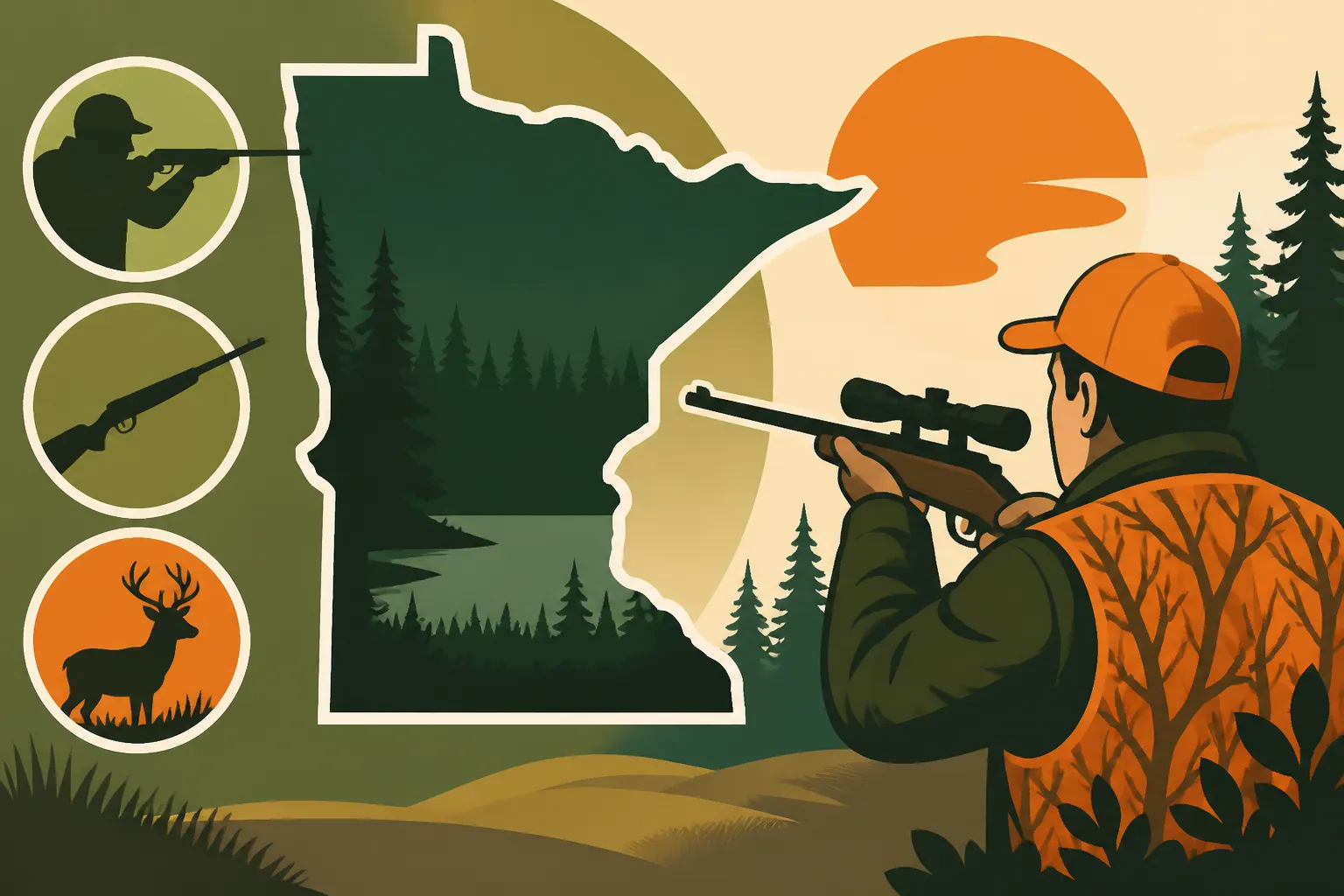
Minnesota’s New Statewide Rifle Rules
Many Minnesota deer hunters have felt the frustration of complex, often confusing, firearm regulations that seemed to vary from county to county, leaving us scratching our heads about what was legal where. For years, the line between "shotgun country" and "rifle country" felt like an arbitrary barrier. But things have changed! This comprehensive guide will walk you through Minnesota's new statewide rifle rules, clarifying exactly what the law means for deer hunters across the Gopher State, helping you understand the implications for your hunts, and equipping you with the knowledge to make informed decisions for the upcoming seasons.
A New Era: Understanding Minnesota's Statewide Rifle Legality
For generations, Minnesota’s deer hunting landscape was defined by a stark geographical divide in firearm regulations. This system, while intended to serve specific safety concerns, often led to confusion and frustration for hunters. Now, a significant shift has occurred, bringing a more unified approach to rifle legality across the state.
The Historical Landscape of Minnesota Deer Hunting Regulations
For as long as many of us can remember, hunting deer in Minnesota meant understanding two very different worlds: the "shotgun zone" and the "rifle zone." Roughly, central and southern Minnesota, particularly the more populated and agricultural areas, were designated as shotgun-only for deer hunting. This meant that if you were after whitetails in those counties, your primary firearm choices were limited to shotguns loaded with slugs, muzzleloaders, or archery equipment. Head north, into the vast expanses of the traditional big woods, and centerfire rifles were the standard.
This historical divide wasn't arbitrary. The rationale behind the shotgun-only zones often centered on public safety. The argument was that shotgun slugs, while powerful, generally have a shorter maximum effective range and tend to drop more quickly than rifle bullets. In densely populated areas, or regions with smaller woodlots and more close-in properties, limiting projectile travel distance was seen as a prudent safety measure. This created a distinct hunting culture in the south, often characterized by deer drives and closer-range stand hunting, where the booming report of a slug gun was the quintessential sound of opening day.
Consequently, this system shaped how many of us learned to hunt. Families often had different "deer guns" depending on where they drew their permit or owned land. A young hunter starting in the Twin Cities metro or the rich farmlands to the south would be trained on a slug gun, while their cousins up near Duluth or Grand Rapids would learn with a .30-06. This wasn't just about the weapon; it was about the entire style of hunting that evolved around those restrictions, from property selection to shot distance considerations. It was a system many grew up with, but one that increasingly felt outdated to a vocal portion of the hunting community.
Why the Shift to Statewide Rifle Rules Occurred
The move towards statewide rifle legality wasn't an overnight decision, but rather the culmination of years of advocacy, legislative efforts, and evolving perspectives on firearm technology and hunter demographics. A significant push came from hunters themselves, who often expressed frustration with the arbitrary nature of the zone lines and the perceived limitations they imposed on hunting opportunities and equipment choices. Many argued that modern slug guns, with their rifled barrels and saboted slugs, offered accuracy and range comparable to traditional rifles, negating the original safety premise for the shotgun zones.
Beyond hunter advocacy, the Minnesota Department of Natural Resources (DNR) also recognized the need for updates and simplification. The complex web of regulations could be confusing for new hunters and even seasoned veterans. Furthermore, issues like Chronic Wasting Disease (CWD) played a role in the discussion. Simplifying regulations was seen as a way to improve hunter participation and management flexibility, especially for special hunts needed to control deer populations or conduct surveillance in CWD management zones. The DNR sought a system that would be easier to understand and administer, while still addressing safety concerns.
Ultimately, the consensus emerged that a statewide standard, with options for local control, was the most sensible path forward for modern hunting and conservation goals. Years of debate, studies into ballistic performance, and public input sessions led to the legislative action that finally changed the rules. It passed with the understanding that while traditional bottleneck rifles would be legal in most of the state, individual counties would have the opportunity to opt-out and retain a straight-wall cartridge restriction, providing a compromise that balanced hunter desires with local safety considerations. This complex journey reflects the dynamic nature of wildlife management, constantly adapting to both conservation needs and the desires of the hunting community. For more context on why these changes were pursued, consider the article on Why Straight-Wall Rifles Are Now Legal Statewide.
Deconstructing the New Law: What "Statewide" Really Means
When the news broke about "statewide rifle legality," many hunters breathed a collective sigh of relief, imagining a uniform system across the entire state. While the law is a monumental step towards simplification, it’s crucial to understand the nuances that define its actual application. "Statewide" doesn't mean absolutely everywhere without exception.
The General Rule: Rifles are Now Legal in Most Areas
As of 2023, the biggest takeaway for Minnesota deer hunters is this: traditional centerfire rifles are now generally legal for deer hunting throughout the vast majority of Minnesota. This marks a profound shift, effectively ending the long-standing and often confusing divide between historical shotgun and rifle zones for most of the state's landmass. This change brings Minnesota in line with many other states and grants hunters a much-desired flexibility to use a wider range of effective and accurate firearms.
What this means in practice is that if you're planning your deer hunt in the countless acres of forest, prairie, and farmland that make up most of Minnesota's counties and permit areas, you can now confidently carry your preferred bolt-action, lever-action, or semi-automatic centerfire rifle. Of course, it must still meet the minimum caliber requirements set forth by the DNR (we'll dive into those details later). This simplification is a breath of fresh air for many who felt constrained by the old rules, perhaps owning a rifle for out-of-state hunts but being unable to use it at home. It allows for greater consistency in gear and training, which can only lead to more confident and ethical hunting.
However, it's vital to recognize that "statewide" isn't an absolute, blanket rule covering every single acre of land in Minnesota. The critical nuance, and where many hunters still need to pay close attention, is that while the state has legalized traditional rifles in most areas, individual counties were granted the option to retain straight-wall cartridge restrictions. This was a legislative compromise designed to address localized concerns, particularly in more densely populated or historically shotgun-only areas where residents might have valid safety worries. Therefore, before heading afield, even in an area you believe is "rifle legal," a quick check of county-specific rules is always a smart move. Modern tools like the GoHunt app can be invaluable for quickly checking specific county regulations and boundary lines directly from your phone.
The Exception: Counties Retaining Straight-Wall Restrictions
This particular provision in the new law is the one that still causes a bit of confusion and requires careful attention from hunters. While the state enacted a sweeping statewide rifle rule, the legislation also included a crucial allowance: individual counties had the option to "opt-out" of the full rifle legality. These counties chose instead to remain restricted to straight-wall cartridge firearms only, alongside shotguns and muzzleloaders. This specific compromise was put in place to address local concerns, particularly in areas that historically had very dense populations, or where the local county board felt strongly about maintaining a shorter-range projectile standard.
Currently, there are thirteen counties in Minnesota that made the decision to retain these straight-wall-only restrictions for firearm deer hunting. These counties are Anoka, Carver, Chisago, Dakota, Hennepin, Isanti, Ramsey, Scott, Sherburne, Washington, Wright, Rice, and Stearns (with only the southern portion of Stearns County specifically opting into the straight-wall restriction). If you are planning to hunt deer with a firearm in any of these counties, it is absolutely imperative to understand that you cannot use a traditional bottleneck rifle cartridge. Instead, your options for firearms are limited to shotguns with slugs, muzzleloaders, or rifles chambered in straight-wall cartridges. This is a crucial distinction, especially for hunters who have historically hunted these areas with traditional shotguns and are now considering an upgrade. Always double-check your intended hunting location against the official county list; a great way to do this is by consulting the DNR's resources or Checking Your County's Shotgun-Only Ordinance.
For those hunting in these specific counties, it's important to understand that this is not a return to the old "shotgun-only" days exactly, but rather a different kind of restriction. Straight-wall cartridge rifles, while still considered short-to-medium range firearms compared to bottleneck rifles, offer significant advantages over many slug guns in terms of accuracy, consistency, and often reduced recoil. They effectively bridge the gap, providing rifle-like precision with a projectile that typically has a more limited maximum range, aligning with the safety concerns often cited in these more developed regions. If you hunt these areas, researching and understanding the capabilities and limitations of straight-wall firearms is a necessary step.
Navigating the Zones: Impact on Minnesota's Deer Permit Areas
The new statewide rifle rules fundamentally alter the hunting landscape in many parts of Minnesota, even while largely maintaining the status quo in others. Understanding how these changes intersect with Minnesota's various deer permit areas is key to planning a successful and compliant hunt.
Former Shotgun-Only Counties and Their New Reality
For decades, many deer hunters in the central and southern regions of Minnesota were limited to shotguns with slugs, muzzleloaders, or archery gear during the firearm season. These areas, once collectively known as the "shotgun zone," often encompassed rich agricultural landscapes interspersed with woodlots, river bottoms, and more suburban fringes. Hunting here was a distinct experience, frequently characterized by organized deer drives across smaller parcels of land and closer-range shots, often due to thick cover or limited sightlines. The new statewide rule, even with its county-specific opt-out clause, profoundly changes this reality for many of these areas.
In the majority of these former shotgun-only counties that did not opt-out of the full rifle legality, hunters now enjoy the freedom to use traditional centerfire rifles. This is a game-changer. It opens up new possibilities for shot placement and accuracy, particularly in areas with longer sightlines across expansive fields, pastures, or along power line cuts. This might necessitate a shift in traditional hunting tactics, moving away from relying solely on short-range slug gun setups to embracing the more precise, longer-range capabilities of a rifle. Hunters might spend more time glassing distant tree lines or positioning stands for shots over larger food plots. However, this also carries with it a greater responsibility: hunters must be acutely aware of their firearm's maximum effective range and practice even more stringent ethical shot selection, always knowing their target and what lies beyond.
Even in the thirteen counties that did retain straight-wall-only rules, there's a significant departure from the pure shotgun-only days. While not allowing bottleneck rifles, the legalization of straight-wall rifle cartridges still offers a substantial upgrade for many. Straight-wall rifles can provide markedly improved accuracy and often less punishing recoil compared to many traditional slug guns, making them a very attractive option for hunters in these restricted areas. This introduces a new learning curve for many, requiring research into suitable cartridges (like the .350 Legend or .450 Bushmaster) and dedicated practice with these newer firearm platforms. It's an opportunity to embrace modern technology while still respecting the underlying intent of local regulations. If you're looking to upgrade your setup, check out our guide on Choosing a Rifle Now That Shotgun Zones Are Gone.
Northern and Northeastern Zones: Business as Usual, Mostly
For hunters who have traditionally chased whitetails in the vast, rugged forests of northern Minnesota, particularly within the 100 series and much of the 200/300A zones, where centerfire rifles have long been the standard, the new statewide rules don't introduce a seismic shift. Your trusted .30-06, .270, or .308 will continue to serve you well as you navigate the dense timber, aspen cuts, and swamp edges of the big woods. These areas, characterized by their expansive public lands and lower population densities, have always been prime rifle country, and that fundamental aspect remains unchanged.
However, even in these traditionally rifle-friendly zones, the statewide discussion and the focus on modern rifle ballistics have brought a renewed emphasis on ethical hunting practices and a deeper understanding of bullet performance. While you may have always used a rifle, the conversations surrounding safety, projectile travel in more populated areas, and the importance of a clean kill might subtly influence how we all think about appropriate calibers and shot distances, even in the wilderness. It serves as a good reminder for all of us, regardless of our experience level, to continually refresh our knowledge of ballistics, shot placement, and responsible hunting techniques. The ability to use a rifle effectively in challenging terrain is a skill that always benefits from refinement.
Perhaps the biggest "change" in these northern zones is the removal of any lingering ambiguity for those who might have hunted areas near the old zone boundaries. Previously, a hunter operating close to the dividing line might have felt a need to double-check their location with extreme care. Now, you can be confident that your traditional centerfire rifle is legal in these expansive northern and central Minnesota forests, allowing you to focus more intently on scouting, tracking that elusive buck through the aspen cuts or along those ridge lines, and less on questioning the legality of your firearm. This clarity is a welcome improvement, freeing up mental energy to concentrate on the hunt itself. For those gearing up for the northern woods, insights on Sighting In a Rifle for Minnesota Woods Ranges can be particularly helpful.
Straight-Wall Cartridges: The Middle Ground
The term "straight-wall cartridge" has quickly become a common part of the Minnesota hunter's vocabulary, especially with the new statewide rifle rules. These cartridges represent a fascinating middle ground between traditional bottleneck rifle cartridges and shotgun slugs, offering a unique blend of performance characteristics suitable for specific hunting environments.
What Defines a Straight-Wall Cartridge?
At its core, a straight-wall cartridge is quite literally what its name implies: a cartridge case where the sides are parallel or nearly parallel from the base to the mouth, without a distinct shoulder that tapers down to a smaller neck. This design is in contrast to "bottleneck" rifle cartridges (like a .30-06 Springfield or .270 Winchester), where the case narrows significantly to hold a smaller-diameter bullet. The lack of a neck and shoulder in straight-wall cartridges is a key differentiator, and it’s why they behave differently ballistically.
This straight-sided design generally results in several performance characteristics: projectiles fired from straight-wall cartridges tend to travel at lower velocities and typically have a shorter maximum effective range compared to bottleneck rifle cartridges. This is precisely why they are often favored in states or regions with higher population densities or specific safety concerns related to projectile travel distance. While they may not have the extreme long-range capabilities of some bottleneck cartridges, modern straight-wall designs and bullet technologies mean they are incredibly effective and accurate for deer hunting within their intended range. They offer a significant step up in ballistic performance, energy retention, and often accuracy compared to many traditional shotgun slugs.
Examples of common straight-wall cartridges that have gained popularity among deer hunters include the venerable .45-70 Government, the relatively new .350 Legend, the hard-hitting .450 Bushmaster, and even pistol calibers like the .44 Magnum or .357 Magnum when fired from a rifle. While some of these might sound like pistol cartridges, modern rifles chambered for them are purpose-built hunting tools, capable of delivering impressive performance on deer. The legalization of these in specific counties offers hunters a much-improved firearm option that respects local safety parameters. To understand the full legal scope of these options, it's worth reviewing information on Straight-Wall Cartridges Legal in Minnesota.
Selecting a Straight-Wall Rifle for Minnesota's Restricted Counties
If your hunting plans take you to one of the thirteen Minnesota counties that opted to remain straight-wall only, then choosing the right firearm for that restriction becomes a critical decision. Fortunately, the market has responded robustly to the demand for effective straight-wall options. Cartridges like the .350 Legend and .450 Bushmaster have quickly risen to prominence as favorites among hunters, thanks to their widespread availability, relatively manageable recoil, and excellent terminal performance on deer. The .45-70 Government, a classic cartridge with a long history, also remains a formidable choice, though it typically delivers a bit more recoil.
When you're in the market for a straight-wall rifle, it's important to consider the typical distances you anticipate shooting. While they're not long-range specialists, most modern straight-wall cartridges are highly effective out to 150-200 yards, with some capable of pushing a bit further with specialized loads and ample practice. Beyond these ranges, bullet drop and energy retention become more significant factors, requiring a precise understanding of your rifle's ballistics. Investing in quality optics is just as important for a straight-wall rifle as it is for any other hunting firearm, allowing for precise shot placement within their effective range. A good quality variable power scope (e.g., 2-7x or 3-9x) will serve most straight-wall hunting scenarios well.
Today, many reputable firearm manufacturers offer excellent straight-wall rifles across various action types, from classic lever-actions to modern bolt-actions and even some semi-automatic platforms, giving hunters a wide array of choices to fit their preferences and budget. Brands like Ruger, Savage, Winchester, and CMMG have embraced these calibers, providing reliable and accurate hunting platforms. But remember, buying the rifle is only the first step. It is absolutely essential to spend ample time at the shooting range, familiarizing yourself with your chosen setup. Understanding your straight-wall rifle's capabilities, its ballistic curve, and your own limitations as a shooter is the hallmark of a responsible and ethical hunter.
Preparing for the Hunt: Calibers, Optics, and Ethical Shots
With the new statewide rifle rules in effect for most of Minnesota, hunters now have a broader spectrum of choices, but with that freedom comes the responsibility of making informed decisions about gear and shot selection. Preparing effectively for your hunt is more critical than ever, ensuring both success and ethical conduct.
Choosing the Right Rifle Caliber for Minnesota Deer
With traditional rifles now legal in most of Minnesota, hunters are presented with a plethora of caliber choices, each boasting its own set of advantages. For many, the tried-and-true classic deer cartridges will continue to be excellent options. The .270 Winchester, .30-06 Springfield, and .308 Winchester remain perennial favorites, offering a superb blend of knockdown power, relatively flat trajectory, and widespread ammunition availability. These calibers are more than capable of cleanly taking Minnesota whitetails across the state's diverse terrain, from the sprawling, open agricultural fields of the south to the dense, dark timber of the northern forests. They have proven their effectiveness for generations.
For those looking for something a bit newer or with different characteristics, the 6.5 Creedmoor has seen a significant surge in popularity. Its appeal lies in its mild recoil, excellent ballistic efficiency, and inherent accuracy, making it a joy to shoot accurately even for extended range sessions. This cartridge offers ample power for whitetails while being comfortable for many shooters. Even smaller calibers, such as the .243 Winchester, can be highly effective for deer, particularly for youth hunters, those new to centerfire rifles, or individuals sensitive to recoil, provided that ethical shot placement is rigorously prioritized. It's a fundamental truth in hunting that precise shot placement into the vital zone trumps raw power almost every single time. For more on this, you might find our article on Minimum Rifle Caliber for Minnesota Deer informative.
When making your final caliber choice, it's essential to consider a few factors beyond just the raw ballistic data. How comfortable are you with the recoil? Can you manage it effectively to maintain accuracy? What are the typical distances you anticipate shooting? Is ammunition readily available and affordable for practice? A common pitfall is choosing a caliber that is either unnecessarily powerful or has too much recoil, leading to developing a flinch and consequently, poor accuracy. The absolute best caliber for you is the one you can shoot accurately, consistently, and confidently under field conditions.
Optics for Minnesota's Diverse Landscapes
Minnesota hunting conditions are wonderfully diverse, ranging from the dense, often dark timber of the Northwoods, where shots are typically quick and close, to the expansive, wide-open agricultural fields and prairie edges in the south, where longer shots might present themselves. Your choice of rifle scope should directly reflect this reality, as a single optic might not be ideal for all situations. For the thick cover and tight shooting lanes prevalent in the big woods, a lower magnification scope (e.g., 1.5-5x, 2-7x, or 3-9x) is often preferred. These scopes offer a wide field of view, making it easier to acquire a fast-moving target, and typically boast excellent low-light gathering capabilities, crucial during dawn and dusk.
If your hunting grounds are characterized by more open terrain, such as cut cornfields, bean fields, or large forest clearings, a scope with a higher maximum magnification (e.g., 3-12x or 4-16x) can be beneficial for those potentially longer shots. However, even in these scenarios, a versatile variable power scope with a lower minimum setting is incredibly useful, allowing you to adapt to changing conditions. Reputable brands like Leupold, Vortex, Nikon, and Athlon Optics offer excellent options across various price points, balancing clarity, durability, and features. Never compromise on optics quality; a clear, reliable, and durable scope can make all the difference when that trophy buck finally steps out.
Beyond just magnification, consider other crucial features. Objective lens size (the front lens) can impact light gathering, but a larger lens also adds bulk. The reticle type (simple duplex, fine crosshairs, or ballistic drop compensating – BDC) should match your hunting style and typical shot distances. Durability is paramount, as hunting gear often faces tough conditions. Fogging is a very real concern in cold, damp Minnesota weather, so look for nitrogen-purged and O-ring sealed optics to prevent internal moisture. Lastly, a good quality laser rangefinder is an invaluable tool for accurately judging distances in unfamiliar terrain, allowing you to make precise holdover adjustments if necessary. Many hunters also leverage digital mapping apps like GoHunt in conjunction with their optics to get a comprehensive understanding of their hunting area.
Practicing Ethical Shot Placement and Range Limitations
With the increased range potential that modern rifles bring to more areas of Minnesota, the responsibility of the hunter to make ethical, humane shots becomes even more critical. A rifle bullet can travel much farther and retain significantly more energy than a shotgun slug, which means understanding your backstop and the terrain beyond your target is absolutely paramount. It's not enough to simply hit the animal; the goal must always be a quick, humane kill to minimize suffering and prevent lost game.
Therefore, spending ample time at the shooting range is non-negotiable. Don't just zero your rifle at 100 yards and call it good. Practice shooting from various positions – standing, kneeling, prone, and from a simulated treestand or ground blind position. Engage targets at different distances that mimic your typical hunting scenarios, and do so under conditions that simulate field stress. Crucially, understand your rifle's ballistic trajectory and, more importantly, its maximum effective range for you. This isn't the rifle's theoretical maximum range; it's the distance at which you, the shooter, can consistently and reliably place a shot into a vital zone (the heart/lung area) under realistic field conditions, accounting for wind, elevation, and adrenaline.
This emphasis on practice and self-awareness is particularly important for hunters transitioning from shotguns to rifles. The extended effective range of a rifle can sometimes tempt hunters to take shots they might not have attempted, or even considered, with a slug gun. Exercise restraint and good judgment. If there's any doubt about your ability to make a clean kill, if you can't be absolutely certain of your backstop, or if the animal isn't presenting an ethical shot angle, don't take the shot. Waiting for the right opportunity, even if it means going home empty-handed, is the mark of a true conservationist. Our role as stewards of Minnesota's wildlife demands nothing less than the highest ethical standards in the field.
Legalities and Logistics: Staying Compliant and Prepared
Navigating hunting season successfully means more than just knowing your rifle's capabilities; it also means adhering to Minnesota's specific legal requirements and best practices. From mandatory safety attire to choosing the right ammunition, staying compliant ensures a safe and enjoyable experience for everyone afield.
Understanding Minnesota's Blaze Orange Requirements
With the expanded legality of rifles across more of Minnesota, safety regulations like blaze orange requirements remain absolutely paramount. In Minnesota, during the firearm deer season, and indeed in certain other hunting seasons, hunters are legally mandated to wear either blaze orange or blaze pink. This isn't merely a suggestion or a recommendation; it's a strict legal requirement specifically designed to enhance hunter visibility in the field, drastically reducing the risk of accidental shootings. For deer hunting, this means wearing an outer garment (such as a hat, jacket, vest, or a combination thereof) that is at least 50% blaze orange or pink and is visible from all sides.
This rule typically applies to all hunters afield, even those pursuing game with archery equipment during concurrent firearm seasons. The underlying logic is straightforward and rooted in safety: if you are present in the woods or fields when firearms are actively being used, you must be highly visible to other hunters. This is a non-negotiable aspect of safe hunting in Minnesota. Failing to wear the required blaze orange or pink can result in citations and, more importantly, puts you and others at unnecessary risk. Do not show up to deer camp or head into the woods without adequate blaze orange; it’s one of the simplest and most effective ways to ensure your safety and the safety of those around you. More detailed information can be found by consulting our article on Minnesota Blaze Orange Requirements.
While the new rifle rules offer greater flexibility in weapon choice, they absolutely do not alter these fundamental safety protocols. If anything, the potential for longer-range projectiles and the increased presence of rifles in former shotgun zones might even emphasize the need for enhanced visibility. Always err on the side of wearing more orange, not less, and ensure that your hunting companions are also properly attired. Regular reminders within your hunting party can prevent costly oversights and maintain a safe hunting environment for everyone.
Ammunition Regulations and Ethical Shot Choice
Beyond the critical distinction between straight-wall and bottleneck cartridges, Minnesota also imposes specific regulations concerning the type of ammunition permissible for deer hunting. For firearm deer hunting, hunters must use centerfire rifle cartridges, shotgun slugs, or muzzleloader projectiles. It’s important to note the prohibited ammunition types, which include rimfire cartridges (like .22 LR), full metal jacket (FMJ) bullets, and tracer rounds. The rationale behind these prohibitions is twofold: to ensure clean, humane kills and to prevent unnecessary wounding of game. FMJ rounds, for example, are designed for penetration and military applications rather than expansion, which is essential for rapidly incapacitating game animals and ensuring a quick, ethical harvest.
When you are selecting your hunting ammunition, it is absolutely crucial to choose reputable brands that are known for producing quality expanding bullets specifically designed for deer-sized game. Options such as soft points, bonded bullets, and controlled expansion projectiles are all excellent choices. These types of bullets are engineered to mushroom upon impact, effectively transferring their energy into the animal's vitals and creating a larger wound channel. This process leads to rapid tissue damage and blood loss, resulting in a quicker, more humane dispatch of the animal. Investing in quality hunting ammunition that performs reliably is just as important as having an accurate rifle.
The type of ammunition you choose, when combined with proper shot placement, forms the absolute cornerstone of ethical hunting. Even with the most accurate rifle and a top-tier scope, if your ammunition is inappropriate for the task or your shot is poorly placed, you significantly increase the risk of wounding an animal and having it escape, leading to prolonged suffering and wasted game. Take the time to research different bullet constructions, consult with experienced hunters or knowledgeable gun shop professionals, and critically, practice extensively with your chosen load to understand its performance characteristics. This preparation ensures that when the moment of truth arrives, you are fully confident in your ability to make an ethical shot. For a comprehensive overview, look into Legal Firearms for Minnesota Deer Hunting.
The Importance of Hunter Safety and Education
Whether you are a seasoned veteran with decades of experience in the Minnesota woods or a novice embarking on your first deer season, the recent shift in Minnesota's rifle rules unequivocally underscores the continuous and vital importance of hunter safety education. For those transitioning from primarily using shotguns to now utilizing rifles in previously restricted areas, there's a definite learning curve involved. This includes understanding the different ballistic properties of rifle cartridges, mastering recoil management, and precisely defining the extended effective range of their new firearm. Even experienced rifle hunters can significantly benefit from periodic refreshers, particularly regarding the nuances of hunting in potentially more populated or suburban transition zones where safety considerations are heightened.
Minnesota law mandates hunter safety training for anyone born after December 31, 1979, before they are legally permitted to purchase a hunting license. Even if you are exempt from this requirement due to your age, seriously consider taking a hunter safety course. These courses cover a broad spectrum of critical topics, extending far beyond just basic firearm handling. They delve into essential field safety protocols, responsible game identification, fundamental first aid techniques, and the overarching principles of ethical hunting practices. It serves as a foundational experience that builds both confidence and competence in the field. If you or someone you know needs to take this course, you can find information on Minnesota Hunter Safety Requirements.
The safe handling, transport, and storage of firearms are paramount for all hunters. Always adhere to the cardinal rules of firearm safety: treat every firearm as if it is loaded, keep the muzzle pointed in a safe direction, keep your finger off the trigger until you are ready to shoot, and be absolutely certain of your target and what lies beyond it. These rules are even more crucially important when wielding a rifle, given its capability for longer-range projectile travel. Educate yourself thoroughly, practice diligently, and always prioritize safety in every aspect of your hunting endeavors.
Practical Implications for Your Minnesota Deer Hunt
The implementation of new rifle rules brings both opportunities and considerations for Minnesota deer hunters, potentially reshaping tactics and influencing how different hunting groups approach the season.
Recalibrating Hunting Tactics for Rifle Zones
The newfound ability to use rifles in many areas previously designated as shotgun-only means that traditional hunting tactics might need to adapt significantly. Where organized deer drives and short-range stand placements were often the norm due to the limitations of shotgun slugs, hunters might now consider longer-range stand placements. This is particularly relevant on the edges of large fields, expansive clear-cuts, or along major transition lines where a longer shot might present itself. This doesn't inherently render deer drives obsolete, especially on smaller parcels or in thick cover, but it certainly expands the tactical toolbox available to hunters, allowing for more diverse strategies.
In these newly opened rifle areas, hunters may find themselves utilizing optics more extensively, spending more time glassing distant tree lines, field edges, or creek bottoms to identify deer movement patterns before making a move. The increased accuracy and range of a rifle can facilitate a more deliberate and patient approach in certain scenarios, potentially reducing the immediate need for aggressive pushes if you can effectively spot and stalk, or sit patiently on a vantage point overlooking a larger area. This shift can be especially pronounced on private land with larger, more open parcels where longer sightlines are common.
For those hunting Minnesota's vast public lands, meticulous scouting becomes even more critical. Understanding lines of sight, identifying potential shooting lanes at greater distances, and analyzing deer movement patterns across larger areas can significantly contribute to success. Tools like GoHunt's advanced mapping features can be invaluable here, helping hunters identify terrain features that create natural funnels, potential bedding areas, or ideal vantage points for those longer shots. This recalibration is about leveraging the rifle's capabilities to hunt smarter, not just harder.
Consideration for Bowhunters and Muzzleloader Enthusiasts
While the spotlight in recent discussions has largely been on the statewide rifle rules, it’s important to remember that bowhunters and muzzleloader enthusiasts are also integral parts of the Minnesota deer hunting community, and their seasons continue largely unchanged. The new rifle rules primarily affect the firearm deer season, but they do have some indirect implications for other weapon users. For instance, during periods when firearm and archery seasons run concurrently, bowhunters in many areas will still need to adhere strictly to blaze orange requirements, ensuring their visibility and safety alongside rifle hunters in the field.
Muzzleloader hunters, who often cherish their dedicated late-season hunt periods, continue to operate under their specific regulations, which offer unique challenges and rewards. In fact, for those hunters operating in the thirteen specific counties that opted to retain straight-wall-only restrictions, a muzzleloader remains a highly effective and perfectly legal option during the regular firearm season. Modern muzzleloaders, with their capability for excellent accuracy and respectable range, can offer performance quite comparable to many modern straight-wall rifles. Many muzzleloader enthusiasts value the unique challenge and the rich tradition associated with this method of hunting, and the new rules do not diminish their chosen pursuit one bit. To explore effective strategies for this unique season, consider our guide on Minnesota Muzzleloader Season Tactics.
The overall expansion of rifle opportunities might lead to subtle shifts in hunter pressure in certain areas. It's plausible that some hunters, now equipped with rifles, might gravitate towards new zones or change their preferred hunting method. This could, in turn, potentially open up new opportunities or provide slightly less crowded conditions for bowhunters and muzzleloader hunters who often seek out quieter, more solitary hunting experiences. Regardless of your preferred weapon, it is always wise to consult the official Minnesota Deer Seasons and Permit Areas to fully understand the specific rules, dates, and permit area regulations that apply to your chosen hunting method and location.
Resources and Staying Informed
Staying informed is perhaps the most crucial aspect of being a successful and compliant hunter in Minnesota, especially with evolving regulations. The wealth of information available, both online and through community networks, is immense and invaluable.
Utilizing Online Resources and Mapping Tools
In this modern era of rapidly changing regulations, complex permit area structures, and increasingly sophisticated hunting strategies, online resources are undeniably your best friend. The Minnesota Department of Natural Resources (DNR) website stands as the authoritative and definitive source for all official regulations, season dates, lottery information, and specific permit area details. It is absolutely essential to familiarize yourself with their annual hunting regulations handbook, which is meticulously updated each year and readily available in digital format. This document is the bible for Minnesota hunters and should be reviewed thoroughly before each season.
Beyond the official DNR channels, advanced digital mapping applications have become absolute game-changers for modern hunters. Platforms such as those offered by GoHunt, onX Hunt, or similar providers, allow you to overlay crucial information directly onto detailed topographical and aerial maps. You can visualize public and private land boundaries, identify critical habitat features (like timber cuts, swamp edges, and food sources), pinpoint potential stand locations, and even check specific county regulations directly from your smartphone or tablet. This functionality is particularly useful for discerning the boundaries of those thirteen straight-wall-only counties and understanding exactly where different rules apply, preventing accidental trespass or non-compliance. These tools are indispensable for scouting, planning, and navigating in the field.
Furthermore, beyond these official and commercial tools, a vibrant community of online forums, dedicated hunting blogs, and various social media groups focused on Minnesota hunting can be excellent places to ask questions, share real-time experiences, and stay updated on local conditions, deer movement, and practical interpretations of the rules. Just be sure, and this is critical, to always cross-reference any information gleaned from these unofficial sources with the official DNR regulations to ensure absolute accuracy and compliance. This due diligence is the mark of a responsible hunter.
Connecting with Fellow Hunters and Local Experts
While digital resources are undeniably powerful and highly convenient, it would be a mistake to underestimate the enduring value of local knowledge and face-to-face interaction within the hunting community. Striking up conversations with seasoned hunters at your local sporting goods store, participating in a regional hunting club, or directly engaging with DNR staff at public events can provide nuanced insights that no online map or regulation book alone can fully convey. These local experts can offer invaluable advice on specific hunting areas, subtle nuances of local deer behavior, and practical tips that are often learned only through years of firsthand experience in a particular patch of woods or farmland.
Building a strong network of fellow hunting enthusiasts not only enriches your overall hunting experience but also creates a vital support system for understanding and navigating complex regulations. You can compare notes on different rifle setups, discuss effective tactics for specific permit areas, share scouting information, and even help each other interpret confusing rules. Engaging in respectful dialogue, even when opinions on hunting ethics or specific regulations might differ, fosters a stronger, more informed hunting community. These personal connections are part of the heritage of hunting and help perpetuate knowledge from one generation to the next.
Consider actively seeking out and attending local hunter education events, seminars, or workshops, especially those specifically focused on the new rifle rules or other pertinent regulation changes. These events often feature DNR officials, local game wardens, or highly experienced hunters who can answer specific questions, provide clarification on the most recent changes, and share practical advice. The more informed you are through a combination of official resources, digital tools, and personal connections, the more confident, compliant, and ultimately, more successful and enjoyable your Minnesota hunting experiences will be.
The Road Ahead: Adapting to Change
The landscape of Minnesota deer hunting is ever-evolving, and the recent changes to statewide rifle rules underscore this dynamic reality. As hunters, our ability to adapt, learn, and uphold ethical standards is more important than ever.
The Future of Minnesota Deer Hunting
The new statewide rifle rules represent a significant and transformative evolution in Minnesota deer hunting. While they undoubtedly bring added flexibility and new opportunities for many hunters across the state, they also introduce new responsibilities and a clear call for ongoing education and adaptation. The overarching goal behind these legislative changes was multifaceted: to simplify a historically complex and often confusing set of regulations, to enhance hunter opportunity by allowing a broader choice of effective firearms, and crucially, to maintain safe and ethical hunting environments for all participants and the broader public. These changes are a testament to the dynamic nature of wildlife management, which must constantly adapt to both evolving conservation needs and the expressed desires of the hunting community.
As hunters, our collective role is to embrace these changes thoughtfully and responsibly. This means going beyond simply understanding the literal text of the new law; it requires fully internalizing and practicing the spirit of ethical hunting. Prioritizing safety in every aspect of our hunt, striving for humane and clean shots, meticulously respecting all land boundaries (whether public or private), and actively contributing to conservation efforts are more paramount than ever before. The long-term health and sustainability of Minnesota's iconic deer herd, alongside the future vibrancy of our cherished hunting traditions, depend squarely on our collective commitment to these fundamental principles.
Looking ahead, we can reasonably anticipate continued discussions, evaluations, and potentially even further refinements to these rules in the years to come. Wildlife management is an inherently ongoing process, constantly responding to biological data, environmental changes, and societal input. The Minnesota DNR, in conjunction with the state legislature, will undoubtedly continue to monitor the impact of these new rifle rules on deer populations, hunter safety statistics, and overall participation rates. Staying actively engaged, diligently informed, and consistently advocating for responsible hunting practices will be essential to ensure that Minnesota not only remains a premier destination for deer hunters but also continues to uphold its rich legacy of wildlife conservation.
| Old Rule (Prior to 2023) | New Rule (2023 Onward) | Areas Affected | Typical Firearm |
|---|---|---|---|
| Shotgun-Only Zone (Central/Southern MN) | Statewide Rifle Legality (with specific county exceptions) | Most of Central & Southern MN (former Shotgun Zone counties that did not opt-out) | Traditional Centerfire Rifles, Shotguns, Muzzleloaders, Archery |
| Rifle Zone (Northern MN) | Statewide Rifle Legality | Northern MN (e.g., 100, 200, 300A Series, Big Woods) | Traditional Centerfire Rifles, Shotguns, Muzzleloaders, Archery |
| 13 Counties with Straight-Wall Only Option | Straight-Wall Cartridge Rifles, Shotguns, Muzzleloaders, Archery ONLY | Anoka, Carver, Chisago, Dakota, Hennepin, Isanti, Ramsey, Scott, Sherburne, Washington, Wright, Rice, Stearns (southern part) | Straight-wall rifles (.350 Legend, .450 Bushmaster), Shotguns, Muzzleloaders, Archery |
| No Dedicated Straight-Wall Rifle Category (pre-2023) | New, distinct category of legal firearms for restricted counties | The 13 Opt-Out Counties | Modern Straight-Wall Rifles (e.g., in .350 Legend, .450 Bushmaster, .45-70) |
Disclaimer
This guide is intended for informational purposes only and should not be considered legal advice. Hunting regulations can change. Always consult the most current Minnesota Department of Natural Resources (DNR) regulations and local ordinances before heading afield to ensure compliance.