Hunting Bear Without Bait or Dogs
Hunting black bears in Minnesota often conjures images of strategically placed bait piles or the exciting, albeit demanding, chase with a trained hound pack. But for those who seek a different kind of challenge, a more primal connection to the hunt, the idea of pursuing a bear without either of these methods can feel daunting, if not impossible. This comprehensive guide is designed to peel back the layers of that perception, offering realistic strategies and insights for successfully still-hunting or spot-and-stalking bears in the vast wilderness of Minnesota.
Understanding Minnesota's Bear Landscape and Behavior
When you're looking to hunt bear without the draw of a bait site or the aid of hounds, your understanding of their natural behaviors, habitat preferences, and movement patterns becomes paramount. This isn't about calling them to you; it's about finding them on their own terms.
Where Bears Live and Roam Without Bait
Minnesota's black bear population is thriving, particularly in the state's expansive northern forests. Unlike deer, which might use specific trails or bedding areas with high predictability, bears are much more opportunistic, driven primarily by available food sources. They are truly creatures of their environment, constantly on the move in search of calories. You'll find them ranging from the dense coniferous swamps of the Canadian Shield country to the mixed hardwoods and aspen forests further south. Areas like the Superior National Forest and the Chippewa National Forest are prime examples of the vast, wild landscapes where bears live unpressured by baiting efforts.
Without a bait site dictating their movements, bears will naturally focus on seasonal food availability. In late summer and early fall, which often coincides with Minnesota's bear hunting season, they're typically gorging on berries (blueberries, raspberries, saskatoons), nuts (acorns, hazelnuts), and agricultural crops if they venture near farmland. They'll also turn over rocks and logs looking for insects and grubs, tear apart old stumps, and occasionally browse on green vegetation. Identifying these natural food sources, often found along forest edges, in old clear-cuts, or within larger tracts of Minnesota State Forest Hunting land, is your first step to narrowing down their potential whereabouts. They often create travel corridors between these feeding areas and their bedding sites, which might be in thick, impenetrable cover. Understanding Where Minnesota Bears Range is key to even beginning this type of hunt.
Bear Sign: What to Look For and How to Interpret It
Hunting bears without bait or dogs means becoming an expert at reading the subtle, and sometimes not-so-subtle, clues they leave behind. Think of yourself as a detective, piecing together a bear's daily routine from tracks, scat, and feeding habits. This isn't just about finding any sign; it's about finding fresh sign that tells you a bear is currently in the area and, ideally, what it's doing.
- Tracks: Look for large, five-toed paw prints. Front paws are wider, while rear paws are longer and narrower, often showing a heel pad similar to a human foot. Fresh tracks will have crisp edges, especially in soft soil, mud, or dust. Pay attention to the direction of travel and if multiple tracks indicate a sow with cubs, which you'll want to avoid if you're targeting a solo bear. Tracking in fresh snow can be a gift, but even in dry conditions, subtle compressions can tell a story.
- Scat: Bear droppings vary greatly depending on their diet. In late summer and fall, you'll often see scat loaded with berry seeds or nut fragments. Fresh scat will be moist and shiny, losing its luster as it dries. Pay attention to the size; larger scat often indicates a larger bear.
- Tree Marks: Bears love to rub, scratch, and chew on trees. Look for horizontal claw marks on tree trunks, especially on softer bark like aspen or pine. These aren't always definitive "marking trees" but rather signs of bears passing through or feeding on bark or insects. Sometimes you'll find "rub trees" where bears will rub their backs, leaving hair and a distinct scent.
- Disturbed Ground: Bears are powerful excavators. They'll flip over large rocks, tear apart rotten logs and stumps, and dig in the ground looking for grubs, roots, and ant nests. Look for freshly disturbed earth or wood chips. If the disturbance looks recent (freshly turned soil, moist wood), you're on the right track.
- Feeding Sign: Beyond scat, look for direct evidence of feeding. Broken branches where berries once hung, chewed-up hazelnuts or acorns under trees, or disturbed cornfields are all strong indicators. If you find a dense stand of berry bushes that looks heavily browsed or trampled, a bear has likely been feasting there recently.
Understanding and interpreting these signs takes practice, but it's crucial for piecing together a bear's movement patterns and predicting where it might be next.
Strategies for Still-Hunting and Spot-and-Stalk Bear Hunting
Once you've wrapped your head around bear behavior and how to read their sign, it's time to put those insights into action. Still-hunting and spot-and-stalk are vastly different approaches, each with its own rhythm and requirements.
The Art of Still-Hunting in Bear Country
Still-hunting for bears is arguably one of the most challenging and rewarding methods. It requires immense patience, quiet movement, and an intimate understanding of the terrain. This isn't a race; it's a slow, deliberate dance with the forest, always on the lookout for a glimpse of black fur.
Begin by identifying an area with fresh sign and abundant natural food sources. This might be a dense patch of berry bushes, an oak ridge dropping acorns, or the edge of a large swamp where bears might bed during the day. Before you even set foot, consider the wind. Bears have an incredible sense of smell, far superior to their eyesight, so you absolutely must hunt into or across the wind. A shifting wind can ruin your hunt in an instant.
Your pace should be agonizingly slow. Think "five steps, then five minutes of observation." Use your binoculars to scan every shadow, every dark patch of timber, every clump of brush. Look for movement, a subtle shift in color that doesn't quite match the forest, or the tell-tale glint of a wet nose. Focus on areas of transition – where different cover types meet, along old logging trails, or near the edges of recent clear-cuts. Bears often use these edges for travel and feeding. If you're exploring Superior and Chippewa National Forest Hunting grounds, these transitions are everywhere.
When still-hunting, you're not just looking for a bear; you're listening. Listen for the rustle of leaves, the snap of a twig that isn't from the wind, the sound of a heavy body moving through brush. Bears can be surprisingly quiet, but when they're feeding, they can make quite a racket. They might rake claws down a log, grunt softly, or tear apart a stump. Every sound is a potential clue. Remember, this type of hunting demands you blend into the environment completely.
Spot-and-Stalk Tactics for Open Terrain
While still-hunting is often done in denser cover, spot-and-stalk relies on finding more open vantage points to locate bears from a distance. This strategy is highly effective in areas with varied topography, clear-cuts, or along large swamp edges where visibility extends further.
To execute a successful spot-and-stalk, you first need a good vantage point. This could be a high ridge overlooking a valley, a cut-over area, or a remote forest road that allows you to glass large areas. Start early in the morning or late in the afternoon when bears are most active, often moving from bedding to feeding areas. Use high-quality optics, like 10x binoculars or a spotting scope, to methodically pick apart distant terrain. Look for movement, dark shapes against the lighter backdrop of fields or clear-cuts, or even the subtle shine of a bear's coat in the sun.
Once you spot a bear, the real work begins. This is where scouting and mapping tools become indispensable. Applications like GoHunt, with its detailed satellite imagery and topographical maps, allow you to analyze the terrain between you and the bear. Identify potential stalk routes that keep you downwind, in cover, and out of sight. Pay close attention to wind currents and thermals, especially in hilly terrain; they can shift unpredictably. Plan your approach meticulously, thinking several steps ahead. You might need to skirt a thicket, cross a drainage, or use a rise in the land to conceal your movement.
The stalk itself needs to be slow and silent, just like still-hunting, but with a clear objective: get within ethical shooting range without being detected. This is where knowledge of Reading Aerial Photos for Big Woods Deer can be adapted for bear, helping you identify potential cover and approach routes. If the bear moves, reassess your plan. Sometimes, the best stalk is to wait for the bear to move into a more favorable position. This method demands patience, physical conditioning, and excellent woodsmanship to close the distance undetected.
Essential Gear and Preparation for Bait-Free Bear Hunting
Hunting bear without bait or dogs fundamentally changes your gear list and preparation. Success hinges on self-reliance, careful planning, and a deep understanding of your equipment.
Optics and Navigation for Stealthy Approaches
Without the luxury of waiting over a bait pile, your eyes and your ability to navigate are your primary tools.
- Binoculars: A good pair of 8x or 10x binoculars is non-negotiable. You'll be spending hours glassing distant hillsides, picking apart dense cover, and confirming subtle shapes in low light. Invest in quality glass that performs well in challenging conditions.
- Rangefinder: Essential for ethical shot placement. Bears can appear closer or further than they actually are, especially in varied terrain or thick timber. A rangefinder ensures you know the exact distance to your target.
- GPS/Mapping App: Whether it's a dedicated GPS unit or a robust phone app like GoHunt, reliable navigation is critical. You'll be venturing into remote areas, often off-trail, and need to know where you are, where you've been, and how to get back. Use the app to mark fresh sign, potential bedding areas, and your planned stalk routes. The ability of GoHunt to layer different maps and public land boundaries (like those found in Minnesota's Fifteen Bear Permit Areas) is incredibly useful for this type of hunting. Always carry a physical map and compass as a backup, and know how to use them.
Firearm and Shot Placement Considerations
Choosing the right firearm and understanding shot placement are paramount for an ethical kill and safe recovery when hunting bears this way.
- Caliber: While many deer calibers can take a bear, you'll want something with significant knockdown power and a good bullet construction for deep penetration. Common choices include .30-06, .300 Win Mag, .338 Win Mag, and even larger straight-wall cartridges if you prefer. Avoid light, frangible bullets designed for varmints or thin-skinned game. Heavy, bonded, or monolithic bullets are preferred to ensure they punch through thick hide, muscle, and bone.
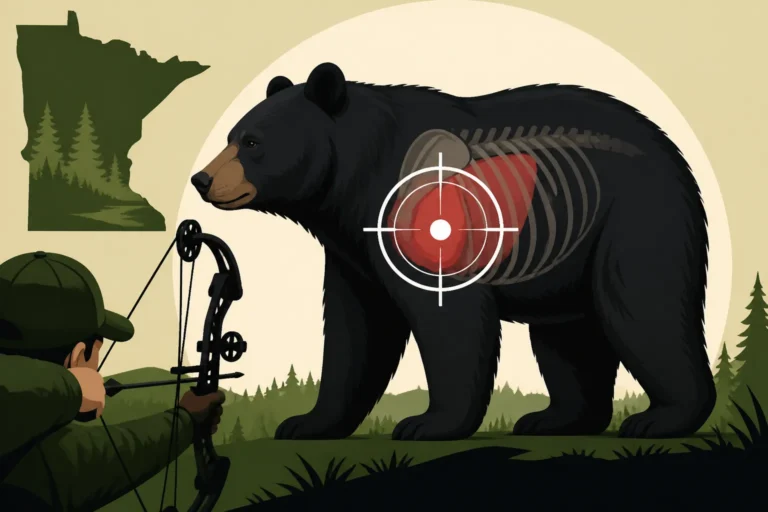
- Shot Placement: Bear anatomy is different from deer. Their vitals are situated lower and more forward in the chest cavity, protected by heavy shoulder bones. A broadside shot aiming for the opposite shoulder (or just behind the shoulder, slightly lower than a deer shot) is ideal. A quartering-away shot can also be effective if the angle allows the bullet to reach the vitals without excessive bone. Absolutely avoid a quartering-to or frontal shot unless it's your only option at close range and you're confident in hitting the central nervous system. Practice shooting from various field positions, as you likely won't have a stable bench rest in the woods. Consult guides on Shot Placement on a Minnesota Black Bear beforehand.
- Follow-up: Always be prepared for a quick follow-up shot. Bears are incredibly tough animals and can cover significant ground even with a lethal hit. Keep your rifle shouldered and your eye on the bear until it's down for good.
Clothing and Scent Control for Close Encounters
Getting close to a bear without the wind betraying you requires meticulous attention to scent and silent movement.
- Clothing: Layering is key for Minnesota's variable weather. Opt for quiet fabrics like fleece or wool that won't rustle against brush. Choose camouflage patterns that blend with the deep woods. Remember Minnesota's Blaze Orange Requirements during firearm season, even for bear.
- Scent Control: This is perhaps the most critical aspect. Bears have an astounding sense of smell. Shower with scent-free soap, use scent-free deodorant, and wash your hunting clothes in scent-free detergent. Store them in airtight bags or containers with natural elements from the woods (pine needles, leaves). Use scent-reducing sprays on your clothing and gear. More importantly, always play the wind. Even with perfect scent control, a direct wind will give you away. Monitor wind direction constantly with a small puff bottle or milkweed seeds. Your success will often come down to being downwind or crosswind.
Overcoming the Challenges of Unbaited Bear Hunting
Let's be realistic: hunting bear without bait or dogs is hard. It's a high-effort, low-odds endeavor that tests your resolve and woodsmanship. It's a journey that many attempt, and few master, but the rewards are immeasurable.
The Time Commitment and Low Success Rates
Unlike hunting over a bait site, which can offer predictable opportunities, still-hunting or spot-and-stalking a bear requires a significant time investment. You might spend days, even weeks, covering miles of rugged terrain, seeing only sign, before you get even a fleeting glimpse of a bear. The success rate for this method is considerably lower than for baiting or hound hunting, which is why most Minnesota hunters choose the latter.
This approach demands dedication. You need to be willing to put in the scouting time before the season, identify natural food sources, and understand bear patterns. During the season, it means long hours in the woods, often from dawn until dusk, without a guaranteed payoff. It's easy to get discouraged when the forest seems empty, or when a sudden wind shift blows your perfect stalk. Hunters pursuing Minnesota's Black Bear Population by traditional methods often have higher harvest rates, but that doesn't diminish the value of a harder-won, unbaited hunt.
Tracking and Recovery Without Hounds
One of the biggest anxieties of still-hunting a bear is the post-shot scenario. Without the aid of trained hounds to track a wounded animal, recovery becomes solely your responsibility, and it can be dangerous.
- Careful Tracking: After the shot, take your time. If the bear doesn't drop immediately, give it at least 30 minutes, or even longer (2-4 hours) if you suspect a marginal hit, to lie down and expire. Mark the spot of the shot carefully, noting landmarks. Then, begin tracking slowly and meticulously. Look for blood, broken branches, disturbed leaves, or hair. Use flagging tape (remove it after the recovery) to mark your trail as you go, especially when you find blood, to help you visualize the direction of travel and backtrack if necessary.
- Dangers: A wounded bear can be incredibly dangerous. They are powerful, resilient, and can cover ground silently, often circling back to ambush a pursuer. Never track a wounded bear alone. If possible, bring a partner, and make sure both of you are armed and vigilant. If the blood trail peters out or you feel unsure, back out and return later with more help or after more time has passed. In thick cover, this can be extremely challenging.
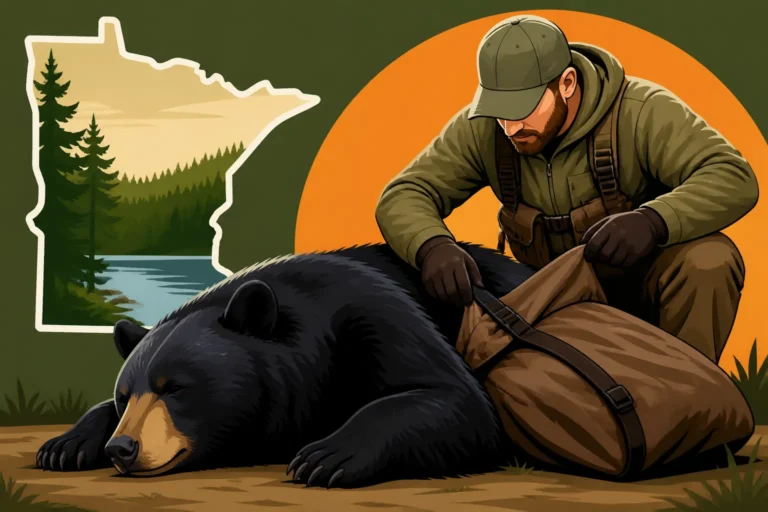
- Retrieval and Field Dressing: Once the bear is down, the work isn't over. Bears are heavy, often weighing hundreds of pounds. Field dressing quickly is essential, especially in warmer weather, to preserve the meat. Knowing how to Handling a Bear After the Shot efficiently and safely is critical. If you're deep in the wilderness, consider the gutless method to lighten the load and pack out the meat in quarters. A game cart or sled can be invaluable if you're on somewhat accessible terrain.
Comparison of Bear Hunting Methods in Minnesota
| Feature | Bait Hunting | Hound Hunting | Still-Hunting/Spot-and-Stalk |
|---|---|---|---|
| Effort/Time | High initial setup/maintenance of bait, then waiting | High initial training/cost of hounds, active pursuit | Extremely high scouting, active pursuit, patience |
| Success Rate | Generally highest in Minnesota | High, but dependent on hound performance and terrain | Lowest |
| Physical Exertion | Moderate (setting bait, stand setup, recovery) | Very high (running with dogs, often rugged terrain) | High (miles of walking, stalking, recovery) |
| Ethical Concerns | Attracting animals to a specific spot, habituation | Potential for long chases, stress on bear and dogs | Minimal, focus on fair chase in natural habitat |
| Gear Focus | Stand, bait supplies, scent control, firearm | GPS collars, dog boxes, specialized vests, firearm | Optics, navigation, quiet clothing, firearm, meat care |
| Experience Level | Can be suitable for various levels, but preparation is key | Requires extensive knowledge of hounds and bear behavior | Demands expert woodsmanship, patience, and tracking skills |
| Challenges | Bait theft, competition, weather | Terrain, dog care, public perception | Finding bears, low visibility, difficult tracking/recovery |
Hunting bear without bait or dogs in Minnesota is a deeply personal and challenging endeavor, but for those who seek to truly test their skills against a wild animal on its own terms, it offers an unparalleled sense of accomplishment. It's a commitment to truly understanding the Northwoods and the incredible creatures that call it home.
Disclaimer
Please remember that hunting regulations and seasons can change. Always consult the most current Minnesota Department of Natural Resources (DNR) regulations before planning any hunting trip.