Turkey Tactics for Farmland Field Edges
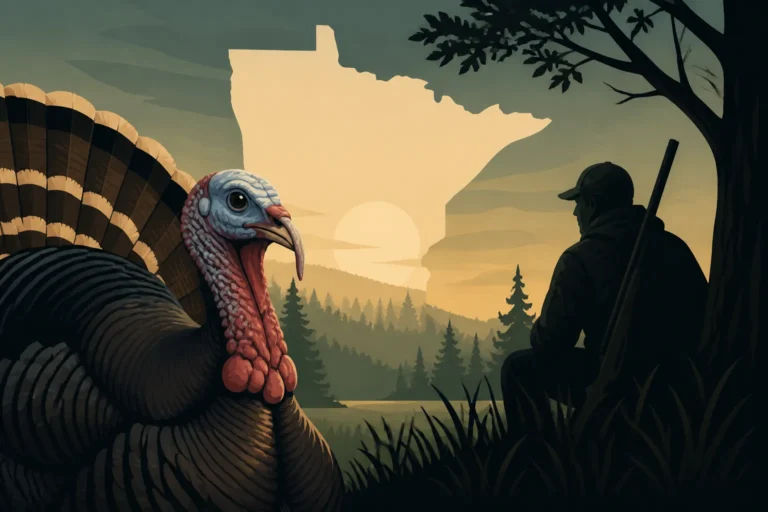
Hunting turkeys on Minnesota's farmland field edges can be incredibly rewarding, but let's be honest, it often feels like you're playing a high-stakes game of hide-and-seek with birds that have a sixth sense for trouble. These gobblers are notorious for strutting just out of range, driving even the most seasoned hunters absolutely wild. This guide is all about equipping you with realistic, proven tactics to outsmart those wary field edge Toms and turn those frustrating "hang-ups" into successful hunts.
Understanding Farmland Turkeys and Their Habitat
Hunting turkeys along field edges in Minnesota presents a unique set of circumstances. Unlike their counterparts in dense timber, these birds are constantly exposed and, frankly, quite a bit savvier about human presence.
The Allure and Challenge of Field Edge Birds
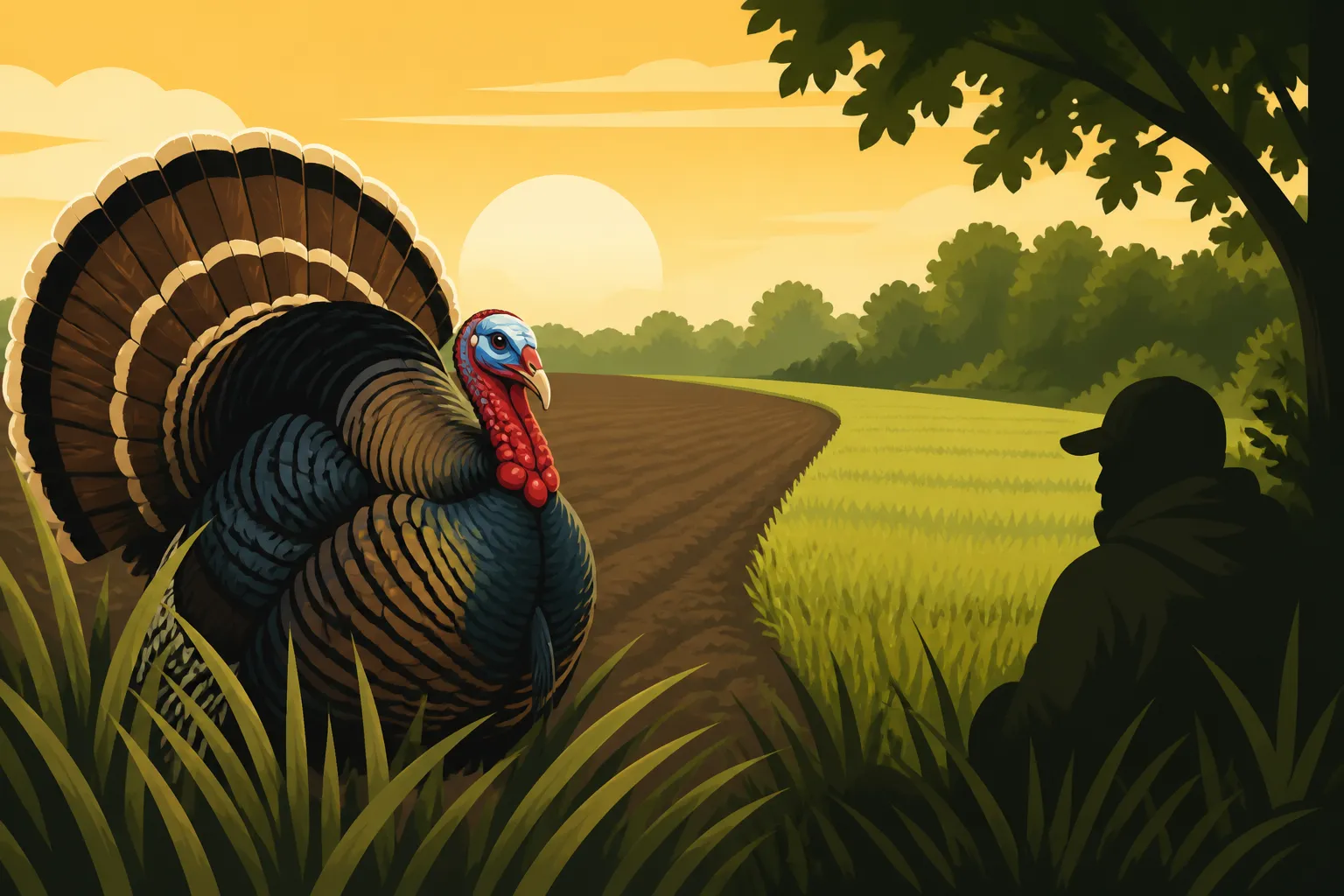
Farmland turkeys are drawn to field edges like magnets because it’s the buffet line of the wild. Waste grain from last fall's harvest, freshly planted corn, soybeans, and an abundance of insects are all easy pickings. These edges also offer a crucial balance of open areas for strutting and feeding, combined with immediate access to security cover in adjacent woodlots, overgrown fence rows, and even cattail sloughs. It's the perfect combination of food and safety, making them prime real estate.
However, this very allure is what makes them so challenging. With wide-open sightlines, these birds can spot danger from a mile away. They're often accustomed to seeing vehicles and people moving on nearby roads, but the moment you try to set up and call them in, their radar goes off. They learn quickly, and the older, wiser gobblers often "hang up" infuriatingly just out of shotgun range, content to strut and gobble from a distance while waiting for the "hen" to come to them. This patience and wariness are what we need to overcome.
Reading the Farmland Landscape for Turkey Sign
Successful turkey hunting in farmland starts long before opening day – it begins with meticulous scouting. You need to become a detective, constantly searching for clues these birds leave behind. Look for fresh turkey droppings, distinct three-toed tracks, and "dust bowls" where they've preened their feathers. Strut marks, those tell-tale drag lines from a gobbler's wingtips in soft soil or dust, are gold. These signs tell you where birds are frequenting, feeding, and strutting.
Beyond specific sign, pay close attention to the overall landscape. Identify pinch points where wooded areas narrow, forcing birds through a smaller corridor. Look for corners of fields, especially those that butt up against dense cover or a creek bottom. Treelines that provide natural travel routes between roosting sites and feeding grounds are also crucial. Utilizing modern mapping tools, like the ones available on GoHunt, can give you a massive advantage here. You can analyze aerial photos, identify property lines (critical if you're hunting private land), and pinpoint terrain features that act as natural funnels or cover. This kind of pre-hunt digital scouting is incredibly effective for finding those hidden gems. A good understanding of Scouting Minnesota Public Land Before Season will also help you apply these principles to larger tracts of ground.
Strategic Setup and Concealment on Field Edges
Once you've identified a promising field edge, your setup and concealment become the next critical components for success. Farmland turkeys don't tolerate sloppy hide-and-seek.
Decoy Strategies for Open Field Edges
On wide-open farmland field edges, decoys often make or break your hunt. Unlike dense woods where a gobbler might come charging in just to a call, a visual aid in open country can be absolutely essential to seal the deal. Decoys give a wary tom something tangible to focus on, drawing his attention away from your concealed position and giving him a reason to close the distance.
The placement of your decoys is paramount. Generally, I like to set my decoys about 15 to 20 yards from my blind or hiding spot. This distance achieves a few things: it brings the gobbler into a comfortable shotgun range, and it gives him enough room to strut and perform without immediately noticing your hide. Position your hen decoys facing away from your position. When a gobbler approaches, he’ll typically try to get in front of the "hen" to display, often presenting a perfect broadside or slightly quartering-away shot. You might consider a lone hen, a jake and two hens, or even a full strut tom. A jake decoy can really tick off a dominant gobbler, often drawing him in aggressively. However, use caution with strutter decoys, especially on public land, as they can sometimes attract other hunters. For more specific insights on what works and what doesn't, check out advice on Decoy Placement for Pressured Minnesota Birds.
Masterful Blind Placement and Natural Cover
Concealment isn't just a suggestion when hunting field edges; it's an absolute requirement. These birds have incredible eyesight and the slightest movement or unnatural outline will send them packing. Ground blinds are an invaluable tool for field edge hunting because they offer complete concealment, allowing you to move, adjust, and even fidget without alerting sharp-eyed gobblers. Brands like Primos and Barronett make excellent blinds for this purpose.
However, don't just pop a blind up in the middle of a field edge and call it good. That's a surefire way to educate turkeys. You need to brush it in heavily. Use whatever natural vegetation is available: corn stalks, hay bales, brush, or even just piles of sticks and leaves. Break up the hard edges of the blind to make it blend seamlessly with its surroundings. If a ground blind isn't an option, then you must become part of the landscape. Utilize thick brush lines, dense fence rows, the base of large, wide-trunked trees, or even the shadows cast by a treeline. Remember the principle of Setting Up Against a Big Oak for maximizing natural cover. Always consider the sun's position. In the morning, try to have the sun at your back so that approaching gobblers are looking into it, making it harder for them to pick you out.
Effective Calling Sequences for Wary Toms
Calling farmland turkeys is a delicate dance. These birds often hear a lot of calling throughout the season, making them more discerning and often call-shy. Knowing when to call, how to call, and when to shut up is the key.
Soft Calling and the Art of Patience
When dealing with pressured farmland turkeys, less is often more. Over-calling is one of the most common mistakes hunters make. These birds have likely heard every loud yelp and cut in the book. Instead, try starting with very soft, subtle calls. A few soft yelps, contented clucks, and purrs mimic a hen casually feeding or contentedly going about her business. This can be incredibly effective at drawing in a wary gobbler who suspects something is amiss with loud, aggressive calling.
Listen intently to the turkey's response. Let the bird dictate the cadence of the conversation. If he gobbles every time you cluck, offer a cluck. If he goes silent, you might go silent too. Long periods of silence can sometimes be your best friend. A gobbler might think the "hen" he heard is moving away, prompting him to come investigate. It takes a lot of discipline to sit quietly after a gobble, but patience often pays off. Knowing what Turkey Calls Worth Carrying in Minnesota will expand your repertoire, but remember, the delivery is more important than the specific call.
Aggressive Calling and Breaking Them Off the Roost
While soft calling is often the go-to, there are times when a more aggressive approach is warranted. This is particularly true when dealing with a gobbler that's hung up and won't commit, or when trying to pull a bird off the roost early in the morning. Loud, sharp cutting and a series of fast yelps can sometimes trigger a shock gobble or entice a bird to cross that final distance.
When targeting birds still on the roost, hit them with a burst of excited calling as they are pitching down from their tree. The sudden presence of an eager "hen" on the ground can be just enough to pull them directly towards you, diverting them from their usual strutting path in the middle of a field. This is where understanding Roost Hunting Minnesota Gobblers really comes into play. It's a gamble, for sure – aggressive calling can sometimes scare off an already wary bird. However, if a gobbler is otherwise unresponsive or simply stuck in a strutting pattern 100 yards out, a change of pace and an aggressive challenge might be the only way to break the stalemate. The ability to recognize when to push and when to hold back is a skill developed over many seasons.
Dealing with Hung-Up Birds and Mid-Day Lulls
The most frustrating scenario in farmland turkey hunting is undoubtedly the "hung-up" bird. He's gobbling, he's strutting, he knows you're there, but he just won't come into range. And then there are those long, quiet periods in the middle of the day.
The Patience Game and When to Push
You've called, he's responded, he's close… but he's stuck at 80 yards, strutting his heart out, waiting for you to make the first move. This is the ultimate test of patience for any turkey hunter. Often, the best tactic here is to simply wait. Let him work through it. If he's a lone gobbler without any hens, his desire to find companionship might eventually overcome his caution. Sometimes, a few very soft clucks or purrs after a long silence can convince him that the hen is about to leave, prompting him to finally commit.
If the gobbler is with a group of hens, the game gets significantly harder. He’s already got his "girls," and he's less likely to abandon them for a distant call. In this scenario, your best bet is often to try and call the hens in. If you can get the hens moving your way, the gobbler will almost always follow. If a long stalemate persists and you feel the bird is truly not coming closer, a strategic repositioning might be needed. This is a high-risk move in open terrain, requiring extreme stealth to avoid being busted. Using your GoHunt app on your phone to identify a hidden ditch, a slight rise, or a dense fencerow that offers a concealed approach could be critical here.
Run-and-Gun Tactics for Roaming Farmland Toms
While many hunters associate "run-and-gun" with vast expanses of public timber, it can be a surprisingly effective tactic on Minnesota farmland, especially during the mid-day lull when birds might be roaming less predictably or have gone quiet. Instead of sitting stationary for hours, this approach involves actively covering ground, listening for distant gobblers, and setting up quickly when you hear a response.
This strategy is particularly useful When Minnesota Gobblers Go Quiet after the morning activity. Utilize natural travel corridors like fence lines, drainage ditches, and brush rows for concealment as you move. Stop every few hundred yards and let out a series of locator calls (owl hoots, crow calls) followed by some aggressive yelps or cuts. If you get a response, quickly assess the situation using your mapping tools, then move in, set up with minimal gear, and try to seal the deal. The key is to be mobile and ready to react. This style of hunting, though different from Run-and-Gun Turkey Tactics on Public Land, requires similar agility and a keen sense of the landscape. It's a high-risk, high-reward strategy that can cover a lot of territory, especially if you have permission to hunt across multiple parcels of farmland.
| Turkey Tactic | When to Use | Pros | Cons |
|---|---|---|---|
| Soft Calling | Wary, pressured birds; subtle approach; post-gobble | Mimics content hen, less intimidating | May not grab attention of distant birds |
| Aggressive Calling | Silent birds, breaking off roost, stubborn gobblers | Can shock gobblers, draws quick attention | Can scare off wary birds, requires confidence |
| Decoy Setup (1-2 Hens) | General field edge use, less aggressive | Realistic visual, draws gobblers to specific spot | Can attract other hunters, adds bulk to carry |
| Decoy Setup (Jake/Strutter) | Challenging dominant gobblers | Triggers aggressive approach, highly effective | High risk of attracting other hunters, may intimidate smaller birds |
| Ground Blind | Optimal for field edges, open areas | Allows movement, total concealment, comfort | Bulky to carry, requires setup time, must be brushed in |
| Natural Cover | Lightweight, spontaneous setups | Highly mobile, no extra gear needed | Limited movement, concealment varies, less forgiving |
| Patience Play (Holding Out) | Hung-up birds, gobblers with hens | Often converts wary birds, low risk | Can be time-consuming, requires discipline |
| Run-and-Gun | Mid-day lulls, covering ground, silent areas | Covers more territory, finds new birds | High risk of bumping birds, requires quick setups |
Disclaimer
Always consult the Minnesota Department of Natural Resources (DNR) regulations for the most current rules and seasons before heading out. Hunting laws and regulations can change, and it is your responsibility to be informed and compliant.