Scrape Lines Along a Logging Trail
It can be incredibly frustrating to spend hours scouting, only to feel like you're missing the key sign that bucks are actively using an area. We've all been there, wandering through the woods and seeing a random scrape, wondering if it's even worth sitting. But what if there was a predictable place to find consistent, high-traffic scrape lines? This comprehensive guide is all about honing in on those often-overlooked yet highly productive scrape lines found along Minnesota's logging trails, helping you decode deer behavior and maximize your hunting efforts.
The Allure of Logging Trails for Deer and Scrapes
Logging trails are much more than just old paths through the woods; they are often natural highways for deer, particularly mature bucks, offering a unique blend of cover, travel convenience, and edge habitat. In Minnesota's diverse landscapes, from the big woods of the north to the fragmented woodlots of the south, these trails are prime real estate for deer activity, and consequently, for scrape lines.
Why Logging Trails Attract Deer
Think about it from a deer's perspective. A logging trail, especially one that's been dormant for a few years, often develops into a narrow opening in the canopy, allowing sunlight to reach the forest floor. This promotes the growth of tender forbs and browse along its edges, creating a linear food plot. Deer will often utilize these trails for easier travel through dense timber, conserving energy. They act as natural funnels, connecting bedding areas to food sources, or allowing bucks to cruise scent-checking doe bedding areas. This makes them ideal candidates for consistent deer movement.
Beyond just travel, these trails offer a crucial element: edge habitat. The transition from dense forest to the slightly more open trail is a common place for deer to feel secure while still being able to monitor their surroundings. Bucks, especially, will often travel just inside the cover, paralleling these trails, using them as reference points and communication hubs.
Understanding the Anatomy of a Scrape Line
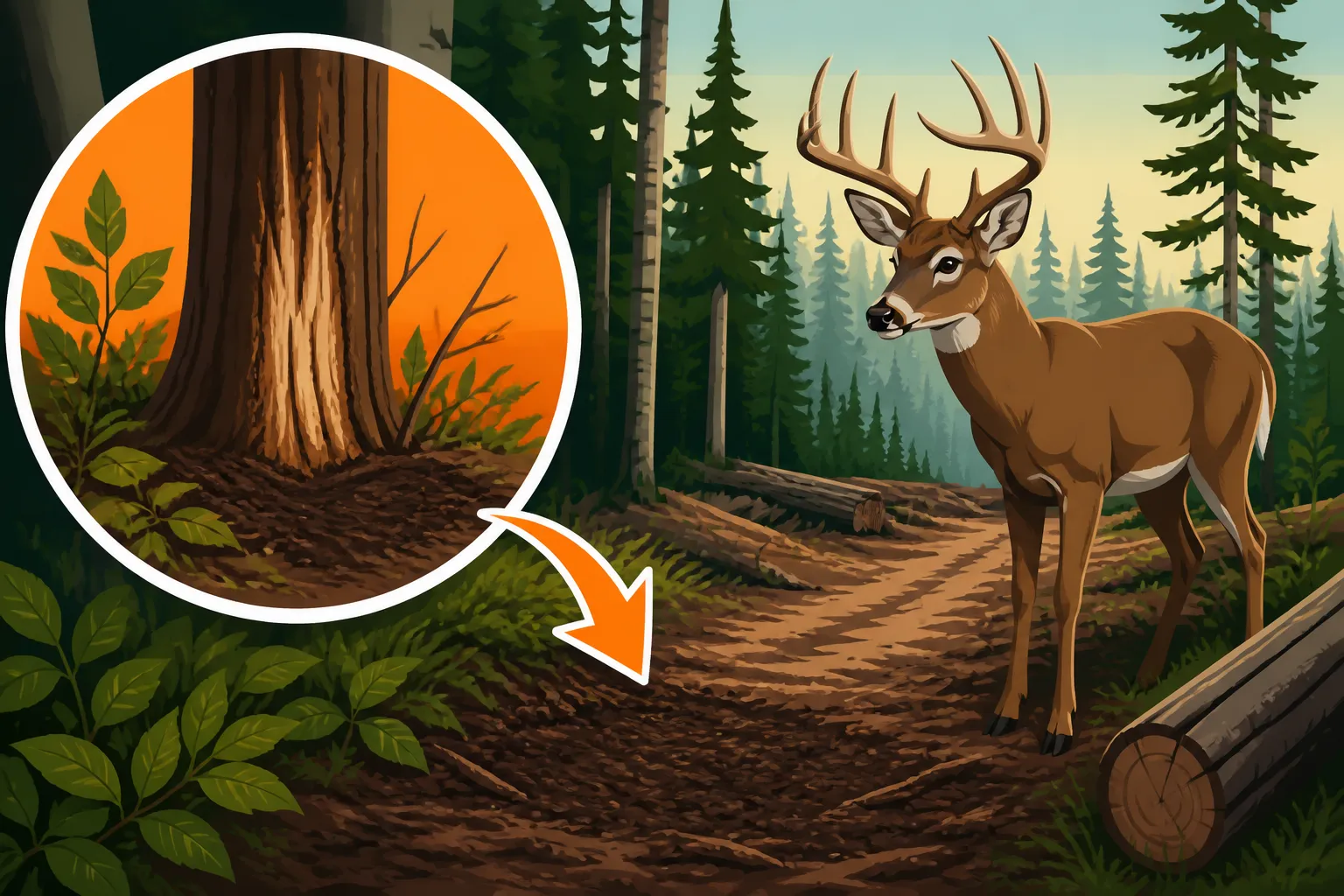
A "scrape line" isn't just one random scrape. It's a series of scrapes, often connected, that bucks create and maintain as a primary form of communication. Imagine a buck walking a familiar route, consistently hitting the same spots to deposit scent and check for does. These lines are typically composed of:
- The Pawing: A cleared patch of ground, usually 1-3 feet in diameter, where the buck scrapes away leaves and debris with his front hooves, exposing the bare earth. This is where he urinates, depositing interdigital gland scent from his feet and tarsal gland scent from his hocks.
- The Licking Branch (Overhanging Branch): Directly above the pawing, usually 3-5 feet off the ground, there will be an overhanging branch that bucks chew, lick, and rub with their forehead and preorbital glands. This is a crucial element, as it's another way bucks leave their scent and check for messages from other deer. Sometimes it's a single branch, sometimes a cluster.
On a logging trail, you'll often find these scrapes spaced out along the trail itself, or just a few yards into the adjacent cover. The linear nature of the trail naturally encourages this "line" formation, making them easier to identify and potentially hunt.
Identifying Active Scrape Lines on Logging Trails
Finding a scrape is one thing; finding an active scrape line that a buck is consistently working is another. Knowing what to look for can significantly improve your chances of setting up on a hot spot. Scouting is key here, and paying attention to subtle details will tell you if you're on a worthwhile trail.
Freshness and Consistency of Scrapes
The number one indicator of an active scrape line is freshness. A freshly worked scrape will have moist, disturbed earth, often with clear hoof prints. The leaves and debris will be pushed back cleanly, not just scattered randomly. The scent, if you dare to get close (and usually only with rubber boots and gloves to avoid contamination), might even be detectable. Look for signs that the licking branch has been recently worked – fresh chew marks, broken twigs, or even droplets of saliva on the branch itself.
It's not just about one fresh scrape, though. An active line will show multiple fresh or recently maintained scrapes along the same logging trail over a stretch of 50 to several hundred yards. If you find one fresh scrape, keep walking the trail in both directions. Often, bucks will work these lines in anticipation of or during Hunting the Rut in Late October and Hunting the Peak Rut in Early November.
Locating Productive Logging Trails
Not all logging trails are created equal when it comes to scrape lines. The most productive ones often share certain characteristics:
- Proximity to Cover and Bedding: Bucks feel secure when bedding close to escape cover. Logging trails that run along thickets, swamp edges, or dense conifer stands are excellent candidates.
- Connecting Key Areas: Look for trails that link up known bedding areas with food sources, water, or other major travel corridors. A mapping app like GoHunt can be invaluable for identifying these connections, allowing you to Reading Aerial Photos for Big Woods Deer and predict likely travel patterns.
- Funnel Points: Any pinch point along a logging trail – where the timber narrows, a topographical feature forces deer into a specific path, or a subtle rise in elevation creates a natural funnel – can intensify buck activity and scrape maintenance.
- Overlooked Areas: Sometimes, the best scrape lines are on older, less obvious logging trails that haven't been used by humans in years. These become integrated into the deer's natural habitat. Using mapping tools to find these faint lines can give you an edge over other hunters who stick to the more prominent paths. Scouting Minnesota Public Land Before Season with a mapping tool is crucial.
Here's a quick comparison of active vs. inactive scrapes:
| Feature | Active Scrape | Inactive Scrape |
|---|---|---|
| Pawed Ground | Moist, dark, fresh earth, clear hoof prints | Dry, covered with leaves/debris, no clear prints |
| Licking Branch | Chewed, broken, rubbed, fresh scent | Intact, weathered, no fresh marks |
| Scent | Potentially strong (tarsal, urine) | Faint or non-existent |
| Consistency | Multiple fresh scrapes along a line | Isolated or old scrapes |
| Timing | Typically late October through early November | Can be found anytime, but not recently freshened |
| Associated Sign | Fresh rubs nearby, heavy track presence | Faded rubs, sparse tracks |
Hunting Strategies for Logging Trail Scrape Lines
Once you've identified an active scrape line along a logging trail, the real work begins: setting up to intercept the buck maintaining it. This requires careful consideration of wind, access, and stand placement.
Treestand and Ground Blind Placement
Your stand or blind placement is paramount. A buck working a scrape line is often focused on the ground, leaving scent, and checking for messages. This makes him vulnerable, but you need to be in the right spot.
- Treestand: For many Minnesota hunters, a treestand is the go-to. Position your stand downwind or crosswind of the scrape line, far enough away that your scent doesn't blow directly into it, but close enough for a clean shot. Look for a sturdy tree 15-20 yards from where the buck is likely to approach the scrape or work the licking branch. Consider angles along the entire scrape line, not just one specific scrape. A good treestand position will also allow you to see up and down the logging trail, giving you early warning of an approaching deer. Setting up a Treestand Setups in Minnesota Hardwoods requires careful thought about cover and shooting lanes.
- Ground Blind: If the logging trail has ample cover right along its edge, a ground blind can be incredibly effective, especially if you're hunting in areas where taller trees for treestands are scarce or visibility is limited. Brush it in well, using natural vegetation to break up its outline. Place it so you have good shooting lanes to the scrape line, ideally slightly elevated on a small knoll if available, and always downwind. A portable pop-up blind can be quickly deployed, but make sure it's concealed effectively. Check out Using a Ground Blind on Minnesota Public Land for more insights.
When choosing a spot, always consider your entry and exit routes. You want to approach and leave your stand without alerting deer that might be using the trail, especially in low light. Walk in and out quiet, and consider a route that keeps you out of the prime deer travel paths until you're in your stand.
Playing the Wind and Thermals
Wind is always king in deer hunting, and even more so when targeting a scrape line where scent communication is central. A buck will often approach a scrape from downwind, circling to pick up scent before committing.
- Dominant Wind: Always try to set up so the prevailing wind carries your scent away from the scrape line and the expected approach path of the buck. If the wind is inconsistent, you might need a backup plan or a different stand location.
- Thermals: In areas with varied topography, like Reading a Ridge for Northern Minnesota Deer, thermals can play a huge role, especially during morning and evening hunts. In the morning, cold air sinks, pulling scent downhill. In the evening, warm air rises, carrying scent uphill. If your logging trail is on a hillside, understand how these air currents will affect your scent cone and adjust your setup accordingly. A Wind and Thermals on a Minnesota Ridge can be tricky to manage, so scout carefully.
Don't forget scent control. Shower with scent-eliminating soap, wear clean clothes, and use scent-eliminating sprays on your boots and outer layers. Minimize any foreign scent you leave in the area.
Incorporating Calls and Decoys
While the scrape line itself is an attractant, you can sometimes sweeten the deal with calls and decoys, especially during the rut.
- Grunt Calls: A well-timed grunt call can pique the curiosity of a buck cruising the logging trail or working the scrape line. A deep, guttural grunt can challenge a dominant buck or attract an inquisitive younger one. Be conservative with your calling; too much can sound unnatural. Read up on Grunt Calls in Mature Minnesota Timber for best practices.
- Rattling: If you're hunting during the peak rut, Rattling and Grunting in Minnesota can be incredibly effective near an active scrape line. Bucks are more aggressive during this time and might respond to the sound of two bucks fighting. Position yourself to have a clear view of where a buck might approach from, and be ready for a quick shot.
- Decoys: A buck or doe decoy placed near the scrape line can sometimes draw a buck in closer, offering a better shot opportunity. If using a buck decoy, position it as if it's challenging another buck, facing the scrape. If using a doe decoy, place it as if it's about to enter the scrape. Always consider the wind and your shot angle in relation to the decoy. Keep in mind that decoys aren't always effective, and in heavily pressured areas, deer might be wary.
Common Mistakes to Avoid When Hunting Scrape Lines
Even with the best intentions and a hot scrape line, it's easy to make mistakes that can blow your hunt. Being aware of these pitfalls can save you a lot of heartache.
Overhunting or Contaminating the Area
One of the biggest mistakes is pressuring a hot scrape line too much or contaminating it with human scent. Bucks are incredibly sensitive to intrusion, and if they feel pressured, they'll simply abandon the area or shift their activity to nocturnal hours.
- Limit Visits: Resist the urge to check the scrape line daily. Each visit leaves scent and introduces disturbance. Use trail cameras (adhering to Where to Hang a Camera on a Logging Trail rules) to monitor activity remotely. This allows you to get valuable information without ever stepping foot near the scrape itself.
- Scent Control is Crucial: Always, always use meticulous scent control. Wear rubber boots to and from your stand, use scent-free clothing, and apply sprays. Anything you can do to minimize your human footprint will increase your chances.
- Approach and Exit Carefully: As mentioned earlier, your entry and exit routes are vital. Plan them out, practice them if necessary, and execute them silently and quickly. Don't linger.
A common scenario is finding a scrape, getting excited, and then blowing the area out by stomping around, leaving scent, and setting up too aggressively. Patience and stealth are your best friends here.
Ignoring Other Sign or Environmental Factors
Focusing solely on the scrape line can sometimes make you blind to other critical information or environmental conditions. Remember, the scrape is a symptom of buck activity, not the only factor.
- Rubs and Travel Corridors: Look for fresh rubs in the vicinity of the scrape line. Rubs often indicate a buck's travel path and can confirm that a mature buck is in the area. If the scrape line is part of a larger Scrape Lines Along a Logging Trail system that also includes heavy rub activity, you're likely in a prime area where Why the Big Woods Grows Older Bucks might be found.
- Food Sources and Bedding: A scrape line is almost always a means of communication between bedding and feeding areas. If you haven't identified these core areas, you're missing a big piece of the puzzle. Understanding the larger landscape and how deer move through it will help you predict when a buck will be on that scrape line.
- Hunting Pressure: Public land logging trails, especially those easily accessible, can see a lot of Hunting Pressure on Minnesota Public Land. If you find a hot scrape line but there are fresh boot prints every day, or other hunters' stands nearby, your chances diminish. Consider moving deeper into the woods or finding more obscure logging trails that others overlook. A GoHunt app can help identify public land boundaries and less-traveled areas.
- Weather Changes: Significant weather shifts, like a cold front, the first snow, or heavy rain, can drastically impact deer movement and scrape activity. Bucks might be more active immediately before a front, or less active during heavy precipitation. Adjust your hunting schedule and strategy accordingly.
By combining an understanding of scrape line behavior with broader deer ecology and careful hunting practices, you can turn those old Minnesota logging trails into some of your most productive hunting spots. It's all about playing the chess match with nature, and a well-placed scrape line on a logging trail can be your winning move.
Disclaimer
Hunting is an inherently dangerous activity. Always prioritize safety, understand and follow all Minnesota hunting regulations, and be aware of your surroundings. The information provided in this guide is for educational purposes only and should not replace proper hunter education or professional guidance.