Using a Ground Blind on Minnesota Public Land
Finding effective cover on Minnesota's vast public lands can often feel like an impossible puzzle, especially when you're trying to stay hidden from sharp-eyed deer without the perfect tree for a stand. It's a real challenge to maintain concealment and manage your scent when you're constantly fighting open spaces or sparse timber. This guide is here to walk you through everything you need to know about successfully deploying and hunting from a ground blind on Minnesota public land, offering practical tips and strategies to boost your chances.
Why Ground Blinds Make Sense on Minnesota Public Land
Let's face it, Minnesota's public hunting grounds, from the big woods to the farmland edges, don't always offer that picture-perfect, branch-laden oak for a treestand. Sometimes, the best sign is in an area with nothing but small saplings, open grass, or thick, impenetrable brush that screams "deer hideout" but whispers "no place for a stand." That's where a ground blind really shines, offering a versatile solution to a common public land problem.
Overcoming Lack of Natural Cover
One of the biggest frustrations on public land is scouting a hot spot—maybe a subtle travel corridor along a field edge, a pinch point between two thickets, or even just the perfect natural funnel—only to realize there isn't a single tree suitable for a treestand. You've found the deer, but you can't get set up without sticking out like a sore thumb. Ground blinds solve this by bringing your concealment with you. They're particularly effective in areas like the edge of a cattail slough where deer love to bed and travel, but where large, sturdy trees are nonexistent.
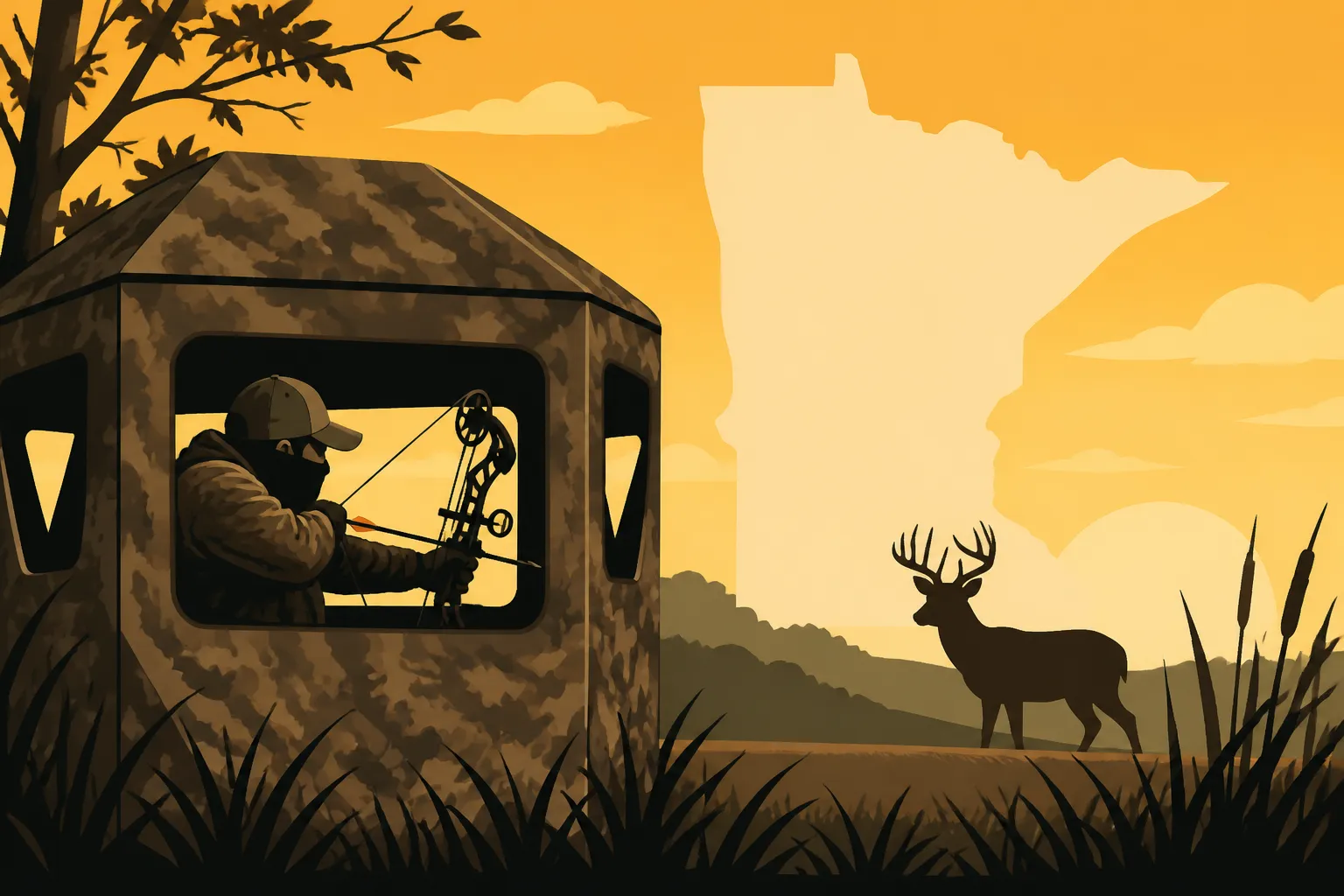
Imagine you're hunting along the fringe of a sprawling marsh, eyeing a well-worn trail leading out to a cut cornfield. There are no mature trees for miles, just a mix of willows and tall grasses. Without a ground blind, you'd be forced to either try a makeshift natural blind that offers minimal concealment or risk being completely exposed. A good quality pop-up blind allows you to set up right on that edge, becoming part of the landscape and giving you a comfortable, hidden vantage point over the trail. It's about adapting to the terrain, not being limited by it, especially when you're exploring areas mentioned in guides like Hunting Minnesota Cattail Sloughs for Deer.
Managing Scent and Movement
Deer have an incredible sense of smell and their ability to pick up on even the slightest movement is legendary. Hunting from a treestand, while effective, means your scent cone is constantly dispersing from your elevated position, and any minor adjustment you make can be easily spotted, particularly by wary, mature animals. Ground blinds offer a distinct advantage here by largely containing your scent and concealing your movements.
While a ground blind isn't a hermetically sealed bubble, the enclosed space significantly reduces how quickly your scent disperses compared to being out in the open. The fabric walls act as a barrier, forcing your scent to dissipate more slowly and in a more concentrated manner, often at ground level. This can buy you crucial extra seconds or even minutes before a deer winds you, allowing for a shot opportunity. Furthermore, the dark interior of most blinds makes it incredibly difficult for deer to detect movement inside. This means you can scratch an itch, adjust your shooting position, or even slowly draw your bow without instantly spooking a deer that's looking right in your direction. This makes them ideal for situations where you might be Rattling and Grunting in Minnesota and need to make subtle movements while calling.
Comfort and Weather Protection
Hunting in Minnesota means dealing with the full spectrum of weather conditions, often within the same day. From crisp early season mornings to brutal late-season cold, rain, snow, and wind, staying comfortable is key to staying focused and out in the field longer. Treestands, while great for visibility, offer little to no protection from the elements.
A ground blind, on the other hand, is your personal portable shelter. On a frigid December morning during Minnesota Muzzleloader Season Tactics, a blind can make all the difference, cutting the windchill and retaining some body heat. When an unexpected rain shower rolls in during the archery season, you can stay dry and continue your hunt while others are scrambling for cover. The ability to sit on a comfortable chair, bring a thermos of coffee, and generally be less exposed to the elements means you're more likely to stay on stand for those critical all-day sits, especially during the peak of the Hunting the Minnesota Rut in Early November.
Strategic Placement of Your Blind for Success
Placing a ground blind isn't just about finding a spot where it fits; it's about making a strategic decision that maximizes your concealment and your chances of seeing game. On public land, where game can be pressured and wary, intelligent placement is paramount.
Scouting for Key Locations
Before you even think about setting up a blind, you need to know where the deer are. This starts with thorough scouting, both in the offseason and right before your hunt. Look for fresh sign like tracks, droppings, rubs, and scrapes. Identify natural travel corridors, whether they're subtle dips in topography, fence lines, or edges where different habitat types meet. Pinch points, where deer are funneled into a narrow strip of land, are absolute gold mines for blind placement. Also, consider food sources—oaks dropping acorns, abandoned apple trees, or the edges of agricultural fields that border public land.
This is where modern mapping tools become indispensable. Platforms like GoHunt allow you to pore over aerial photos, topographical maps, and public land boundaries right from your couch. You can identify potential bedding areas, probable travel routes between food and cover, and strategic spots that might offer natural concealment for your blind. I always recommend spending some time using these tools to identify a few potential spots before you even set foot in the woods. Combine this digital scouting with boots-on-the-ground recon, and you'll be light years ahead. A great resource to dive deeper into this is Scouting Minnesota Public Land Before Season.
Maximizing Concealment and Backing
Once you've identified a promising area, the next step is to choose the exact spot for your blind. The goal is to make your blind disappear into the surroundings, not stand out. This means looking for natural cover to tuck it into. Think about dense brush lines, the base of a cluster of small pines, a thicket of dogwood, or even a large blowdown. The idea is to break up the silhouette of the blind as much as possible, blending it into the existing vegetation.
Crucially, always consider your "backing." Never place a blind in an open area where deer can see light through the shooting windows or where your outline is silhouetted against the sky. Instead, ensure there's a solid, dark background behind your blind, whether it's a dense stand of evergreens, a dark shaded hillside, or simply thick timber. This will make you and your blind virtually invisible to approaching deer. Also, think about the sun's angle throughout the day. You don't want the sun shining directly into your shooting window, creating a glare that can reveal your presence or make it hard to see.
Entry and Exit Routes
This is often overlooked, but it's perhaps one of the most critical aspects of blind placement, especially on pressured public land. You can have the best blind, in the best location, but if you spook deer on your way in or out, your hunt is effectively over. Plan your approach and departure routes meticulously, aiming for paths that allow you to get to and from your blind without alerting game.
Consider the wind direction. Your entry and exit routes should always keep the wind in your favor, blowing your scent away from where you expect deer to be. Utilize natural terrain features for cover, such as ditches, draws, or dense stands of timber. If you're walking across an open field, try to do so under the cover of darkness, well before first light, or after legal shooting hours. In areas with thick cover, such as a large cattail slough, knowing how to navigate stealthily is key. You can find excellent advice on specific scenarios in posts like Entry Routes Through a Cattail Slough. The less disturbance you create, the more confident deer will be moving into your area.
Setting Up and Brushing In Your Blind Properly
So you've chosen your spot, now it's time to set up your blind. This isn't just a matter of popping it open; it's an art that can mean the difference between deer ignoring it and deer skirting it entirely. Proper setup and brushing in are paramount for success, especially when game is accustomed to seeing human activity.
Early Placement vs. Day-Of Setup
There are two main schools of thought when it comes to deploying your ground blind: setting it up well in advance or doing it the day of your hunt. Both have their merits and drawbacks, particularly on public land.
Early Placement: If you have a spot that you know isn't heavily pressured, and you're comfortable leaving your blind out for a period, setting it up a week or two before your hunt can allow deer to become accustomed to its presence. This "weathering in" period can significantly reduce a deer's wariness. They'll walk by it, smell it, and eventually, it just becomes another piece of the landscape. This works best in more remote public land areas or during off-peak times. However, leaving a blind unattended on public land always carries the risk of theft or damage. Additionally, some WMAs or State Forests have rules about how long structures can be left. Always check the local regulations for Ground Blind Rules on Minnesota WMAs.
Day-Of Setup: For highly pressured areas, or if you're concerned about leaving your gear out, setting up your blind just before your hunt is often the best approach. The key here is to be as quiet and efficient as possible. Carry your blind collapsed, and deploy it swiftly once you reach your spot, ideally under the cover of low light. While deer won't have time to get used to it, proper brushing in (which we'll cover next) becomes even more critical to immediately blend it into the environment. This method also minimizes the human scent you leave in the area.
The Art of Brushing In
Brushing in your blind means camouflaging it with natural vegetation to break up its tell-tale boxy outline and help it disappear. A ground blind, no matter how well-camouflaged its fabric, will still look like a foreign object if it's just popped up in the middle of nowhere.
Start by collecting branches, tall grasses, cornstalks, or whatever natural materials are abundant in your chosen area. Securely weave these materials into the brush straps or loops typically found on the exterior of modern blinds. Don't be afraid to go overboard; you want to make it look like a natural thicket or a pile of debris. Pay special attention to the corners and edges, which are often the easiest parts of the blind for an animal to identify as artificial. The goal isn't to create a perfectly manicured bush, but rather to make it look like a random, organic part of the surroundings. For field edge setups, this might mean stacking cornstalks or hay bales around it, as detailed in Brushing In a Blind on a Field Edge. Remember, the more natural it looks, the less likely deer are to give it a second glance.
Managing Windows and Shooting Lanes
The windows of your ground blind are your eyes and your shooting portal, but they can also be your biggest giveaway. A common mistake is to open all the windows, creating too many opportunities for light to enter and reveal your silhouette or movement.
Generally, keep most windows closed, only opening the ones you absolutely need for visibility or a shot. If you're bowhunting, you'll need a clear shooting lane, which might require some pre-cutting of small branches if you've set up early. For gun hunting, your shooting lanes might be smaller, but still need to be unobstructed. Before opening day, I often use a platform like GoHunt to mark potential shooting lanes on the map, then confirm them on the ground. When cutting lanes, be subtle and trim only what's necessary, leaving as much natural cover as possible. If a deer approaches from an unexpected angle, you can quietly open a different window, but remember to be slow and deliberate with your movements inside the blind.
Here's a quick comparison of ground blinds versus treestands for public land hunting:
| Feature | Ground Blind (GB) | Treestand (TS) |
|---|---|---|
| Concealment | Excellent; conceals movement, breaks scent cone | Good; uses elevation to hide, but scent is an issue |
| Terrain Versatility | High; works anywhere there's ground to set it on | Low; requires suitable tree |
| Comfort/Weather | Excellent; protected from elements, can use chair | Poor; exposed to all elements |
| Scent Control | Better; contains scent, low dispersion | Worse; scent disperses widely from elevation |
| View/Visibility | Limited ground-level view | Excellent elevated view |
| Setup Speed | Fast pop-up; brushing in takes time | Variable; can be slow for hang-ons, fast for climbers |
| Public Land Rules | Check local WMA/SF for duration/placement | Check local WMA/SF for tree damage/duration/type |
| Theft Risk (Unattended) | Higher | Moderate to High |
Hunting from Your Blind: Tactics and Considerations
Now that your blind is strategically placed and brushed in, it's time to hunt. But success from a ground blind requires a specific mindset and adherence to certain tactics to truly maximize its advantages. It's more than just sitting down; it's about being an integral part of your chosen environment.
Scent Control and Wind Management
Even though a ground blind offers better scent containment than a treestand, it's not a foolproof scent barrier. Deer still have an incredible sense of smell, and you absolutely cannot slack on your scent control regimen. Shower with scent-free soap, use scent-eliminating sprays on your clothes, and wear clean hunting clothes that have been stored in a scent-free container. Brands like ScentLok or Scent Crusher offer products specifically designed for this.
More importantly, you must still play the wind. A ground blind simply gives you a little more leeway if the wind swirls or an animal approaches from an unexpected direction. Never hunt a spot from your blind if the prevailing wind is blowing your scent directly into where you expect deer to approach from or bed. Use mapping tools like GoHunt to check real-time wind conditions and plan accordingly. Understanding how wind interacts with terrain, particularly in hilly or timbered areas, is crucial. For example, knowing about Wind and Thermals on a Minnesota Ridge can dictate whether a morning or evening sit is more appropriate from your specific blind setup. Always have multiple blind locations scouted for different wind directions.
Patience and Minimal Movement
Hunting from a ground blind demands an extreme level of patience and discipline when it comes to movement. The dark interior gives you a massive advantage, but any rapid or significant movement near a window can still be detected by a sharp-eyed deer. Think of your blind as a photography hide; you're there to observe and react, not fidget.
Minimize the gear you bring in that could create noise. If you bring snacks, make sure packaging is quiet. Use a quiet thermos for your coffee. Position everything you need within easy, silent reach. Consider bringing a comfortable chair that allows you to sit still for hours. If you're bringing a new hunter or a child, a ground blind is an excellent way to introduce them to hunting because it allows for a bit more wiggle room for slight movements without immediately blowing the hunt. However, emphasize the importance of quiet, slow movements. These long, silent waits are often when the magic happens, and patience can pay off with a mature buck stepping into your shooting lane.
Legalities and Public Land Etiquette
Hunting on public land comes with a set of responsibilities and rules, and ground blinds are no exception. Regulations regarding blinds can vary by state, county, or even specific management area, so it's critical to know the local rules.
In Minnesota, for example, permanent ground blinds are generally prohibited on public land, and temporary blinds (like pop-ups) often have rules about how long they can be left unattended. Some areas may require a visible tag with your name and hunting license number. Always check the Minnesota DNR regulations or specific WMA rules before deploying your blind. You can often find this information by looking up the Minnesota Deer Seasons and Permit Areas and drilling down into specific unit regulations.
Beyond the law, there's etiquette. Public land can get crowded, especially during opening weekends. If you set up a blind, try to do so in an area that isn't already being actively hunted by others. Avoid setting up too close to another hunter's stand or blind, and always pack out everything you pack in. Leaving trash or abandoned blinds not only harms the environment but gives all hunters a bad name. Being a respectful user of public land helps ensure these opportunities remain open for everyone. If you're worried about finding quiet spots, resources on Hunting Pressure on Minnesota Public Land can help guide your strategy.
Disclaimer
Always consult the Minnesota Department of Natural Resources (DNR) website or official regulations for the most current and specific hunting laws, permit requirements, and season dates. Hunting regulations can change, and it is the hunter's responsibility to be fully informed and compliant.