Where Big Woods Bucks Bed in Minnesota
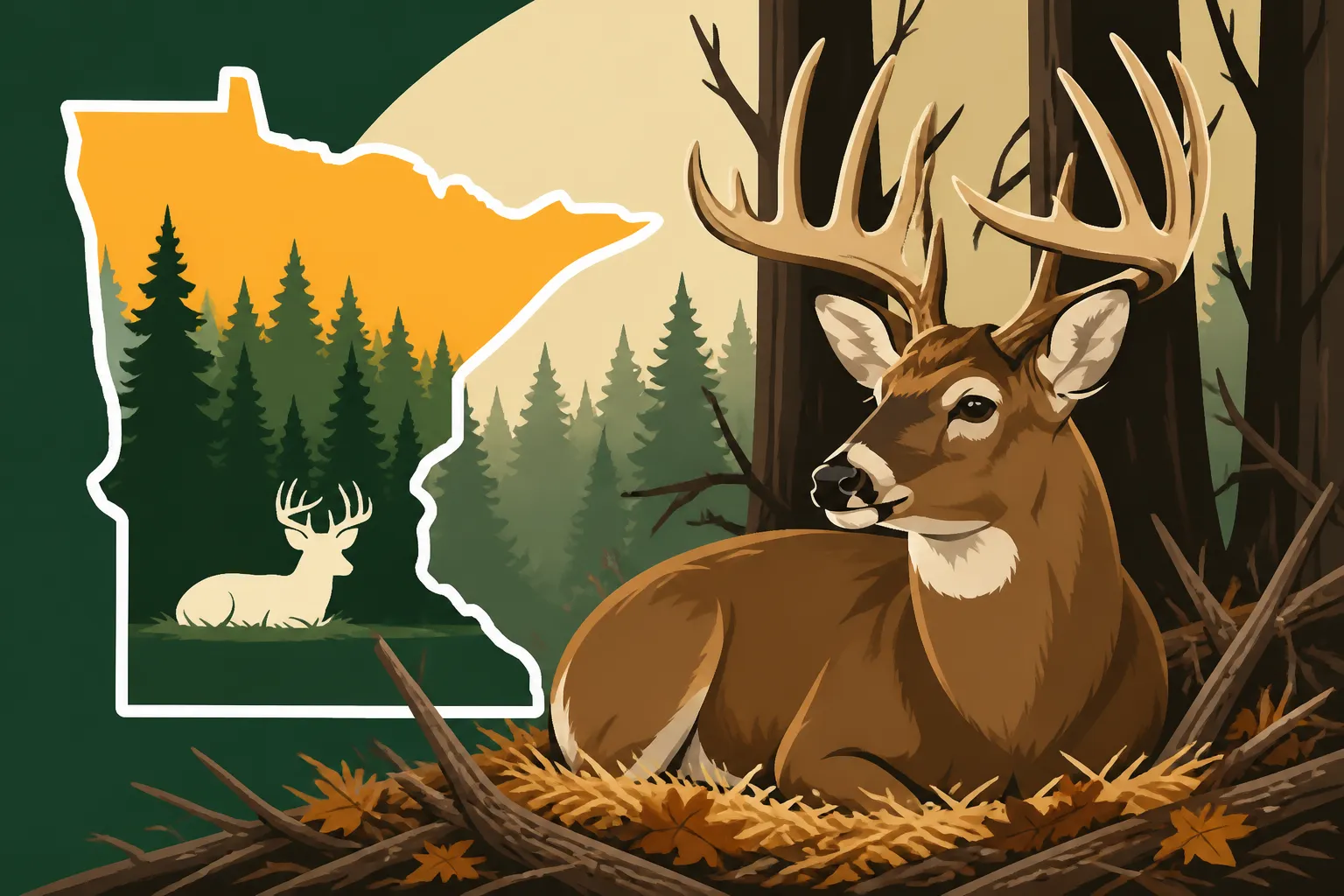
Finding a mature whitetail buck in Minnesota's sprawling Big Woods can often feel like searching for a ghost. These elusive animals are masters of their environment, especially when it comes to disappearing into dense cover for their daytime rest. If you've ever felt frustrated by vast timber, seemingly endless swamps, and deer sign that suddenly vanishes, you're not alone. This guide aims to pull back the curtain on where big woods bucks truly bed, offering detailed insights and actionable strategies to help you unlock their secret hideouts and increase your hunting success.
Understanding the "Why" Behind Big Woods Bedding
To consistently locate big woods bucks, we first need to get inside their heads and understand the fundamental reasons driving their choice of bedding locations. It's not just random; every spot serves a purpose, usually centered around survival and comfort.
Security and Seclusion as Top Priorities
At the core of a mature buck's existence is an unyielding need for security. These animals are prey, and their survival depends on their ability to detect threats and remain undisturbed. In the Big Woods, where human and predator pressure can be significant, especially during the firearm season, this need for security is amplified.
Bucks seek out areas where they can rest with minimal risk. This often means bedding in spots that offer excellent visibility downwind, allowing them to scent-check anything approaching from behind, while having good visual cover or a clear line of sight to detect movement in front. They might choose a slight rise where they can survey their surroundings, or a dense thicket that provides impenetrable visual concealment. The feeling of being "safe" is paramount. They want to avoid encounters with anything that could pose a threat, whether that's a pack of coyotes, a lone wolf, or, most importantly, human hunters. Many times, the nastiest, most overlooked pockets of cover, the ones hunters typically avoid, are exactly where these wary bucks will seek refuge. This is especially true on public land, where they quickly learn to associate easy-access areas with danger.
Thermal Regulation and Weather Protection
Beyond security, bucks are also looking for comfort, which in Minnesota often means protection from the elements. Our state's weather can be brutally unpredictable, swinging from mild autumn days to bitter cold, driving rain, or heavy snow in a matter of hours. A big woods buck's bedding choice will frequently adapt to these conditions.
In colder weather, especially late in the season, you'll often find bucks bedding on south-facing slopes. These areas receive more direct sunlight throughout the day, providing a crucial thermal advantage. Dense conifer stands—think thick spruce, balsam fir, or cedar—offer fantastic insulation, blocking harsh winds and trapping what little warmth the sun provides. Conversely, during the warmer days of the early archery season, or when winds are particularly high, bucks might opt for north-facing slopes or the deep shade of those same conifer thickets to stay cool and escape the direct sun. Heavy snow also dictates bedding choices; deer will gravitate towards cover that provides a natural barrier, minimizing snow accumulation and making it easier to bed down. Understanding these microclimates within the Big Woods is key to predicting where a buck might be resting on any given day.
Prime Bedding Locations in Minnesota's Big Woods
The vastness of Minnesota's Big Woods can be intimidating, but certain habitat types and terrain features consistently attract mature bucks looking for a place to bed down. Learning to recognize these prime locations on a map and in the field is a game-changer.
Thick Conifer Stands and Regenerating Timber
When you think "big woods bedding," visualize the kind of cover you'd rather avoid pushing through. That's usually where the bucks are. Dense pockets of conifers, like spruce, balsam fir, and cedar swamps, are absolute magnets for mature deer. These areas offer unparalleled visual concealment, making it nearly impossible for predators or hunters to spot a bedded buck. Furthermore, the thick canopy provides excellent thermal protection, insulating deer from cold winds and heavy snow, as well as offering shade on warm days. While cedar swamps are notorious for their difficulty to navigate, they're often worth the effort to scout around the edges.
Beyond mature conifers, don't overlook regenerating timber. Young aspen cuts, thick jack pine stands, or areas that have been clear-cut 5-15 years ago and are now a tangle of new growth, can be impenetrable sanctuaries. These areas, though difficult to traverse, provide ideal bedding cover due to their sheer density. Bucks can lie down and be virtually invisible, relying on their senses to detect threats. They’ll often bed just inside the thickest part, close enough to an edge or travel corridor but deep enough to feel utterly secure. If you're wondering how certain forestry practices might impact deer, it's interesting to consider How Old a Cut Should Be for Grouse as a parallel for understanding the age of regenerating cover that benefits different game. Similarly, knowing Setting Up on a Clear-Cut Edge can be incredibly effective, as bucks will often stage just inside the safety of the young timber before venturing out.
Ridge Tops, Sides, and Leeward Slopes
Topography plays a crucial role in big woods bedding, and ridges are often prime real estate. Bucks, being strategic animals, will frequently bed on or just below the crest of a ridge, especially on the leeward (downwind) side. This allows them to use the prevailing wind to their advantage, scent-checking anything that approaches from behind, while also having a clear view of the terrain in front and below.
Imagine a buck bedded on a bench just below a ridge top. The wind blows up and over the ridge, carrying scent from anything approaching from the backside. Below him, he has a visual advantage, able to see movement well before it becomes a direct threat. This combination of scenting ability and visual command creates a powerful defensive setup. Understanding these subtle shifts in elevation and how they interact with the wind is critical. A slight change in terrain can create a thermal funnel or a perfect ambush point. When you're trying to figure out where a deer might be on a piece of ground, understanding Reading a Ridge for Northern Minnesota Deer can provide invaluable clues about their movement patterns and bedding preferences. It’s all about leverage, and these bucks are always looking for the high ground advantage.
Beaver Ponds, Cattail Sloughs, and Island Thickets
Water features in the Big Woods often act as natural barriers, creating sanctuaries that are difficult for humans to access, making them incredibly attractive to mature bucks. Beaver ponds, with their flooded timber and dense regrowth around the edges, can be fantastic bedding areas. The water itself often deters casual intrusion, and the messy, broken terrain provides both cover and a noise buffer.
Even more significant are cattail sloughs and the small, dry islands of timber often found within them. These islands, even if only a few yards wide, offer a feeling of extreme isolation. A buck bedded on such an island is surrounded by water or dense, noisy cattails, creating a formidable defense. He can hear anything approaching through the water or dry vegetation, giving him ample time to slip away unnoticed. Hunting these areas requires commitment and specialized tactics, but the rewards can be substantial. Learning Entry Routes Through a Cattail Slough or even broader strategies for Hunting Minnesota Cattail Sloughs for Deer can be key to unlocking these hard-to-reach honey holes. The less accessible a spot is, the more likely a mature buck is using it.
Scouting Strategies for Locating Bedding Areas
Finding these hidden gems in the vastness of the Big Woods requires diligent scouting, both from your armchair and with boots on the ground. It’s about detective work, combining technology with traditional woodsman skills.
Topographical Maps and Aerial Imagery
Your scouting journey should always begin long before you step foot in the woods. Modern technology has provided us with incredible tools that make pre-season reconnaissance more effective than ever. Using topographical maps and high-resolution aerial imagery is your first step. Tools like GoHunt or the Minnesota Recreation Compass App are invaluable.
What are you looking for? Start by identifying areas of significant change in elevation – steep hills, ridges, and saddles. Then, overlay these with the satellite imagery to pinpoint dense cover types. Look for the darkest green blobs, which typically indicate thick conifer stands, cedar swamps, or impenetrable regenerating cuts. Pay close attention to the edges of these cover types, especially where they meet more open hardwoods or clear-cuts, as these often serve as transition zones. Identify potential travel corridors that lead into or out of these thick bedding areas. Look for natural funnels created by terrain or vegetation. Using features like GoHunt's property line overlays can also help you identify remote pockets of public land that might be less pressured. Understanding Scouting With the Minnesota Recreation Compass App can help you get started with this digital approach, providing a wealth of information at your fingertips, and learning to interpret Reading Aerial Photos for Big Woods Deer will reveal patterns you might otherwise miss.
Boots-on-the-Ground Reconnaissance (Off-Season)
While digital scouting is powerful, there's absolutely no substitute for walking the ground. The off-season (late winter, early spring after snowmelt, or mid-summer) is the ideal time for this, as you'll disturb the area far less than during hunting season.
During late winter or early spring, residual snow cover can be a blessing. It makes buck beds incredibly obvious – circular depressions in the snow, often surrounded by droppings, showing where a buck spent time resting. Look for heavily used deer trails, distinct rub lines (especially large ones from mature bucks), and old scrape lines leading into and out of those dense cover areas you identified on your maps. These are the highways and signs that tell you a buck is actively using that area. Focus your efforts on the thickest, nastiest spots, the ones that are a pain to walk through. That's precisely where you'll find the most evidence of mature buck activity. The goal is to confirm your map findings and identify the exact bedding locations without pushing deer out during the season. It’s also an excellent time for Shed Hunting on Minnesota Public Land, which can directly show you where bucks are spending their winter months and shed their antlers. This intimate knowledge of the terrain and deer sign, gained through direct observation, is what truly builds an effective hunting strategy.
Leveraging Technology and Experience
Combining your digital map work with your boots-on-the-ground observations creates a powerful synergy. Tools like GoHunt allow you to drop pins, mark observations, and track your movements, consolidating all your scouting data into one accessible platform. This helps you build a detailed picture of deer movement and bedding preferences over time.
Don't just look at the map; think about the deer's perspective. How would you approach that bedding area if you were trying to sneak in undetected? How would you escape if a predator approached? This critical thinking, combined with your observations of wind patterns and local hunting pressure, will help you refine your understanding. For instance, if you know a particular WMA or piece of public land receives heavy hunting pressure, especially on opening weekend, you can bet that the mature bucks will immediately retreat to the most impenetrable, remote thickets you've identified. GoHunt (like other mapping apps such as onX) can even show you onX Layers for Minnesota Land Status to confirm boundaries and help avoid accidental trespassing. Your personal experience, combined with this comprehensive data, is what turns general knowledge into hyper-specific, actionable hunting intel. The more time you spend doing this, the better you’ll get at predicting deer behavior.
Approach and Hunting Tactics Near Big Woods Bedding
Finding where big woods bucks bed is only half the battle; the other, equally critical half, is effectively hunting these areas without spooking your target. These bucks are incredibly sensitive, and one wrong move can send them into another zip code.
Scent Control and Stealthy Entry/Exit Routes
Mature big woods bucks have an uncanny ability to detect human presence. Their noses are their primary defense mechanism, making meticulous scent control absolutely non-negotiable. This means showering with scent-free soap, using scent-eliminating sprays on your clothes, and storing your hunting gear in airtight containers. But true scent control also involves minimizing the scent you leave on the ground.
Beyond scent, stealth is paramount. Your entry and exit routes must be carefully planned to avoid disturbing the bedding area itself or alerting any deer that might be feeding or traveling nearby. This often translates to long, circuitous walks to get to your stand, frequently adding significant time and effort to your hunt. You want to approach from a direction that keeps your wind out of the bedding area, and ideally, from a side that offers natural noise dampening, like a slight dip or a thick line of trees. Think about minimizing all noise – quiet clothing, soft steps, and no rattling equipment or banging against your stand. Remember, every deer you bump is a lesson learned for that animal, making it even harder to hunt. Being mindful of Hunting Pressure on Minnesota Public Land means recognizing that these bucks are already educated; you must be smarter and more disciplined than the average hunter.
Playing the Wind and Thermals
If scent control is non-negotiable, then understanding and playing the wind and thermals is its indispensable counterpart. You simply cannot hunt a mature buck's bedding area effectively without the right wind direction. Your wind must carry your scent away from the bedding area, and ideally, away from any likely travel corridors.
Thermals add another layer of complexity, especially in hilly or broken terrain. In the mornings, as the sun begins to warm the earth, air currents (thermals) tend to rise. This means your scent will drift upwards, often for hundreds of yards. Conversely, in the evenings as the sun sets and the air cools, thermals drop, carrying scent downwards into valleys and low-lying areas. Therefore, a stand that's perfect for a morning hunt on a ridge might be disastrous in the evening. You need to identify your stand locations based on the specific wind and thermal conditions for the time of day you plan to hunt. GoHunt, for example, often has features that help predict wind direction and speed, but understanding how those interact with the local topography is where your experience comes in. For a deeper dive into this, check out Wind and Thermals on a Minnesota Ridge – it's crucial knowledge for successful big woods hunting.
| Weather Condition | Ideal Bedding Location | Why |
|---|---|---|
| Cold/Windy | South-facing Conifers | Maximum sun exposure, dense canopy blocks wind, traps warmth. |
| Warm/Sunny | North-facing Conifers | Deep shade provides cooling, typically less direct sun. |
| Rain/Snow | Dense Conifer Thickets | Canopy provides protection from precipitation, minimal ground snow/moisture. |
| Mild/Calm | Ridge Tops/Benches | Excellent visibility, scenting advantage with subtle wind currents. Less need for extreme thermal protection. |
| High Pressure | Deepest, Nastiest Cover | Bucks seek extreme seclusion and security from increased human activity. |
Stand Placement and Hunting the Edges
When hunting near bedding areas, your stand placement is critical. Most seasoned hunters agree that the best strategy isn't to barge directly into a buck's bedroom. Instead, you want to set up on the downwind side of the bedding area or along a natural travel corridor that a buck uses to enter or exit his bed.
A common tactic is to set up on a travel route that a buck uses when leaving his bed to feed in the evening, or returning to it in the morning. This might be a subtle trail leading from a dense spruce swamp to a logging road or a small oak ridge. You're trying to catch the buck in a vulnerable transition period. Often, this involves being patient and letting the deer come to you. You need to analyze the terrain, wind, and prevailing deer movement to pick the perfect tree. GoHunt's detailed maps can help you visualize these travel corridors, funnels, and escape routes, allowing you to choose a stand location that maximizes your advantage while minimizing the risk of blowing out the bedding area. Remember to account for the buck's potential escape routes and ensure your setup doesn't block them, but rather intercepts them. Learning about different types of setups, whether it's Treestand Setups in Minnesota Hardwoods or more specific to terrain like Hanging a Stand on a Big Woods Funnel, will give you the tools you need to capitalize on these hard-earned insights.
Disclaimer
The information provided in this guide is for general educational purposes only and is not a substitute for official hunting regulations. Always consult the current Minnesota Department of Natural Resources hunting regulations, local ordinances, and landowner permissions before engaging in any hunting activities. Hunting involves inherent risks; always prioritize safety and ethical practices.