Bone Saws Versus the Gutless Method
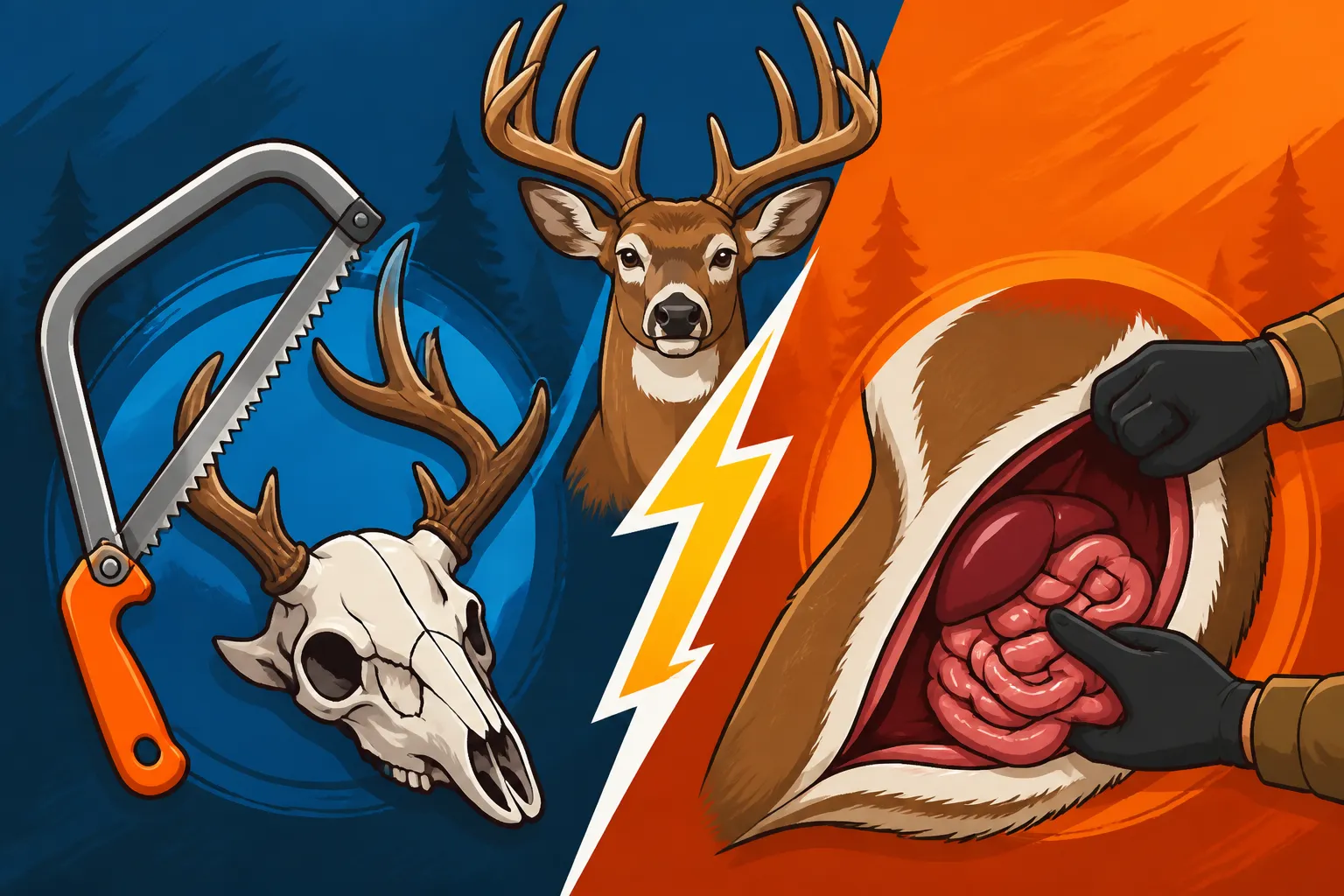
One of the most daunting parts of a successful deer hunt, especially here in Minnesota, is often what happens after the shot. You've got this magnificent animal on the ground, and now the real work begins: getting that valuable meat from the woods to your freezer. The traditional approach of field dressing with a bone saw to split the pelvis and sternum has always been a staple, but it’s not always the easiest or cleanest option, especially if you're deep in the Big Woods or dealing with warmer temperatures. Lately, a lot of hunters are giving the "gutless method" a serious look, and for good reason. It promises efficiency and a lighter load. But which one is right for your Minnesota hunt? This guide will break down both techniques, helping you decide whether to pack a saw or just a razor-sharp knife for your next adventure.
The Traditional Approach: Field Dressing with a Bone Saw
For generations, hunters have relied on a good bone saw to help them field dress deer. It's a method that many of us learned from our fathers and grandfathers, often around a flickering lantern at deer camp. There's a certain nostalgia and familiarity to it, and when done right, it certainly gets the job done. But let's be honest, it also comes with its own set of challenges, especially when you're wrestling with a cold, heavy deer in less-than-ideal conditions.
When a Bone Saw Shines in Minnesota
A bone saw really comes into its own under specific conditions, and Minnesota offers plenty of these scenarios. Think about those hunts where you're close to a road or ATV trail, maybe on private land or a easily accessible Wildlife Management Area. If you've just dropped a buck within a few hundred yards of where you parked, and you've got a deer cart or a buddy with an ATV waiting, then a bone saw is a perfectly viable, and often preferred, tool.
Consider the crisp, cold days of late November or early December during Minnesota's firearm season. The air is naturally refrigerating, which means you might be less concerned about getting the hide off and the meat cooling immediately. With the cold working in your favor, the time it takes to meticulously saw through the sternum and pelvis isn't as critical for meat preservation. This is where a lot of hunters feel most comfortable sticking to tradition. You can perform a thorough field dress, remove the entrails, and then haul the whole carcass out, knowing you've done a clean job. For many, it's just part of the ritual of Field Dressing a Deer in Cold Weather.
Choosing the Right Bone Saw for the Job
Not all bone saws are created equal, and if you’re going to use one, you want it to be reliable. We’ve all been there, struggling with a flimsy saw that binds up in bone or, worse, breaks mid-job. That frustration is real, and it’s why investing in a quality saw makes a huge difference.
You'll find a few main types of bone saws on the market. There are fixed-blade saws, which are robust and don't have moving parts to fail. Then you have folding saws, which are super popular for their portability and ability to stash away in a pack without snagging anything. Some even resemble pruning saws, with aggressive teeth designed to cut through dense material. Look for a saw with a comfortable grip, especially one that won't get slick with blood or cold hands. Stainless steel blades are a huge plus for hygiene and preventing rust, which is crucial for tools that come into contact with meat. The teeth pattern is also important; you want something aggressive enough to power through bone without excessive effort, but not so aggressive that it creates a lot of bone dust or splinters. Keep it clean and sharp, and it'll serve you well.
Step-by-Step with a Bone Saw
The process of using a bone saw for field dressing is pretty straightforward, but precision and cleanliness are key. After you've got your deer positioned, usually on its back or side, and made your initial incision from the sternum down to the pelvis to open the abdominal cavity, you'll encounter the bone barriers.
First, the pelvis. This can be tricky. You'll want to carefully locate the pelvic bone and then work your saw through it. The goal is to separate the hindquarters cleanly to allow for full access to the lower digestive tract and bladder, ensuring everything can be removed without contamination. Take your time here. Rushing can lead to a messy situation. Once the pelvis is split, it's much easier to reach in and free up the rectum.
Next, the sternum. This is often the tougher cut, especially on a large buck. You'll need to carefully extend your cut up through the breastbone, being mindful of the internal organs. Again, the saw allows you to cleanly divide the bone, opening up the chest cavity so you can reach in and sever the trachea and esophagus, allowing all the organs to be removed cleanly. Remember, the goal is to get the guts out as cleanly as possible to begin the cooling process and prevent spoilage. Once the sternum is split and the organs removed, you're looking at a completely opened cavity, ready for transport or further processing at camp. Butchering a Deer at Camp can be made easier with a cleanly field-dressed animal.
Embracing Efficiency: The Gutless Method
The gutless method is a game-changer for many hunters, especially those of us who venture deep into Minnesota's public lands or tackle challenging terrain. Instead of traditionally field dressing by opening the body cavity, this technique focuses on removing all the meat off the bone in quarters and backstraps, leaving the guts untouched within the carcass. It sounds a little strange at first, I know, but trust me, it’s incredibly effective.
Why the Gutless Method is Gaining Traction in Minnesota
There are so many reasons why Minnesota hunters are embracing the gutless method. Picture this: you've harvested a beautiful deer miles back in the Superior National Forest Ranger Districts, or maybe you're packing into the Boundary Waters Canoe Area for a hunt. Dragging a whole deer out of there? Not happening. Or perhaps you're hunting during Minnesota's Long Archery Season in early September when temperatures can still be surprisingly warm. Getting the hide off and the meat cooling immediately is paramount to prevent spoilage. The gutless method allows you to do just that, and quickly.
This technique shines when you’re hunting solo, far from any vehicle access, or dealing with difficult terrain like thick cattail sloughs or steep bluff country. It significantly reduces the weight you have to transport, turning a multi-person drag into a manageable solo packing job. When you break down an animal into manageable quarters and pack them into game bags, the physical toll is drastically cut. Many online resources, including those you might find through a hunting research tool like GoHunt, highlight the efficiency benefits of this method for backcountry hunting, showing how it frees you up from the heavy lifting, literally. This method means you're carrying meat, not bones and guts, which makes traversing a long logging trail or navigating a tricky Hunting a Funnel Between Two Sloughs much more feasible.
Essential Gear for a Successful Gutless Operation
The beauty of the gutless method is its simplicity in terms of core gear, but the quality of that gear is absolutely paramount. Forget the heavy bone saw; your primary tool here is a sharp knife, or several. You'll want a reliable fixed-blade knife for the bulk of the work, something with a sturdy, comfortable grip and a blade that holds an edge. Many hunters also swear by replaceable-blade knives (like those from Havalon or Outdoor Edge), which allow you to have a scalpel-sharp edge at all times without needing to stop and sharpen. These are incredible for precision cuts around bone and silver skin.
Beyond knives, game bags are non-negotiable. Quality, breathable game bags are crucial for protecting the meat from dirt, insects, and drying out while allowing it to cool properly. Look for bags made from synthetic material that resists tears and is washable for reuse. I always pack at least four large game bags, one for each quarter, plus a smaller one for the backstraps and tenderloins. A small tarp or plastic sheet is also incredibly useful for keeping the meat clean as you work, especially on damp ground. And of course, a good headlamp is essential if you find yourself working after dark. When thinking about packing light and efficiently, reputable hunting platforms like GoHunt often feature gear reviews and packing lists that emphasize durable, lightweight tools perfect for this method.
The Gutless Method, Step by Painstaking Step
Okay, let's walk through this. The idea is to remove the four quarters, the backstraps, and the tenderloins without ever opening the body cavity. This keeps the mess contained and the meat cleaner.
- Position the Deer: Lay the deer on its side. This makes working on the top side much easier.
- Remove the First Side:
- Start by making a long incision along the spine from the neck to the tail.
- Make another cut around the hock of the front leg and another around the hind leg, meeting the spine cut.
- Now, peel back the hide. Think of it like unzipping a jacket.
- Carefully detach the front shoulder by finding the natural seam where it connects to the body. There's no bone joint to cut, just muscle and connective tissue. Slice and separate.
- For the hindquarter, find the ball joint connecting it to the pelvis. With a bit of manipulation, you can usually pop it out of the socket. Then, cut around it to free the entire hindquarter.
- Next, remove the backstrap. This is the prime cut of meat running along the spine. Carefully cut along the top of the spine and then underneath it, peeling the whole loin away.
- Finally, reach inside the cavity from the front and back where you've already made openings for the legs, and carefully retrieve the tenderloin from along the inside of the spine. These are often considered the best cuts!
- Flip and Repeat: Once one side is completely deboned, carefully roll the deer over onto the deboned side. Now, repeat the entire process on the other side.
- Bag It Up: As you remove each piece of meat, immediately place it into a breathable game bag. This protects the meat from dirt, insects, and helps it cool down rapidly. This rapid cooling is paramount, especially for Game Bags for Warm September Days.
By the time you're done, you'll have four boneless quarters (or boned-out muscle groups, depending on your preference), two backstraps, and two tenderloins, all neatly bagged and ready for your pack. The remaining carcass, with all the guts inside, is left intact, significantly reducing your pack weight. This method, especially for those venturing onto remote acreage found via mapping platforms like GoHunt, means a much easier hike out.
Head-to-Head: Bone Saw vs. Gutless Method Comparison
Choosing between a bone saw and the gutless method really comes down to assessing your specific hunting scenario. There's no one-size-fits-all answer in the varied landscape and conditions we face here in Minnesota. Both have their advantages and disadvantages, and a prepared hunter might even be proficient in both.
Pros and Cons of Each Method
Let's lay it out clearly so you can see where each method truly excels, or falls short:
| Feature/Method | Bone Saw (Traditional Field Dress) | Gutless Method |
|---|---|---|
| Effort/Time | Moderate effort, can be slower due to sawing through bone. | High initial effort for precise cuts, but generally faster overall. |
| Cleanliness | Higher risk of gut pile contamination if not careful. | Keeps gut pile intact, less mess, generally cleaner meat if done right. |
| Pack Weight | Full carcass drag (heavy), or partial if head/hide removed. | Meat only (boneless), significantly lighter and easier to pack. |
| Meat Cooling | Body cavity opened for cooling, but hide remains on. | Hide removed quickly, meat exposed to air in bags, rapid cooling. |
| Hygiene | Requires careful technique to avoid piercing organs/bladder. | Minimal risk of gut contamination, focus on clean cuts. |
| Skill Level | Basic field dressing skills, comfort with saw. | Requires more precise knife work, understanding anatomy. |
| Best Scenario | Close to vehicle access, cold weather, desire for full carcass. | Deep backcountry, warm weather, solo hunting, difficult terrain. |
| Residual Impact | Leaves a traditional gut pile. | Leaves an intact carcass, which some prefer for scavengers or aesthetics. |
For example, if you're hunting the agricultural fields of southern Minnesota, where deer are often taken near field edges or gravel roads, using a bone saw for a traditional field dress might be completely practical. You can often get a truck right to the animal, making a full carcass drag negligible. However, if you're trying to retrieve a deer from a remote corner of the Chippewa National Forest Deer Ground or Hunting the Mississippi River Backwaters, the thought of dragging out a whole animal after using a bone saw might make your back ache just thinking about it. That's where the gutless method truly shines, transforming an impossible haul into a series of manageable backpack trips.
Factors to Consider When Choosing Your Method
The decision isn't just about what you can do, but what makes the most sense for your situation. Here are some key factors I always consider:
- Location of the Kill: How far are you from your vehicle? Are you on easily accessible private land, or are you miles into public land where Hunting Pressure on Minnesota Public Land means you might need to be discreet and efficient? The deeper you are, the more appealing the gutless method becomes. Mapping tools like those found on GoHunt can give you a clear picture of terrain, proximity to roads, and land ownership, helping you plan your extraction strategy before you even make the shot.
- Temperature: This is a huge one. In Minnesota, early archery season can be quite warm. If it’s 60 degrees and sunny, getting the hide off and the meat cooling rapidly is paramount to prevent spoilage. The gutless method, by quickly removing the hide from the quarters, is far superior here. If it's a frigid 15 degrees in late firearm season, the urgency is less, and a bone saw might be perfectly fine.
- Physical Fitness and Help Available: Are you hunting solo, or do you have a few buddies to help with the drag? A solo hunter in tough terrain will almost always benefit from the lighter load of the gutless method. If you've got a crew for a deer drive, then Deer Drives With Three or Four Hunters often involves dragging a whole deer out, making a bone saw more practical.
- Transportation: Do you have a deer cart, ATV, or boat? If so, a bone saw might be perfectly acceptable. If you're backpacking or using a canoe in the Boundary Waters, boned-out meat is your only realistic option. Planning for Packs for a Day on Public Land should always include consideration for how you'll get meat out.
- Personal Preference and Skill: Some hunters simply prefer the traditional field dress. Others find the precision knife work of the gutless method more satisfying. Practice makes perfect for either method, so don't be afraid to try something new, maybe on a smaller animal first. Many hunters find that resources like GoHunt's community forums offer a treasure trove of advice and shared experiences on both methods, allowing them to learn from others before trying it themselves.
Practical Tips for Both Methods in Minnesota's Backcountry
No matter which method you choose, the ultimate goal is to get clean, cooled meat from the field to your plate. Minnesota's diverse environments, from the northern forests to the southern farmlands, present unique challenges. But with a bit of planning and the right techniques, you can ensure your venison is top-notch.
Keeping Your Meat Clean and Cool
This is perhaps the most critical aspect of post-harvest care. For both methods, rapid cooling and cleanliness are non-negotiable.
- Game Bags are Gold: Always, always use quality game bags. They protect the meat from flies, dirt, and debris, while still allowing air circulation to promote cooling. Don't cheap out here. Breathable synthetic bags are ideal. If you're using the gutless method, bag each quarter immediately. Even with a traditional field dress, consider quartering the animal and bagging it if you have a long drag or warm temperatures.
- Elevate and Ventilate: Once the meat is bagged, get it off the ground. Hang it from a tree limb or place it on logs to allow air to circulate all around it. This is particularly important for warm days.
- Cool Down Quickly: If temperatures are warm, even after bagging, consider getting the meat into coolers with ice as soon as possible. Don't let it sit in the sun. For those deep backcountry kills where you might be packing out over multiple trips, especially if the air is above freezing, this is where the gutless method excels. You can focus on getting the meat out and into a cooler, rather than dealing with a whole carcass.
- Avoid Contamination: For the bone saw method, be meticulous about not piercing the intestinal tract or bladder. For the gutless method, focus on clean cuts, ensuring your knives are sharp and you're not dragging meat through dirt or vegetation. Carry sanitizing wipes for your hands and knives. Field Dressing Knives Worth Carrying are those that are easy to clean and keep sharp.
Dealing with Public Land Considerations
Hunting on Minnesota's public lands means respecting other users, wildlife, and the environment. Your choice of field dressing method can have an impact here.
- Minimize Your Footprint: The gutless method generally leaves a much cleaner, less impactful kill site. The guts remain within the carcass, which is often left for scavengers to clean up naturally. This can be less noticeable to other hunters or hikers than a traditional gut pile. If you're concerned about Opening Weekend Crowds in the 100 Series, a discreet method is often appreciated.
- Pack it In, Pack it Out: Whether it's a broken bone saw, knife blades, or trash from your snack, make sure absolutely everything you brought in, goes out with you. Leave no trace.
- Discretion and Respect: While a traditional gut pile is part of hunting, if you're in a heavily used public area, try to position the carcass or pile away from trails or obvious viewpoints. This shows respect for non-hunting users and helps maintain a positive image of hunting. Utilizing mapping tools, like those found on GoHunt, can help you identify less-traveled areas where your post-kill activities might have less impact on other users.
- Dragging a Deer Out of a Slough: Sometimes, the environment dictates your method. If you've taken a deer in a tough spot, like trying to Recovering a Deer From a Frozen Slough, breaking it down into smaller, lighter pieces with the gutless method might be your only realistic option for extraction. Even in snowy conditions, having boned-out meat to put on a Deer Sleds for Snow Country is far easier than trying to drag a whole, rigid carcass.
The choice between a bone saw and the gutless method isn't about one being inherently "better" but rather about finding the best fit for the specific circumstances of your hunt. Both have their place in the Minnesota hunter's toolkit. Practice both, understand their nuances, and you'll be well-prepared for whatever your next successful hunt throws your way.
Disclaimer
This article is for general informational purposes only and does not constitute professional advice. Laws, prices and regulations vary by location and change over time. Consult a qualified professional for guidance on your specific situation.